
Compare beach accessibility solutions by checking each option against your site's arrival routes, equipment needs, staffing, care process, and acceptance evidence. The best fit is the option that meets the planned service's documented requirements and operating limits. A resort may offer accessible parking while guests still face loose sand or an uncertain equipment handoff. Those gaps can prevent access to the planned beach area, so use the criteria below to compare complete service arrangements before purchasing.
Before finalizing this workflow, review accessible beach service alongside beach accessibility budget.
For broader destination-level context, consult the UN Tourism accessibility publications and guidelines. Apply local requirements and current product documents to the specific project.
1. What makes beach accessibility solutions complete?
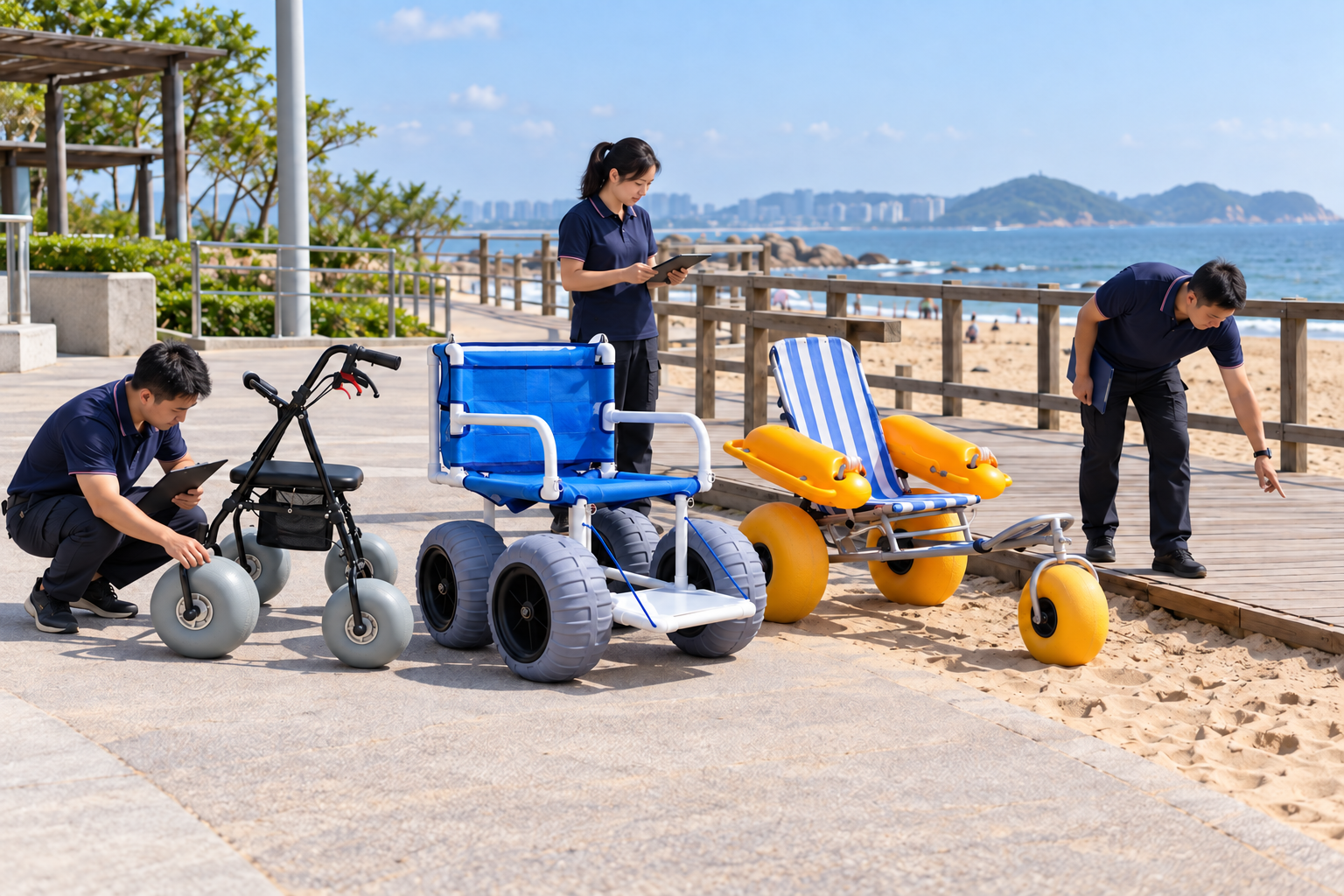
Complete beach accessibility solutions connect physical access with staffing, current information, maintenance, and a defined operating boundary. A useful plan follows the visitor from arrival through return and assigns responsibility at each handoff. Its scope should describe the activities your site can support and the help visitors can expect.
Define the service before the equipment
Begin with the access chain. A broken connection near parking, an abrupt surface change, or an unavailable staff member can stop the service. Bring facilities, guest services, procurement, and beach operations into the same review, with input from intended users. Agree on the destination and assistance model before comparing product categories.
- Map arrival points, service desks, routes, and destinations.
- Identify where visitors change equipment or receive assistance.
- Assign booking, handoff, inspection, and care roles.
- Publish the operating boundary and contact details.
Give every connection an owner
Approve one sentence describing who the service supports, where it operates, and what staff provide. Use that sentence to resolve conflicting requests across departments.
| Solution layer | Buyer question | Evidence to retain |
|---|---|---|
| Arrival and route | Can visitors reach the service area? | Dated route review |
| Equipment | Which device performs each task? | Configuration record |
| Service | Who manages each handoff? | Responsibility matrix |
| Care | Who releases returned equipment? | Inspection record |
Key Takeaway: An unresolved owner signals a service gap that belongs in the project brief.
2. Where should beach accessibility solutions begin?
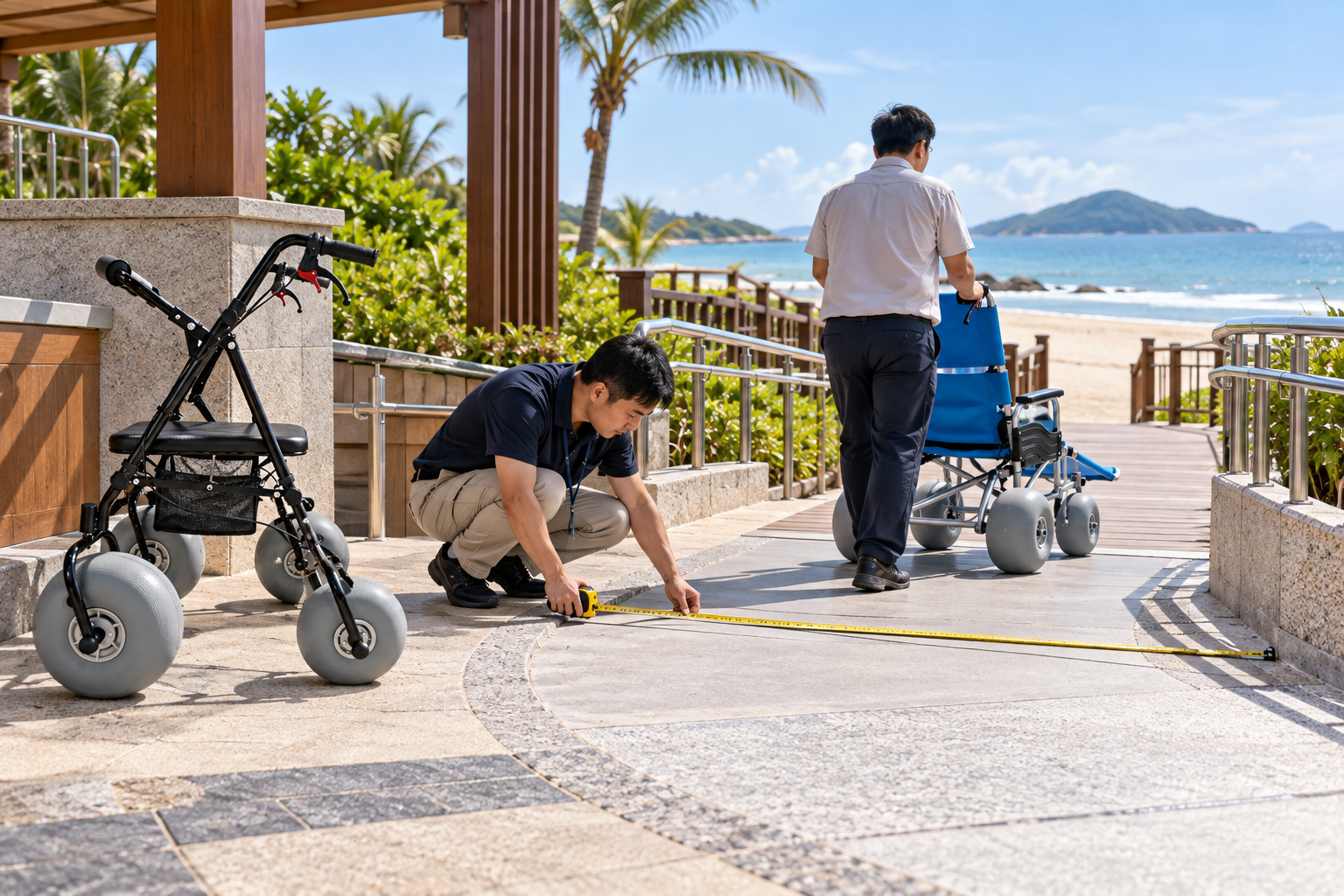
Beach accessibility solutions should begin at realistic arrival points and follow the route to a useful destination. Include parking, passenger loading, entrances, restrooms, changing areas, and the return path in your review. Ask a qualified local reviewer to confirm applicable route requirements, including required endpoints, before approving the layout.
Does the route reach somewhere visitors can use?
Follow the same path a visitor follows. Record surfaces, slopes, widths, turns, obstructions, and ground-level changes during normal operating conditions. An accessible beach mat may address a sand-route gap, subject to site review, device suitability, installation instructions, and care arrangements. Mark its proposed endpoint beside the planned seating, shade, or staffed service area.
- Review crowding, temporary furniture, and seasonal changes.
- Check mat entry, exit, edges, anchoring, and substrate conditions.
- Assign inspection after weather, traffic, or sand movement.
- Define closure conditions and a usable return plan.
Approve the complete route
Keep a dated route record showing required site work and who will resolve it. Have operations and accessibility reviewers assess the same drawing before equipment selection.
| Route segment | Practical check | Responsible role |
|---|---|---|
| Arrival | Connection to the service point | Facilities lead |
| Firm-ground route | Turns, clearances, and obstructions | Site reviewer |
| Sand route | Mat layout and surface changes | Beach-services lead |
| Destination and return | Usable endpoint and return plan | Shift supervisor |
Key Takeaway: A remaining gap at either end can limit the value of the proposed mat route.
3. How do beach accessibility solutions match equipment to tasks?

Beach accessibility solutions match equipment to approved tasks, user needs, terrain, staffing, transport, and storage. Walking aids, companion-pushed chairs, and floating chairs serve different roles. Record intended use and exclusions for each proposed configuration before deciding quantities.
Give each product a defined service role
Start with what the visitor wants to do. Walking support, seated travel across sand, and supervised water access need separate reviews. Transport and storage can affect which configurations staff can handle, assemble, and maintain. A catalog label cannot settle those site-specific questions.
- Describe the activity, route, and expected assistance.
- Request current instructions for the exact model and options.
- Review packed size, assembly, and storage against staff resources.
- Keep water use subject to a separate operating decision.
Compare roles before product lists
Create one option line per equipment role and require the supplier to state its limits. A supervised pilot can then test the proposed configuration within documented instructions and locally approved conditions.
| Equipment role | Planning question | Evidence needed |
|---|---|---|
| Walking support | Is this aid suitable for the planned activity? | Model instructions and user review |
| Seated sand travel | Who provides propulsion and assistance? | Route and configuration review |
| Portable equipment | Can staff transport and assemble it? | Handling and assembly record |
| Water access | What conditions and supervision apply? | Written water-use limits |
Key Takeaway: Select additional equipment only when it fills an approved service need.
4. How should beach accessibility solutions address user needs?

Beach accessibility solutions should address user needs through respectful intake, clear service information, and appropriate assessment or referral. Product dimensions support comparison but do not establish personal suitability. Staff need to know which questions they can answer and when a qualified professional should be involved.
What should your intake process establish?
Keep product facts and individual judgments separate. Supplier documents can describe dimensions, adjustments, supports, transfer access, and stated limits. The user should help explain the activity they want and the assistance they expect. Medical or clinical questions belong with an appropriately qualified professional.
- Ask about the requested activity and service location.
- Explain available equipment and assistance in plain language.
- Confirm companion and staff responsibilities.
- Offer an alternative when a suitable match cannot be established.
Define the referral boundary
Add an intake and referral section to the operating procedure before opening reservations. Collect only information needed for the agreed service through your approved process.
| Information | Source | Decision owner |
|---|---|---|
| Product dimensions and limits | Current supplier documents | Equipment reviewer |
| Individual support needs | User and appropriate assessor | Qualified local role |
| Route conditions | Site team | Operations authority |
| Unresolved service request | Frontline staff | Named escalation owner |
Key Takeaway: A named referral route prevents frontline staff from improvising specialist advice.
5. What governs water use in beach accessibility solutions?

Model-specific instructions and locally approved operating conditions govern water use in beach accessibility solutions. Water access needs a separate plan covering the environment, supervision, entry, exit, and emergency response. Large wheels or flotation components alone do not establish permission for the intended use.
Set the boundary before offering water access
Draw the operating boundary before choosing the chair. Have the responsible local team review waves, currents, tides, drop-offs, available supervision, and exit points. Equipment selection can proceed when the intended service agrees with written product limits. Describe beach access, shoreline access, and floating water use separately in public information.
- Obtain current water-use documentation for the exact configuration.
- Define the permitted zone and stop conditions.
- Assign supervision, companion, and response roles.
- Plan exit, recovery, rinsing, and post-use inspection.
Keep water approval separate
Require documented approval from the equipment reviewer and the designated local water-safety lead before offering water entry. Recheck the operating decision when conditions or equipment change.
| Control | Required answer | Hold condition |
|---|---|---|
| Product | Does documentation permit intended use? | Unclear instructions |
| Environment | Are current conditions within limits? | Conditions outside limits |
| People | Are required roles available? | Missing supervision |
| Exit and response | Can staff follow the approved plan? | Obstructed exit or incomplete response |
Key Takeaway: One unresolved control is a reason to pause water entry and review the service.
6. How should beach accessibility solutions manage handoffs?
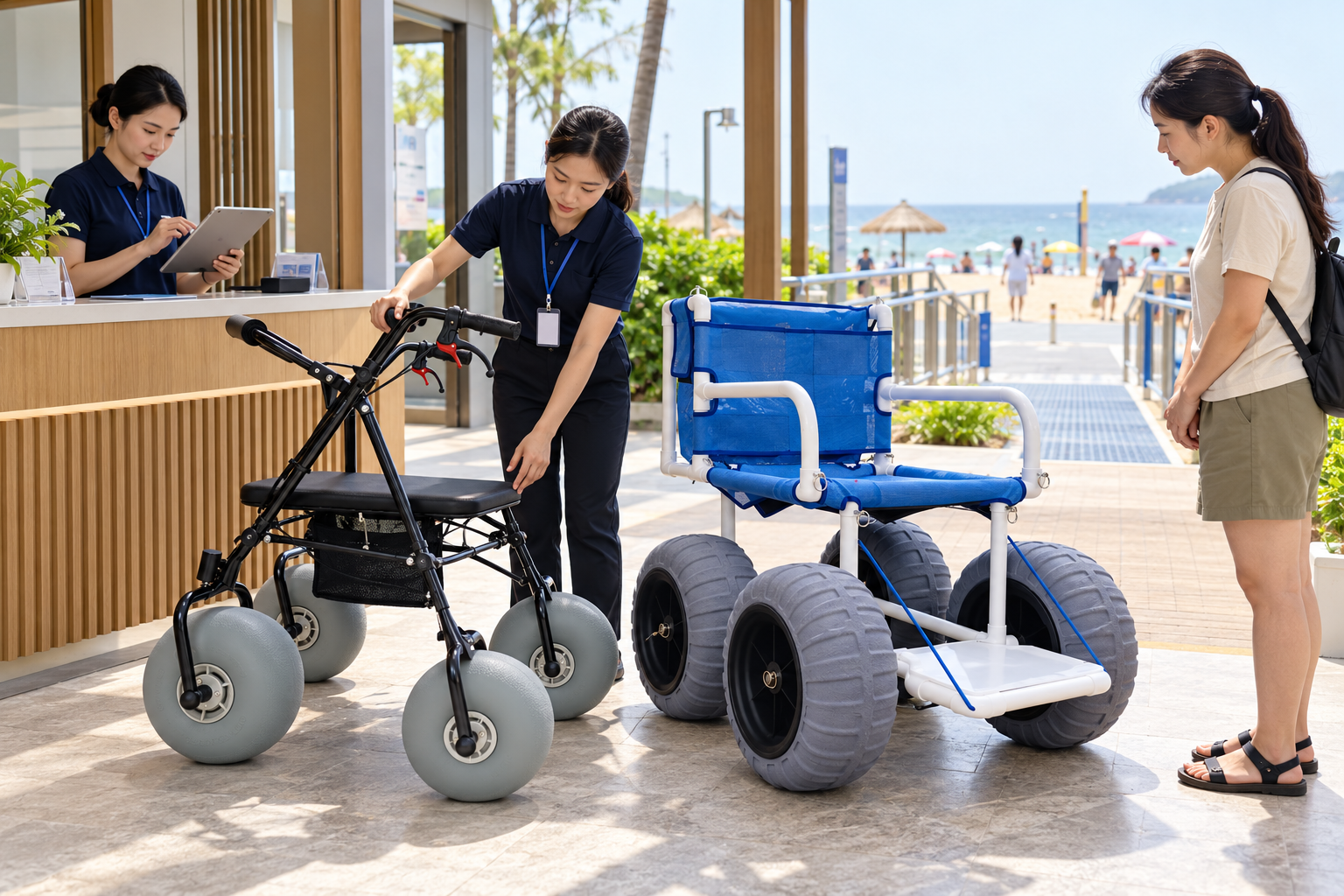
Beach accessibility solutions should manage handoffs through a documented booking-to-return workflow with named staff responsibilities. Booking information must agree with equipment status and current site conditions. Staff also need authority to pause service when conditions fall outside the approved plan.
Make every handoff repeatable
Put responsibilities beside actions. Use a short briefing and model-specific pre-use check so staff share the same information. The detailed beach wheelchair rental workflow can help you map booking, handoff, return, and care. Adapt those steps to your staffing model and rehearse a complete cycle before launch.
- Publish current hours, location, and booking method.
- Match requests with an approved equipment category.
- Explain the route, assistance, return, and incident contacts.
- Record return condition before confirming next availability.
Confirm the whole service is available
Give each operating action an owner and a record. A booking should remain subject to the site's documented release and pause procedures.
| Operating action | Primary owner | Required record |
|---|---|---|
| Booking | Guest services | Request and confirmation |
| Pre-use check | Trained operator | Asset check |
| Handoff | Beach-services staff | Boundary explanation |
| Pause or return | Shift authority | Reason or condition record |
Key Takeaway: A chair marked available still needs an approved route and the required staff.
7. How do beach accessibility solutions stay serviceable?
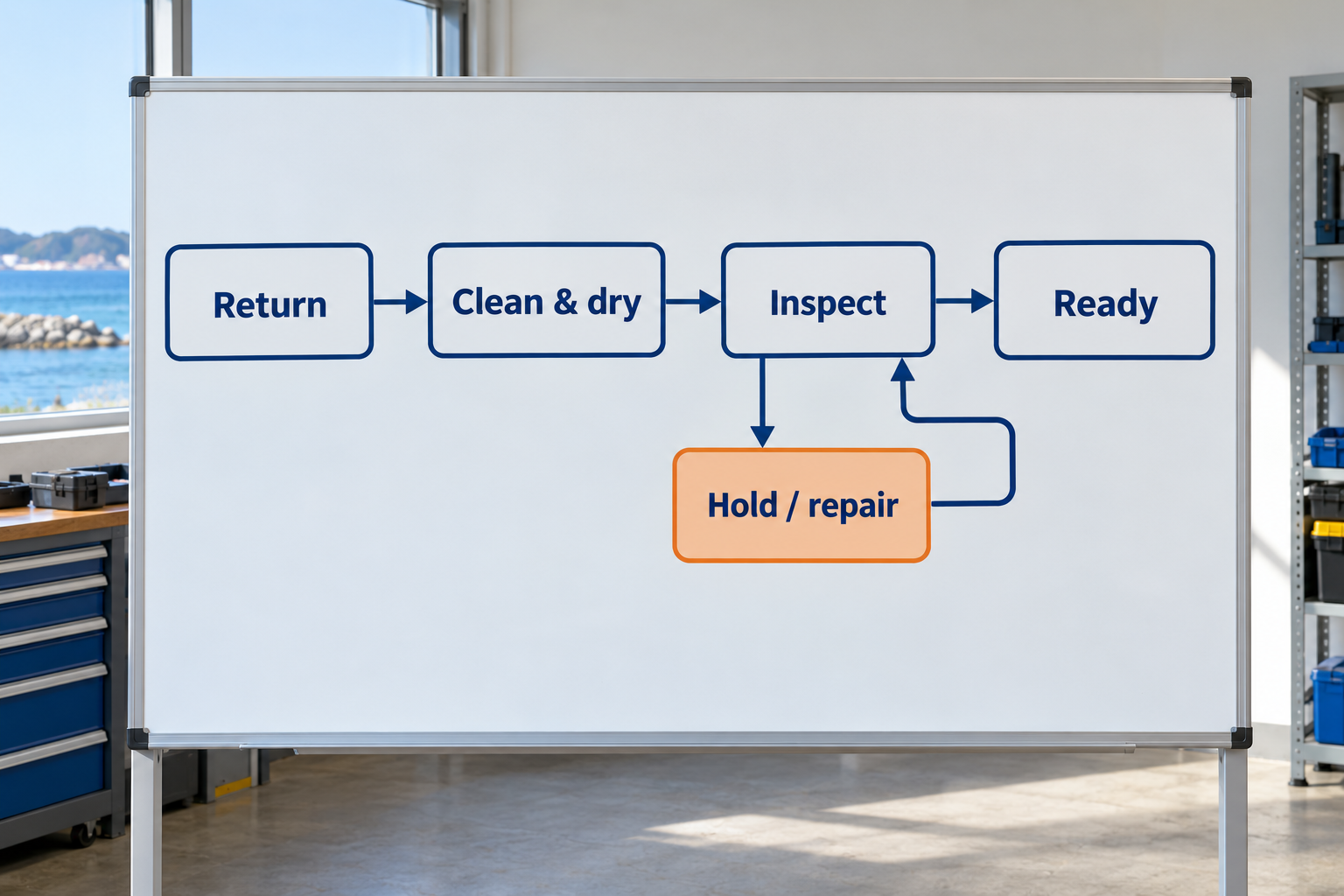
Beach accessibility solutions stay serviceable through planned cleaning, drying, inspection, storage, parts, and repair. Those activities need staff time and space in the operating budget. Care instructions should follow the exact equipment configuration, with faults kept visible until an authorized release.
Plan the return-to-service path
Make equipment status visible. Separate returned equipment from equipment approved for use, and identify anything awaiting inspection or repair. Use the current manual to define cleaning methods and component checks. Include mat inspection and seasonal removal or storage in the same site-level care plan.
- Follow written cleaning, rinsing, and drying instructions.
- Record checks for the components identified by the manual.
- Keep damaged or unconfirmed parts outside service stock.
- Assign repair decisions and return-to-service authority.
Budget for care and downtime
Include care labor, storage, parts, and expected downtime when comparing purchase options. Retain enough detail for another shift to understand why equipment is ready or on hold.
| Lifecycle stage | Control | Release evidence |
|---|---|---|
| Return and cleaning | Approved care method | Completed care record |
| Inspection | Model-specific checks | Dated result |
| Repair | Approved parts and authority | Repair record |
| Storage and release | Dry, identified equipment | Available status |
Key Takeaway: Repeated holds can reveal a parts, staffing, or storage problem that procurement must address.
8. How should buyers specify beach accessibility solutions?

Buyers should specify beach accessibility solutions through a service brief that connects site conditions, equipment roles, documents, and acceptance checks. Suppliers need a defined task and configuration to answer accurately. Separate required, preferred, and optional items so exceptions remain visible.
Connect the quotation to acceptance
Buy evidence with the equipment. Request exact model identity, manuals, parts references, care instructions, and written commercial terms. A structured beach wheelchair supplier review helps purchasing teams track unanswered questions. Photographs can show visible construction, while performance and suitability claims need their own supporting evidence.
- Number requirements and supplier responses.
- Record model, options, and document revisions.
- Agree on receiving checks and how to handle differences.
- Assign unresolved exceptions an owner and decision date.
Make acceptance observable
Compare the delivered configuration and documentation with the approved order. Keep equipment on hold where a difference affects intended use or remains unresolved.
| Purchasing requirement | Supplier response | Acceptance check |
|---|---|---|
| Service role | Intended use and limits | Match the approved task |
| Configuration | Model and options | Compare the delivered unit |
| Documentation | Manuals and parts records | Confirm the agreed package |
| Support | Terms and contact path | Verify the escalation route |
Key Takeaway: A clear acceptance check gives the buyer a basis for resolving a mismatch before release.
9. How can buyers launch beach accessibility solutions?
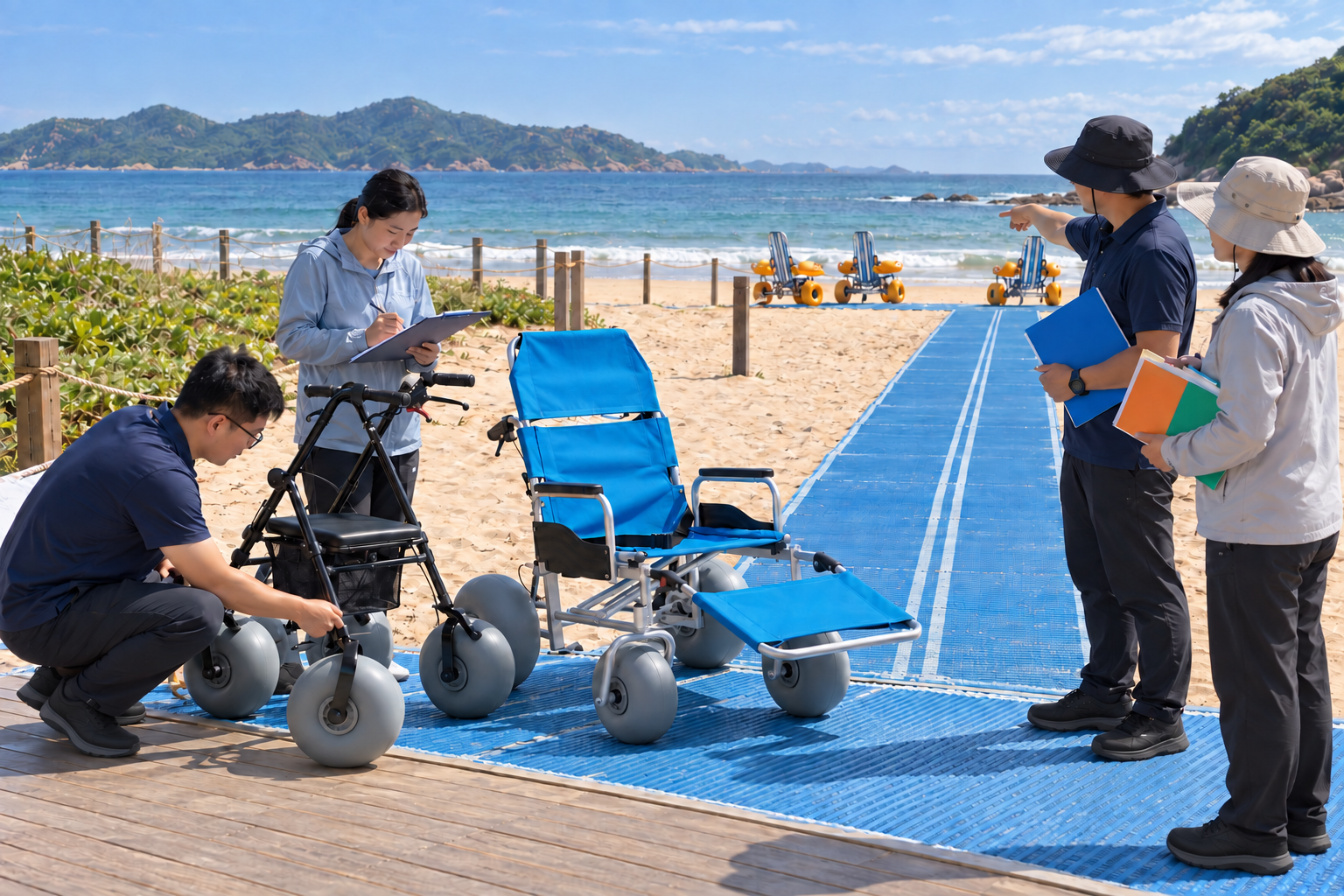
Buyers can launch beach accessibility solutions by approving a defined service, piloting its route and equipment, and resolving gaps before public opening. The project brief should bring route, user needs, water boundaries, staffing, care, and acceptance into one decision. Expand after reviewing operating evidence and visitor feedback.
Turn the project brief into a pilot
Close with one approval rule. Open the planned service when route, equipment, staff, information, and care arrangements agree. ARY offers beach mobility equipment and access mats for buyers to review against that brief; request model-specific documentation and a written quotation.
- Approve the service goal, route, and decision owners.
- Review equipment evidence and run a supervised pilot.
- Resolve gaps and publish accurate service information.
- Review demand, downtime, feedback, and incidents before expansion.
Approve a usable service before expansion
Give the launch reviewer a short evidence pack and an unresolved-issues list. Keep the purchasing question practical: which equipment supports the service your team can operate?
| Launch gate | Evidence | Decision |
|---|---|---|
| Route and scope | Approved service map | Proceed or revise |
| Equipment and staff | Pilot record | Accept or correct |
| Public opening | Current information and care plan | Open or hold |
| Expansion | Reviewed operating results | Extend or improve |
Key Takeaway: Keep your ARY project focused on usable access, with equipment, routes, staff, and care planned together. After resolving the pilot’s open issues, contact us for a model-specific quotation before expansion.
10. What should buyers ask about beach accessibility solutions?
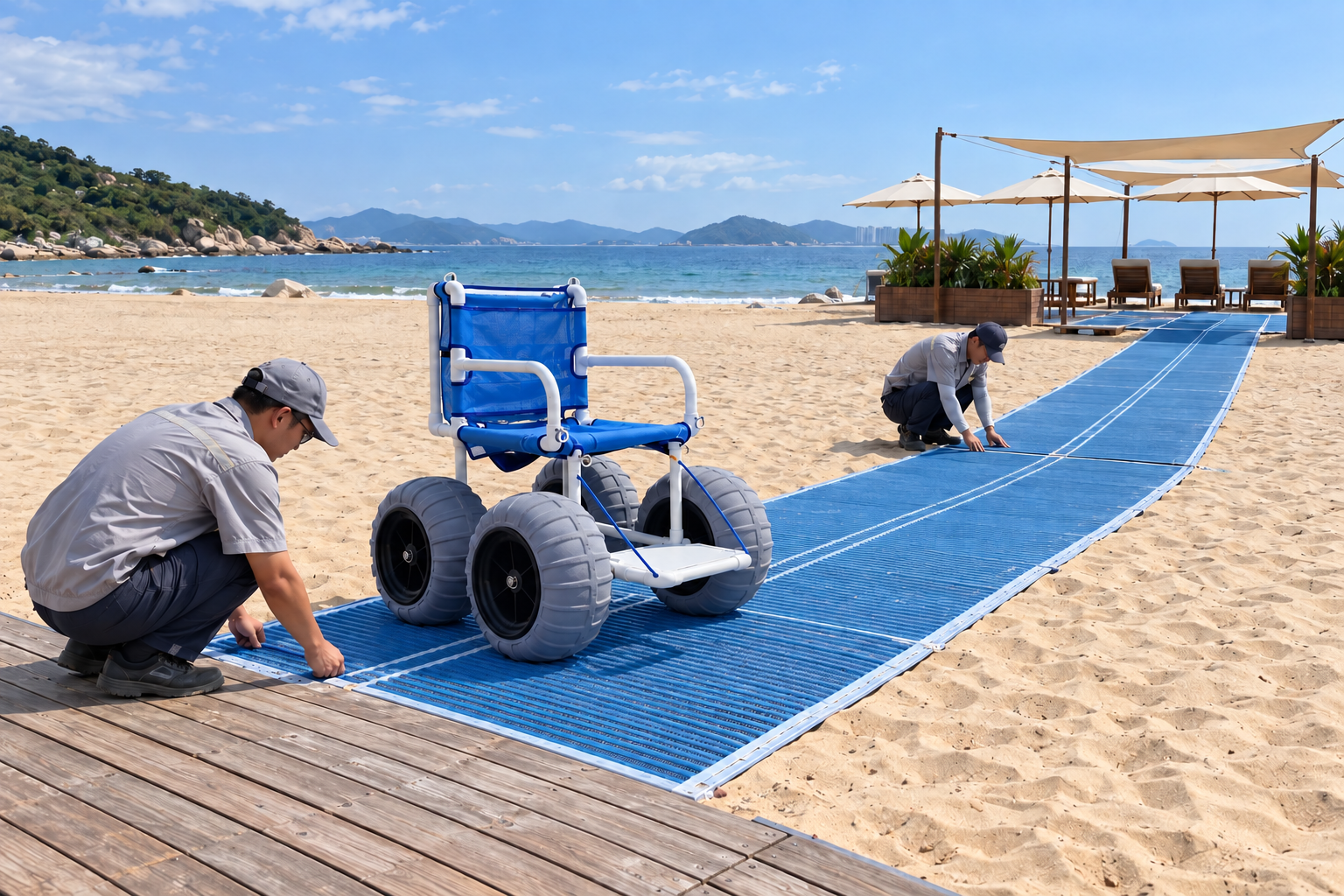
Buyers should ask whether beach accessibility solutions match their route, visitors, staff capacity, and intended activities. These checks help turn a broad request for accessible equipment into a project decision that suppliers and site teams can answer.
Can I start with one chair and a beach access mat?
Yes, if that combination fits the approved service and your team can operate it. Review the arrival route, mat endpoint, equipment suitability, and assistance arrangements before opening. Start with a defined use case. A limited pilot can expose gaps before a larger order.
- State where the service starts and ends.
- Confirm staff, care, and closure responsibilities.
What's the best way to choose an equipment mix?
Choose by approved task and user need. Ask suppliers to explain intended use and exclusions for each configuration, then review handling and upkeep with your site team. Keep dry-sand travel and water entry as separately approved activities.
How do I know if the program is ready to open?
Use a documented readiness review. Confirm that the route, equipment, trained staff, visitor information, and care process agree with the service you plan to offer. Hold any activity with unresolved product instructions, missing staff roles, or unsuitable conditions.