Wheels Sink and Drag
Narrow hard-surface wheels can cut into loose sand, increasing drag and interrupting the route from storage to the shoreline.

Move chairs, coolers, accessibility equipment, maintenance supplies, and event gear from storage areas to the shoreline with a two-wheel cart configured around your route and cargo needs.
For resorts, public beaches, rental operators, distributors, and coastal project teams.
Share your route, application, quantity, and destination so we can review the configuration before quoting.
Beach operations often start on hard ground and end on loose sand. A cart that works in a warehouse may sink, drag, shift its load, or become difficult to control once the route reaches the beach.
Narrow hard-surface wheels can cut into loose sand, increasing drag and interrupting the route from storage to the shoreline.
Boardwalk edges, mat transitions, slopes, and soft sand can change how cargo sits inside the cart and how staff handle it.
Sand can collect around wheels, hubs, axles, handles, and storage areas. Teams need a clear inspection and care routine.
Resorts, public beaches, rentals, and event sites have different surfaces, storage spaces, cargo tasks, and staffing plans.
Start with the real route before choosing a beach transport cart.
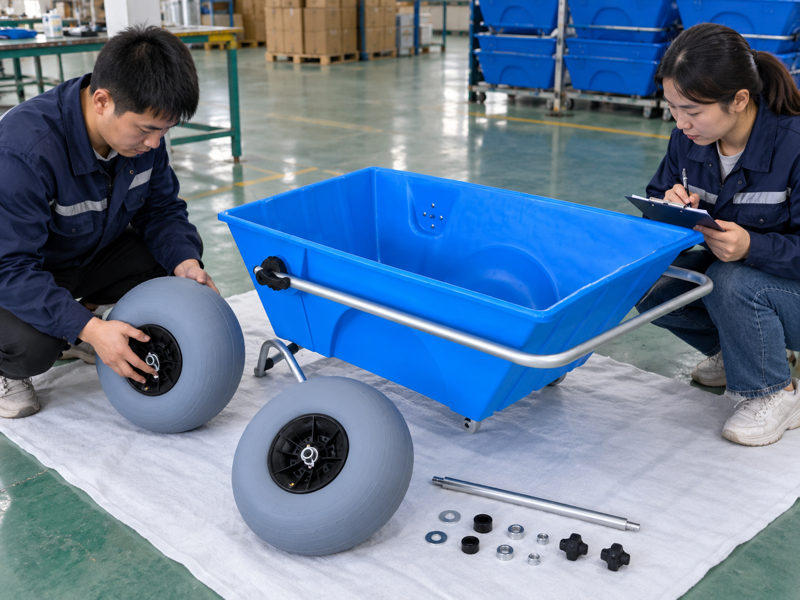
A Beach Cargo Cart is a two-wheel equipment cart for routes that include boardwalks, access mats, firm ground, and soft sand. A molded open tub provides cargo space, while wide balloon wheels spread contact across sand and a U-shaped handle gives staff a clear operating point.
This product transports equipment and supplies. It is not designed to carry passengers.
Review the working features before defining your project configuration.
The cart combines a two-wheel structure with a molded cargo tub and wide beach wheels. Buyers can match each feature with a route, cargo task, vehicle, and storage plan.
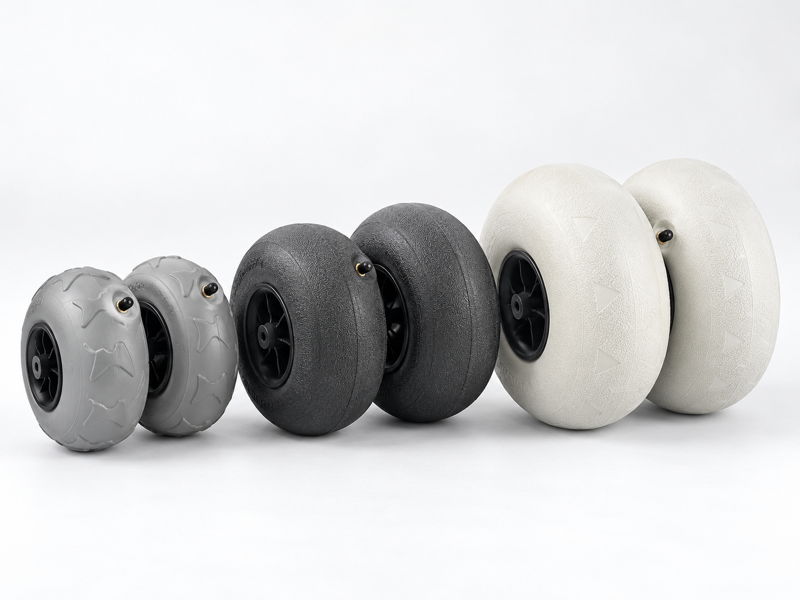
Wide balloon wheels support beach routes where narrow hard-surface wheels may sink or drag, helping staff keep cargo moving.
The open tub holds packed chairs, coolers, maintenance supplies, access equipment, and event gear within one visible cargo area.
The U-shaped handle gives staff a defined point for moving and positioning the cart during daily setup and return.
Wheel, hub, axle, cargo, and clearance decisions can follow the complete site route instead of a product photo alone.
Visible wheels, hubs, handles, supports, and tub surfaces help teams create a repeatable inspection routine.
Drawings, sample checks, packing needs, destination details, and receiving steps can be confirmed before volume ordering.
Use your route and cargo task to select the functions that matter most.
Each buyer uses the cart differently. Real application images help teams connect product features with route, cargo, staffing, storage, and care decisions.
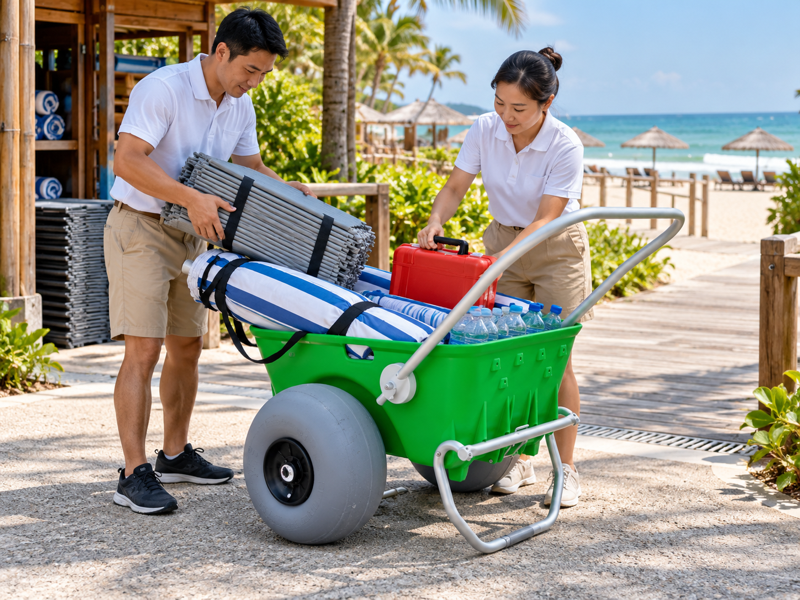
Move chairs, towels, shade equipment, coolers, and guest-service supplies from storage to a managed beach zone.

Carry maintenance tools, route equipment, cleanup supplies, and event materials across controlled public access areas.
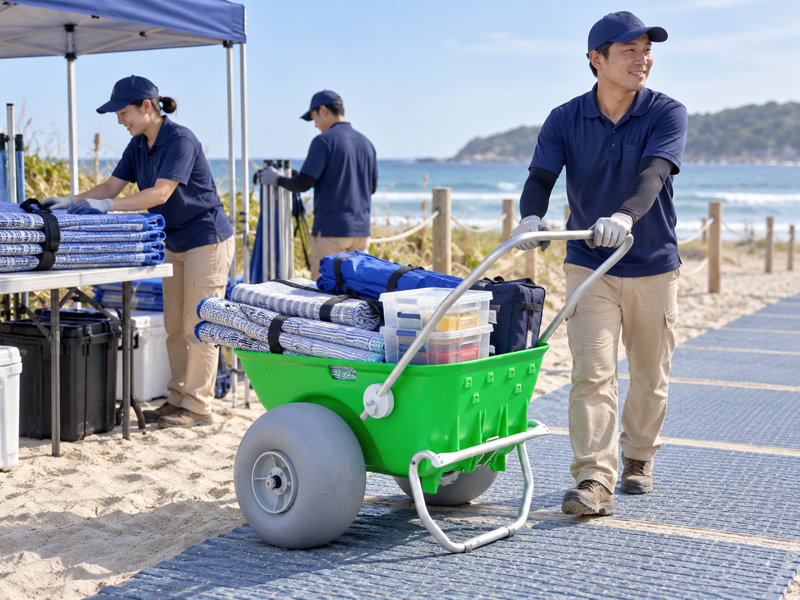
Support setup, equipment return, cleaning, storage, and handover while keeping cargo in one organized transport point.
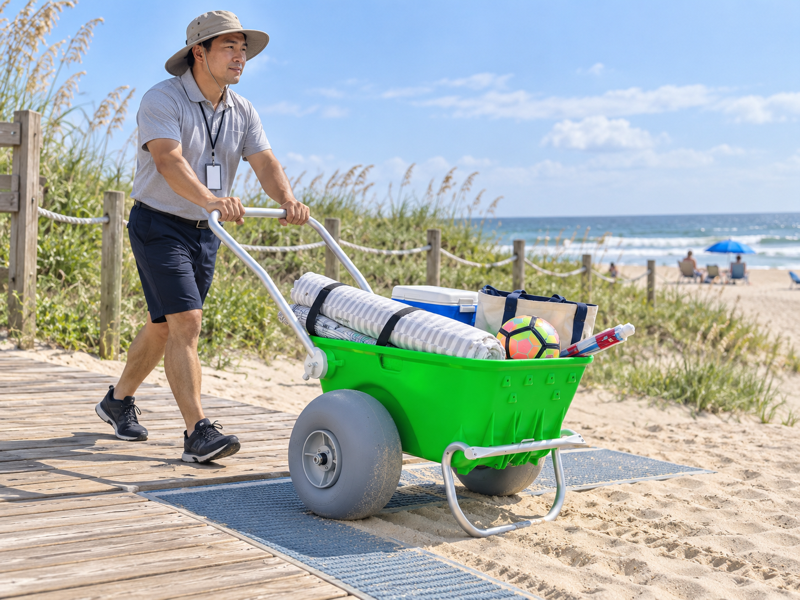
Add sand-route transport to a wider coastal equipment offer for resorts, municipalities, rentals, and project contractors.
Tell us which operating scenario matches your project.
The Beach Cargo Cart moves equipment that supports the visitor route. It works beside access mats, beach wheelchairs, floating wheelchairs, and beach walkers, but it does not transport passengers.
Prepare equipment, cargo, staff roles, and route information before the service day begins.
Create a firmer route across soft sand for mobility equipment, staff, and beach-service operations.
Move chairs, coolers, maintenance items, and project supplies between storage and the managed beach zone.
Match wheelchairs, walkers, and water-access products with the intended visitor journey and staff plan.
Connect cargo transport with the full accessibility route.
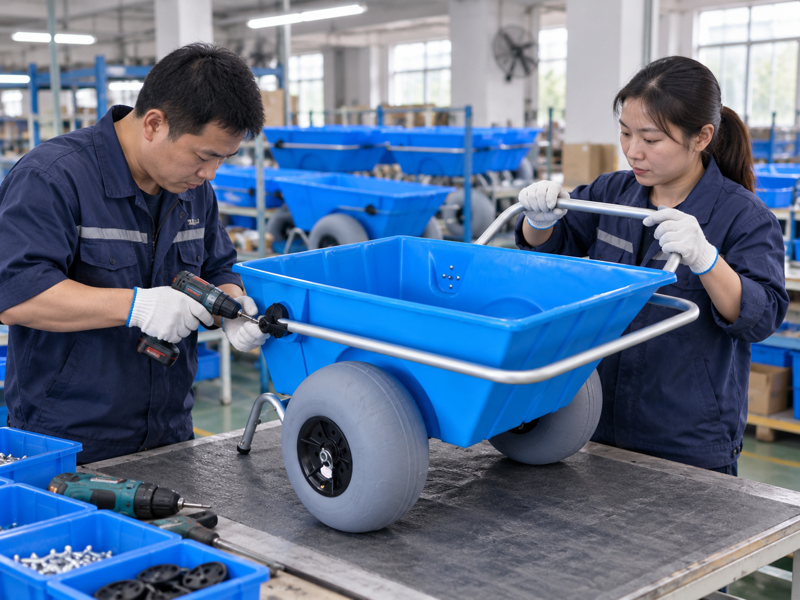
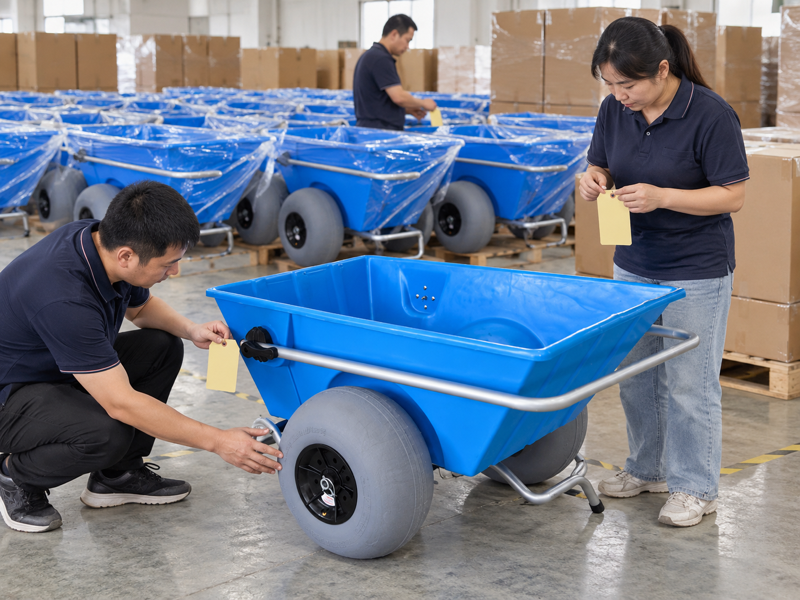
Ary Beach Wheelchair connects product development, manufacturing coordination, inspection, packing, and export sales. Buyers can discuss route and product questions with a team familiar with coastal equipment applications.
Review product structure, wheel options, route needs, and requested changes before the quotation is confirmed.
Check product identity, visible components, configuration, and open issues before release.
Confirm packing, loose parts, destination information, and receiving needs for the approved order.
Ask for manufacturing and product evidence tied to your selected configuration.
Beach equipment should start with its operating environment. Product decisions can connect sand routes, water-access programs, resort services, public beach projects, mobility equipment, access mats, walkers, and cargo transport.
Record the route, cargo, user journey, staff roles, storage, and destination before selecting a product family.
Compare the tub, handle, wheel, hub, axle, frame, packing, and application requirements.
Record fit, handling, route observations, care questions, and unresolved points against an approved test plan.
Keep drawings, packing information, configuration changes, and buyer approval in one project file.
Turn the beach route into a controlled product brief.
Ary Beach Wheelchair works with buyers serving the United States, Europe, South America, Australia, and other coastal markets. Requirements still differ by buyer role, route, import process, environment, and local rules.
Ask for evidence that matches the selected product and project. General marketing images should not replace drawings, samples, inspection records, or route review.
Share your market, destination, and project role before requesting delivery terms.
Practical value comes from matching the cart with staff, cargo, route, care, storage, and replacement planning rather than relying on one broad product claim.
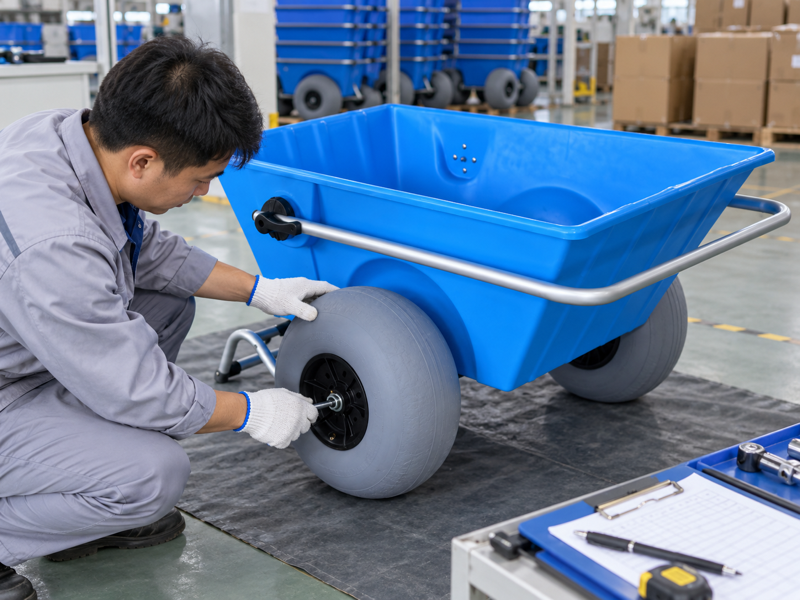
Visible wheels, hubs, handles, supports, and tub surfaces help teams carry out checks before and after service.
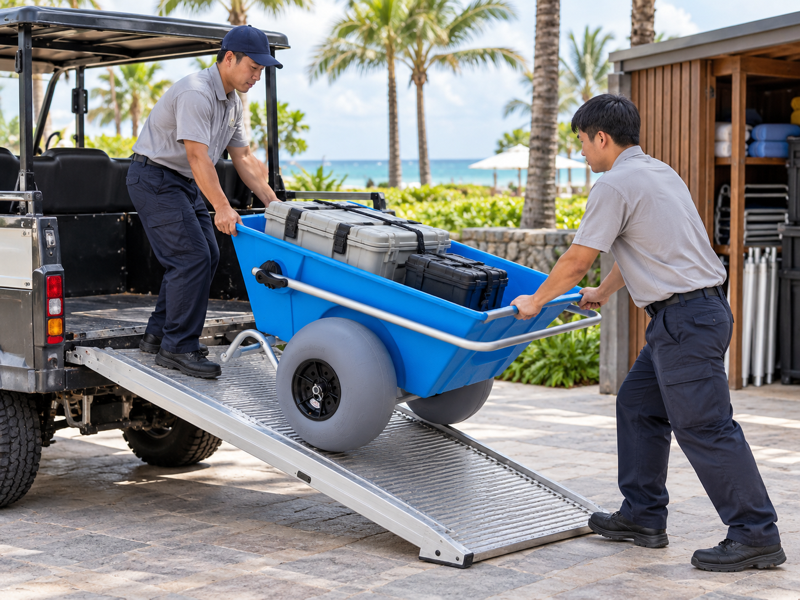
Vehicle openings, storage clearance, folded parts, and handoff checks can be reviewed before a project begins.

A controlled wheel identity, axle interface, parts record, and release check support future maintenance decisions.
Handling, durability, and maintenance results depend on the selected configuration, cargo, route, storage, care process, and operating frequency. Confirm these points through drawings, instructions, and sample review.
Build daily-use requirements into the product brief before ordering.
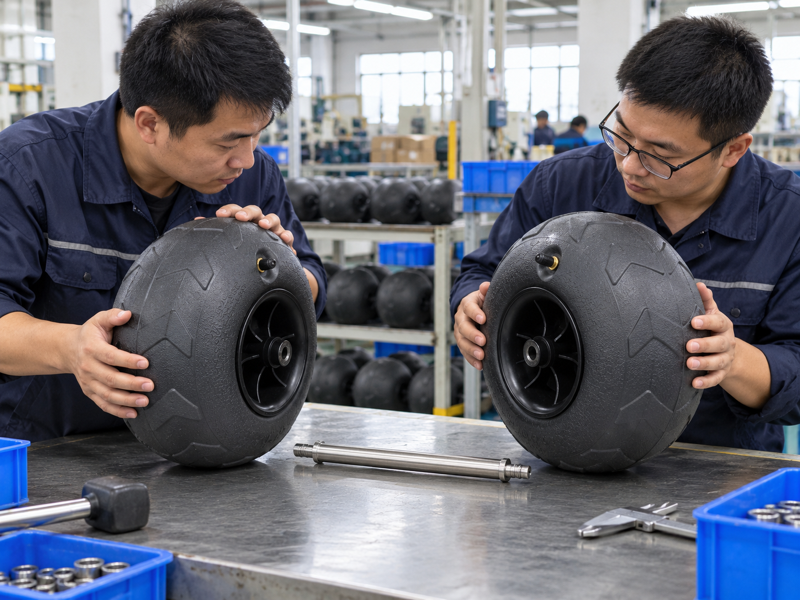
OEM and project requests can be reviewed against product structure, route conditions, quantity, packing, documentation, and production feasibility. The approved quotation and drawing control the final configuration.
Send the requested changes with quantity, destination, and application details.
Long-term cooperation works best when both sides keep the approved configuration, wheel and axle details, packing requirements, delivery records, and open changes connected to each order.
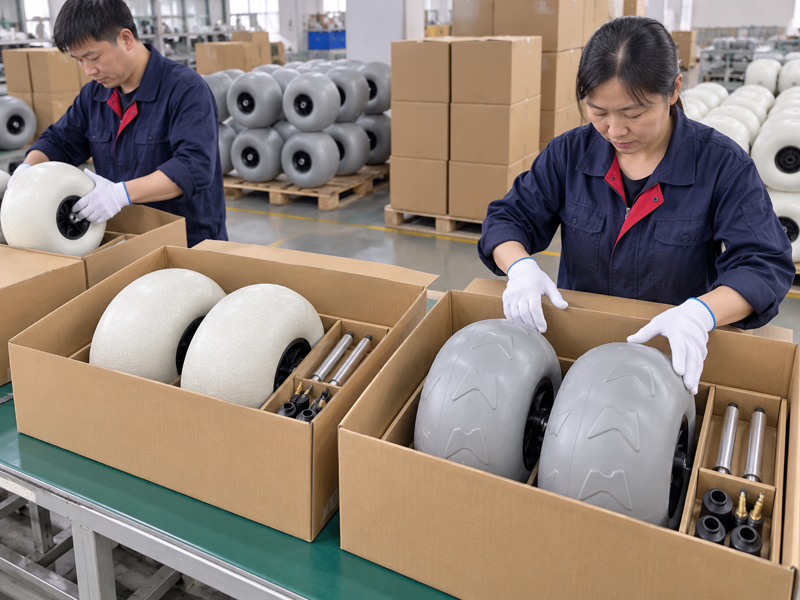

Keep the approved tub, wheel, hub, axle, handle, packing, and project needs in one buyer file.
Check drawings, quantity, destination, requested changes, and delivery needs before release.
Confirm replacement identity, interface, accessories, packing, and responsible owner before shipment.
Record product, package, document, and delivery changes before they reach production.
Connect repeat orders with the same approved product evidence.
A clear process keeps the route, product configuration, quotation, sample, production, packing, and receiving decisions connected.
A complete project brief helps us identify the right questions before quoting.
Review product boundaries, configuration, storage, care, samples, and quotation inputs before making a purchasing decision.
No. The cart transports equipment and supplies. It is not a passenger mobility device.
Yes. Confirm color, wheel set, quantity, and packing on the quotation.
Choose from the complete route and cart configuration. Send route photos, transitions, cargo details, and application information for review.
Request the current drawing and compare it with vehicle openings, storage clearance, turning space, and handling access.
Yes. Define the sample configuration, route trial, inspection points, and approval criteria first.
Yes. Feasibility, quantity, structure, packing, documentation, and the approved drawing control the final result.
Follow the current instructions. Remove sand, inspect visible parts, allow the product to dry, record issues, and use controlled storage.
Provide buyer type, application, route, cargo use, quantity, destination, delivery timing, and requested options.
Send any unanswered purchasing question with your project details.
Share your route, cargo task, quantity, destination, and project requirements. Our team can review the requested configuration, identify open questions, and prepare the next quotation step.