Narrow Wheels Sink Into Loose Sand
Narrow hard-surface wheels concentrate contact on a smaller area and may create more drag when the route reaches loose sand.

Help carts, wagons, kayak trolleys, and coastal equipment travel across loose sand with wide, low-pressure wheels configured around the route, hub, axle, and frame interface.
For equipment manufacturers, distributors, resorts, public beaches, rental operators, and coastal project teams.
Share your equipment, axle details, route, quantity, and destination so the open fit questions can be reviewed before quotation.
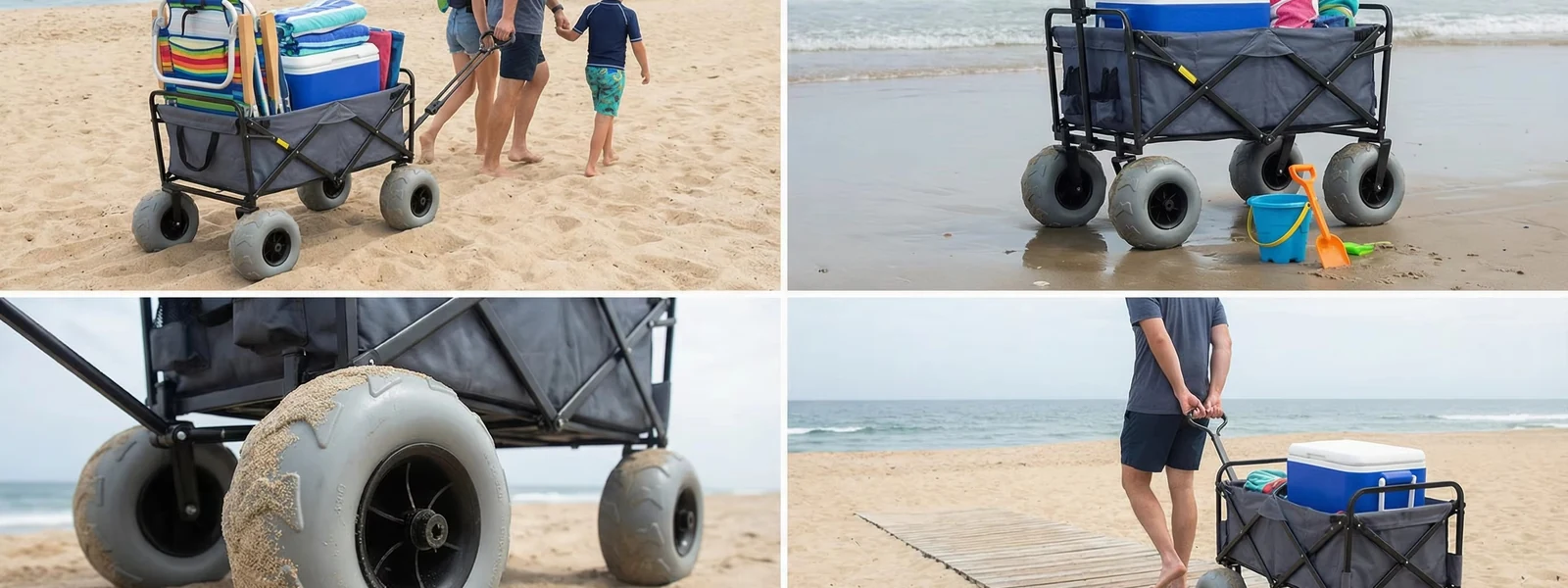
A wheel that rolls on pavement can sink, drag, rub the frame, or fail to mount correctly on beach equipment. Reviewing the route and the mechanical interface together reduces avoidable fit problems.
Narrow hard-surface wheels concentrate contact on a smaller area and may create more drag when the route reaches loose sand.
A nominal size does not confirm hub width, bore, axle retention, frame clearance, or the position of nearby equipment parts.
A wheel can look suitable and still fail to fit the axle without the correct drawing, dimensions, spacers, and retention method.
Boardwalks, vehicle loading, storage, access mats, slopes, wet sand, and loose sand create different clearance and care needs.
Start with the complete route and equipment interface instead of choosing from a product photo alone.
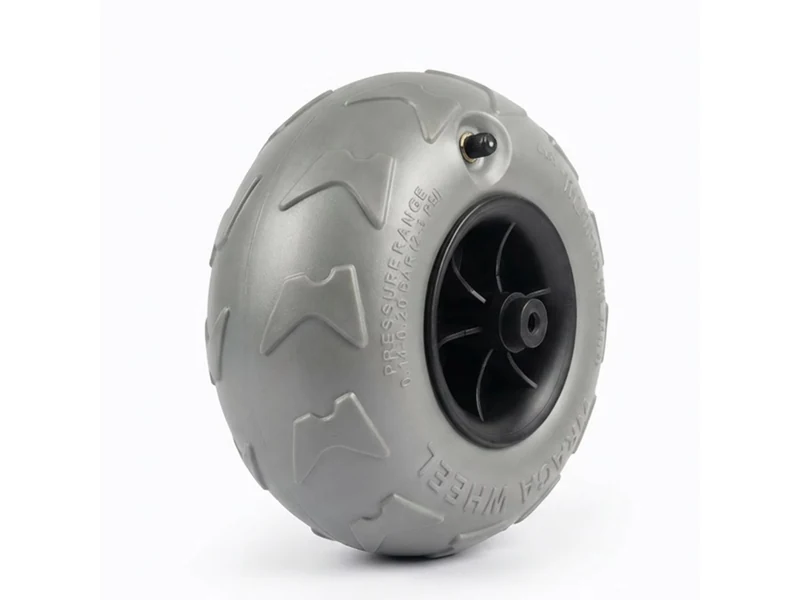
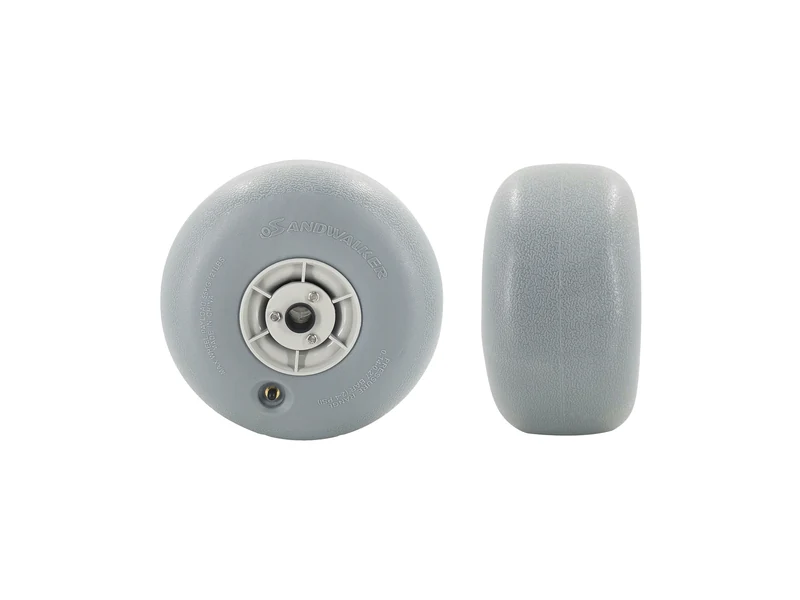
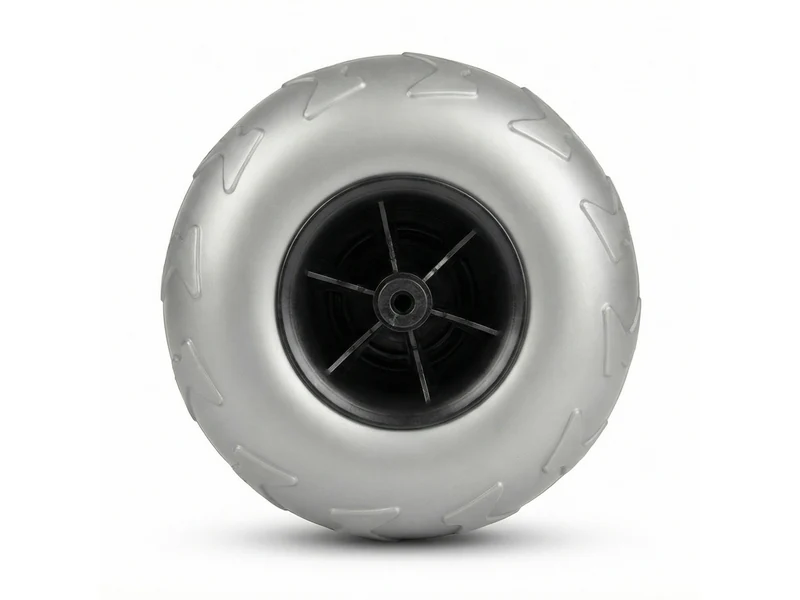
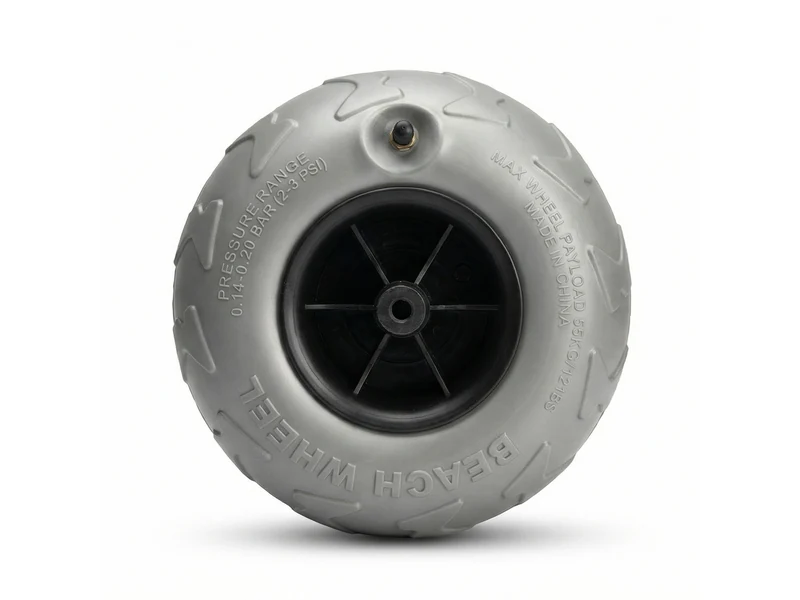
Beach Balloon Wheels are wide, low-pressure wheels used on carts, wagons, kayak trolleys, fishing equipment, and selected coastal mobility equipment. Their broad wheel body spreads contact over loose ground, while the hub connects the wheel to the equipment axle.
The wheel is one part of a complete equipment system. Suitability depends on the route, equipment design, hub, axle, clearance, operating task, and an approved fit review.
See how each visible part connects with the route and equipment interface.
The benefit comes from the complete combination of wheel body, hub, axle, frame, route, and operating task. Each function must be checked against the selected equipment.
The broad wheel body distributes contact over a wider area than a narrow hard-surface wheel, supporting suitable equipment on loose sand.
Selected carts and trolleys can move from firm routes onto sand when the wheel and equipment are matched to the task.
The hub, bore, bearing or bushing, spacer, and retention method create the working connection with the axle.
Wheel width, hub position, axle length, and nearby frame parts are checked so the installed wheel can rotate without interference.
The wheel body, hub, valve, axle interface, and fasteners can be included in a repeatable inspection routine.
Drawings, dimensions, equipment photographs, and a sample turn an uncertain purchase into a documented approval.
Match the function to the real route before choosing the final wheel configuration.
The same wide-wheel principle can serve different equipment categories. A fit review connects the application with the axle, frame, route, operating task, and responsible equipment owner.

Move packed coolers, chairs, maintenance supplies, event equipment, or service gear across routes that include soft sand.

Move kayaks, canoes, paddleboards, or related equipment between storage, vehicles, launch points, and the shoreline.

Carry packed gear across sand after the frame, axle, clearance, and route have been checked together.

Support selected beach mobility or service equipment only after the responsible equipment owner approves the wheel and axle configuration.
Show us the equipment and complete route so the application can be reviewed in context.
Compatibility comes from connected decisions. The route defines the operating need, while the equipment drawing and sample show whether the selected wheel can be installed and used as intended.
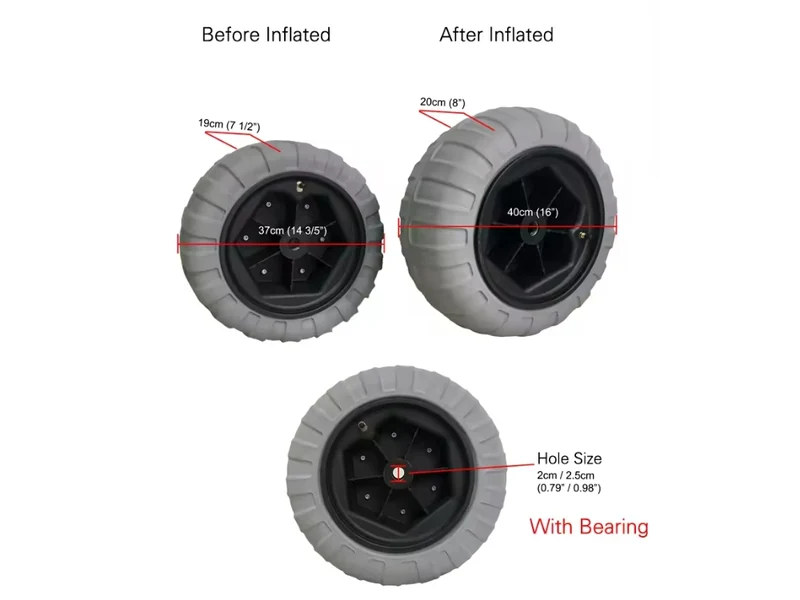
Record pavement, vehicle loading, boardwalks, slopes, firm sand, loose sand, storage, and the return route.
Provide equipment photographs, frame design, operating task, intended cargo or user, and the responsible owner.
Confirm axle diameter and length, hub width, bore or bearing needs, retention, clearance, and nearby parts.
Check installation, free rotation, frame clearance, retention, route behavior, and open questions.
Record the wheel, hub, axle accessories, packing, quantity, and unresolved conditions before volume ordering.
Send an axle drawing or measured interface before requesting a final configuration.
The equipment name does not define compatibility. Bore diameter, working axle length, hub width, bearing or bushing type, spacers, and the retention method must work together before the wheel can rotate with the required clearance.
Factory review is useful when it converts measured interface data into a drawing, sample, and controlled part identity.
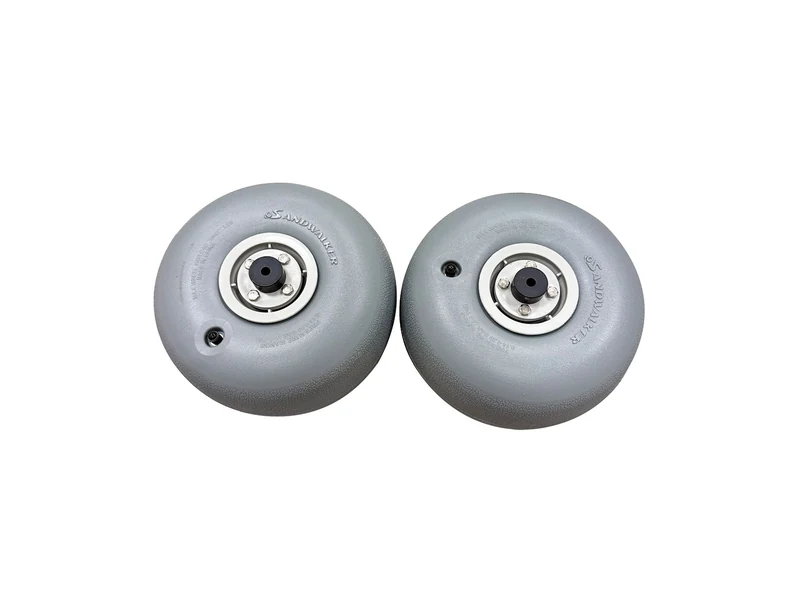
Record the diameter, usable length, shoulder position, thread or pin location, and the space available beside the frame.
Confirm what supports the wheel on the axle and how the proposed bore, bearing, or bushing is identified in the drawing.
List washers, spacers, collars, pins, nuts, caps, and installation order so the wheel stays located without rubbing the frame.
Send measured interface details before approving a hub or axle arrangement.
A Beach Balloon Wheel needs a repeatable care routine tied to the selected instructions. The team should know what to inspect before use, what to record after the route, and when a wheel must be held for review.
Use the current wheel-specific guidance for inflation, installation, cleaning, storage, and any stated operating limits.
Look for visible deformation, cuts, abrasion, valve damage, loose hub parts, and other changes before the equipment is released.
Clear sand from the hub and axle area, follow the cleaning guidance, allow components to dry, and avoid trapping moisture in storage.
Log pressure or condition checks when required, mark unresolved damage, and store the wheel away from avoidable heat or sharp contact.
Ask for wheel-specific care guidance instead of applying one pressure or interval to every configuration.
For an international order, a material name or color photograph is not enough. The buying file should identify the selected wheel body, surface, hub, bore, valve, accessories, and the evidence linked to that exact configuration.
Confirm the material declaration for the wheel under review rather than extending one family name to every product.
Use current photographs and sample inspection to review the tread area, sidewall, seam, finish, and visible condition.
Record the hub, bore, bearing or bushing, fasteners, and accessories separately from the inflatable wheel body.
Appearance can help identify the order, but it does not replace material, interface, inflation, or sample evidence.
Keep every public claim tied to the current wheel specification. A material label alone does not establish fit, service life, or local compliance.
Request the material and construction record for the exact wheel you intend to approve.
A sample earns approval only when it is installed on the intended equipment and observed across the actual route. The record should separate fit, route behavior, and after-use condition so one good impression does not hide an open issue.

Check bore fit, spacers, retention, free rotation, frame clearance, valve access, and interference through the full wheel movement.

Move the empty or approved test equipment across firm ground, transitions, turns, slopes, and soft sand under a written trial plan.

Review visible wheel condition, valve, hub, axle contact, sand entry, cleaning needs, and any change that requires supplier review.
The result belongs to the tested equipment, interface, route, and configuration. Do not extend it automatically to a different axle, frame, wheel, or operating task.
Define the sample plan before the wheel arrives so the result can support a clear approval decision.
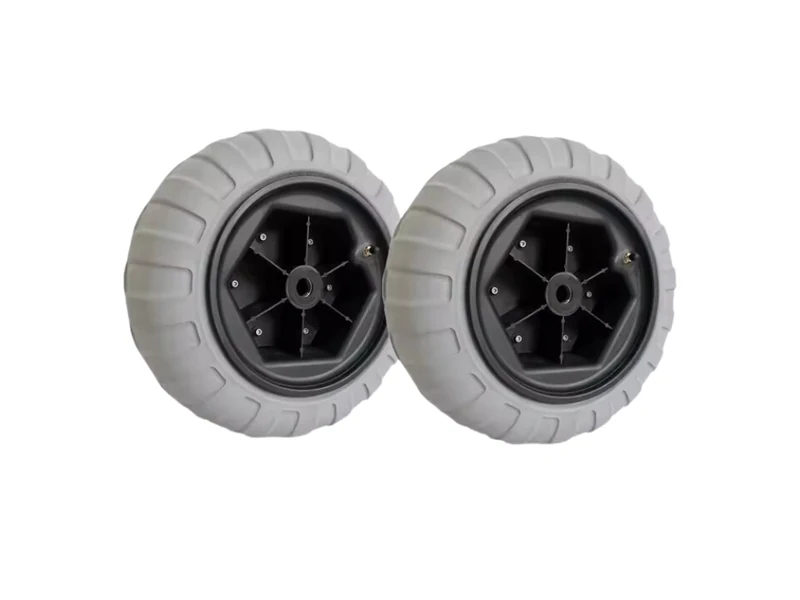
An OEM request begins with the equipment interface and required evidence. The discussion may cover the hub, bore, insert, color, markings, accessories, packing, or document set, while feasibility and the approved sample control what can be supplied.
A requested change is not approved until the technical owner records feasibility, sample results, open conditions, and the controlled final specification.
Describe the interface change and the business reason so the review starts with a testable requirement.
A replacement wheel is useful only when its identity matches the approved interface. Pairing, labels, packing records, and a spare cross-reference help receiving teams distinguish the correct wheel from a similar-looking item.
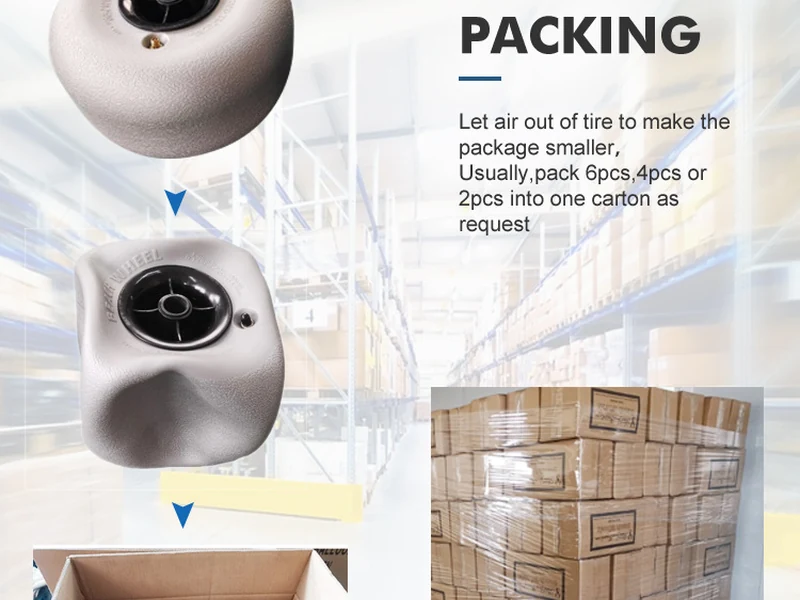
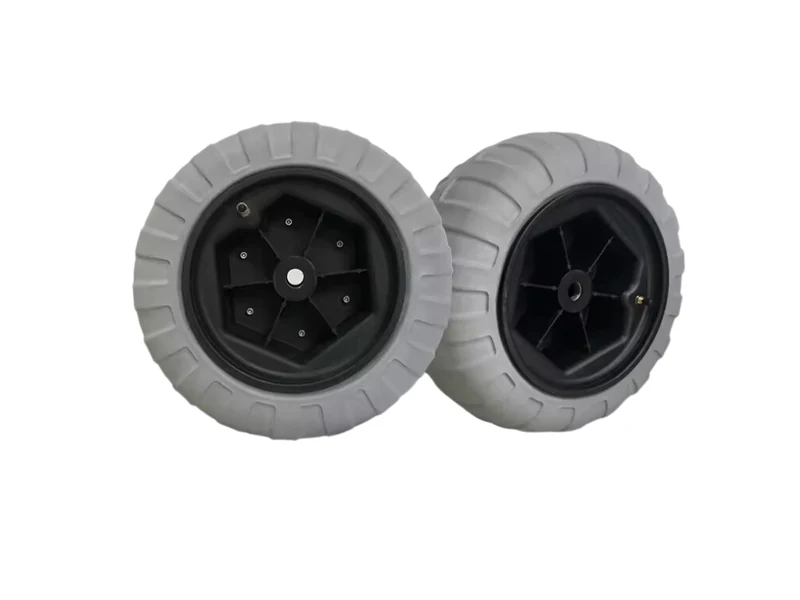
State whether the release unit is one wheel, a matched pair, or a complete set and record the quantity basis on the order.
Link the wheel label or part identity with the hub, bore, material, color, approved drawing, and revision.
Show which approved equipment and axle interface can use the spare and which similar products must not be substituted.
Check wheels, axle parts, spacers, retainers, labels, and documents before the package is released to storage.
Ask for a part identity that your receiving and maintenance teams can use after the original order is closed.
The buying file should let another engineer or purchaser reconstruct why the wheel was approved. Each document has a specific job: define the equipment, define the interface, identify the wheel, record the sample, and release the correct revision.
Keep open questions visible beside the document they affect. A blank field, an assumed answer, and a confirmed value are three different states.
Send the equipment drawing and axle record first; they determine which wheel documents are relevant.
Use these questions to expose missing interface data before a wheel is quoted, sampled, or released for a volume order.
No. Diameter does not confirm wheel width, hub width, bore, axle length, retention, or clearance beside the frame.
Record diameter, usable length, shoulder positions, thread or pin details, retention space, and nearby frame clearance.
That depends on the approved hub and axle interface. Identify the current support method and request a drawing for the proposed arrangement.
Not by material name alone. Confirm the exact wheel body, hub, bore, valve, accessories, drawing, and sample result for the selected item.
It should document installation, rotation, clearance, retention, transitions, turns, sand behavior, visible condition, and care needs on the intended equipment.
Follow the selected instructions and hold the wheel when visible damage, valve problems, loose hub parts, retention issues, or unresolved fit questions appear.
Link it to the approved drawing, part identity, hub, bore, material, accessories, equipment reference, and release revision.
Send equipment photographs, the drawing if available, axle measurements, clearance, application, route, quantity, destination, and requested documentation.
Put unresolved fit questions in the inquiry instead of turning them into assumptions.
Provide the equipment, axle, hub, clearance, route, and order details. The first reply can then focus on compatibility questions, the proposed evidence, and whether a drawing or sample is needed.