
A better beach wheelchair wholesale checklist turns a bulk order into a controlled evidence review rather than a price-only decision. Similar quotes can hide differences in product identity, packing, spare parts, and inspection records. A written use case gives buyers one starting point.
Next, connect every requested feature with a document, sample check, or acceptance record. This guide reviews beach wheelchair wholesale offers without relying on vague promises. It covers operating settings, samples, packing, spares, quality records, receiving, and repeat orders.
What should a beach wheelchair wholesale brief contain?
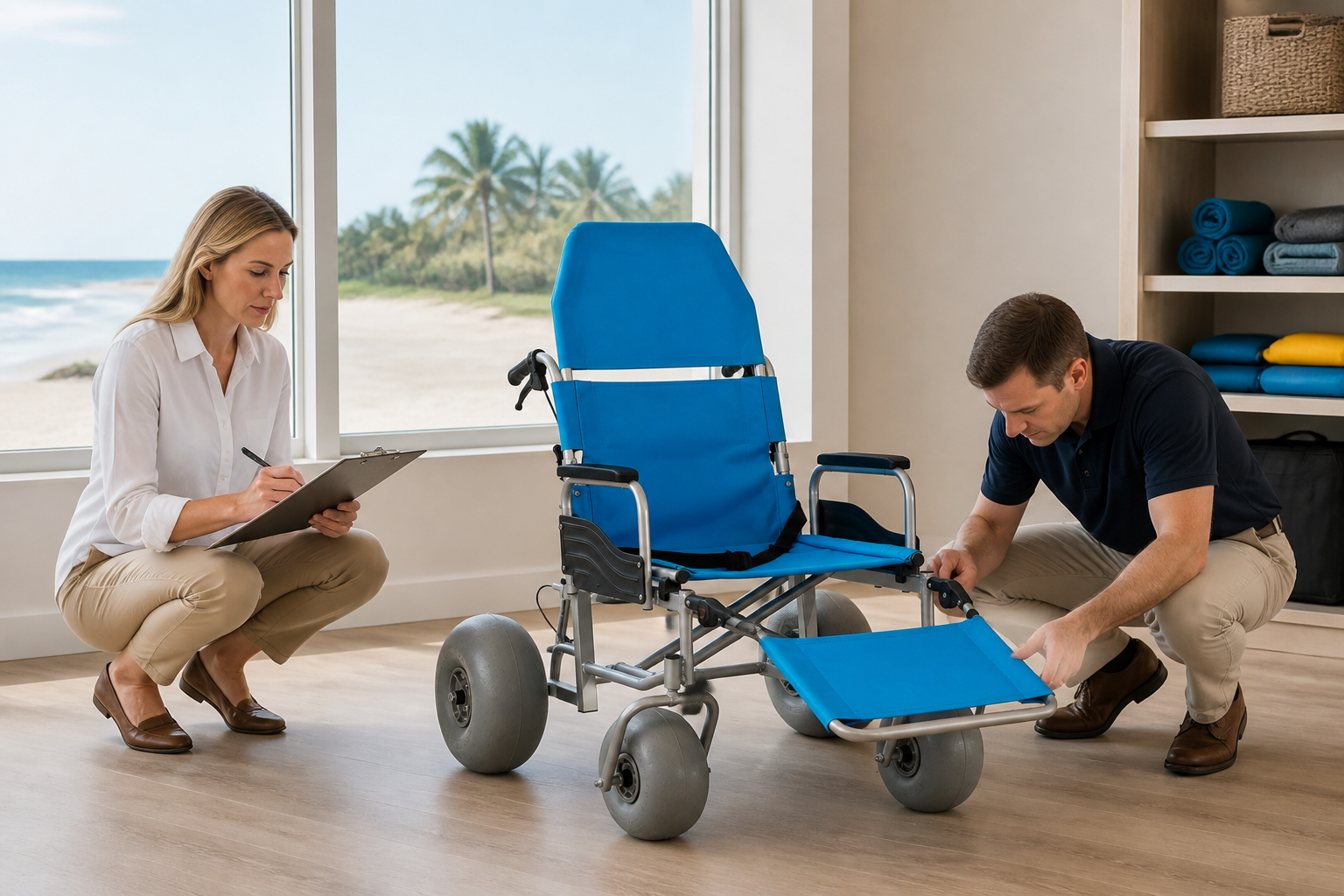
Next, The beach wheelchair wholesale brief should state where the chairs will operate, who will manage them, and what evidence the buyer expects before shipment. For example, the National Park Service mobility-device list shows that real programs use different equipment and local rules.
How can teams turn site needs into a usable brief?
Here is the practical starting point: describe the route before describing the product. A hotel with a short path across dry sand has a different workflow from a municipality covering long public routes. Record surface changes, storage access, staff availability, cleaning space, and likely trip length. Then ask suppliers to answer each point in the same order. This method makes quotes easier to compare because sales language cannot replace a missing response. Buyers can also use the broader beach wheelchair product range to separate land-only mobility from water-entry equipment before requesting prices.
- Next, Map pavement, boardwalk, soft sand, wet sand, and shoreline zones.
- Then, State whether trained staff or family attendants will push each chair.
- Meanwhile, Note storage door widths, vehicle space, and rinse-water access.
- For example, Request a named document or sample check for every claimed feature.
Key Takeaway: A route-based brief gives every supplier the same question set and limits late specification changes.
| Brief field | Evidence requested | Buyer use |
|---|---|---|
| Operating route | Site map or written zone list | Product category choice |
| Staffing model | Operator workflow | Handle and training review |
| Storage plan | Packed dimensions or sample check | Space planning |
Then, Read any blank evidence cell as an open purchasing question, not an assumed pass.
How should buyers compare wholesale supplier responses?
Then, Beach wheelchair wholesale responses should be compared through one scored matrix that separates facts, samples, and unanswered claims. Use the supplier overview to prepare questions, then request current evidence for the quoted model.
What belongs in a fair supplier comparison?
The useful part comes next: assign the same response format to every bidder. Place required evidence beside each question and add a simple status such as received, needs clarification, or not offered. Do not reward a polished brochure when another supplier provides clearer part drawings, packing photos, and service steps. A buyer may give extra weight to items that shape daily work, such as wheel removal, frame cleaning, brake access, or replacement lead communication. Review comparable project configurations to see how fleet mix can change by location, then keep the score tied to your own route.
- However, Separate verified documents from verbal statements.
- As a result, Mark product options that change the quoted configuration.
- Afterward, Record the date and version of each supplier answer.
- Also, Keep commercial terms apart from product acceptance evidence.
Key Takeaway: A shared matrix makes supplier differences visible without mixing price, product fit, and missing records.
| Response type | Status label | Buyer action |
|---|---|---|
| Document supplied | Received | Check scope and version |
| Sample demonstrated | Observed | Save photos and notes |
| Sales statement only | Open | Request supporting record |
Meanwhile, Give closer review to high-scoring quotes that still contain open evidence gaps.
What should a wholesale sample inspection cover?
Meanwhile, A beach wheelchair wholesale sample inspection should cover structure, rolling behavior, user-contact areas, removable parts, cleaning access, and packing condition. Then compare a lightweight beach wheelchair only through its own sample and document set.
How can a sample review stay repeatable?
Use the same sequence every time: photograph the unopened package, record visible damage, assemble only through supplied instructions, and note every tool or person needed. Inspect wheel seating, fasteners, frame joints, fabric attachment, foot support, belts, handles, and exposed edges. Roll the empty chair across a controlled route that represents the intended surface without adding a rider during an early product check. Repeat wheel removal and refitting if that feature affects transport. The sample record should describe what the reviewer saw, not what a salesperson predicted.
- Then, Photograph labels, carton corners, protective materials, and loose parts.
- Next, Log assembly time as an observation from your own team.
- Next, Check left and right components for matching fit and finish.
- Then, Record cleaning access around hubs, joints, fabric, and foot support.
Key Takeaway: A fixed sample sequence creates comparable evidence and reveals work that a brochure cannot show.
| Sample stage | Record | Decision question |
|---|---|---|
| Unpacking | Photos and part count | Did the shipment arrive complete? |
| Assembly | Steps, tools, notes | Can staff repeat the process? |
| Empty-chair route | Handling observations | Does the configuration match the site? |
For example, Focus later supplier questions on observed friction points rather than general product claims.
How can buyers review materials without vague claims?
For example, Beach wheelchair wholesale material review should locate each named material or finish. Then connect it with a drawing, specification, or model-matched test record.
What evidence makes a material statement useful?
A label alone is not enough: ask where the material appears and why it was selected. A quote may mention aluminum, stainless hardware, polymer parts, mesh, or protective coating, yet the buyer still needs a component map. Request the model revision and confirm whether optional parts change the material set. For coastal use, cleaning instructions and fastener access matter beside material names. Avoid treating a broad phrase such as corrosion resistant as a lifetime promise. It should lead to a maintenance method, exposure limits, and a defined inspection routine.
- Meanwhile, Request a component-to-material list for the quoted model.
- For example, Ask which finish covers exposed frame surfaces and joints.
- However, Confirm whether replacement fasteners match supplied drawings.
- As a result, Link care instructions with each salt, sand, and moisture exposure point.
Key Takeaway: Material evidence becomes useful when it identifies the component, model revision, and care method.
| Claim area | Supporting record | Buyer check |
|---|---|---|
| Frame | Drawing or material list | Match quoted model |
| Hardware | Component schedule | Check replacement reference |
| Fabric and belts | Care sheet | Review rinse and drying method |
However, Compare the record scope before comparing impressive material names.
What packing details matter in a bulk order?
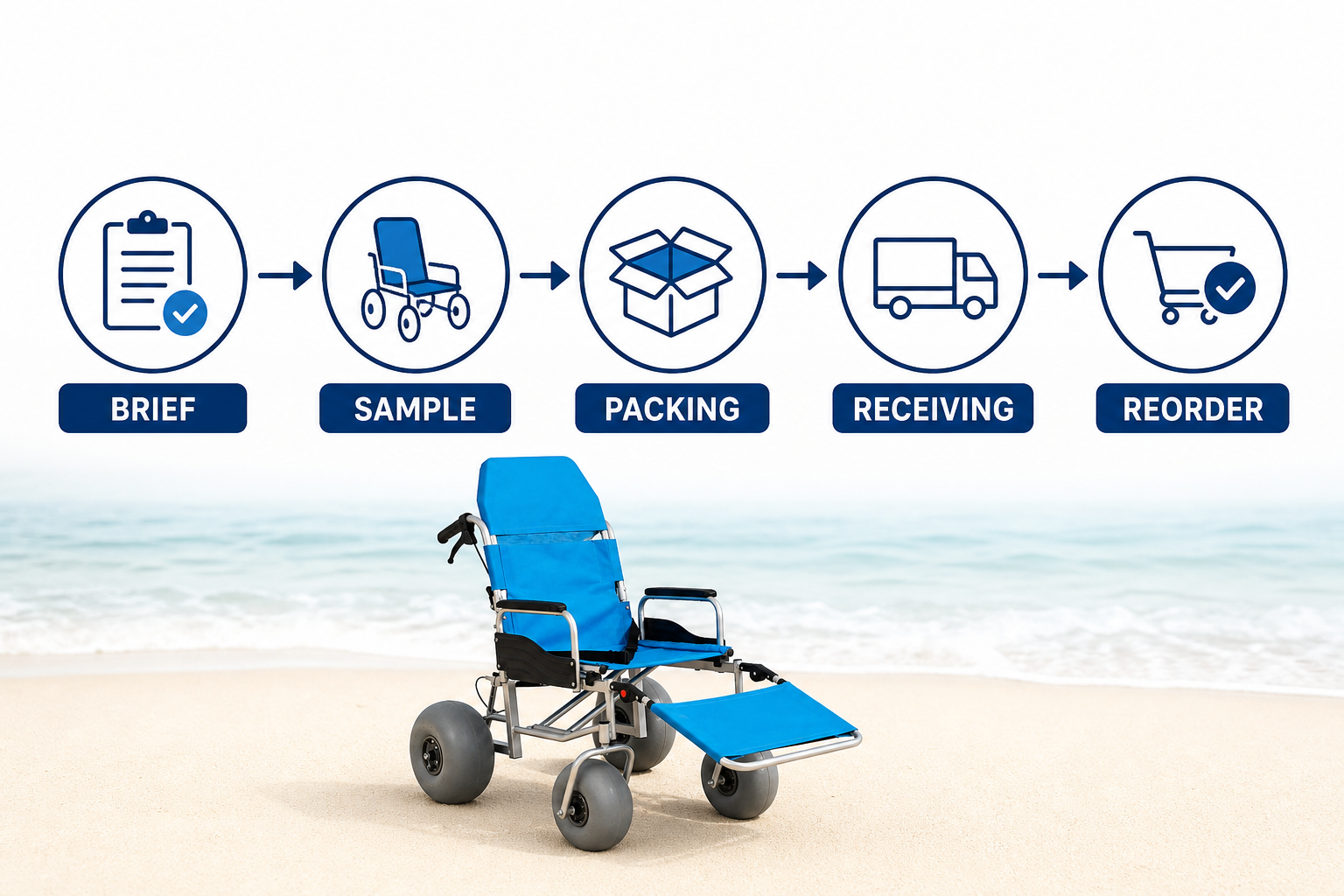
However, Beach wheelchair wholesale packing records should identify each chair, wheel, fabric part, and hardware set. They should also show protection through buyer receiving. A portable-chair travel workflow can help frame loading questions without replacing packing instructions.
How should teams map packing and receiving together?
Think from the receiving dock backward: define what staff must see when cartons arrive, then request matching factory records. Buyers may need carton marks, item counts, part-bag labels, protective separators, and a packing photo for each configuration. If wheels ship detached, specify how wheel pairs and hardware stay associated with the right frame. Ask whether mixed colors or options change carton identification. A packing list should support receiving without requiring staff to open every box before they can route inventory.
- Afterward, Match purchase-order lines with carton labels and packing-list entries.
- Also, Define how loose hardware, tools, and instructions stay together.
- Then, Request a photo standard for closed and open cartons.
- Next, Set a process for damage notes, missing parts, and supplier notification.
Key Takeaway: Packing control works best when factory labels mirror the buyer’s receiving and storage records.
| Packing element | Factory record | Receiving check |
|---|---|---|
| Carton identity | Label sample | Match purchase-order line |
| Loose parts | Sealed part list | Confirm count before assembly |
| Damage protection | Packing photos | Compare with arrival condition |
As a result, Trace one sample carton through the full record path before approving the bulk method.
How should spare parts support be evaluated?
As a result, Beach wheelchair wholesale spare-parts support should be evaluated by part identity, ordering method, compatibility record, packaging, and response process. Also review the user manual resource while confirming parts for the exact model.
What makes a spare-parts plan usable after delivery?
Here is where detail pays off: request a parts diagram or list tied to the quoted revision. Generic promises about available spares do not help a maintenance team identify a hub, fastener, strap, fabric panel, or wheel fitting. Ask which parts operators may replace locally and which tasks need supplier guidance. Record the ordering reference, unit packaging, and contact path. A small opening stock may help a public fleet. However, quantities should follow local use patterns and the buyer’s risk review.
- Next, Give every replaceable item a stable part reference.
- Then, Confirm compatibility across colors, sizes, or frame revisions.
- Meanwhile, Ask how service questions and photos should be submitted.
- For example, Define how discontinued or revised parts will be communicated.
Key Takeaway: A spare-parts promise becomes operational only when staff can identify, request, and fit the right item.
| Support item | Supplier record | Fleet use |
|---|---|---|
| Part identity | Diagram or code list | Correct ordering |
| Compatibility | Revision note | Avoid mismatched parts |
| Service channel | Named response path | Faster clarification |
Afterward, Review part identification during sample inspection rather than after fleet delivery.
How can quality records support order approval?
Afterward, Beach wheelchair wholesale quality records should support the buyer’s stated acceptance points and identify the model, lot, date, and reviewer behind each record.
Which records create a usable approval trail?
Keep the trail simple: connect the purchase brief, approved sample, production record, packing evidence, and receiving report through shared identifiers. Buyers do not need a large document stack if none of it maps to the delivered configuration. Ask suppliers how they control drawing revisions, incoming components, assembly checks, and final packing. The buyer can then choose a small set of records that match risk. A public program may keep more formal approvals than a small seasonal rental team, yet both benefit from dated evidence.
- However, Reference the approved model and options on every record.
- As a result, Link nonconformance notes with correction and recheck evidence.
- Afterward, Keep photo files named by order, model, and inspection stage.
- Also, Record who accepted any deviation and why.
Key Takeaway: Quality records add value when they form one traceable line from brief through receiving.
| Control point | Identifier | Approval use |
|---|---|---|
| Approved sample | Model and revision | Production reference |
| Production check | Order or lot | Shipment release review |
| Receiving report | Carton and item | Arrival acceptance |
Also, Look for broken identifier links before accepting a polished inspection packet.
What should an arrival inspection verify?
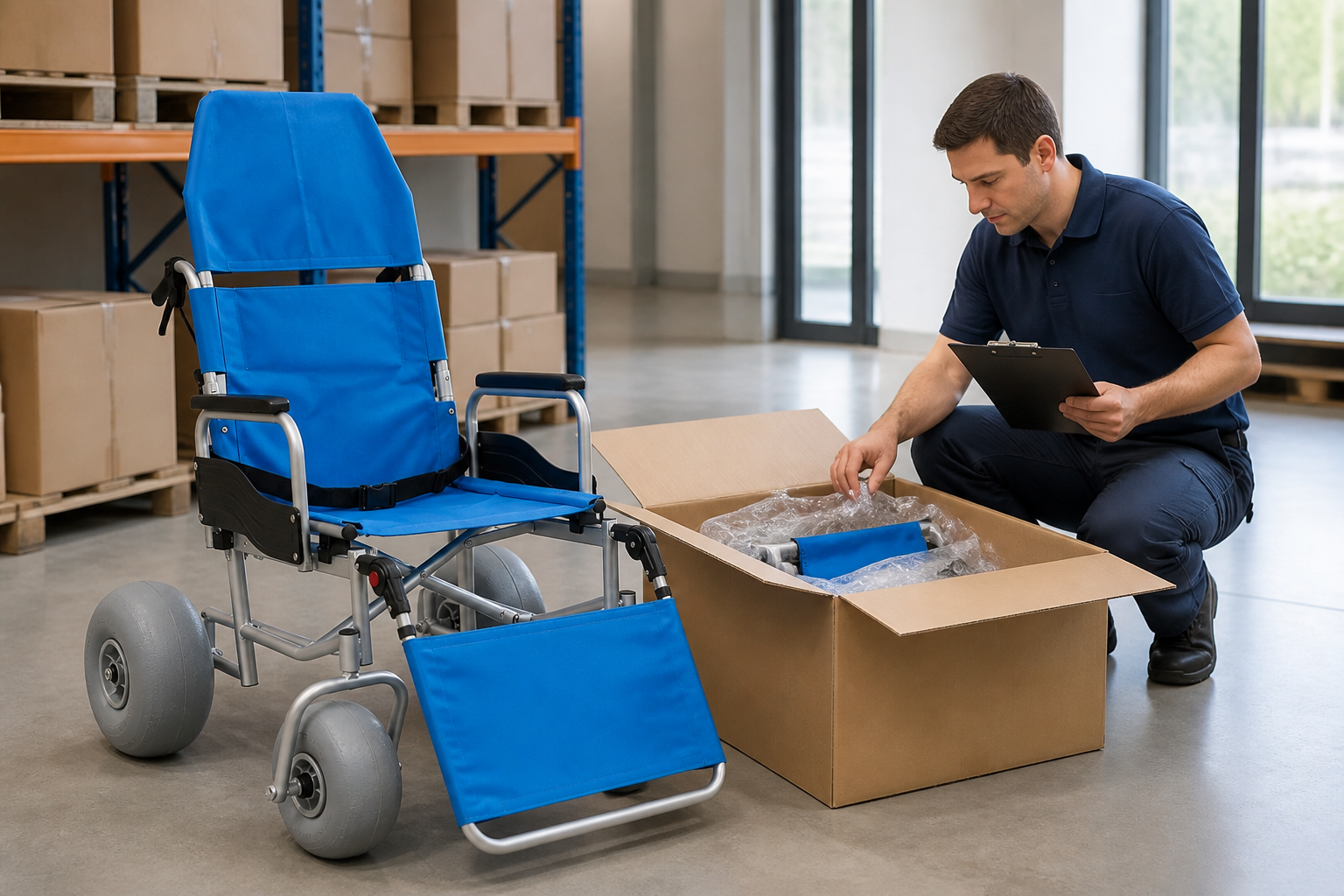
Also, A beach wheelchair wholesale arrival inspection should verify shipment identity, quantity, visible condition, part completeness, assembly match, and draft-only acceptance notes before fleet deployment.
How can receiving staff avoid rushed acceptance?
Give the dock team a short script: photograph outer condition, compare labels with the packing list, isolate damaged cartons, and open a planned sample from each configuration. Staff should not improvise acceptance rules during a busy delivery. Use the approved sample record beside the arrival unit, then check component identity and empty-chair assembly. If a difference appears, preserve packaging and send a clear photo set before rework. A defined hold area prevents uncertain units from entering service.
- Then, Count cartons before moving them into mixed storage.
- Next, Record seal, label, corner, moisture, and puncture condition.
- Next, Compare a planned sample with approved configuration photos.
- Then, Tag accepted, held, and damaged units with separate statuses.
Key Takeaway: A short receiving script protects evidence and stops unclear units from blending into available stock.
| Arrival step | Status | Next action |
|---|---|---|
| Label match | Pass or hold | Route to correct storage area |
| Visible condition | Pass or damage | Photograph and isolate |
| Sample assembly | Pass or query | Accept or request clarification |
Then, Review hold reasons weekly until every unit has a recorded outcome.
How should buyers plan repeat orders?
Then, Beach wheelchair wholesale repeat orders should use field records from the current fleet rather than copying an old quantity and configuration without review.
What data supports a smarter reorder?
The fleet already holds the clues: count active units, held units, repair events, lost parts, peak-use periods, transfer requests, and storage pressure. Compare those records with staff feedback on pushing, cleaning, assembly, and guest handoff. A repeat order may retain the base model while changing spare-parts packs, carton labels, fabric colors, or documentation. Buyers should also check whether drawings or materials changed since the prior order. The supplier response should identify differences before production approval.
- Meanwhile, Review use logs by location and product configuration.
- For example, Separate damage, wear, loss, and operator error in service notes.
- However, Confirm current drawings against the approved prior revision.
- As a result, Update packing and spare-parts plans from actual receiving experience.
Key Takeaway: Repeat orders improve when current operating evidence replaces assumptions from the prior purchase.
| Reorder input | Record source | Possible change |
|---|---|---|
| Use pattern | Checkout or staff log | Fleet mix |
| Service events | Repair record | Spare-parts pack |
| Receiving issues | Arrival report | Packing instruction |
Next, Study recurring service notes before increasing order size.
What do wholesale buyers ask before placing an order?
Next, Beach wheelchair wholesale buyers usually ask about model fit, sample evidence, packing, parts, documentation, and the steps that follow a reported mismatch.
Which buyer FAQs should the team settle in writing?
Keep these answers beside the quote: a short written response reduces different interpretations across purchasing, operations, and receiving teams.
- Afterward, Confirm model revision and included options.
- Also, Name the sample and document approval stages.
- Then, Record the service contact and response path.
- Next, Define the receiving window for damage or shortage reports.
Can I approve a beach wheelchair wholesale order from photos alone? No. Photos can support an early review, but a physical sample and matching records give buyers stronger evidence about assembly, handling, packing, and component fit.
What is the best way to compare two wholesale quotes? Use one matrix. Keep commercial terms, product evidence, sample observations, service support, and open questions in separate columns.
How do I know if the delivered model matches the sample? Check shared identifiers. Compare model revision, option list, component photos, packing labels, and a planned arrival sample.
Can I request spare parts with the main shipment? Yes, when the supplier identifies compatible parts and the buyer has a local reason for each item. Base quantities on use and service planning rather than guesswork.
Key Takeaway: Written answers should connect every commercial promise with a record, sample, or named follow-up step.
| Buyer question | Strong answer contains | Warning sign |
|---|---|---|
| What model will arrive? | Revision and option list | Generic product name |
| How is it accepted? | Sample and receiving steps | Verbal approval only |
| What happens after a mismatch? | Contact, evidence, response path | No named process |
Compare open questions with business risk before signing, then contact us today when your route and evidence list are ready for a supplier discussion.