
A better beach wheelchair maintenance plan is a written routine that links pre-use checks, sand removal, fresh-water care, drying, inspection, fault control, storage, records, and supplier service. Coastal equipment faces abrasive sand, moisture, salt exposure, frequent handling, and changing staff shifts. A chair can look clean while a loose fastener, damaged strap, rough wheel movement, or trapped moisture remains unnoticed. Fleet managers need a process that helps staff decide whether each chair is ready, needs correction, or must stay out of service. This article gives resorts, public beaches, rental teams, parks, and distributors a practical beach wheelchair maintenance framework. Product manuals, supplier instructions, local workplace rules, and qualified repair guidance should control every chair-specific task.
Related planning resources cover beach wheelchair parts and beach walker maintenance checklist.
For broader destination-level context, consult the UN Tourism accessibility publications and guidelines. Apply local requirements and current product documents to the specific project.
Why does beach wheelchair maintenance need a written routine?
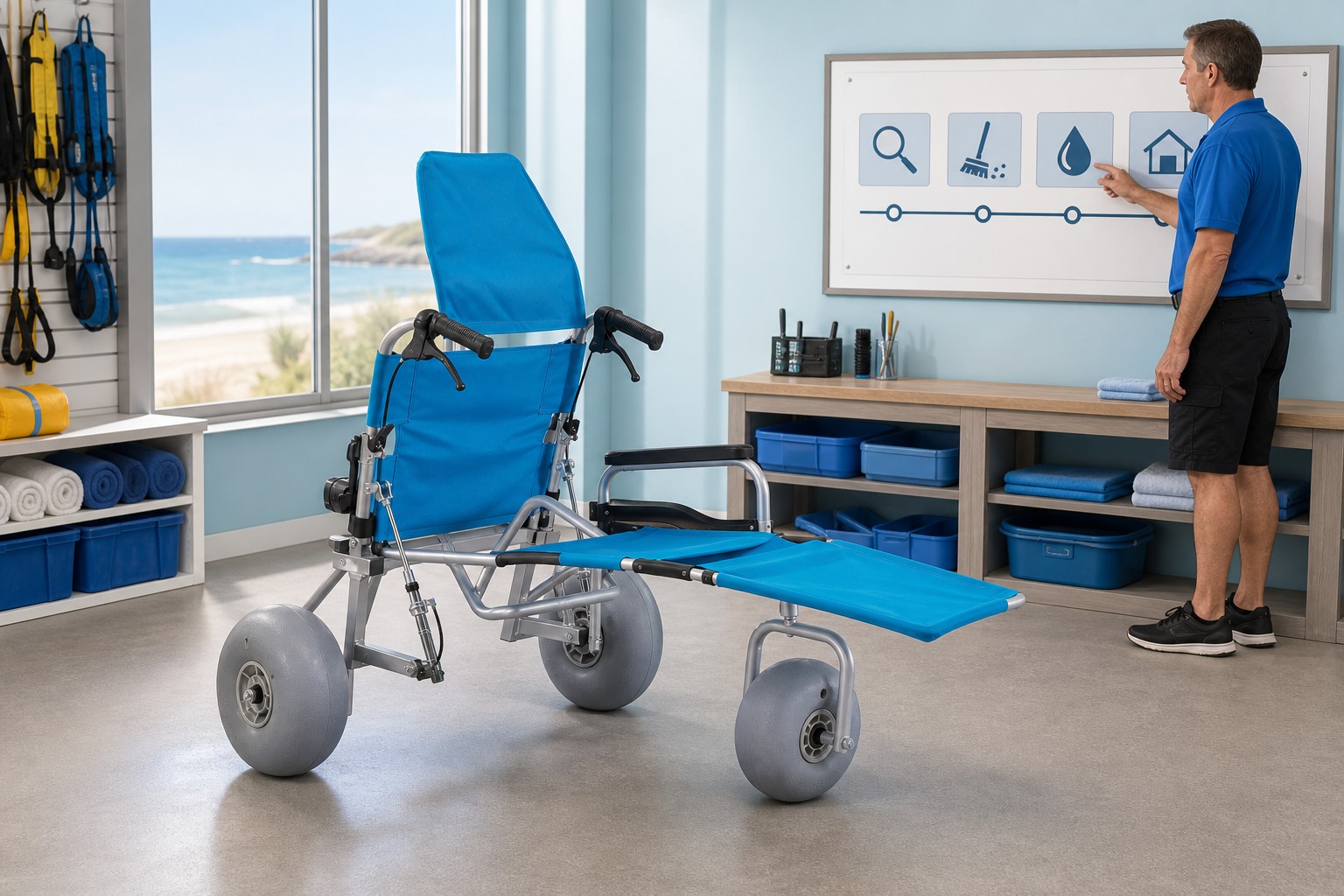
Beach wheelchair maintenance needs a written routine because cleaning, inspection, fault decisions, and records must remain consistent across shifts and seasons. Verbal habits vary between people and can disappear when staff change. A short procedure gives each operator the same sequence, approved materials, decision points, and escalation path.
Define ready, hold, and service status
Here’s the practical point: staff should not use “looks fine” as a release decision. Define three visible statuses: ready for use, held for correction, and removed for qualified service. The beach wheelchair user manual can be one source for chair-specific handling topics, paired with supplier documentation for the exact model.
- Name the checks required before ready status.
- List faults staff may correct under approved instructions.
- Define defects that require a service hold.
- Assign who may return a chair to operation.
Key Takeaway: Clear status rules turn maintenance findings into controlled operating decisions.
| Status | Meaning |
|---|---|
| Ready | Required checks passed |
| Hold | Correction or review pending |
| Service | Qualified work required |
Status labels help every shift understand the same equipment decision.
What should staff check before each dispatch?
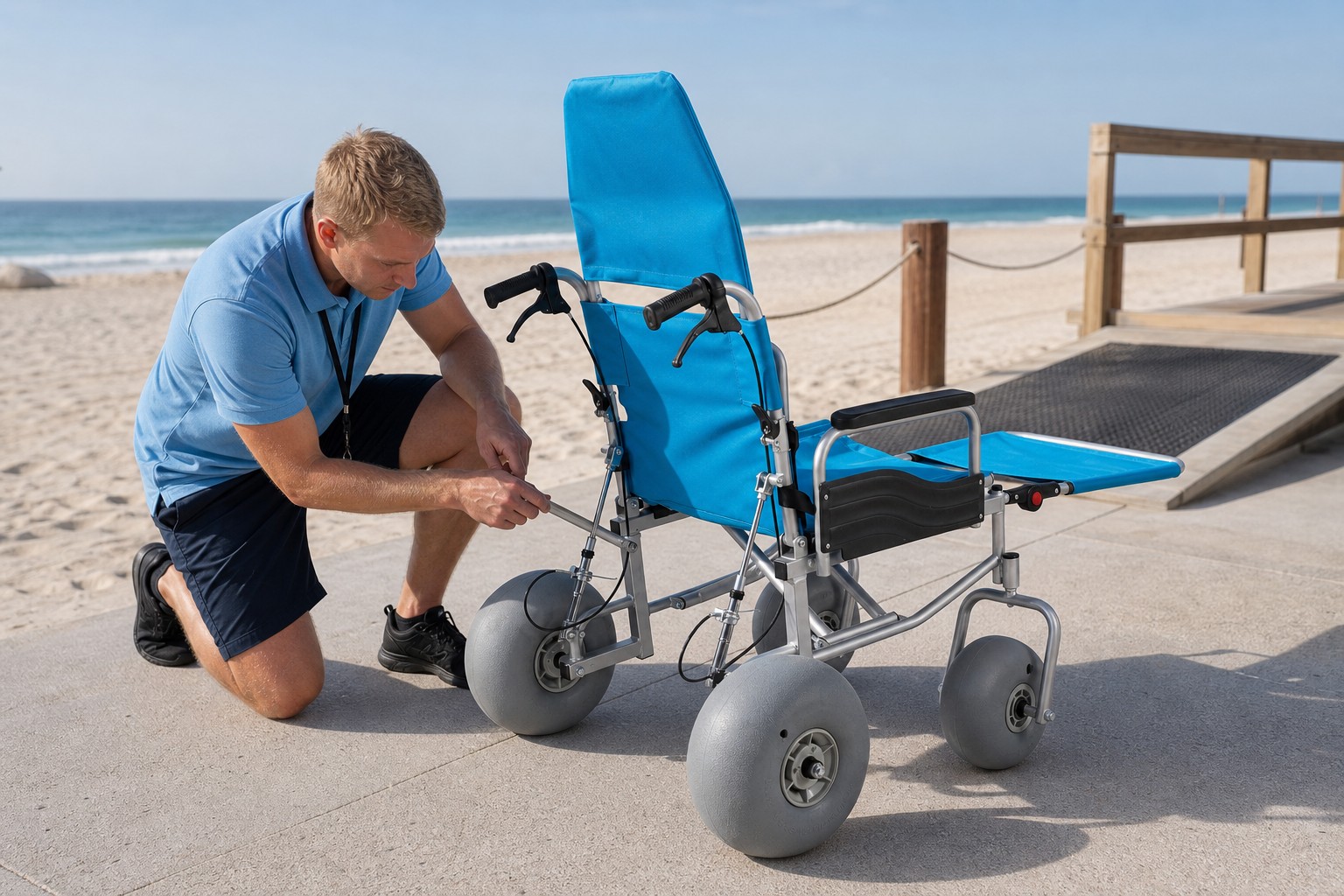
A beach wheelchair maintenance pre-dispatch check should cover clean condition, secure visible hardware, normal wheel movement, intact frame and seat parts, usable handles and supports, correct accessories, and any model-specific items in the manual. The check should happen before a guest arrives so faults do not create pressure for a rushed decision.
Use a short hands-on check
A useful checkpoint: look, touch, and move approved parts rather than completing a paper-only form. Staff should compare the chair with a known ready condition and review any open fault tag. They should never tighten, lubricate, or dismantle parts without an approved method.
- Walk around the chair under good light.
- Check wheels for damage, looseness, and free movement.
- Review frame joints, fasteners, seat, straps, and foot support.
- Confirm accessories and operating instructions are present.
Key Takeaway: A pre-use check should confirm function and condition before dispatch.
| Check group | Pass question |
|---|---|
| Wheels | Do they move and sit as documented? |
| User supports | Are seat, straps, and foot support intact? |
| Frame and handles | Are visible parts secure and undamaged? |
The check is complete only after staff record the chair’s status.
How should staff remove sand without damaging parts?
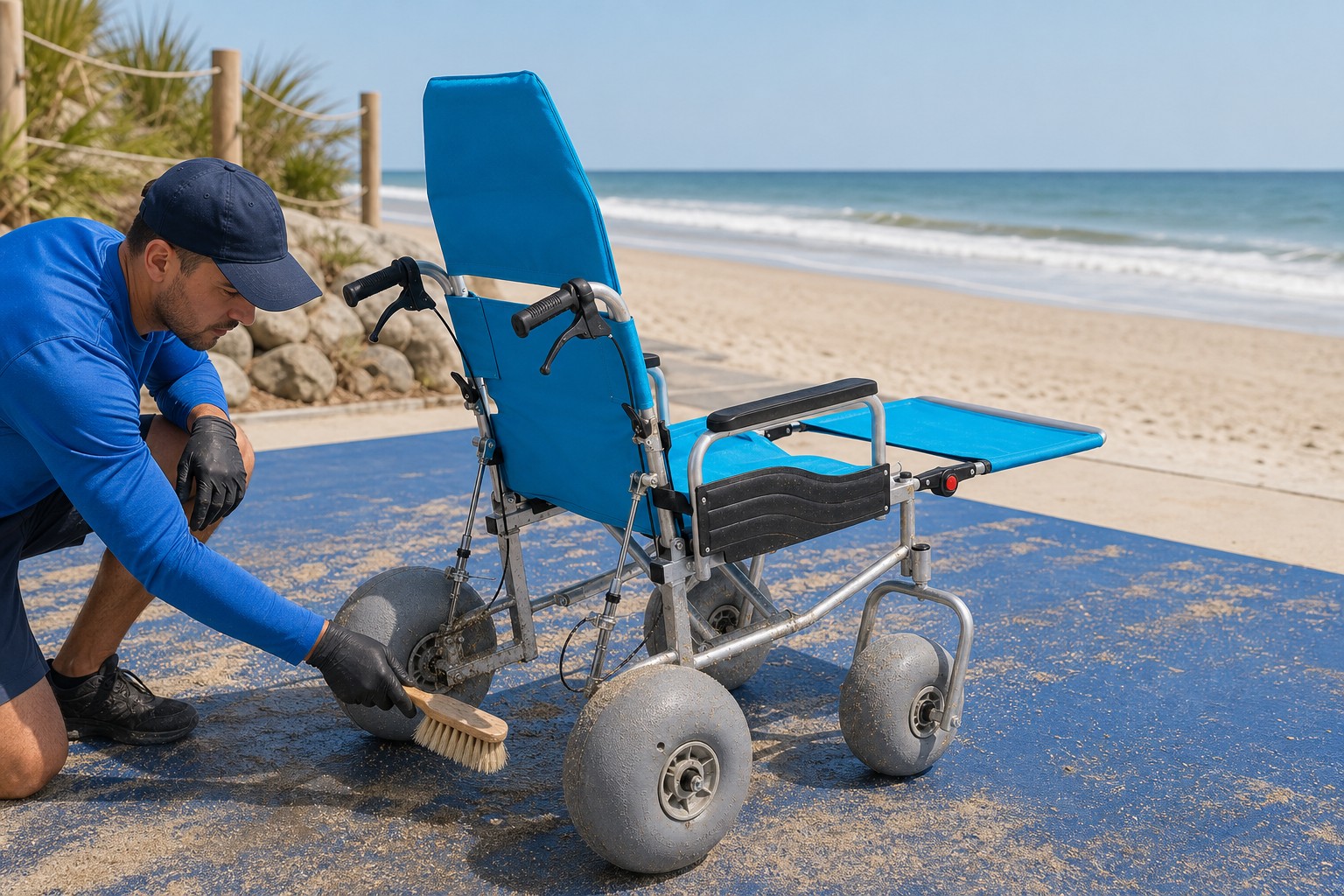
Beach wheelchair maintenance should remove sand using the soft tools, sequence, and access points approved by the product supplier. Dry brushing or low-force removal may fit some areas, while other parts may need rinsing under the manual. High-pressure air or water can drive grit into bearings, joints, fabric layers, or enclosed spaces.
Work from exposed surfaces toward detail areas
The reliable method: remove loose material before it mixes with rinse water and moves deeper into the chair. The guidance in this beach wheelchair cleaning article can help a team draft questions for its supplier and maintenance lead.
- Clear loose sand from seat, frame, foot support, and wheel surfaces.
- Use only approved brushes, cloths, and rinse pressure.
- Pay attention to hubs, joints, fastener recesses, and fabric seams.
- Collect or dispose of debris under local site rules.
Key Takeaway: Gentle staged sand removal protects parts from avoidable abrasion and trapped grit.
| Area | Care focus |
|---|---|
| Fabric and supports | Brush without tearing or stretching |
| Frame joints | Remove grit without forcing it inward |
| Wheels and hubs | Follow model-specific access guidance |
A clean-looking surface still needs a close check at sand collection points.
How should teams care for chairs after saltwater exposure?
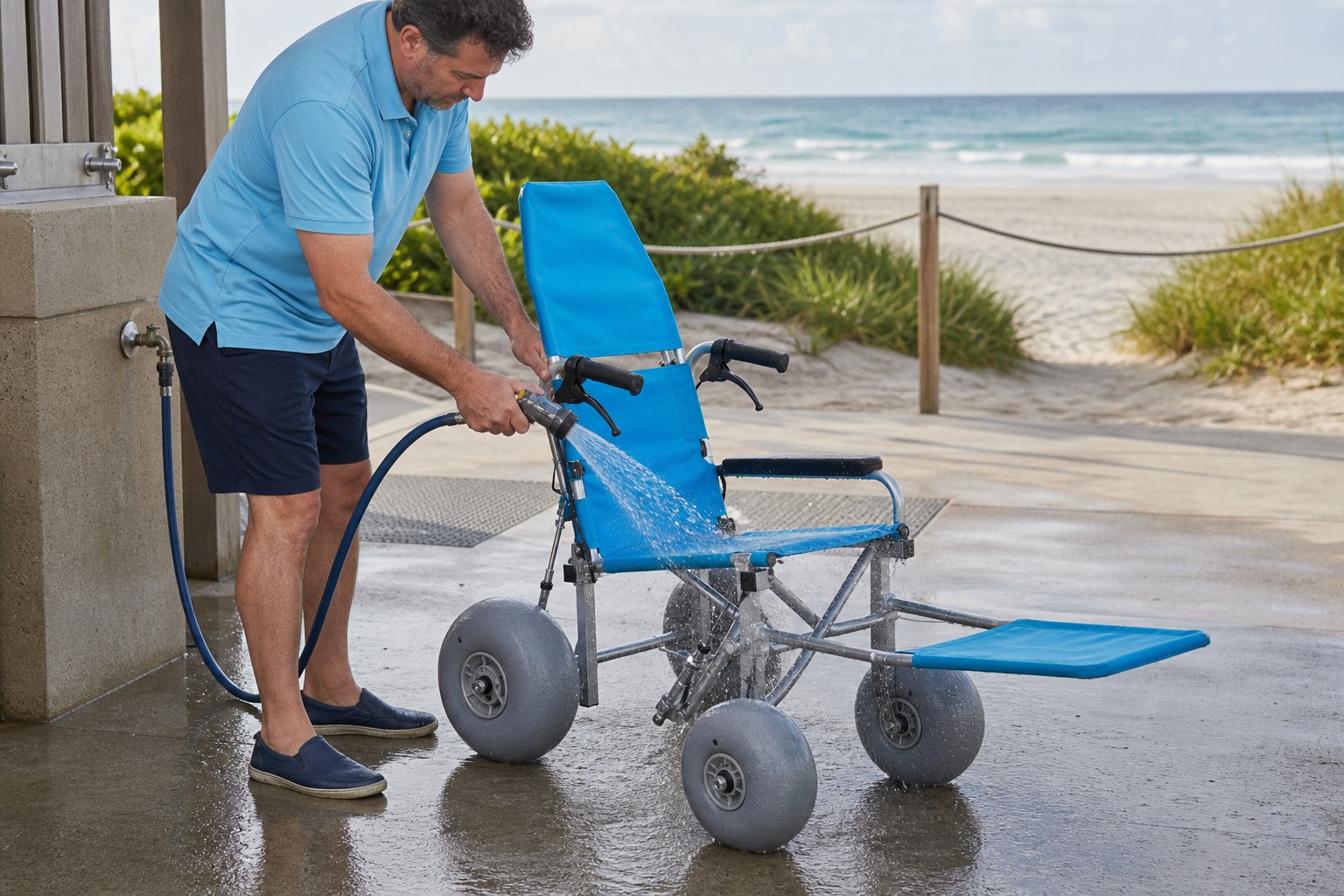
Beach wheelchair maintenance after saltwater exposure should include the supplier-approved fresh-water rinse, full drainage, drying, inspection, and status record. Delay allows salt and moisture to remain on metal, hardware, fabric, and moving areas. Staff should avoid chemicals, coatings, or lubricants not named in the instructions.
Build a direct route from beach to rinse area
The operational detail: cleaning quality drops when the rinse point is far away, blocked, or missing drainage and drying space. Map the return route so a used chair reaches care before storage. This all-terrain chair saltwater care article covers related inspection topics.
- Rinse exposed areas under the approved method.
- Allow trapped water to drain from documented points.
- Dry fabric, frame, wheels, and hardware before storage.
- Record corrosion, staining, rough movement, or loose parts for review.
Key Takeaway: Rinsing, drying, and inspection belong in one continuous post-use task.
| Care step | Completion evidence |
|---|---|
| Rinse | Approved method completed |
| Drain and dry | No visible retained water in checked areas |
| Inspect | Condition recorded before storage |
The return route should end at verified status rather than a wet storage space.
What tire and wheel checks belong in the routine?
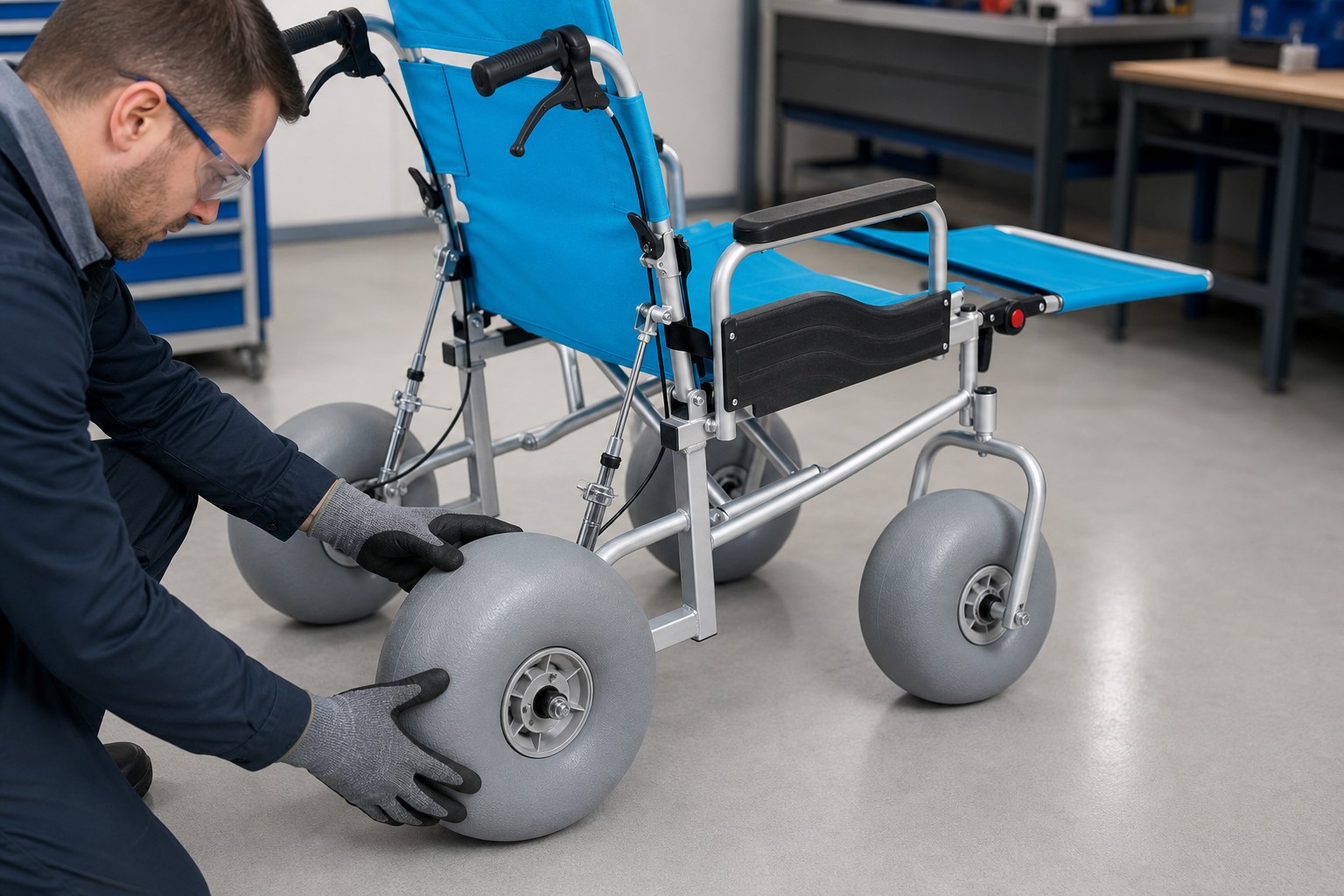
Beach wheelchair maintenance should include tire surface, inflation or shape where applicable, valve condition, wheel alignment, axle security, hub movement, debris, rubbing, and visible damage checks named by the product manual. Balloon wheels and other sand-mobility designs differ, so staff need model-specific limits and approved service methods.
Compare movement with a known ready chair
A strong field check: push and turn the empty chair in its approved inspection area while listening and feeling for drag, wobble, rubbing, or uneven movement. Staff should not guess pressure values or repair limits. Record the observation and move the chair to hold status when it falls outside documented guidance.
- Inspect tread or outer surfaces for cuts and deformation.
- Check valves, caps, axles, retainers, and visible hardware.
- Rotate wheels where instructions permit and note rough movement.
- Remove approved debris without opening sealed parts.
Key Takeaway: Wheel checks need both a visual review and an approved movement check.
| Observation | Staff response |
|---|---|
| Normal movement | Record and continue |
| Debris under approved access | Clean and recheck |
| Damage, looseness, or rough travel | Hold for qualified review |
Movement changes often provide an early maintenance signal.
How should teams inspect frames, seats, straps, and handles?
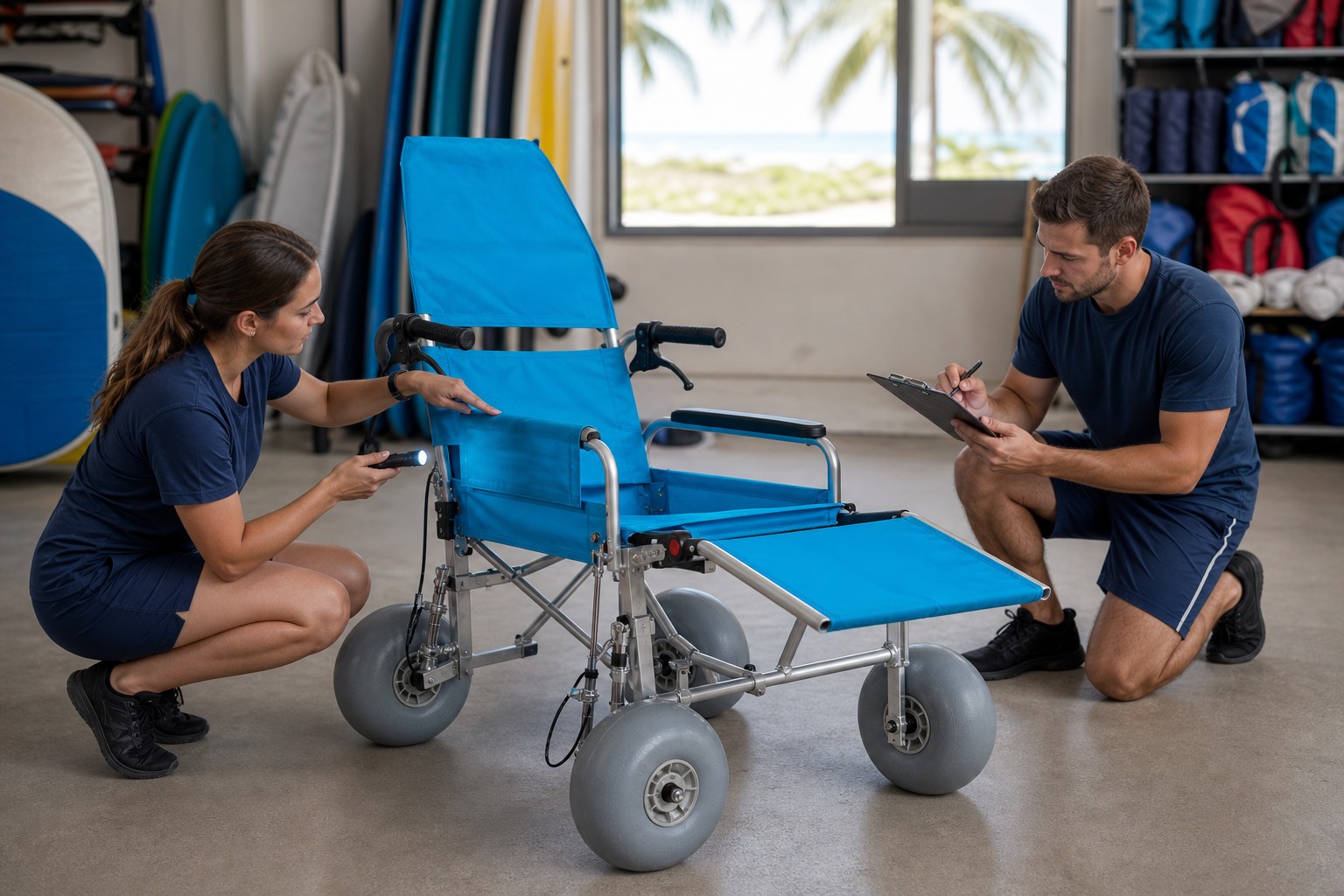
Beach wheelchair maintenance should inspect frames, seats, straps, and handles for cracks, bends, looseness, corrosion, fraying, cuts, failed stitching, missing hardware, sharp edges, and changes from the supplier’s reference condition. Good lighting and a repeatable inspection order help staff cover every user-support and operator-control point.
Follow the load path around the chair
Here’s the hands-on logic: trace where the guest is supported and where attendants control movement. Start at the handles, move through frame joints and seat supports, then check straps, foot supports, and accessory mounts. Staff should never straighten, weld, sew, drill, or substitute parts without approved repair authority.
- Check handle grips and control points for movement or damage.
- Review frame tubes, joints, welds, fasteners, and supports.
- Inspect fabric, seams, straps, buckles, and attachment points.
- Confirm foot and side supports match the documented setup.
Key Takeaway: A load-path inspection links visible condition with how people use the chair.
| Component group | Condition question |
|---|---|
| Operator controls | Secure and comfortable to handle? |
| Frame | Straight, secure, and free from damage? |
| User supports | Intact, attached, and correctly positioned? |
Any uncertain support component should move the chair to hold status.
What drying and storage setup protects a fleet?
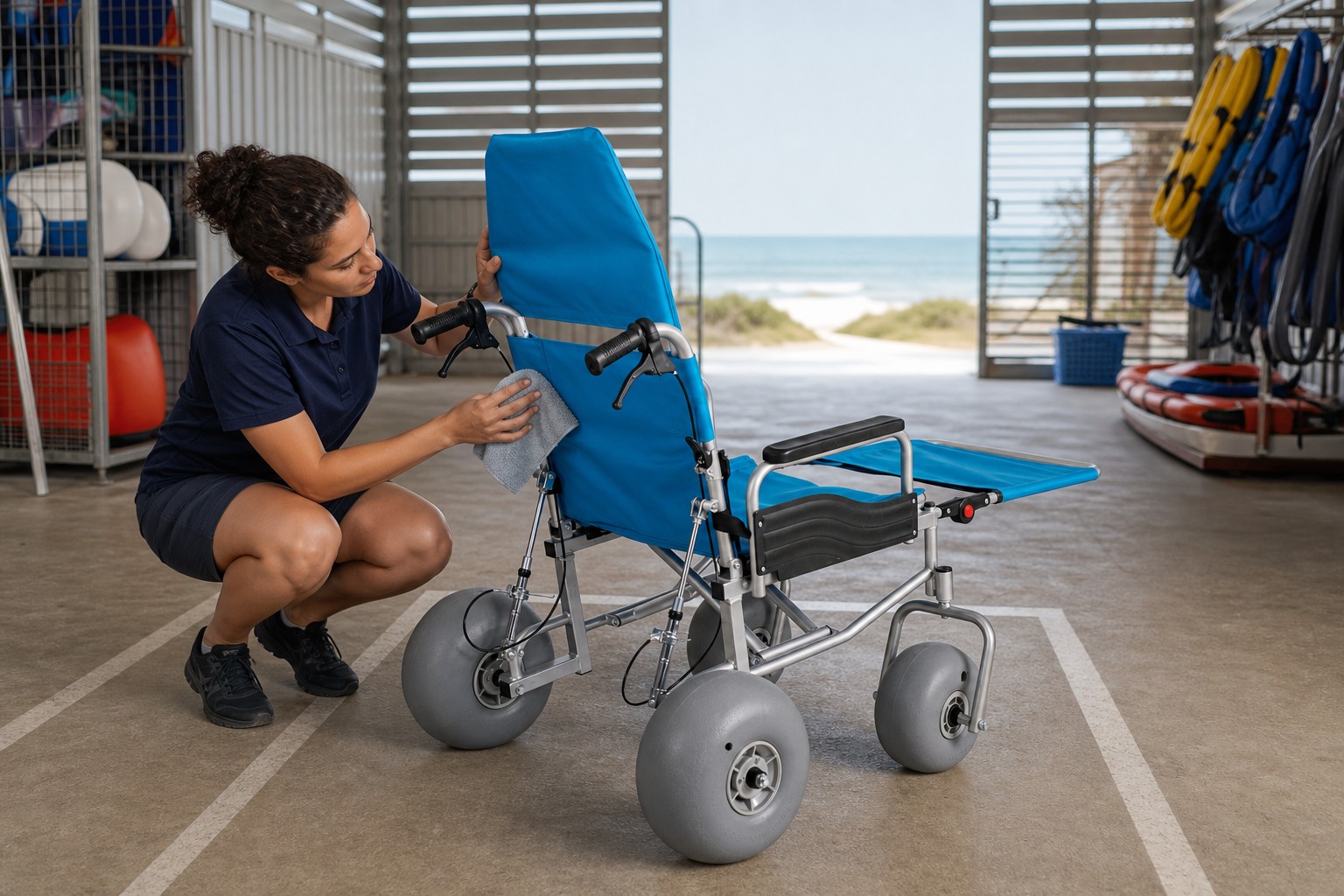
A beach wheelchair maintenance storage setup needs ventilation, separation between clean and returned equipment, protection from weather and impact, and room for inspection access. Exact orientation, folding, stacking, and cover use must follow supplier instructions.
Create dirty, drying, ready, and hold zones
The layout advantage: visible zones stop a damp or unchecked chair from blending into ready stock. Each bay should have a status label and enough access for staff to move equipment without striking wheels, frames, or nearby chairs.
- Keep returned equipment outside the ready zone.
- Provide drainage and airflow around drying chairs.
- Store accessories with the correct chair or tracking record.
- Protect fault-tagged equipment from accidental dispatch.
Key Takeaway: Storage layout should preserve maintenance status rather than hide it.
| Storage zone | Allowed equipment |
|---|---|
| Returned | Awaiting clean and inspection |
| Drying | Clean but not yet released |
| Ready | All required checks passed |
| Hold | Fault or service action pending |
A well-marked room can prevent more errors than a shelf full of forms.
How should managers record faults and service actions?
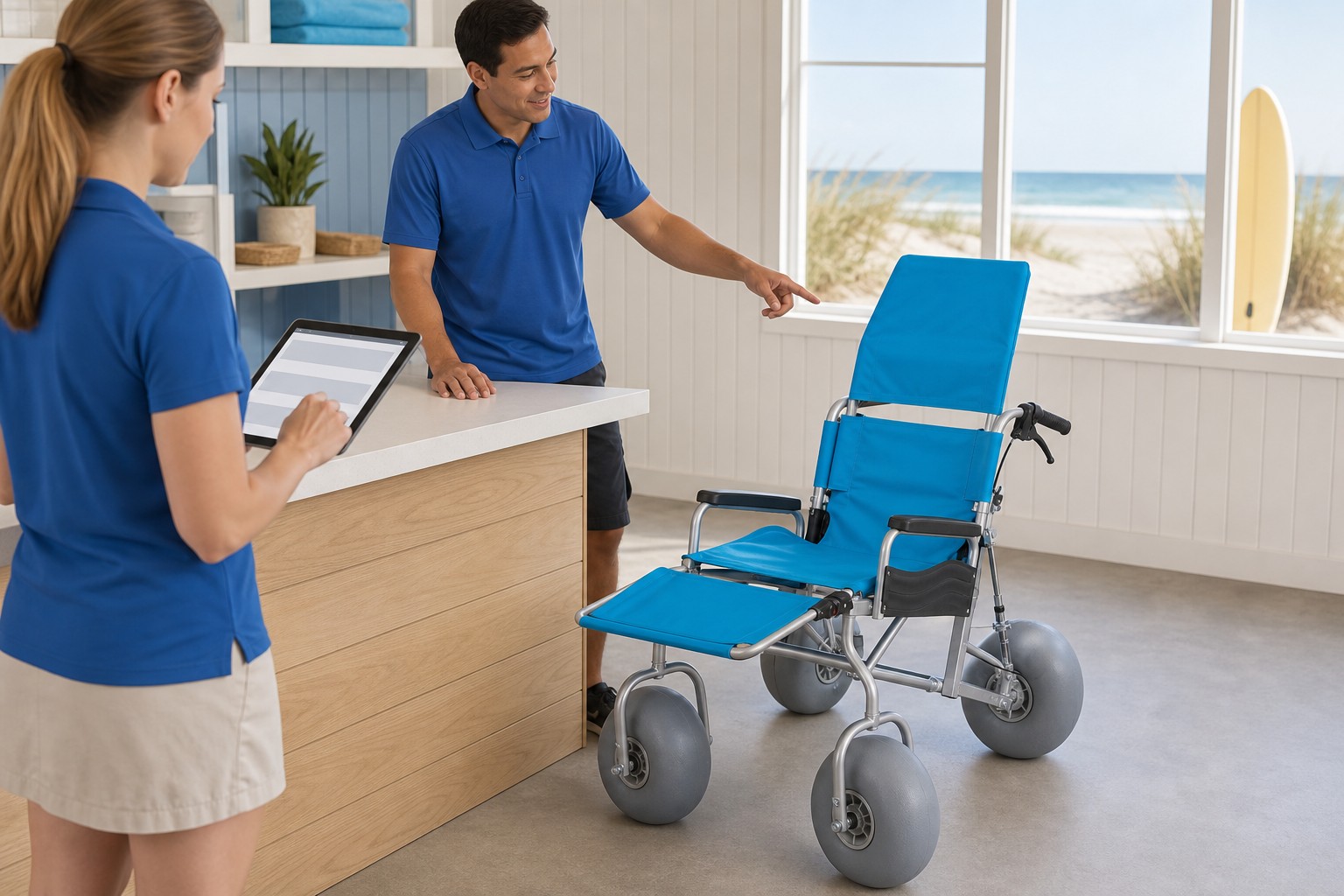
Beach wheelchair maintenance records should capture chair ID, date, staff name, condition, location, status, photos where useful, approved action, parts used, service provider, and return-to-use authorization. Records should be easy to complete during a shift and detailed enough for repair, supplier, warranty, and purchasing discussions.
Use one record from fault through release
The process benefit: a single record prevents observations from being split across notebooks, messages, and verbal updates. Give each fleet chair a durable ID. Link that ID with daily checks, cleaning, faults, service, and parts so managers can see recurring patterns.
- Record what staff saw or felt without guessing the cause.
- Add a clear ready, hold, or service status.
- Attach supplier or repair communication to the same record.
- Name the person authorized to release the chair.
Key Takeaway: One traceable record supports safe status control and better supplier conversations.
| Record field | Example entry type |
|---|---|
| Observation | Location and visible condition |
| Action | Approved clean, adjustment, part, or service |
| Release | Date, status, and authorized person |
Trend review can reveal repeated wear at a route or handling point.
When should a chair leave service for qualified review?
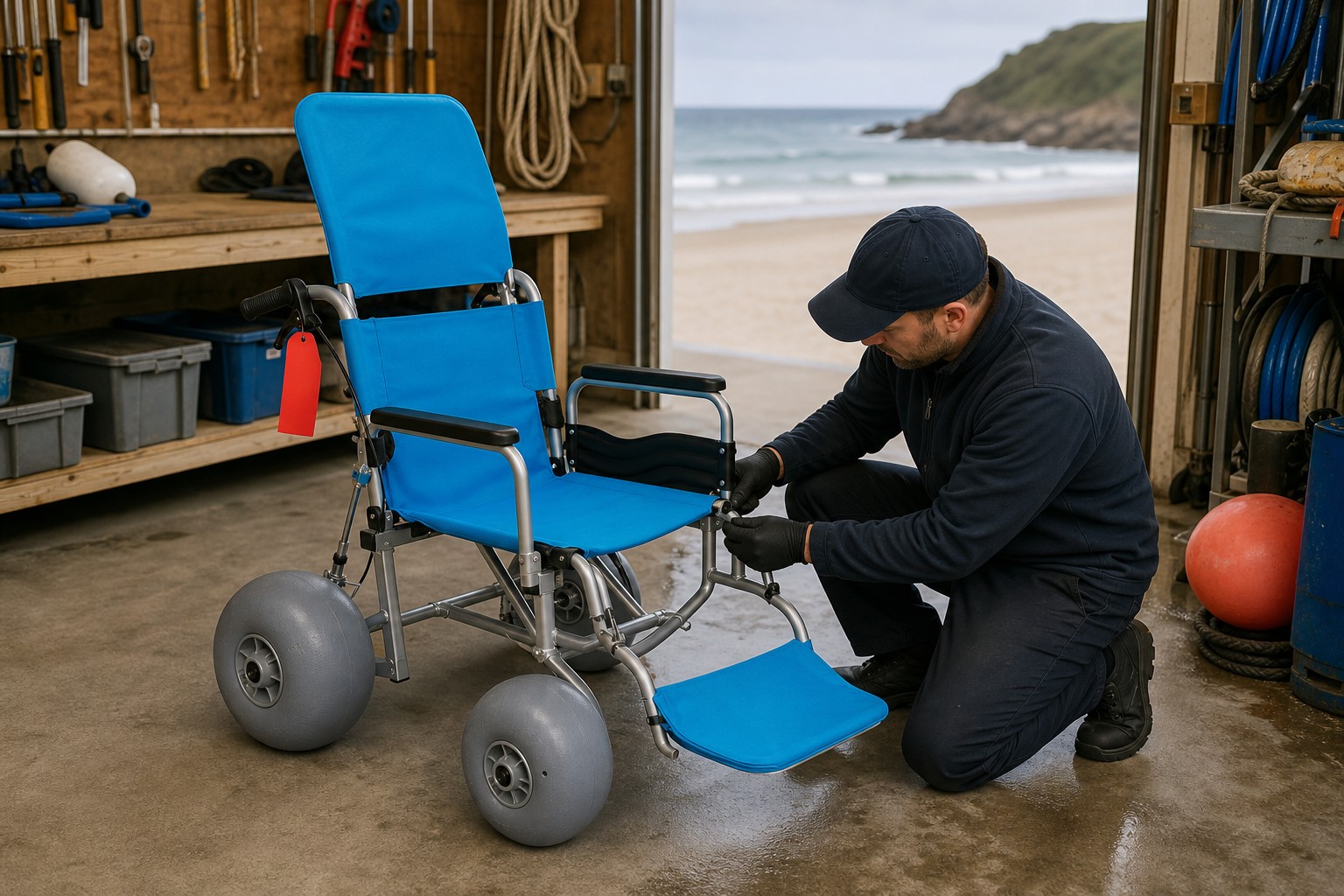
Beach wheelchair maintenance should place a chair out of service whenever a required check fails, a part differs from documented condition, staff cannot confirm a permitted correction, or the manual directs qualified review. Cracks, bends, loose structural parts, damaged user supports, abnormal wheel movement, sharp edges, missing retainers, or uncertain repairs warrant a hold decision.
Make stopping easy and visible
The management rule: staff should receive support for taking equipment out of operation. A booking queue or low fleet count cannot turn an unresolved defect into a ready chair. Use a physical tag, system status, and separated hold area at the same time.
- Stop use and place the chair in the hold zone.
- Record the exact observation and location.
- Contact the approved repairer or supplier with evidence.
- Release the chair only after the documented check or service.
Key Takeaway: A clear hold process protects staff from pressure to make unsupported repair decisions.
| Trigger | Immediate action |
|---|---|
| Failed required check | Remove from dispatch |
| Unknown repair method | Seek supplier or qualified guidance |
| Completed service | Verify and authorize release |
Fast isolation is better than a rushed diagnosis.
What supplier support should buyers compare for maintenance?
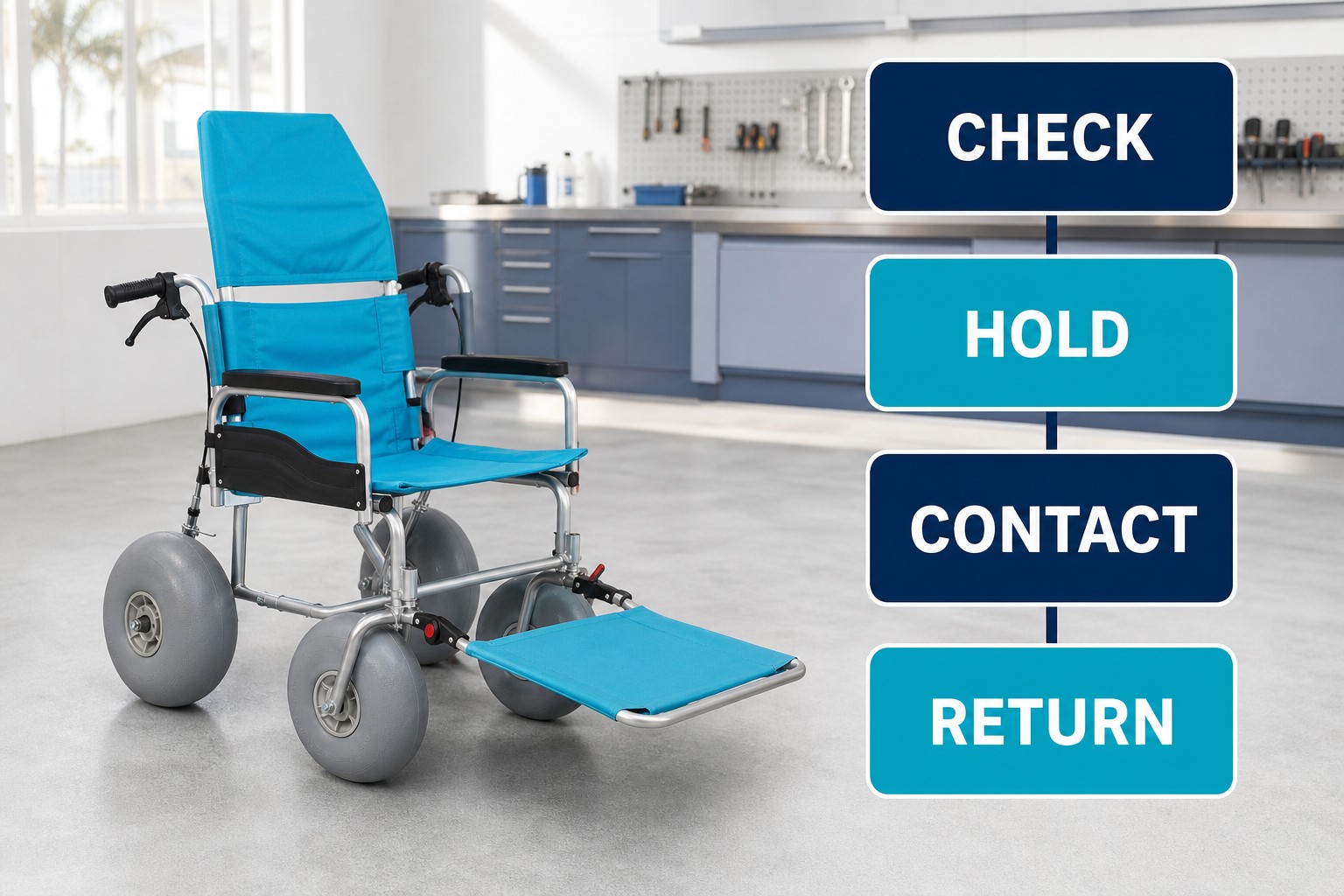
Buyers should compare beach wheelchair maintenance support through manuals, inspection guidance, approved cleaning methods, parts lists, repair authority, training, warranty terms, response channels, lead times, and model identification. A low purchase price may leave costly gaps if routine parts, technical answers, or authorized service are hard to obtain.
Add ownership evidence to procurement
The useful buying question: can the supplier show how this chair will be kept ready throughout its planned service period? Request documents before ordering and have operations staff review them. Record missing information rather than assuming a compatible part or method.
- Ask for current manuals and maintenance schedules.
- Review commonly replaced parts and ordering references.
- Clarify which tasks staff may perform and which need service.
- Record warranty steps, support contacts, and response expectations.
Key Takeaway: Maintenance support is part of product fit and belongs in the buying comparison.
| Support area | Evidence to request |
|---|---|
| Routine care | Manual, checklist, approved materials |
| Parts | Illustrated list and ordering process |
| Service | Repair path, warranty, and contacts |
Supplier evidence helps buyers estimate the work behind a fleet-ready chair.
Closing note: Reliable beach wheelchair maintenance depends on connected habits: written status rules, dispatch checks, careful sand removal, saltwater care, wheel review, frame and support inspection, drying zones, traceable records, service holds, and supplier evidence. Managers can turn these questions into a chair-specific procedure and validate every step against product documents. For help reviewing equipment and ownership requirements, contact us today with your fleet size, operating setting, cleaning area, storage plan, and current maintenance questions.
FAQ
Can I use a pressure washer on a beach wheelchair?
Only if the product instructions permit it. High pressure may force grit or water into parts, so use the supplier-approved tools and rinse method.
Maintenance records to review
What’s the best time to clean a beach wheelchair?
Clean it promptly after use under the operating plan. Sand, salt, and moisture should be removed before the chair enters drying and ready storage.
How do I know if a wheel needs qualified service?
Hold the chair when movement, condition, alignment, hardware, or damage falls outside documented guidance. Record the observation and seek approved review.
Can staff replace parts from another chair model?
No, unless the supplier provides written compatibility and an approved method. Similar appearance does not prove fit or safe function.
What’s the best maintenance record for a fleet?
Use one chair ID linked with checks, cleaning, faults, photos, actions, parts, service, status, and authorized release.