
The best beach wheelchair rental workflow connects inquiry, route review, chair release, guest briefing, handoff, return, cleaning, drying, inspection, storage, and record closeout. Rental operators often focus on the booking calendar, yet a confirmed time means little when chair status, staff roles, access paths, or return care remain unclear. Resorts, municipalities, nonprofits, recreation programs, and private rental teams need one visible sequence that can pause safely whenever equipment or site evidence changes. This article lays out ten operational questions for building that sequence. A written state map also helps front-desk and equipment teams share the same facts. It avoids invented prices, availability promises, staffing ratios, medical advice, and performance claims.
Related operating decisions include all-terrain beach wheelchair and beach wheelchair parts.
For broader destination-level context, consult the UN Tourism accessibility publications and guidelines. Apply local requirements and current product documents to the specific project.
What demand should a rental program be built around?
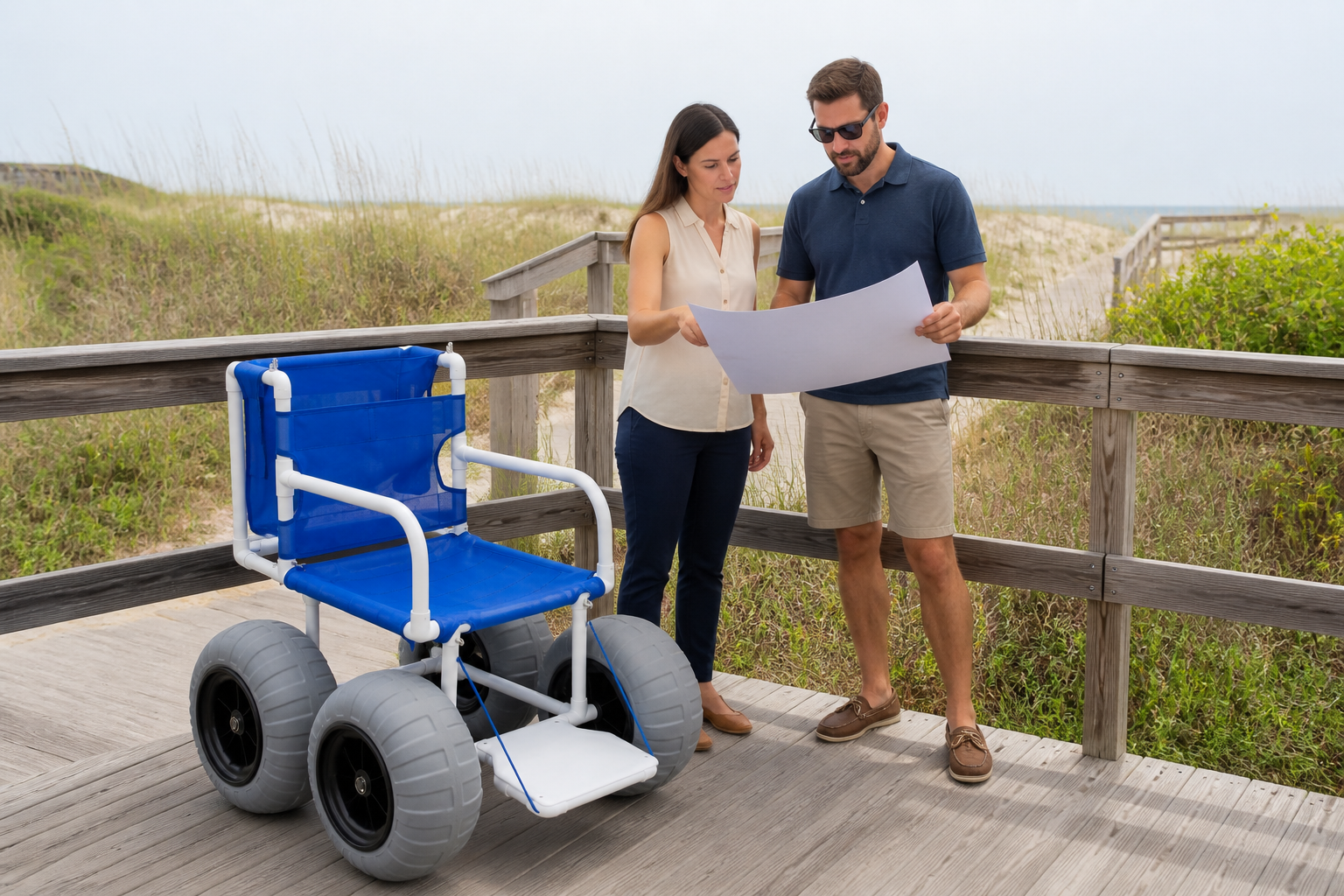
A beach wheelchair rental program should be built around documented service scope, site access, chair type, operating window, staff capacity, care facilities, storage, and handoff method. Demand may come from hotel guests, public beach visitors, events, recreation programs, or local residents. A request count alone does not show which routes, chair forms, delivery areas, or staff tasks the service can support.
Define service scope before opening bookings
Here’s the scope test: separate requests the program can review from promises it cannot support. Record service locations, route types, chair categories, booking lead time, collection or delivery method, care turnaround, storage capacity, and closure rules. Use the live beach wheelchair catalog to identify product categories, then tie each rental choice to the exact model and site process.
- List service locations and route types.
- Define chair categories and handoff methods.
- Record care, storage, and staff limits.
- Publish a clear review and confirmation process.
Key Takeaway: Demand planning begins with service scope rather than with a full calendar.
| Review area | Working record |
|---|---|
| Scope area | Program record |
| Location | Route and handoff point |
| Equipment | Chair type and current status |
| Operations | Staff, care, storage, and timing |
The scope record helps booking staff give accurate next steps.
How should teams structure booking questions?

A beach wheelchair rental booking should collect the permitted operational information needed to match location, route, timing, chair type, delivery or collection, guest communication, attendant expectations, return, and stop conditions. Teams should avoid turning a rental form into a medical questionnaire unless local policy and qualified guidance require specific information. Privacy rules should control what gets stored and who can see it.
Collect only information needed for operations
The booking rule: ask each question because it changes a documented operational step. Confirm beach or venue, access point, date window, arrival method, contact channel, chair category, expected handoff, and return plan. Make clear that a request remains pending until chair and route status are checked. The existing booking article offers reader context while a local form governs the actual service.
- Ask for location, time, and contact channel.
- Record access and handoff details.
- State pending, confirmed, changed, or declined status.
- Retain only information allowed by local policy.
Key Takeaway: Every booking question should support a named operational decision.
| Review area | Working record |
|---|---|
| Question group | Purpose |
| Location and time | Route and resource review |
| Handoff | Staff and communication plan |
| Return | Care and closeout timing |
A shorter purposeful form can create clearer handoffs than an open text request.
What route review belongs before booking confirmation?
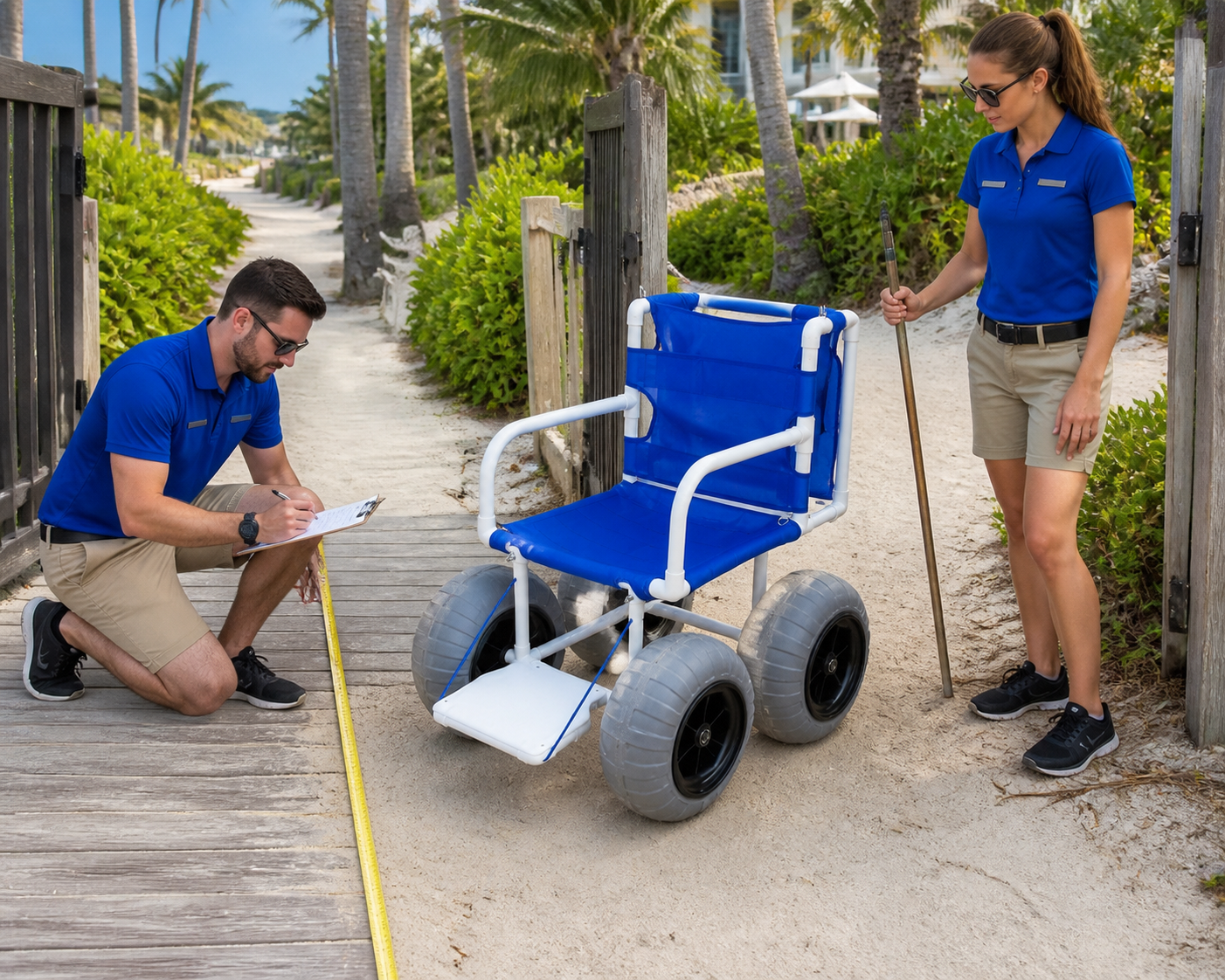
A beach wheelchair rental confirmation should follow a route review covering delivery or pickup point, parking, gates, ramps, boardwalk seams, surface changes, turning areas, transfer space, pause points, beach zone, return path, cleaning access, and storage. A chair may be available while a route remains unsuitable or temporarily closed, so equipment status and site status need separate checks.
Check the complete service path for each location
What can change the answer? weather, events, construction, crowds, debris, tides, closures, or staffing may alter a route after a request arrives. Use sources named by venue policy and direct observations from staff. The site applications hub can frame use cases, while local route evidence controls confirmation. Give staff a clear changed, postponed, or declined option when conditions do not support the planned handoff.
- Map pickup, route, handoff, beach zone, and return.
- Check fixed access and changing conditions separately.
- Link route status with booking status.
- Name who can change or stop a confirmation.
Key Takeaway: Booking confirmation depends on both chair status and current route status.
| Review area | Working record |
|---|---|
| Review | Status evidence |
| Fixed route | Access, surface, turn, and handoff |
| Changing site | Weather, event, crowd, debris, or closure |
| Decision | Confirm, change, postpone, or decline |
The route review gives front-desk staff a traceable reason for each decision.
How should staff release a chair before handoff?
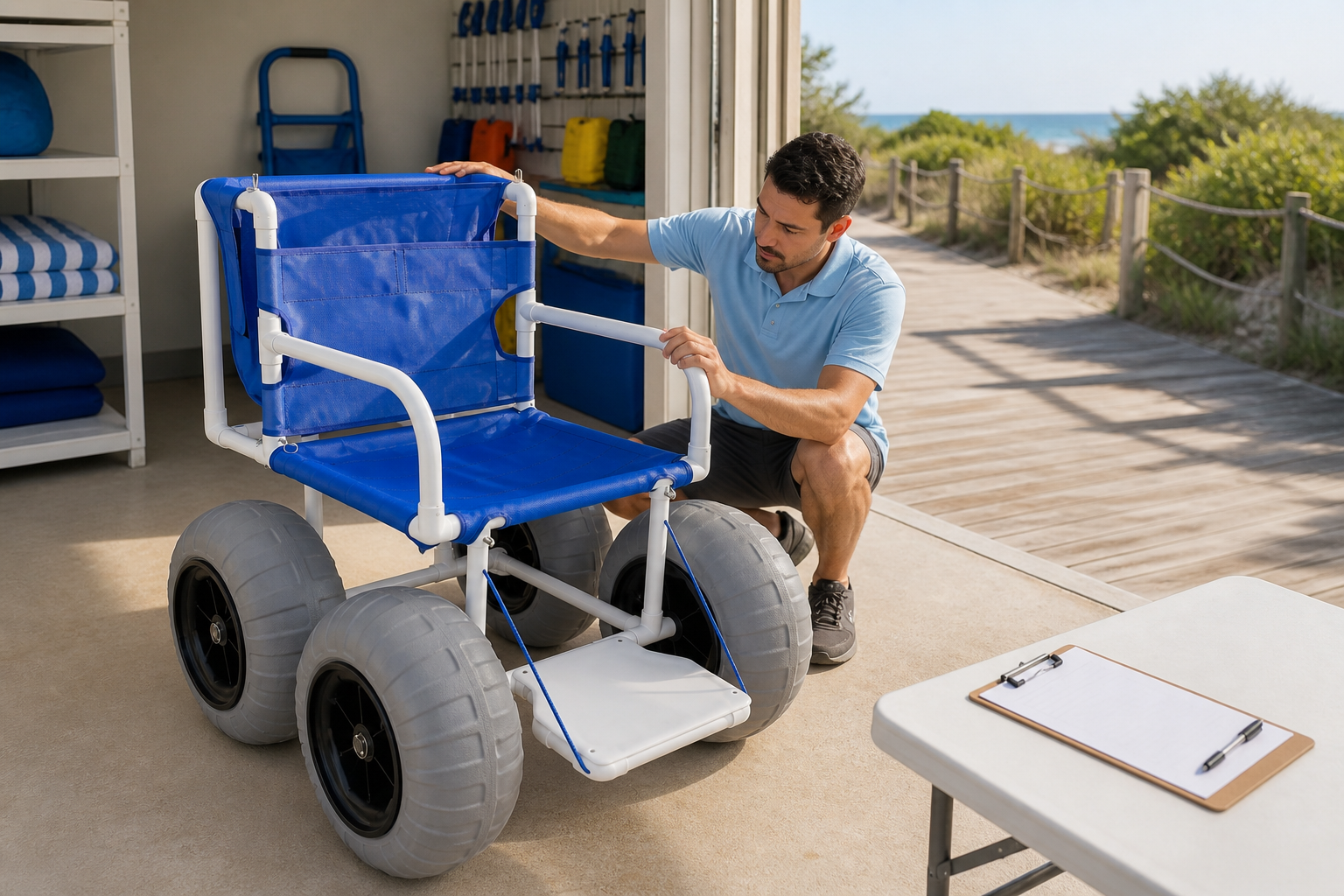
A beach wheelchair rental chair should be released only after staff confirm chair ID, model, current status, frame, joints, wheels, hubs, seat, back, arm rails, belt provision, footplate, cords, visible hardware, cleanliness, and empty-chair movement under current instructions. The check needs a named person and time. A fault or uncertain step changes the chair to hold rather than ready.
Use a chair identity and condition check
The release point: perform the check in good light on firm ground before the guest arrives. Match parts and features with model records, confirm prior cleaning and drying, and keep held chairs outside the bookable pool. Do not swap wheels, fasteners, fabrics, or foot supports between units without approved records. Record the replacement chair when a booking moves to another unit.
- Confirm chair identity and document revision.
- Inspect every named component.
- Verify cleaning, drying, and empty-chair checks.
- Record ready, hold, or replacement status.
Key Takeaway: A rental booking becomes operational only after a specific chair receives ready status.
| Review area | Working record |
|---|---|
| Release group | Pass question |
| Identity | Correct chair and current records? |
| Condition | Components present and visibly sound? |
| Status | Ready decision named and recorded? |
Chair-level release prevents a calendar entry from substituting for inspection.
What briefing supports a clear guest handoff?
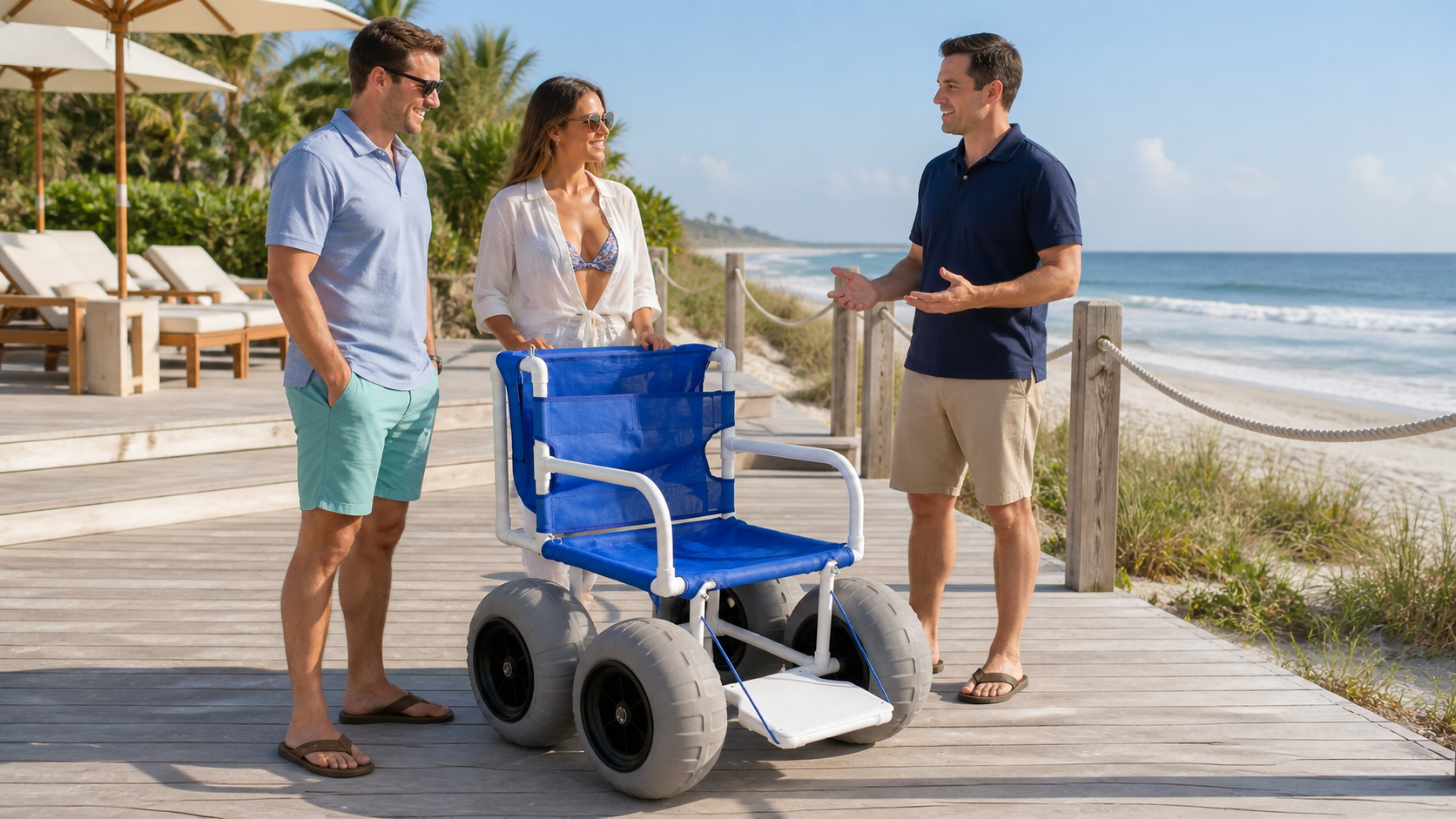
A beach wheelchair rental handoff should brief the guest and support person on chair identity, planned route, staff roles, communication signals, transfer method under local policy, pause and stop requests, surface boundaries, return time, care expectations, and what happens if conditions change. Plain language matters. Staff should invite questions without making medical, comfort, safety, or access guarantees.
Explain route, roles, signals, and return steps
The conversation check: deliver the briefing where everyone can hear before movement begins. Show only controls or support points named in current instructions. Confirm the agreed communication method and who will lead each step. Keep private details out of public view and record only permitted operational notes. If the guest or staff identifies an unresolved issue, pause the handoff and return to the release decision.
- Identify chair, route, staff, and support roles.
- Explain start, pause, stop, and return signals.
- State surface and service boundaries.
- Record agreed operational notes under policy.
Key Takeaway: A clear briefing turns equipment release into a shared service plan.
| Review area | Working record |
|---|---|
| Briefing topic | Plain-language message |
| Route | Where service starts, goes, and returns |
| Communication | Pause, stop, and change signals |
| Closeout | Return time and handoff method |
The briefing also gives everyone a clear way to pause before movement.
How should pickup and return timing be coordinated?
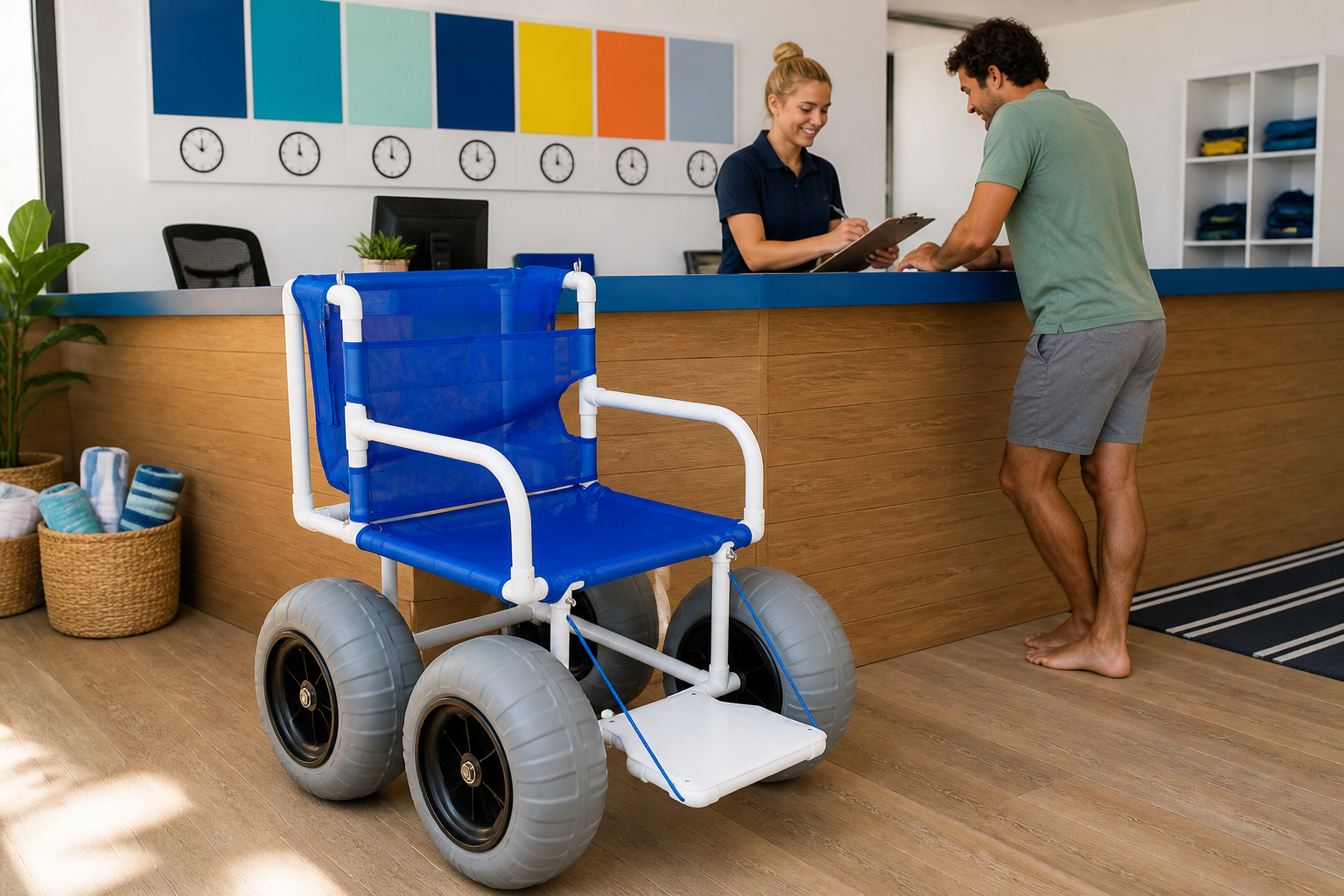
A beach wheelchair rental schedule should connect pickup or delivery, route window, guest handoff, return, cleaning, drying, inspection, maintenance status, and storage release. Time between bookings cannot be treated as usable inventory until the prior chair has completed care and receives ready status. Delivery travel, venue access, staff breaks, and route changes also belong in the plan.
Connect scheduling with chair status and care time
The scheduling view: use visible requested, pending, confirmed, out, returned, drying, hold, and ready states. Assign a chair ID only through the program’s stated process, then record any replacement. Avoid promising exact turnaround without evidence from local care and inspection work. When a return runs late or a chair enters hold, notify the next booking through the approved channel and offer only supported options.
- Link each booking with chair and route status.
- Reserve time for handoff, return, care, and inspection.
- Record delays, replacements, and changed plans.
- Keep held or drying chairs outside availability.
Key Takeaway: Scheduling works when operational status controls the calendar.
| Review area | Working record |
|---|---|
| Schedule state | Meaning |
| Pending | Route and chair review open |
| Out or returned | Care closeout not complete |
| Ready | Inspection and release recorded |
Status-based timing keeps booking pressure from bypassing care steps.
What cleaning and drying steps reset rental status?
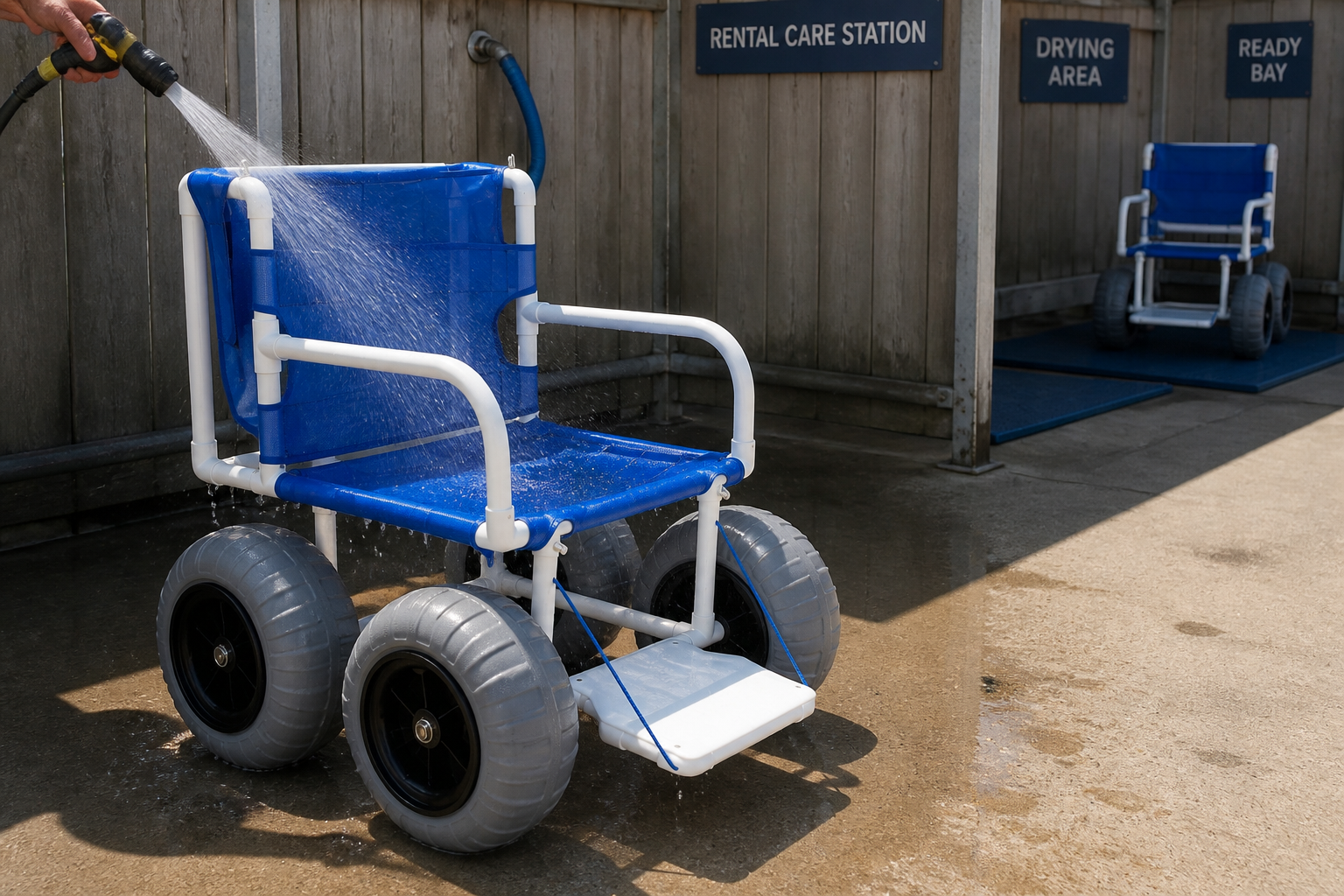
A beach wheelchair rental chair resets to ready only after supplier-approved cleaning, drainage, drying, inspection, and release. Sand, salt, moisture, sunscreen, or debris can remain around PVC joints, mesh panels, wheels, hubs, rails, footplate, cords, and hardware. A quick surface rinse cannot stand in for a complete model-specific care method or a recorded condition check.
Move returned equipment through visible care states
Here’s the reset sequence: mark the chair returned, move it to a separate care area, follow current cleaning instructions, allow stated drying, inspect in good light, record faults, and release or hold. Keep chemicals and tools controlled under local procedure. Do not place a wet chair in enclosed storage or return it to a booking because another unit is unavailable.
- Record returned status before cleaning.
- Follow named cleaning and drainage steps.
- Dry fully before inspection and storage.
- Release only after condition review.
Key Takeaway: Rental status resets through care and inspection, not through calendar time.
| Review area | Working record |
|---|---|
| Care stage | Status |
| Returned | Awaiting care |
| Cleaning or drying | Not bookable |
| Ready or hold | Release decision recorded |
The reset sequence keeps each booking linked with a known chair condition.
How should a maintenance hold affect availability?
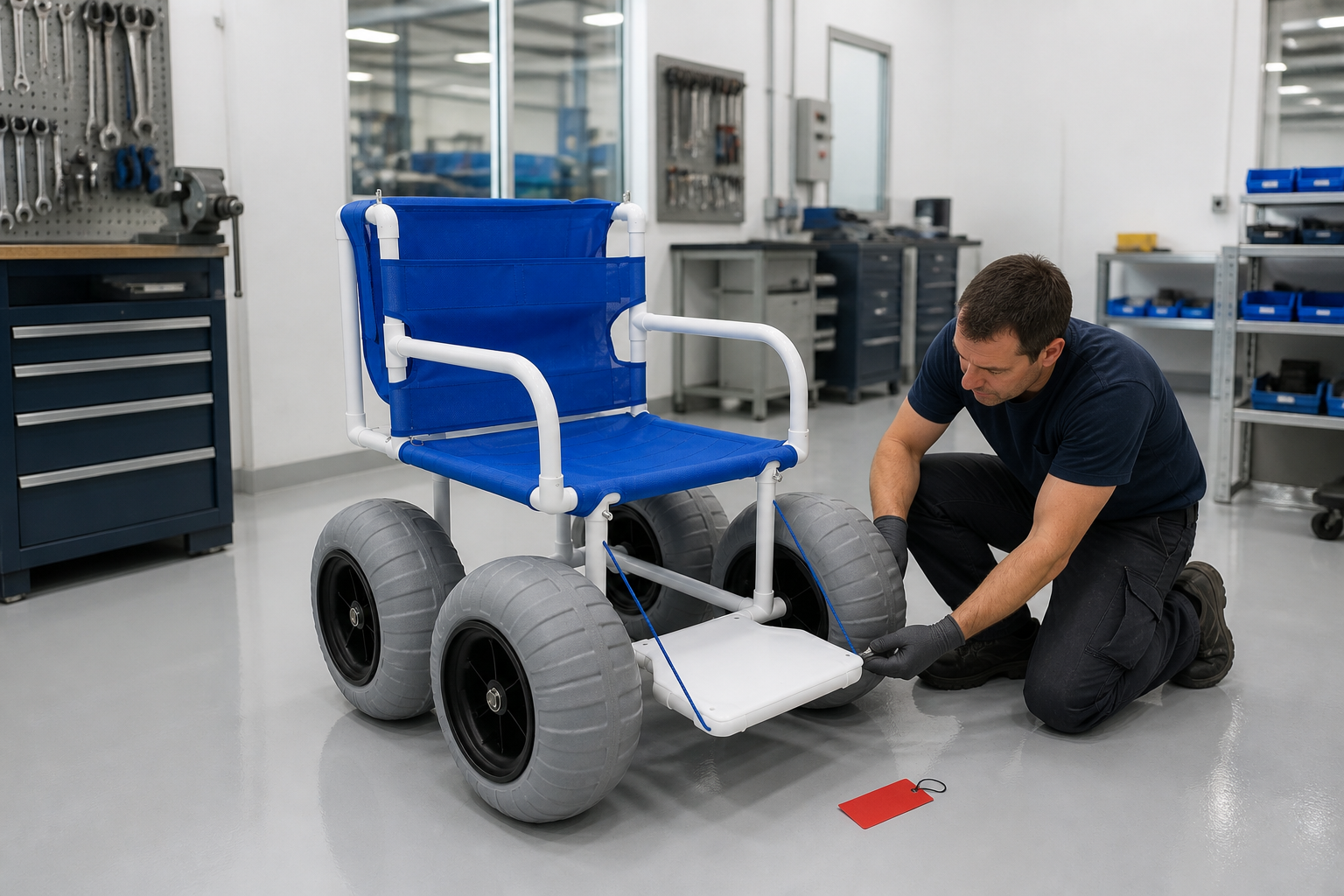
A beach wheelchair rental chair on maintenance hold should be removed from availability until the recorded issue receives an approved response, required work is completed, and a named release check passes. Hold reasons may include visible damage, missing parts, unclear wheel or hub condition, mesh concerns, frame questions, incomplete care, or a missing instruction. Staff should never hide a hold by moving a booking to that unit.
Remove uncertain equipment from the booking pool
The control rule: show hold status in both equipment and booking records. Assign issue owner, supplier or service contact, required evidence, next action, and review date. If another chair replaces it, record the new chair ID and repeat the release check. Avoid unofficial repairs or parts swaps. Keep the held unit physically separated or clearly marked under local procedure.
- Remove held units from bookable status.
- Record issue, owner, source, and next action.
- Use approved repair and parts channels.
- Repeat release checks after work is closed.
Key Takeaway: A hold protects service quality only when equipment and booking records agree.
| Review area | Working record |
|---|---|
| Hold field | Record |
| Issue | Observed condition or missing evidence |
| Action | Owner, source, and required work |
| Release | Check result and named decision |
Linked status prevents a substitution from creating a new undocumented gap.
What records connect booking, chair, and staff?
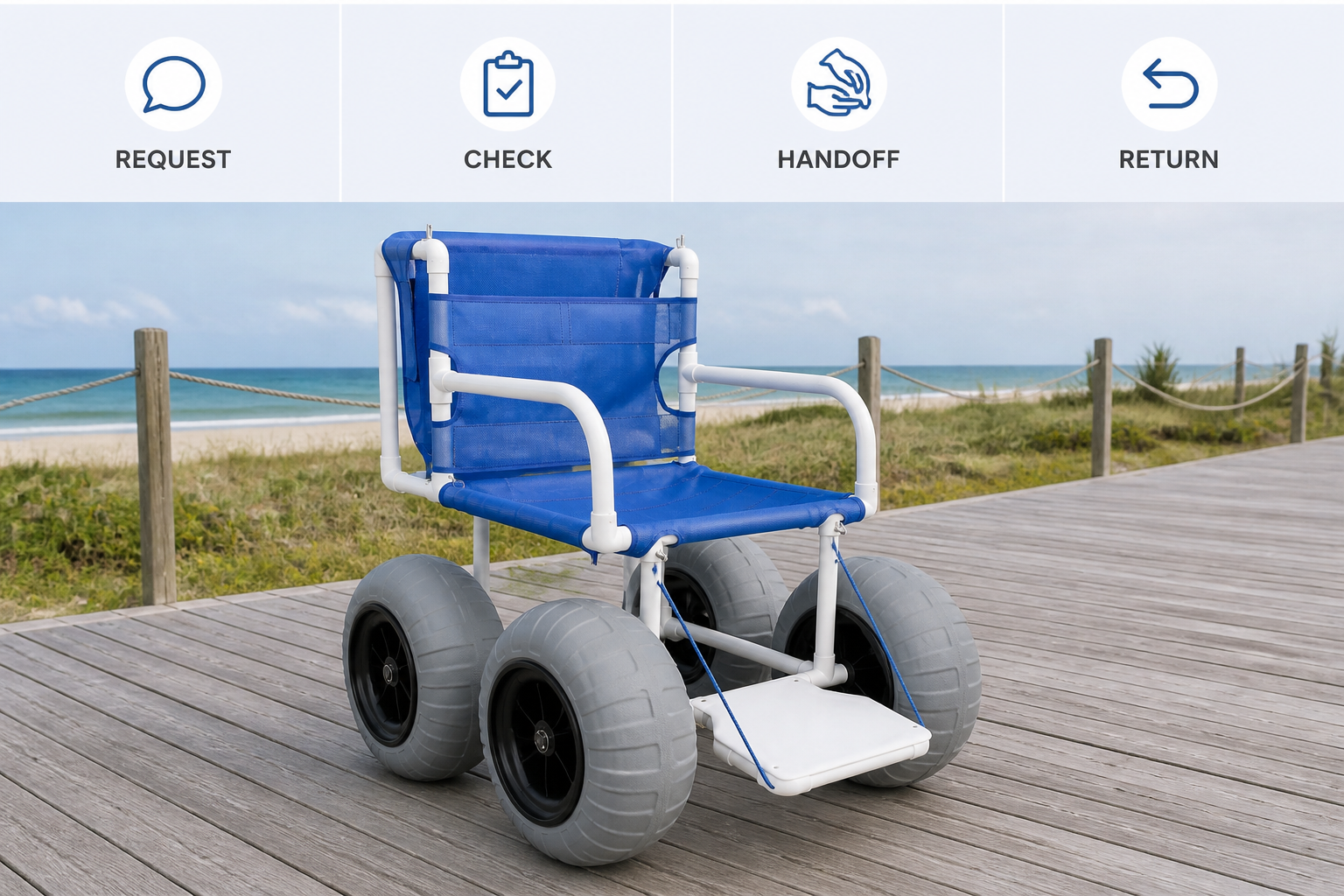
A beach wheelchair rental record should connect request ID, permitted guest contact, location, route status, chair ID, model, release check, assigned staff, handoff time, changes, return time, care status, faults, storage release, and closeout. This chain lets teams answer which chair served which booking and whether each handoff passed. Record retention and privacy access must follow local policy.
Create one traceable service chain
The record test: a manager should trace a service from request through ready storage without relying on memory or private messages. Use short controlled status values and named ownership. The record may link documents rather than duplicate them. Keep clinical notes, unsupported observations, and personal detail outside the operational file unless policy gives a clear reason and access control.
- Link request, route, chair, and staff identity.
- Record release, handoff, return, and care times.
- Track changes, faults, replacements, and closeout.
- Apply retention and access rules.
Key Takeaway: A traceable record gives every rental handoff a source and owner.
| Review area | Working record |
|---|---|
| Record stage | Core fields |
| Plan | Request, route, chair, and staff |
| Service | Release, handoff, change, and return |
| Closeout | Care, fault, storage, and status |
The chain supports later review without turning staff memory into evidence.
How can managers review a rental workflow fairly?

A beach wheelchair rental workflow should be reviewed through evidence such as incomplete checks, repeated route questions, booking changes, chair holds, late returns, care delays, missing records, and staff feedback. Managers should not invent satisfaction figures, savings, safety rates, or utilization claims. A small accurate record of process gaps gives more value than a polished dashboard built from unsupported numbers.
Review exceptions and handoffs without false metrics
The review method: sample completed and changed bookings, trace every handoff, and group gaps by source. Ask whether staff had current instructions, clear status options, enough care time, and a named stop rule. Assign actions with owner and review date. Recheck after a workflow change and preserve prior records so a new form or schedule does not erase what happened.
- Sample normal, changed, and held bookings.
- Trace chair, route, staff, and care handoffs.
- Group gaps by source rather than blame.
- Assign action, owner, and review date.
Key Takeaway: Fair review uses traceable exceptions and actions rather than invented success claims.
| Review area | Working record |
|---|---|
| Review source | Question |
| Booking | Was status clear and current? |
| Equipment | Did release and care records connect? |
| Action | Who owns the change and follow-up? |
The review closes when a documented change receives a later check.
Closing Notes
A dependable rental service connects demand, booking questions, route review, chair release, guest communication, pickup, return, care, maintenance holds, and record closeout. Keep every booking tied to current chair and site status. To discuss a rental program brief with a product team, contact us today with your fleet type, route, booking channel, care station, storage setting, and staff handoffs.
Frequently Asked Questions
Can I confirm every request as soon as it arrives?
No. Confirm only after the chair, route, staff, timing, and operating conditions pass the program’s current review.
What’s the best booking information to collect?
Collect only permitted operational details needed for chair, route, timing, communication, delivery, and return planning.
How do I know if a returned chair is ready?
Ready status follows stated cleaning, drying, inspection, fault review, and documented release.
Can one rental workflow cover every location?
Not without local review. Each site needs its own route, handoff, care, storage, and stop conditions.
What’s the best way to handle a maintenance hold?
Remove that chair from bookable status, record the issue, assign the next action, and release it only through the approved process.