
A beach wheelchair supplier becomes easy to verify when every claim connects with a named model, a current document, a review owner, and a clear buying decision. Coastal resorts, municipal programs, distributors, rental operators, and recreation teams often receive polished images yet still lack model identity, drawing revisions, component records, packaging details, or change history. That gap slows quote comparison and can move unanswered questions into receiving. This guide turns a beach wheelchair supplier review into a shared evidence trail for product fit, operations, shipment planning, service support, and release. It uses visible product structure only as a reference and does not invent certification status, capacity, prices, order volume, delivery dates, warranty terms, or buyer results.
Which evidence belongs in a supplier review?
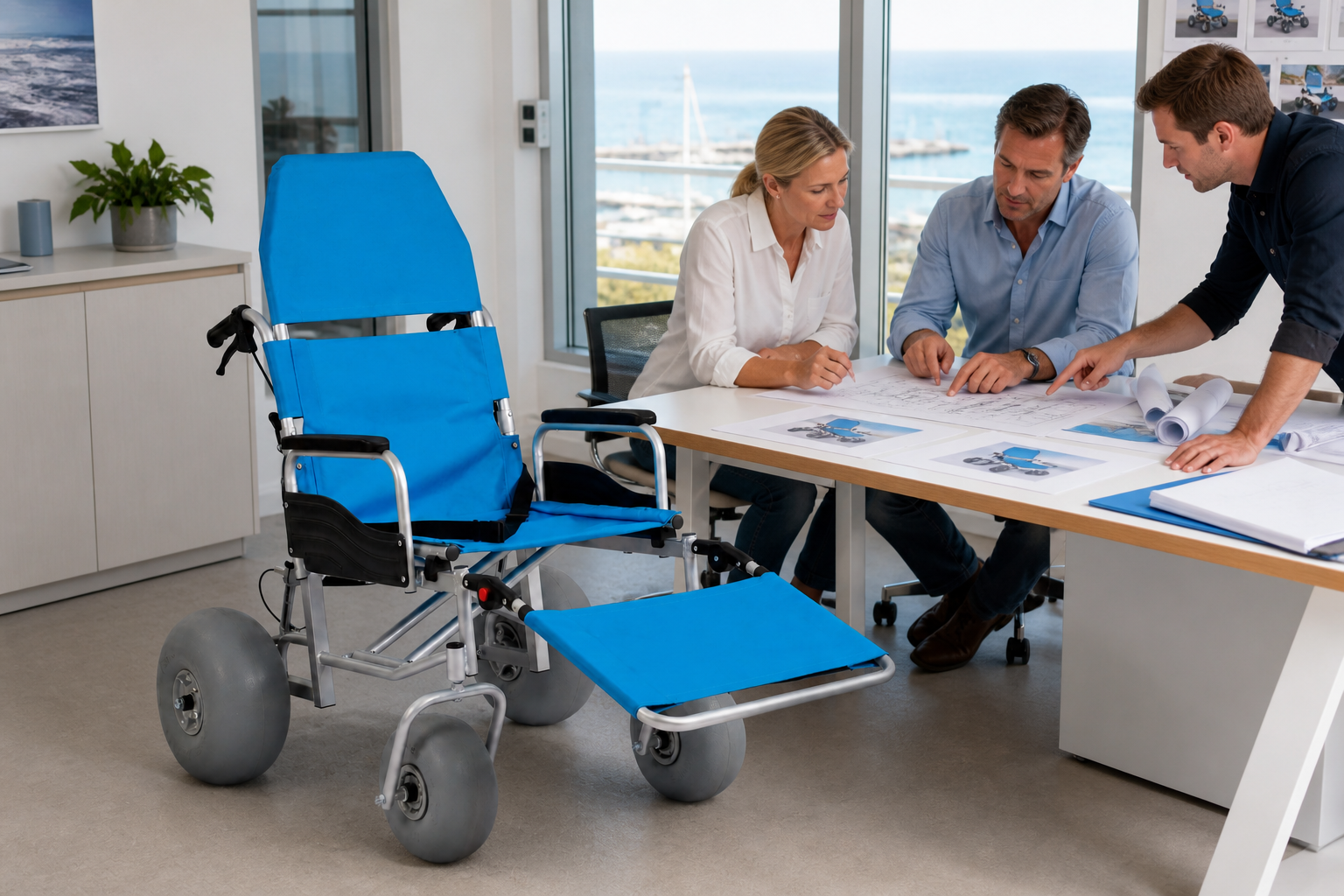
A beach wheelchair supplier review should connect model identity, drawings, materials statements, instructions, parts records, packaging information, and change history with a named source. The National Park Service mobility-device list shows how varied real program settings can be; it does not validate a supplier or model.
Build one evidence register for every quoted model
Start with the evidence trail: A product image can show a wide wheel stance, folding frame, high back, arm pads, belt, and foot support, yet it cannot confirm exact dimensions, material grade, approved options, test scope, or document revision. Buyers need a register that separates visible structure from written product evidence and local operating questions.
Create one line for each requested file, record its model and revision, name the reviewer, and mark the buying question it answers. Link the register with the project library so site teams can compare product records with planned applications without treating a project page as a specification sheet.
- Name the exact model and quoted configuration.
- List every requested file and its revision.
- Assign one reviewer and response date.
- Mark each item accepted, open, changed, or held.
Key Takeaway: Supplier evidence works when every file answers one purchasing question.
| Evidence area | Working record |
|---|---|
| Identity | Model, option, revision, source |
| Buyer use | Route, storage, service, or shipment |
| Decision | Accepted, open, changed, or held |
The register shows which questions have support and which still need a written answer.
How should buyers compare product documentation?
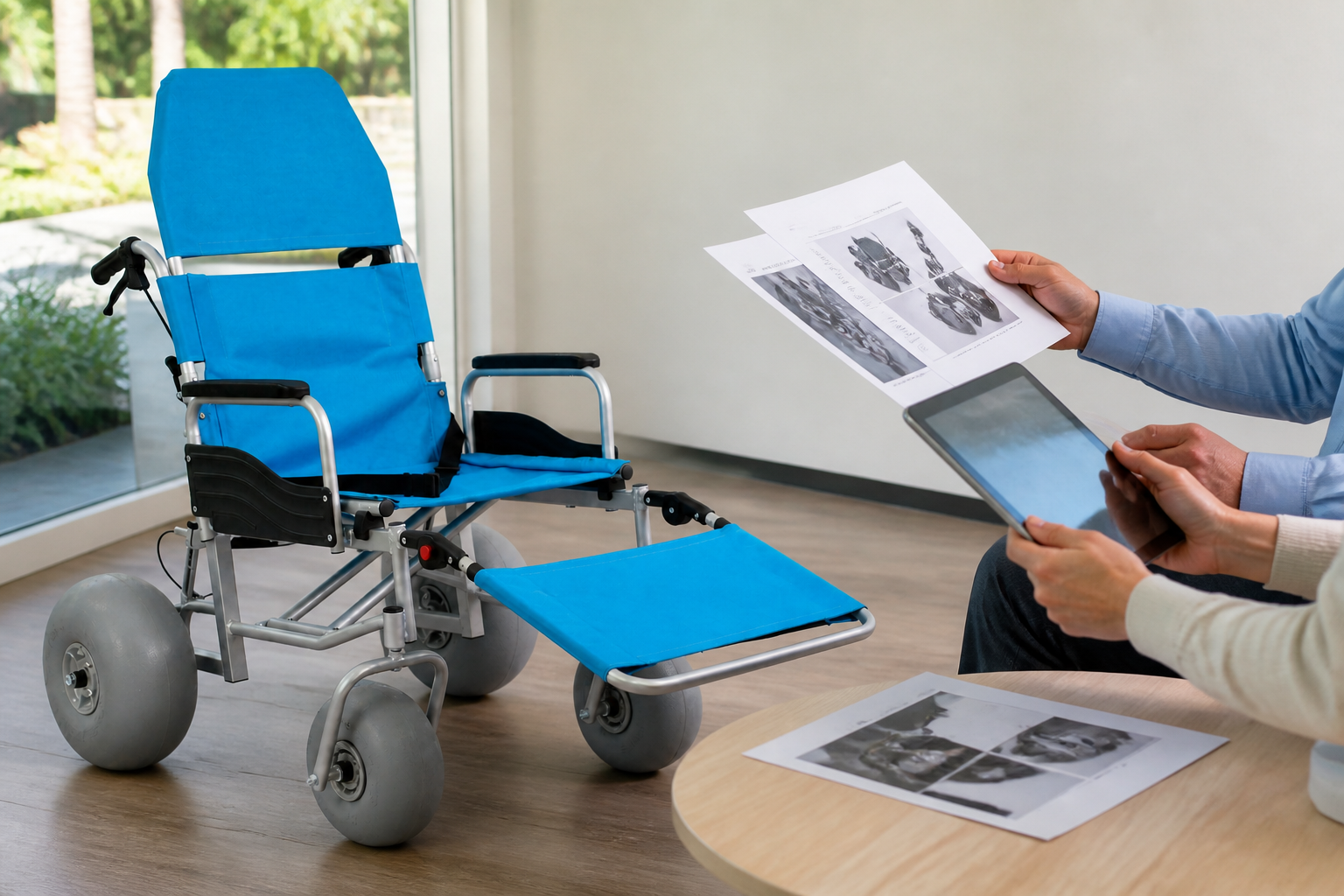
A beach wheelchair supplier should provide product documents that match the same model, option set, units, revision, and quoted configuration. Compare document identity across a floating model and the quoted chair instead of mixing records.
Compare like-for-like documents before scoring a quote
Use the matching test: A drawing from one chair and instructions from another can create a tidy file set that still fails a buying review. Match titles, model codes, visible components, date, revision, and unit system across every source. Keep market-specific regulatory questions in a separate verification line rather than assuming a certificate applies to every destination.
Ask another reviewer to trace one claim from quote through drawing and instruction page. If that path breaks, record the missing source rather than filling the gap from a similar model. The user manual resource can supply operating context while current supplier files remain the product authority.
- Match model codes across all supplied files.
- Check dates, revisions, and unit systems.
- Separate product facts from market questions.
- Record missing or conflicting sources.
Key Takeaway: Comparable documents share one clear model identity and revision trail.
| Check | Question |
|---|---|
| Model | Do all files name the quoted chair? |
| Revision | Which version controls the order? |
| Gap | Who will supply the missing source? |
A document set becomes usable once another buyer can follow the same evidence path.
What should a sample review record?
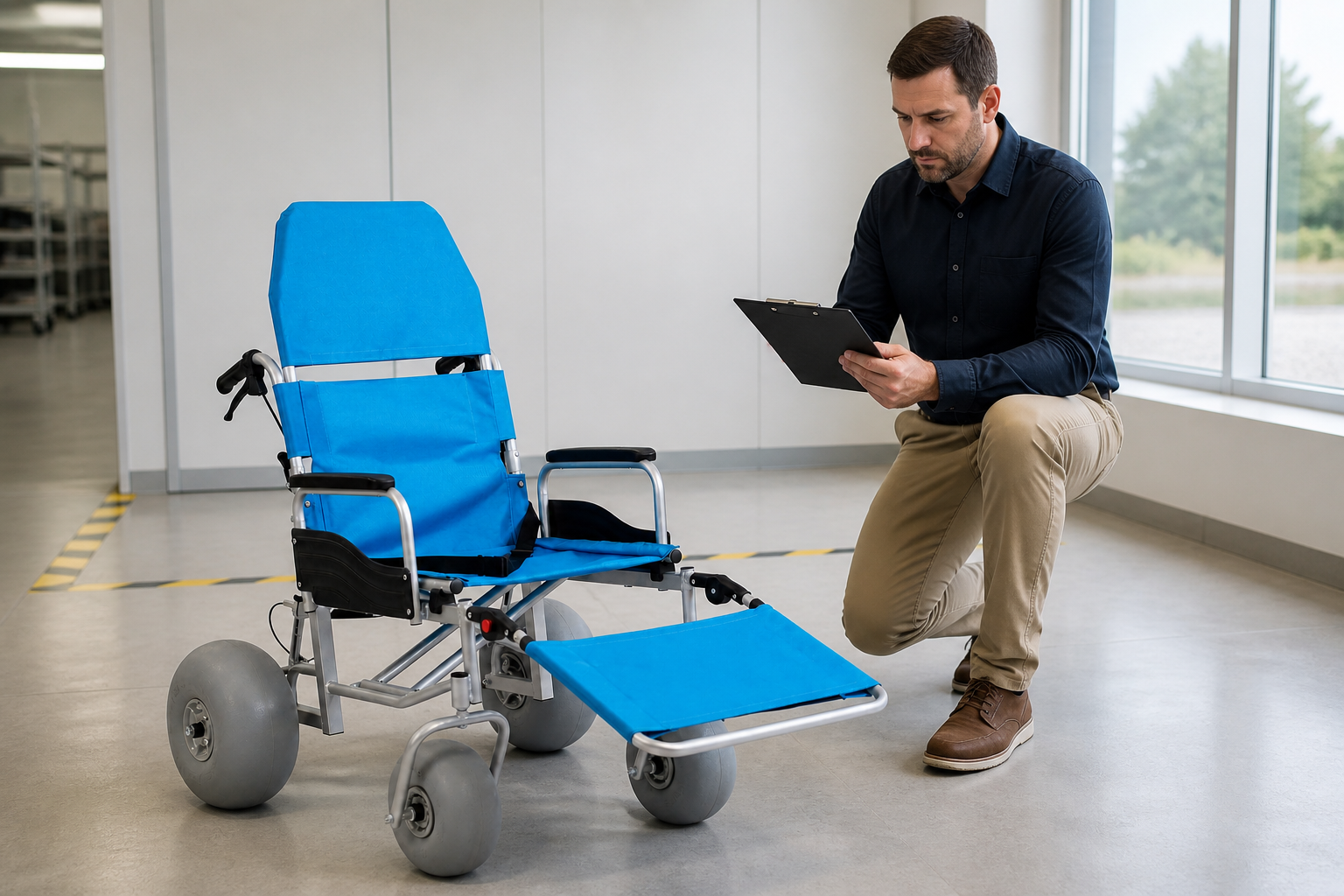
A beach wheelchair supplier sample review should record the received configuration, visible condition, component identity, setup source, questions, and approval boundary. A lightweight model still needs its own drawing revision, parts list, and care record.
Treat the sample as one controlled configuration
Keep this distinction clear: A sample can support handling observations and document checks, but one unit does not prove every production lot or every site outcome. Photograph the empty chair from consistent angles, identify loose parts, match each component with the packing record, and log differences without changing the approved sample state during review.
Use a bright inspection space, follow current setup instructions, and note any feature that differs from the quoted record. Connect the review with the all-terrain chair page for product-family context while the sample label and supplier documents control the decision.
- Record package, model, and component identity.
- Photograph the empty chair from fixed views.
- Follow the supplied setup sequence.
- Log every difference and owner response.
Key Takeaway: A sample review supports a defined configuration rather than a broad production promise.
| Sample area | Record |
|---|---|
| Received | Package, parts, visible condition |
| Compared | Quote, drawing, instructions |
| Result | Match, question, change, or hold |
A controlled sample gives purchasing and operations the same reference point.
How can a factory show process control?
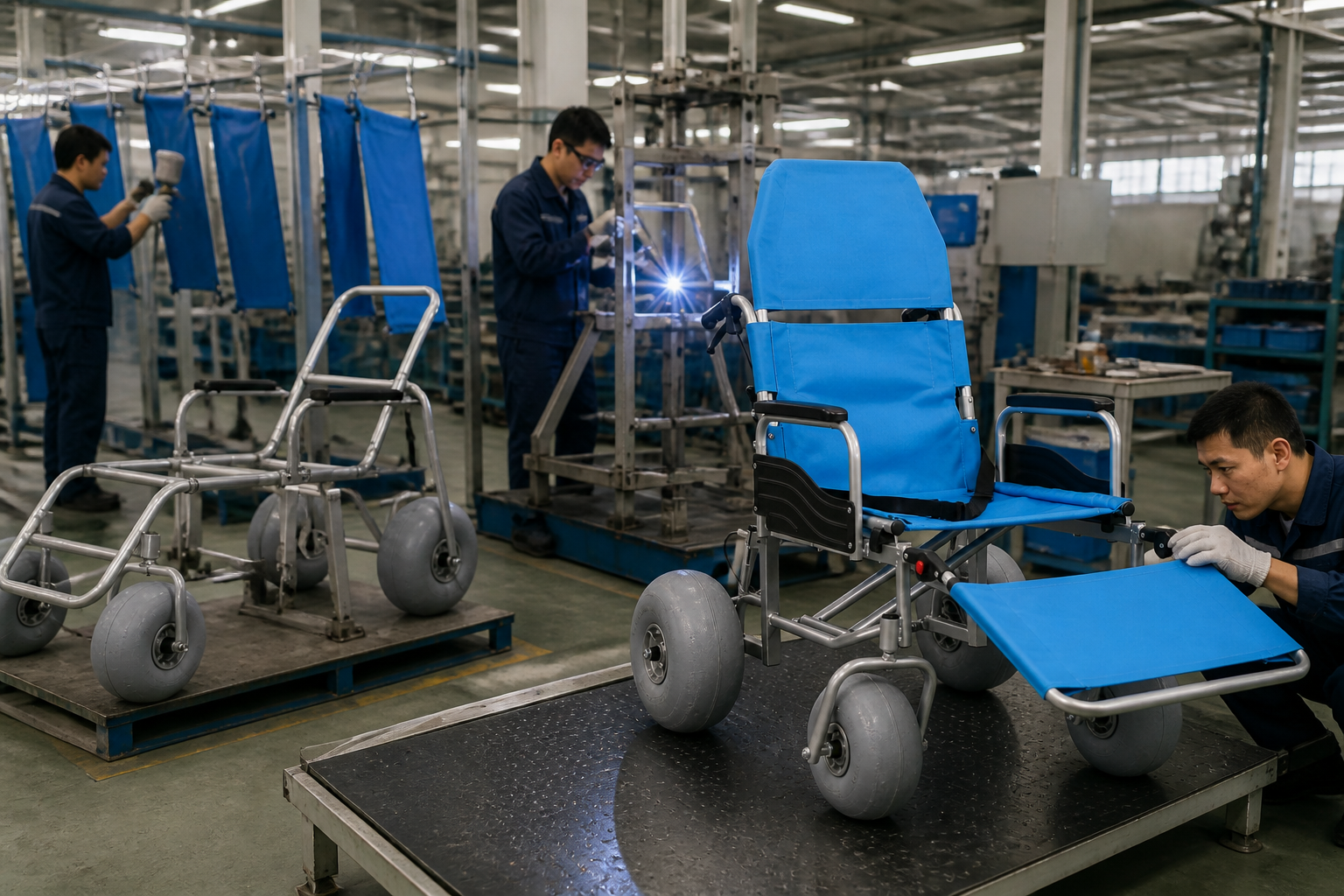
A beach wheelchair supplier can show process control through named production stages, inspection points, responsible roles, record examples, and change handling tied to the quoted model. Use the supplier overview to form questions, then request current evidence for the named model.
Ask for traceable process evidence rather than slogans
Ask for the working sequence: A factory tour or video can show cutting, joining, finishing, assembly, inspection, and packing, but the buyer still needs to know which records connect those stages with the order. Request a process map and a redacted record example that identifies checkpoints without exposing another customer’s data.
Select one visible component such as a frame joint, wheel connection, seat attachment, or foot support and ask how its approved state moves from incoming material through finished inspection. Record who approves a process change and how buyers receive notice before production or shipment.
- Name each production and inspection stage.
- Connect checkpoints with responsible roles.
- Request a redacted record example.
- Document how process changes reach buyers.
Key Takeaway: Process evidence links a quoted model with repeatable records and named approvals.
| Stage | Buyer evidence |
|---|---|
| Incoming | Identity and inspection record |
| Assembly | Work step and checkpoint |
| Release | Approval, packing, and change status |
Following one component through the process reveals whether records connect or merely coexist.
Which questions clarify parts and service support?
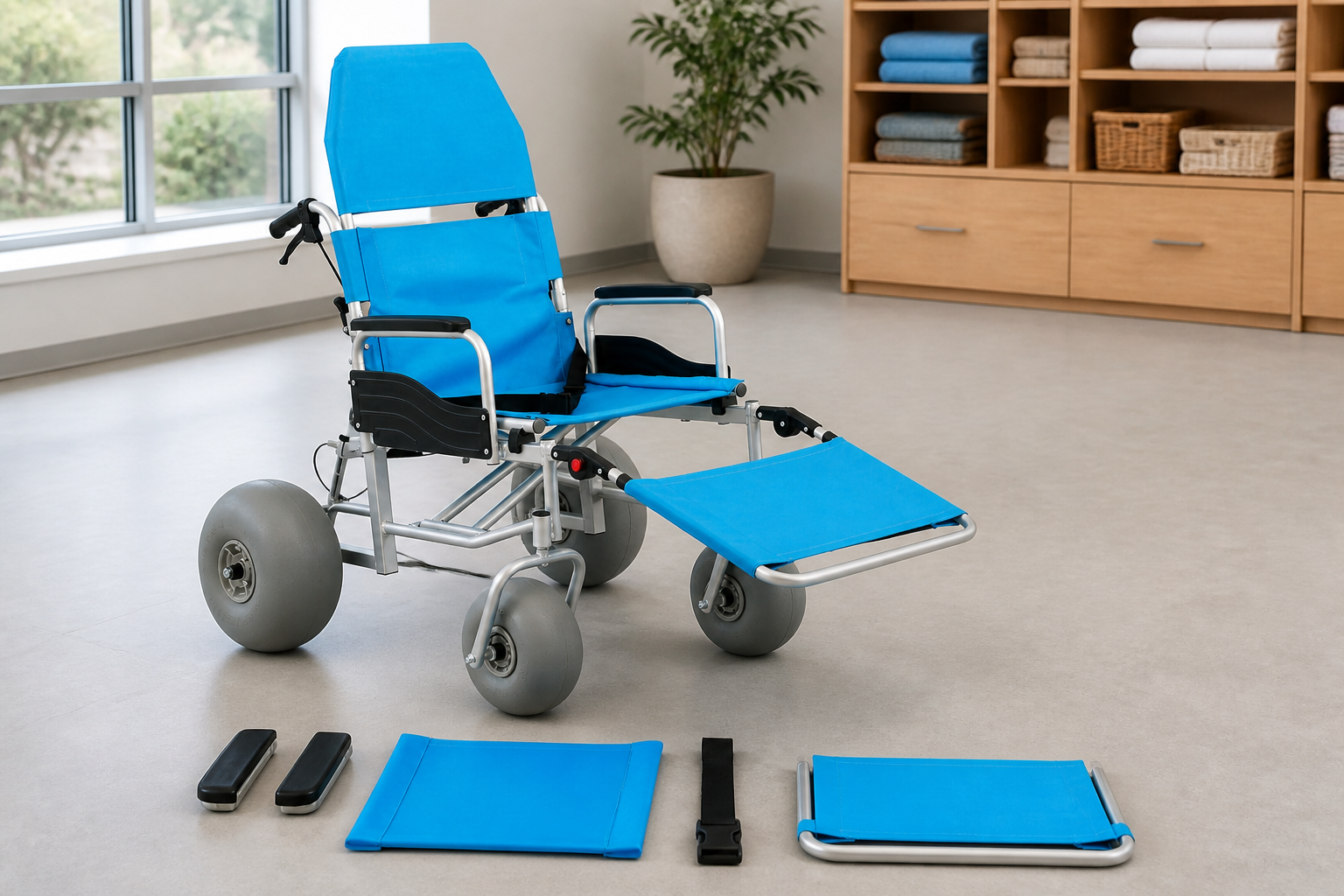
A beach wheelchair supplier should answer parts and service questions with component identity, compatibility, ordering references, instructions, and a defined response path.
Map service questions to each replaceable component
Focus on the service record: Buyers should not infer compatibility from appearance alone. A wheel, fastener, fabric panel, belt, arm pad, or foot support may look familiar yet belong to another revision. Ask how each service part connects with model code, drawing revision, installation guidance, and the delivered chair record.
Build a parts matrix before approval and ask which records will accompany later orders. Keep warranty discussion tied to the supplier’s written terms without creating promises inside the article. Record the contact route for a mismatch, missing item, or instruction question.
- List replaceable components by model reference.
- Ask how compatibility will be confirmed.
- Request current fitting or service instructions.
- Name the response path for a mismatch.
Key Takeaway: Parts support depends on model traceability rather than visual resemblance.
| Service area | Buyer question |
|---|---|
| Identity | Which part matches this revision? |
| Instruction | Which source controls fitting? |
| Response | Who handles a mismatch or gap? |
A parts matrix makes future service questions easier to route and review.
How should buyers review packaging and shipment readiness?
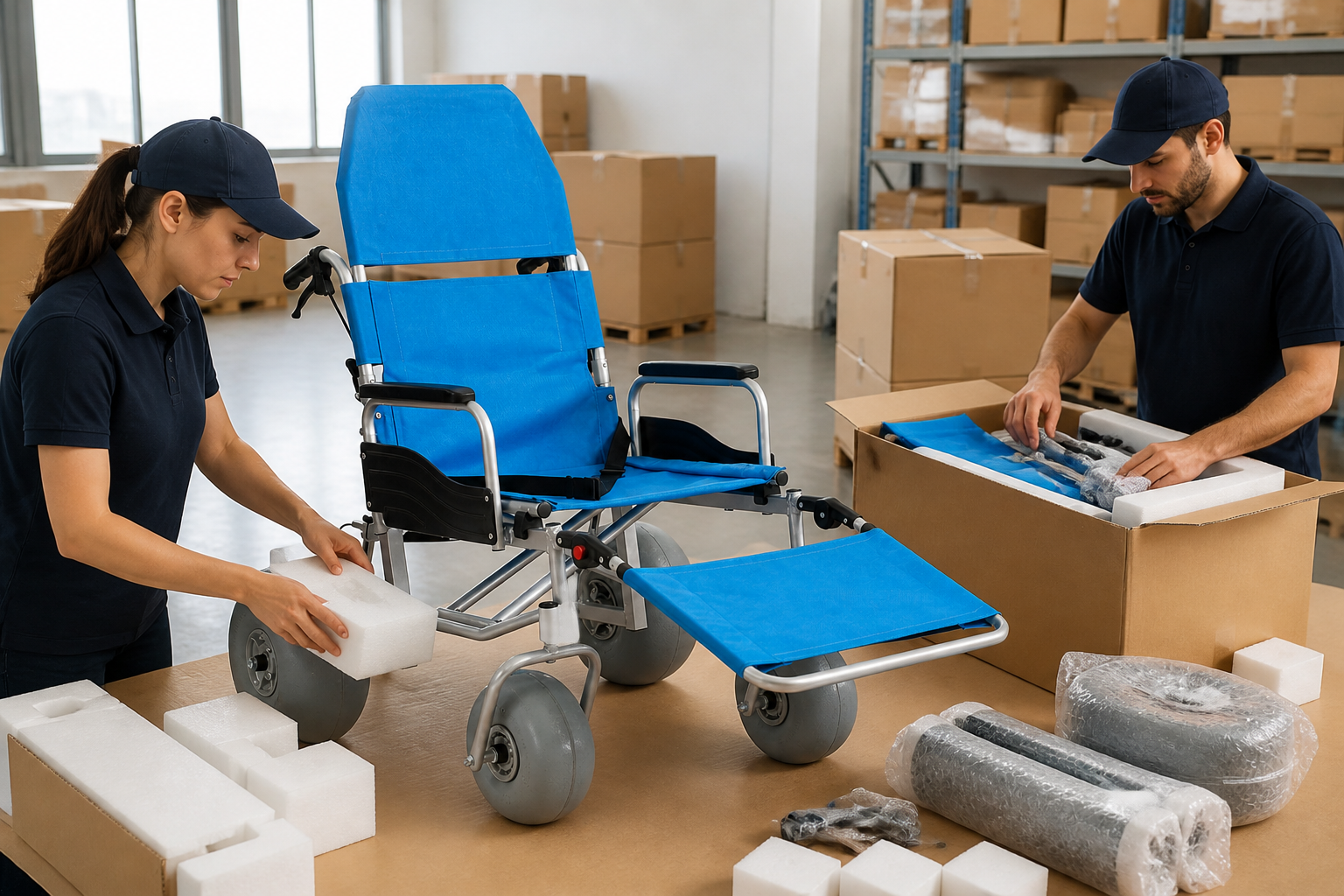
A beach wheelchair supplier shipment review should connect packing method, component protection, package identity, assembly state, document set, and receiving plan.
Connect packing evidence with the agreed chair state
Review the full handoff: A packed chair may travel assembled, folded, or partly disassembled. Each state changes protection points, loose-part control, receiving labor, and setup steps. Ask for current packing images or a packing drawing for the exact configuration and compare it with route, vehicle, warehouse, and receiving constraints.
Record how wheels, frame joints, seat surfaces, handles, and foot support avoid contact damage inside each package. Ask how package identity maps back to order and model records. Build a receiving hold step for damage, missing parts, or unexplained substitution.
- Name the agreed packed chair state.
- Map protection around each exposed component.
- Tie package identity back to the order.
- Define receiving hold and response steps.
Key Takeaway: Shipment readiness joins product protection with a reviewable receiving plan.
| Packing area | Working record |
|---|---|
| Chair state | Assembled, folded, or separated |
| Protection | Contact points and loose parts |
| Receiving | Check, hold, response, and release |
Packing evidence closes the gap between an approved sample and an unopened delivery.
What should a quote comparison sheet include?
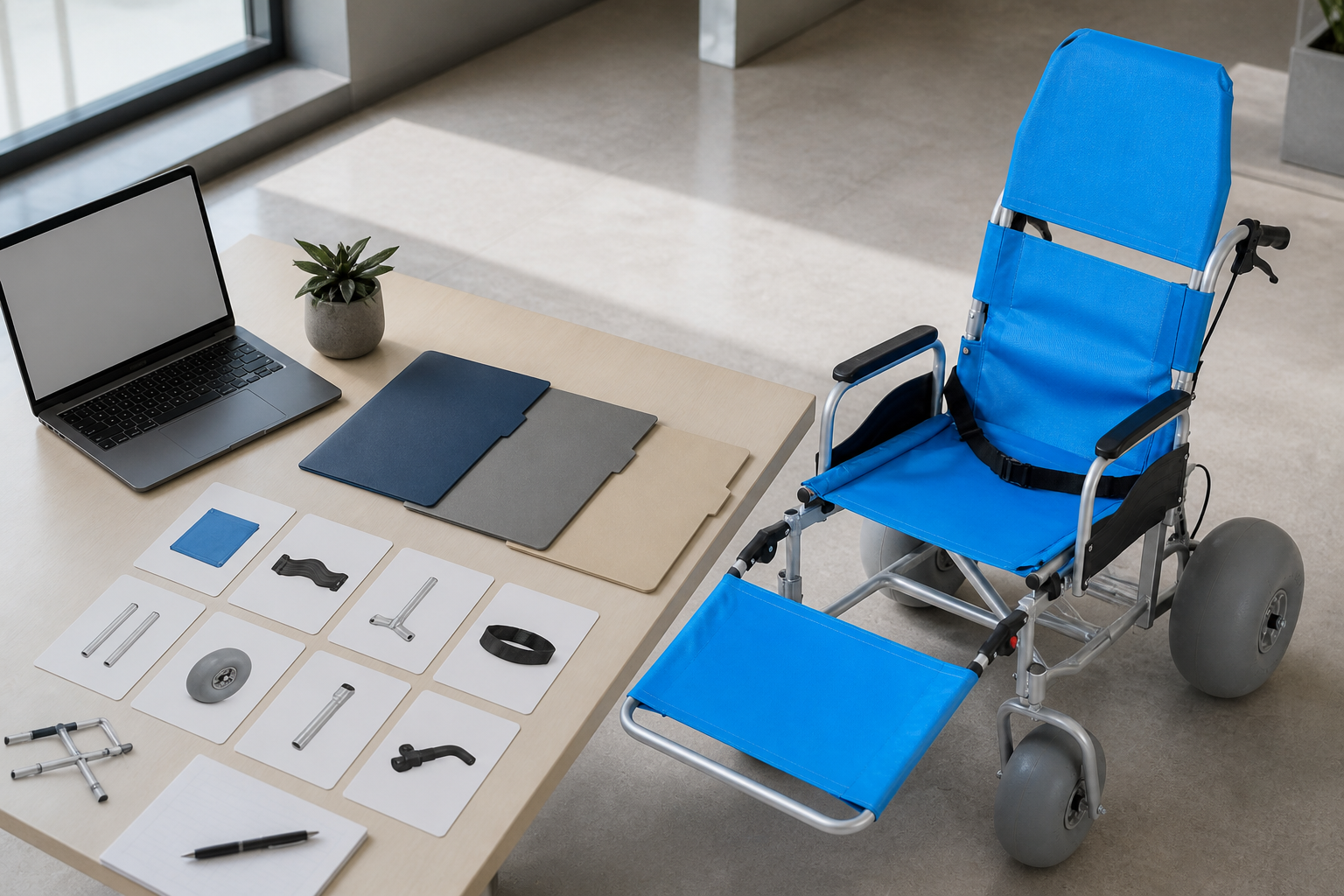
A beach wheelchair supplier quote comparison should align model, configuration, included parts, documents, packaging, service scope, exclusions, change rules, and open questions.
Use one scope matrix across every quote
Make scope visible: Price alone cannot reveal whether two offers cover the same chair state or supporting records. One quote may include removable components, packing, manuals, or spare items that another leaves open. Keep commercial values in the buyer’s controlled file while the comparison structure records scope without inventing numbers.
Give each quoted item a matching row and require a source for any claimed inclusion. Separate confirmed scope from requested scope and supplier response. Add an owner for currency, freight, schedule, and payment questions rather than turning unverified details into assumptions.
- Align model and configuration rows.
- Separate included, excluded, and open scope.
- Attach a source for each supplier response.
- Name owners for unresolved commercial items.
Key Takeaway: A scope matrix makes quote differences visible before commercial approval.
| Comparison row | Status |
|---|---|
| Product | Model, option, included parts |
| Support | Documents, packing, service path |
| Open item | Question, owner, response date |
The matrix lets buyers compare offers without forcing unlike scope into one number.
How can teams manage product changes?
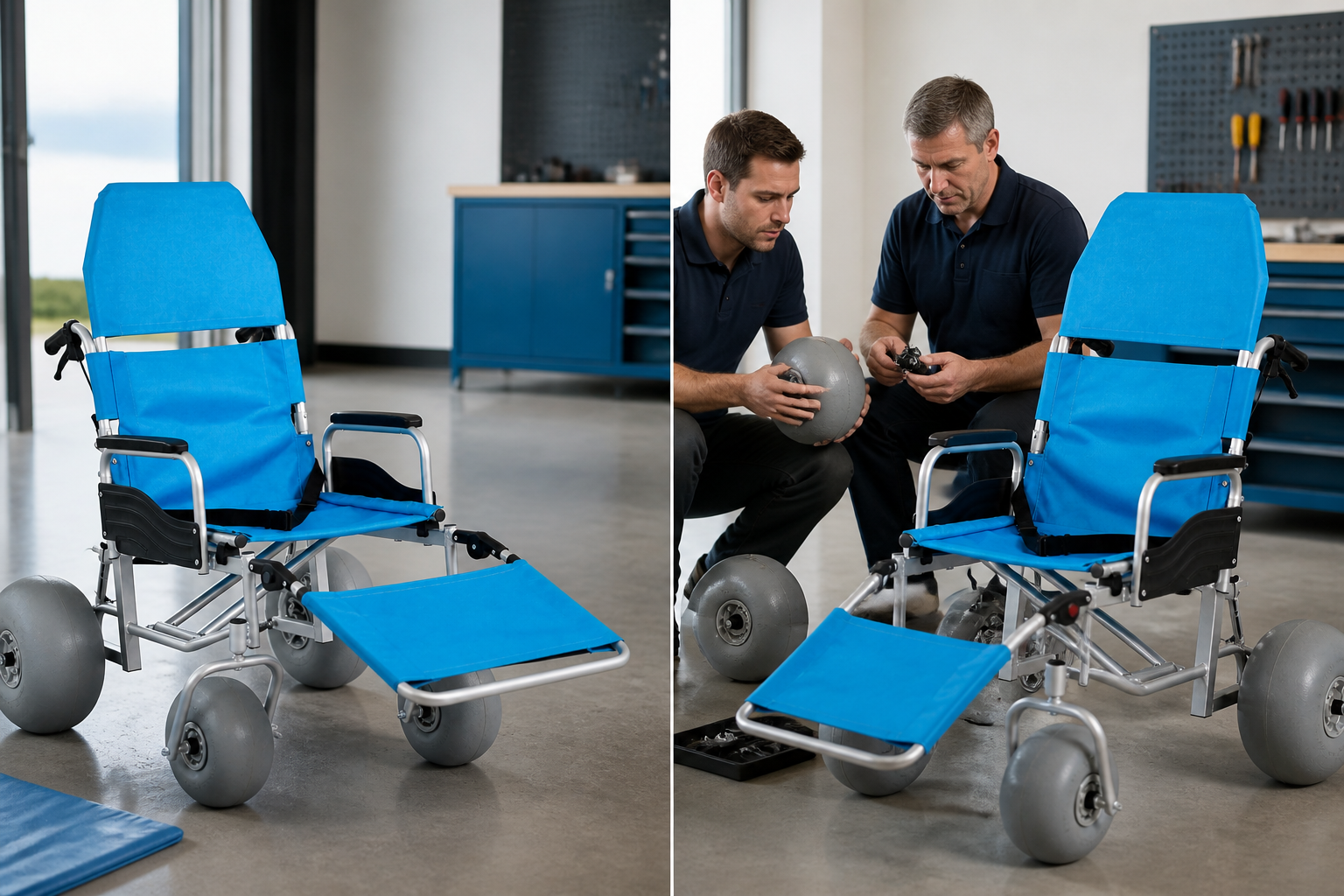
A beach wheelchair supplier product change should identify the affected model, component, reason, document revision, buyer impact, approval owner, and effective order point.
Give every product change a named approval path
Keep the change boundary visible: A color, fabric, fastener, wheel, frame joint, belt, packaging method, or instruction revision can affect records used by purchasing and operations. Even a small visible change needs a trace when it alters the quoted configuration or replaces approved evidence.
Require written notice before an affected order moves forward. Compare old and new records side by side, identify site or service decisions that need another review, and store the approval with the order. Do not replace earlier files without keeping a revision history.
- Name the model and component affected.
- Retain old and new document references.
- Review operational and service impact.
- Record approval and effective order point.
Key Takeaway: Change control keeps an approved configuration from drifting without review.
| Change record | Required field |
|---|---|
| Identity | Model, component, old and new state |
| Impact | Document, route, service, or packing |
| Approval | Owner, date, and effective order |
A visible change path protects both buyer records and supplier communication.
Which receiving checks connect back to supplier evidence?
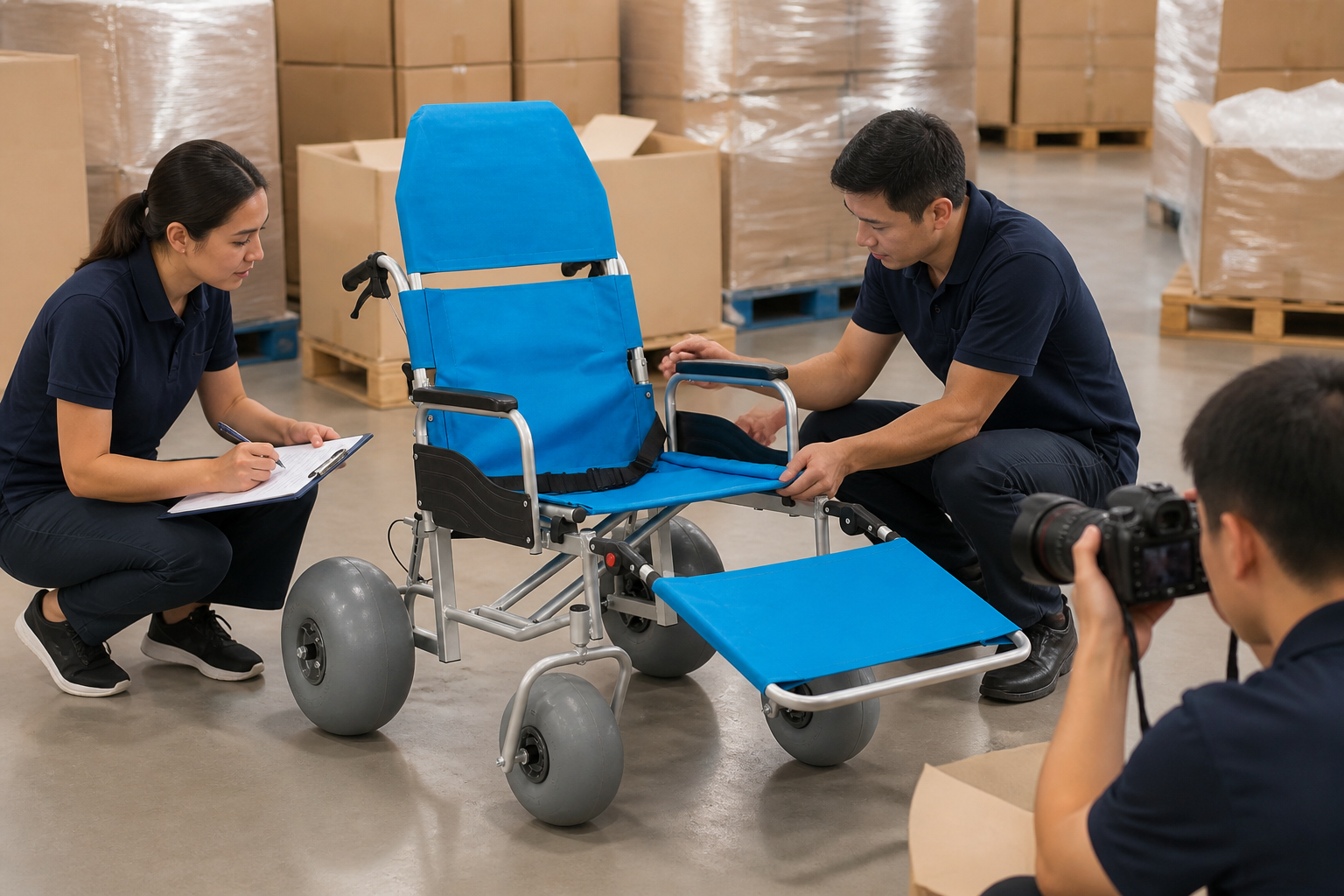
A beach wheelchair supplier receiving check should match package, model, components, visible condition, setup source, approved revision, and release decision with the order record.
Use the approved evidence register as the receiving checklist
Separate arrival from release: Delivery confirms that packages reached the site, but service release needs a controlled review. Check package identity before opening, retain photos of visible damage, count named components, follow current setup instructions, and compare the empty chair with approved sample or drawing records.
Move any mismatch into a hold state with an owner and supplier question. Do not modify parts merely to make the chair resemble a reference image. The approved configuration and written sources should guide the receiving result.
- Match package identity with purchase records.
- Count named parts before assembly.
- Use current setup and inspection sources.
- Record release, hold, damage, or question.
Key Takeaway: Receiving checks close the supplier evidence loop at the delivered configuration.
| Receiving stage | Decision record |
|---|---|
| Arrival | Package and visible condition |
| Setup | Parts, source, and configuration |
| Release | Accepted, held, damaged, or open |
The same evidence used for approval should support the release decision at delivery.
How should buyers make the approval decision?
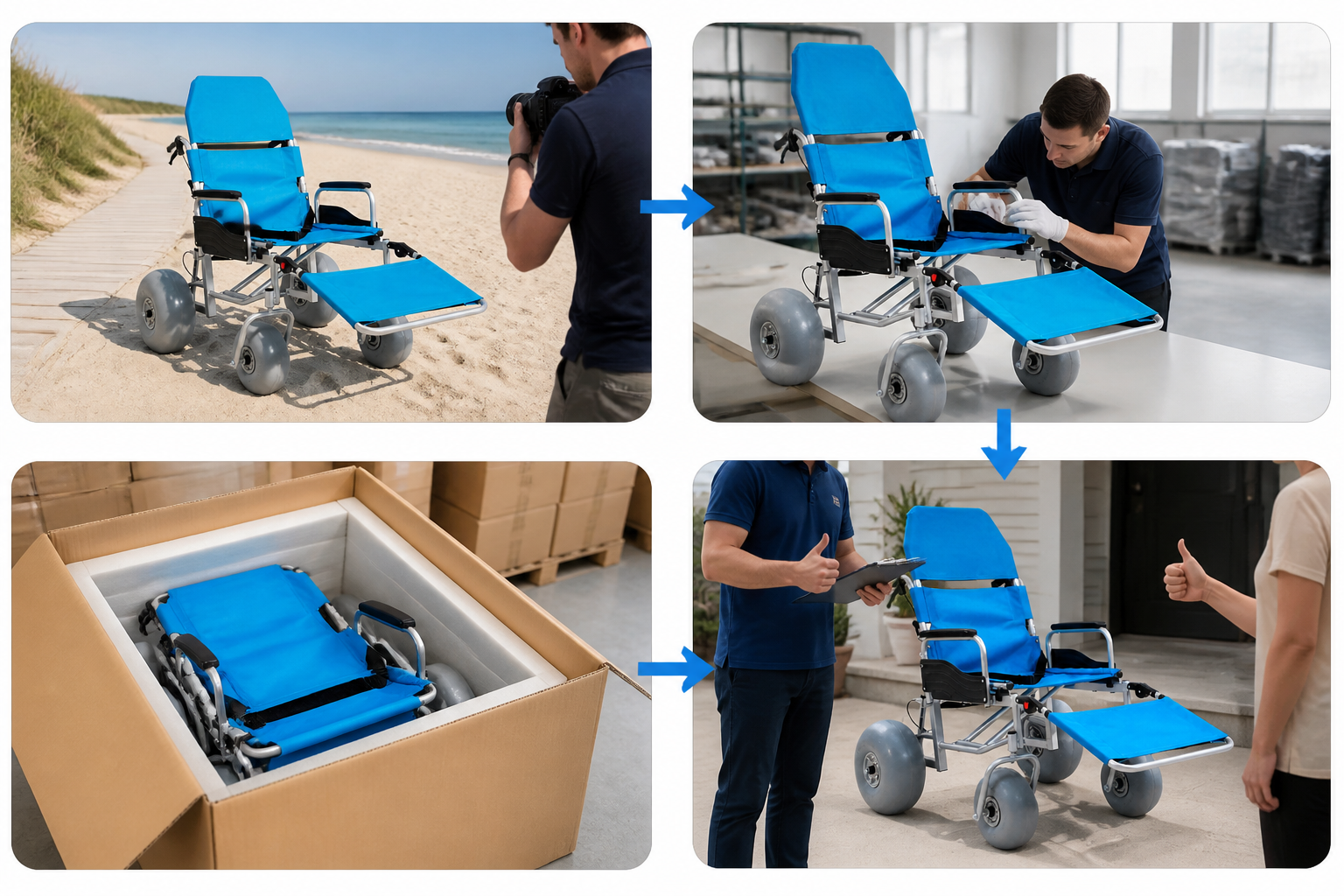
A beach wheelchair supplier approval should rest on matched model records, resolved gaps, agreed scope, controlled changes, shipment readiness, service paths, and a signed decision owner.
Base approval on closed evidence paths and named limits
Use a clear decision gate: Bring product, operations, purchasing, logistics, and service questions into one review. Mark what the supplier has supported, what local teams have checked, what remains outside scope, and which later events reopen approval. A favorable decision should never rely on an unlabeled photo or a missing record being filled by guesswork.
Share the approval summary with receiving and service teams, then keep linked source files available through the order life. For a documented buying brief or an open supplier question, contact us today with the model, application, route, storage, shipment, and service records your team already holds.
- Close or assign every open evidence item.
- Record agreed scope and stated limits.
- Name change and receiving review triggers.
- Sign the decision with owner and date.
Key Takeaway: Approval becomes defensible when another team can retrace every decision path.
| Decision gate | Evidence |
|---|---|
| Product | Model, documents, sample, changes |
| Delivery | Packing, receiving, service path |
| Approval | Owner, limits, triggers, and record |
The decision flow reveals both supported scope and remaining buyer responsibility.
Closing Notes
A sound supplier review links model identity, current files, sample state, process records, parts support, packing, quote scope, changes, receiving, and approval. Keep every claim tied to its source and every open item tied to an owner. This approach gives purchasing and coastal operations one shared record without inventing product facts or commercial promises.
Frequently Asked Questions
Can I approve a supplier from product photos alone?
No. Photos show visible form, but approval needs current model records, scope, and written answers.
What’s the best supplier document to request at the start?
Use a model-specific document list. It keeps drawings, instructions, parts records, packing, and changes tied to one quote.
How do I know if a sample matches the quote?
Match the sample label, component set, drawing revision, and visible configuration with the quoted record.
Can one factory visit replace document review?
No. A visit adds process context, while written model and order records still control the decision.
What’s the best way to handle a product change?
Use written change control. Record the affected model, old and new state, buyer impact, and approval owner.