
A marina visitor looking for a beach mat needs directions to the shore, even when the same entrance also leads to berths and a boarding ramp. Name a shore-side destination such as the beach picnic bay or a waterfront viewing area. Draw the route from the public drop-off to that point and back. End the shore-route approval there. A gangway, pontoon or vessel boarding operation needs a separate assessment by the responsible marina and vessel operator.
Choose a starting point visitors really can use during the advertised hours. The shortest line on a marina map may pass through a permit-only gate, cross a busy delivery bay or end at a deck with insufficient space to turn a wheelchair.
Trace arrival, access and the return together
Start where a visitor and any companion will leave the vehicle. Walk past the marina office, accessible facilities and the chosen promenade exit to the mat. Check each gate as it is normally operated, including latch access, usable width and the space immediately beyond. Confirm who can open it and whether it will remain accessible on the return trip.
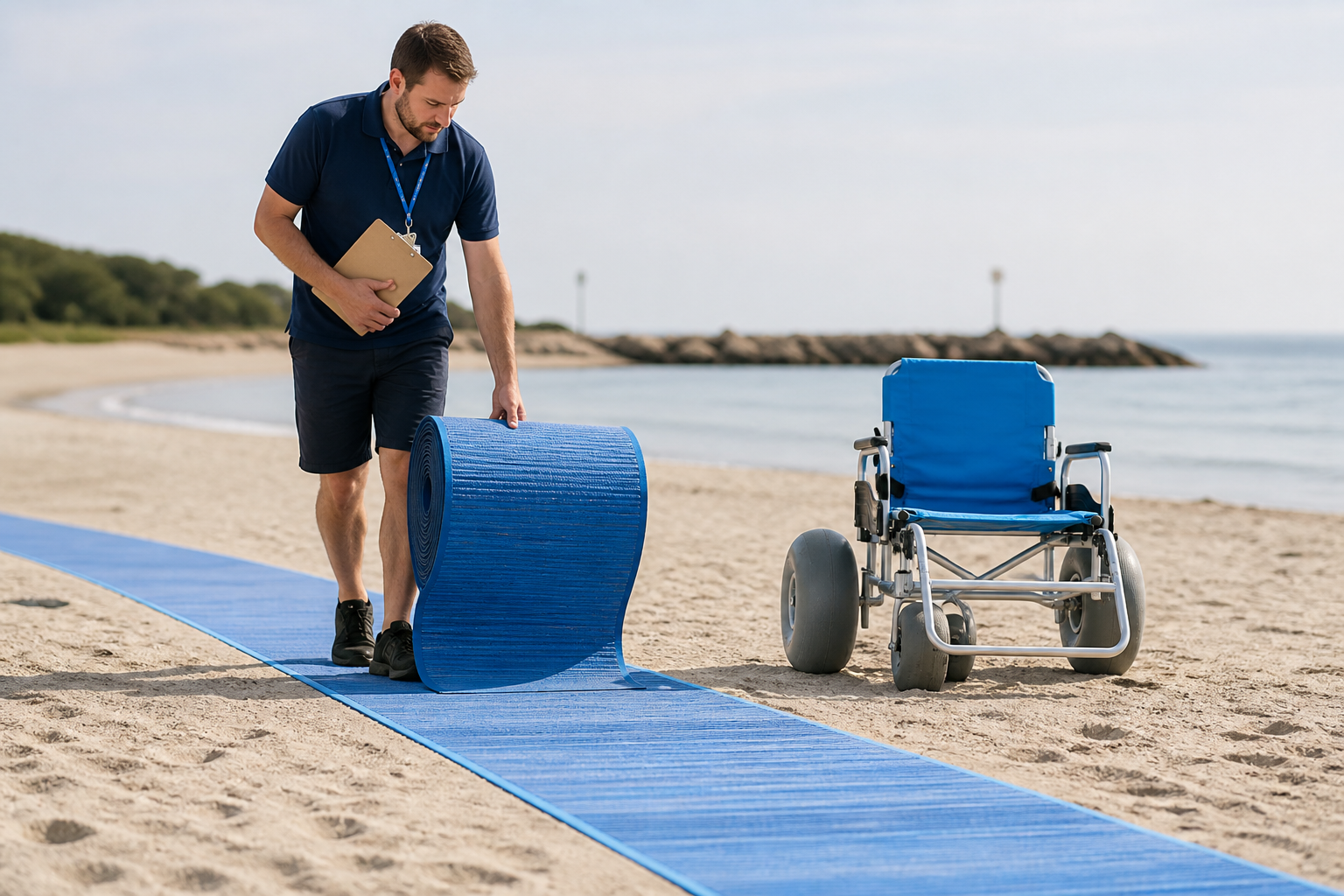
At a hard-to-sand connection, check the arrival surface, first section, support beneath the edge and clear space around any turn. A visitor moving beside an attendant or using foot supports may need more room at a corner than the measured straight opening suggests. At the destination, look for a usable stopping area that stays clear of service traffic and the waterfront edge. Keep the checks tied to the actual equipment and site design. Checking a ramp or promenade connection
Resolve conflicts with marina work
Ask operations to mark cart deliveries, maintenance access, waste collection, emergency routes and temporary staging areas. Walk the proposed guest route once during a normal service period. An area that appears clear before opening may regularly fill with trolleys or deliveries later in the day.
| Conflict at the marina | Decision to settle before opening |
|---|---|
| Supply carts cross the promenade between the drop-off and the first mat section. | Agree a separate line or a controlled crossing that the responsible team can operate during guest hours. |
| A tenant-controlled gate is the only way back. | Confirm access for the entire outing and an operational fallback. Choose a public entrance if the gate cannot reliably be opened. |
| Maintenance vehicles need the proposed mat corridor. | Have the engineering and operations leads review the actual vehicle, system and substrate. Separate or suspend the uses until an appropriate arrangement is approved. |
| Beach seating spills into the space needed to turn back. | Mark the usable turning area and identify who moves obstructions or changes the published destination. |
A pedestrian mat specification alone gives a marina no vehicle load approval. Where an unavoidable crossing forms part of the scheme, give the reviewer the actual proposed traffic, frequency, ground condition, section detail and who controls access. Engineering review for beach mat interfaces
Inspect the wet land-side areas the visitor will encounter
Check areas exposed to spray, standing water, tracked sand or deposits near a drain. Examine the route during representative operating conditions where the site permits it. Record where the surface or the support below a section changes. A photo of a dry, clean promenade can be a poor reference for the mat entrance after washdown or high water.
Give the maintenance crew the supplied care method and the agreed response to contamination, a raised joint or undermined support. If work, water or debris blocks the only usable route back, restrict access at the visitor’s decision point and provide help under the marina’s procedure to anyone already beyond it. Recheck the affected line and its return before describing it as open again.
Make the shore route easy to find without implying boarding access
At the junction where paths divide, direct visitors to the named shore destination. Mark where the firm surface ends and whether loose sand remains. Keep the wording consistent at reception, on the map, in booking notes and on the approach sign. When another operator handles boat trips, direct boarding enquiries to that operator for its own arrangements.
An example reception message is, “For the beach picnic bay, follow the public promenade to the west gate. The mat ends at the seating area. Return through the same gate. Boat-trip check-in is at the marina office.” Replace those place names with the actual route and check the gate status before giving directions.
Ask both the marina and the adjoining resort, if involved, who will update the desk when deliveries occupy a crossing or the shore endpoint changes. Assign the on-duty route owner authority to pause access. Guests should be able to confirm the current destination before leaving the public arrival area. Beach mat opening and closure rules