
For a private island beach route, make two trips on paper before ordering matting: the guest’s journey from the arriving boat to a usable beach destination and back, and the crew’s journey with the mat sections, tools and spare fittings from the freight landing to the store. A passenger transfer can be feasible while the freight route cannot accept the longest package. A complete set of matting can be in the island store while a change of landing makes the guest trip unavailable.
Ask the boat operator about the actual landing
Confirm the passenger arrangements for the person and their mobility equipment with the carrier for the arrival and return sailings. Ask which landing and connection will be used, where competent assistance is available, which changes in conditions alter the transfer and who tells arriving guests about a change. A mat laid on island sand settles none of the boat or gangway questions.
Walk from the landing to the resort’s firm approach and first mat section. Include any cart transfer, gate, incline or luggage handling area. Establish the last place the guest can turn and return with the agreed assistance. If the island must switch from its usual landing to a different pier, a route map beginning only at the beach hut has lost its first link.
Send the kit that can actually reach the island store
For the selected system, obtain packed piece dimensions and gross weights, a package-by-package list and the approved handling and storage method. Confirm where the carrier will accept freight, how each piece is unloaded, and the transfer equipment available for the inland leg. A mainland quote ending at the harbour may omit a scheduled cargo crossing or movement between the island pier and the store.
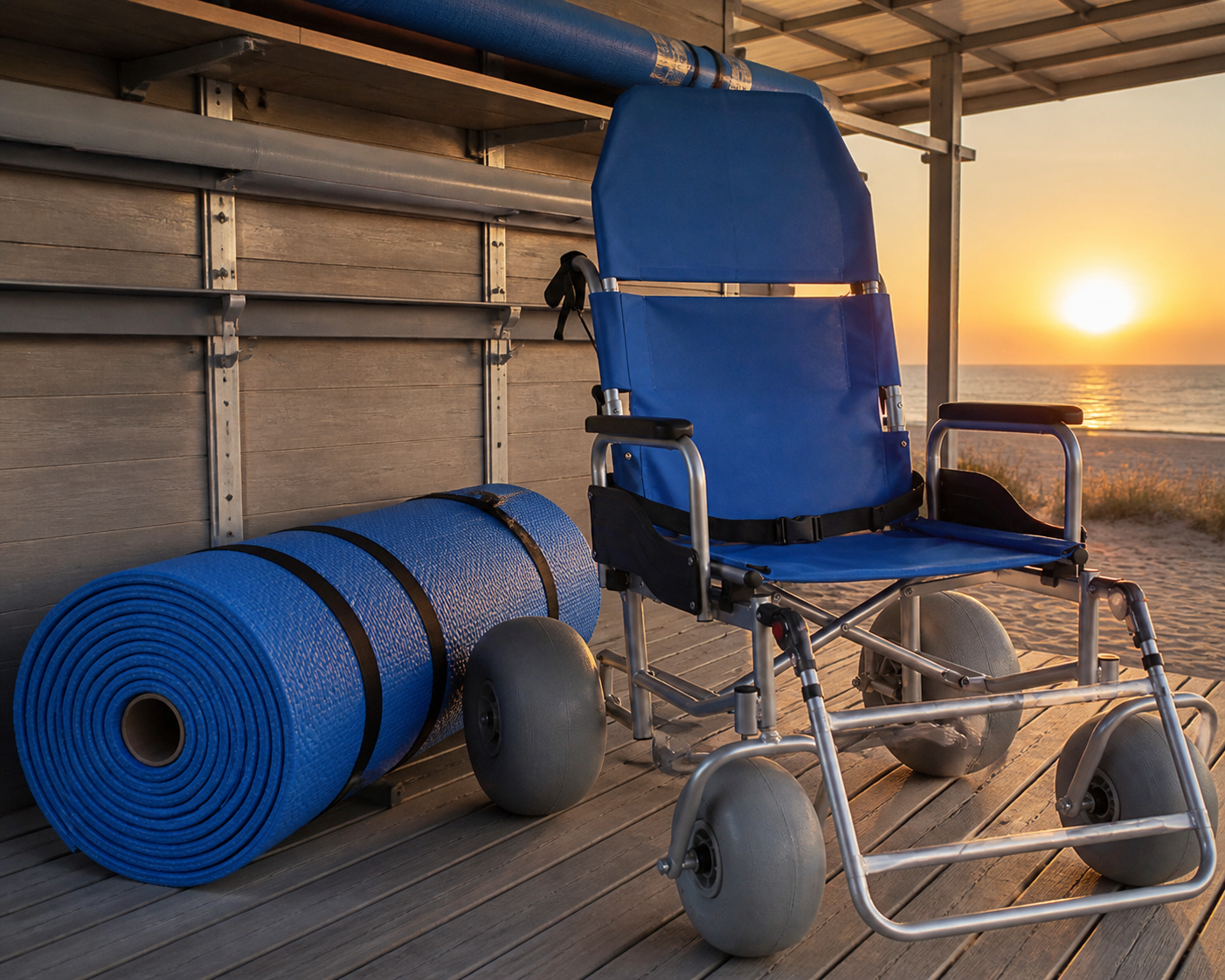
For interlocking sections, identify the mating pieces, edge kit and any tools required for the approved layout. For rolls, identify compatible joins, end treatments and the space needed for rolling and storage. Ask the supplier which components are actually replaceable and what an approved replacement comprises. Beach mat product configuration · Packing and identifying the shipment
Work out the cost of one missing fitting
Suppose a hypothetical island service receives all its main sections but a required end fitting remains in the mainland depot. The next freight crossing is two days away. An intact bundle of panels cannot deliver the promised route unless the affected transition can be completed as approved. Ask the local operator whether a shorter route with its own verified endpoint can operate while the correct kit travels. If it cannot, postpone that beach service and tell guests before their boat journey.
Choose spare stock by part identity, likely operational consequence, actual supply time and local repair capability. Open-ended promises to send “a suitable connector” are poor island cover. Confirm the approved reference and supply unit, where the reserve will be stored and who can fit and check it. Keep spares for the mat separate from components for any beach chair. Mat spare-parts planning
Keep an island plan for the last boat
Work backwards from the confirmed return sailing and allow for the walk from the mat, return of borrowed equipment, any transfer and the carrier’s actual boarding arrangements. Identify who can assist a visitor if the crossing or the shore service changes. A third-party boat timetable and an island employee’s guess about a boarding point are not a coordinated return.
Before opening the route after rough weather or an interruption in freight, have the island lead confirm the installed extent, usable return, trained people, missing parts and current transport arrangements. Tell the mainland booking desk the destination the island can support that day. For a scheduled cruise destination receiving several parties together, the port-call mat route guide deals with the different question of batching visits within a fixed call.