
A beach access mat operating policy should tell the person on duty which route they may open, who can pause it and what visitors must be told when access changes. Give every route a recognisable starting point and destination. “West entrance to the shaded viewing area” is far more useful at the visitor desk than an inventory entry that says “blue mat, west beach.”
The examples below describe rules a site operator could adapt. Set the local inspection criteria, responsibilities and hours with the people who manage the beach. Keep the installation instructions for the actual mat and its fixing system with the field team. The operator needs both the technical detail for the equipment and a policy for the service it has promised.
Define exactly what can be advertised
Give the service desk a short description of the approved route. Include the named entrance, end of the continuous surface, planned hours or season, means of checking today’s status and contact for assistance. Identify whether the route connects to a toilet, viewing area or equipment handover point if the program advertises that connection. Keep beach wheelchair availability and any water activity in their own service descriptions.
List the roles that make decisions during each shift. The field inspector checks the route against the accepted layout. The duty lead can pause use immediately and controls the release decision. The visitor-information role updates the entrance notice, website, booking desk and any partners directing people to that entrance. Assign a backup for each necessary task during staff changes.
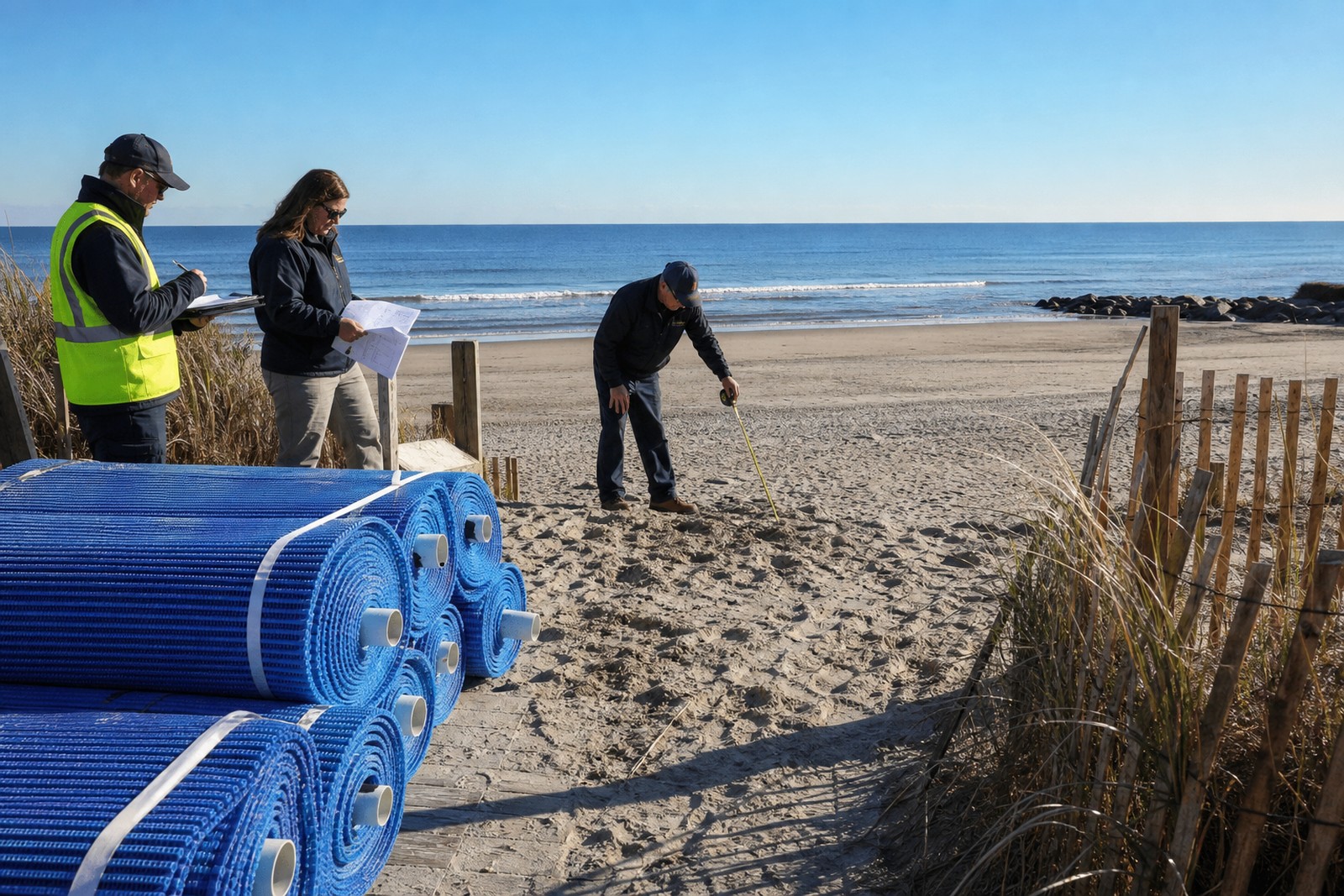
Write an opening rule a new shift can follow
One example policy reads, “The duty lead may open the west route after today’s inspector has checked the approach, the installed run and the viewing-area endpoint against the current route plan. The desk publishes the opening time and destination after receiving that decision.”
The record should identify the route version, time checked, condition observed and person authorising opening. Where a defect required correction, attach the recheck. Before staff leave the entrance, compare what the sign says with what the visitor can actually reach. If the season’s route has moved or shortened, update the route map and review the new endpoint first. Seasonal beach mat startup checks
For U.S. projects, the U.S. Access Board’s guide describes the scope of the federal outdoor developed-area provisions for beach access routes. The site should identify requirements applicable to its own project and obtain any necessary design review. An operating policy assigns daily responsibilities for the route the site has accepted. Access Board guide to outdoor developed areas
Give staff clear authority to pause use
A lifted section, a separated join, exposed hardware, water washing over the path or a blocked return area can change what a visitor encounters. Include triggers for inspection after storms, grooming, other site work or a report from a visitor. Ask the responsible site team to set weather and exposure criteria appropriate to that beach and product.
A practical pause rule could read, “Any staff member who sees a condition affecting movement or return alerts the duty lead. The lead can restrict access at once, arrange a field check and tell the visitor desk which entrance and destination are affected.” Identify how staff assist people already on the route under local procedures. Close or control the approach at a point where new arrivals can make a choice.
| Status | Decision needed | Example of visitor wording |
|---|---|---|
| Open | Current layout and intended endpoint checked and released | “The west mat is open from the boardwalk to the viewing area. Loose sand continues beyond it.” |
| Paused | Duty lead restricts the affected route pending assessment or repair | “The west mat is temporarily closed at the boardwalk entrance. Staff are checking a lifted joint. Ask the visitor desk for the latest update.” |
| Revised route open | A shorter or relocated route has been reviewed, including its return space | “The west mat is open to the first seating area today. The extension to the viewing area remains closed.” |
| Closed for the season | Removal or seasonal closure authorised and communicated | “The west mat is closed for the season. Contact the visitor desk to check other access arrangements.” |
Publish an alternative only after staff confirm how visitors can use it. Provide a contact route for people who cannot use the entrance sign or website, and make the current message available to staff who answer enquiries. The U.S. Department of Justice’s effective communication guidance can inform that review where applicable. Effective communication guidance
Reopen after the affected journey has been checked
Suppose sand has washed out beneath a connection. The maintenance team can report its repair as complete. The field reviewer still checks the joint, its neighbouring sections, the approach and the route back to the published endpoint. If the correction changes the alignment or length, have the authorised person review that revised layout. A fixed joint alone does not resolve a blocked return area farther along the run.
Record the release time, reviewer and destination now available. Remove barriers or temporary notices in coordination with the opening decision and replace the paused message on each public channel. An illustrative update is, “The west route reopened to the viewing area after inspection this afternoon. Please report any change at the boardwalk entrance to the visitor desk.”
Preserve the original report, the action the team took and the decision communicated. If several pauses arise at the same joint, review the installation, conditions and inspection method with the supplier and site lead. That history also tells the next season’s team which location deserves attention before reopening. Checking the interface at the ramp or boardwalk