
For a cruise call, the relevant question is how many people can reach the advertised beach destination and return before the ship’s deadline. A mat wide enough for one wheelchair may still have a single turning bay, one entrance attendant and a return crossing that incoming groups will need at the same time. Plan the day around those shared points.
Work back from the return crossing
Confirm the arrival berth or tender landing, transfer to the beach, time needed to get back aboard and the clock used for the final handover. Reconcile ship time and port time if they differ. Give the port and beach teams one itinerary showing the last point a party can reach and still make the agreed return. The shore excursion planning guide covers individual passenger, personal wheelchair and vehicle handovers.
For the mat crew, the deadline is the time the last party must leave the mat endpoint. In a hypothetical call, the group must reach its port contact by 14:30 local time. Allow 25 minutes for the road transfer, 10 for collection and chair hand-back, 15 for travelling back along the mat and 10 as contingency. Those 60 minutes place the latest departure from the endpoint at 13:30. If the shore transfer is delayed until the destination cannot be reached and left by then, offer a shorter, already checked destination or cancel the beach leg under the operator’s arrangements.
Stage each party without blocking a return
Map the check-in area, transfer space, first mat joint, any narrow segment and the turnaround. Locate the waiting area on firm ground clear of both directions of travel. Determine where an incoming party can wait while an earlier party returns. A queue held on the last mat panel can seal off the very space someone needs for the return turn.
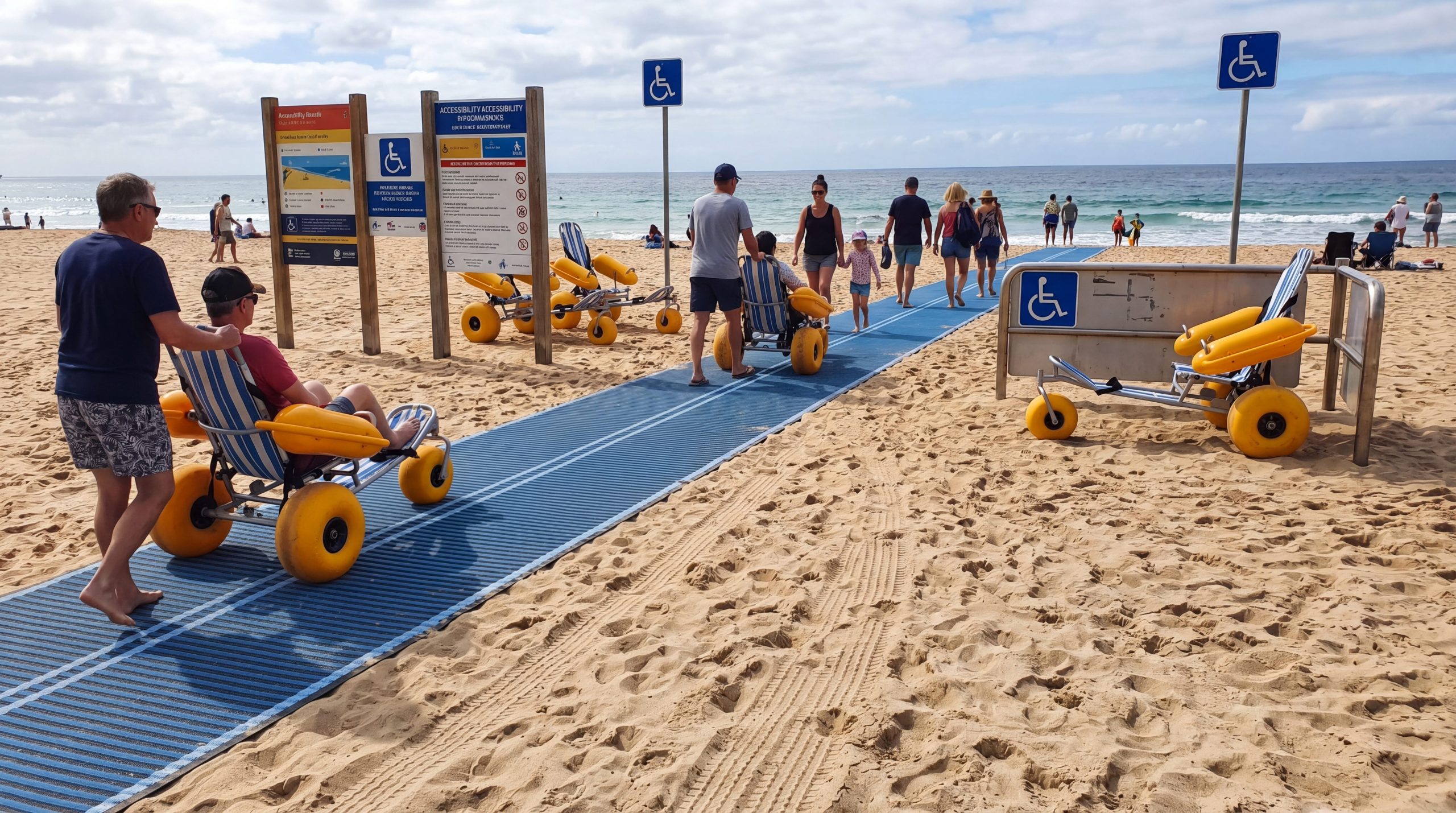
Use the actual installed dimensions, the configured mobility devices and the people who will assist. Observe how long a group takes to clear the shared crossing on an agreed rehearsal. If only one group can use the narrow section at a time, the dispatcher and route attendant need a means to confirm it is clear before sending the next group. Adding a second beach chair will not resolve that bottleneck. Planning usable mat width and passing space
Open the part of the mat that is ready for this call
Confirm that the complete run to the announced endpoint is laid and inspected. Check the transition from the firm path, joint engagement, surface condition, edges and the last usable turn. Keep the exact system instructions at the deployment point. The offered construction determines which joins, hardware and handling equipment the crew needs. Beach access mat system information
If the extension to the beach seating area is closed, tell the excursion organiser what shorter visit is possible, how many parties it can support and whether the revised timetable still works. The operator should describe the verified endpoint before accepting the group from the port. Where a beach wheelchair is supplied, confirm the chair, assistance and return separately. A dry mat route does not include a water activity.
End the call with everyone and every component accounted for
Keep one count of parties still beyond the entrance and another of equipment on loan. Confirm the last guest has crossed back and the receiving team has accepted any personal equipment before authorising removal of the route they needed. On a call-only installation, count sections, connectors and end fittings back into storage and record damage before the next mobilisation.
After the first calls, compare actual time at the shared crossing, time spent waiting on transfers and any visitors who accepted the shorter destination. Each points to a different improvement: more space to pass, a better shuttle schedule or more accurate excursion wording. Managing a peak-day beach equipment queue