
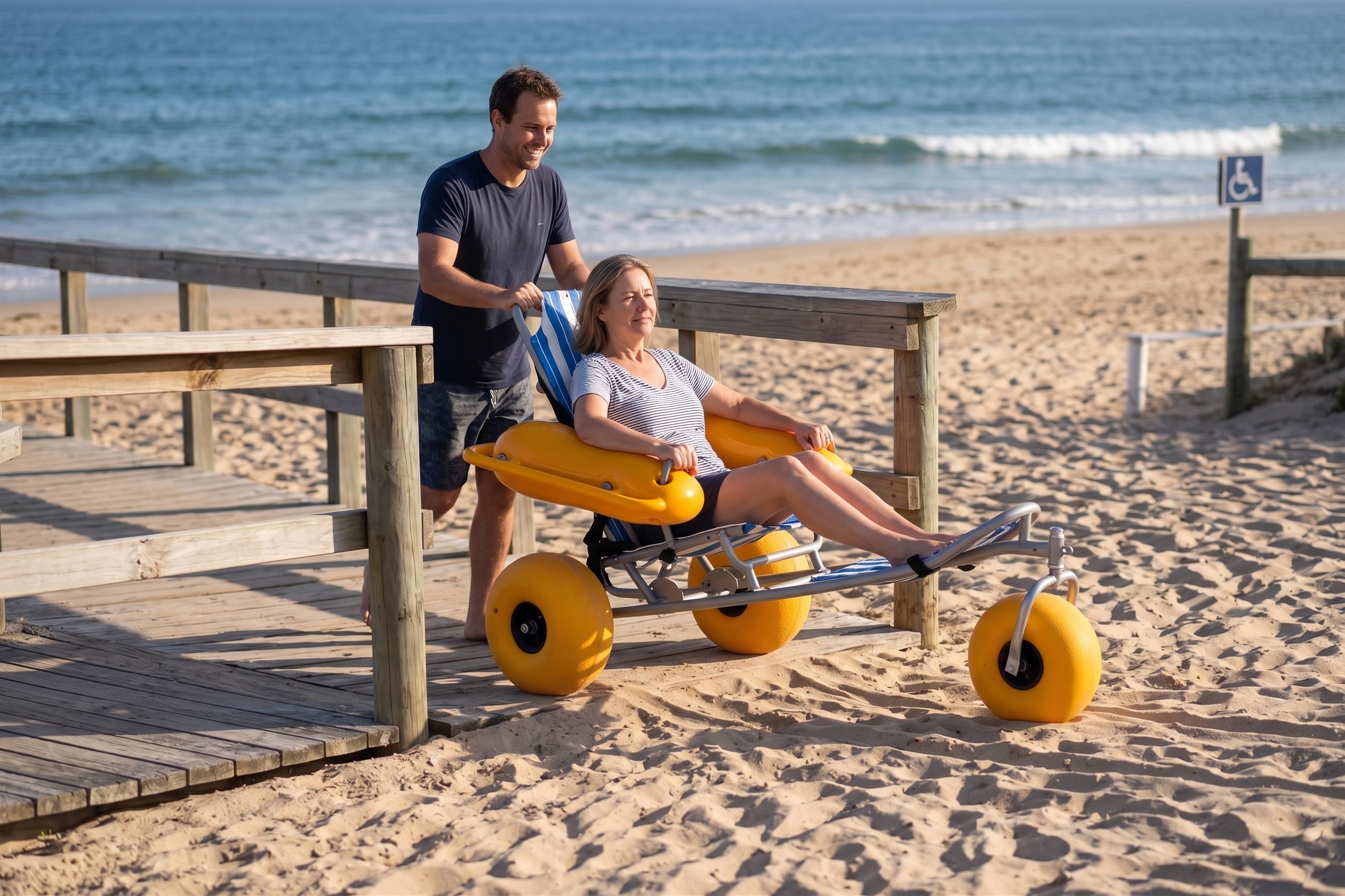
Illustrative equipment and route image from the Ary Beach collection.
On a busy morning, people waiting for beach wheelchairs need to know where to check in, whether their booking is confirmed and when the desk will update them. A returned chair may be visible while it awaits inspection. A trained attendant may already be on the beach. Put both facts in front of the dispatcher before quoting a start time.
Define one visible arrival point and one completed handoff point. Mark where people can wait without obstructing the transfer space, the route back from the beach or access to their own mobility equipment. Offer a way to wait seated or nearby and receive an update under the operator’s arrangements. Someone who cannot stand in a physical line still needs an identifiable place in the queue.
Check in a booking or create a walk-in request
Ask for the confirmed reference or create a new request, then verify the activity, requested time, entrance and agreed assistance. Discuss individual fit privately with the appropriate team. The public queue board can show a ticket or booking reference, task and next update. Keep personal information in the booking system.
Use the site’s stated allocation rule for confirmed bookings, walk-ins, cancellations and late arrivals. Before the desk releases a space to a walk-in, check the full expected return and preparation window against the next confirmed visit. If the visitor can accept a different service or later start, record that preference and confirm the change with them. Beach wheelchair booking and collection questions
Base the estimate on the next supported handover
The next start requires a suitable released chair, available trained staff and an open journey to the stated destination. A desk offering an AY-ST-V1.0 water visit must also coordinate the trained water team, approved calm shallow zone and return route. An available land chair may offer a different outing if the visitor wants one and the land service is supported. Floating wheelchair water-entry conditions
Consider a hypothetical queue at 10:15. One land chair is expected back at 10:30. Its check and preparation usually occupy 15 minutes on this shift. A qualified handover lead will be available at 10:50. The earliest estimated start is therefore 10:50, assuming the chair returns on time, passes inspection and the route remains usable. That gives an estimated wait of 35 minutes from 10:15. If the chair returns with a reported fault, remove that estimate and tell the waiting visitor when the desk will next have information.
A brief message could read, “The previous visit is still out. We expect to update your start time at 10:35 after the chair returns. You may wait at the shaded desk and keep this reference.” Use an actual update time that a named staff member can meet. Returning late from the beach, needing extra assistance and waiting for repair lead to different messages.
Keep arrivals, returns and departures moving
| What staff observe | Who acts | What happens to the queue |
|---|---|---|
| Several groups arrive together | Greeter checks references and separates scheduled starts from unconfirmed walk-ins. | Preserve the agreed order and identify who needs a private fit discussion. |
| The next chair is back but unprepared | Returns staff receive the asset, hear the user’s report and complete prescribed checks. | Keep the chair unavailable until the authorised release reaches the desk. |
| An attendant cannot cover the next start | Duty lead arranges qualified relief or changes the appointment. | Update the visitor before preparing a chair for an unsupported departure. |
| The route or water service closes | Field lead identifies the affected activity, destination and existing visitors needing a return. | Stop new starts for that activity, contact its waiting visitors and offer verified alternatives. |
When a booked group arrives early, explain the scheduled start and where it can wait. When a walk-in leaves, close the request with its reason where known. Clear a queue entry only after an actual handover, withdrawal or agreed change. The staff training and shift roster guide can help identify covered and uncovered tasks at peak changeovers.
At shift end, compare check-in time, actual handover, waits, withdrawals and pause reasons by service. A pattern of visitors waiting on returned equipment calls for a look at preparation space or coverage. A queue waiting on a water supervisor calls for a staffing or operating-hours decision. Pass those findings to the next seasonal demand forecast with the period and route attached.