
Illustrative equipment and route image from the Ary Beach collection.
Before selling a beach wheelchair shore excursion, identify the last point the visitor can reach and still get back to the ship on time. Work backwards from the cruise line’s confirmed return instructions, including any tender, screening or meeting time. Name the beach chair, the entrance where it will be handed over, the people providing assistance and the contact responsible for the trip back.
A port berth and a tender landing can involve different handovers. Ask the cruise line or port operator to confirm the arrangements for the visitor, their own mobility equipment and the particular arrival that day. The excursion team also needs the ground transport provider to confirm its vehicle and assistance. Having a beach wheelchair waiting at the far end settles only one part of the journey.
Agree the handovers before disembarkation
Give the visitor one itinerary that names the meeting point visible from the arrival route, the transport pickup, beach station, proposed destination, return pickup and latest hand-back to the cruise team. Use local times consistently. Include who can be reached if the ship changes berth, the tender schedule changes or the group is late.
| Handover | Confirmation needed |
|---|---|
| Ship or tender to the port contact | Which arrival point is in use, whether the visitor’s planned disembarkation is available, and where the shore team can actually meet them. |
| Port to vehicle | Passenger travel arrangements agreed with the transport provider, handling of the personal chair, luggage space and the pickup contact. |
| Vehicle to beach equipment | Named beach entrance, released chair, agreed transfer assistance, custody of the person’s own chair and time it will be returned. |
| Beach back to ship | Time to come back from the destination, complete the transfer and return the loan chair, travel to the port and reach the agreed cruise handover. |
A visitor staying in their wheelchair during a vehicle journey needs that arrangement confirmed for the actual vehicle and wheelchair by the responsible transport provider. If the visitor transfers to a vehicle seat, confirm how the empty chair and any removed components will be carried and identified. Keep the vehicle booking and the beach-chair booking linked by the visitor’s agreed times and practical requirements. Beach wheelchair reservation questions
Try the land route with the chair that will be issued
For the AY-ST-V2.0, the manual identifies a four-wheel chair with a high backrest, adjustable leg support and a folding frame. The listed overall width is 110 cm. Measure the narrowest usable opening at the beach station and along the proposed route, including a turn at the end. Check the assembled chair in the seating configuration selected for the visitor. A leg support extended for the outing changes the space needed to turn or approach a threshold. AY-ST-V2.0 manual, pages 2–3
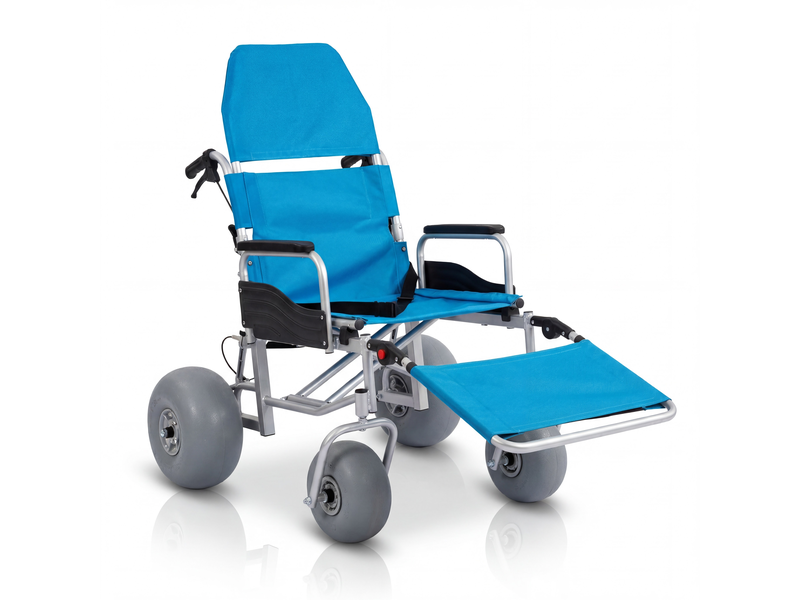
Before offering the excursion, have staff walk the boardwalk, mat connection and planned sand section in both directions. Examine the collection and transfer space as carefully as the beach. After obvious defects are resolved, try the empty, correctly prepared chair under the operator’s procedure. Record the date, exact configuration, surfaces, place where the wheels meet loose sand, turn and time needed for retrieval. An individual trial requires the person’s agreement, suitable fitting and appropriate trained support. Use the actual service observations to revise the planned journey. Wheelchair access where a mat meets soft sand
Calculate the turnaround time
Before doing the subtraction, confirm whether the all-aboard time uses ship time or local port time. Record both if they differ and agree which clock the driver and shore guide will use.
Suppose, in a hypothetical itinerary, the cruise operator requires the group back at its named port meeting point by 14:40 local time. The excursion planner allows 30 minutes for the road trip, 10 minutes to hand back the beach chair and recover the personal chair, 15 minutes from the viewing area back to the beach station, and a 10-minute contingency. Those four allowances total 65 minutes. The group must leave the viewing area by 13:35.
If the visitor reaches the viewing area at 13:10, this example leaves 25 minutes there. A 30-minute arrival delay would put the visitor there after the turnaround time. Check with them about a shorter, already assessed destination, or cancel the beach leg under the operator’s arrangements. Use timings from the actual route and current port instructions. A generic excursion duration gives the desk no way to make this decision.
Put the return contact in charge of the clock
At arrival, reconfirm the current berth or landing, vehicle, beach route, chair and required staff. Confirm who keeps the turnaround time while the guide supports the visitor. If the group meets unexpected soft sand, loses a planned transfer point or needs more assistance, pause and check whether a supported return is still feasible. The site’s land outing ends at the agreed destination. A water session would require a separately planned service, equipment and time allocation.
At the beach return, confirm the visitor has their personal chair and accessories before the vehicle leaves. Record the actual handover time at the port and any delay the next planning team can address. A late vehicle, a slow equipment handover and a changed landing each require a different adjustment before the next excursion is offered.