
A campground map can show a pitch close to the beach while the usable route starts at a boardwalk farther away. Before assigning a visitor that pitch, trace the journey from the actual tent or vehicle door to the first mat panel. Include the trip back to the pitch and the facilities the visitor expects to use along the way.
Start at the pitch, not the beach entrance
Mark where a person would get out, where camping equipment will stand and how they can reach the common path. A level pad can work well at an empty pitch, then lose its turning space when a vehicle, tent line, picnic table or cooler occupies it. Ask the visitor how they expect to move between their pitch, the washroom and the beach. Inspect the relevant connections at their normal operating layout.
Consider two hypothetical pitches. Pitch A is closest to the sand but the route to the mat crosses a loose-gravel vehicle lane. Pitch B is farther from the beach and opens onto a firm path leading to the boardwalk. If the visitor wants to stay in their usual chair, tell them about the surfaces and measured distances before they choose. Physical proximity alone does not establish which pitch gives them a usable trip.
Look at the place where wheels meet sand
Take the route in both directions. Locate the first and last connected sections, the firm-to-mat transition and the turning area at the beach destination. Note where a wheelchair could catch a lip on the uphill return even if the outward trip appears manageable. Check the width that remains when other campers and equipment use the path. Beach mat clear width and turning space
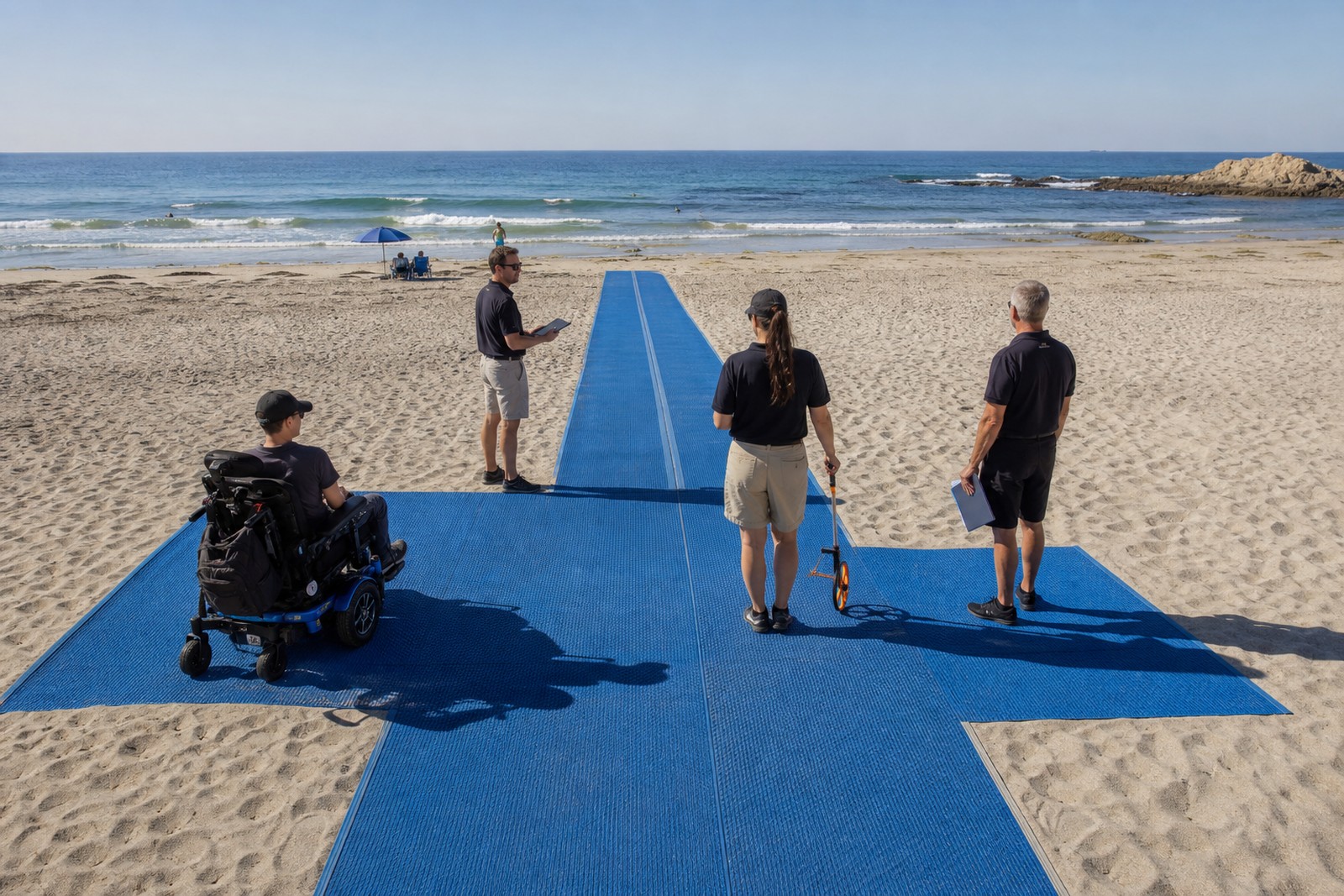
For modular matting, use the installed section count, clear width and connection details for the actual product. Check whether the far edge is supported by sand and whether the approved method allows adjustment after sand moves. A sample panel does not establish that the campsite lane, boardwalk and endpoint form a continuous route. Manufacturer’s mat configurations · Mat and boardwalk connection checks
Check the way back during campground operations
At a campground, the return can happen hours after the first trip. Delivery vehicles may cross the common path, a gate may be locked at a set time, or the last staffed equipment return may precede dusk. Walk the normal evening route with the site manager and confirm what access and assistance the operator can provide during the intended hours.
| Where the trip could break | What the campground team should establish |
|---|---|
| Pitch to washroom or main path | Surface, clear space around the occupied pitch and whether the visitor can follow the agreed route independently or with their chosen assistance. |
| Main path to first mat section | Gate, vehicle crossing, entry edge and a named place to call for help if that connection closes. |
| End of mat | Actual destination, turning space and what remains on loose sand. Confirm a suitable chair and assistance separately if the visitor wants to continue. |
| Return to the pitch | Available entrance, expected closing time, lighting or other verified orientation arrangements, and where any borrowed equipment must be returned. |
If the mat end becomes unusable while people are at the beach, the duty team should first address their return under the campground’s local procedure. Update the route at the registration desk as well as at the beach entrance. A camper arriving that evening needs the current description before unloading at the wrong pitch. Site assessment for a complete beach visit