
Start the risk assessment with one specific outing. Name the entrance, chair or walking aid, destination, assistance and way back. A service that offers an assisted ride to a viewing area faces different conditions from one that also offers supervised water entry. Mark the intended activity on the route plan so everyone knows which decision the assessment supports.
Many projects begin with a product request, then discover route, staffing, care, information, or authority gaps after purchase. A useful assessment records where someone could be exposed to a hazard, how staff would recognise it, what part of the service must stop and what would permit it to resume. Use the site operator’s risk process to decide priorities.
Walk the journey in the visitor’s equipment configuration
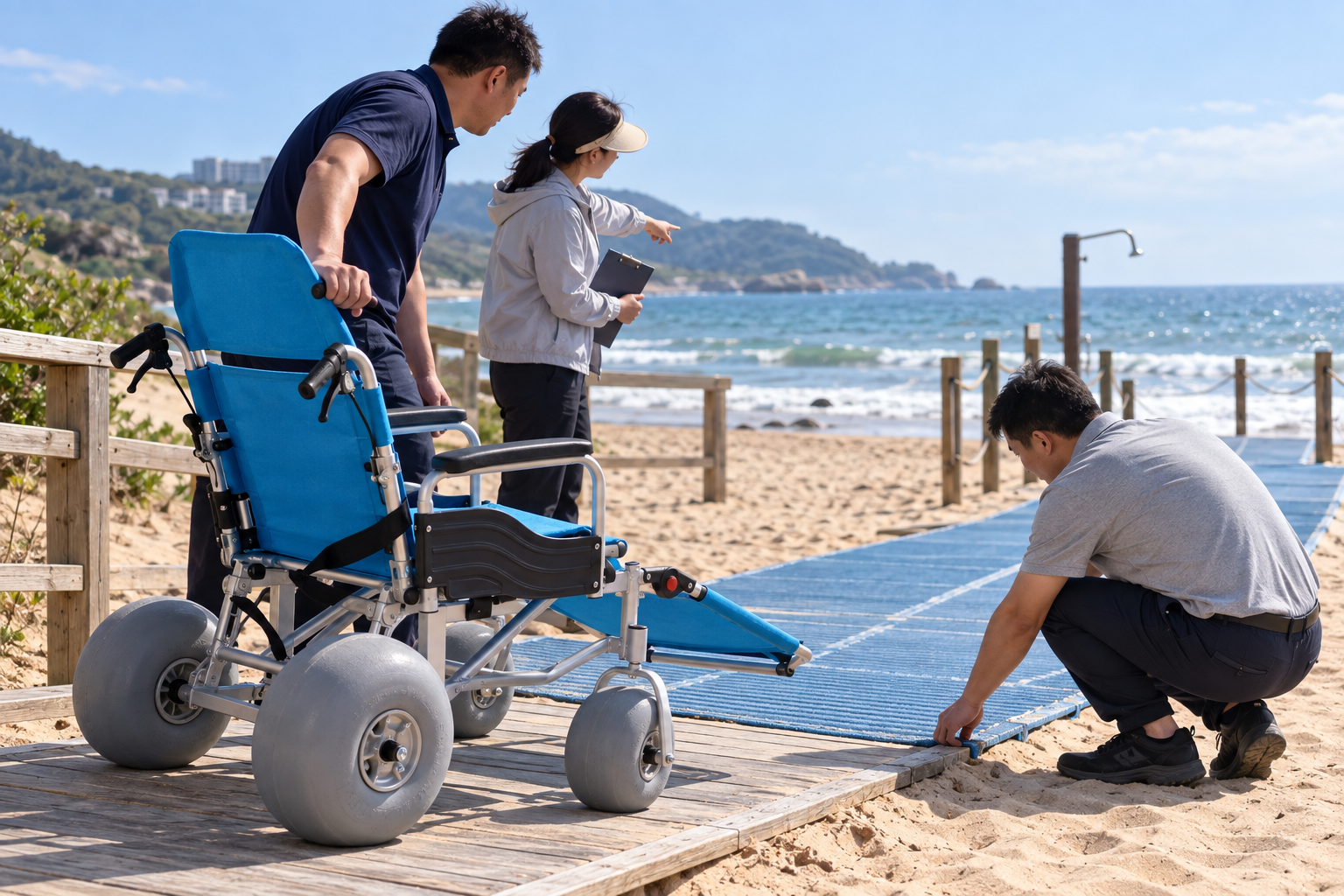
Follow the visitor from drop-off to the collection desk, transfer space, planned destination and return point. At each change of surface, look at the opening in the direction the chair will actually approach. A ramp landing may allow an attendant room to stand behind a chair on the outward trip and leave little room to line up from the beach side. Check sand beneath the end of a mat as well as the mat surface.
Take the intended chair through permitted, empty-equipment checks after resolving evident route defects. Include its leg support, full wheel width and attendant position. For the four-wheel AY-ST-V2.0, the manual identifies a high backrest and adjustable leg support. A turn that clears the empty chair in one setup may need a different assessment in the position selected for an individual visitor. Record the configuration used. Any participant trial needs an agreed plan, fit and assistance appropriate to that person. AY-ST-V2.0 manual, pages 2–3 and ramp and mat transition checks
Give each hazard a practical boundary
The following illustrative entries show how the same station might handle different findings. Set actual limits and responsibilities through the operator’s approved procedures and the instructions for the supplied equipment.
| Observation and exposure | Control and scope of the hold | What verifies the correction |
|---|---|---|
| Sand has eroded below the mat’s return edge. A front wheel could meet a step when the visitor comes back. | Route lead closes trips dependent on that connection and directs visitors to a confirmed usable endpoint. | Installer corrects the connection. The route lead checks the repaired edge, adjoining sections and approach in both directions. |
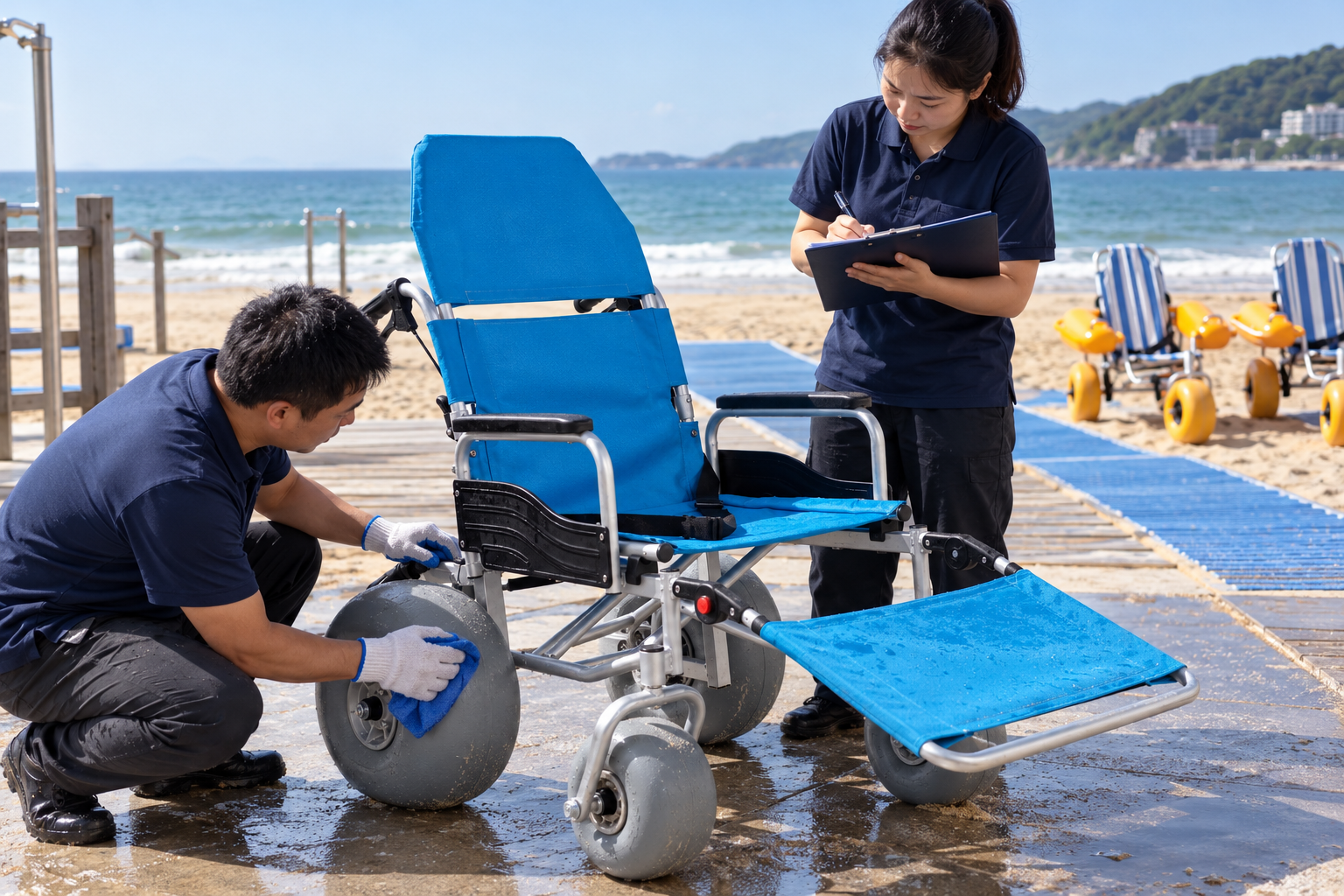
| The leg support on one chair shifts during its instructed engagement check. A visitor depends on that support during travel. | Equipment lead isolates that asset. The desk reviews any booking linked to it. | Authorised service and recheck of the affected assembly. A substitute chair needs its own release and fit review. |
| A visitor needs assistance with a transfer beyond the tasks the staff on duty may provide. | Pause that handover, ask what the visitor needs and involve the person authorised for the task. Discuss a supported alternative if available. | The assistance, equipment and transfer location have been agreed with the visitor and the responsible provider. |
| A trained attendant is still supporting an earlier return when a second booking arrives. | Dispatcher holds the new departure or offers another staffed slot. Keep the earlier visitor’s return covered. | Duty lead confirms actual cover for both commitments. |
| Waves reach the entry zone proposed for an AY-ST-V1.0 floating session. | Water-service lead stops departures from that zone. Review the land outing independently. | Inspect the current entry, exit and attendant footing and restore service only under the site’s authorised water procedure. |
The AY-ST-V1.0 guidance limits its use to protected, controlled, calm water with trained supervision and stable attendant footing. A chair’s inflatable wheels and armrests identify equipment to inspect. They cannot establish the condition of the water or the team’s ability to support an exit. Floating wheelchair service boundaries and shallow-water site decision
Check that the control works under normal staffing
Ask the person on the desk to handle one example while the route and equipment staff carry out their usual duties. If a technician tags a chair, can the desk see it is unavailable before confirming the next reservation? If a ramp closes, can someone at the entrance direct an arriving visitor before they reach the impassable section? A form cannot replace appropriate routes, equipment, staff, maintenance, or emergency planning.
For incidents requiring urgent assistance, use the site’s emergency contacts and local response procedure. Brief staff about how to identify the exact location and inform the duty lead. Store incident and personal information under the site’s access rules. The public update can identify the affected entrance or service without naming the visitor. Staff rehearsal and operating handover
Reassess the condition that changed
Prioritize barriers with serious visitor consequences, weak controls, and high service dependency. A single damaged return connection used by every outing can warrant attention before several minor issues that leave another usable path. Record the finding, affected service, condition or restriction, responsible lead and what that person must check before reopening.
Repeat the relevant assessment after a route moves, weather changes the supporting sand, an approved model changes or a staffing arrangement changes. For U.S. projects, determine the requirements applicable to the particular facility and route. The Access Board explains the scope of federal outdoor-developed-area provisions. A product label or a site risk register does not determine legal compliance. Access Board guide to outdoor developed areas