
When a guest asks for “a cabin with beach access,” tell them which cabin, which entrance and which destination the park can actually connect. Two cabins in the same price category may have different thresholds, approach paths or distances to reception. A mat across the last stretch of sand settles only one part of the booking.
Describe the guest’s route for the accommodation they will receive
Walk from the cabin door in its normal furnished configuration. Identify the threshold, the route past parked cars, the crossing to the communal path and the start of the mat. If the guest plans to use the pool, restaurant, toilet or changing area on the same outing, inspect the branch to that amenity and the way back. Describe which destinations are connected by a firm route and which require another arrangement.
Reception should be able to explain what happens when a cabin allocation changes. If the advertised cabin is replaced by another unit, repeat the route check for the new entrance and contact the guest before confirming the change. A room category or a beach photograph gives little help to someone arriving at the wrong side of a flight of steps.
Rehearse the busiest changeover
Run a walk-through while housekeeping carts, luggage transfer and grocery deliveries are moving along their usual lines. A laundry trolley parked across the landing can block the turn onto an otherwise usable mat. Agree a staging place with housekeeping and check that a passing visitor can still reach the return path. Keep dining queues and beach-toy storage out of the space used to turn.
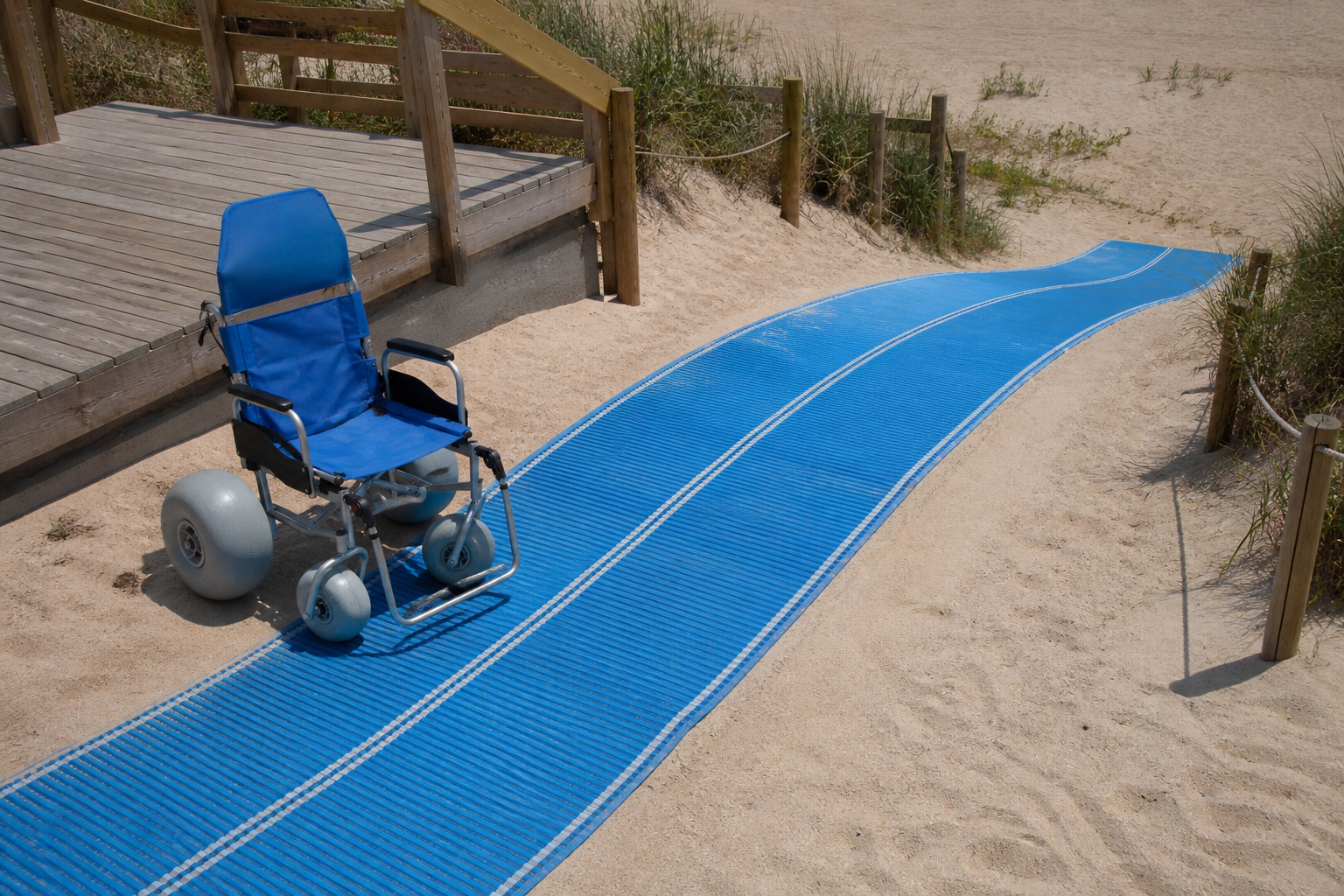
Ask maintenance to identify the actual mat construction and its transition detail at the end of the hard path. For a modular system, verify the layout and the hardware for the selected sections. If a panel or its substrate shifts, reception needs the new usable endpoint and time of the check. The supplier’s modular product description leaves material, care and service life to the selected configuration. Beach mat system information
Give reception a booking statement it can keep
A useful confirmation includes the assigned accommodation, named collection point, surface changes, installed endpoint, operating hours and contact for day-of changes. If a sand wheelchair is offered, confirm that booking separately, including fit discussion, assistance, collection and return. An open mat cannot reserve a chair. A confirmed chair cannot cure a broken path between the cabin and reception. Resort equipment and route planning
For a fictional booking, reception could say, “From Cabin 6, follow the paved path past reception to the east gate. The mat presently reaches the viewing bay. To visit the picnic area beyond the bay, ask us about the sand route and available assistance. Please check at reception before setting out if the entrance changes.” A real confirmation should give the park’s verified dates, hours, contact details and actual arrangement for that guest.
When the advertised connection changes mid-stay
Suppose storm cleanup closes the east gate after guests have already checked in. Identify which occupied cabins and advance bookings rely on that gate. The field lead checks any alternative entrance and the full return to the cabin area. Reception contacts the affected guests with the usable alternative or the service that must wait. Update the in-room directions as well as the website and the beach-side sign.
At checkout, a specific question is more useful than asking whether the park was “accessible”: which point between the cabin and the intended destination prevented or complicated the visit? Pass a reported loose mat edge to maintenance and a misleading cabin description to reservations. The two findings require different corrections before the accommodation is sold again. Visitor information for beach wheelchair services