
The AY-ST-V2.0 combines four balloon wheels, a high backrest and adjustable leg support in one beach-wheelchair configuration. For accessible-tour companies and hotels, its value lies in offering a different equipment option from a compact folding chair. Start your purchase decision with those features and the intended user’s requirements. Do not assume one model suits everyone.
For a connected planning step, compare accessible travel equipment program performance with beach photography wheelchair.
For broader destination-level context, consult the UN Tourism accessibility publications and guidelines. Apply local requirements and current product documents to the specific project.
1. What distinguishes the AY-ST-V2.0 configuration?
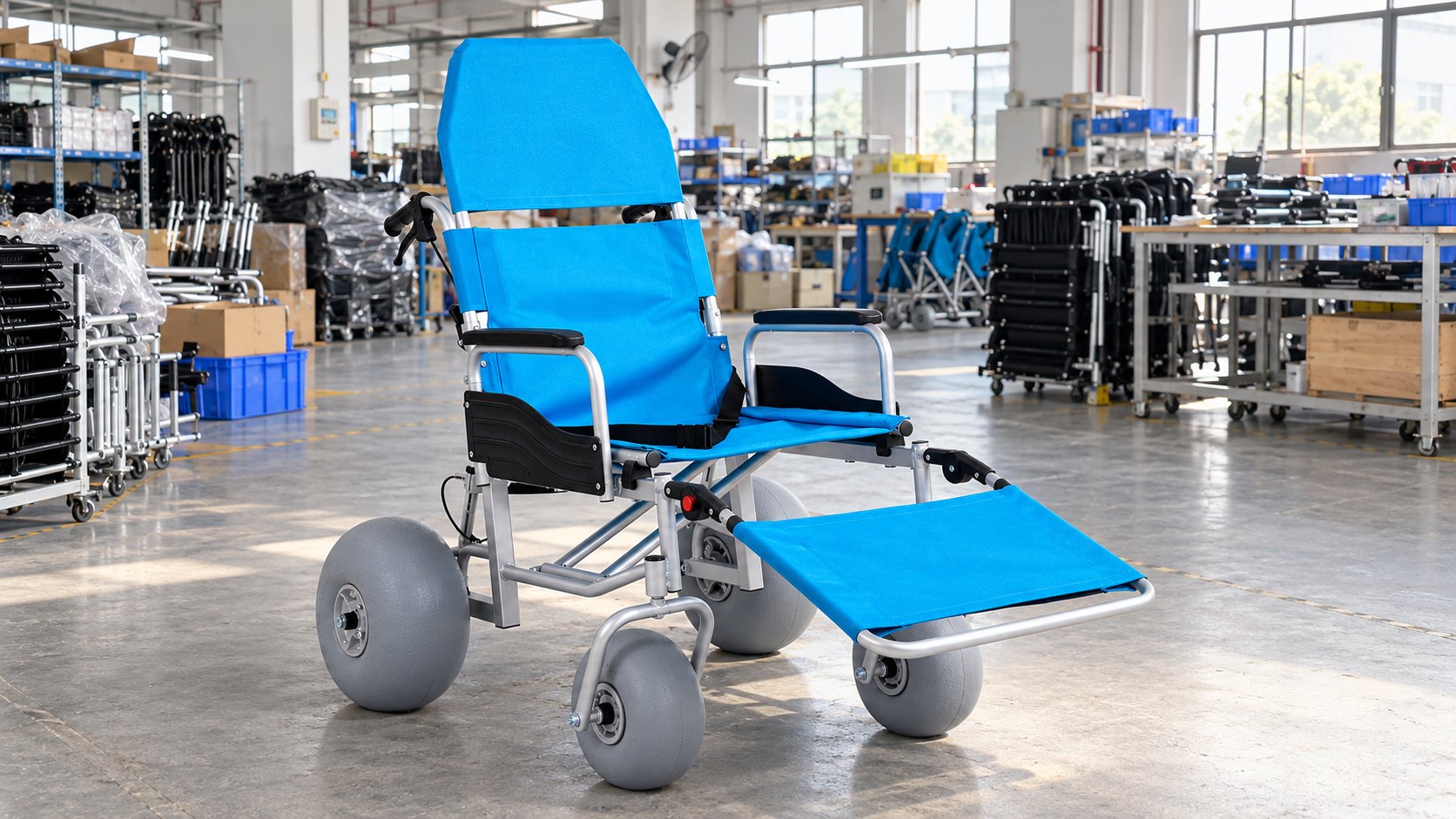
The supplied model documentation shows a high-backed, four-wheel beach chair with blue fabric seating and an extended leg-support assembly. Its front and rear balloon wheels differ in size. Those visible features distinguish it from a low-back manual chair and from the separate floating-chair category.
For a tourism buyer, that distinction gives a product discussion some substance. You can identify which configuration you are considering instead of asking for an unspecified beach chair. Guests and operating staff can then discuss the actual seating layout and assistance arrangements.
Start with this model’s complete configuration.
- Identify the high backrest and leg-support arrangement.
- Match current product photographs with the quoted model.
- Keep individual suitability separate from product identification.
The all-terrain beach wheelchair page provides product-family context. Request the current AY-ST-V2.0 specification for an order; a category description should not substitute for an agreed supplied version.
Recognize the product
| Visible feature | Product distinction | Buyer question |
|---|---|---|
| High backrest | Different seating profile | Does this configuration address the stated requirement? |
| Extended leg support | Different lower-leg arrangement | Which positions are permitted? |
| Four balloon wheels | Beach-oriented wheel layout | What terrain limits apply? |
2. What can a high backrest add to a beach-equipment offer?
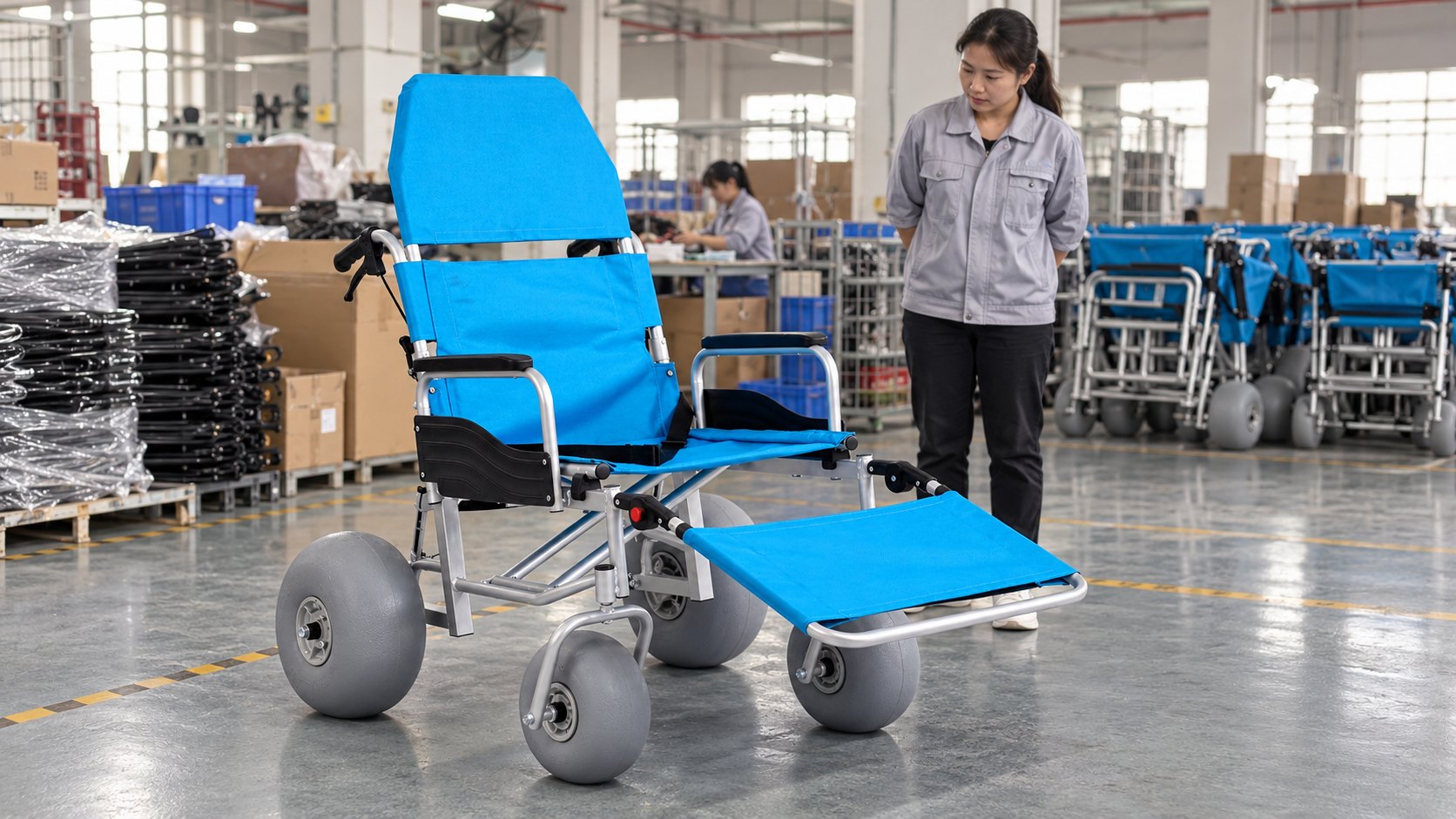
A high backrest changes the seating configuration available for discussion. A tour company carrying only a compact low-back chair cannot assume that every traveler wants that arrangement. Adding another configuration may make its product offer more relevant to a broader set of expressed requirements.
That is a choice benefit, not a clinical outcome. A taller backrest does not automatically establish comfort, pressure management or suitability for a particular person. Those questions need appropriate individual input and current product information.
Offer a configuration choice without promising a medical benefit.
- Show the complete backrest in product photographs.
- Ask which seating requirements need clarification.
- Avoid describing higher as automatically better.
Compare the model with your lightweight beach wheelchair option using actual features. A hotel may decide one configuration meets its reviewed service needs, while another buyer may need several choices. Neither result follows from the backrest alone.
Explain the backrest benefit accurately
| Product fact | Potential customer value | Unsupported promise to avoid |
|---|---|---|
| High-back configuration | Another seating option to review | Suitable for every guest |
| Visible support layout | Clearer pre-booking discussion | Guaranteed comfort |
| Different product profile | More specific equipment selection | Clinical benefit without assessment |
3. Why does adjustable leg support matter to buyers?
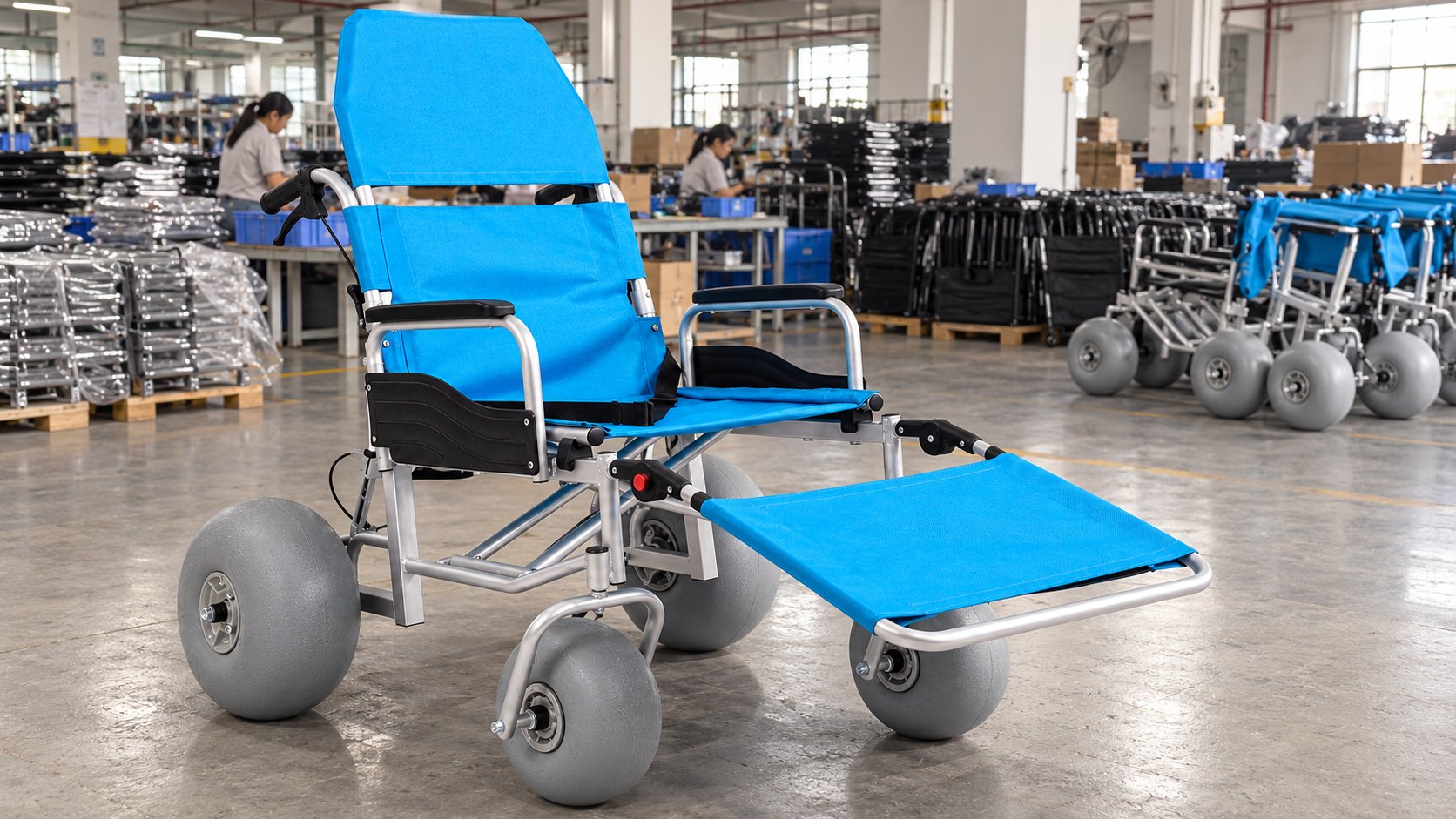
The supplied AY-ST-V2.0 documentation identifies adjustable leg support. This gives buyers a concrete feature to discuss when a standard foot-support arrangement does not answer a traveler’s stated requirements. Confirm permitted positions and instructions applicable to the delivered unit.
For a resort or travel company, commercial value comes from describing the option accurately before committing equipment. Staff can show its arrangement and refer unresolved questions appropriately. They should not prescribe a position or treat adjustment as proof of individual suitability.
Review leg support as part of the complete chair.
- Ask which adjustments the current version permits.
- Keep operating instructions with the identified unit.
- Confirm assistance and suitability through the appropriate process.
Use the model comparison for tour programs to organize your discussion. Compare the actual supplied assemblies rather than assuming that every chair described as reclining has identical features.
Evaluate the adjustment feature
| Feature question | Evidence needed | Buyer use |
|---|---|---|
| What can change position? | Current model instructions | Explain available configuration |
| Which positions are permitted? | Applicable guidance | Avoid improvised adjustment |
| Who needs this option? | Stated individual requirements | Review suitability without assumptions |
4. What do four balloon wheels contribute to the product?
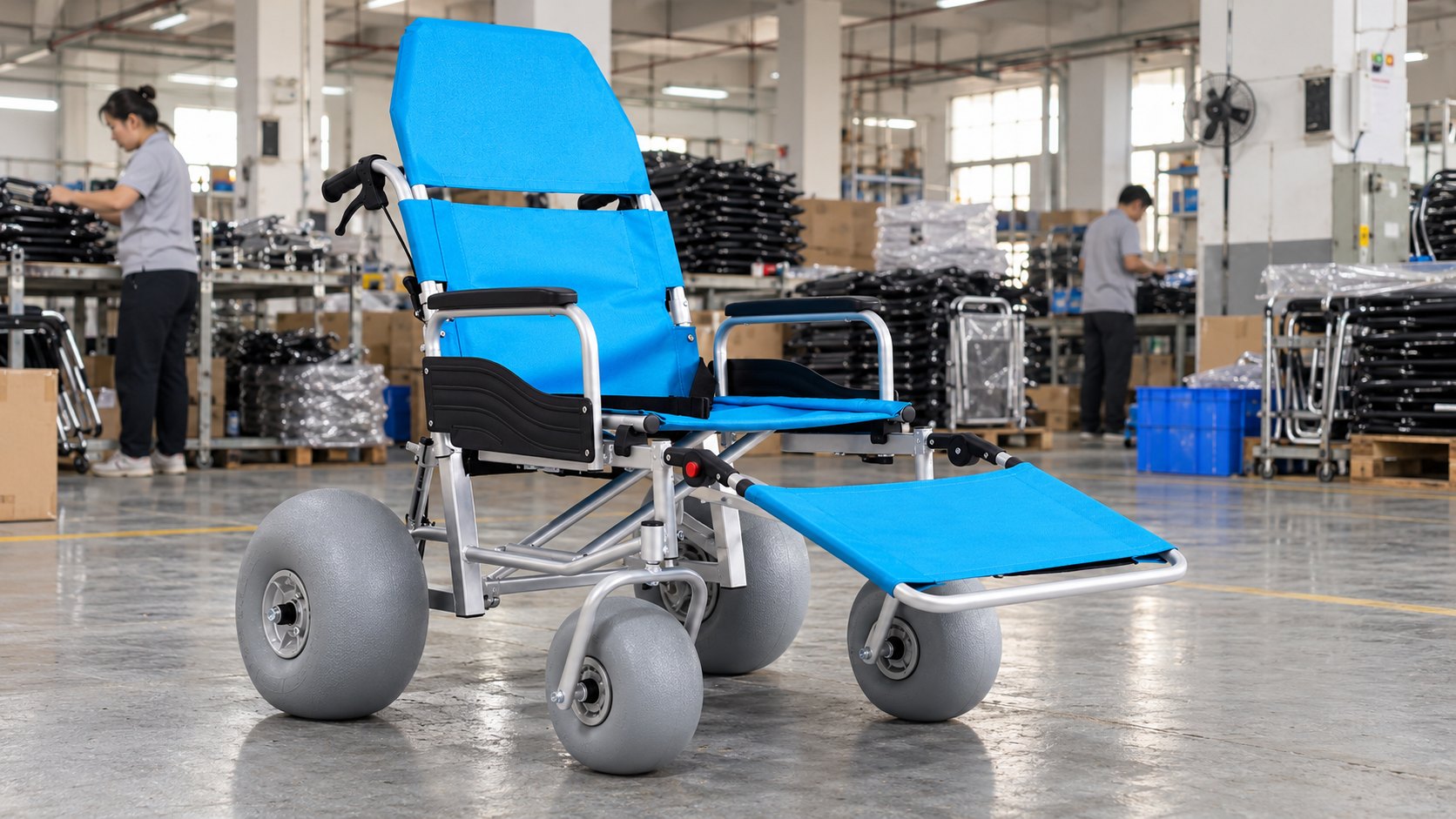
Wide balloon wheels belong to the beach-oriented configuration shown in Ary’s supplied material. Their role differs from the narrow wheels found on many everyday mobility products. Review front-wheel behavior, rear-wheel placement and the supplied frame together.
Avoid turning that design intent into an absolute performance claim. Sand conditions, load, terrain and operating arrangements affect actual movement. Neither a photograph nor the number of wheels proves that a chair cannot sink or requires a particular amount of pushing effort.
Evaluate the complete wheel-and-frame combination.
- Identify all four supplied wheels.
- Check their current references and operating guidance.
- Review the intended beach surface locally.
The beach balloon wheel resource can support component questions. It does not authorize fitting an unspecified replacement to the AY-ST-V2.0. Keep compatibility tied to the actual model and version.
Keep wheel claims specific
| Product element | Useful discussion | Do not infer |
|---|---|---|
| Wide wheel profile | Intended beach-mobility role | No sinking under every condition |
| Front/rear arrangement | Complete handling configuration | A universal assistance ratio |
| Replacement reference | Applicable support stock | Compatibility from appearance |
5. How does this chair differ from a floating beach wheelchair?
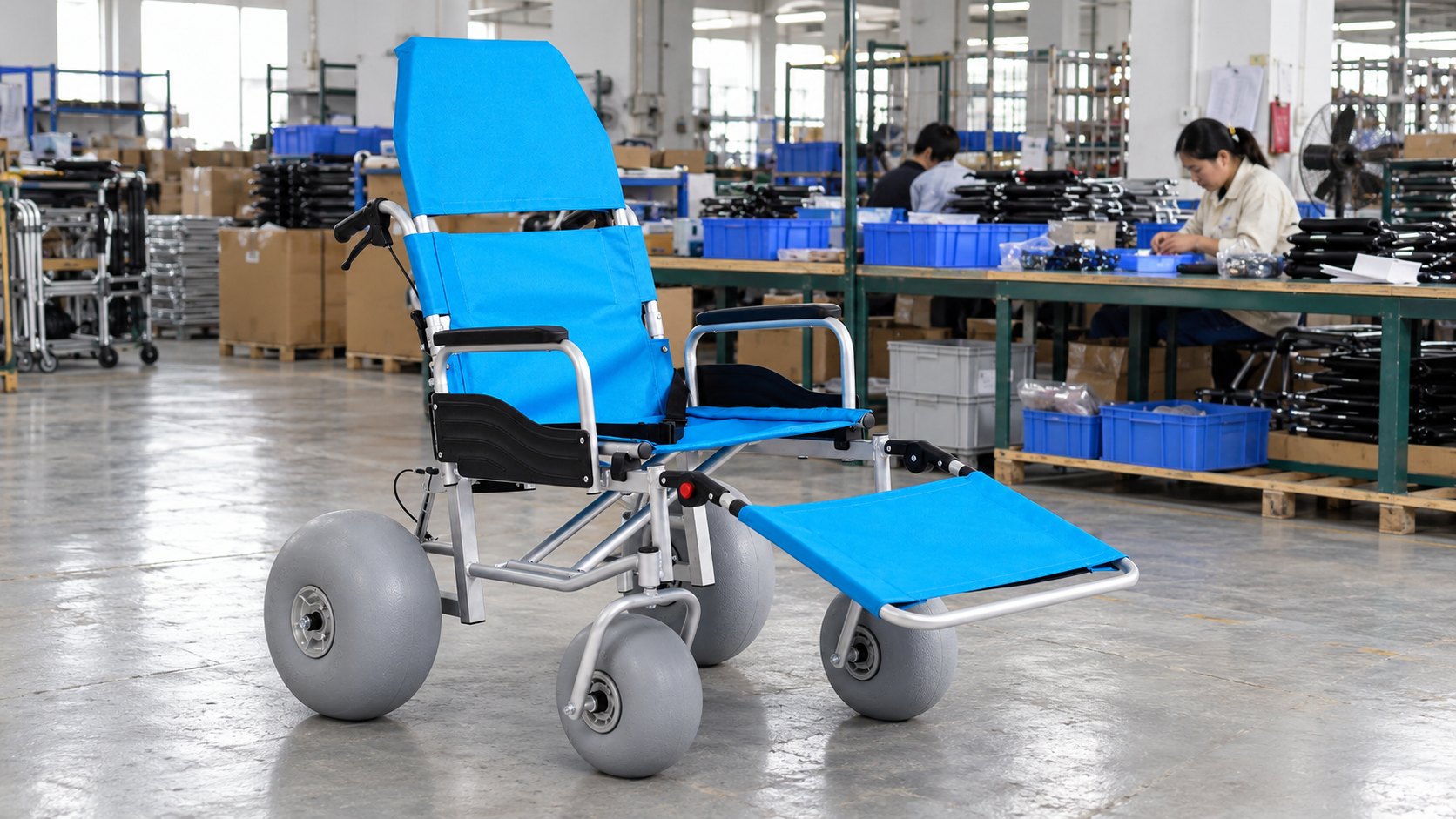
The AY-ST-V2.0 high-back configuration should be evaluated for its documented beach-mobility role. It should not be sold as a flotation product because it has broad wheels or an adjustable backrest. Floating equipment is a separate category with different construction and operating questions.
A tourism company benefits from keeping those offers distinct. Guests asking to reach a position on sand have not necessarily requested a water activity. Conversely, a water-access inquiry should not be answered by pointing to an ordinary land-based beach chair.
Separate sand mobility from a floating-product proposal.
- Identify which product category the request concerns.
- Describe the offered model accurately.
- Refer water-related requirements for a separate review.
Compare with the floating beach wheelchair category when discussing different products. Do not infer water-use authorization from a generic safety graphic or another model’s manual. Obtain current, model-specific guidance before making a service commitment.
Distinguish product roles
| Requirement | Product discussion | Separate decision |
|---|---|---|
| Beach mobility | Reviewed land-chair configuration | Terrain and individual requirements |
| Floating-chair inquiry | Purpose-built floating model | Applicable operating conditions |
| Unclear request | Clarify the intended activity | No automatic category substitution |
6. Where do beach access mats complement this wheelchair?
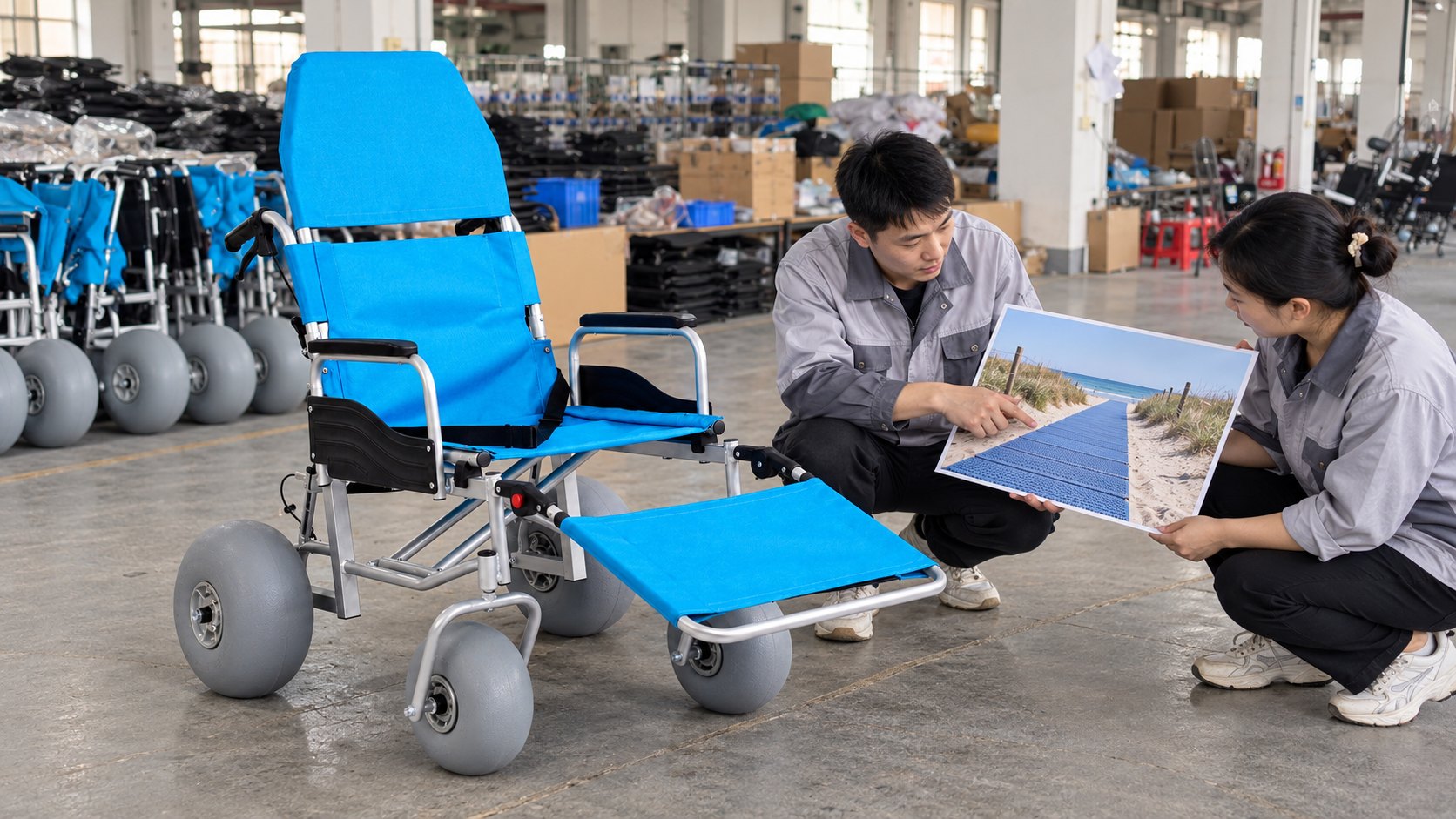
A beach wheelchair provides a mobility configuration. An access mat provides a route surface. Both products can belong in one beach-access proposal, with different roles.
For a hotel, a mat may define a connection from existing infrastructure while the chair provides an additional equipment option. Review your actual combination on the intended route. Confirm transitions, available space and relevant instructions instead of assuming two beach-access products automatically work together everywhere.
Specify the chair and route surface as complementary products.
- Identify the intended connection and stopping area.
- Review the actual wheelchair configuration on that proposal.
- Keep unverified route claims out of guest information.
The accessible beach mat page provides a separate product discussion. Request its applicable information alongside the chair specification. A successful equipment purchase should leave each item’s purpose clear, without claiming that either product alone makes an entire destination accessible.
Separate the product contributions
| Product | Main contribution | Joint review |
|---|---|---|
| Beach wheelchair | Identified mobility configuration | Suitability for the proposed task |
| Access mat | Defined route-surface option | Actual installation and connection |
| Combined proposal | Equipment plus route arrangement | Site-specific compatibility |
7. What should buyers understand about the folding structure?
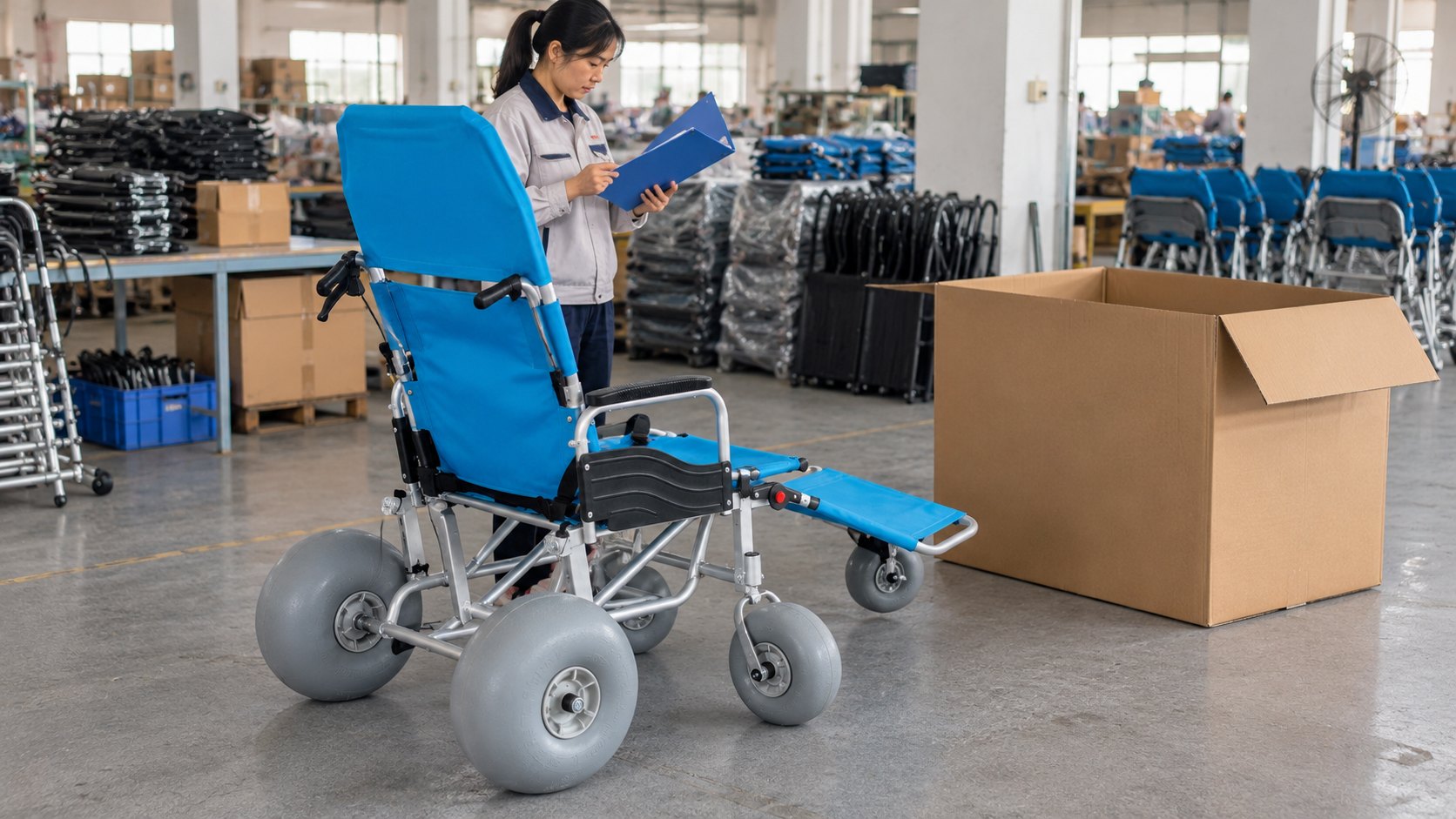
The supplied documentation illustrates a folding frame. That feature gives buyers a reason to investigate storage and empty-equipment transport, especially where a tour company moves equipment between locations. It does not establish a particular folded size or loading method without current confirmation.
Ask which transport configuration is permitted for your delivered version. Distinguish an assembled chair, a folded chair and a packed shipment. Those states can involve different dimensions, components and handling responsibilities.
Ask what remains attached in the quoted transport configuration.
- Request current assembled and transport information.
- Identify approved preparation steps through the instructions.
- Review actual storage and vehicle constraints.
Use the portable beach-equipment travel resource to frame those questions. Avoid promising that this model fits any vehicle or storage room. A folding structure’s practical benefit depends on a confirmed arrangement at the buyer’s location.
Compare product states
| State | Information needed | Buyer decision |
|---|---|---|
| Assembled | Current external configuration | Operating and storage space |
| Permitted transport state | Applicable instructions and dimensions | Empty-equipment movement |
| Shipping package | Confirmed packed details | Freight and receiving arrangements |
8. What information makes the model easier to specify?
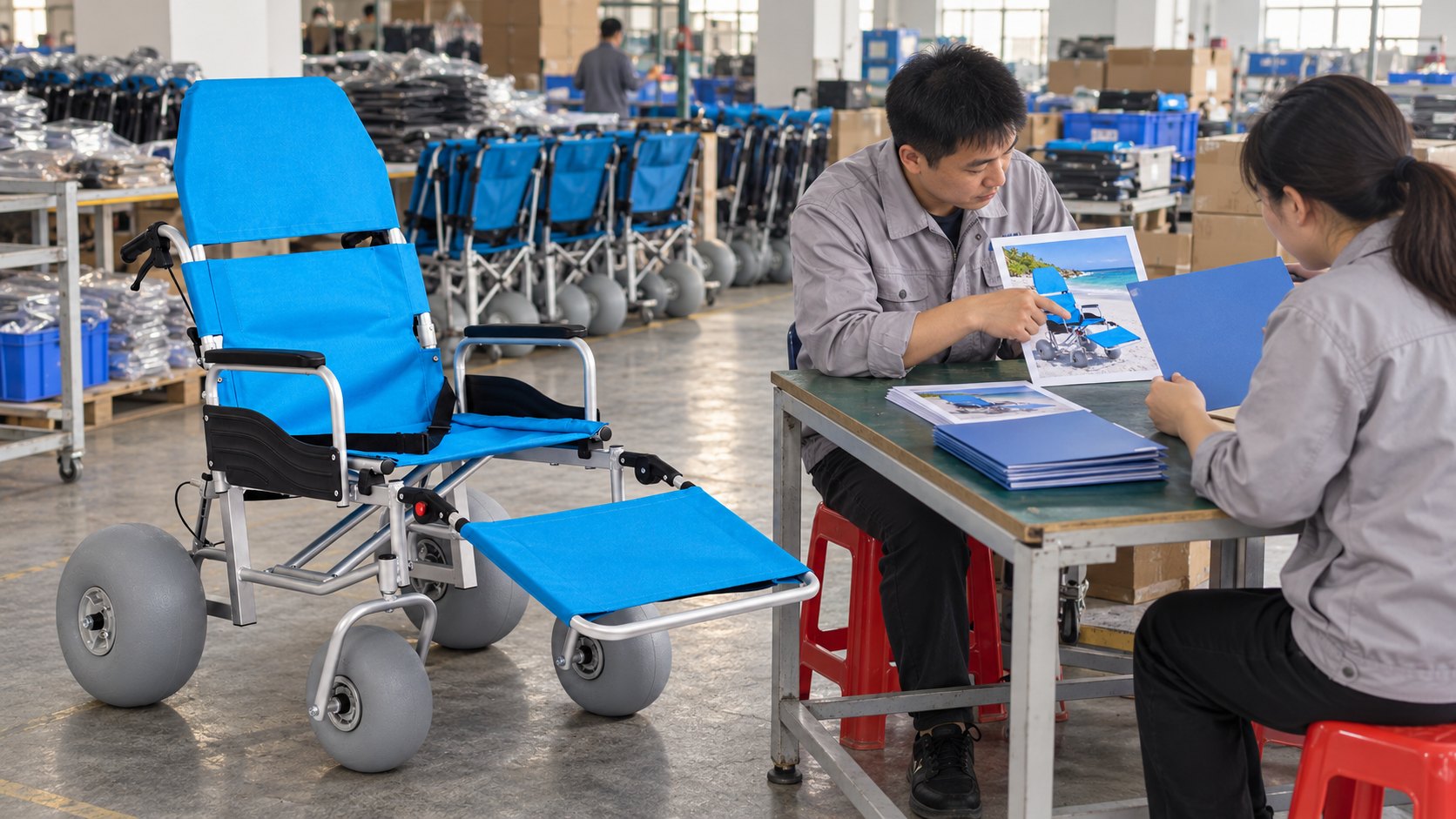
Request one current information set that names AY-ST-V2.0 and describes the supplied version. It should connect product photographs, dimensions, included items and applicable instructions. A collection of unrelated category pages creates unnecessary uncertainty for a buyer.
Pay particular attention to fields affecting suitability, transport or handling. Obtain supplier confirmation of current rated capacity, dimensions, product mass and materials before relying on them. This article deliberately does not present unconfirmed numbers as specifications.
Keep every quoted value tied to the same supplied version.
- Ask for a dated model-specific specification.
- Identify included and optional items separately.
- Request clarification where documents disagree.
The equipment manual resource provides a starting point for document questions. Confirm applicability before use. Accurate product information helps a tourism buyer explain its equipment offer without guessing from a catalog photograph or repeating another version’s figures.
Build an identifiable specification
| Information | Required connection | Buyer benefit |
|---|---|---|
| Product photograph | Actual supplied configuration | Clear identification |
| Numerical specification | Current confirmed version | Meaningful comparison |
| Instructions | Same model and version | Appropriate preparation |
9. What should a tourism buyer include in the quotation request?
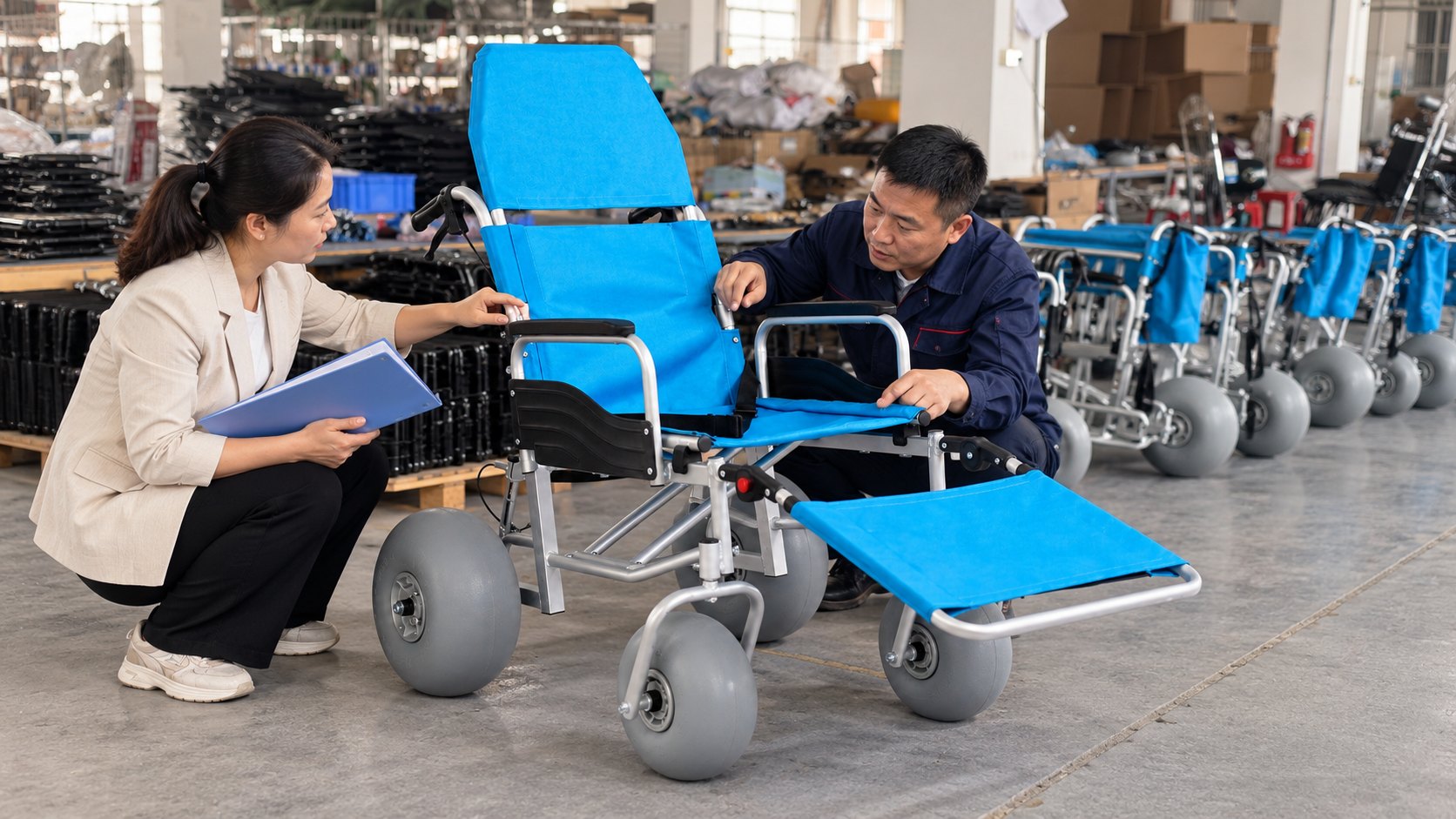
State that you are evaluating the AY-ST-V2.0 high-back beach-wheelchair configuration. Explain the equipment role, intended quantity, destination and relevant verified site constraints. Ask the supplier to distinguish confirmed product information from details requiring clarification.
Keep the request product-centered. A hotel name or tour itinerary alone does not tell a supplier which seating configuration, transport information or associated items the buyer needs. Describe those requirements directly without sending unnecessary guest records.
Request a quotation for an identified configuration.
- Name the model and relevant product questions.
- Separate equipment supply from freight and optional items.
- Ask for applicable support and replacement information.
Use the tour-company purchasing checklist to organize your inquiry. Do not assume warranty coverage, spare availability or delivery timing from a general marketing statement. Compare offers against the same confirmed scope before approving an order.
Make quotations comparable
| Request | Supplier answer needed | Avoid assuming |
|---|---|---|
| Identified model | Current supplied version | Every high-back chair is equivalent |
| Package scope | Included and optional items | Accessories automatically included |
| Support terms | Actual offered arrangements | Universal warranty or lead time |
10. When is this model worth considering for a beach-access offer?
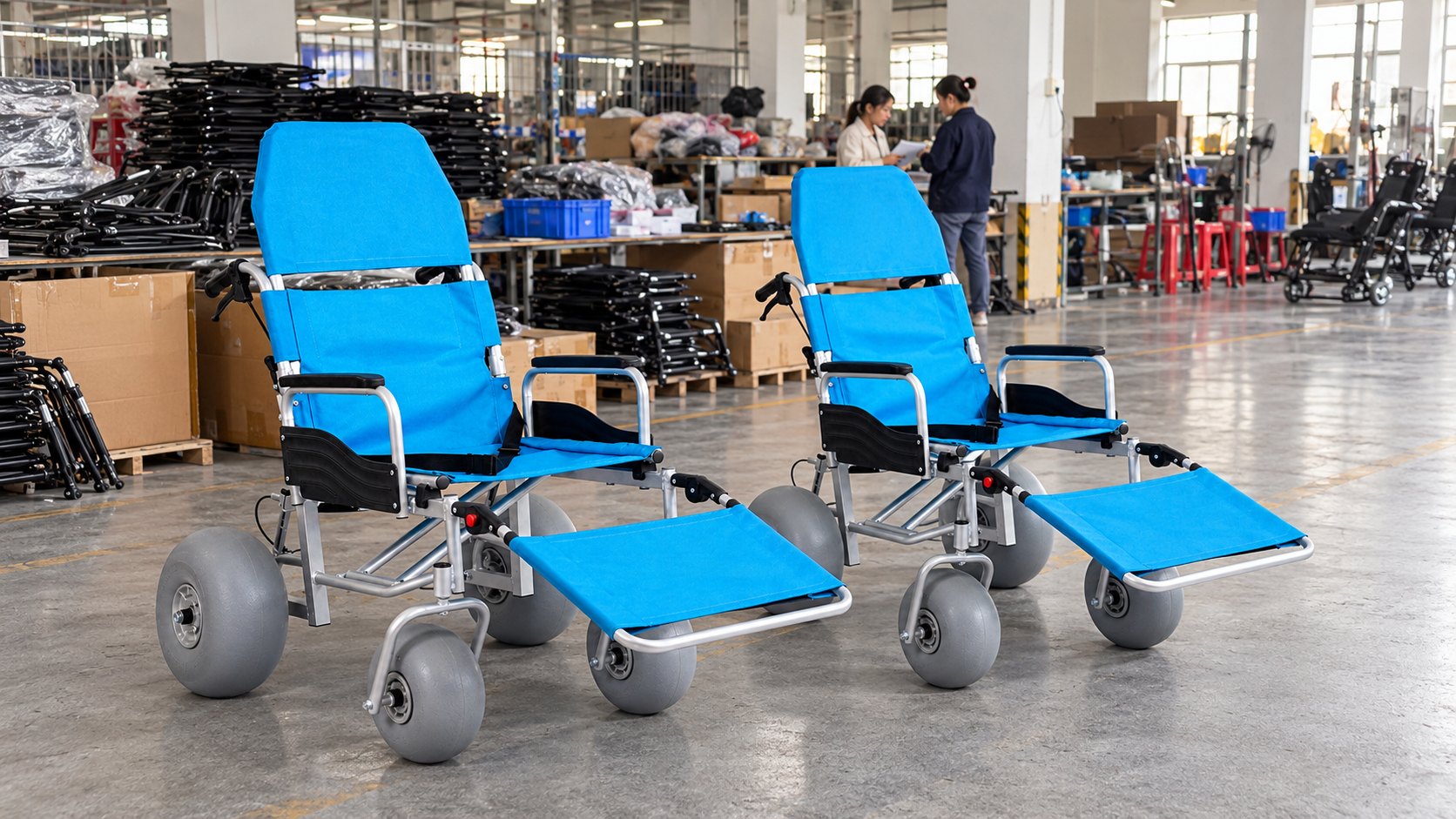
Consider the AY-ST-V2.0 when its high-back and adjustable-leg-support configuration addresses a specific equipment requirement your team has identified. Its value should come from a useful product choice, not from adding features to a brochure without understanding their role.
Compare this complete model with existing equipment and the intended user’s requirements. Confirm technical facts and relevant operating arrangements before promising a service. A different model may fit your requirement better when compactness or another configuration takes priority.
Base your purchase decision on the product requirement.
- Identify what this configuration would add.
- Resolve current model-specific specification questions.
- Review suitability and local use separately.
- Confirm the supplied package before ordering.
Send your requirements through Ary Beach’s contact channel, naming AY-ST-V2.0. Request current photographs, specifications and instructions so your tourism business can evaluate an actual product rather than a generic beach-access promise.
Q1: Is a high backrest automatically suitable for every traveler?
No. It provides a configuration to evaluate. Individual suitability and any specialist seating requirements need separate consideration.
Q2: Does this four-wheel model provide flotation?
Do not treat it as a floating chair. Review the separate floating-product category and obtain current model-specific guidance.
Q3: Can its folding structure guarantee vehicle fit?
No. Confirm the permitted transport configuration and actual dimensions, then review your intended vehicle and handling arrangement.
Q4: Can buyers use a capacity figure from another product page?
Use current confirmed values for the exact supplied version. Do not combine specifications from different models or documents.
Q5: What is the useful next step for a tourism buyer?
Request an AY-ST-V2.0 information and quotation pack tied to the product requirement, destination and intended equipment role.