
A tour buyer choosing a folding beach wheelchair needs three answers before requesting a fleet price. Can the chair serve the traveler and land destination the team has in mind? Can the transport crew carry the empty unit in the vehicles actually booked? Can the supplier deliver and support the same configuration throughout the season? A favorable unit price has limited value if the daily shuttle cannot collect the chair.
Put the dimensions next to the decisions they affect
For the AY-ST-V3.0, the manufacturer gives a 40 cm seat width, a 100 kg maximum load and overall dimensions of 95 × 92 × 77 cm. The folding chair has flip-back armrests, flip-up pedals and a listed net weight of 13 kg. Its 55 × 35 × 81 cm carton and 15.5 kg packaged weight belong on the freight comparison. The carton is not a measurement of the chair as the guide will fold it between stops. AY-ST-V3.0 English manual, pages 2–3
Discuss seat and support requirements with the traveler and qualified provider where needed. Use overall width for an initial gate check, then verify the turns and working space at the intended viewing area. A vehicle check uses different measurements again: the actual folded equipment, clear door opening, load path and remaining secured cargo space after passengers’ luggage is assigned. The chair travels empty as equipment.
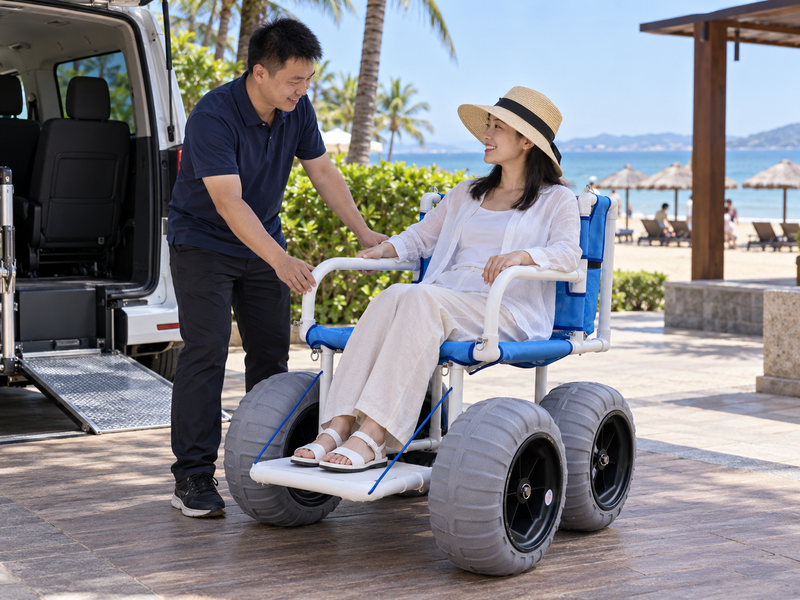
Handoff example. The guest is using a different chair with a white tubular frame. The blue-seat folding model shown on the cover is the AY-ST-V3.0 evaluated here. Use the linked manufacturer manual to identify its frame and supplied components.
Make the sample earn the order
| Buyer’s question | Ask the supplier or partner to demonstrate |
|---|---|
| Is this the configuration quoted? | Match the model, revision, frame, wheels, pedals, fittings, manual and included items to the written offer. Identify any sample-only components. |
| Can the local partner deploy it? | Have the assigned team open the empty chair under the model instructions, check the assemblies and verify the chosen land route in both directions. |
| Will it fit the tour vehicle? | Fold the sample in its intended cargo configuration and test the narrowest opening, turn inside the vehicle and authorized securing arrangement. Include time to unload and check it. |
| What happens if a wheel is damaged? | Obtain the correct part reference, order contact, estimated supply time and written terms for support at the destination. Check which fittings come with the part. |
Suppose a regional operator uses two vehicles with the same number of passenger seats. Only one has enough usable cargo space after suitcases are loaded. Record the verified vehicle and configuration on the trial result. If the operator can assign either vehicle at short notice, require a confirmed equipment carrier or price a local loan arrangement before advertising that departure. An empty test in the larger vehicle cannot answer for the other one.
Document what acceptance buys
Request itemized prices for the identified chair, spares, freight to the receiving depot, setup support and any agreed returns. Give the supplier a clear process for declaring substituted parts before shipment. Have the receiving team compare delivered stock against the accepted sample and order revision, with authority to hold a different configuration.
Attach the accepted setup, transport check and dated route findings to the purchase decision. The equipment delivery plan can then name a real handoff, and the spares and backup plan can identify which bookings a fault would interrupt. Keep questions still awaiting supplier confirmation visible before approving more units.