
If a walker starts pulling to one side, first help the user bring the outing to a safe stop under the operator’s procedure. Identify the walker and the side affected. A pulling sensation can come from the surface, a rubbing wheel, brake drag or another problem. The service contact needs the observation before anyone chooses a replacement part.
Give the visitor a way back and keep a walker with an unresolved braking, frame or retention concern unavailable for issue. The person reporting the fault can describe it without taking an assembly apart. The authorised service technician decides which checks and repairs the model instructions permit.
Identify the part where it sits on the walker
For the AY-STZ1.0, the manufacturer identifies a four-wheel folding walking aid with adjustable brake-equipped handles, a seat and storage bag. The manual lists 9-inch front wheels and 12-inch rear wheels. Record “left front” or “right rear” as seen by the person using the walker, and include the local asset number. A wheel diameter can identify a position but cannot establish axle fit, retention or a supplier part number. AY-STZ1.0 model manual
| A visitor or team member notices | What to tell the service contact |
|---|---|
| A wheel catches on a turn | Side and position, direction of travel, surface, and whether a trained checker also sees the symptom during a permitted empty check |
| One brake releases differently from the other | Which lever was used, the affected wheel if known, what happened on release, and whether the unit had recently been folded or moved |
| A handle shifts at its selected setting | Which handle, visible condition of the adjustment fitting, and the last operation that disturbed it |
| The seat or bag moves unexpectedly | Whether the issue concerns the load-bearing seat attachment or the separate bag mounting, and where the movement occurs |
Who receives the call?
During the outing, contact the service desk or number given at handover so staff can help the person and identify the held unit. At the store, the equipment lead routes the fault to the technician or approved supplier contact for the delivered configuration. Put those actual contact details beside the fleet record. If buying through a distributor, ask which party can confirm part identity, authorise service work and handle any warranty enquiry.
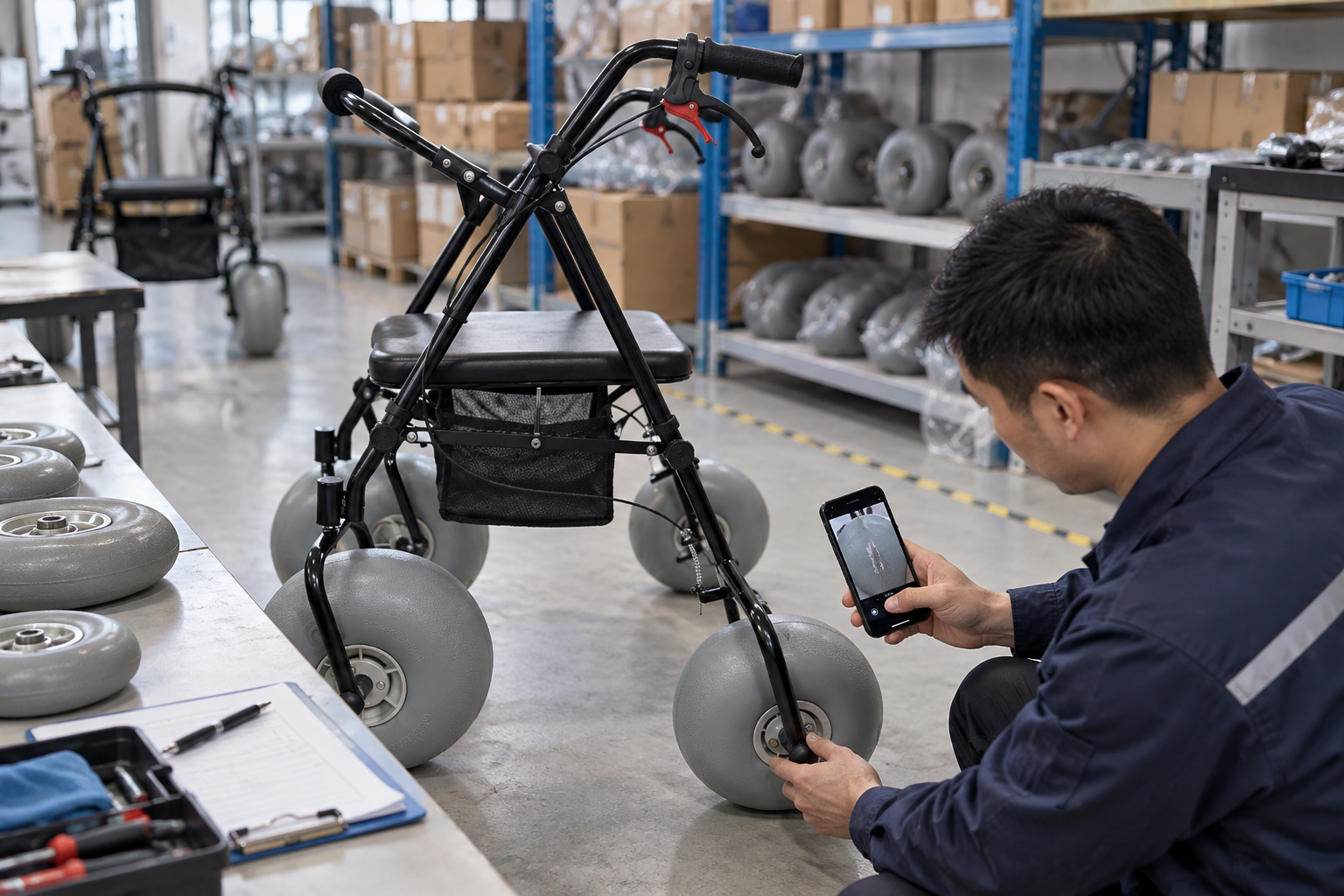
Send a wide photograph showing the unit and its orientation, plus a close view of the label or visible connection. Include the model, asset ID, revision or serial if available, side, symptom, operating conditions and any relevant repair history. Keep the user’s identifying details in the appropriate restricted record. Warranty and supplier support questions
Ask for the compatible assembly
A supplier answer should identify the part or kit, ordering unit, included fittings and the specific walker configuration it fits. Ask whether the workshop may replace it locally and which post-installation checks apply. If a proposed substitute uses a different interface or a set of fittings is incomplete, keep it out of use pending written clarification.
For example, a returned wheel marked “12 in” might be the right nominal rear-wheel size while coming from an unidentified unit. Keep it separately labelled until the supplier can match the assembly to the particular asset and its fittings. Substituting a different retainer or opening a mounting hole to make it fit would change the supplied configuration. The spare-parts stock guide deals with stocking levels once parts have been positively identified.
What closes the fault?
A delivered replacement closes a shortage only after its reference and contents match the request. For the walker, the authorised technician must fit it, repeat the checks affected by the work and verify the original symptom. If the wheel still catches, report the same location and conditions against the open job. Record the corrective work, outcome and release authority before the desk makes the walker available to another visitor. Daily wheel, frame and brake checks