
A box marked “beach walker wheels” is difficult to use when a visitor is waiting and the technician needs a front wheel for one particular walker. Start with approved model records, replaceable components and buyer maintenance authority. Give each stock line a supplier reference, the exact walker and position it fits, the contents of the order unit and the person authorised to fit it.
For AY-STZ1.0, the manual identifies a folding carbon-steel frame with epoxy paint, a stainless-steel front fork, adjustable handles with brakes, four wheels, a rest seat and a storage bag. The front wheels are listed at 9 inches and the rear wheels at 12 inches. Those sizes help staff identify a position. The supplier still needs to confirm the wheel assembly, hub interface and retention hardware supplied for that revision. AY-STZ1.0 walking aid manual, pages 2–5
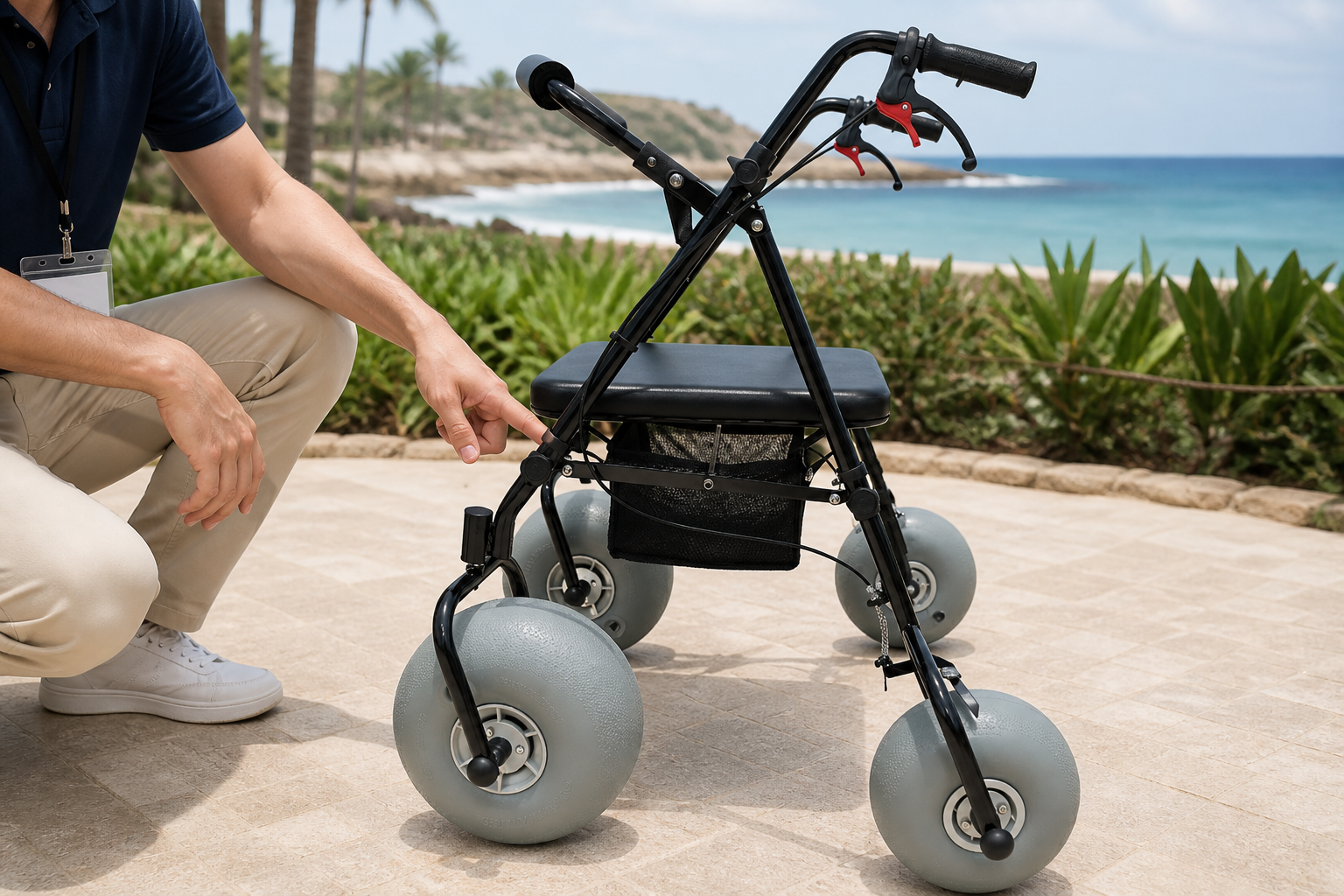
Ask for parts the workshop can actually use
Have a technician place a sample walker beside the illustrated parts list. Point out the front fork, each wheel attachment, both brake controls, handle adjustment points and the seat and bag mountings. Ask which components the supplier offers separately, which come in a matched kit and which require service by a specialist. A manual drawing identifies a location. It does not supply a spare part number.
| Candidate for stock | Confirm before ordering | What a shortage would interrupt |
|---|---|---|
| Front or rear wheel assembly | Exact position, compatible asset revision, hub/axle interface and included retention pieces. | A wheel with damage or uncertain retention keeps that walker unavailable. |
| Brake or handle component | Side and version, approved replacement route, cable or fittings included, and the required function check. | A brake that fails to operate as instructed blocks user issue even if all four wheels roll. |
| Handle adjustment hardware | Approved fitting for the supplied handle and locking arrangement, ordered singly or as a kit. | The intended handle setting cannot be used if it will not stay secure. |
| Seat, bag or attachment | Identify the part that carries the seat and the separate storage attachment. Confirm intended use and fitting instructions. | Damage to a supporting seat connection needs a different decision from damage to the bag. |
Check whether the parts can remain identified during routine folding and transport. For example, if staff repeatedly find a displaced brake cable after loading a folded walker, have the technician inspect its permitted routing and observe the handling sequence. More brake parts in a bin may shorten a delay while leaving the source of repeated damage unresolved. AY-STZ1.0 sample and receiving checks
Count what is free, what is promised and when the next batch arrives
For each approved stock reference, keep separate figures for serviceable parts on hand, parts allocated to open jobs and confirmed incoming quantity with its expected arrival date. A returned item of uncertain condition belongs in quarantine. A part in transit can help the forecast, but staff cannot issue it today.
Consider a hypothetical stock card for one compatible retention kit. The store has four accepted kits, two already allocated, and one confirmed incoming before the end of the replenishment period. Two kits are free to issue today. The planning balance over the period is four minus two plus one, or three kits. If local records show demand of one kit a week and replenishment takes three weeks, expected use during the wait is three kits. With a chosen buffer of one, the reorder point is four. A planning balance of three triggers an order review.
Confirm the incoming date, the quantities already on purchase orders and the supplier’s ordering unit before choosing the new order quantity. Recalculate when the season, observed consumption or supply time changes. Keep fleet-size estimates labelled while actual issue history is still short. A reserve walker, an available technician or a delay obtaining the correct control assembly can each change which stock is worth carrying.
Follow the part onto the walker
At receipt, check the package label, reference, units and kit contents before shelving the part. At issue, record part, receiving asset, work order and remaining balance. Keep a removed component identifiable until diagnosis, supplier return or disposal is agreed. Identify unused stock coming back from a repair before adding it to the available quantity.
After fitting, the authorised person repeats the checks affected by the work. For a wheel, that includes its prescribed mounting, retention and movement. For a brake or handle, check the function and adjustment affected. Where the frame was folded or components moved during repair, recheck the disturbed connections before a user trial. Soft-sand use and after-use checks
A buyer can ask for a comparable quote using one line per approved part or kit, with model revision, quantity per kit, included hardware, supply time and service instructions. Attach photographs of any unresolved interface. Leave a substitute pending until the supplier confirms compatibility and the workshop can perform the required checks.