
Perform the daily check on the empty walker, on firm, level ground where the inspector can see both sides. Start with its asset ID and the previous return note. If the last visitor reported that the right brake failed to release, look for the completed repair and recheck before issuing that walker. A washed frame or an intact-looking lever cannot close the earlier fault.
Check the structure in the order a user encounters it
The AY-STZ1.0 has a folding carbon-steel frame, height-adjustable handles with brakes, four wheels, a seat and a storage bag. The manual lists 9-inch front wheels and 12-inch rear wheels. These details identify the expected assemblies. Use the model’s drawings and the actual configuration for attachment and operation checks. AY-STZ1.0 walking aid manual, pages 2–5
| At the walker | What the checker does before handover | Finding that needs attention |
|---|---|---|
| Frame and opening points | Set up the unit as instructed. Look at the joints, supports and connections from both sides. | Incomplete engagement, a crack, distortion or a fitting that cannot be identified. |
| Handles and controls | Confirm that each handle stays at its selected setting. Inspect grips, levers and the accessible cable route. | A handle slips, a grip is loose or a cable is trapped after folding. |
| Wheels and forks | Check the correct front and rear assemblies, their condition, attachment and instructed inflation. Observe a short empty roll and turn. | A wheel rubs, catches, shifts unexpectedly or loses air repeatedly. |
| Brakes | Have a trained checker apply and release each control on the empty walker using the supplied procedure. | Different response between sides, failure to engage, sticking or drag after release. |
| Seat and bag | Check the seat and its supporting attachments separately from the under-seat bag and its mountings. | Damage at a supporting connection, an unsecured bag or material fouling a control or wheel. |
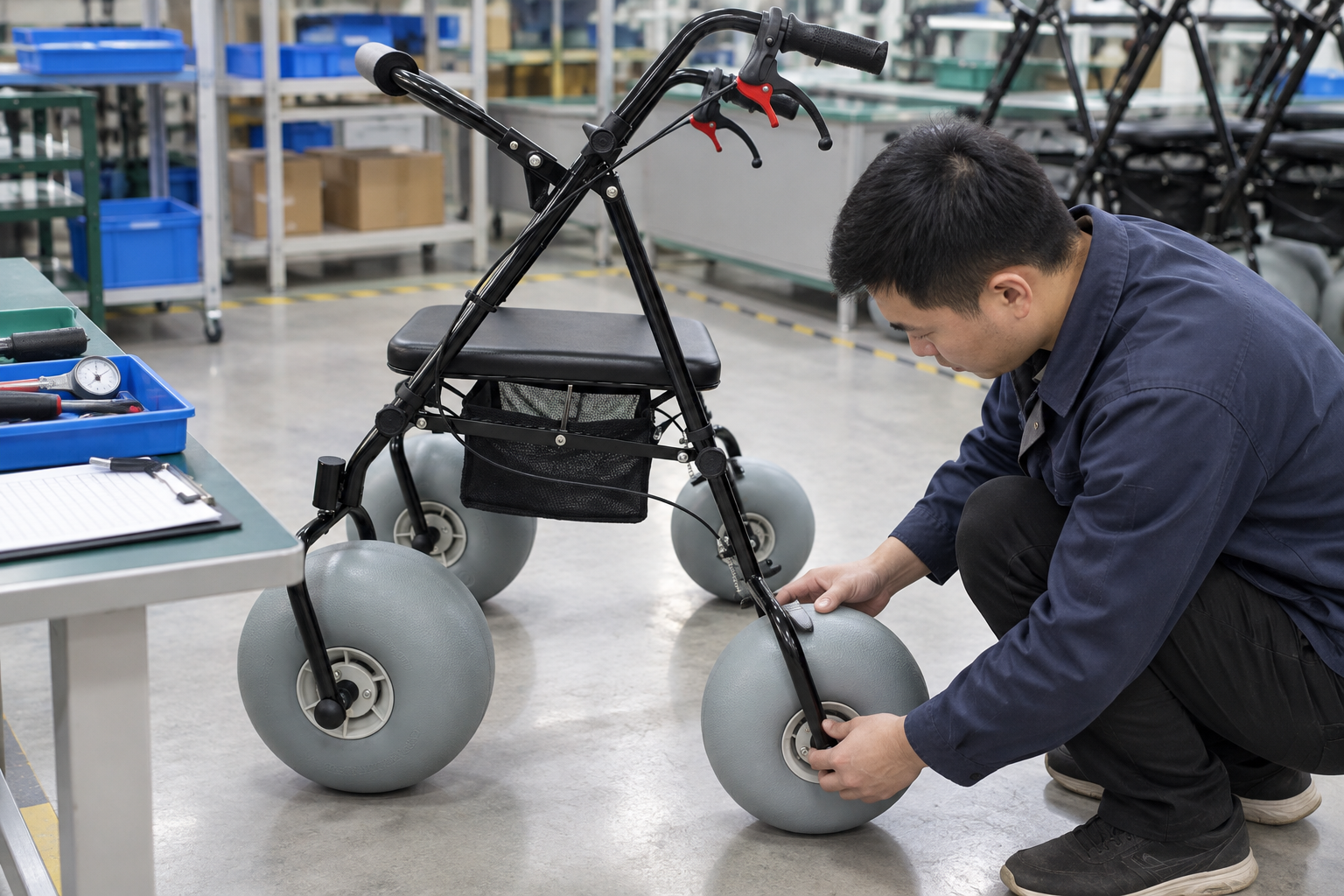
Decide what the finding means for this unit
Record the symptom precisely. A note such as “front wheel rubs on the left during a right turn on firm ground” gives a technician a condition to investigate. “Wheels checked” gives the next shift no way to distinguish a completed test from a reported defect. Use the asset number and component position on the hold tag and availability record.
A trained checker may remove loose debris by a permitted method and repeat the affected check. Follow the site’s service procedure for damage, missing retention hardware or uncertain braking. Keep the walker unavailable while those concerns remain unresolved. No one should be asked to lean on the walker, sit on it or go out onto sand to find out whether an uncertain connection will hold.
Recheck the parts that changed
Repeat the affected checks after transport, folding, an authorised repair or handle adjustment. If a wheel has been removed, confirm its identity, refitting and retention as well as free movement. If a cable was disturbed, check routing and the relevant brake functions after reassembly. Have the authorised person record the result and update the desk before release. Reporting a walker part fault
The pre-use check addresses equipment condition. At handover, confirm the fit, control reach, route and assistance with the person using the aid. Explain what to do if handling changes during the walk. A concern about the same component on successive days belongs with the service lead even if the symptom disappears after each cleaning.