
When a guest reports that one brake responds differently from the other, the operator needs to make two decisions. First, remove the affected beach walker from issue pending an appropriate equipment assessment. Then establish how the purchased warranty or after-sales agreement handles the case. A supplier may need time to examine the evidence. The booking desk needs the correct equipment status immediately.
Read the terms against the unit you bought
Obtain the actual warranty document and order reference for the supplied configuration. The AY-STZ1.0 manual identifies the folding carbon-steel frame with epoxy paint, a stainless-steel front fork, adjustable handles with brakes and different front and rear wheel assemblies. Use those descriptions to identify the part under discussion. Consult the supplier’s written terms for the coverage period and remedy. AY-STZ1.0 product manual
Ask how the start date is determined, who may submit the case and which evidence establishes purchase or delivery. Identify what is covered for the frame, wheel assemblies, brake components and soft items. Obtain written explanations of applicable exclusions and required coastal care. A purchaser should be able to trace a quoted promise to the exact product and period before repeating it to a customer.
| When reviewing the agreement | Question the buyer needs answered |
|---|---|
| Technical assessment | Who may examine the walker, and must the supplier authorise work in advance? |
| Parts and repair | If a claim is accepted, which part, labour and follow-up checks are included? |
| Transport and return | Who pays for the proposed shipping legs, and must the original part be retained or returned? |
| Communication | Which contact issues the case reference and where can the buyer request an update? |
Report what happened before diagnosing the cause
Identify the asset, configuration, location and date the issue was noticed. Separate a guest’s account from the technician’s findings. “The visitor reported that the right control felt different on return” records the report. “The right control did not meet the instructed function check on firm, level ground” records a separate observation, if staff actually performed it. Neither sentence assigns cause.
Photograph the affected area and its connection on the empty walker. Attach purchase information, the relevant manual revision, care and inspection history, prior changes and any recent transport event. Retain the component until the supplier explains whether it needs examination. Keep personal visitor details out of routine supplier correspondence unless an authorised process requires them.
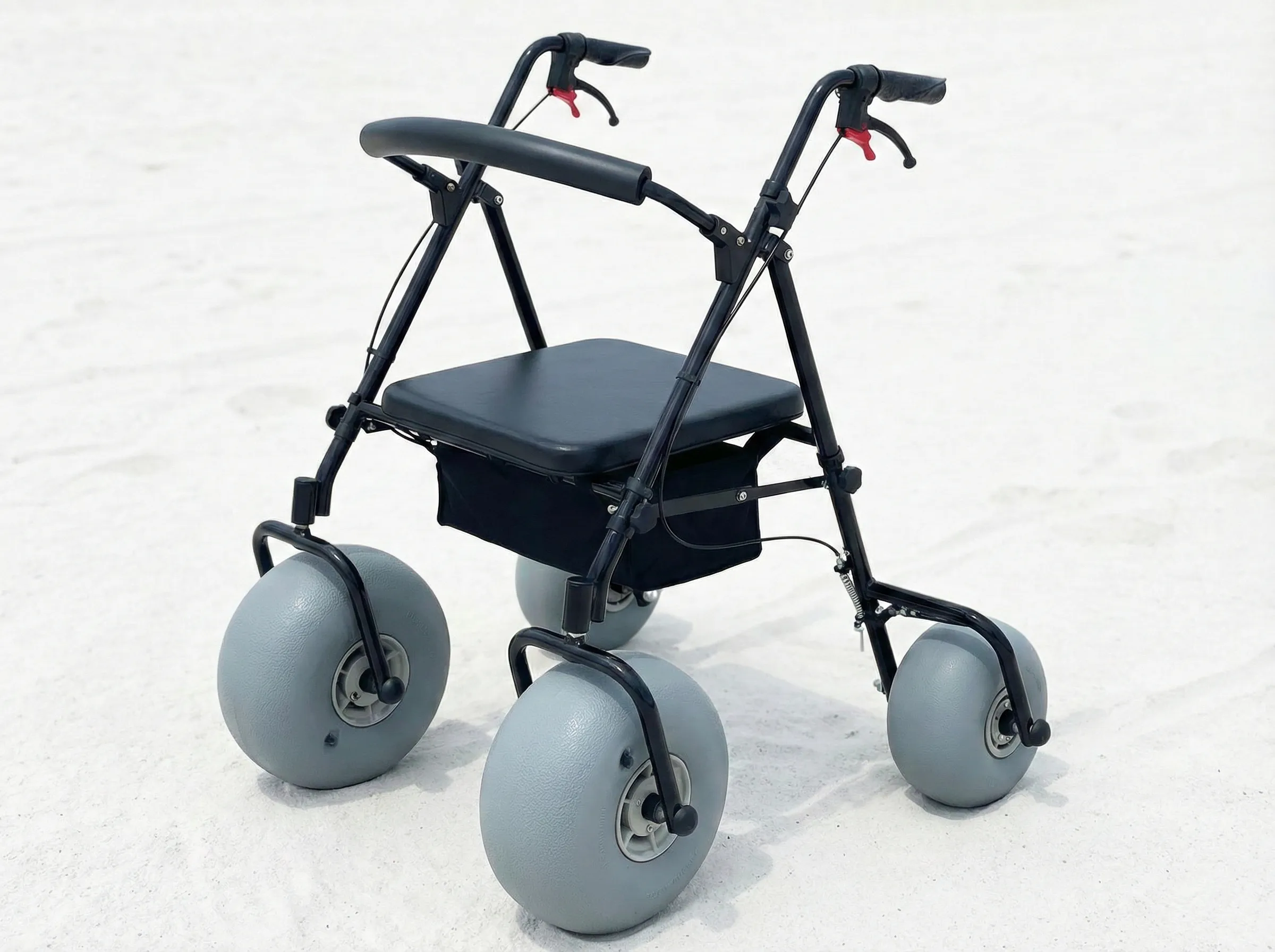
Send one request with a clear question. Is an authorised inspection required? Which additional view or measurement would help? If a part is recommended, ask for its compatible reference, whether fittings are included and what work may be done locally. The separate stock guide covers matching service parts to an approved assembly. AY-STZ1.0 spare-parts stock
Keep the service response separate from the claim outcome
Mark the walker with a visible hold, update availability and contact anyone whose reservation depended on it. Offer another unit only after confirming its suitability and availability. Tell the visitor when the desk will update them. A staff member should avoid promising a replacement, refund, insurance payment or warranty approval before the responsible party makes that decision.
If the supplier declines coverage or requests a paid assessment, record the written basis, the proposed repair path and the buyer’s decision. The mechanical fault still needs resolution. A commercial settlement or credit does not return the walker to usable condition.
Close the case with the documented supplier outcome, part or work completed, authorised post-repair check and release decision for the asset. Review recurring issues by unit, component position, route and handling conditions. Several reports from the same return point justify investigating that setting and process. They do not establish a manufacturing defect without further evidence.