
A tourism partner’s page says that a mat takes visitors from the promenade to a beach viewing place. To check that promise, invite a willing visitor who wants that outing to help review the actual trip. Start with the information they receive before travelling and finish when they have returned to their usual equipment and meeting point. Someone reading the page at a desk cannot tell whether a person arriving from the beach side can find the return sign.
Agree on a visit the person wants to make
Ask the person which destination matters to them, what mobility device and assistance they plan to use, and how they would like to report difficulties. A participant can comment on the booking information or the entrance without agreeing to travel onto sand. Arrange individual fitting, transfer support or a borrowed chair with the appropriately trained provider when needed. Honour a wish to pause, shorten the outing or end the visit.
Have the operator check the route and known equipment concerns before the participant starts. A visitor should never be asked to reproduce a wheel catch at an unresolved joint. If a suspected defect has already been reported, inspect and address it through the authorised maintenance procedure first. Planning a controlled beach mat route trial
Follow the public promise to its actual endpoint
Bring the published directions and confirmation for that date. Ask the visitor to use the normal information to find the entrance; do not silently guide them from a different entrance that regular visitors would not know. Note the first point where someone has to supply information missing from the page. Follow the approach to the mat, the advertised stopping place and the return path.
| At this point | Ask the participant | Separately note what staff observe |
|---|---|---|
| Enquiry | Which entrance, time and assistance did you understand were available? | Exact page, map or confirmation used and date viewed. |
| Arrival and handover | Could you locate the collection point and ask about your own equipment? | Landmarks, gate status, actual desk location and any assistance provided. |
| Mat and destination | Did you reach the place you intended? Where did you choose to stop or ask for help? | Route segment, surface change, mat endpoint, configuration and conditions on that visit. |
| Return | Could you find your way back and recover personal equipment as agreed? | Return direction, signage, staffing and the time or place that differed from the published plan. |
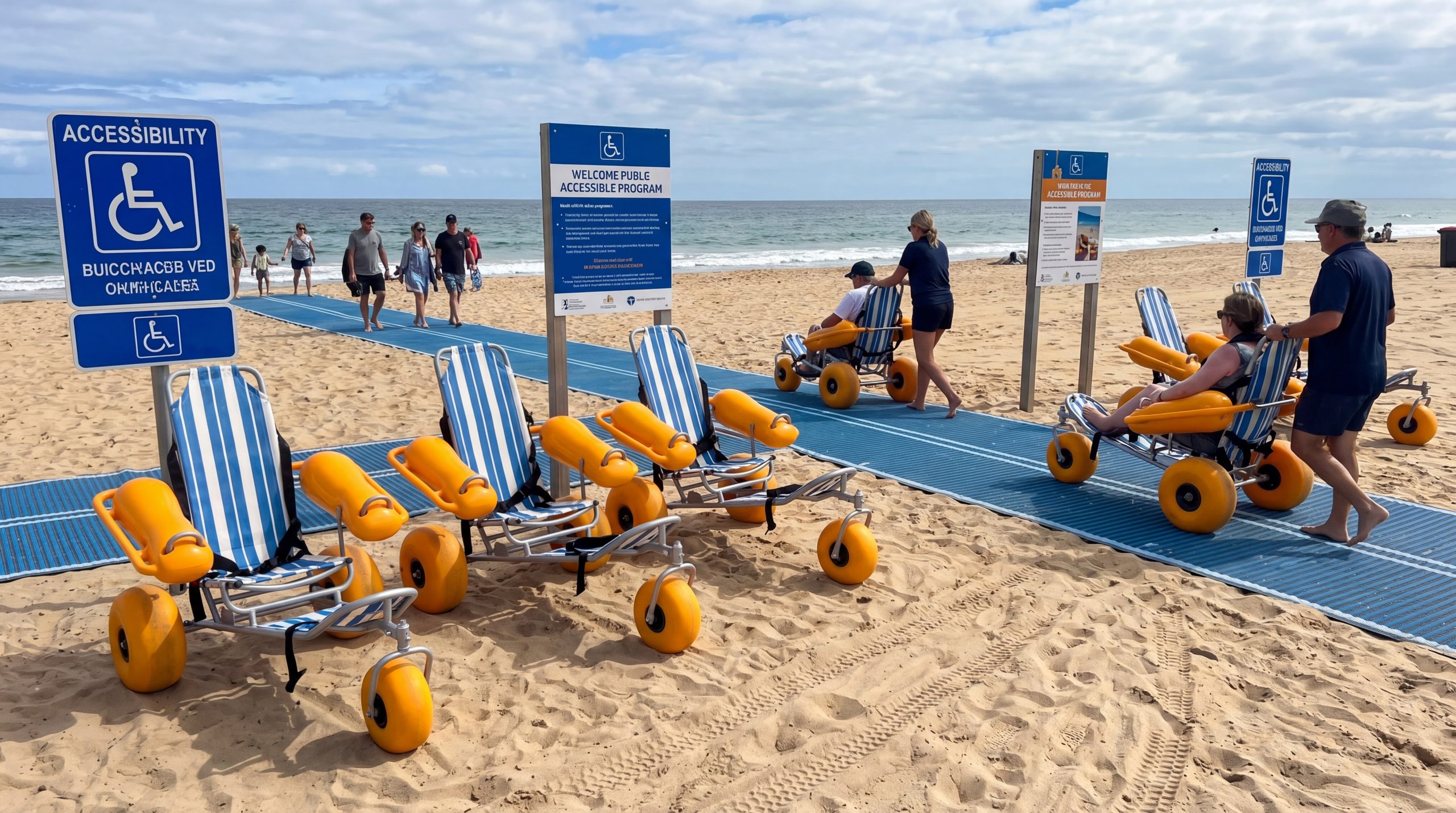
A mat and a loan chair may have different booking and operating conditions even at the same beach. For example, Parks Canada lists seasonal mobility matting at named Prince Edward Island National Park beaches and separately describes its chair reservation process. An assessment at another destination should identify its own operator and availability for both. Parks Canada’s PEI accessibility information
Record what the visitor experienced without inventing a cause
In a fictional example, a visitor says, “I reached the blue mat, but from my chair I couldn’t see which way to return to the pickup point.” The observer notes that the sign was visible from the car park and faced away from the mat. Keep those two accounts together with the direction, location and time. The visitor has identified an orientation problem on that trip. Staff must still inspect what the sign, approach or instructions contributed.
Get the participant’s agreement before taking identifying photographs or attributing quotations. Ask their preferred way to give feedback, including after the visit. Keep personal details under the operator’s privacy arrangements. If other guests use a different entrance or device, do not extend the one visit’s findings to all of them. Community input on beach mat services
Correct the part of the service that failed
Give the sign or route issue to the site operator, the booking discrepancy to the service desk and any inaccurate destination wording to the tourism editor. Agree on a correction and what the next visit should establish. A corrected web page alone would leave a wrongly oriented sign in place; replacing the sign alone would leave the old pickup point in confirmation emails.
Once the responsible operator has checked the physical correction, invite a willing participant or reviewer to follow the revised return under comparable conditions. Ask them to identify the pickup without coaching and check that the desk can receive them there. Publish what was observed, for which entrance, device and conditions, and what remains unknown. The tourism board listing guide explains how that checked change can reach the wider destination listings.