
A hotel offers to buy beach matting for a public beach. The council controls the entrance and a club volunteers to store the rolls. Before anyone places an order, those three parties need to settle who can open the gate when the hotel is closed, who replaces a broken joint and who owns the rolls after the summer. A public-private beach mat partnership can put those answers in a short written agreement with a marked route plan.
Start with the public trip and the right to offer it
Draw the path from a named public entrance to a usable place to sit, turn or meet companions. Identify who controls the boardwalk, the sand and any private gate along the way. Ask the landowner to confirm the footprint, the equipment and the operating season it will allow. Record any further local approvals and who will obtain them before work starts. Make the public hours, fees if any, service limits and return route clear to each partner.
Test a simple question at the meeting. Could a visitor use the promised public route on a day the private partner was holding its own event? If that requires staff to unlock a second gate, put the gate, keyholder and backup shift in the agreement. If the parties cannot arrange public entry, revise the site or the advertised service.
Agree what each contribution buys
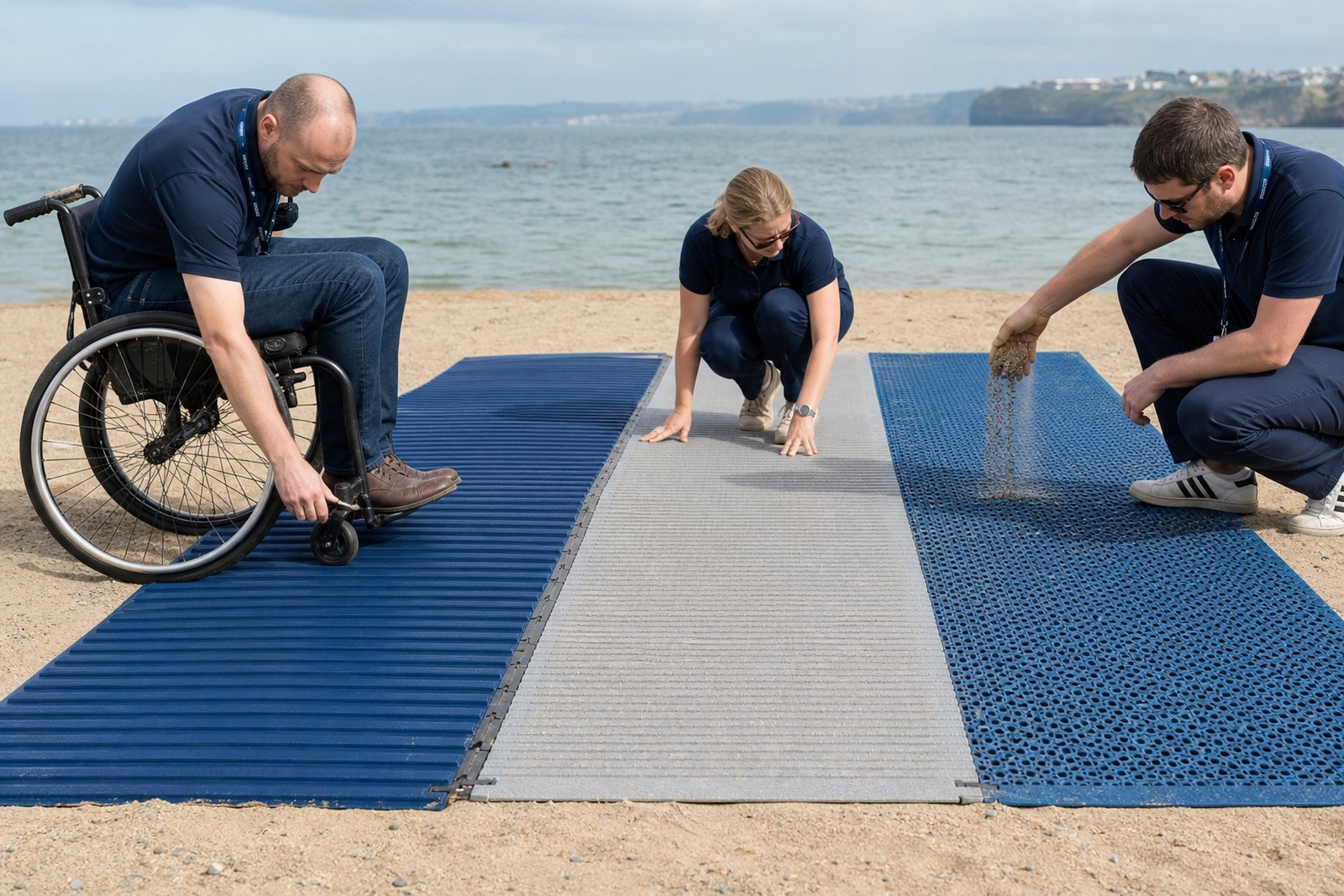
Separate purchase and installation from the costs the operator will incur every season. Compare quotes against the same drawing and the same list of mat sections, connections, end treatments and spares. Name the buyer who can accept an offer and record any commercial interest a partner has in a competing proposal. At handover, state ownership for mats, hardware, signs, storage, documents and replacement parts.
| Partnership decision | Put this in the signed schedule |
|---|---|
| Ownership and custody | Name the owner of each equipment group, where the operator keeps it and who may authorize a move. |
| Money after installation | Allocate inspection labor, sand clearance, repairs, annual storage and replacement. Identify who approves an unbudgeted expense. |
| Daily decisions | Name the operator who can close an unsafe reach immediately, who checks repairs and who tells visitors the route has changed. |
| Information partners receive | Set out which route status, spending and service figures are shared, who prepares them and where personal incident details are handled separately. |
| Withdrawal or sale | Set the notice contact, inventory date, condition record and party responsible for collection or continued public service. |
Sidmouth Town Council’s project update describes summer matting jointly funded by East Devon District Council and Sidmouth Town Council. It gives a real example of named contributors. For a project involving a private partner, document who takes custody and pays for upkeep in your own agreement before announcing the service. Sidmouth Town Council project update
Rehearse a failure before the first public day
Suppose the mat starts to lift at the boardwalk join on a holiday weekend. Ask the duty operator to trace the authority to close the route, the number for the repair crew and the spending limit for a replacement. Then ask the public information contact to draft the notice while the others are still in the room. Write down any permission nobody can give and assign it before opening.
Give each signatory and the club holding the rolls the same signed asset list and installed-route handover record. Agree when they will review cost, availability and unresolved repairs. At the end of the agreement, walk the inventory together, sign for what changes hands and update the public entrance information on the date the operator changes.