
A destination listing can send a visitor to the wrong beach even when every sentence about beach matting is technically true. If the mat is at one entrance and the borrowed wheelchair must be collected somewhere else, a description of the entire resort area as “wheelchair accessible” omits the decision the visitor needs. Build one listing for each named entrance and identify the source of each service detail.
Give the editor a route record small enough to verify
Ask the local operating contact to confirm the signed entrance, the approach from parking or drop-off, the point where matting starts, the useful endpoint and the surface beyond it. Record the latest date and local time that person verified the installation. Add the normal operating period separately. A fixed seasonal description can remain accurate even on a day when the mat has been removed.
Keep wheelchair availability on another line. Identify who accepts requests, the equipment or assistance offered, collection and return arrangements, and which details require confirmation for the travel date. If the local operator has not reported a same-day status, give visitors its verified enquiry route and mark the date of the latest information the board can support. Beach wheelchair visitor-page fields
Compare the source wording before combining locations
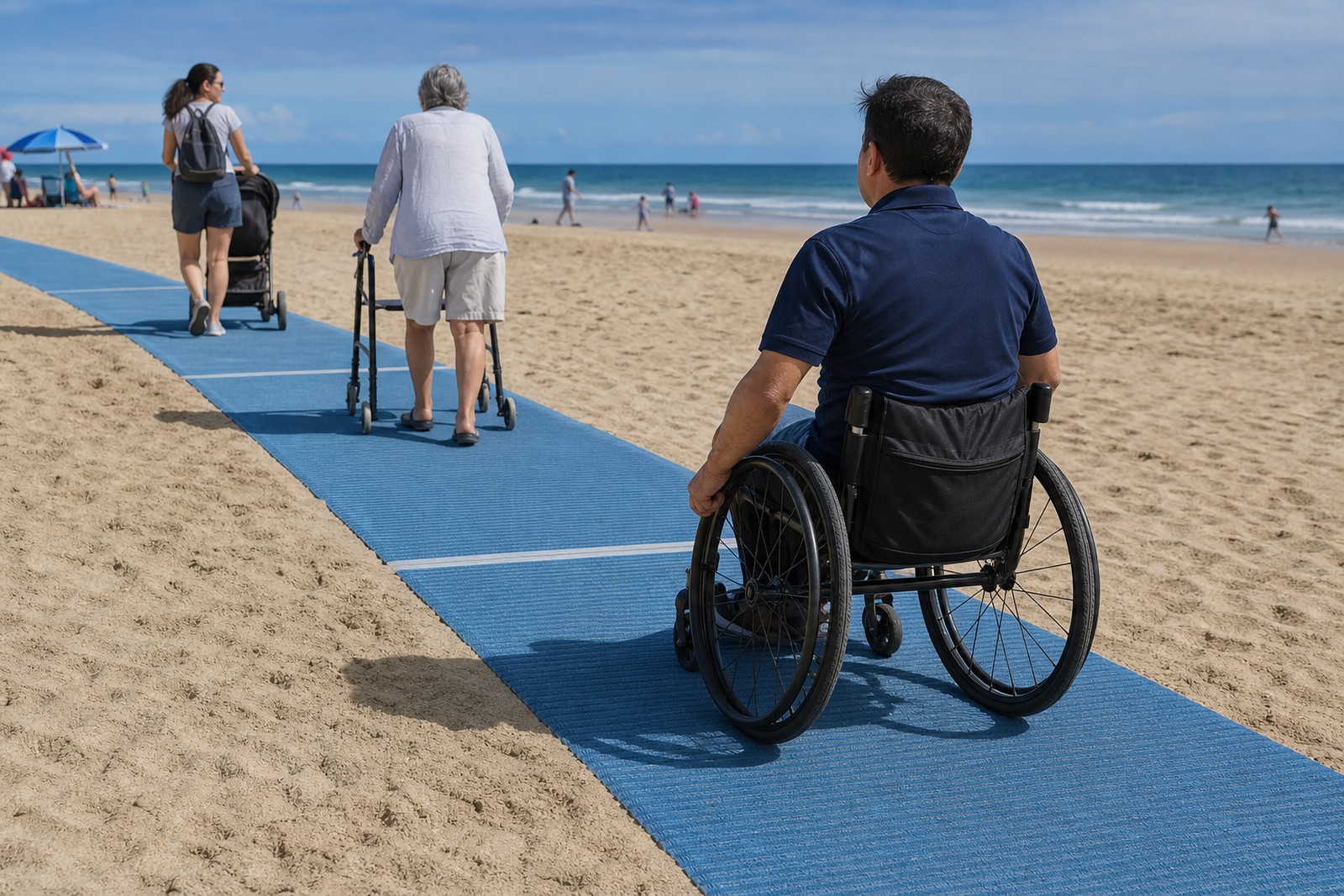
City of Moreton Bay’s accessible-beaches page describes Beach Access Point 12 at Woorim, beside Bluey and Jean Piva Park. Its approximately 30 m mat reaches an upper-beach viewing point before the firmer tidal sand. For Suttons Beach, the same page describes matting near the rotunda and seawall as a resting place away from the water. An editor can give those two locations different destinations even though both have beach matting. The council also notes that severe weather may shorten or remove the matting. Confirm the local status for a specific visit. City of Moreton Bay accessible beaches, reviewed 12 November 2026
| Published field | What belongs in it | What needs separate evidence |
|---|---|---|
| Entrance and landmark | The actual access name or number used on site | Which gate or approach a different operator manages |
| Installed extent | Where the mat reaches, recorded for its specific entrance and date | The remaining distance to water or firm sand on the visitor’s day |
| Chair or assistance | The named operator and verified booking or enquiry channel | A chair allocation, individual fit or water-use permission |
| Change notice | What endpoint or service changed, observed time, next update contact | Reopening date if the site lead has not yet given one |
Send a correction through the same channels as the offer
Suppose an operator reports that the last panels have been removed after strong weather. The board updates the specific entrance listing and any search result or itinerary that still says the farther destination is reachable. Tell the visitor centre, accommodation partners and booking desks which description changed. A shortened route may still serve a visitor who wants the nearer view. Someone expecting to cross the remaining sand needs that information before setting out.
Use a dated photograph or an operator-confirmed sketch where it helps visitors locate the first and last panels. Label illustrative photographs accordingly. Do not use a picture of another beach as evidence of this entrance, or treat an accessible-parking symbol as proof that the whole route is open. Ask a colleague to read the listing from a phone and explain where they would park, where they would stop and whom they would call if the chair request is still pending.
Audit the listings that cause failed trips
Review visitor reports against the exact listing and operator record. A visitor sent to the wrong street end points to inaccurate directions. A booked chair unavailable after arrival points to a booking or allocation problem. A correct map with a damaged mat joint calls for field action and a change of public status. Pass each finding to the appropriate owner and record when the source and the published page agree again.
Periodically follow one listing from the tourism website through the partner booking page to the signs on site. Keep the verified wording, its owner and the date it was checked. For a detailed account that includes a willing visitor’s own experience, use a separate supported visit and route verification.