
Ask about a trip before asking whether people like a proposed beach mat. “Where would you start, where would you want to stop, and how would you get back?” can reveal a missing gate connection, an inconvenient collection point or a destination that offers little reason to make the journey. A simple vote for a coloured line on a plan may reveal none of those things.
Tell participants what their input can change. A park may be choosing between two routes, setting service hours or deciding which information visitors need before arrival. It might already have restrictions on dune disturbance or use of a delivery road. Describe those decisions and constraints in plain language when inviting people to take part.
Hear from people who cannot attend the site walk
Invite people who use different mobility devices, people walking with support, companions and staff who handle collections, maintenance and visitor enquiries. Include people who tried to visit but could not reach the proposed meeting point. A meeting held only at the far end of the route will miss precisely some of the people whose experience the team needs.
Offer a phone conversation, an accessible digital or paper map, a written response and an optional supported site discussion as appropriate. Ask which format or assistance works for each person. Explain who will see their comments, what permission is needed for a photograph or attributed quotation, and how they can contribute without being named in a public report. U.S. organisations can consult the Department of Justice guidance on effective communication where it applies. DOJ effective communication guidance
Make the interview about identifiable places
Use a plan showing the arrival point, first hard-to-sand transition, possible stopping areas and the route back. Let the participant trace their journey first. If the site visit is inappropriate or conditions change, use identified photographs or a map instead. Nobody needs to cross an unresolved defect to provide a useful account.
| Ask this | What the answer can change |
|---|---|
| “Where would you meet the person travelling with you?” | Siting of the meeting point, directions and access to assistance. |
| “Where did you need to stop, turn back or ask someone for help?” | Which joint, gate, slope or stretch of loose sand needs field review. |
| “If the mat ended at this seating area, could you make the trip you wanted?” | Choice of destination, stopping space and priority for a later extension. |
| “Which information would you want before leaving home?” | Entrance description, route status, remaining sand, hours or contact method. |
Avoid turning an interview into a test of a person’s mobility. A comment such as “I couldn’t reach the table with my companion” is a report about an outing. Ask for the table location and the surface they encountered. Have the field team measure the clear approach separately.
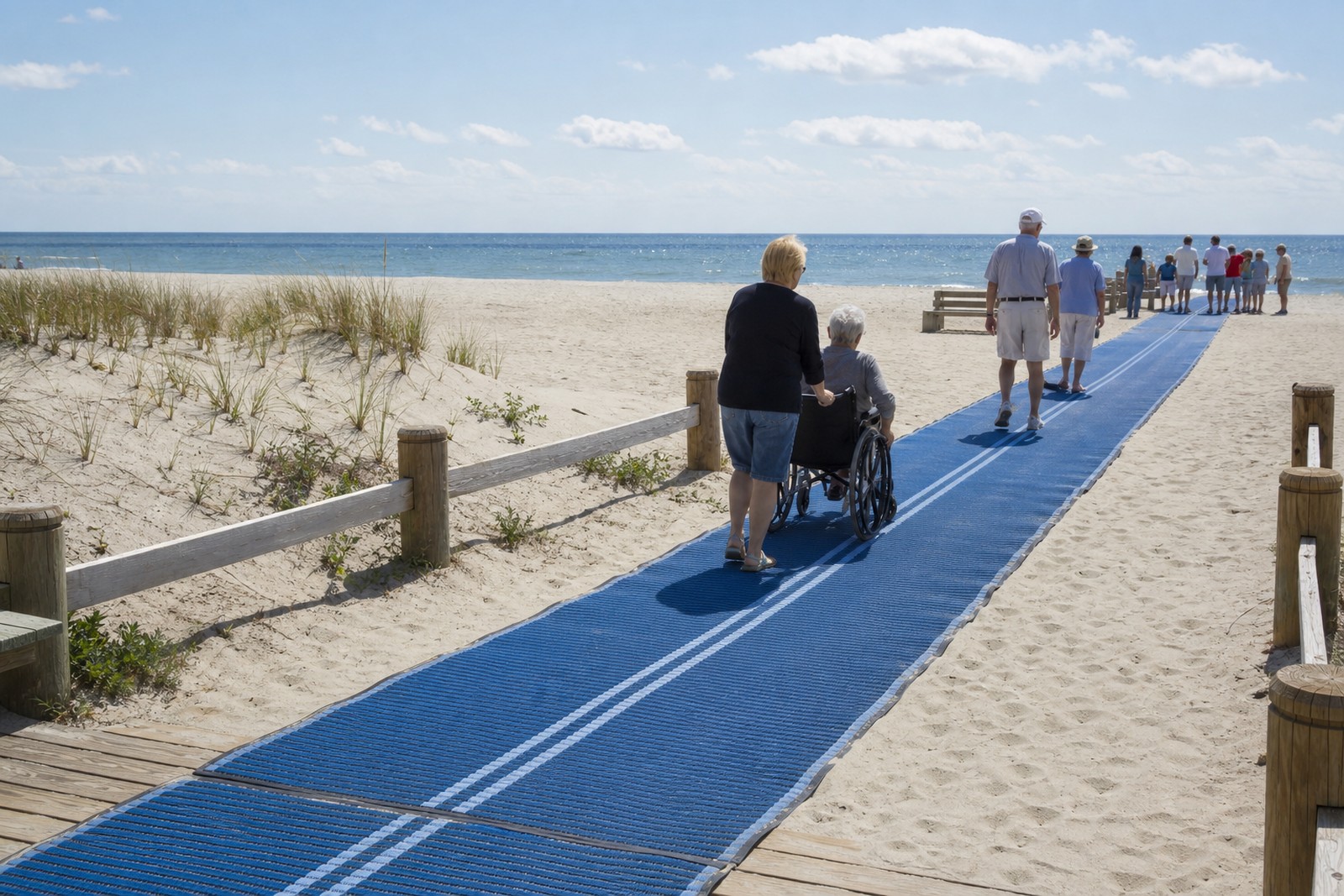
Keep disagreement in the decision record
Suppose one participant favours the shortest route to the water view while another needs a nearby rest area and a reliable return. Record both priorities and the physical locations involved. Check which option reaches a usable destination, what assistance or staffing would be needed and which environmental or engineering questions remain open. Counting preferences alone could hide a serious access barrier reported by one person.
Keep three entries distinct: the person’s words, what the team observed, and the proposed project response. A technician may find that furniture narrows an otherwise adequate turn. Moving the furniture is a candidate action. It becomes a verified improvement only after the team checks the arrangement in ordinary use, including where the furniture goes later that day.
Return to the people who raised the issue
Publish a short account of the choices considered, the decision, outstanding questions and who will act next. Explain a deferred request fairly. For example, the team might select the picnic destination for the first season because the beach lead can maintain its return route, while retaining a water-view extension for further design and funding review.
Invite the affected participants to review the revised directions or proposed layout. Give them a way to report whether the original difficulty remains after opening. Use the input alongside the engineering review, service budget and site authority’s decision. Choosing a first public beach mat route · Measuring route availability and unmet visits