
A sponsor asking “What did our funding deliver?” needs a different answer at purchase, at receipt and after the first operating period. A signed order shows what was bought. A receiving record identifies the chairs that arrived. A dated service record shows when visitors could actually use the supported activity. Keep those records linked so that public recognition matches the stage the project has reached.
Start with the sponsor’s agreed scope. Did the contribution pay for chairs, compatible spares, freight, training, route preparation, or a stated share of several costs? Record any restrictions and the party responsible for the balance. If water access was part of the proposal, identify the local operator responsible for that activity and the conditions the site must meet before it opens.
Follow a funded item from order to handover
Put the agreement reference and purchase order line on the receiving sheet. Record the model and supplied revision, quantity, date and the local asset ID assigned to each unit. If a package is missing or contains a different component, keep the supplier’s response with the affected chair until its actual disposition is known. An invoice or photograph of several chairs cannot settle which items belong to this award.
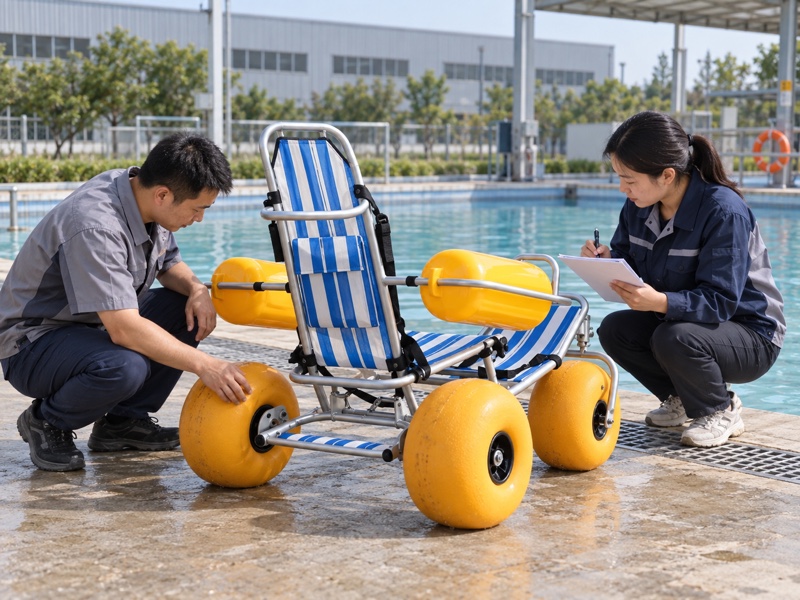
For example, an order for AY-ST-V1.0 should identify a three-wheel model with inflatable PVC wheels, two detachable inflatable PVC armrests, an aluminium-alloy frame and an adjustable backrest. The corrected manual gives the buyer a component reference. Receiving staff compare the actual chair and accessories with the agreed configuration, record visible damage and complete the instructed assembly checks. A proposed substitute needs the buyer’s approval and a revised record. AY-ST-V1.0 manual, pages 2–5
| Reported milestone | Evidence the sponsor may review | Question still open |
|---|---|---|
| Funding committed or paid | Signed agreement and finance record identifying the funded scope | Which items have actually been ordered? |
| Equipment ordered | Accepted purchase lines, quantity, configuration, buyer contribution and delivery basis | What has arrived and in what condition? |
| Equipment delivered and accepted | Dated receipt, matching asset IDs, discrepancies and their resolution | Which complete units have passed release checks? |
| Service opened | Released equipment, assessed route, available trained staff and operator’s opening decision | What service was available, at which site and when? |
| Service used | Reporting period, definition of a completed session and reconciled activity entries | What did visitors experience and which requests remained unmet? |
State the actual result when delivery is incomplete
Consider a hypothetical award for three chairs. All three appear on the order. At the reporting date, two are on site and the third is on backorder. One received chair has passed the equipment checks. The other is held pending replacement of a damaged armrest. A truthful report can say, “Three chairs ordered, two received, one released to the operator, one awaiting a replacement armrest and one awaiting delivery.”
If the water service has not opened, report that status and the outstanding task. The manufacturer describes AY-ST-V1.0 use in controlled calm, shallow water with trained supervision and stable attendant footing. Possession of a chair cannot establish the condition of that entry, the readiness of the crew or the visitor’s individual arrangements. The sponsor can refer operating questions to the service lead. Manufacturer’s water-use guidance and program delivery and operating handover
Count the service people could actually use
Agree on a period, a source and a unit before reporting participation. Count completed sessions from recorded returns or another locally defined completion event. Distinguish an enquiry, a confirmed booking, a visitor cancellation, an operator closure and a completed visit. Repeat visits by one person can produce several sessions. A session count alone cannot establish the number of different people served.
Keep a short explanation where equipment availability and service activity differ. A released unit may have stayed in storage because the water zone closed. A busy land-chair service cannot be counted as use of a funded floating-chair water service unless the award and the actual records support that interpretation. The floating wheelchair booking system guide explains how staff can retain those separate states.
Use anonymised totals and only the personal details your organisation is authorised to share. Permission to operate the service and permission to publish a visitor’s photograph are separate matters. Obtain the relevant permission before including identifiable people, and allow visitors to give feedback without appearing in sponsor publicity. A photograph of the delivered asset with its identifying reference may answer the sponsor’s equipment question on its own.
Make the next update answer the outstanding question
For a held chair, name the part or repair decision awaited, the responsible service contact and the date of the next check. For a closed activity, state the affected service and the operator’s next review. Add dated evidence when a replacement arrives, fitting is complete and the unit passes its recheck. Preserve the earlier shortage entry so the sponsor can see what changed.
Close the report against the original award lines, including accepted quantities, unresolved commitments and who will maintain the equipment after the funded period. Describe only the service that was available in the period reported.