
A second beach can have a long waiting list and still be a poor destination for the only spare floating wheelchair. Before expanding the fleet, find out what limits visits at each site. If the second beach lacks an approved exit or trained return cover, moving another chair there would reduce resilience at the first beach without creating a usable appointment.
Find the bottleneck at each proposed site
Compare requests for similar days and times. Separate unmet requests caused by insufficient chairs from those caused by water conditions, staff availability, an inaccessible land connection or unsuitable hours. A request for a group of four also needs an agreed counting basis. Four individual sessions spread over a morning create a different capacity requirement from four people asking to enter together.
Assess the receiving site independently. The operator needs suitable storage, a route from the store to the visitor, a qualified duty team, supervised calm water with reliable attendant footing, and an approved exit and return. For an AY-ST-V1.0, staff should be able to identify the correct inflatable armrests, three wheels and attachments and carry out the model-specific checks. AY-ST-V1.0 manual
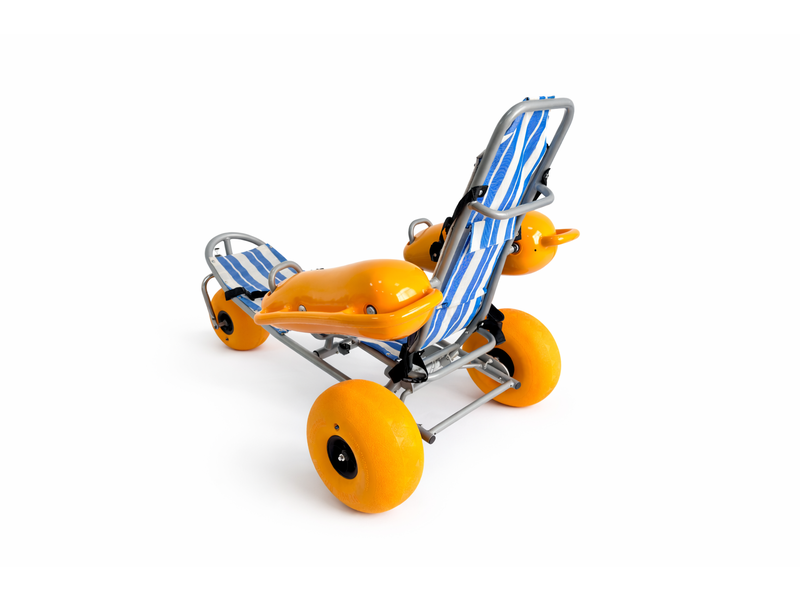
Compare a transfer, an additional unit and additional cover
| What the site records show | Expansion decision worth pricing |
|---|---|
| Visitors are regularly turned away while all serviceable units are in use and trained cover is available | Price an additional matching unit, storage and maintenance capacity at that site. |
| A chair sits unused at another site in the same time block | Check bookings, reserve needs, travel time and compatibility before proposing a transfer. |
| Several units are available when the activity closes for staff or shore conditions | Resolve the staffing or site constraint before counting another chair as added capacity. |
| Demand occurs only on occasional event dates | Compare a time-limited loan with buying, including transport, inspection, return and cover at the lending site. |
For example, if an operator’s first site has two released chairs and has confirmed two overlapping bookings on Saturday, sending one chair away would leave one commitment unsupported. Check whether the second site could run an independently staffed later block after a documented transfer and inspection. If the journey or inspections take too long, price another arrangement or offer fewer slots. A chair in transit is unavailable to both sites.
Transfer custody and opening authority separately
Before a move, record the serial or local fleet ID, revision, armrest and wheel configuration, accessories, condition and outstanding repairs. The sending site removes the unit from its booking inventory. The receiving site checks the shipment against that record and keeps the unit unavailable until it has been inspected. Damage, missing fittings or a revision mismatch belongs on a unit-specific hold. Keep a timestamp and named custodian at each handoff.
Set a review period when the operator authorizes a pilot. Compare planned and completed supported sessions, hours lost to each constraint, maintenance travel, and the effect on the original site’s bookings. Keep a land-only option distinct from an additional water session when reporting results. Use the service dashboard to keep definitions consistent between sites and the floating fleet maintenance record to trace what changed on each unit. Fund permanent expansion only once staff can explain which constraint the added equipment addresses.