
During a floating wheelchair incident, staff responsible for the visitor follow the site’s trained assistance or emergency procedure. Another authorised team member can stop new departures, contact the duty lead and protect the return for anyone already using the zone. Start the written account when doing so is compatible with those immediate duties.
An incident record should allow the shore lead and the equipment technician to investigate the same event without confusing what someone observed with what caused it. Give the event one reference. Use that reference on the equipment hold, the water-zone restriction and any restricted individual report the operator requires.
Preserve the sequence and the location
Record the time first reported, the location and direction of travel, who reported what, and when staff took each action. Name the actual chair, entry or exit point, water conditions as observed, staffing or assistance in place, and any change from the earlier session briefing. If a witness spoke to the desk later, distinguish the time of their account from the time of the event.
| Record | Examples of useful detail |
|---|---|
| Visitor and attendant account | What each person experienced or saw, their location, the agreed signal or contact used and what support followed. Use the appropriate privacy process. |
| Physical condition | Exact side and component, visible marks or movement, whether it was examined before or after cleaning or disassembly. |
| Site condition | Water activity, wind or wake observed, footing or return issue, affected zone and the source of each observation. |
| Immediate decisions | Which starts stopped, how current visitors were accounted for, which chair was removed from issue, and who took charge of the next action. |
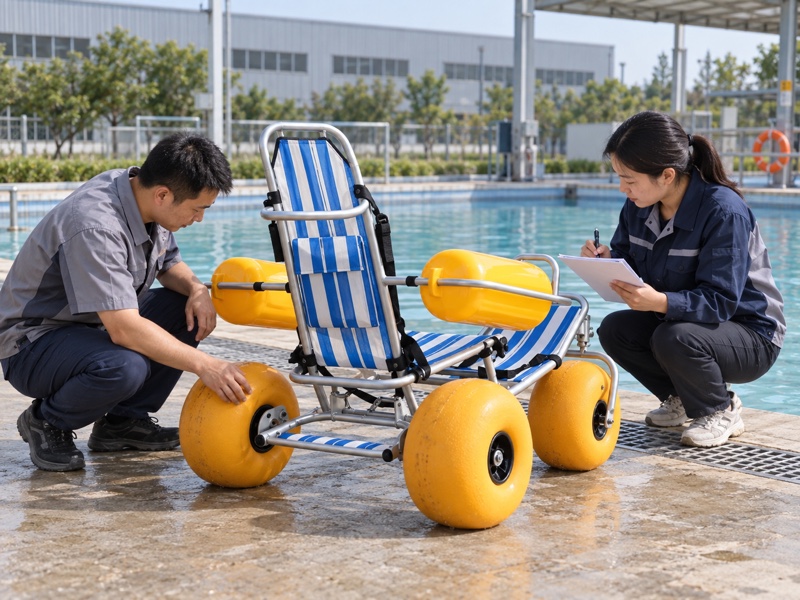
Photograph the equipment or shore interface when it is safe and appropriate. A wide view locates the finding, and a close view can identify the part. Keep identifiable personal or health information in the operator’s restricted record. The public or booking notice usually needs the affected service and contact, not the visitor’s personal story.
Keep an observation from becoming a premature diagnosis
In a fictional near-miss, an attendant reports that the left armrest on F-09 looked softer than it had during the handover, just as boat wakes began reaching the agreed exit. Record both observations, the actual visitor assistance provided through the local procedure and the interrupting conditions. Do not conclude that the armrest caused the event, or that calmer water would resolve the chair concern.
The corrected AY-ST-V1.0 manual identifies two detachable inflatable PVC armrests, three inflatable wheels and the connections shown in its assembly illustrations. The technician can compare the named side and attached parts with the actual unit and supplier guidance. The shore lead separately checks whether the entry and exit can again support the manufacturer’s controlled calm-water scope, trained supervision and reliable attendant footing. V1.0 manual · Water-use environment
Give corrective actions separate owners
If an equipment fault is confirmed, document the affected part, approved correction, recheck and authorised release of that chair. If the zone was interrupted by wave action or an unusable exit, keep the route restriction until the site lead has reassessed the current conditions and local response arrangements. Record the decision time and which activity can resume.
For review, compare the original equipment setup, shore condition and later findings. Note any part replaced or route moved in the meantime. A recurrence at one exit on different chairs points the team towards a site review. The same unexplained component problem on several units may call for a wider maintenance check. Neither pattern, on its own, establishes cause. Equipment maintenance and repeat faults
Follow the reporting obligations applicable to the operator and location when deciding who must receive an incident notification. Brief the next shift on unresolved equipment and route restrictions, named contacts and when visitors will receive an update. The service closure plan covers desk messages and reopening after the initial response.