
Put each AY-ST-V1.0 away with an identifiable set of components and a clear condition at the time of storage. Next season’s team should be able to find the chair, retrieve its correct armrests and wheels, and see whether an earlier fault still prevents use. A storage bay marked “floating chairs” gives them too little to work from if parts from several units share one shelf.
The corrected model manual identifies an aluminium-alloy frame, three inflatable PVC wheels, two detachable inflatable PVC armrests and a backrest with three adjustment positions. Pages 4–5 show how assemblies fit together and illustrate rinsing. Keep the applicable version available where staff prepare and rebuild the chair. AY-ST-V1.0 manual
Receive the last return before closing the store
Ask the attendant what changed during the final outing. Did a wheel rub? Was an armrest losing air? Did the equipment strike a hard edge? Note the side or component and photograph a visible fault before cleaning obscures its location. If that condition needs service, tag the asset and carry the open issue into the storage record.
Follow the supplier’s after-use care instructions, remove loose sand by the permitted method, and let the chair and its contact surfaces drain and dry before covering or packing them. Keep equipment waiting for drying or inspection accessible to the people completing that work. The after-use maintenance guide covers routine cleaning, inflatable component checks and service holds in more detail.
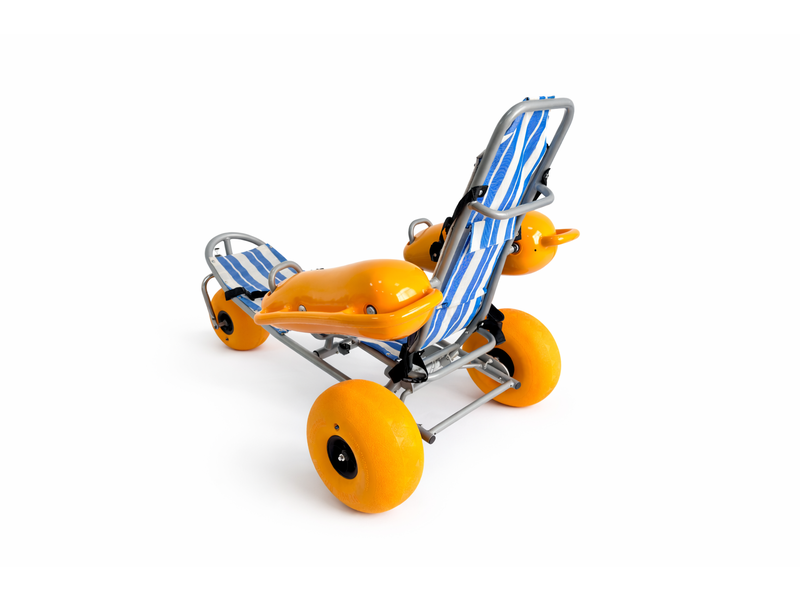
Size the storage bay and the route into it
The manual lists the assembled chair at 220 × 109 × 117 cm and its product weight at 28 kg. Measure the doorway, turns and storage position using the chair in the configuration staff are permitted to move. Include room to handle the equipment and inspect both sides once it is inside. A wide bay at the end of a narrow passage may still be unusable.
Choose a dry, shaded area protected from public access, impacts and other goods pressing against the inflatable parts. Identify how each assembly will be supported. Obtain the supplier’s instructions for permitted disassembly, inflation during a long closure and any approved support or packing method. The dimensions of the assembled chair do not establish the size of a disassembled set or the lifting method available to your team.
When moving an empty chair between the beach station and an off-site store, check the loading opening, cargo space and securing arrangement for the actual vehicle. Include every loose component. At the receiving store, reconcile what arrived against the sending team’s list and record the new bay location.
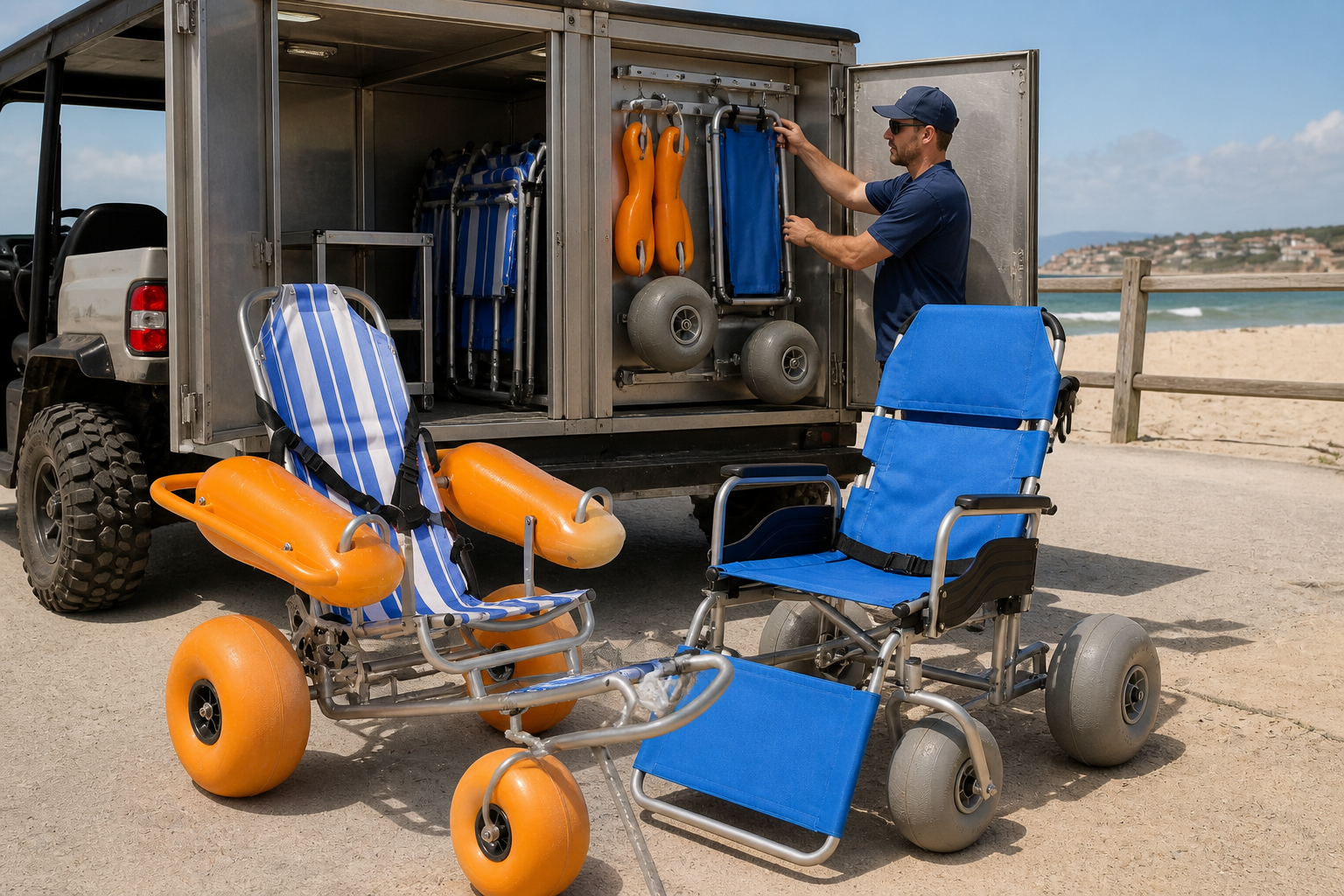
Keep removed parts with the right unit
Where disassembly is authorised, label, count and link every stored component with its approved asset record. Photograph the accepted configuration. Use a labelled container for the fittings and retainers assigned to it, and identify their intended positions on the parts map. During a hurried closeout, small parts can migrate between units.
| On the storage record | Detail the reopening team needs |
|---|---|
| Chair and location | Model, asset ID, bay and date received. Record any transfer to another building. |
| Component set | Which wheels, detachable armrests, fittings and supplied strap remain installed, and where removed items are stored. |
| Condition | Dated findings by component, open repair reference and any part awaiting identification or replacement. |
| Authority to issue | Who can access the stored unit, who can carry out approved work and who will complete the reopening check. |
A sample storage entry could read, “Unit F-03, bay B. Both armrests present. Right armrest lost air during the last session. Held for technical review.” When a replacement arrives, record it against that issue. Keep the unit unavailable until the authorised fitting and applicable checks are complete.
Check after a move, storm or long closure
Assign someone to check the space at intervals appropriate to the supplier’s guidance and the condition of the store. Look for water ingress, damp fabric, damaged packaging, compressed inflatable parts or a component moved to a different bay. If the site storm plan calls for relocation, identify the receiving location and take the asset list and open repair records along. Recheck condition and component counts after the move.
Before reopening, match each unit to its record and close any unresolved shortage or fault. Reassemble using the current model instructions. Check the inflatable armrests, all three wheels and their attachments, the backrest and seat, and each connection disturbed during storage. Verify inflation and ordinary function by the applicable method. Refer an uncertain attachment or renewed air loss to the authorised service contact.
Record which chair passed, which configuration staff may issue and who released it. Give the desk that unit’s actual status. When a visitor later requests a water session, the duty team still has to check the site, trained supervision, attendant footing and route back for that day. Supervised shallow-water session checks