
A floating beach wheelchair with a damaged armrest may need one replacement assembly. A chair with a distorted armrest mounting point raises a different question: can a replacement part still attach securely? Set the chair aside while the fault is investigated. The useful distinction for a fleet manager is between a fault that an approved repair can resolve and a chair whose condition, parts supply or intended use no longer supports the service.
Start with the part that failed
Identify the model and take a close photograph of the problem, then a wider view showing where the part attaches. On the AY-ST-V1.0, the manufacturer specifies an aluminum-alloy frame, three inflatable wheels and a pair of detachable inflatable PVC armrests. A loss of air in one of those armrests affects a flotation component. Remove the chair from guest use and identify the affected side and the circumstances in which the change appeared. AY-ST-V1.0 manual, pages 2–5

| Finding on the empty chair | What to establish | When to extend the review |
|---|---|---|
| One armrest repeatedly loses shape | Which armrest, where the change occurs and whether its mounting is intact | The damage extends to the attachment or the correct replacement cannot be identified |
| A wheel rubs or moves unexpectedly | Front or rear position, tire condition, axle and retention hardware | A correctly fitted assembly still rubs or the mounting appears distorted |
| Seat fabric or backrest attachment is damaged | Condition of the attachment points and the part specified for this chair | Several supports are affected or an adjustment will no longer hold |
| Frame or bracket appears bent or cracked | Location, extent and the manufacturer’s repair assessment | The manufacturer cannot identify a suitable repair or confirm the proposed return-to-use checks |
Use the inflation instructions for the specific fitted component. Matching an armrest by colour, selecting a wheel by diameter alone or increasing pressure to compensate for drag can conceal the original fault. If identification is uncertain, supply photographs and the model label when requesting parts and service guidance.
When replacing a part makes sense
Choose a component repair when the fault is confined to an identifiable part, the supplier confirms a compatible replacement, and someone qualified can complete and check the work. Ask whether the replacement is a complete assembly and whether its mount, retainers or fittings are included. Two quotations headed “armrest” may cover different items.
For example, suppose an operator finds a cut on one removable armrest. If the manufacturer specifies replacement, the mounting is sound and the correct assembly is available, compare that repair with the cost of a complete chair. If the mounting also moves, fitting a new armrest leaves a second fault unresolved. The next step is a technical assessment of that mounting. An empty roll on firm ground can reveal wheel interference after work. It cannot verify flotation or settle a structural repair question.
When the whole chair warrants replacement
Look back through inspections, photographs, open defects, repairs and current product instructions. Repeated loss of the same fixing after approved repairs may point to an unresolved mating part. A series of unrelated faults and long delays for discontinued components may leave little usable service time. Age by itself tells you neither of those things.
Compare two complete offers over the same service period. For repair, include the compatible part, freight, installation, the specified recheck and any temporary equipment needed during the wait. For replacement, include the delivered configuration, receiving checks, adjustment to existing storage and staff familiarization. Ask when the equipment can actually return to service. A spare that ships promptly may still leave a chair unavailable if the required fitting or inspection takes longer.
Has the service changed?
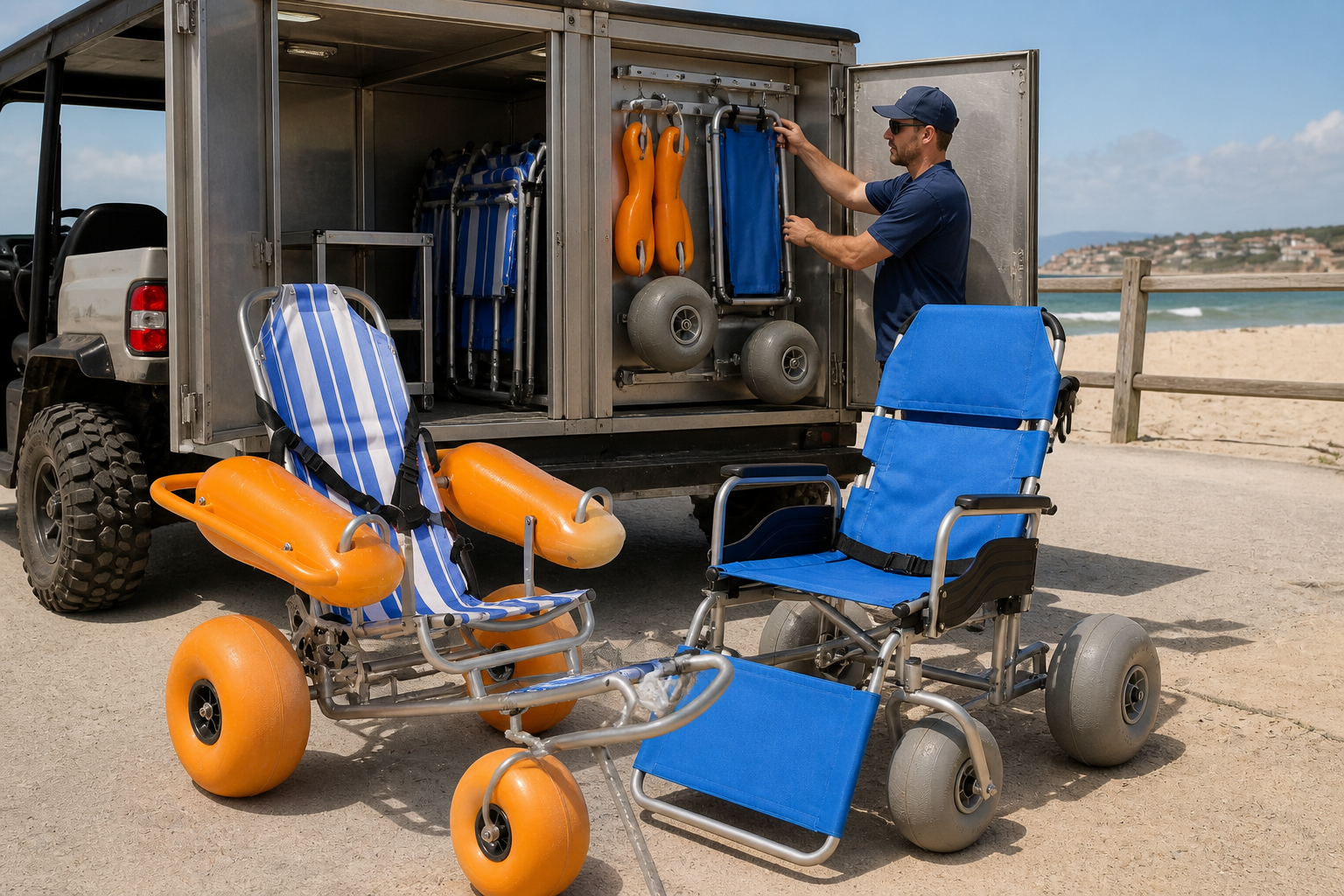
A serviceable chair may no longer suit its route. Perhaps the site has lost its protected entry point, or trained staff are unavailable during the hours guests request. A new floating chair will not restore either resource. Ary’s floating model is intended for controlled calm-water access under trained supervision, with the attendant able to maintain stable footing. Wave action and open-ocean operation fall outside its stated conditions. Floating wheelchair operating requirements
If the service now ends at a seating area on land, consider the land and floating wheelchair comparison when specifying a replacement. Never repurpose a damaged floating chair for guest use on land without an appropriate assessment of its complete condition and documented intended use.
Close the repair or retire the unit
For a repaired chair, record the installed part, the work done and the outcome of the manufacturer’s required checks. Give receiving staff the asset ID and the result before making it available for booking. A repair after an incident should stay linked to the original incident record.
If the chair is retired, remove it from bookable stock and keep it physically separate from ready equipment. Identify the failed component when arranging return or disposal so an incomplete chair cannot re-enter service at another location. For a new unit, verify the delivered model and accessories against the order before assigning it to the former chair’s sessions.