
Close a floating wheelchair session when the team can no longer provide the water conditions, equipment or trained supervision required for it. Say exactly what has closed. An armrest losing air takes a particular chair out of service. Waves reaching a designated entry point can close the water activity for every chair using that entry.
The duty lead needs authority to stop new departures and tell staff already supporting a visitor. An outing in progress takes priority. Use the site’s trained team and established return or emergency procedure, with an agreed means of communicating with the visitor. The desk can then contact people due to arrive and update the public status.
Decide how far the closure extends
For the AY-ST-V1.0, the manufacturer’s operating guidance describes controlled, calm, shallow water with trained supervision and stable attendant footing. The stated scope excludes wave action and open-ocean conditions. Inspect the planned exit as well as the entry. A calm-looking launch area does little for a visit if sand has washed out from the return point. Manufacturer’s water-use guidance and same-day shallow-water site assessment
| What the team finds | Immediate control | What can still be offered |
|---|---|---|
| A detachable inflatable armrest will not retain air, or a wheel retainer is missing. | Tag the identified chair and block its allocation. Arrange assessment against the model instructions. | An alternative chair only after its own release, fit and assistance are confirmed. |
| A wave reaches the planned entry or an attendant cannot establish reliable footing for the return. | Stop water departures from that zone. Ask the water-service lead to control access and assess current conditions. | A separately approved land outing if its route and staffing are available and the visitor wants it. |
| The trained water supervisor or required attendant cover becomes unavailable. | Hold the affected service period. Check who is already on the route and who covers their return. | Work within the duties and equipment the remaining qualified team can support. |
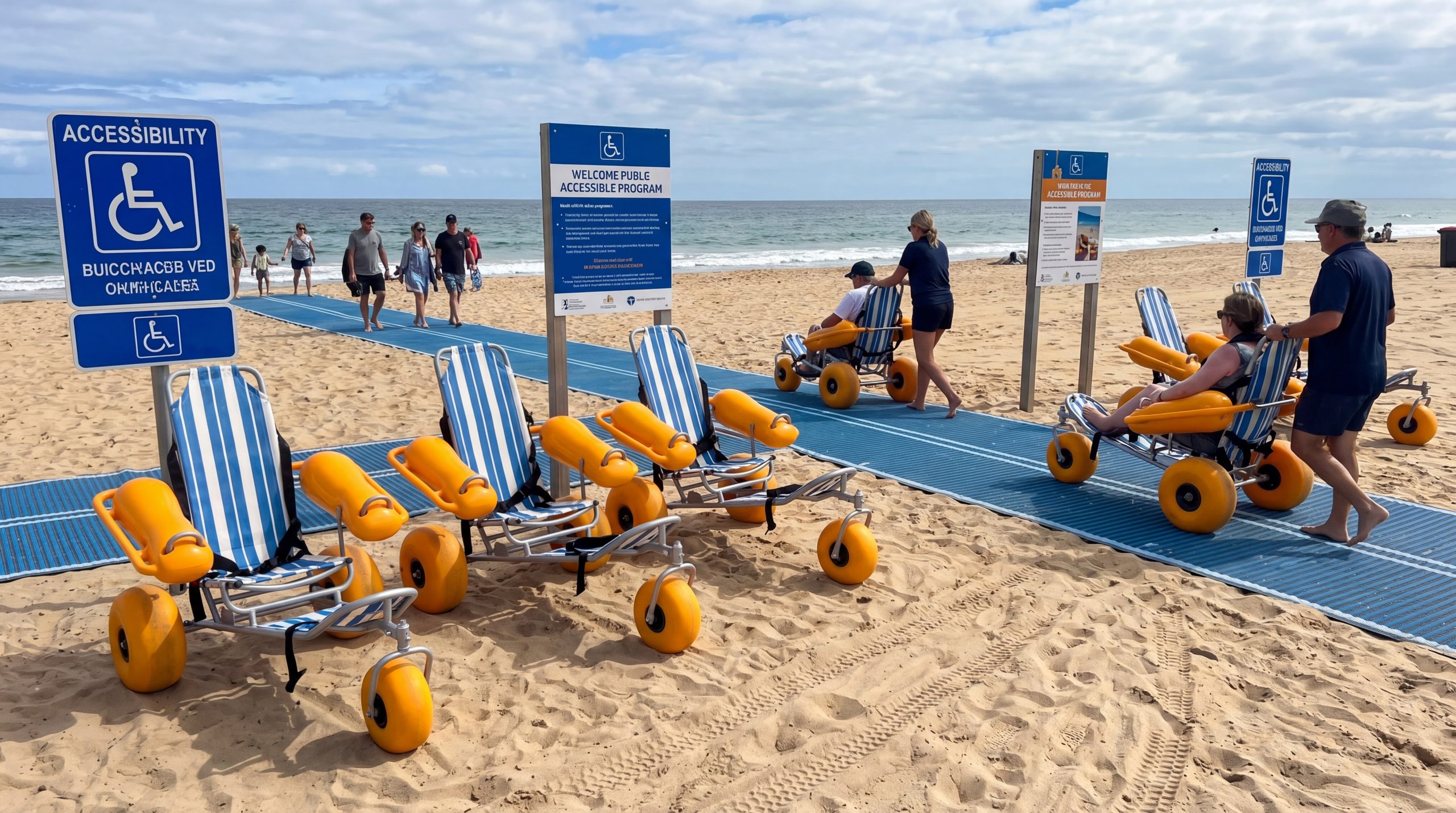
| A displaced mat joint blocks the shared return path. | Close the affected segment and all outings that depend on it. Direct the route team to the exact joint. | Another route only after its access, return, staffing and destination have been checked. |
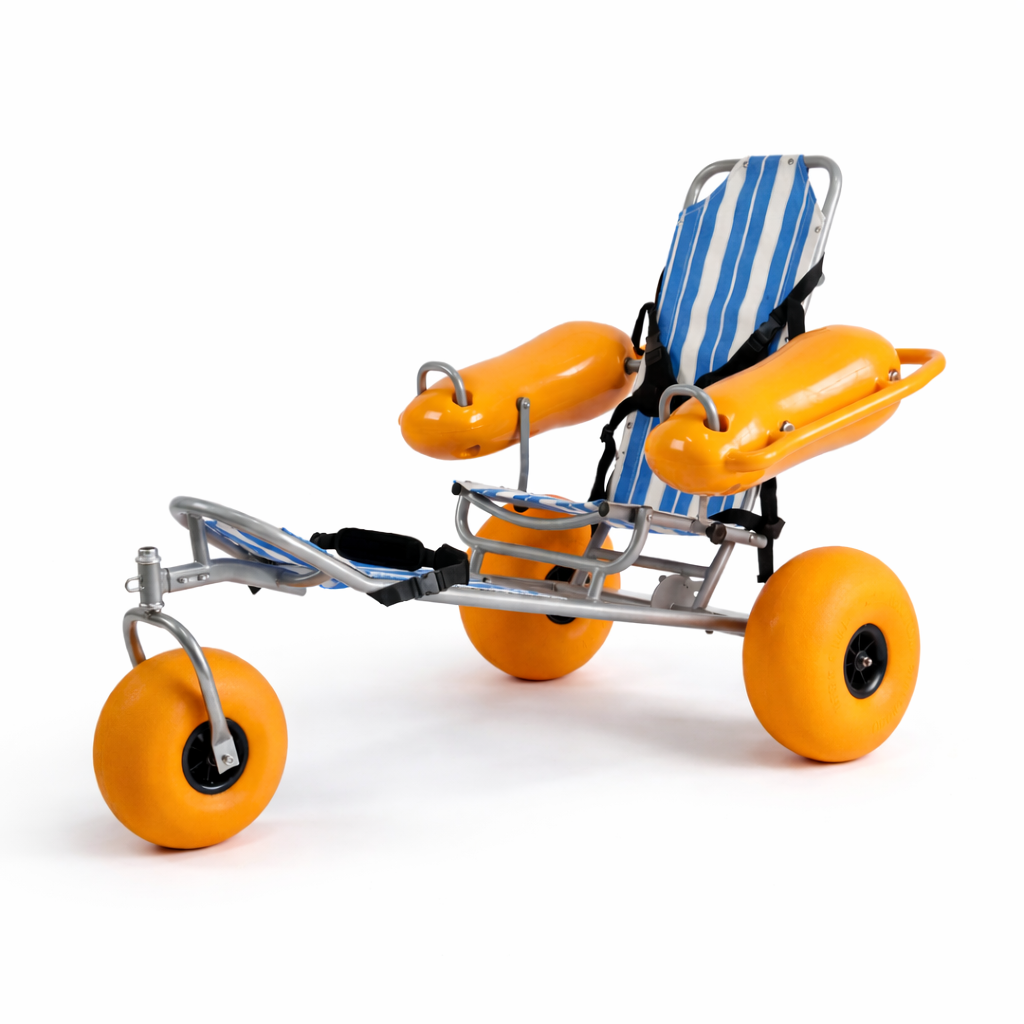
The AY-ST-V1.0 manual shows three inflatable PVC wheels, two detachable inflatable PVC armrests, their attachment points and the backrest arrangement. Use those drawings to identify a reported fault. A sound spare wheel does not resolve damage to the armrest on the same asset. Corrected AY-ST-V1.0 manual, pages 2–5
Put the closure where visitors make their decisions
Give the entrance, desk, website and any booking partner the same service name, affected place and time of the decision. An old message can remain live after service changes, particularly if partner staff update a different calendar. Name the person who will check the other channels after the notice goes out.
For example, a notice for an illustrative closure could say:
10:00 a.m. local time. Water entry at the main beach access is closed while staff check the return area after wave action. The land route to the viewing area is open. If you have a water booking, contact the service desk to choose a land visit or another date. Staff will post the next status update by 11:00 a.m. local time, even if the water service stays closed.
Use that land-route sentence only after the duty lead has confirmed it. Give booked visitors the site’s actual rescheduling, payment and cancellation arrangements. A clock time for the next update is useful if someone will be available to give it. Keep bookings for the closed activity blocked while staff discuss alternatives. The floating wheelchair booking system guide explains how to preserve a water closure when an individual visitor cancels.
Reopen the service that has been checked
Hand the incoming duty lead the original reason for closure, the affected route or asset and what still needs inspection. A record is useful when another trained manager can reproduce the decision and see what remains open. If the return path changed with the tide, the shore team must revisit that location. If a named chair failed a component check, the technician must identify the corrective work and repeat the affected checks.
Before reopening water access, confirm the current entry and exit, released equipment, trained cover, visitor communication and the local assistance arrangements. Record the person authorising the change and the time. Reopen only the affected activity and time slots that now have cover. Tell visitors who were offered a later update, and give the next shift the current decision.
A physical repair can return a chair to the ready area while the water zone stays closed. Conversely, an open zone leaves an unresolved chair fault on hold. Keep those two entries visible at the service desk so the next booking reflects both decisions.