
Two chairs can be the same age and need different maintenance. One has been assembled and dismantled frequently for transport. Another has spent most of its time in a dry store but returned twice with an armrest losing air. Track the actual unit, component and exposure. Use the manufacturer’s prescribed work and authorised service decisions to set the maintenance plan.
Build the plan from the chair and its service history
Keep the current model instructions, accepted configuration and supplier service contact with the asset record. AY-ST-V1.0 uses an aluminum-alloy frame, three inflatable PVC wheels, detachable inflatable PVC armrests and an adjustable backrest. The manual’s assembly drawings identify the attachment areas that may have been disturbed by transport, storage or repair. Ask the manufacturer for any required intervals, specific maintenance materials and permitted repair tasks for the supplied version. AY-ST-V1.0 manual, pages 2–5
Separate planned work from event-driven assessment. A calendar may tell the technician when a scheduled check is due. A newly reported air loss, impact, rough transport or changed attachment requires attention when reported. Daily rinsing and drying are described in the return cleaning routine. Long-term maintenance asks whether the part, its mounting or the way the chair is being handled has changed.
Investigate repeated faults before ordering another part
| Pattern in the history | Useful comparison | Decision for the authorised maintainer |
|---|---|---|
| One side repeatedly loses air | Same armrest or different assemblies? Same valve area or surface? What storage or handling contacts that side? | Identify the affected assembly and seek the supplier-approved repair or replacement route. |
| A rear wheel rubs after refitting | Check which wheel and hardware were removed, whether the issue occurs on one unit, and which fitting step preceded it. | Inspect the mating components and approved configuration before blaming the tire. |
| A backrest setting slips on more than one chair | Compare affected settings, attachment condition, revisions and previous work. | Determine the relevant checks and whether other units of the same configuration require review. |
| Loose hardware disappears after transport | Compare issue and destination counts and the component container used. | Correct the handling or storage arrangement and match any replacement to the unit. |
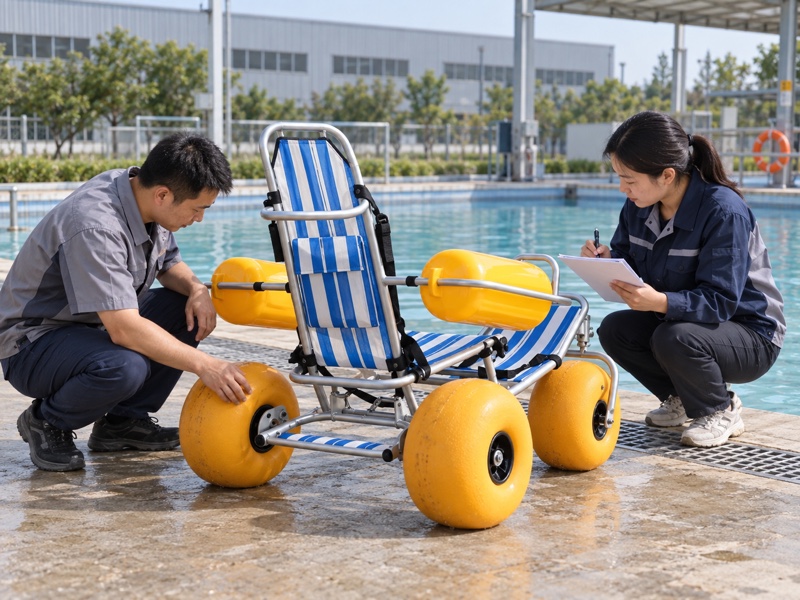
In a hypothetical repeat-fault case, an armrest was replaced on F-02, then a similar loss of inflation was reported at its next outing. Retain both records. Ask the supplier or authorised technician to examine the replacement, the attachment area and the storage arrangement before installing another unit. If other chairs use the same batch or mounting arrangement, the technical lead can identify which ones need examination. Similar symptoms are a reason to investigate, not proof of a common defect.
Verify the repair at the point where it mattered
The work order should identify the original condition, approved part reference or method, person performing the work, any other components disturbed and the verification required afterward. Obtain the correct service instructions before modifying, patching or replacing a part. A part that looks similar can have a different interface.
For a wheel issue, the required outcome concerns attachment, retention and permitted rolling behaviour. For a flotation armrest, the applicable assessment includes the assembly, its mount and the condition that caused the hold. Follow the manufacturer’s authorised verification procedure. A successful unloaded roll on a floor cannot verify flotation performance. No guest should be asked to test a suspected defect on the water.
Decide what belongs on the next maintenance order
Review downtime, repeated findings, service effort, availability of approved parts and upcoming workloads by model and revision. Identify which spares are committed to existing jobs. Distinguish a component repair from a case where frame condition or inability to confirm a suitable repair makes the complete chair a replacement candidate. Repair-or-replace assessment
After a repair or seasonal inspection, update the physical tag and the availability system with the authorised result. Keep the history even when the unit changes storage site. The next team should be able to retrieve the fault, installed part and recheck record from the asset ID before the chair returns to a water-service pool. Seasonal storage record