
A floating beach wheelchair safety plan connects a suitable chair with a checked route, trained attendants, controlled water entry, and after-use care. Guests need one clear explanation before movement begins. Staff need named roles and written pause limits. Equipment needs a condition check before storage. A site plan brings those decisions together without treating calm water as risk-free.
What Does a Floating Wheelchair Safety Plan Cover?
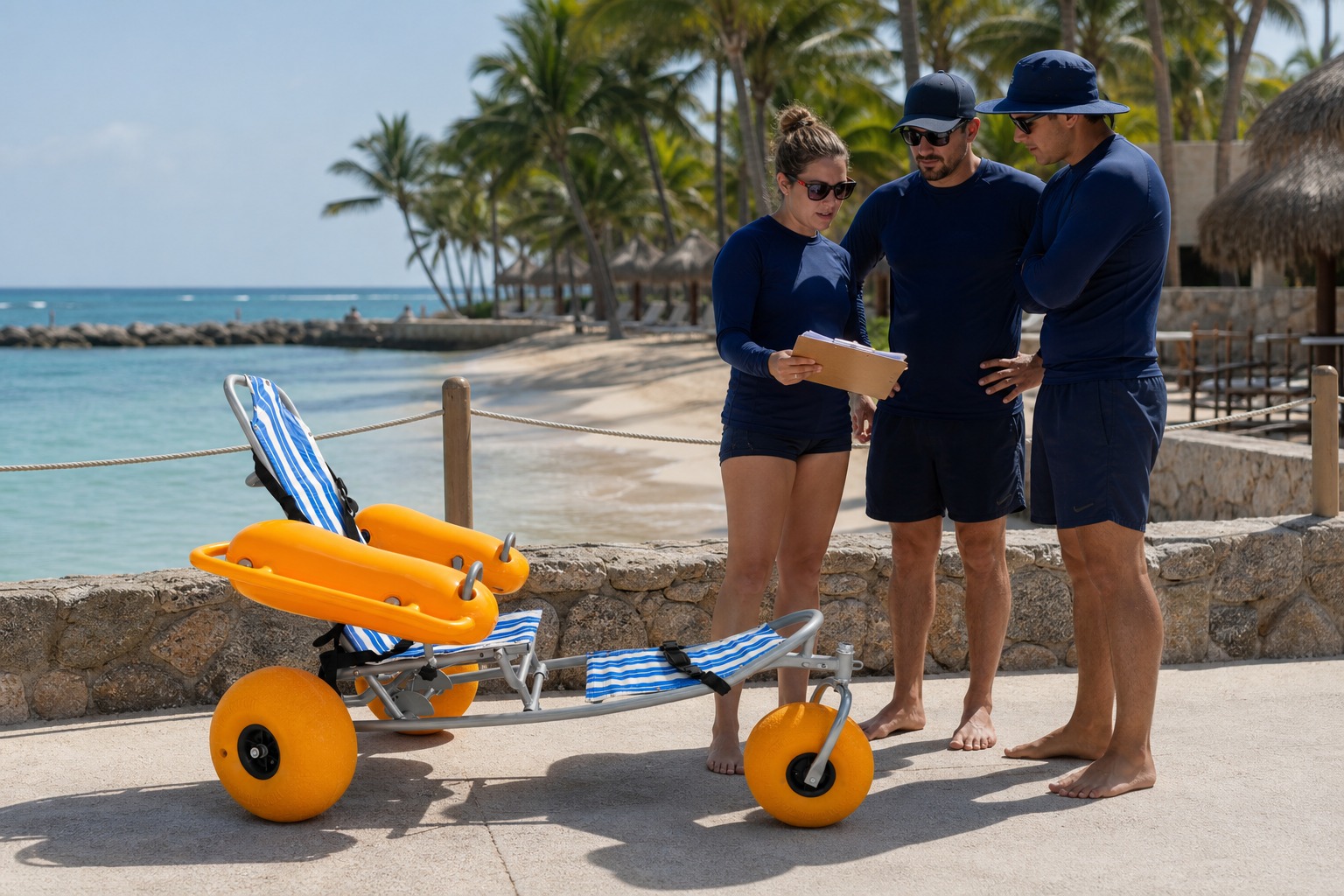
floating beach wheelchair safety covers guest fit, equipment condition, route hazards, water conditions, attendant roles, communication, and return care. So, connect this stage with the guest, attendants, chair, and site conditions.
NOAA tide predictions can support scheduled route reviews. Current surf, weather, water-quality notices, and the site’s written limits still control each session.
Which stages belong in one operating plan?
Start with the whole service: Treat booking, handoff, transfer, beach travel, water entry, exit, rinsing, and storage as connected stages. A weak handoff can create problems later even when the chair itself performs as intended. Assign an owner and a pause rule to every stage so staff do not improvise under pressure.
- Booking and guest support notes.
- Chair and route inspection.
- Water-entry limits.
- Return care and service records.
Why do written roles reduce confusion?
Here is the operating benefit: A named lead attendant controls movement and speaks with the guest, while a support attendant watches terrain and nearby activity. A supervisor handles condition changes, equipment faults, and any decision to stop. Brief role cards keep that structure consistent across shifts and seasonal teams.
Key Takeaway: A safety plan works when every person knows who decides, who communicates, and who records.
| Planning Area | Practical Control |
|---|---|
| Service Stage | Named Control |
| Handoff | Lead attendant |
| Water zone | Lead plus support |
| Return | Inspection owner |
This role map exposes gaps before a guest reaches the shoreline.
How Should Resorts Match the Chair to Each Guest?
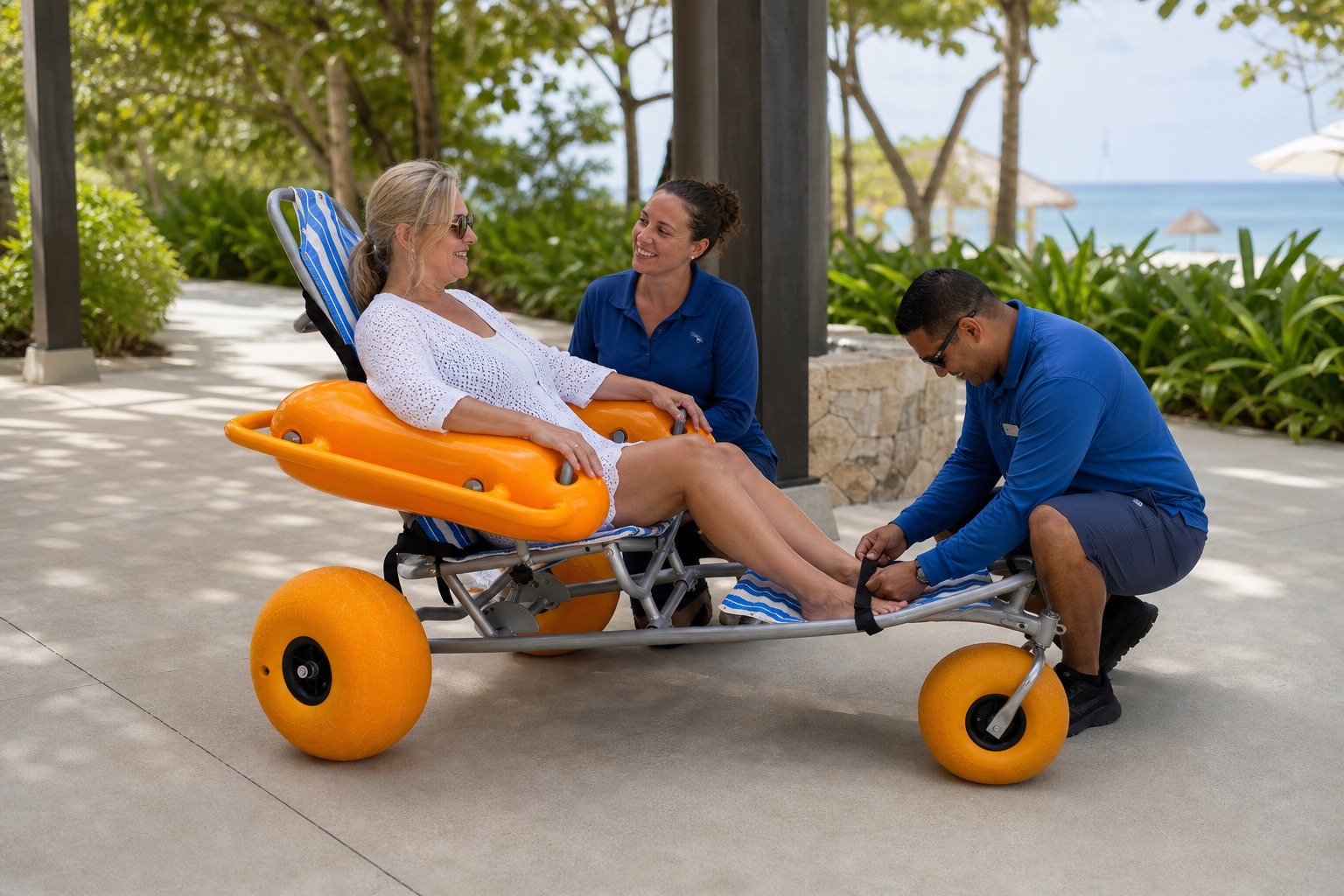
Floating beach wheelchair safety should match the guest’s posture, transfer preferences, support needs, destination, and comfort with water before the session begins. Next, confirm fit, assistance, destination, and the guest’s own preference.
Use the beach wheelchair comparison page to separate floating, land-based, and portable use before a booking is accepted.
What should staff discuss during booking?
Keep the conversation practical: Ask how the guest prefers to transfer, which supports feel comfortable, whether a companion will join, and whether sand travel or supported water entry is the goal. Avoid treating a service conversation like a medical interview. Record only details that help staff prepare a respectful and workable session.
- Preferred transfer method.
- Seat and foot support needs.
- Companion participation.
- Desired sand or water destination.
When should a different plan be offered?
Use comfort as a real limit: Offer dry-sand access, a shorter route, or another mobility option when fit, posture, transfer, or water confidence does not suit the planned session. Staff should never pressure a guest into water because a booking was made. A clear alternative protects dignity while keeping participation possible.
Key Takeaway: Matching starts with the person’s goals and continues with a route that suits those goals.
| Planning Area | Practical Control |
|---|---|
| Guest Factor | Planning Response |
| Transfer | Agree before setup |
| Water comfort | Choose dry or water use |
| Support need | Set staffing level |
This comparison turns personal preferences into clear operating choices.
What Route and Water Checks Belong Before Use?
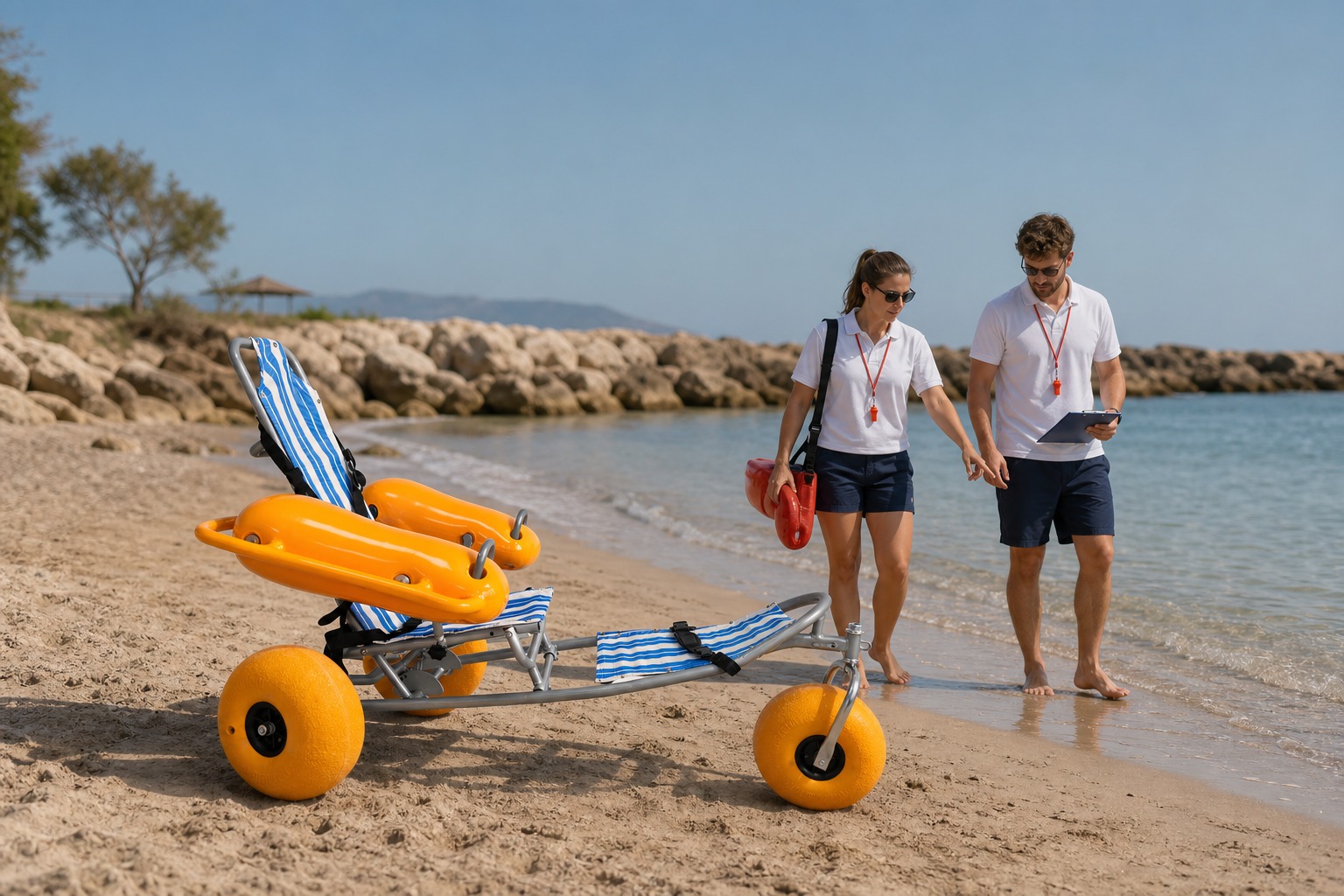
floating beach wheelchair safety needs a same-day review of access surfaces, slopes, crowding, temperature, wind, waves, currents, visibility, and exit points. Then, walk the route and set water limits before the session.
Next, record any accessible beach mat as a separate route segment with its own inspection and stop rules.
How should staff inspect the complete route?
Walk it before moving the chair: Begin at pickup and follow every gate, ramp, mat, sand section, turning point, water-entry line, and planned return path. Note fresh ruts, washouts, hot surfaces, vehicles, beach furniture, or crowd pinch points. Conditions can differ from the prior shift, so a map cannot replace a physical review.
- Firm pickup and transfer space.
- Clear sand route and turning room.
- Controlled water-entry line.
- Open return and emergency exit.
What conditions should pause water entry?
Set limits before guests arrive: Pause when surf, wind, current, visibility, water quality notices, lightning, heat, or crowding exceeds local operating rules. Resorts should base limits on site policy, qualified coastal advice, and product instructions. Written thresholds help staff make a calm decision without arguing at the waterline.
Key Takeaway: A route check is complete only when staff have a safe way in, a safe way out, and a clear stop decision.
| Planning Area | Practical Control |
|---|---|
| Check Zone | Pause Signal |
| Sand route | Blocked or unstable |
| Water | Outside site limits |
| Exit | No clear return path |
The paired check prevents teams from judging sand and water as separate tasks.
How Should Staff Manage an Assisted Transfer?
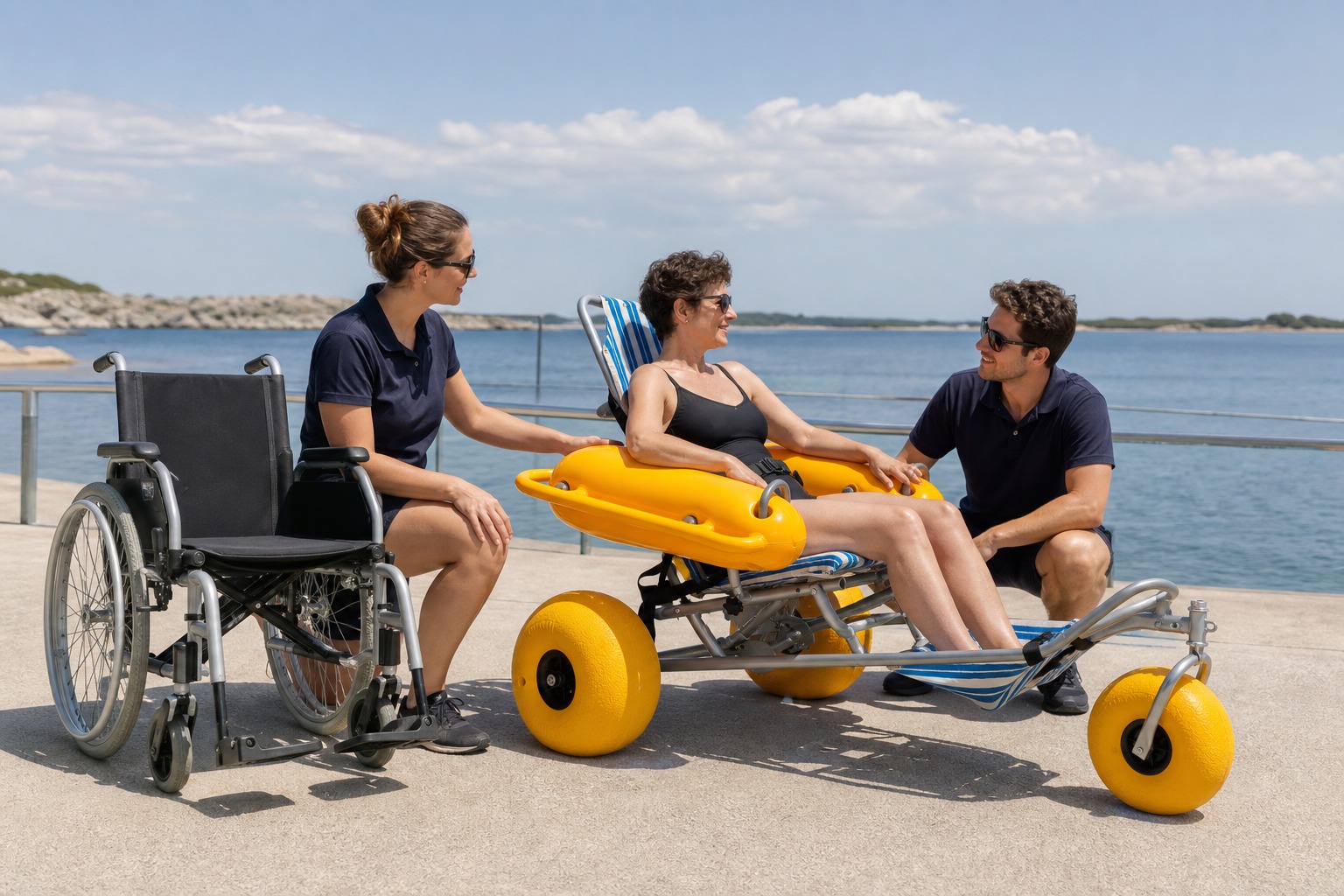
Floating beach wheelchair safety should use a firm level area, an agreed method, locked equipment, adequate staff, and step-by-step communication led by the guest. Meanwhile, name who leads the transfer and who may stop it.
What belongs in the transfer setup?
Slow the setup before movement: Clear enough room for the guest’s mobility device, the beach chair, staff, and any transfer aid approved by the site. Check brakes or stabilization points, remove loose obstacles, and position foot or arm supports as directed. The guest should hear what will happen before anyone touches the chair or their mobility device.
- Firm and level transfer area.
- Agreed transfer method.
- Stable chair position.
- Clear verbal count and pause option.
How can attendants preserve guest control?
Ask before every change: Use the guest’s preferred language and pace, confirm contact points, and stop when comfort or balance changes. Companions can support communication but should not replace the guest’s consent. Record any setup adjustment that would help the next visit run more smoothly.
Key Takeaway: A good transfer feels predictable because the guest directs the pace and staff follow one agreed method.
| Planning Area | Practical Control |
|---|---|
| Transfer Step | Control Point |
| Position | Guest confirms setup |
| Movement | Lead gives clear count |
| Pause | Any person may stop |
This sequence reduces rushed handling and gives staff a repeatable handoff.
What Attendant Roles Support Safer Operation?
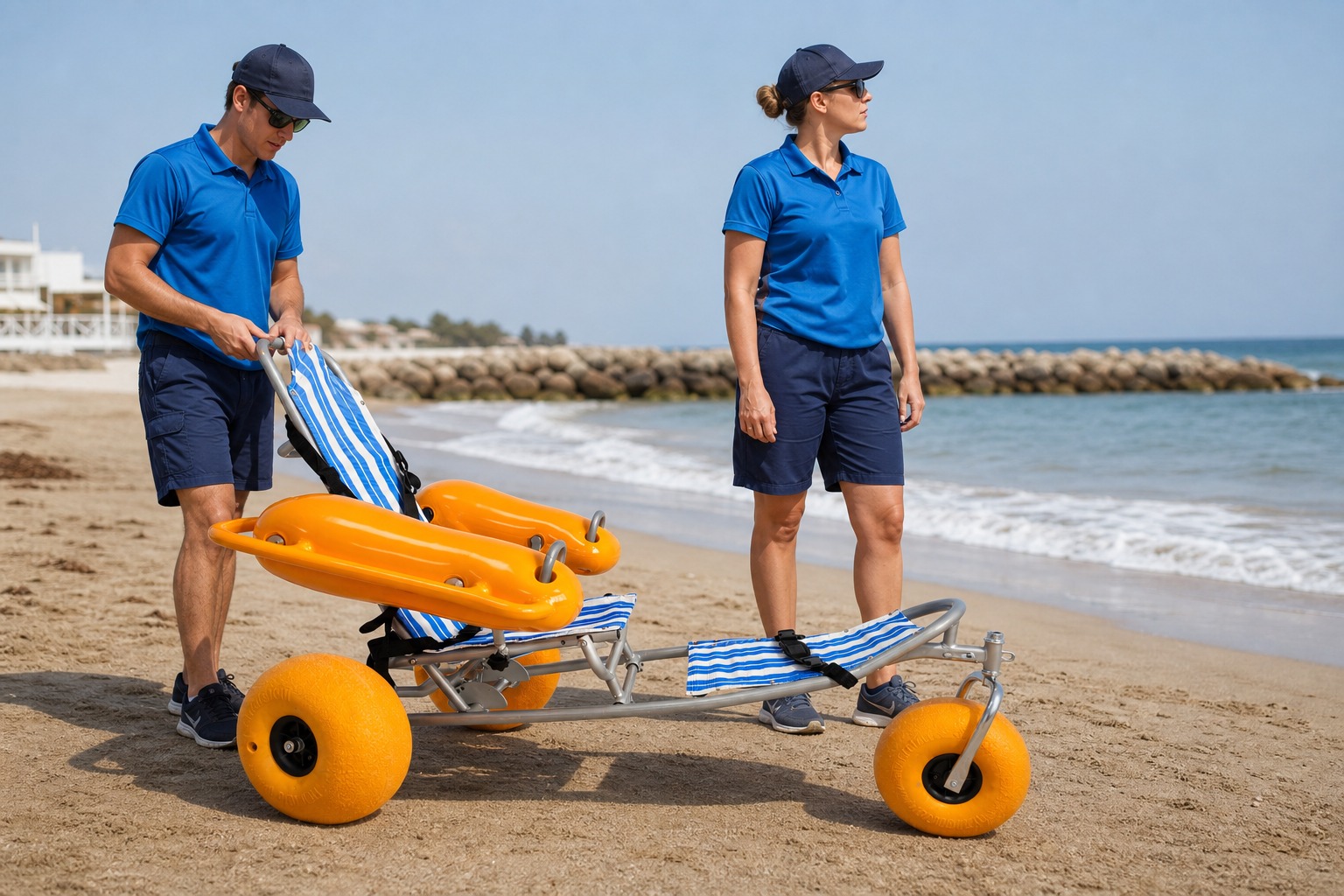
floating beach wheelchair safety works best with one lead attendant, a support or spotter role when conditions require it, and a supervisor available for stop decisions. For example, one attendant can lead communication while another watches conditions.
Then, keep the current user-manual resource with the exact chair record used for training.
What should the lead attendant control?
One voice keeps movement clear: The lead explains the route, confirms guest readiness, controls the chair, and calls every start, turn, pause, entry, and exit. This person watches the guest and chair rather than juggling unrelated tasks. A pre-session briefing should state who takes over if the lead cannot continue.
- Guest communication.
- Chair direction and pace.
- Entry and exit calls.
- Session stop recommendation.
When does a support attendant add value?
Add support before difficulty rises: Long sand routes, mild slopes, busy public areas, transfers, and supported water entry may need another trained person. The support attendant watches wheels, obstacles, surf direction, and nearby people without issuing conflicting commands. Local rules should define minimum staffing for each service level.
Key Takeaway: Clear attendant roles replace mixed instructions with coordinated movement.
| Planning Area | Practical Control |
|---|---|
| Role | Primary Focus |
| Lead | Guest and chair control |
| Support | Terrain and surroundings |
| Supervisor | Policy and escalation |
This staffing model helps managers schedule capability rather than just headcount.
How Should a Floating Chair Enter Calm Water?
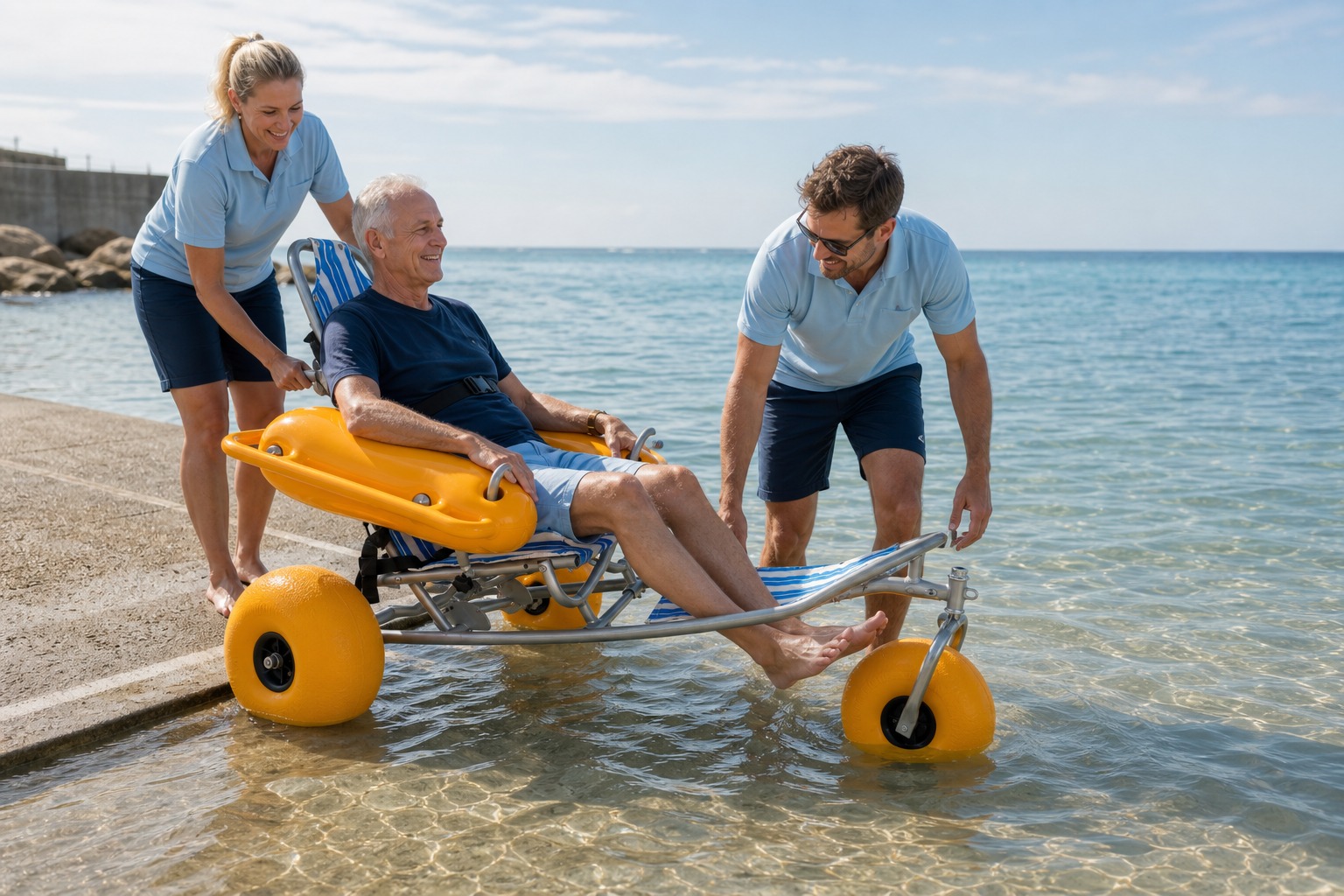
Floating beach wheelchair safety should enter calm approved water slowly, facing the planned direction, with attendants maintaining control and the guest receiving continuous updates. However, stop water entry when any written limit is exceeded.
What sequence supports a controlled entry?
Use small deliberate steps: Confirm the exit point, secure supports as directed, approach along the approved line, pause at each change in depth, and check guest comfort. Attendants should maintain their assigned positions while keeping hands clear of pinch points. The chair must stay within product instructions and the resort’s operating boundary.
- Confirm water and exit limits.
- Approach on the approved line.
- Pause as depth changes.
- Maintain verbal contact.
Why should staff avoid rushed entry?
Momentum can hide changing conditions: A fast push can reduce the time available to notice a rut, wave, guest concern, or shifting chair angle. Slow entry gives the team room to stop and return without a sudden correction. Water access should feel controlled rather than dramatic.
Key Takeaway: Controlled entry depends on pace, communication, and a return route that remains open.
| Planning Area | Practical Control |
|---|---|
| Entry Moment | Staff Action |
| Water edge | Pause and confirm |
| Depth change | Recheck comfort |
| Condition change | Turn back early |
The sequence favors reversible decisions at every stage.
When Should Staff Pause or End a Session?
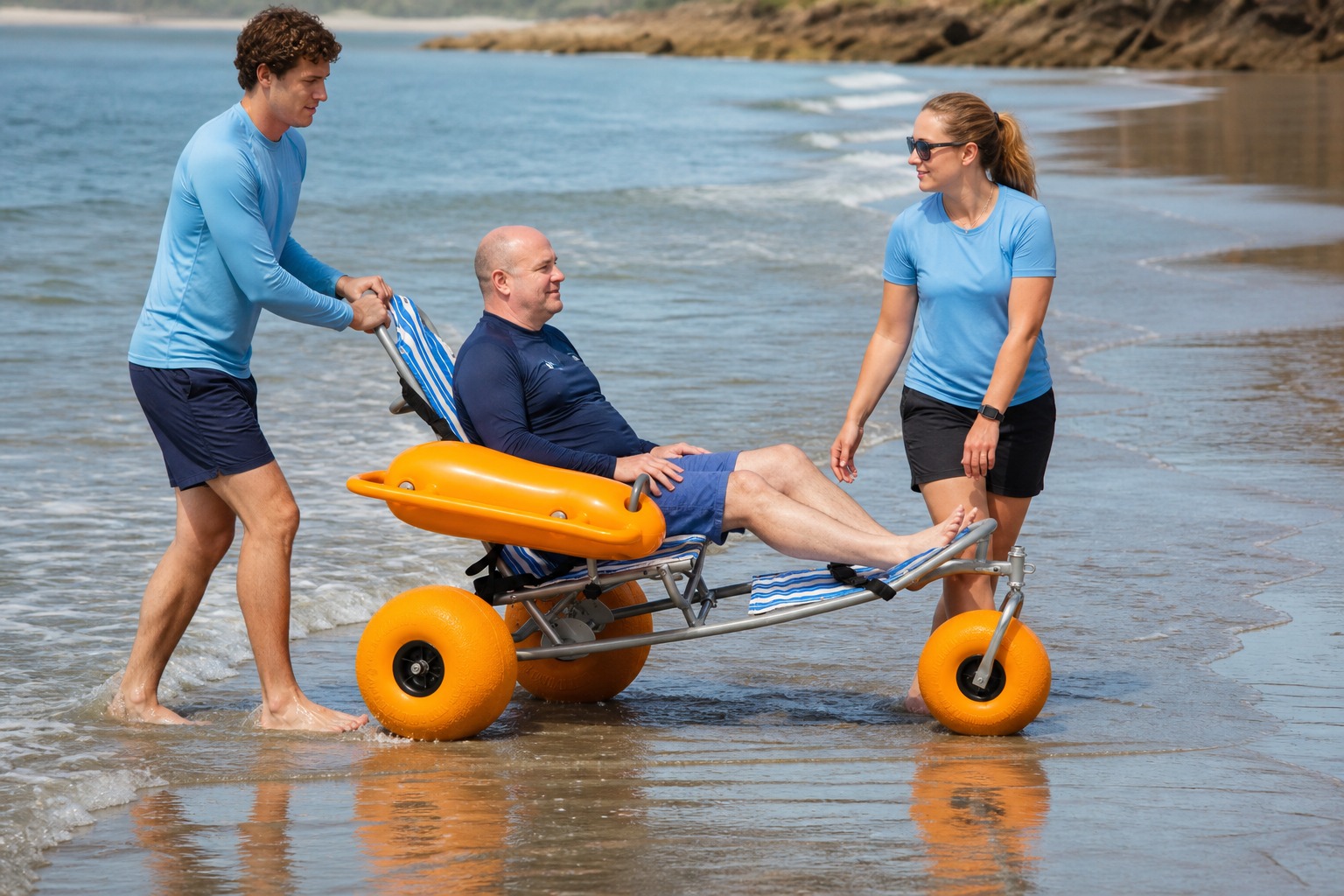
floating beach wheelchair safety should pause or end a session whenever the guest asks, equipment changes, staff control weakens, or site conditions move outside written limits. As a result, staff can end a session without debate or delay.
Which signals require an immediate pause?
Make stopping normal: Stop for guest discomfort, loose supports, unusual chair movement, attendant fatigue, a blocked exit, worsening surf, heat stress, or nearby hazards. A pause is a professional control rather than a service failure. Staff can reassess on firm ground and offer a shorter or dry-sand alternative.
- Guest asks to stop.
- Chair condition changes.
- Attendant control decreases.
- Weather or water moves outside limits.
How should teams manage the return?
Leave before conditions close in: Use the planned exit while it remains clear, keep one person communicating, and avoid hurried turns near waves or uneven sand. Recheck the guest after reaching stable ground. Document the trigger so managers can improve route rules, staffing, or booking information.
Key Takeaway: A strong program makes an early return easy, respectful, and free from blame.
| Planning Area | Practical Control |
|---|---|
| Pause Trigger | Immediate Response |
| Guest concern | Stop and confirm |
| Site change | Use planned exit |
| Equipment fault | Remove from service |
This framework gives staff permission to act before a small issue becomes harder to manage.
What Should an Incident Response Plan Include?
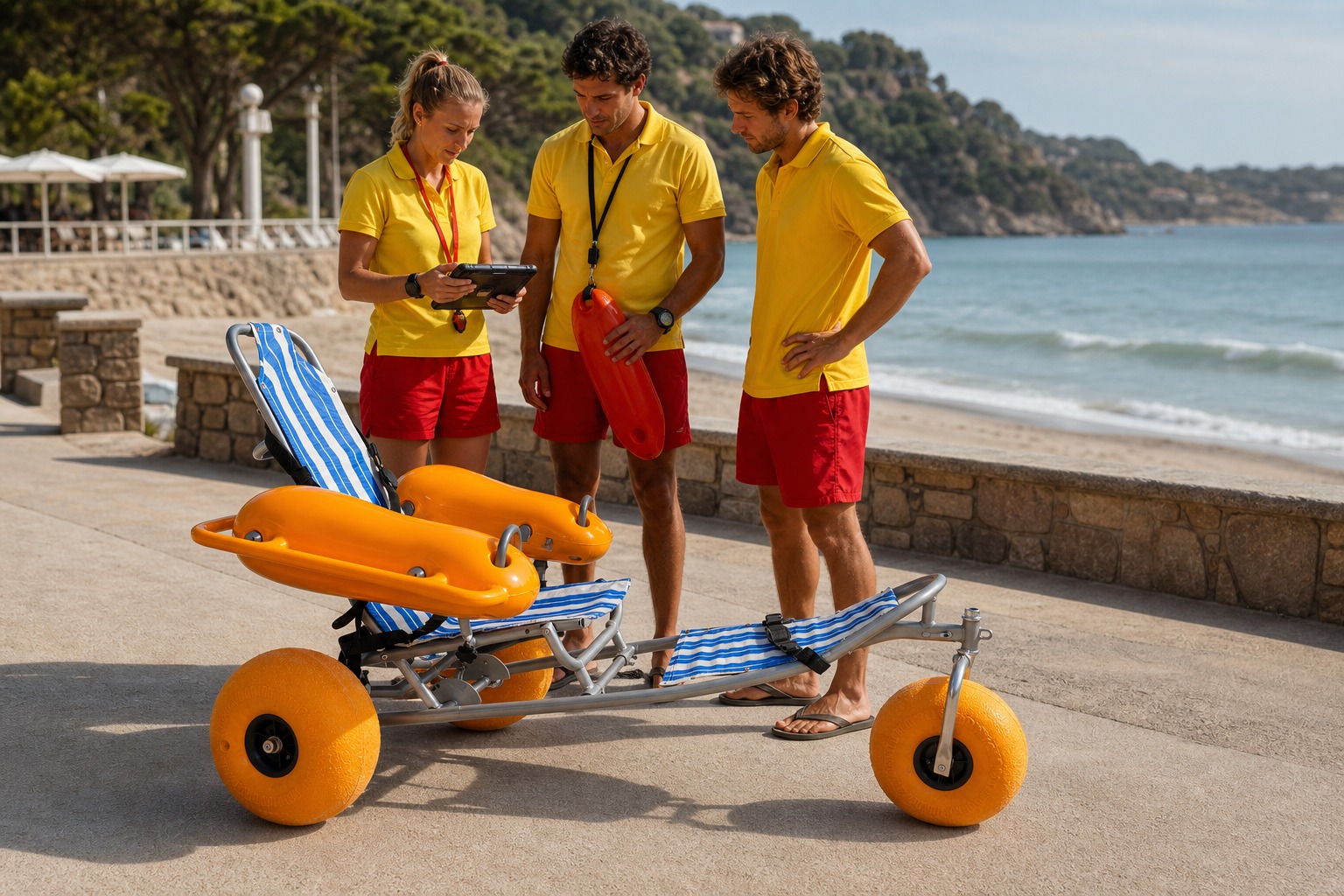
Floating beach wheelchair safety should include communication, guest support, staff roles, emergency contacts, equipment isolation, factual records, and a review before service resumes. Afterward, document any incident, pause, damage, or uncertainty.
How should resorts prepare before an event?
Preparation keeps the response orderly: Post emergency contacts, identify the nearest accessible extraction route, keep communication devices available, and brief staff on local response procedures. Run short drills that include a lost route, equipment concern, heat issue, and water-condition change. Drills should focus on coordination without inventing dramatic scenarios.
- Emergency and supervisor contacts.
- Accessible extraction route.
- Communication equipment.
- Guest support and privacy steps.
What belongs in a factual record?
Write what happened, not assumptions: Record time, location, conditions, people present, actions taken, equipment ID, and follow-up owner. Keep personal information limited and protected under site policy. Service should resume only after the relevant route, staffing, and equipment controls have been reviewed.
Key Takeaway: Incident planning protects the guest while giving managers useful facts for corrective action.
| Planning Area | Practical Control |
|---|---|
| Record Area | Useful Detail |
| Conditions | Observed site state |
| Actions | Who did what |
| Follow-up | Owner and due date |
A concise record supports better decisions without turning the process into blame.
How Should Resorts Care for Chairs After Saltwater Use?
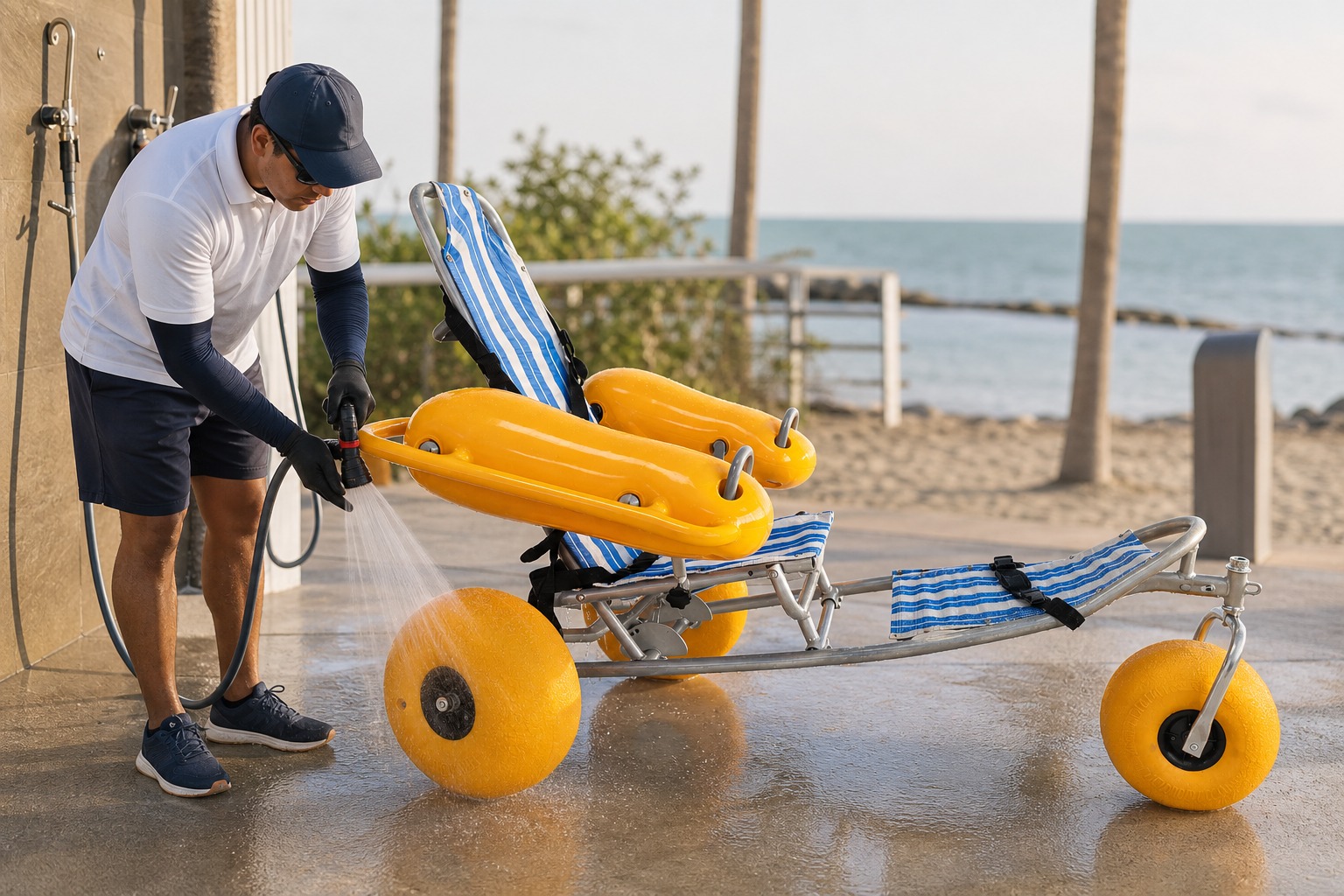
floating beach wheelchair safety needs prompt fresh-water rinsing, controlled drying, hardware inspection, condition records, and protected storage after saltwater exposure. Also, connect rinsing and inspection with the exact chair record.
What belongs in the return-care sequence?
Care starts before storage: Remove loose sand, rinse floats, wheels, lower frame, joints, supports, and approved fabric areas with fresh water. Allow moisture to drain and dry before enclosure. Check fasteners, straps, frame connections, wheel attachment, and any area that felt different during use.
- Remove sand before rinsing.
- Rinse exposed chair areas.
- Dry before enclosed storage.
- Record wear and service needs.
How should managers track chair condition?
Use one record per chair: Assign an equipment ID and record each session, rinse, inspection, fault, repair, and return-to-service decision. Trends can reveal recurring wear linked with a route, handling method, or exposure level. Only an authorized person should clear a chair that was removed from use.
Key Takeaway: Coastal care protects readiness when rinsing, inspection, records, and storage follow the same sequence.
| Planning Area | Practical Control |
|---|---|
| Care Record | Management Use |
| Session log | Connects use and wear |
| Fault status | Prevents accidental issue |
| Service approval | Confirms readiness |
The record turns routine cleaning into a useful maintenance history.
How Can Resorts Audit and Improve the Safety Plan?
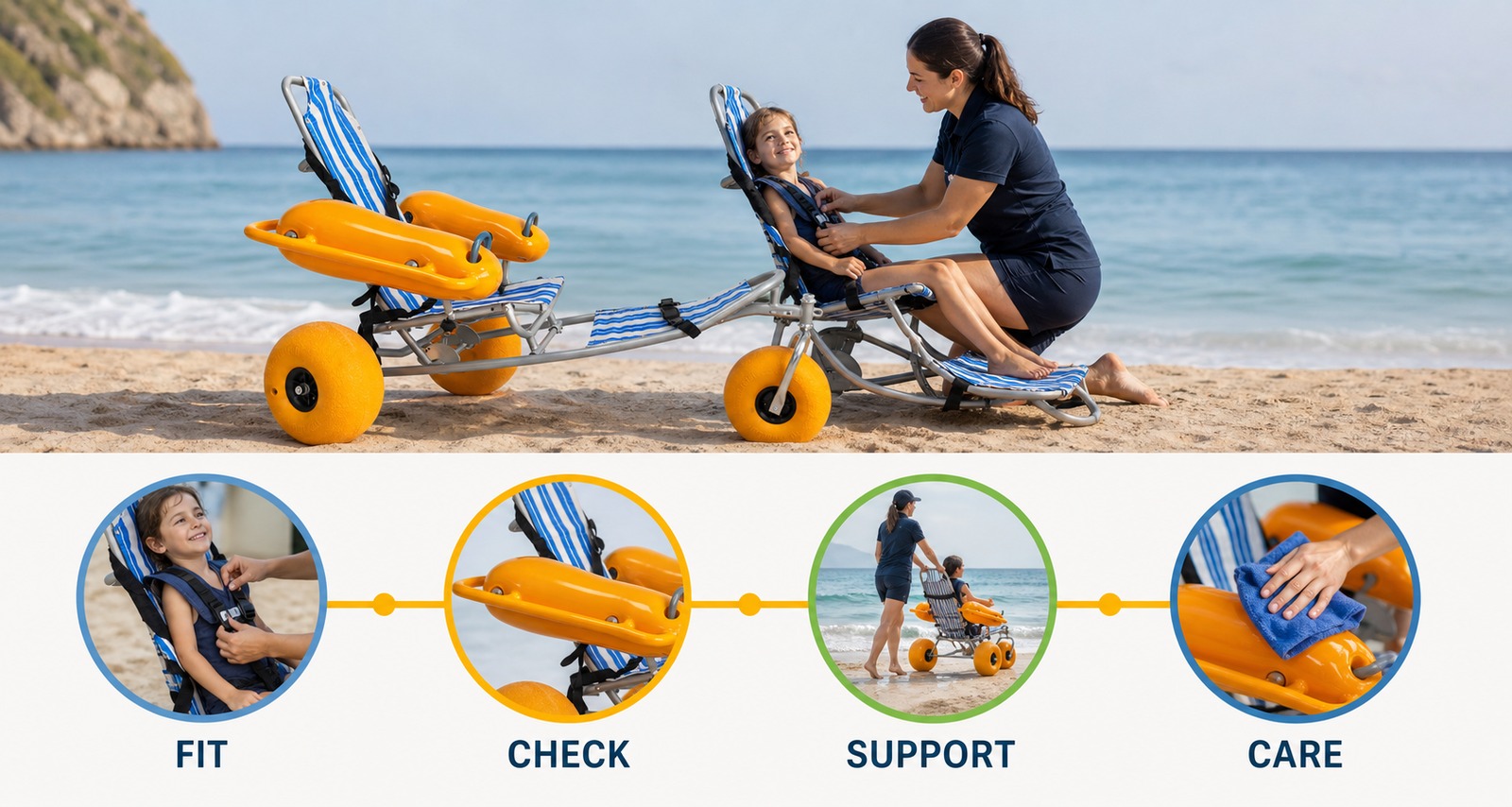
Floating beach wheelchair safety can improve the plan by reviewing guest feedback, pause events, inspection findings, staff observations, route changes, and service records on a set schedule. Finally, use guest feedback and service records to revise the plan.
Which signals should managers review?
Use evidence from real operations: Look for repeated booking questions, transfer delays, route closures, equipment faults, near misses, and sessions that ended early. Ask staff where instructions conflict and ask guests whether they felt informed and in control. Small patterns often point to training, signage, or scheduling changes.
- Guest communication feedback.
- Pause and early-return reasons.
- Inspection and repair trends.
- Route and staffing changes.
What should happen after the review?
Turn findings into named actions: Update the route map, role cards, booking questions, training drills, inspection form, or maintenance schedule, then assign an owner and review date. You can contact us today to discuss equipment and operating needs for a resort program. Better water access should be measured by informed choice, respectful support, and repeatable control.
Key Takeaway: A living safety plan solves gaps in fit, routes, staffing, water entry, stopping, and equipment care.
| Planning Area | Practical Control |
|---|---|
| Review Finding | Possible Action |
| Transfer delay | Revise setup and training |
| Route change | Update limits and map |
| Wear pattern | Adjust care schedule |
This final review keeps the program connected to guest experience and daily evidence.
FAQ
Can I use a floating wheelchair without an attendant?
No for a managed resort session. A trained attendant team should control the chair according to product instructions and local operating rules.
What’s the best water condition for a session?
Use only conditions within the resort’s written limits. Calm approved water, a clear exit, suitable visibility, and adequate staffing support a controlled session.
How do I know if the chair fits a guest?
Run a respectful fit review. Check posture, supports, transfer method, comfort, destination, and the guest’s own preference before moving.
Can staff continue after a guest asks to pause?
No. Stop promptly, confirm the guest’s needs, and return to stable ground or offer another access option.
What should happen after saltwater exposure?
Rinse and inspect the chair. Fresh water, drying, condition records, and protected storage help keep it ready for later use.