
Beach walker safety depends on matching a wide-wheeled walker to the senior, practicing on firm ground, choosing a short route, and treating seated rest as part of the plan. A senior may move confidently along a boardwalk, yet loose sand can slow the wheels, change posture, and drain energy much faster than expected. If a companion pulls the frame, brakes remain unfamiliar, or the return route is too long, a pleasant outing can become tiring and uncertain. A better approach gives you clear controls: fit the handles, test the brakes, rehearse turns, map early rest points, watch heat and fatigue, and keep another mobility option available.
What Does a Beach Walker Safety Plan Cover?
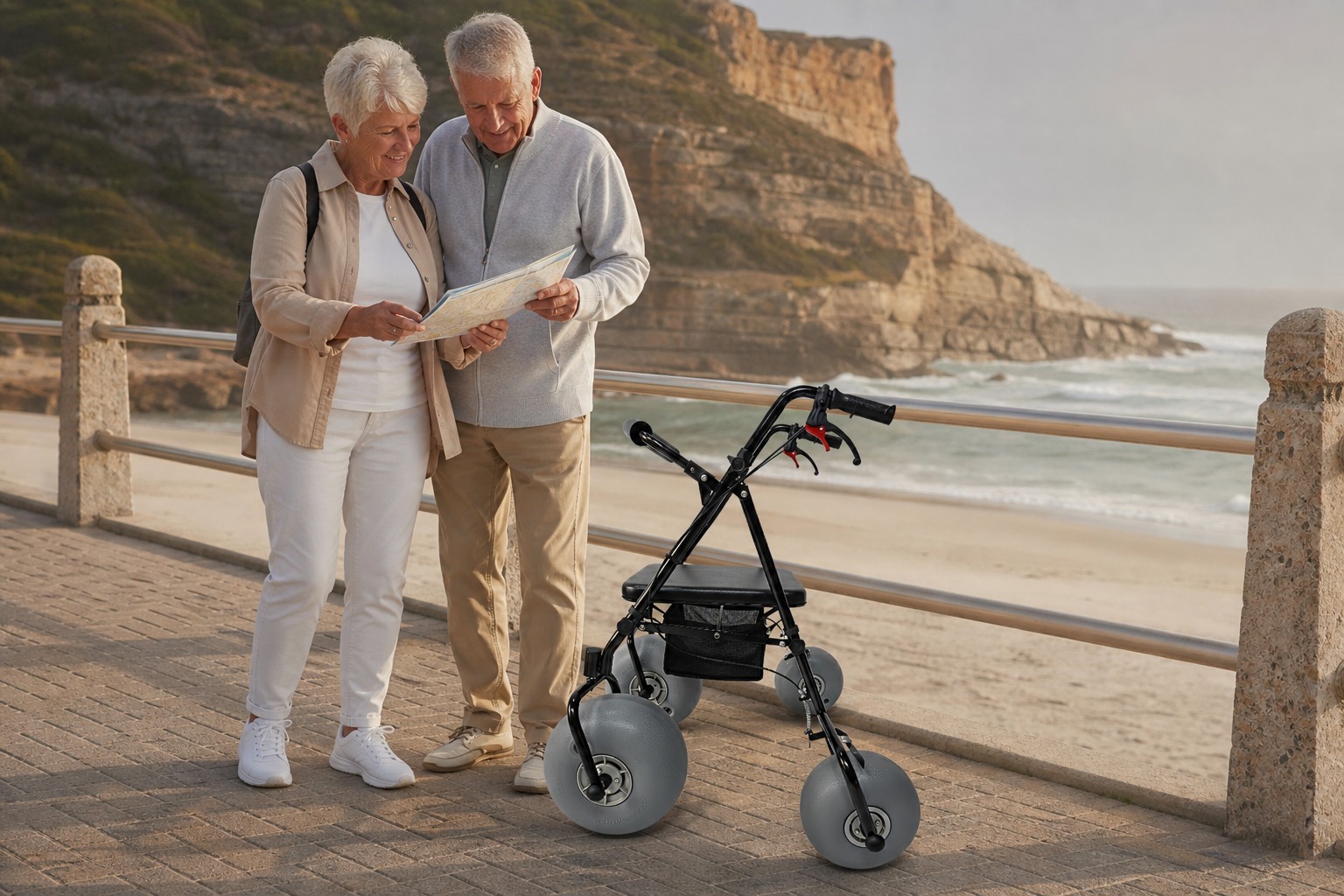
beach walker safety covers user fit, walker condition, brake use, route choice, walking pace, rest, weather, companion support, and after-use care. It gives you a practical control for this stage while keeping the guest, staff team, equipment, and site conditions in one decision.
For broader fall-risk context, the CDC advises older adults to discuss personal fall prevention with a healthcare provider. That guidance does not replace model-specific fitting, route limits, or companion support.
Which decisions should happen before the beach?
Plan around the person: Start with walking ability, endurance, balance, preferred assistance, and the user’s own goals. Then match those needs with handle range, wheel design, braking, seat stability, and a realistic route. A written plan helps companions avoid making rushed choices after fatigue begins.
- User comfort and walking limit.
- Walker fit and control check.
- Short route with rest points.
- Return option and backup mobility.
Why should rest be planned early?
Energy must cover the return: A senior may feel strong at the start and still tire quickly on loose sand. Planned pauses preserve energy before posture or judgment changes. Mark each rest point and keep the return distance visible to both user and companion.
Key Takeaway: A safety plan connects equipment, personal ability, route length, and rest timing.
| Planning Area | Practical Control |
|---|---|
| Planning Area | Control |
| User | Comfort and endurance |
| Walker | Fit and brakes |
| Route | Short with early rest |
This simple map keeps the trip within the senior’s available energy.
How Should the Walker Be Fitted to a Senior?
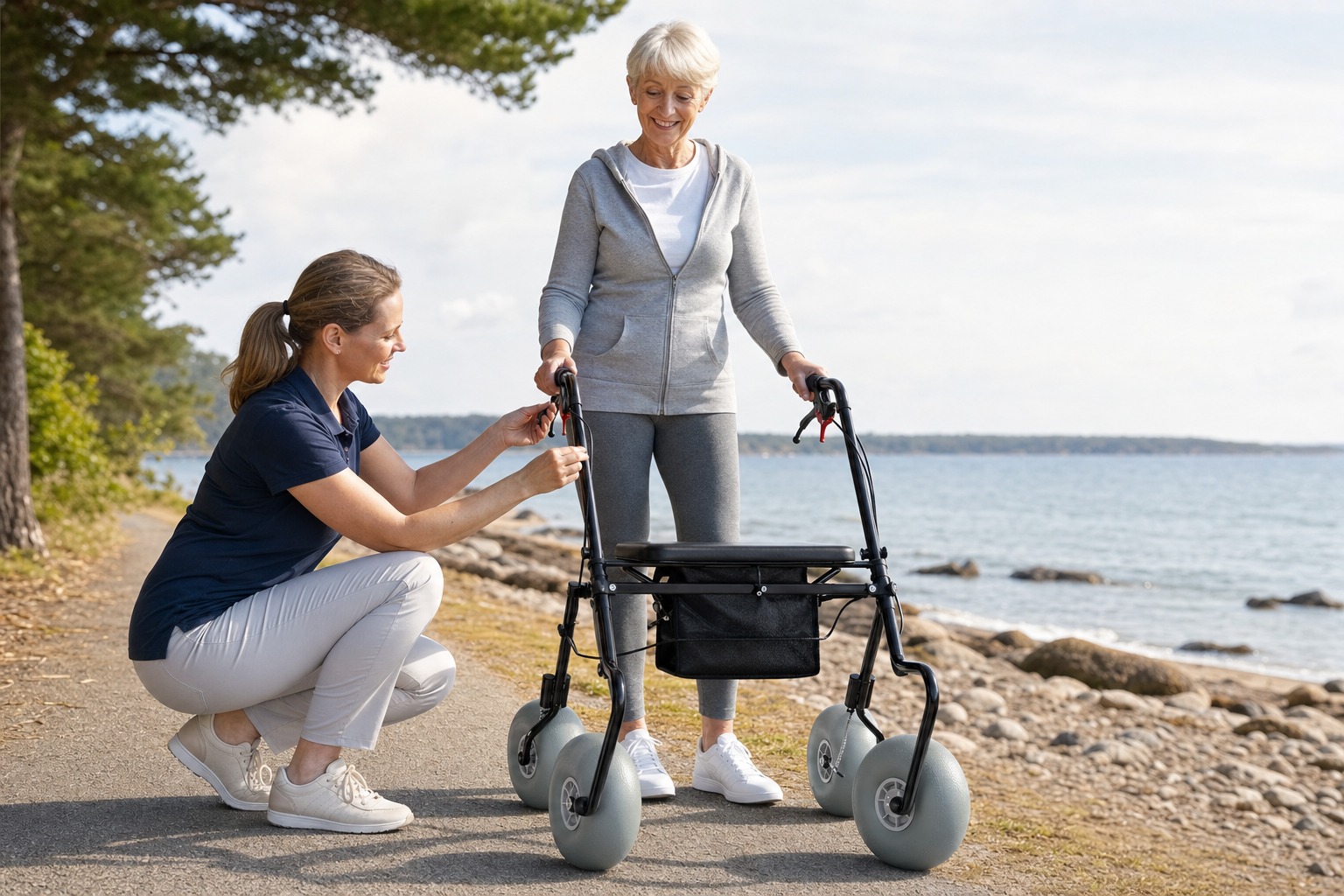
Beach walker safety should fit the senior’s upright posture, comfortable hand position, brake reach, step pattern, and seated-rest needs. It gives you a practical control for this stage while keeping the guest, staff team, equipment, and site conditions in one decision.
What should staff or companions adjust?
Begin on firm level ground: Set handle height so the user can stand without hunching or reaching, then confirm a relaxed grip and usable elbow position. Check whether brake controls can be reached and operated without strain. The seat should support a stable sit-to-stand routine rather than forcing a deep or awkward movement.
- Comfortable handle height.
- Natural grip and elbow position.
- Reachable brake controls.
- Stable seat height and width.
What signs suggest a poor fit?
Watch movement, not just measurements: Hunched posture, raised shoulders, shuffling steps, hard brake pulls, or repeated contact with the frame can signal a mismatch. Stop and adjust before moving onto sand. A route trial matters because soft ground changes the effort required from the same setup.
Key Takeaway: A good fit lets the senior steer, brake, and rest without fighting the walker.
| Planning Area | Practical Control |
|---|---|
| Fit Signal | Response |
| Hunched posture | Review handle height |
| Brake strain | Review reach and control |
| Unstable sit | Change setup or device |
The fit check protects both walking control and seated rest.
What Brake and Wheel Checks Belong Before Walking?
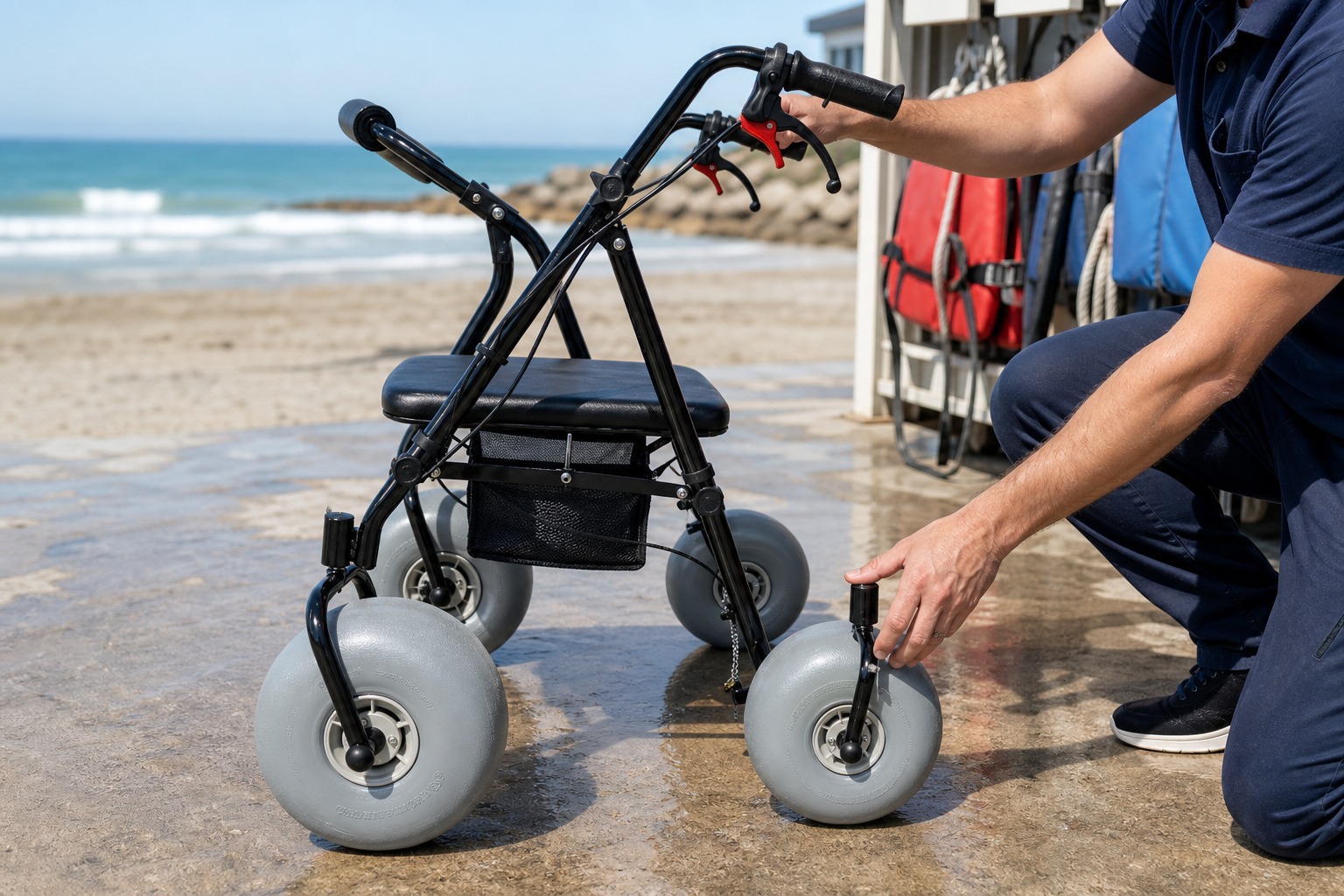
beach walker safety needs a pre-walk check of brake hold, cable response, wheel attachment, tire condition, frame locks, handles, and seat stability. It gives you a practical control for this stage while keeping the guest, staff team, equipment, and site conditions in one decision.
How should the mechanical check run?
Use the same order each time: Roll the walker on firm ground, apply each brake, test the parking position, inspect wheels and fasteners, and confirm folding joints remain secure. Look for sand, damage, drag, or loose parts around moving areas. Remove the walker from use when stopping or steering feels uncertain.
- Service and parking brake response.
- Wheel rotation and attachment.
- Frame locks and visible hardware.
- Seat and handle stability.
Why test on firm ground before sand?
Firm ground reveals basic control: A mechanical fault can be harder to separate from normal sand resistance once the trip begins. A short firm-ground test shows whether the walker rolls straight and stops predictably. The user also gets a calm chance to rehearse controls before the surface changes.
Key Takeaway: A two-stage check covers both mechanical readiness and the user’s control of the device.
| Planning Area | Practical Control |
|---|---|
| Check | Ready Signal |
| Brake | Holds without excess force |
| Wheel | Turns and stays secure |
| Frame | No loose movement |
This sequence catches faults before soft sand adds extra resistance.
How Should Seniors Practice Before Reaching Sand?
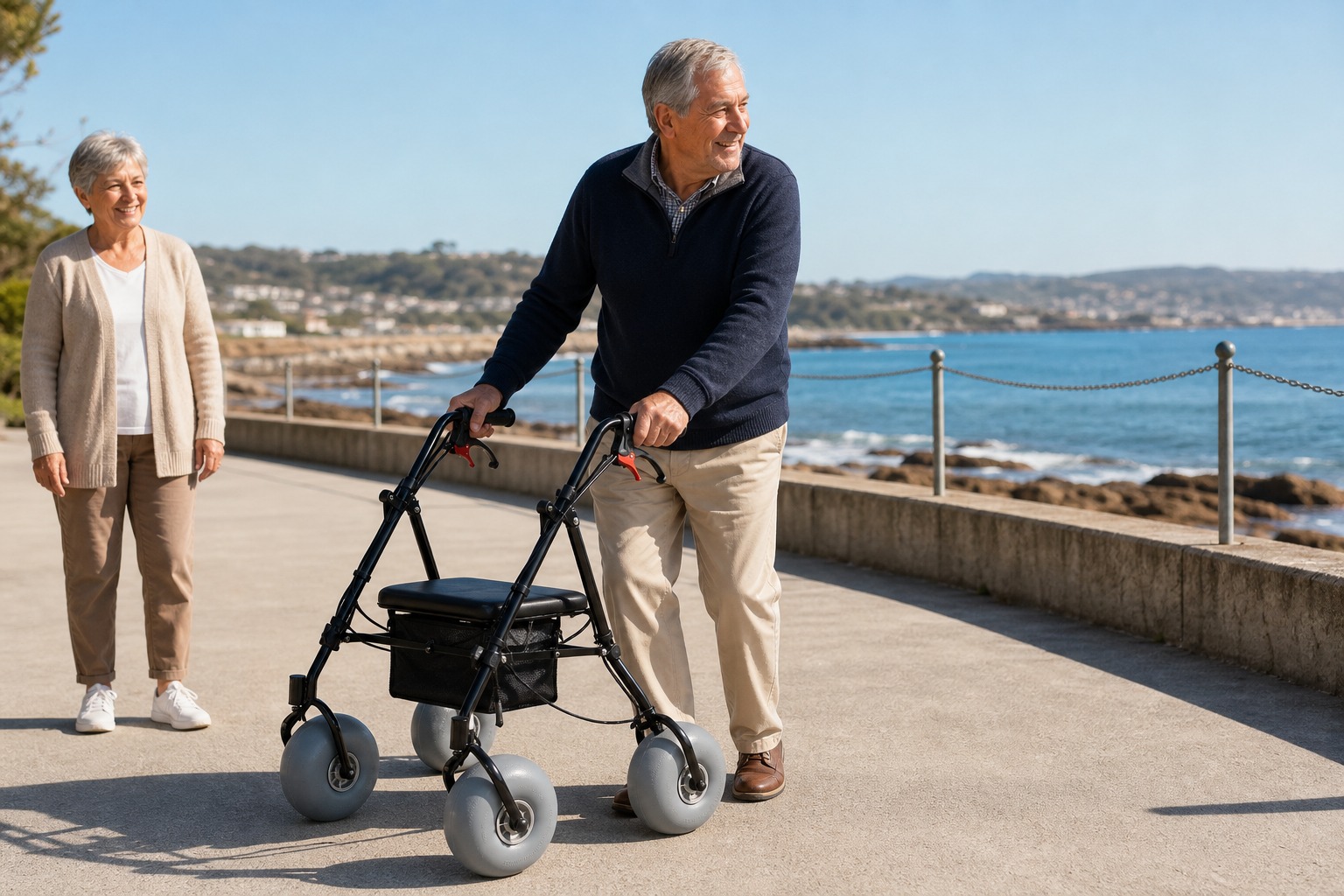
Beach walker safety should practice straight walking, broad turns, braking, parking, sitting, standing, and asking for help on a firm level surface. It gives you a practical control for this stage while keeping the guest, staff team, equipment, and site conditions in one decision.
Which skills belong in the rehearsal?
Build one skill at a time: Walk a short straight line, stop at a marked point, turn through a wide arc, park the walker, and rehearse a controlled sit. Repeat each action until the user can describe what feels comfortable. A companion should practice staying close without pulling or steering unexpectedly.
- Straight walking at a calm pace.
- Wide turns without pivoting.
- Controlled braking and parking.
- Safe sit-to-stand sequence.
When is the user ready for a sand trial?
Comfort matters more than speed: Move to packed sand only when controls feel familiar and the user can stop without losing posture. Keep the trial short and near the firm route. Loose sand can follow only if the user remains confident and has enough energy for the return.
Key Takeaway: Practice turns unfamiliar controls into a predictable routine before terrain becomes harder.
| Planning Area | Practical Control |
|---|---|
| Practice Surface | Training Goal |
| Firm path | Controls and posture |
| Packed sand | Adapt to resistance |
| Loose sand | Short supported trial |
The staged rehearsal gives the senior a clear point at which to pause.
How Should You Choose a Soft-Sand Route?
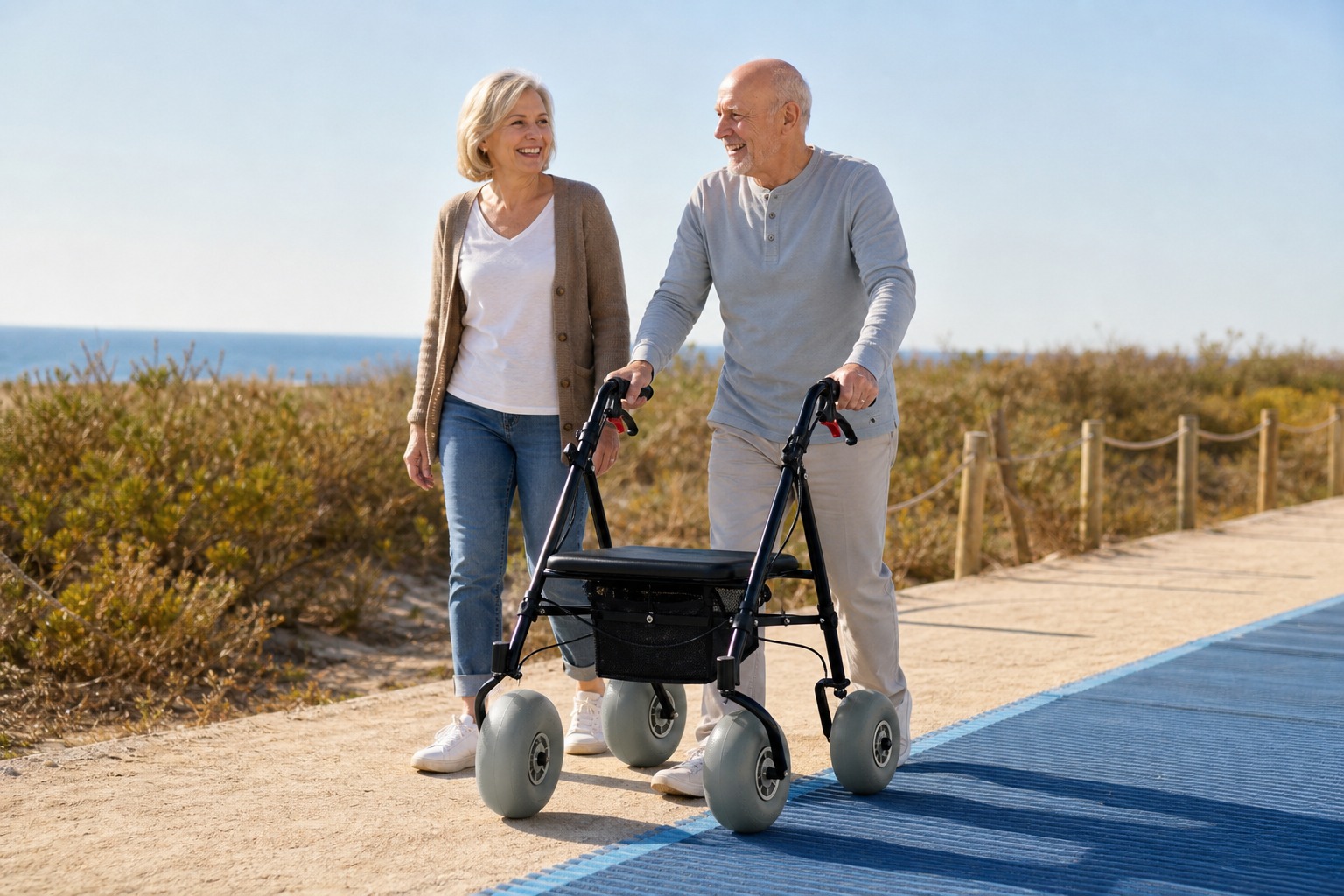
beach walker safety should choose the shortest level route with firm entry points, early rest options, shade, visible support, and an easy return. It gives you a practical control for this stage while keeping the guest, staff team, equipment, and site conditions in one decision.
Next, check whether an accessible beach mat or another firm route can shorten exposure to loose sand.
What route features reduce effort?
Choose simplicity over distance: Favor packed sand, an access mat, or naturally firm tracks when they connect with the desired destination. Avoid steep side slopes, deep ruts, loose dune faces, vehicle lanes, and crowded turns. Walk the route without the user before the session because wind and foot traffic can change it quickly.
- Firm entry and return line.
- Short level sand section.
- Shade or rest near the route.
- Clear alternative if conditions change.
Why should the return route shape the plan?
Half the energy belongs to coming back: A route that feels manageable outward may become difficult after heat and repeated wheel resistance. Set a turnaround point based on remaining energy rather than the destination alone. Keep a beach wheelchair or firm-path return option available when walking no longer feels suitable.
Key Takeaway: A good route leaves enough time, energy, and space for an unhurried return.
| Planning Area | Practical Control |
|---|---|
| Route Feature | Preferred Choice |
| Surface | Firmest practical line |
| Slope | Level where possible |
| Rest | Before fatigue peaks |
This route filter keeps the visit flexible when the beach changes.
What Walking Technique Works on Loose Sand?
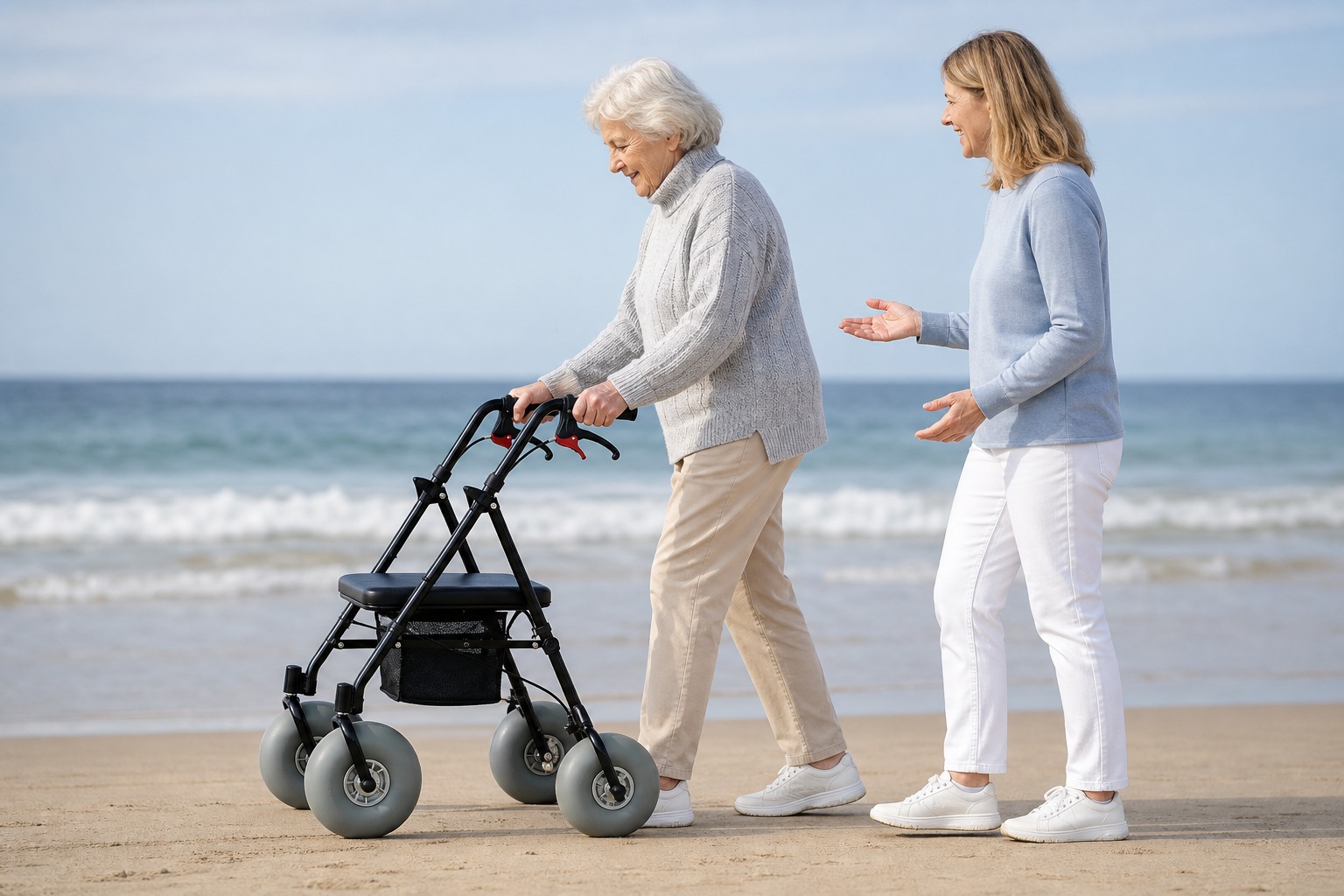
Beach walker safety works best with a steady short step, upright posture, broad turns, controlled braking, and no pulling from the companion. It gives you a practical control for this stage while keeping the guest, staff team, equipment, and site conditions in one decision.
How should the senior move the walker?
Let pace stay deliberate: Place the walker a comfortable distance ahead, step within the frame, and avoid reaching too far forward. Keep turns broad because tight pivots can bury a wheel or twist the frame. Pause before fatigue changes posture, grip, or foot placement.
- Use short controlled steps.
- Keep the body within the frame.
- Turn through a wide arc.
- Stop before posture begins to change.
How should a companion help?
Support without taking control: Walk close enough to respond, describe surface changes, and offer a steadying hand only through the agreed method. Do not drag the walker or rush the user from behind. If progress becomes difficult, return to firm ground or switch to another mobility option.
Key Takeaway: Good technique keeps control with the senior while the companion manages information and support.
| Planning Area | Practical Control |
|---|---|
| Movement | Preferred Method |
| Forward step | Short and centered |
| Turn | Broad controlled arc |
| Companion | Guide without pulling |
The movement pattern reduces abrupt wheel stops and preserves user confidence.
How Should a Senior Use the Seat for Rest?
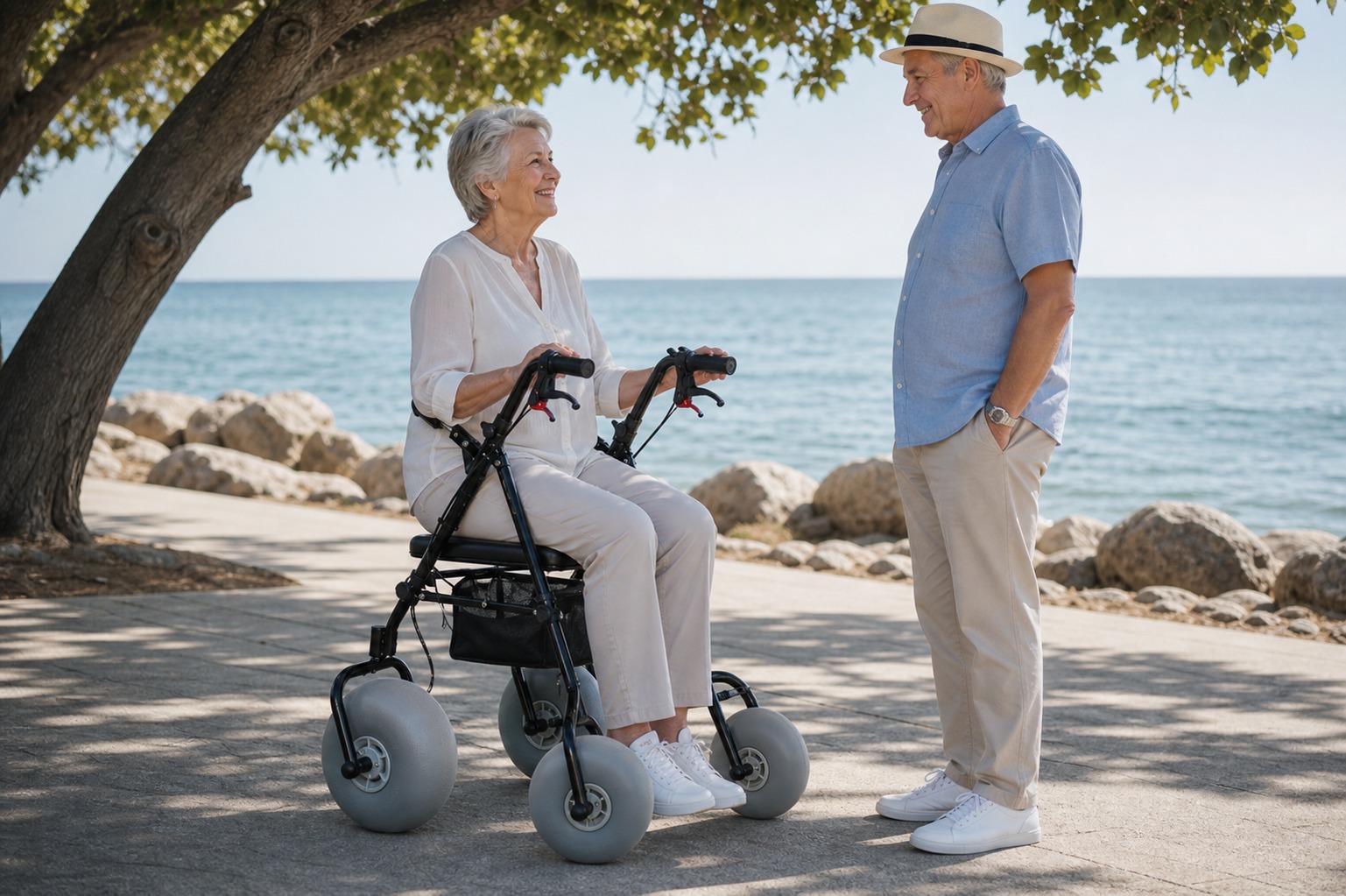
beach walker safety should use the seat only on firm level ground with parking brakes engaged and a controlled turning and standing method. It gives you a practical control for this stage while keeping the guest, staff team, equipment, and site conditions in one decision.
What is the safer sitting sequence?
Set the walker before the person moves: Stop fully, select stable ground, engage parking brakes, and confirm that the frame does not shift. The user turns slowly, feels the seat behind their legs, reaches through the agreed support method, and lowers at a controlled pace. A companion stays close when balance or fatigue makes the movement less certain.
- Choose firm level ground.
- Engage and test parking brakes.
- Turn without pulling the frame.
- Stand only after checking balance.
When should a rest stop happen?
Pause before fatigue makes the choice: Use early breaks based on distance, heat, breathing, posture, grip, and the user’s own report. Shade and hydration access can make a short rest more useful. Recheck the return plan before standing and continuing.
Key Takeaway: A planned rest protects remaining energy and makes the return easier.
| Planning Area | Practical Control |
|---|---|
| Rest Step | Purpose |
| Stable ground | Limits rolling |
| Brakes | Holds the frame |
| Early pause | Preserves return energy |
This sequence makes the seat a planned control rather than an emergency response.
What Should a Companion Do During the Trip?
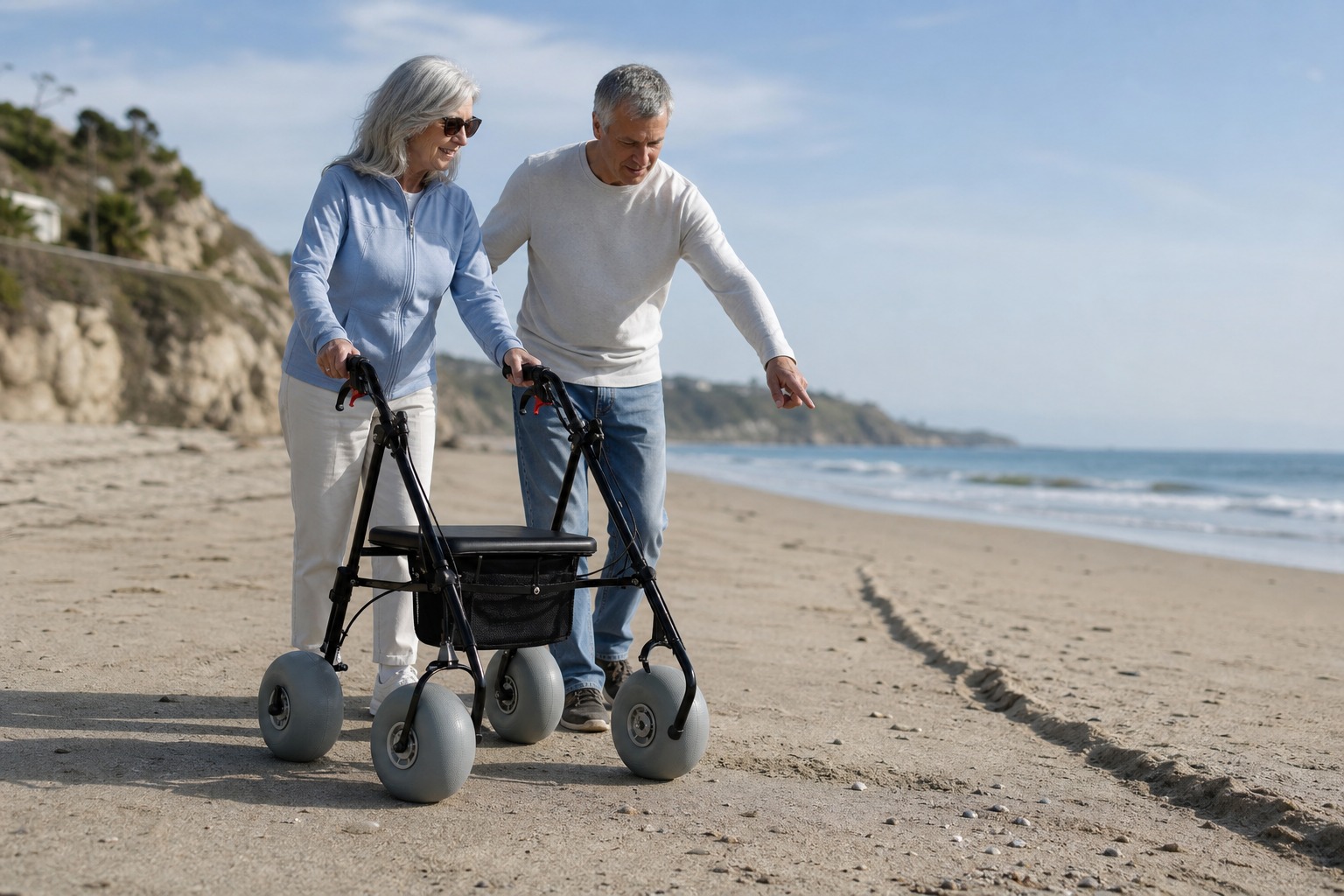
Beach walker safety should respect the senior’s pace, watch terrain and fatigue, communicate changes, protect personal space, and help only through an agreed method. It gives you a practical control for this stage while keeping the guest, staff team, equipment, and site conditions in one decision.
How can companions support without taking over?
Ask before touching the walker: Stay near the side rather than pulling from the front, describe ruts or slopes early, and let the user decide when to stop. Carry small items so the walker remains balanced and the user can keep both hands available. Use calm language that supports choice rather than rushing toward a destination.
- Ask before physical help.
- Describe surface changes early.
- Watch posture and grip.
- Keep the return route available.
Which signs call for a route change?
Read the pattern before a crisis: Slower steps, repeated wheel stops, leaning, hard breathing, hand discomfort, confusion, or a request to stop all deserve attention. Return to firm ground when rest does not restore comfortable control. Personal health questions should be handled with an appropriate professional rather than guessed at the beach.
Key Takeaway: A companion’s best contribution is early information, respectful pacing, and a ready alternative.
| Planning Area | Practical Control |
|---|---|
| Observed Signal | Support Response |
| Slower pace | Offer early rest |
| Posture change | Return to firm ground |
| User concern | Stop and listen |
The support role becomes clearer when observation leads to agreed action.
How Do Weather and Heat Change the Safety Plan?
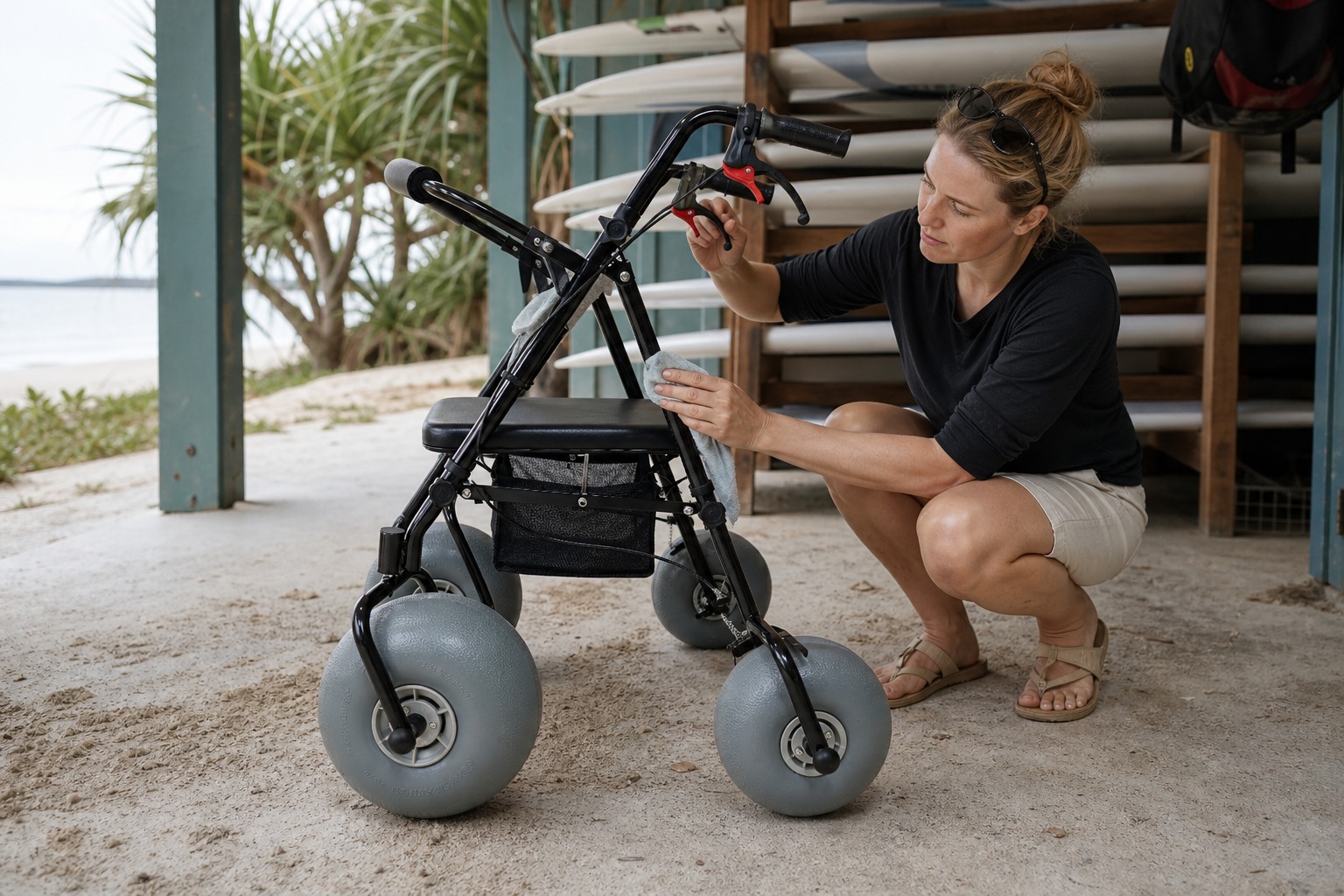
beach walker safety should shorten routes, add shade and rest, review surface temperature, and pause when weather makes walking or braking less predictable. It gives you a practical control for this stage while keeping the guest, staff team, equipment, and site conditions in one decision.
Which conditions deserve extra caution?
Coastal weather changes effort quickly: Direct sun, hot surfaces, strong wind, blowing sand, rain, poor visibility, and approaching storms can affect the user and equipment. Check local guidance and the site’s own operating limits before departure. A cooler time of day may support a shorter and more comfortable trip.
- Heat and direct sun.
- Strong wind or blowing sand.
- Wet or shifting surfaces.
- Storm or visibility concerns.
How should staff or families adapt?
Change the plan before the user tires: Move rest points closer, keep hydration available, avoid long exposed loops, and select a firmer route. End the session when weather shifts outside site rules or the user reports discomfort. Record recurring seasonal issues so later bookings receive better information.
Key Takeaway: Weather planning reduces exposure by adjusting time, route, rest, and stopping limits together.
| Planning Area | Practical Control |
|---|---|
| Condition | Plan Change |
| High heat | Shorter shaded route |
| Wind | Avoid exposed loose sand |
| Storm risk | Pause the trip |
This comparison turns a forecast into practical route choices.
How Can Facilities Improve Beach Walker Safety?
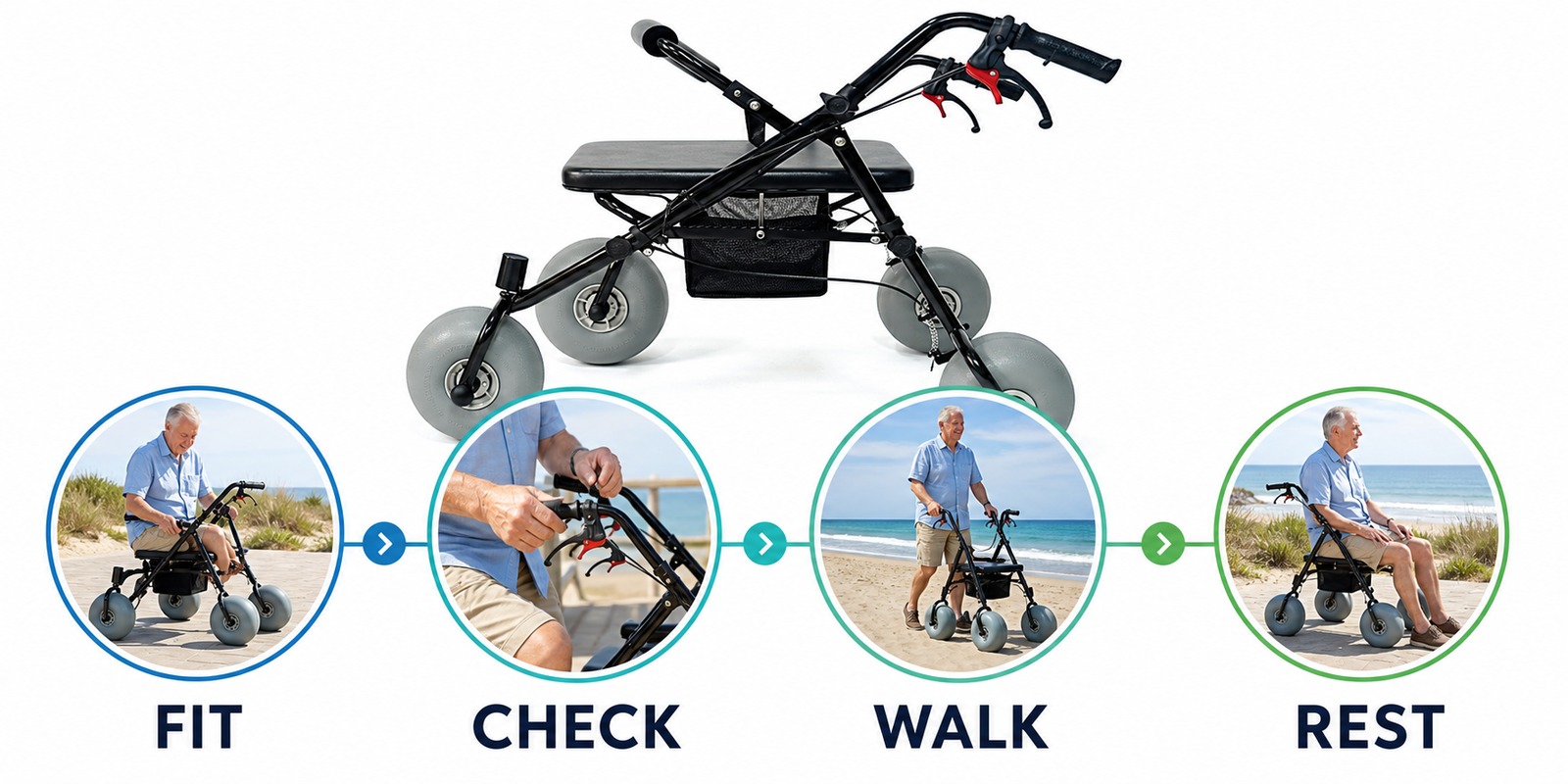
Beach walker safety can improve safety through fit checks, staff training, mapped routes, clear rest areas, inspection records, cleaning, feedback, and backup mobility choices. It gives you a practical control for this stage while keeping the guest, staff team, equipment, and site conditions in one decision.
Then, compare the walker with other beach mobility options so staff do not assign one device to every visitor.
Which program records are worth keeping?
Track what changes service quality: Record walker ID, fit setting, route used, session result, inspection findings, maintenance action, and any early return. Ask seniors and companions which steps felt clear or difficult. Patterns can guide handle-setting cards, route signage, staff practice, or maintenance timing.
- Fit and setup record.
- Route and rest-point notes.
- Inspection and repair history.
- User and companion feedback.
What should managers do after a review?
Assign the next action: Update training, route maps, booking notes, rest locations, cleaning routines, or backup-chair availability, then name an owner and date. You can contact us today to discuss a walker and broader mobility setup. Better beach access respects a senior’s pace, energy, choice, and right to change the plan.
Key Takeaway: A complete program solves fit, control, route, rest, weather, support, and equipment readiness together.
| Planning Area | Practical Control |
|---|---|
| Review Finding | Program Action |
| Poor fit | Revise setup process |
| Long route | Add a nearer destination |
| Brake wear | Adjust inspection timing |
This closing review keeps the service centered on confident use rather than distance covered.
FAQ
Can I use a beach walker on deep dry sand?
Sometimes, with limits. Wide wheels reduce sinking, but deep loose sand raises effort, so use a short level trial near firm ground.
What’s the best route for a senior?
Choose the shortest firm route. Add shade, early rest points, a clear return, and another mobility option if walking becomes tiring.
How do I know if the handles fit correctly?
Watch posture and control. The senior should stand comfortably, reach the brakes without strain, and steer without hunching or reaching.
Can a companion pull the walker through sand?
No as a routine method. Pulling can twist the frame or remove control from the user, so return to firm ground or change equipment.
What should happen after a beach trip?
Clean and inspect the walker. Remove sand, rinse coastal residue when suitable, dry it, test brakes, and record faults before storage.