
Accessible Beach Mat: How to Build Better Shore Access
Beach Mat Buying Guide planning starts with a named route, a clear operating purpose and evidence that matches local conditions. The U.S. Access Board outdoor developed areas guide provides route-planning context, while responsible local authorities still decide what applies to each beach.
Also, staff should keep one dated site record. This record should name one decision owner. Short notes make handoffs easier to audit.
An accessible beach mat creates a firmer route over loose sand so wheelchair users, walkers, families, and beach staff can reach more of the shoreline. Imagine an accessible parking space and ramp that lead smoothly to the dune, only for the paved route to stop where dry sand begins. Visitors can see the water but face a final surface that traps narrow wheels, destabilizes walking aids, and makes every step harder. The right mat closes that route gap through suitable material, thoughtful width, stable installation, routine clearing, and a destination that connects with the rest of the beach access plan.
1. What should a beach mat buying guide plan cover?
Use this beach mat buying guide record to compare route limits, inspection duties and supplier evidence before approving wider deployment.
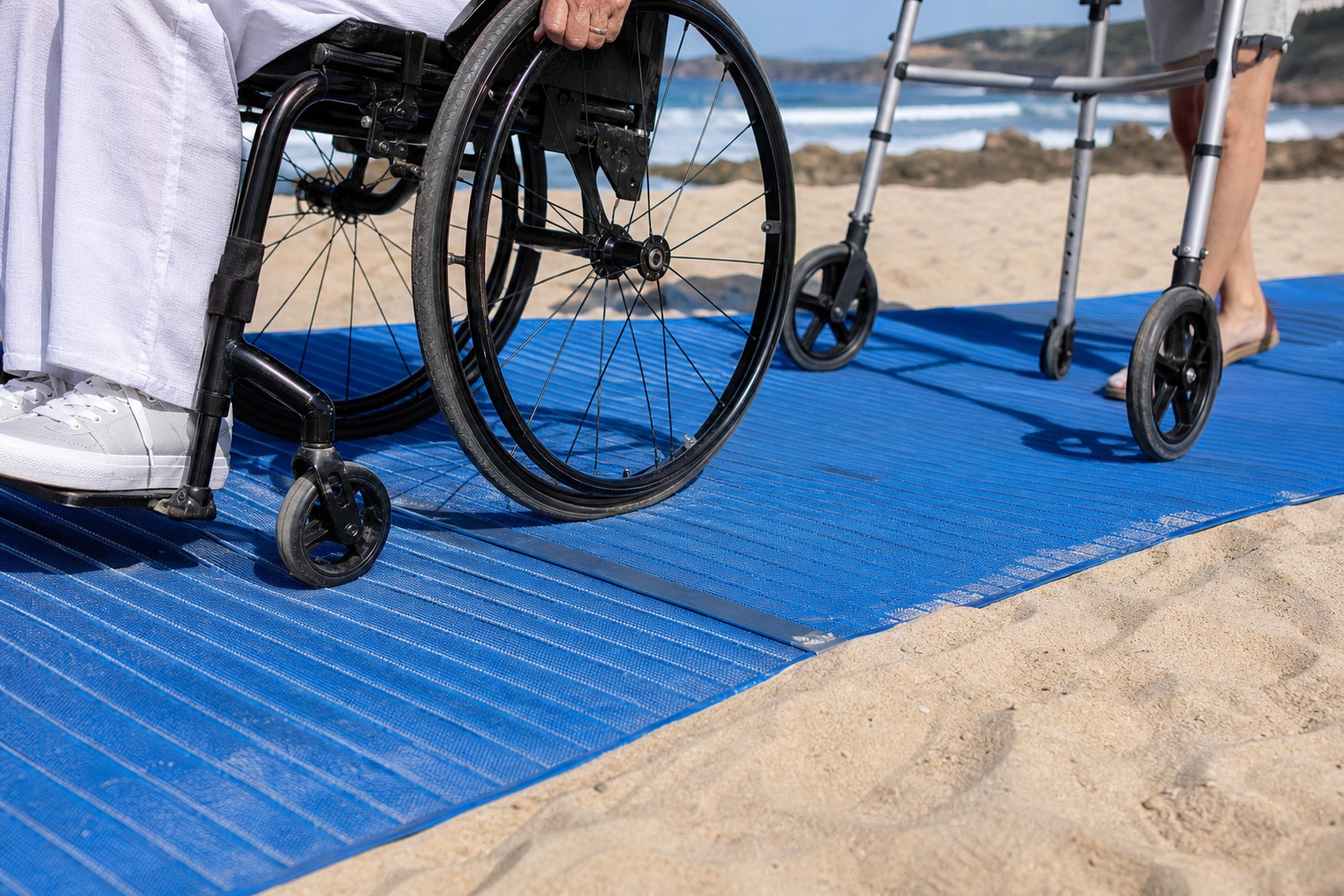
However, A accessible beach mat works by creating a continuous, lower-resistance surface over loose sand while remaining stable under expected pedestrian and mobility traffic. It gives you a practical access tool, but performance still depends on site conditions, user needs, and responsible operation.
Meanwhile, staff can record this check before opening the route.
Which design qualities matter most?
Begin with surface behavior: A useful mat should distribute wheel loads, resist excessive shifting, drain or shed sand as designed, and provide a detectable edge without creating an abrupt trip point. Material alone cannot fix a poorly chosen route.
- Firm rolling surface.
- Stable edge treatment.
- Appropriate drainage or mesh.
- Connections that stay aligned.
Why is continuity so important?
One gap can stop the journey: A strong section in the middle of the beach offers little value when users still encounter loose sand between parking, the mat entrance, rest areas, or the final destination.
Key Takeaway: The mat works as part of a connected route, not as an isolated strip.
| Planning Area | Practical Check |
|---|---|
| Design Area | Buyer Check |
| Surface | Supports expected mobility devices |
| Connections | Remain level and secure |
This comparison keeps attention on usable movement instead of color or appearance alone.
Why Do Public Beaches Install Access Mats?

For example, A accessible beach mat helps public beaches extend firm access beyond boardwalks and reduce the effort needed to cross dry sand. It gives you a practical access tool, but performance still depends on site conditions, user needs, and responsible operation.
Meanwhile, the duty lead can keep this result with the site log.
Who benefits from the route?
The user group is broader than expected: Wheelchair users are central, but the same route may help people using walkers, parents with strollers, older visitors, emergency teams, and staff moving beach equipment.
- Manual and powered wheelchair users.
- People using walkers or canes.
- Families with strollers.
- Beach operations and emergency staff.
How does it support public service?
Access becomes visible and repeatable: The beach mat installation project shows how a planned route can connect public facilities with a clearly identified shoreline destination.
Key Takeaway: A mat turns the last stretch of an accessible route into a usable public amenity.
| Planning Area | Practical Check |
|---|---|
| Public Goal | Mat Contribution |
| Route continuity | Firmer sand crossing |
| Service visibility | Clear access entrance |
The route can serve many visitors without requiring a separate booking.
How Should You Compare Mat Materials?
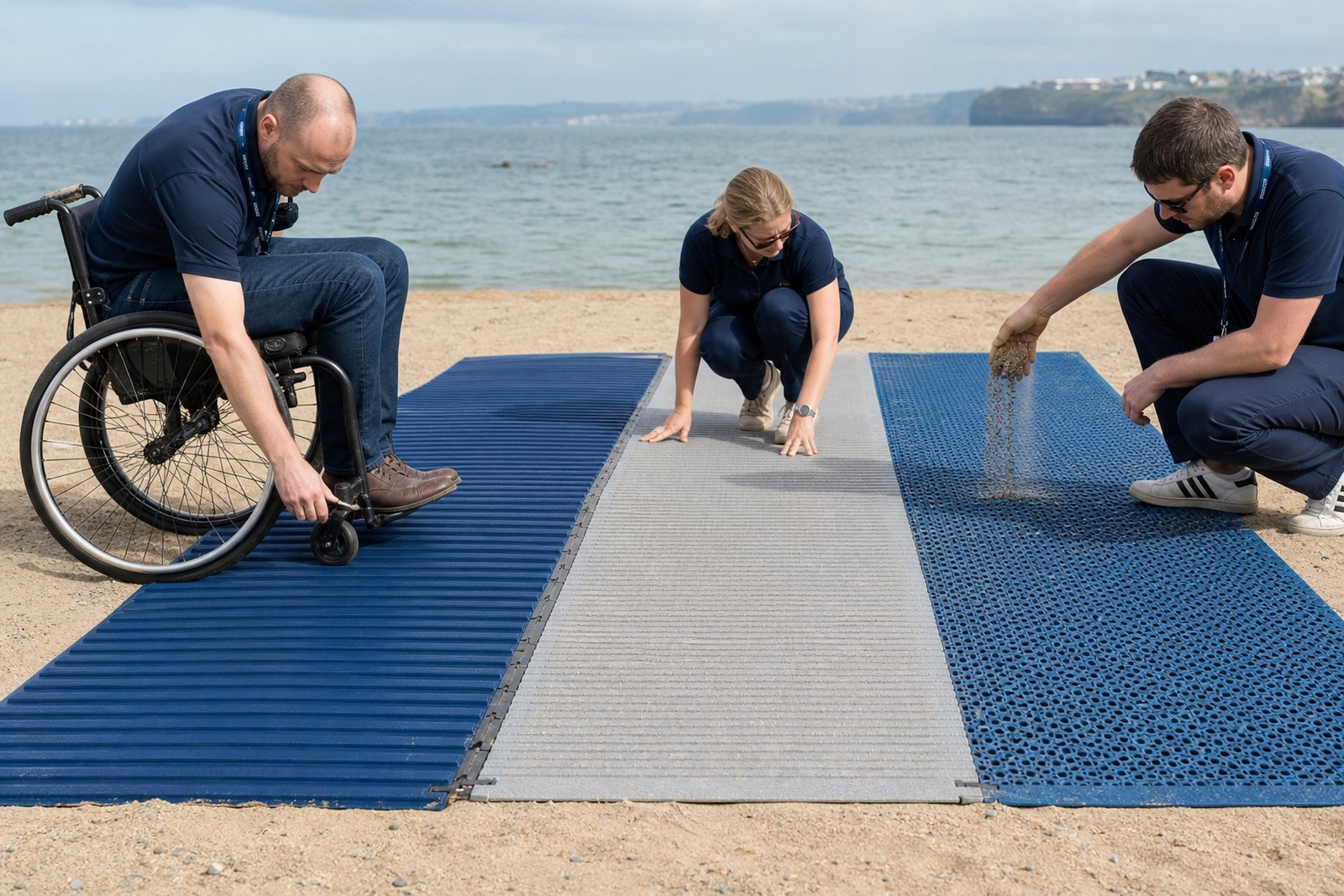
Meanwhile, A accessible beach mat should compare materials by surface firmness, drainage, temperature, slip behavior, edge stability, cleaning, repair, and expected service conditions. It gives you a practical access tool, but performance still depends on site conditions, user needs, and responsible operation.
In practice, one short record makes the next handoff easier.
What should procurement teams test?
Use real mobility equipment: Test representative wheelchairs, walkers, service carts, and footwear on a sample installed over local sand. Include wet and dry conditions when the product is intended for those environments.
- Rolling resistance.
- Surface grip when damp.
- Heat under direct sun.
- Connection and edge stability.
Is mesh always better than solid material?
The answer depends on the site: Mesh may allow sand movement and drainage, while solid or modular surfaces may offer a different rolling feel. Compare the options through the site’s access mat application guidance.
Key Takeaway: Material choice should follow terrain, users, maintenance capacity, and installation method.
| Planning Area | Practical Check |
|---|---|
| Material Question | Site Test |
| Drainage | Observe after water exposure |
| Cleaning | Trial the planned method |
A small field trial is more reliable than selecting from a specification sheet alone.
Who Benefits From an Accessible Beach Mat?
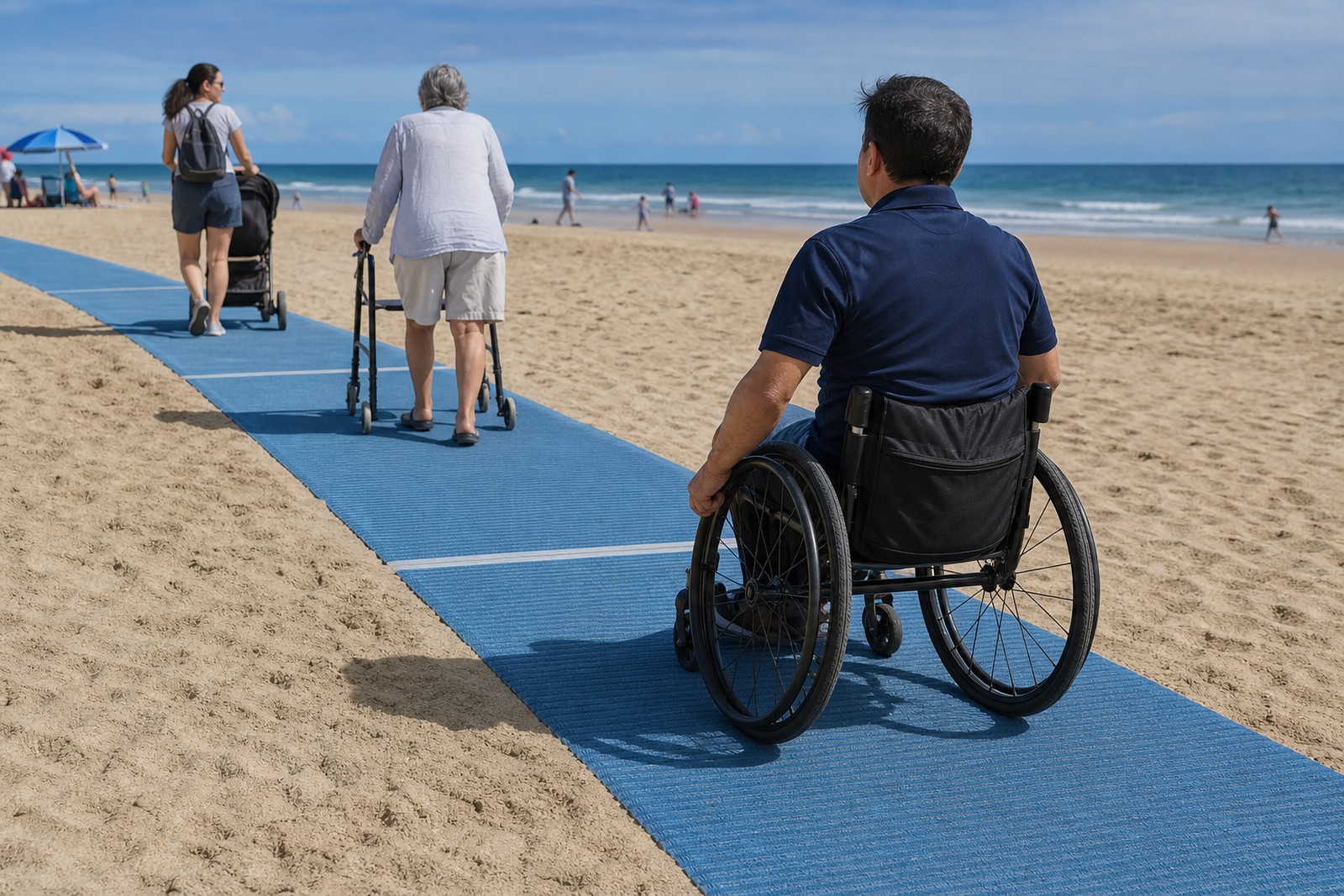
As a result, A accessible beach mat can benefit people using wheelchairs, mobility scooters, walkers, canes, strollers, and service equipment when the route suits their device and ability. It gives you a practical access tool, but performance still depends on site conditions, user needs, and responsible operation.
As a result, crews can see whether work may continue.
What should planners learn from users?
Ask about the complete route: Discuss arrival, turning space, passing, rest points, destination, and return effort. Users may identify barriers at gates, transitions, slopes, or crowded zones that a site drawing does not reveal.
- Mobility device dimensions.
- Turning and passing needs.
- Rest and shade preferences.
- Desired shoreline destination.
Does the mat replace every mobility aid?
No single surface solves everything: Some visitors may still need a sand-ready chair beyond the mat or a floating chair for supported water entry. The beach wheelchair range can help planners see how route and mobility equipment work together.
Key Takeaway: The mat broadens access, but users still need choices that fit their destination.
| Planning Area | Practical Check |
|---|---|
| User Goal | Possible Support |
| Cross dry sand | Accessible mat |
| Reach water | Approved chair and assistance |
A layered plan serves more people than one universal assumption.
How Should You Plan Mat Width and Route?
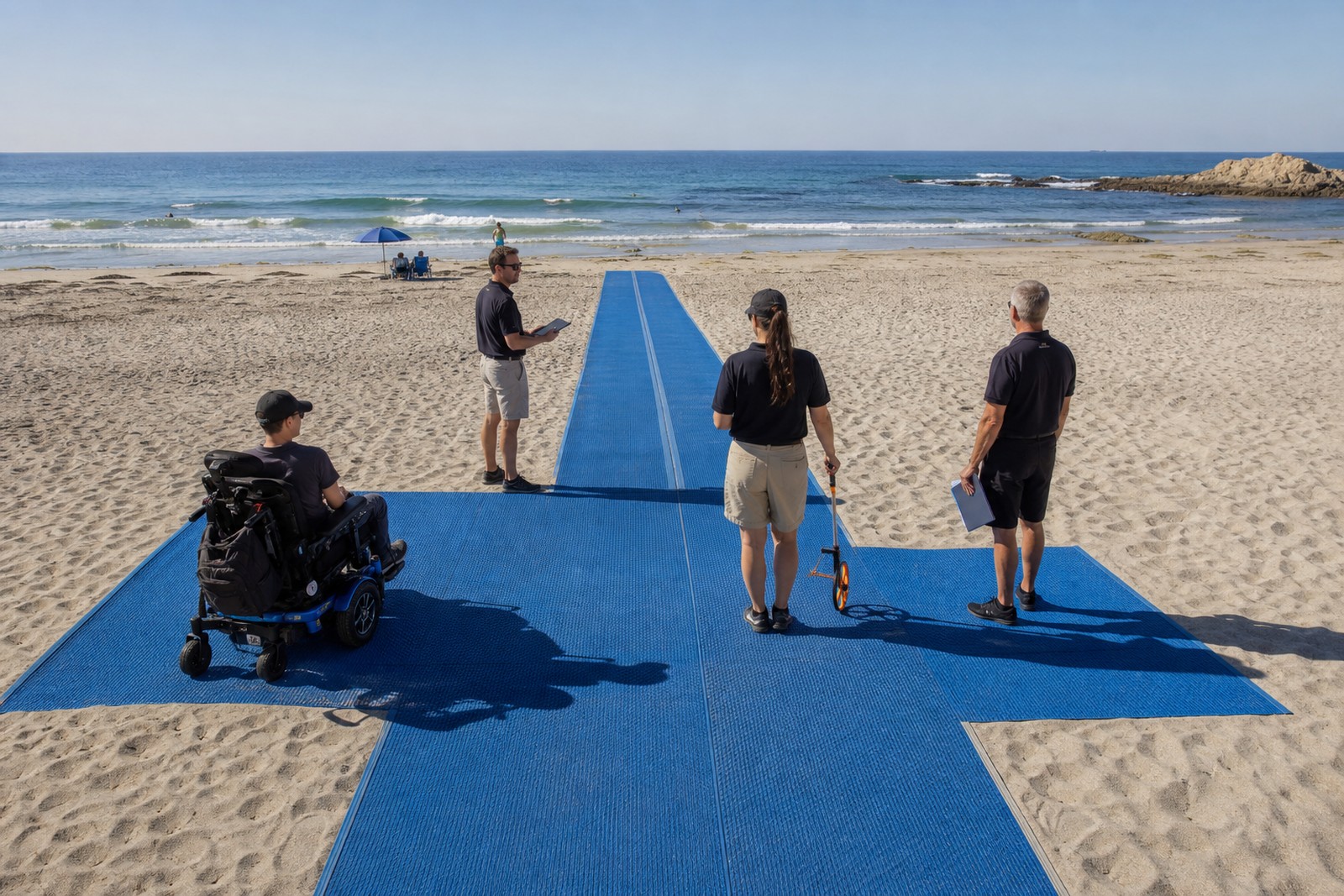
In practice, A accessible beach mat should follow the shortest practical accessible line while providing suitable width, passing strategy, turning space, rest points, and a useful destination. It gives you a practical access tool, but performance still depends on site conditions, user needs, and responsible operation.
Still, unresolved evidence should remain visible to the next shift.
Where should route planning begin?
Start at the accessible arrival point: Walk from parking or drop-off through gates, ramps, dunes, transfer areas, and the beach destination. Note every change in level, tight turn, cross slope, and place where users may meet opposing traffic.
- Accessible arrival connection.
- Comfortable turning locations.
- Passing or waiting strategy.
- A defined destination and return route.
How should seasonal shoreline change affect the plan?
Expect the beach to move: Wind, tides, storms, events, and maintenance vehicles can alter sand levels and route demand. Build a review process that allows the mat line or endpoint to change when conditions require it.
Key Takeaway: Route quality depends on continuity, usable width, and a destination people actually want to reach.
| Planning Area | Practical Check |
|---|---|
| Route Zone | Planning Question |
| Entrance | Is the transition level? |
| Endpoint | Does it provide useful access? |
A route map should be treated as an operating plan, not a permanent assumption.
What Site Checks Belong Before Installation?
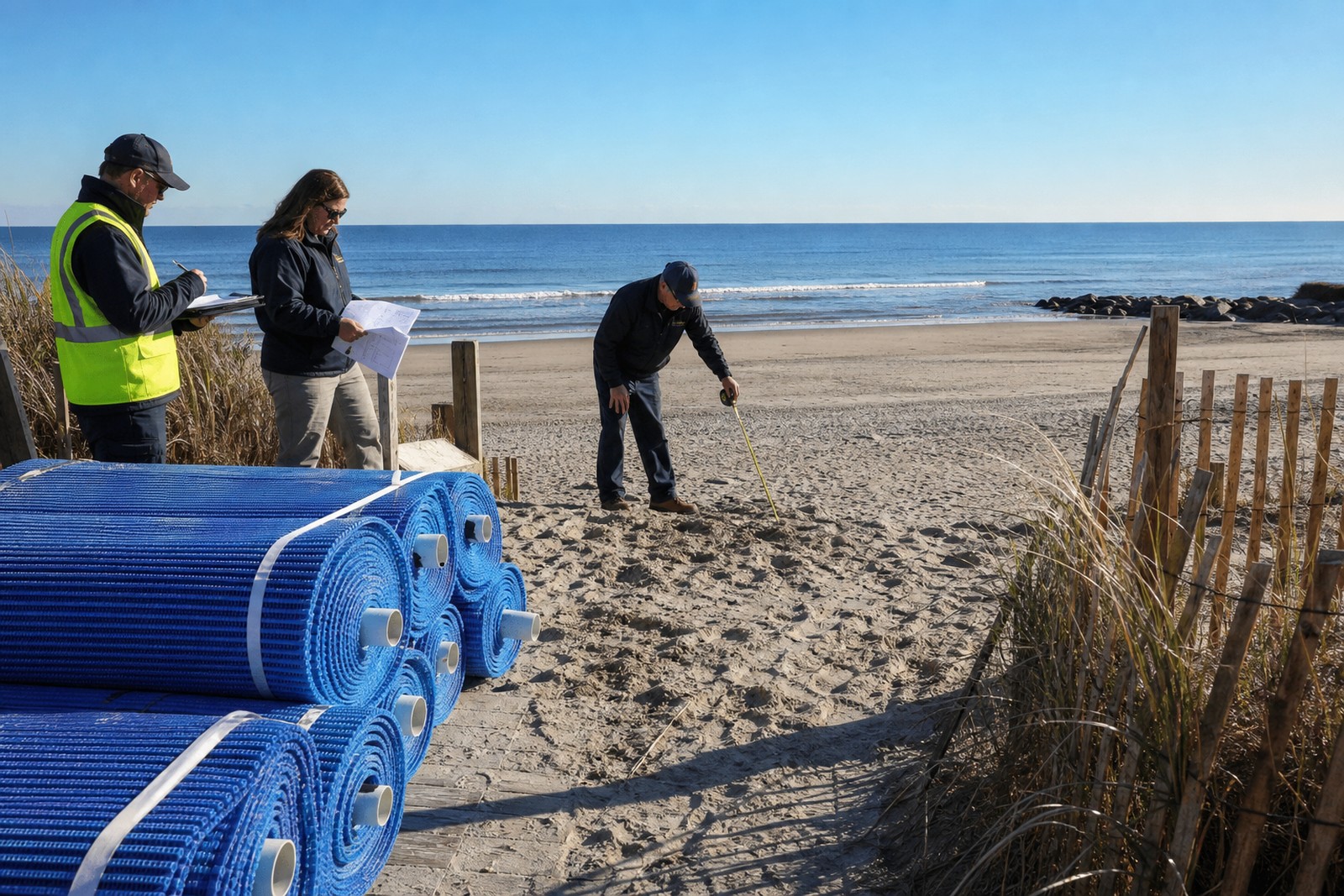
Still, A accessible beach mat needs a site review covering sand profile, drainage, slopes, protected areas, vehicle crossings, crowd flow, tides, and maintenance access. It gives you a practical access tool, but performance still depends on site conditions, user needs, and responsible operation.
Then, the named owner can close or escalate the issue.
What should crews document?
Record conditions before unrolling: Photograph the route, mark elevations and cross slopes, identify buried services or sensitive dunes, and note where sand naturally accumulates. Local approvals may control route location or seasonal timing.
- Sand depth and slope.
- Drainage and wash-over risk.
- Dune or habitat restrictions.
- Emergency and maintenance crossings.
What should stop installation?
Use a clear pause threshold: Pause when the route conflicts with protected areas, unstable drop-offs, severe weather, unresolved permits, unsafe vehicle interaction, or a transition that cannot be made level.
Key Takeaway: A pre-installation survey prevents a good product from being placed on an unsuitable line.
| Planning Area | Practical Check |
|---|---|
| Site Factor | Pause Signal |
| Slope | Unsafe transition |
| Environment | Unresolved protected-area issue |
Documented checks also make later route changes easier to explain.
How Should Crews Install the Mat?
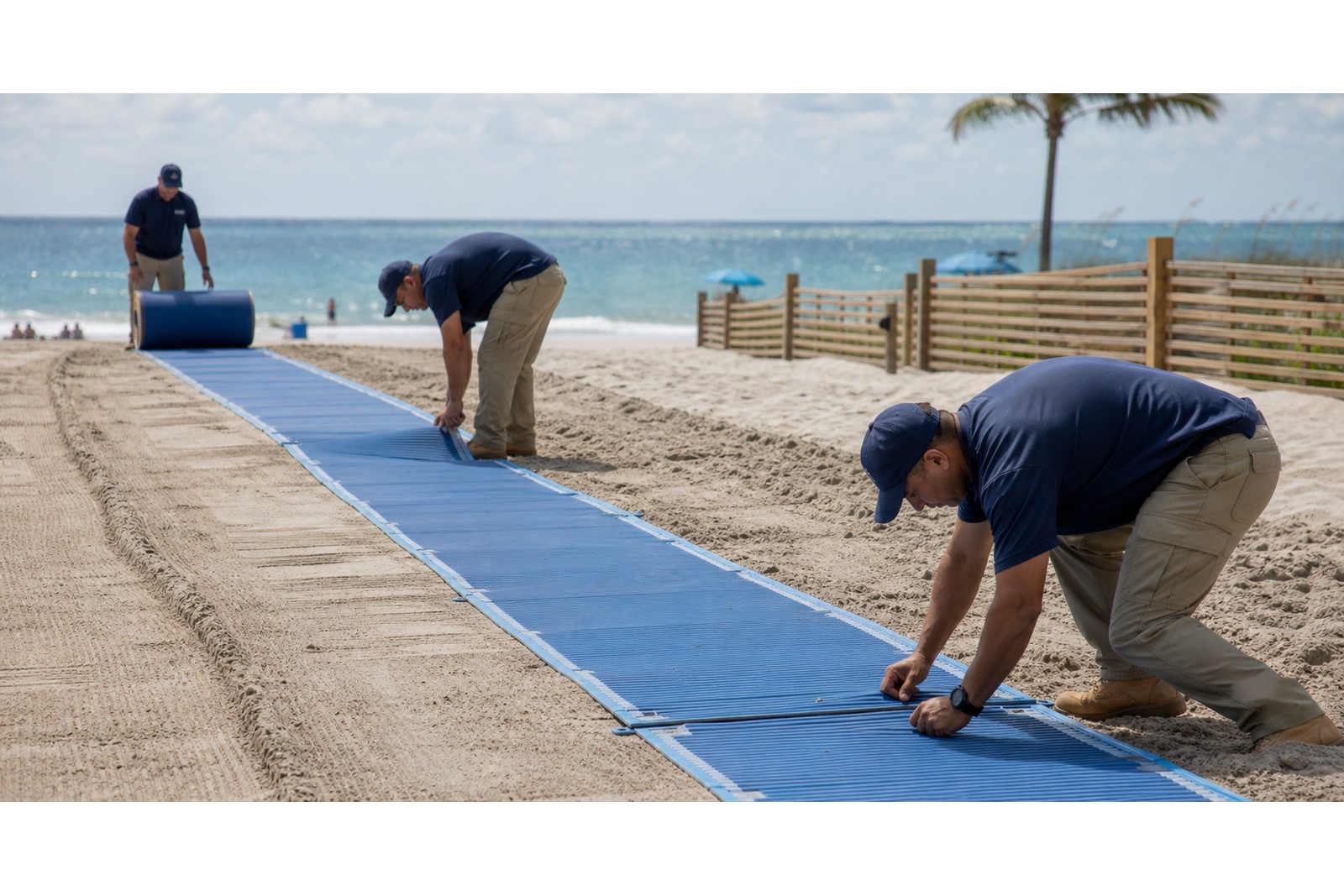
Then, A accessible beach mat should be installed on a prepared route with aligned sections, secure connections, controlled edges, and anchoring that follows the product and site plan. It gives you a practical access tool, but performance still depends on site conditions, user needs, and responsible operation.
Even so, local authority decisions remain separate from product claims.
What sequence keeps installation consistent?
Preparation saves rework: Clear large debris, establish the centerline, stage sections, connect them in order, tension or anchor as specified, and inspect every transition. Do not improvise fasteners that create sharp or raised hazards.
- Prepare and mark the route.
- Stage sections in sequence.
- Connect and anchor as specified.
- Inspect transitions and edges.
How should the finished route be tested?
Roll it before opening it: Use representative mobility equipment in both directions, including turns and transitions. The site’s installation project provides context for connecting field work with the larger public access goal.
Key Takeaway: Installation is complete only after the entire route passes a practical mobility test.
| Planning Area | Practical Check |
|---|---|
| Installation Step | Acceptance Check |
| Connection | Level and secure |
| Transition | No abrupt lip or loose edge |
A route-level test catches issues that section-by-section inspection can miss.
How Do You Manage Seasonal Mat Storage?

Even so, A accessible beach mat should use a documented removal, cleaning, labeling, rolling or stacking, transport, and dry-storage process suited to the mat system. It gives you a practical access tool, but performance still depends on site conditions, user needs, and responsible operation.
At that point, staff can update visitors with a dated message.
What should happen before removal?
Capture the route first: Photograph section order, label connections, record repairs, remove accumulated sand with the approved method, and schedule enough staff and equipment for controlled handling.
- Photograph the installed sequence.
- Label sections and connectors.
- Clean before packing.
- Record damage and missing parts.
What makes storage practical?
Protect next season’s setup: Keep components dry, shaded, supported, and separated from sharp objects or incompatible chemicals. Store route maps, hardware inventories, and repair notes with the mat.
Key Takeaway: Organized storage reduces spring installation time and prevents small parts from disappearing.
| Planning Area | Practical Check |
|---|---|
| Storage Item | Preferred Practice |
| Mat sections | Clean, dry, and supported |
| Hardware | Labeled by route position |
Seasonal planning should treat removal and reinstallation as one continuous cycle.
How Do You Maintain the Mat in Service?
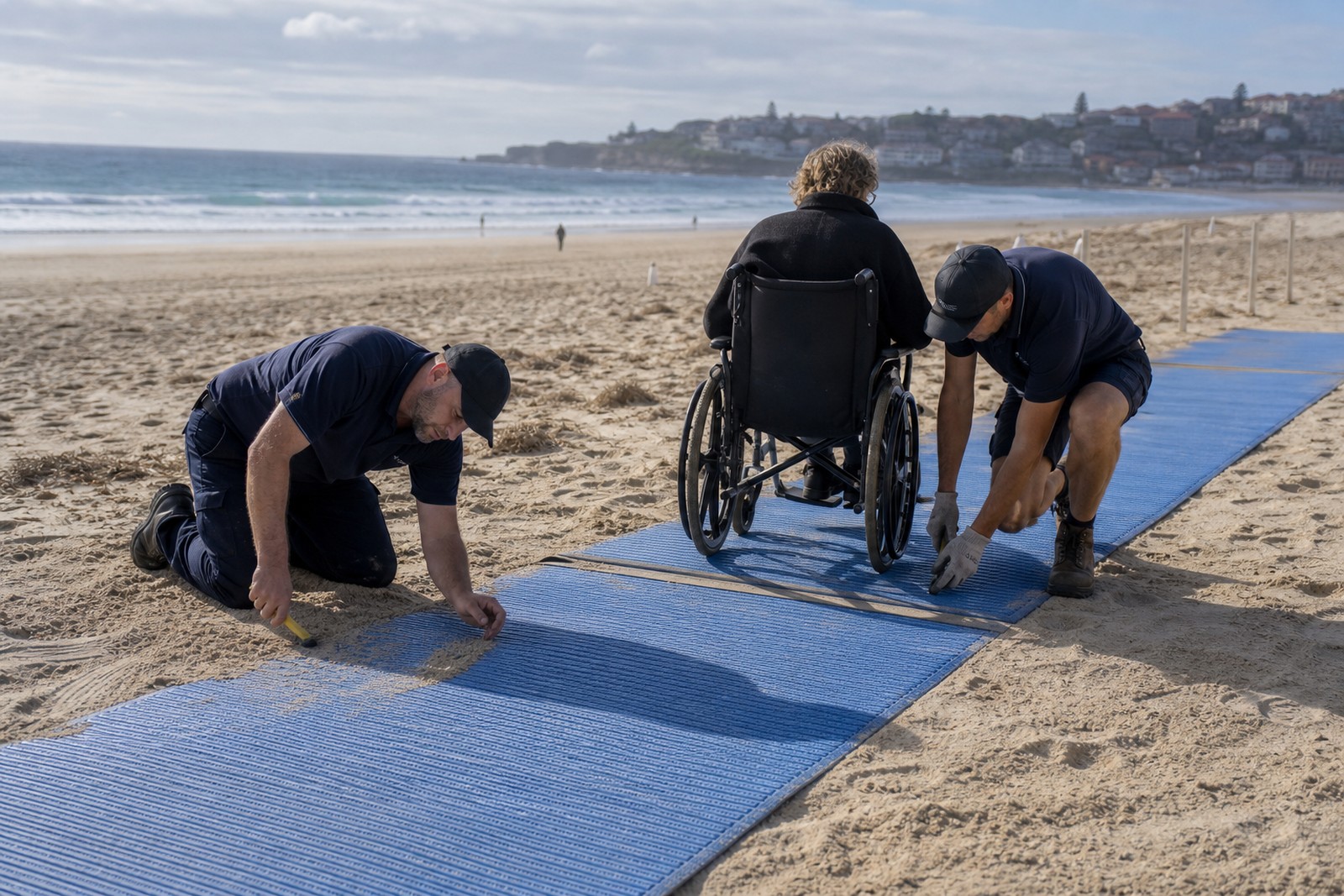
At that point, A accessible beach mat needs routine inspections, sand clearing, connection checks, edge review, cleaning, and prompt repair when traffic or weather changes the route. It gives you a practical access tool, but performance still depends on site conditions, user needs, and responsible operation.
For that reason, the review should end with one named action.
What belongs in a daily or weekly check?
Look at movement and accumulation: Inspect entrances, edges, joints, anchors, surface contamination, buried sections, wash-outs, and vehicle crossings. Frequency should rise after storms, busy events, or unusual tides.
- Clear excessive sand accumulation.
- Check joints and anchors.
- Inspect edges and transitions.
- Record storm or traffic damage.
How should teams respond to a fault?
Make the route status obvious: Close or mark unsafe sections, repair with approved components, and reopen only after a full mobility test. Maintenance logs should identify recurring trouble spots.
Key Takeaway: Regular inspection keeps a small defect from becoming a route-wide barrier.
| Planning Area | Practical Check |
|---|---|
| Maintenance Signal | Response |
| Raised edge | Close and correct |
| Buried section | Clear and retest |
Recurring defects often reveal a route or drainage issue, not just a damaged component.
How Do You Build a Complete Access Path?
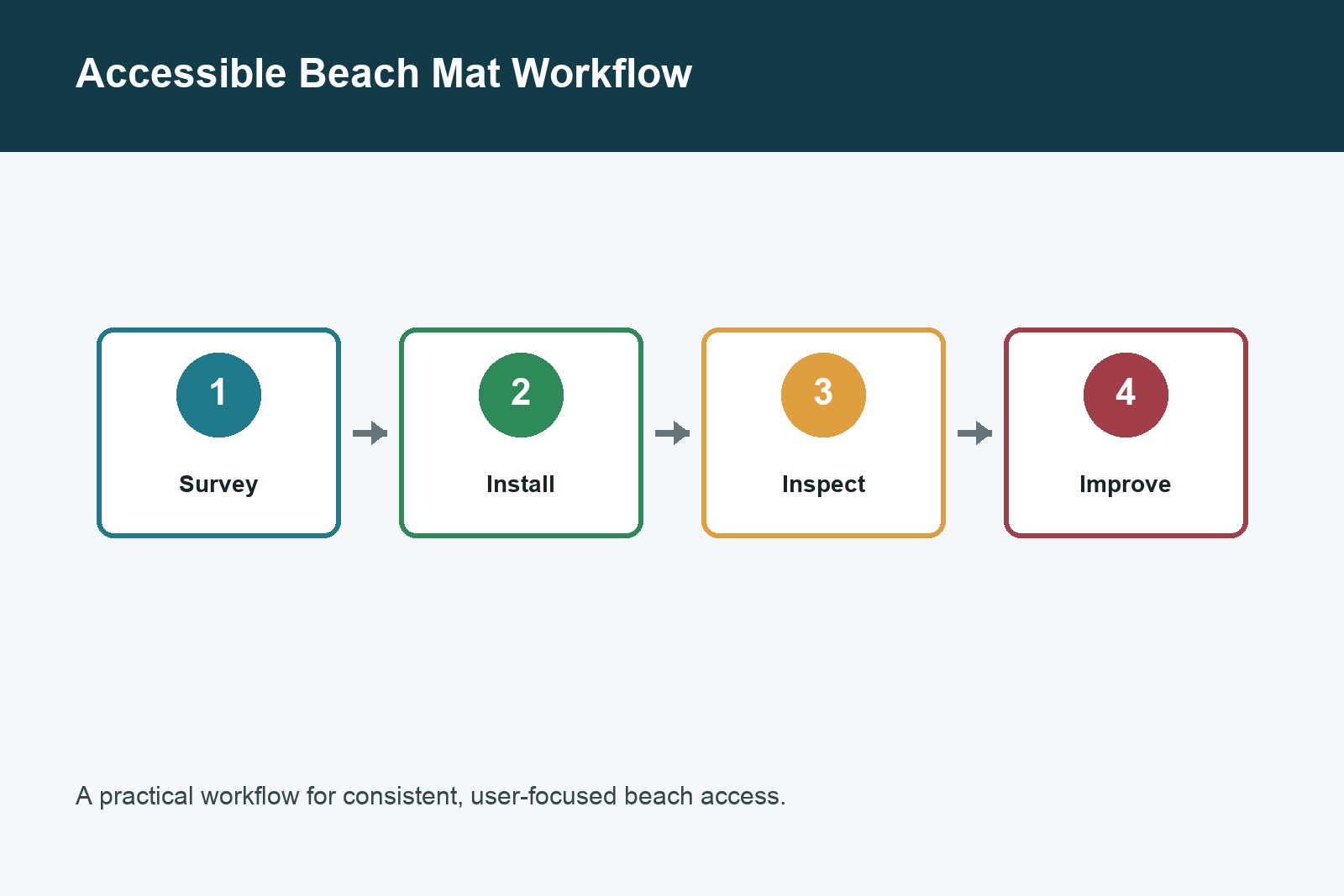
For that reason, A accessible beach mat should connect arrival, paths, matting, mobility equipment, rest areas, staff support, and the shoreline destination into one coherent experience. It gives you a practical access tool, but performance still depends on site conditions, user needs, and responsible operation.
However, teams should retest the route after material changes.
What belongs in the final program review?
Follow a visitor from start to finish: Test signage, transitions, passing, shade, seating, equipment pickup, water access, emergency response, and the return trip. Include users with different mobility devices in the review.
- Arrival and wayfinding.
- Continuous firm route.
- Rest and equipment options.
- Destination and return access.
What should your next step be?
Turn the route map into action: Prioritize the largest break in continuity, test a representative mat section, and assign inspection ownership. You can contact us today to discuss the route and equipment mix. Better shore access should let people participate with dignity from arrival to the water’s edge.
Key Takeaway: A complete path solves continuity, usability, operations, and visitor choice together.
| Planning Area | Practical Check |
|---|---|
| Program Layer | User Value |
| Mat route | Lower-resistance sand crossing |
| Mobility equipment | Choice beyond the mat |
This final view keeps the project focused on an actual beach journey.
FAQ
Can I install an accessible beach mat on loose sand?
Yes, when the product and anchoring method suit the site. Survey slopes, sand movement, drainage, tides, and protected areas before installation.
What’s the best accessible beach mat material?
The best material depends on local conditions. Compare rolling resistance, grip, drainage, heat, connections, repair, and maintenance through a field sample.
How do I know if the mat is wide enough?
Test the intended traffic. Consider mobility device width, passing or waiting locations, turns, emergency access, and the route’s busiest periods.
Can an access mat stay outdoors all year?
Sometimes, but only when the product and site plan allow it. Storm exposure, snow, tides, seasonal rules, and maintenance capacity may require removal.