Maintain a floating beach wheelchair by following the exact model schedule for rinsing, drying, inspection, tire care, issue reporting, and storage. Salt, sand, and coastal moisture constantly attack valuable equipment, causing operational downtime and frustrated beach guests. When salt crystals dry, they bind moving parts, while abrasive quartz grains grind down bearings and scrape protective clear coatings. This chemical and physical wear leaves your mobility assets looking neglected, or worse, directly broken. By implementing a simple, proactive maintenance routine, you can shield your equipment from rapid deterioration. This guide outlines the straightforward, step-by-step procedures to protect your floating beach wheelchair and keep your shoreline program active all year long.
Why clean a floating beach wheelchair daily?
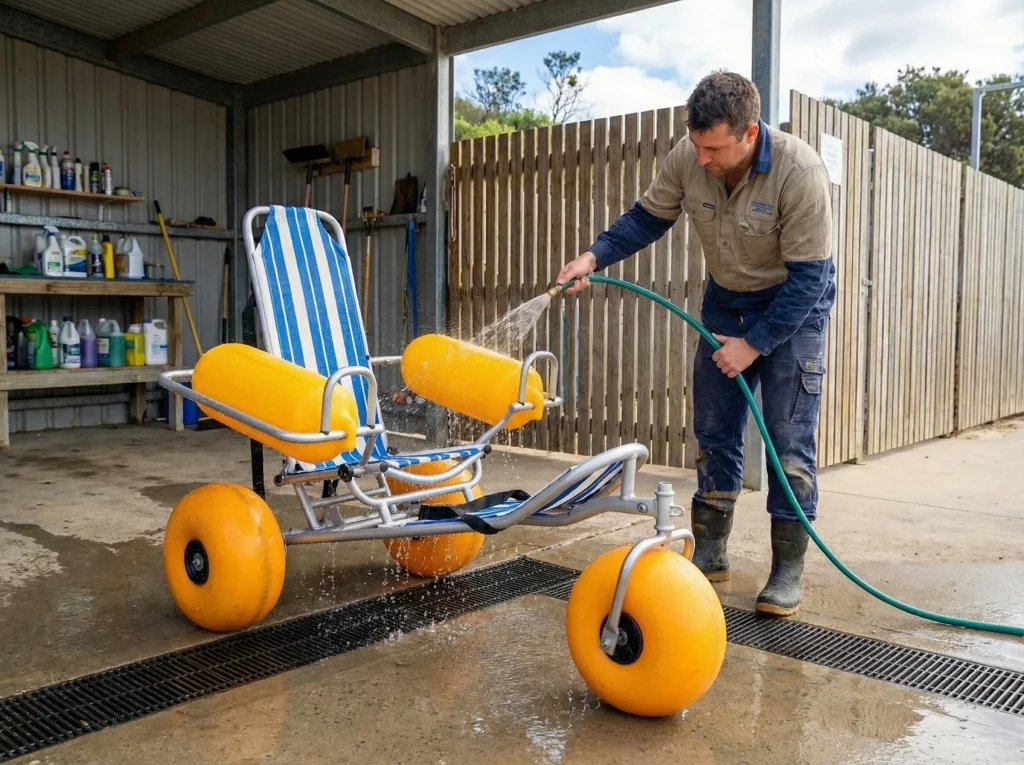
For example, cleaning a floating beach wheelchair daily prevents salt crystallization and sand buildup from locked joints or damaged coatings. Daily cleaning is the single most critical task for coastal equipment longevity. You must protect your floating beach wheelchair from aggressive coastal air that causes oxidation. This simple chore keeps the aluminum frame bright and prevents moving parts from sticking. For a public-program example, the Padre Island beach wheelchair guidance shows why each site needs its own use and return procedure; the exact model manual still controls care.
What happens if sand accumulates?
For cleaning: Fine quartz sand particles find their way into every tiny gap. When left to dry, sand acts like sandpaper, stripping the protective layers of your equipment.
- For example, sand particles grind down bearing assemblies over time.
- Also, debris blocks the quick-release pins from locking securely.
- Next, abrasive grit ruins clear finishes on metal tubes.
Why is saltwater corrosion so dangerous?
However, saltwater triggers rapid galvanic oxidation on unprotected metal surfaces. When water evaporates, salt crystals expand inside joints, pushing components apart and cracking welds.
| Maintenance Level | Frame Condition | Operating Status |
|---|---|---|
| Daily Wash | Bright, polished surface | properly operational |
| Neglected Wash | White powdery oxidation | Sticky joints, stiff movement |
Meanwhile, examining the long-term impact of salt residue demonstrates why instant washing is a basic rule.
Key Takeaway: Consistent daily washing keeps the silver aluminum frame looking clean and operating safely for years.
How do you wash a floating beach wheelchair?
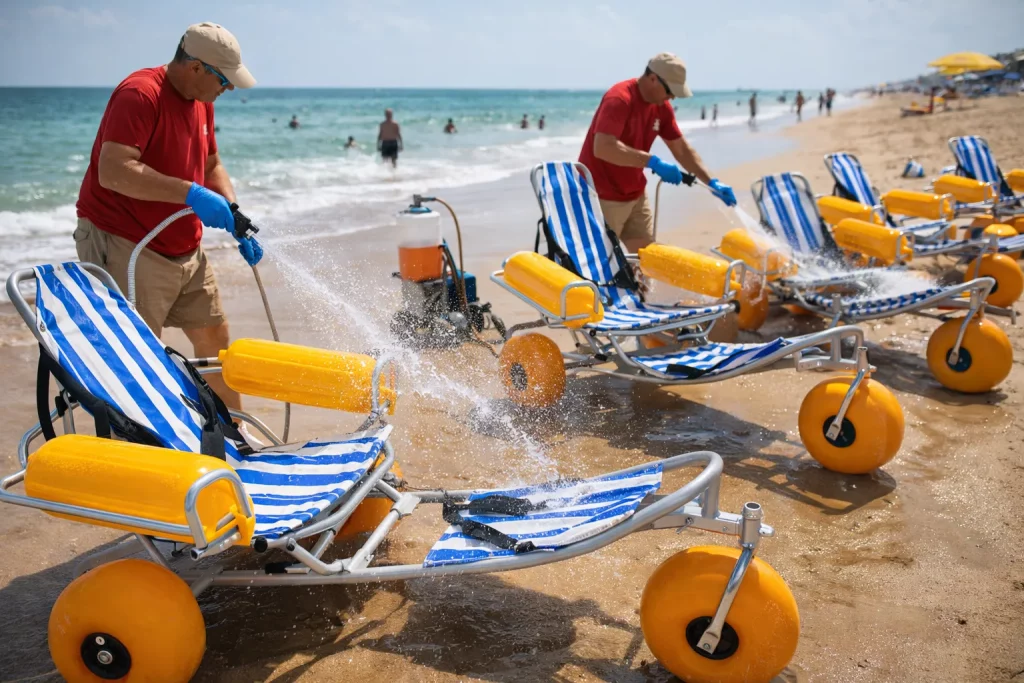
As a result, you wash a floating beach wheelchair by spraying it thoroughly with clean, pressurized freshwater after every single use. Spraying down the floating beach wheelchair removes salt crusts before they harden into a solid barrier. Pay special attention to the underside and around the three orange low-pressure balloon wheels. Use a gentle hose setting to avoid pushing debris deeper into the seals.
What is the correct washing sequence?
Let us look closer. Staff must adopt a systematic top-to-bottom washing protocol to remove all corrosive materials.
- In practice, hose down the push handles and striped blue-white backrest.
- For example, rinse the orange side flotation chambers and under-seat restraint.
- Also, flush out the front castor fork and rear axle sleeves.
Should you use high-pressure washers?
Also, high-pressure industrial washers can force sand past protective rubber seals and into dry bearings. This creates internal grinding that destroys axle shafts and hub mechanisms.
| Pressure Level | Cleaning Safety | Component Risk |
|---|---|---|
| Low Pressure (Hose) | Use only when permitted by the model manual | Lower risk when flow stays within model guidance |
| High Pressure (Power) | Blasts sand deep into joints | High risk of seal damage |
Then, using moderate water pressure prevents water from penetrating the sealed flotation compartments.
Key Takeaway: Gentle freshwater rinses wash away abrasive sand without degrading the watertight seals or stripping protective coatings.
How do you inspect a floating beach wheelchair frame?

For example, you inspect a floating beach wheelchair frame by checking all structural weld joints, fasteners, and locking pins for signs of stress, hairline cracks, or loose hardware. Regular checks on the silver aluminum frame help catch structural problems before they cause failures during guest use. You must examine your floating beach wheelchair at least once a week. Look closely at the connection points near the armrests and the footrest.
Which frame areas need checking first?
What does this mean for you? Early detection of frame wear saves expensive repair bills and supports safety.
- Next, examine the welding beads along the primary load-bearing tubing.
- In practice, check the nuts securing the footrest and armrest pivots.
- For example, look for surface discoloration that suggests coating wear.
What signs indicate frame fatigue?
However, look for hairline cracks in the welds or bends in the aluminum tubes. Aluminum does not rust, but it can suffer from stress fatigue under heavy loads.
| Inspection Area | Warning Signs | Action Required |
|---|---|---|
| Welded Joints | Hairline cracks, bubbling | Replace component promptly |
| Tubing Sections | Bending, deep dents | Monitor or swap part |
Meanwhile, monitoring structural joints helps spot micro-fractures before they compromise safety.
Key Takeaway: You get the best results when suitable equipment, trained attendants, clear operating limits, and consistent aftercare work together.
How do you service a floating beach wheelchair axle?
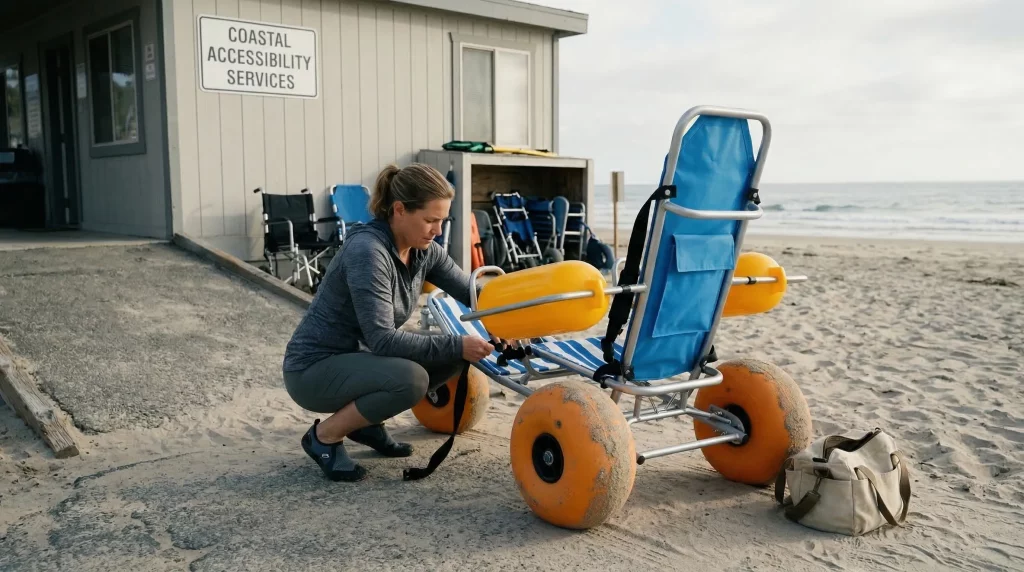
As a result, you service a floating beach wheelchair axle by removing the wheels, cleaning the shafts with a soft brush, and verifying that the quick-release pins click securely into position without grease. Servicing the axle makes sure that the wheels slide off with less effort for transport or cleaning. The floating beach wheelchair relies on dry stainless steel axles that must remain free of oily grease. Grease attracts sand, turning it into a destructive grinding paste.
Why must axles remain directly dry?
For routine care: Wet lubricant is the enemy of beach equipment axles. Oily residue catches blowing sand, locking it inside the wheel hub where it damages the metal.
- Also, dry surfaces allow sand to fall away by design.
- Next, grease locks grit inside the wheel hubs.
- In practice, clean stainless steel resists corrosion without chemical coatings.
How do you check the quick-release pin?
Also, press the button on the quick-release pin to check for smooth action. The locking detent balls must expand properly to lock the wheel assembly onto the frame.
| Axle Component | Safe Status | Danger Status |
|---|---|---|
| Stainless Shaft | Clean, dry, polished | Gritty, greasy, scratched |
| Release Pin | Clicks tight, pops out | Stuck button, lazy spring |
Then, reviewing axle pins preserves the quick-assembly features needed for rapid resort operations.
Key Takeaway: Wipe the axle shafts dry with a clean cloth to prevent grit buildup and lock failures.
How do you inflate a floating beach wheelchair tire?
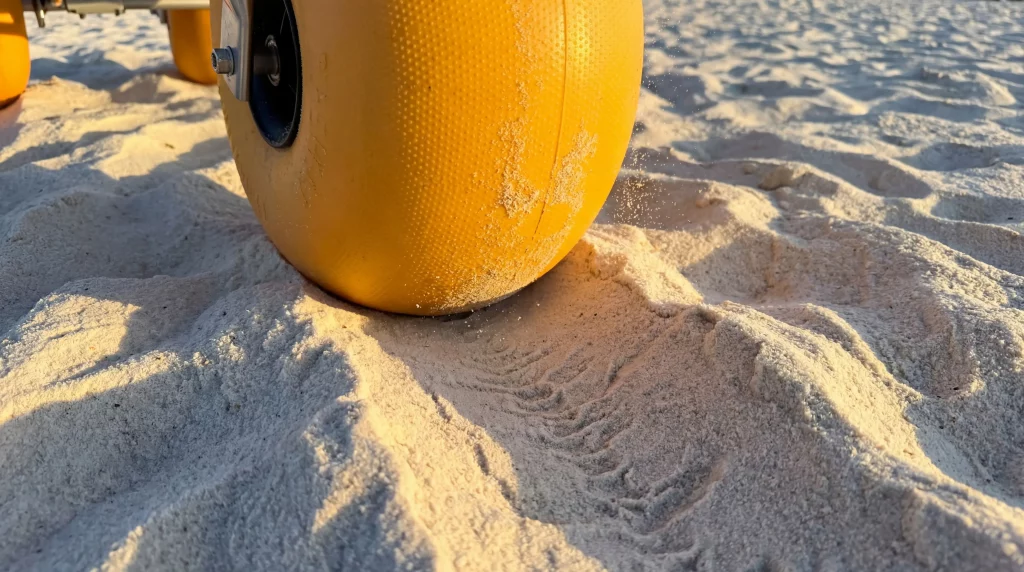
For example, balloon tires require low air pressures to float over dry, powdery sand instead of digging in. You should inspect the wheels of your floating beach wheelchair before each guest sits down. Avoid unregulated high-pressure air sources; use the pump, gauge, and pressure limit stated for the exact tire. Use a compatible pump and gauge specified for the tire.
Why is correct tire pressure critical?
This is a critical point: Correct inflation prevents the wheel from slipping off the rim. If the pressure drops too low, sand can slide inside the tire bead, causing air leaks.
- For example, low pressure spreads the tire footprint across soft sand.
- Also, proper levels preserve the inherent buoyancy of the balloon wheels.
- Next, over-inflation stretches the rubber, making the ride bumpy.
How can you check for leaks?
However, brush soapy water over the tire surface and valve stem to spot slow leaks. If bubbles form, you have found a leak that needs attention.
| Review Area | Practical Guidance | Operational Note |
|---|---|---|
| Water conditions | Use only calm, controlled, designated zones | Confirm against the model manual |
| User fit | Confirm the model instructions and restraint adjustment | Confirm against the model manual |
| Attendant control | Maintain hands-on supervision throughout use | Confirm against the model manual |
Meanwhile, tracking pressure levels helps you find slow leaks before guests get stuck in deep sand.
Key Takeaway: You get the best results when suitable equipment, trained attendants, clear operating limits, and consistent aftercare work together.
How do you align a floating beach wheelchair castor?
As a result, you align a floating beach wheelchair castor by checking the front fork vertical angle and tightening the steering stem nut until the wheel swivels smoothly without wobbling. Correct castor alignment prevents the front wheel from fluttering when pushing the client across the boardwalk. A misaligned front wheel makes the floating beach wheelchair pull hard to one side. You should check the steering hardware for alignment issues every month.
What causes castor misalignment?
Let us look at the facts: Heavy use on soft dunes and transitions eventually loosens hardware. Sideways impacts can shift the front fork out of its track.
- In practice, bumping into wooden boardwalk edges shifts the fork.
- For example, loose stem nuts allow play in the bearings.
- Also, uneven load distribution puts sideways stress on the fork assembly.
How do you adjust the swivel tension?
Also, adjust the tension of the fork steering nut to control the swiveling action. It should turn freely but have no vertical play when lifted.
| Castor Status | Steering Performance | Bearing Safety |
|---|---|---|
| Properly Aligned | Straight tracking, easy turns | Safe load distribution |
| Misaligned Castor | Shimmies, pulls to one side | Wear on stem assembly |
Then, keeping castor forks straight improves tracking and reduces physical strain on the attendant.
Key Takeaway: Regular castor adjustments keep steering effortless, allowing operators to turn the chair with less effort.
How do you sanitize a floating beach wheelchair seat?
You sanitize a floating beach wheelchair seat by spraying it with mild, non-abrasive disinfectant and wiping it down with a clean microfiber cloth. Sanitizing the mesh fabric between users satisfies resort hygiene standards and protects guests. The skin-contact surfaces of your floating beach wheelchair deserve careful, routine sanitization. Use bleach-free cleaning agents that will not bleach the blue-white striped fabric.
Which seating parts need sanitizing?
For shared use: Attendants must sanitize every skin-contact point after every rental cycle. This maintains high hygiene standards for public beach visitors.
- Next, sanitize the adjustable safety restraint and plastic buckles.
- In practice, wipe down the armrest flotation pads and handles.
- For example, clean the front footplate area to remove body oils.
What cleaning agents are safe?
Avoid harsh solvents or petroleum-based cleansers that can degrade plastic armrests or fade woven colors. Use neutral liquid soaps or specialized fabric sanitizers.
| Cleanser Type | Mesh Fabric Safety | Armrest Material Safety |
|---|---|---|
| Mild Soap Solution | directly safe, gentle | Safe for plastic/rubber |
| Harsh Bleach | Fades colors, weakens fiber | Dries out orange plastic |
Choosing gentle sanitizers keeps fabrics strong and prevents skin irritation for guests.
Key Takeaway: Use mild soapy water or fabric-safe disinfectants to maintain the seat’s bright, clean look.
What tools fix a floating beach wheelchair?
You fix a floating beach wheelchair using a low-pressure tire gauge, a soft-bristled brush, a freshwater spray bottle, and a clean microfiber cloth. Having a dedicated maintenance kit on hand reduces downtime and speeds up daily check-ups. The floating beach wheelchair requires minimal specialized gear because of its tool-free design. Keep your maintenance tools stored in a dry plastic box near the beach station.
What belongs in your beach kit?
What is the best approach? Keep a small, organized toolkit close to your beach rentals for rapid repairs.
- Also, include a dry silicone spray for pivot joints.
- Next, store a low-pressure gauge that reads within the manufacturer-recommended low-pressure range.
- In practice, keep spare quick-release pins and replacement clips.
Why are non-metal brushes preferred?
Metal wire brushes can leave small scratches on the silver aluminum frame, allowing salt to settle inside the metal. Soft nylon bristles safely lift sand from joints without scratching.
| Tool Choice | Surface Action | Sand Removal Efficiency |
|---|---|---|
| Nylon Brush | Safe, soft scratching | High efficiency in joints |
| Steel Wire Brush | Damages protective coating | Scratches metal, ruins surface |
Selecting non-abrasive tools protects aluminum finishes from deep scratches that cause pitting.
Key Takeaway: A simple, cheap maintenance kit keeps your beach gear operational throughout the summer.
Where do you store a floating beach wheelchair?
You store a floating beach wheelchair in a dry, well-ventilated indoor space covered with a light dust sheet during the off-season. Proper storage keeps coastal moisture from tarnishing metals and degrading plastics over winter. Leaving your floating beach wheelchair outside during winter months will shorten its operational lifespan. Complete the model-specific cleaning and drying steps before storage. Keep the user manual resource with the maintenance record for the exact model.
What is the storage preparation checklist?
For routine care: Proper preparation prevents mold from growing on seating mesh and protects plastic parts.
- For example, deflate tires slightly to relieve tension on the rubber.
- Also, wipe down frame tubes with a water-displacing protector.
- Next, drape a breathable fabric sheet over the stored chairs.
Why avoid outdoor tarps?
Plastic tarps trap moisture underneath, creating a damp greenhouse environment that corrodes aluminum and promotes mold growth. Breathable sheets allow dampness to escape by design.
| Storage Method | Air Circulation | Moisture Control |
|---|---|---|
| Dry Indoor Bay | High airflow | Excellent protection |
| Tarp on Beach | No airflow | High risk of condensation |
Choosing indoor ventilation over plastic covers stops damp air from ruining aluminum welds.
Key Takeaway: Model-specific storage can reduce avoidable exposure and make the next inspection easier to document.
How can we support your floating beach wheelchair?
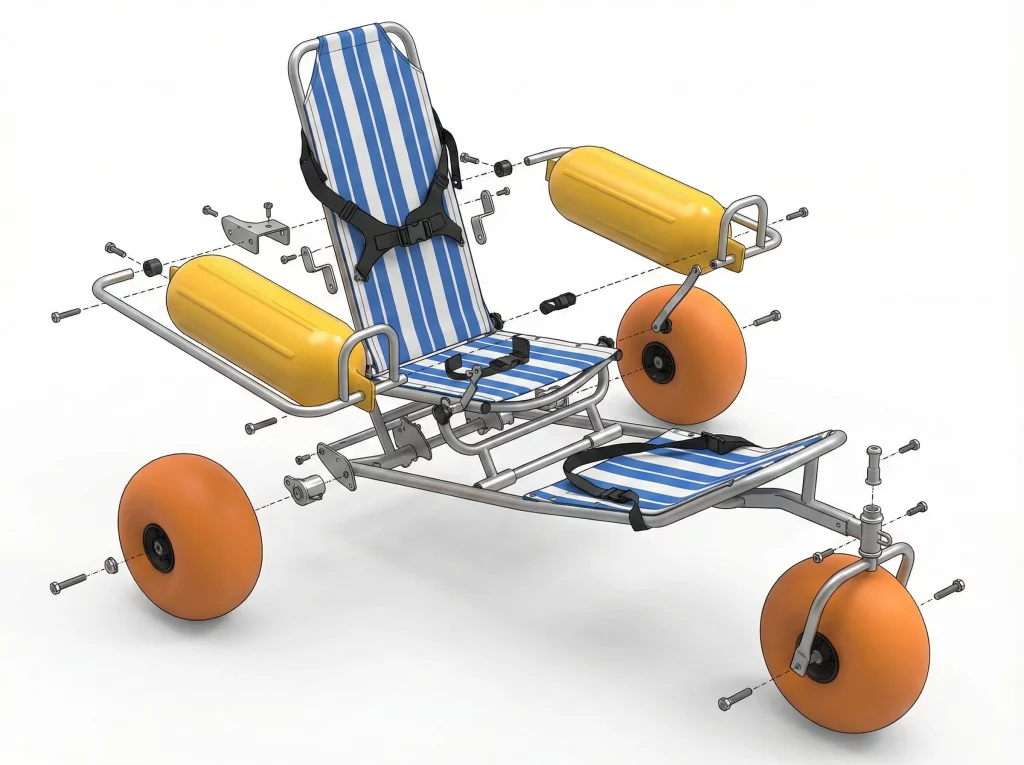
Maintenance works best when site staff keep model records, inspection results, issue reports, and parts requests together. Ask the supplier to confirm current parts availability and service channels in writing.
What factory resources do you get?
This is our commitment to you: Confirm available parts, documentation, and response channels before the busy season.
- In practice, confirm current flotation-part availability for the exact model.
- For example, request the current assembly instructions in an approved format.
- Also, request the current technical file needed for procurement review.
Ready to expand your beach accessibility program?
If you are planning a resort upgrade or need parts for an existing fleet, contact us today and request current product, logistics, and service information. Share the exact model, route, use plan, and service history when requesting support.
| Launch Priority | Practical Action |
|---|---|
| Product fit | Confirm user needs, route, and water conditions |
| Staff readiness | Train attendants and document stop rules |
| Long-term care | Plan rinsing, inspection, and secure storage |
This final check connects procurement decisions with reliable daily operations.
Key Takeaway: A successful program pairs suitable equipment with trained staff, documented operating limits, and dependable aftercare.
What should operators confirm before service?
Frequently Asked Questions
Can I use high-pressure pressure washers to wash the chair? No, unless the exact model manual permits it. Use the water flow, tools, cleaning agents, and drying steps specified for each component.
What is the best way to clean salt buildup off the mesh seat? The best way to clean salt buildup is to spray the fabric with fresh, warm water and scrub gently with a soft-bristled brush. Avoid harsh bleach or commercial chemical cleaners that can fade the blue-white stripes and weaken the structural fibers. Let the fabric air dry directly in the sun before storing it.
Can I store the chair outside under a waterproof cover during winter? No, you should avoid storing the chair outside under a plastic cover or tarp. Waterproof covers trap moisture underneath, leading to mold on the seating mesh and corrosion around the aluminum weld joints. Follow the model’s storage limits and use a dry, ventilated location unless its documentation allows another setup.
How do I know if the flotation armrests are compromised? You can check the flotation armrests by inspecting the outer orange plastic shell for deep cracks or punctures. You can also submerge them in shallow water to check for air bubbles escaping the seals. If you detect any leaks, replace the armrests promptly to protect user stability in water.
Use a compatible gauge rather than estimating pressure by touch, and stay within the exact tire limit in the model documentation.