
Start at the store with an empty AY-ST-V1.0 and the last return or service entry for that particular chair. Has an armrest been replaced, has a wheel been removed for storage, or is there an unresolved report of a loose connection? A release check must account for what happened to the unit since its last use. If it is still on hold, keep it unavailable while the responsible person investigates.
Identify the complete set before checking its condition
Use the asset ID and the manufacturer’s current instructions for the delivered configuration. The corrected V1.0 manual identifies an aluminum-alloy frame, three inflatable PVC wheels, two detachable inflatable PVC armrests, a seat belt and a backrest with three settings. Its drawings distinguish the single front wheel from the two rear assemblies. Keep the correct fittings with each unit after transport, cleaning and storage. Corrected AY-ST-V1.0 manual, pages 2–5
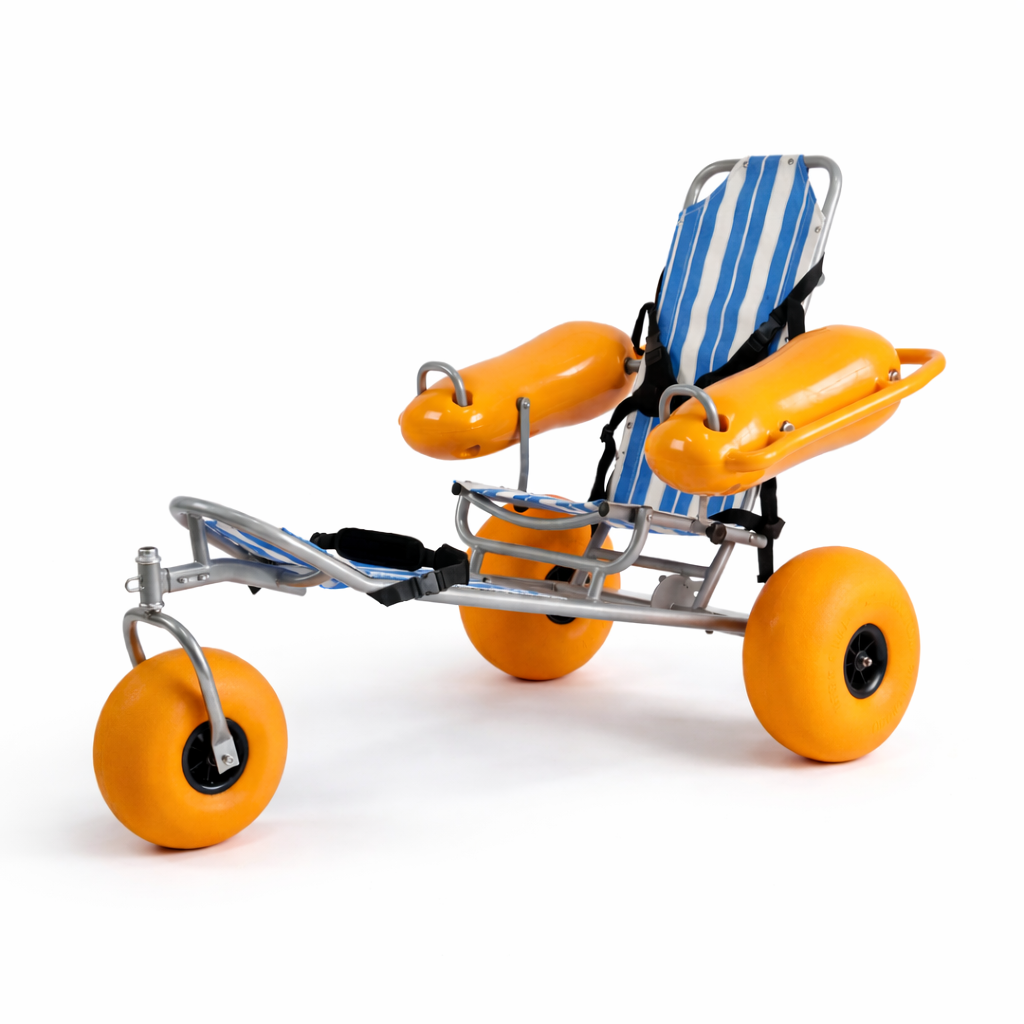
| Component on the empty chair | What the trained checker observes | Example that prevents issue |
|---|---|---|
| Inflatable armrests | Correct pair and attachment arrangement, visible condition including undersides, valve area, and inflation checked by the applicable component instruction. | A cut, recurring loss of air, unconfirmed attachment or damaged closure. |
| Front and rear wheel assemblies | Actual position, tire and valve condition, wheel mounting and retention after any refit. | Unexplained side movement, missing retaining part, persistent drag or rubbing. |
| Frame, seat and belt | Visible alignment, seat fabric and seams, supports, belt and buckle, and the points that connect them to the frame. | Crack, distorted mounting or incomplete load-bearing attachment. |
| Backrest and adjusted parts | Engagement of the setting chosen for the intended setup according to instructions. | The setting slips, movement is unexplained or a fitting cannot be identified. |
Use a suitable gauge when the applicable instructions require one. If a pressure figure cannot be matched to the actual inflatable component, obtain the supplier’s clarification before adjustment. A squeeze by hand cannot establish the setting or verify flotation performance.
Watch the chair move before anyone uses it
After static checks pass, observe the permitted empty roll and turn on a firm, level area. State what happens and where. “Right rear wheel rubs on the frame during the left turn” gives the technician a repeatable condition. If a fault appears, stop the check and leave the chair held. Do not use extra pressure, an improvised spacer or an occupied trial to make an unexplained problem disappear.
The person who performs corrective work records the part, the work and any neighbouring connections disturbed. Have the authorised person repeat the relevant checks and record the result against the original finding. A replacement part arriving in the store does not by itself make the chair ready. Maintenance and repair verification
Tell the desk which decision was made
For an illustrative store entry, “F-04, front wheel refitted after storage, instructed attachment and empty movement checks complete; both armrests identified and secure; equipment released at 09:20 by the authorised checker.” Use actual measurements and release criteria when required. If any required item was not checked, record the outstanding question and keep the appropriate hold.
Send the released asset ID and configuration to the issuing staff. Whether a particular guest can use it on a particular route remains a separate decision. For water activity the team needs the person’s agreed support, a currently controlled calm shallow zone, reliable attendant footing, qualified cover and a usable return. Check that with the site lead on the day. Floating chair shore-route opening decision