
A shore route opens only as far as the duty team can support the visitor’s return. Walk the route from the collection point past the transfer and staging spaces to the proposed water zone, then work back toward the collection point. A ramp that was usable at yesterday’s tide can lead to a different sand edge or footing today.
For the AY-ST-V1.0, the manufacturer identifies a controlled, calm, shallow operating zone, trained supervision and stable footing for the attendant. It excludes wave action, open-ocean conditions and independent deployment. The site operator must decide whether today’s particular entry and exit meet those limits and the local operating plan. Manufacturer’s operating environment and supervision guidance
Set the destination and mark the return
Use names that the desk, attendants and visitor can all locate. Identify the firm approach, agreed handover space, landward stopping place, proposed protected entry and the place where the person’s usual mobility equipment will be available on return. Include the time of the check and the conditions that prompted it.
Look at the edges and turns from both directions. Sand can accumulate at the end of a boardwalk or wash away below it. A short section of loose, sloping ground can change control on return. Note obstacles from other users, boats or equipment and where a party could wait clear of them. If that space disappears during normal operations, the route drawing needs revision before another start.
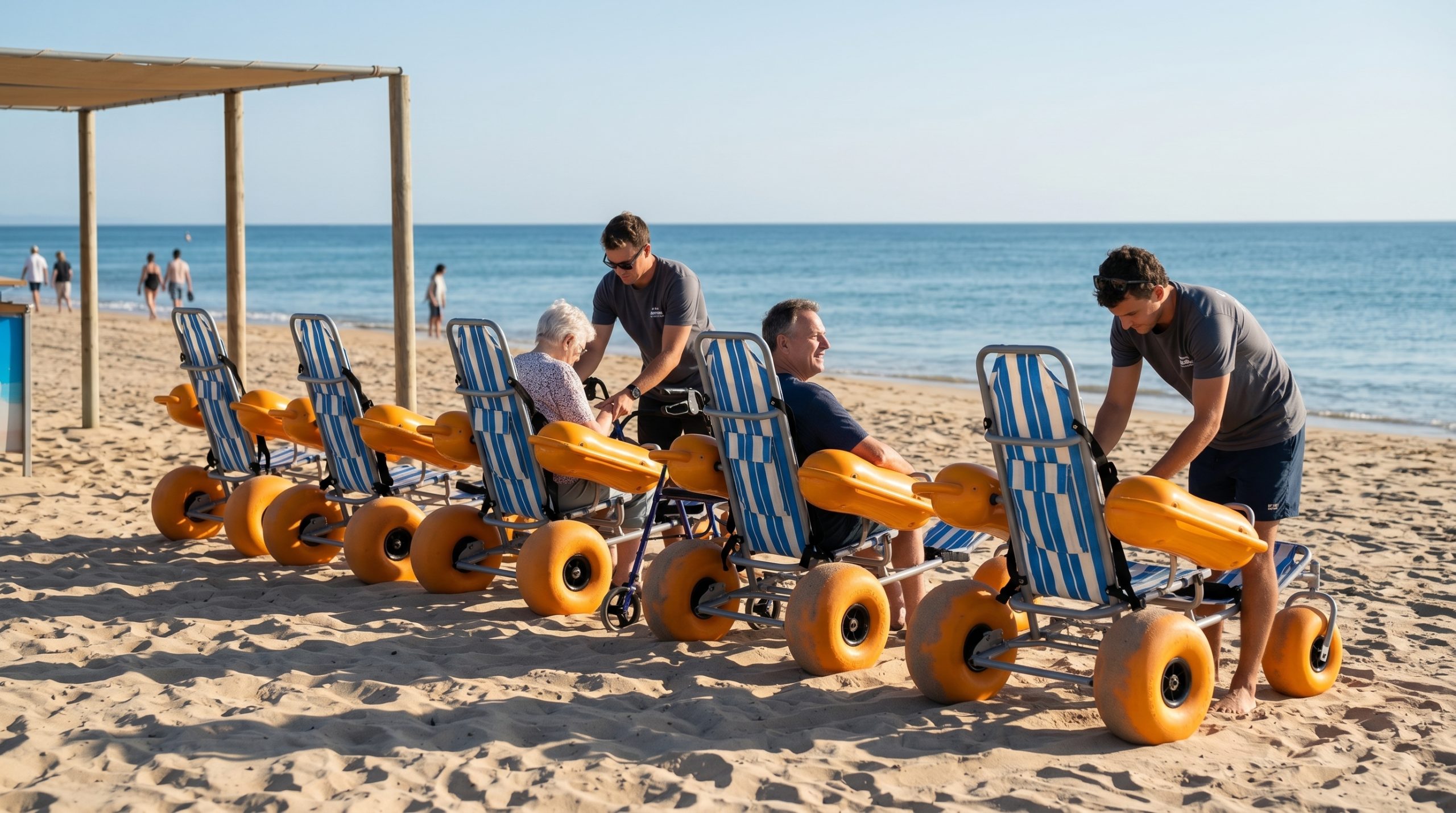
Check the route using its actual equipment
The V1.0 is a three-wheel chair with detachable inflatable PVC armrests. The manual lists an overall size of 220 × 109 × 117 cm. Use its documented configuration and the actual chair when checking the staging bay, turning space and firm approach. An opening wider than the nominal chair can still be difficult to use if an immediate turn leaves no room for the attendant. The product drawings identify components and connections. They do not supply site-specific entry manoeuvres or an emergency plan. Corrected AY-ST-V1.0 manual, pages 2–5
Have authorised staff inspect the site under their local procedures. An empty chair can be checked on a suitable firm approach after evident defects have been removed. Never use a guest to test an uncertain bank, water zone or assembly. Arrange an appropriate individual assessment and assistance separately for the person who intends to use the service.
Give the desk an opening decision it can describe
| Finding at this entrance | Decision for this service |
|---|---|
| Approach, staging and land destination checked, but water footing or exit is uncertain | Offer only the checked land outing if suitable equipment and support are available. Name its endpoint. |
| Wheelchair has an unresolved fault, while the site itself is suitable | Hold the named chair. Check any substitute independently before allocating it. |
| Waves, wakes or a changed level reach the proposed zone | Pause water departures there. Review the exit and the situation of anyone already in the service through the local team. |
| Protected zone, entry and exit, released chair and trained cover confirmed | The duty lead may offer the locally authorised session with the person’s agreed support and conditions. |
For a hypothetical morning, the entrance is clear and the chair has passed its empty-equipment checks. The return point, however, has lost supporting sand. The team can describe a checked viewing place on land while the water session remains closed. Sending a spare chair would leave the return problem unresolved.
Record the route status where bookings are confirmed and agree who will report a change during the session. A new tide or wind condition, lost attendant cover, changed exit or visitor request to return can change the service before the end of a time slot. Use the separate closure and reopening plan when a previously open zone needs to close.