
A handover is complete when the guest knows the outing being offered, the attendant knows the agreed support, and the issuing desk knows who has the chair. Train those three conversations together. A signature beside a booking will not tell the incoming attendant that the guest wants to stop on land or that their personal wheelchair is waiting at another entrance.
Rehearse with one real configuration
Use the empty, released chair and its current instructions for the equipment part of training. Ask the learner to locate the asset identification, front and rear wheels, backrest and the two removable armrests. On the AY-ST-V1.0 the armrests and wheels are inflatable PVC. The model manual identifies their attachment arrangements, a seat belt and a three-position backrest. Staff should know which authorised person has completed the prescribed checks on the actual unit and where to locate the record. AY-ST-V1.0 manufacturer manual · Checks before issuing the chair
The service assigns fitting, transfer assistance and control of any water activity to appropriately trained people. A companion may wish to help, but their role and the support the guest wants must be agreed with the local operator. The shore-side briefing does not qualify a companion to take over duties requiring trained staff. WHO guidance on assistive product training and provision
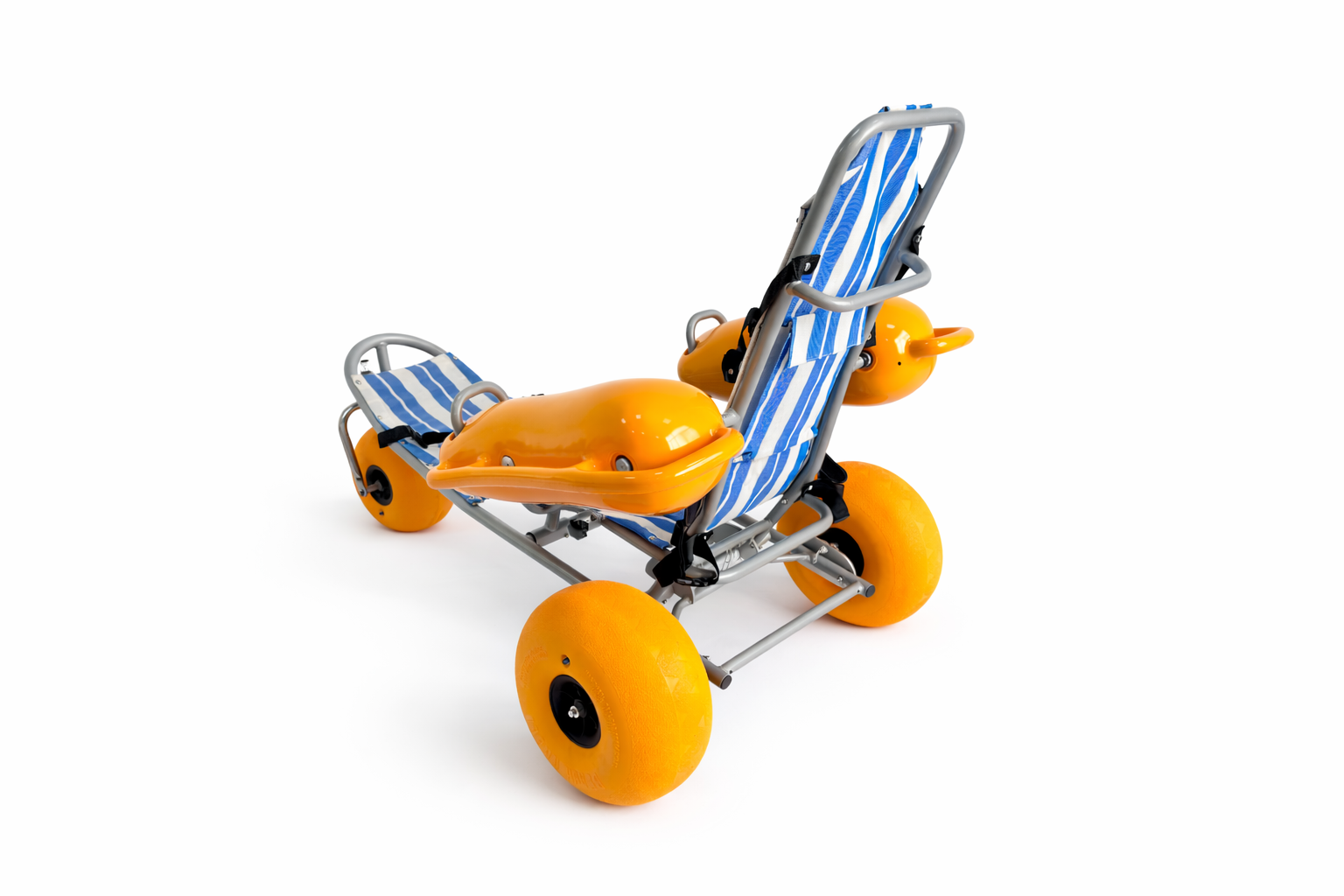
Give each participant a part in the exchange
| Speaker | Practical handover question or action |
|---|---|
| Booking or issue staff | Identify the guest’s agreed activity, collection and return point, allocated chair, latest route status and any unresolved assistance question. |
| Guest | Describe the intended destination, preferred way to communicate, what support is wanted and how to ask to pause or return early. |
| Attendant | Explain the supported route, the limits applying today, where personal equipment will be kept and who can help at the return point. |
| Companion, if involved | Confirm the tasks they have agreed with the guest and the operator, and whom to contact if the plan changes. |
Use plain prompts and allow time for a reply or demonstration in the guest’s preferred format. For example: “Where would you like this outing to end?” and “How would you like to tell us that you want to come back?” The answer can change the destination and assistance before anyone transfers.
Practise an interruption, not only the normal greeting
In a fictional rehearsal, the desk has booked a supervised water visit. The equipment checker reports that one armrest on the allocated chair repeatedly loses air. Ask the trainee to identify that unit, stop its issue and contact the technical lead. The desk must establish whether another suitable, released chair and a supported slot actually exist before offering a replacement.
Run a second version in which the chair is ready but wave action reaches the proposed entry. This time the water activity is on hold irrespective of which chair is available. The attendant can discuss a separately checked assisted land visit or another time with the guest. Model guidance calls for controlled calm water, stable attendant footing and trained supervision. The site supplies its own approved return and emergency arrangements. Manufacturer’s water-use conditions
Finish the handover by rehearsing the return
Have the team identify the person who will receive the guest at the agreed place and restore access to their usual mobility equipment. Record the chair, actual issue and return times, removable components accounted for, and any concern the guest or attendant reported. Send a reported equipment fault to maintenance under that asset ID.
During the observed rehearsal, ask the next employee to repeat the supported endpoint, the guest’s agreed communication method and who covers the return. When those answers differ from the guest’s understanding, repeat the briefing in a way the guest finds usable. The fleet training and rota guide addresses who is authorised and available to teach or cover each duty.