
At return, ask which parts were exposed to sand or water and whether anything changed during the outing. A mark on a wheel, a loose attachment or an armrest that appeared to lose shape is easier to identify while the attendant can point it out. Record the chair ID, side and visible condition before cleaning removes grit or changes the appearance of a mark.
Move the empty chair to the designated care area where rinsing and drying will not obstruct visitors. Keep its loose parts in a labelled container. If body fluids, an unusual contaminant or an unknown chemical contacted the equipment, isolate it and obtain the site’s appropriate hygiene procedure and manufacturer-compatible care method before it goes back into shared use.
Clean the surfaces staff touch and the places sand collects
The corrected AY-ST-V1.0 manual shows three inflatable wheels, two detachable inflatable PVC armrests, a fabric seat and backrest, and the frame connections. Its care illustrations depict rinsing. Use the instructions for the supplied configuration; do not infer a chemical concentration, pressure-washing method, immersion period or disinfection claim from a pictogram. AY-ST-V1.0 manual, pages 2–5
| Care area | What staff should look for as the surface becomes visible |
|---|---|
| Armrest surfaces and attachments | Grit at the mounting area, abrasion, cuts, distorted shape or a reported air-loss point. Keep each detached assembly identifiable. |
| Wheels and adjacent frame | Sand at the fork, wheel-to-frame gaps and retention points. Refer unexplained drag or movement for an equipment check. |
| Seat, backrest and belt | Sand in folds or seams, surface damage, loose attachments, damaged buckle or webbing. Check surfaces beneath accessible fabric folds. |
| Frame and removed fittings | Debris hiding a connection, damage at an attachment, or hardware missing from the labelled kit. |
Remove loose material by the permitted method, then rinse approved surfaces and allow them to drain. Protect controls, valves and connections as their instructions require. If a routine cannot reach trapped material without disassembly, ask the authorised equipment lead whether the relevant part may be removed. A cleaning task should not silently become an undocumented repair.
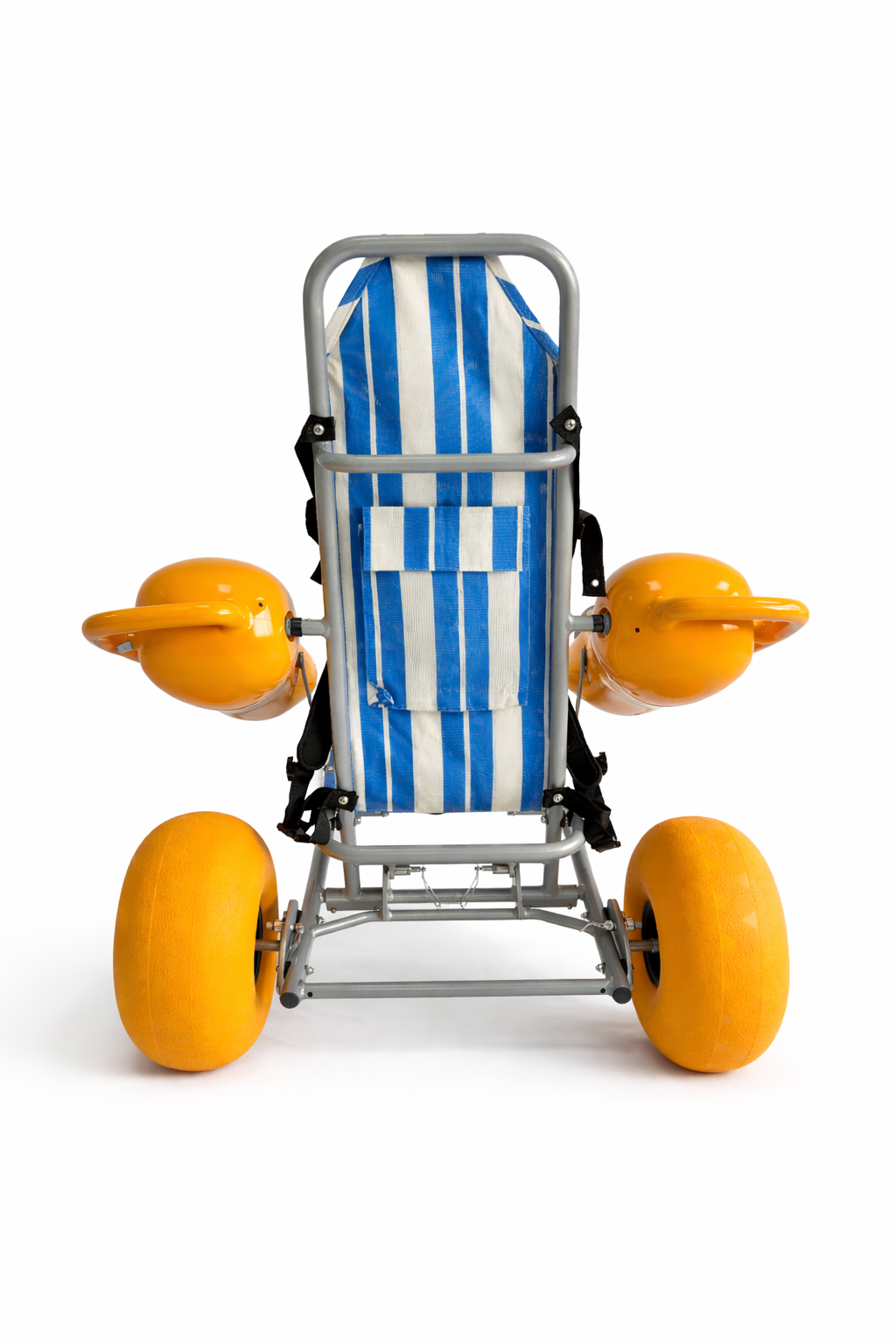
Keep drying visible in the work area
Place the chair and authorised removed parts where air can circulate and staff can inspect the surfaces. Check folds, undersides, the seat area and contact points where stored components would press together. Use the supplier’s care and storage guidance for the actual material. Closing still-damp fabric into a tightly packed set defeats the drying step.
Identify the unit as awaiting drying, awaiting inspection, held for service or ready according to its actual state. A guest who sees clean equipment beside the desk may reasonably expect to use it. Give booking staff the status before that expectation becomes a confirmed collection.
Route a finding to the correct task
A sample care record might read: “F-07 returned from the protected beach area. Visible sand removed and permitted surfaces rinsed. Left armrest had lost shape during use. Chair drying in Bay C; technical assessment still open.” This tells the service team where the chair is, what care has occurred and which concern remains. The finding calls for the applicable inflation and component assessment, not repeated inflation as a substitute for diagnosis.
Any connection disturbed during cleaning must be correctly refitted and checked before issue. The authorised checker compares the actual configuration, attachments, seat and wheel function with the current instructions. If the chair is going into seasonal storage, take its condition and open work forward rather than marking the entire fleet ready at the store door. Pre-issue equipment inspection · Long-term storage and reopening checks