
The AY-ST-V1.0 is a floating beach-wheelchair configuration with three wheels, side flotation armrests and a fabric seat-and-back arrangement. Its product role differs from a four-wheel land chair. Resorts and accessible-tour companies should evaluate it as a dedicated floating product. Reaching sand does not establish a chair’s suitability for water access.
For a connected planning step, review beach photography wheelchair.
For broader destination-level context, consult the UN Tourism accessibility publications and guidelines. Apply local requirements and current product documents to the specific project.
1. What identifies the AY-ST-V1.0 floating configuration?
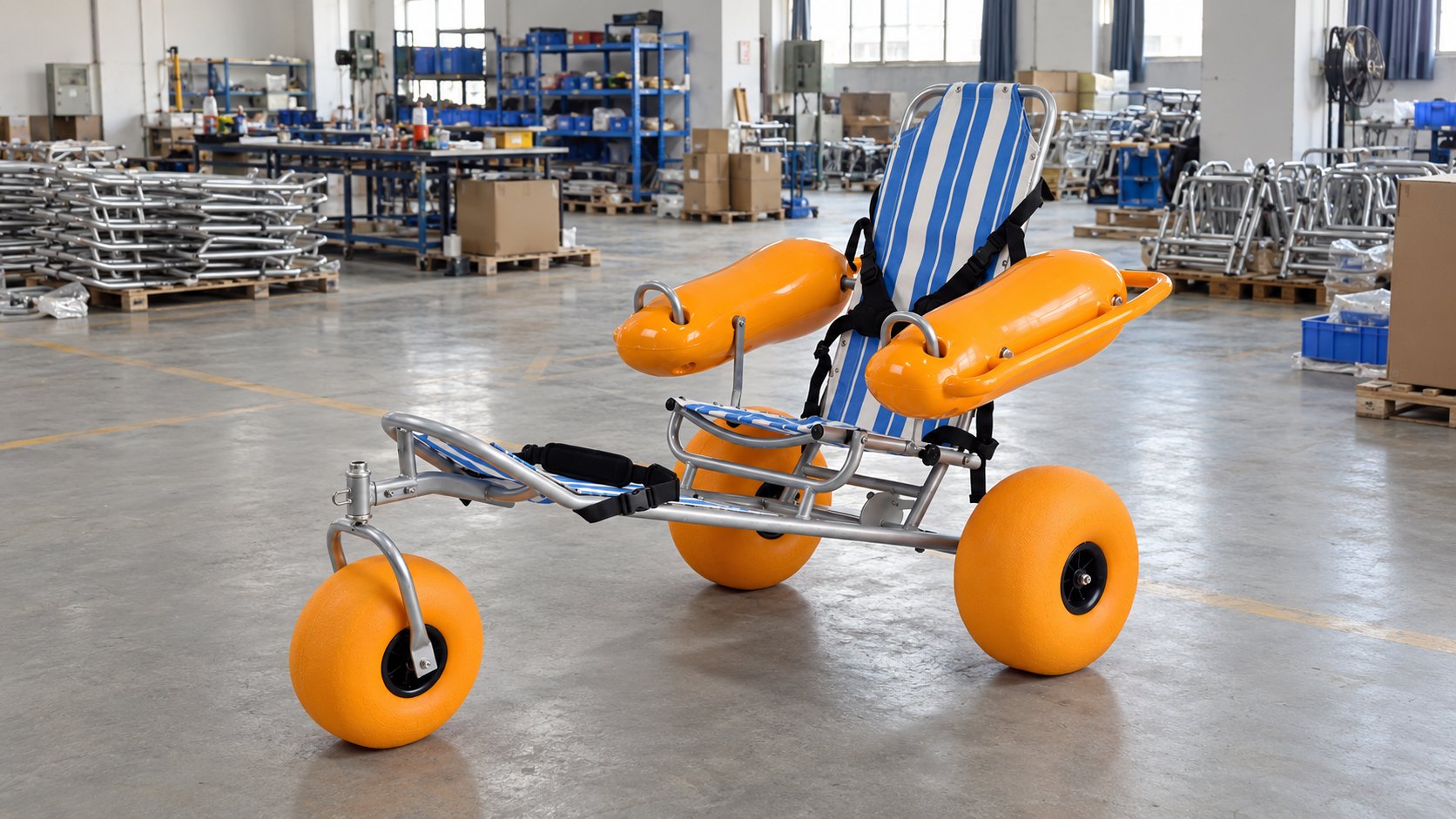
The supplied documentation shows a three-wheel frame with prominent side flotation components and fabric seating. Product references show the characteristic blue-and-white seat arrangement with colored flotation parts. Confirm the actual color and version supplied rather than using appearance as your only identifier.
A named configuration helps buyers discuss a real product. It connects the quotation, instructions, photographs and associated components. That connection is especially useful when a resort also holds ordinary land-based beach wheelchairs that serve another purpose.
Identify the complete floating-chair assembly.
- Match frame, wheels, flotation components and seating.
- Request current photographs of the quoted version.
- Keep individual suitability outside a visual identification exercise.
The floating beach wheelchair page provides product-family context. Ask for current AY-ST-V1.0 information before an order. A category name does not establish that every floating chair has identical construction, limits or operating instructions.
Recognize the product
| Visible element | Product distinction | Confirm before purchase |
|---|---|---|
| Side flotation components | Dedicated floating configuration | Exact supplied assembly |
| Three-wheel layout | Different frame arrangement | Applicable current version |
| Fabric seat and back | Identifiable seating configuration | Individual requirements separately |
2. Why are the flotation armrests central to this product?
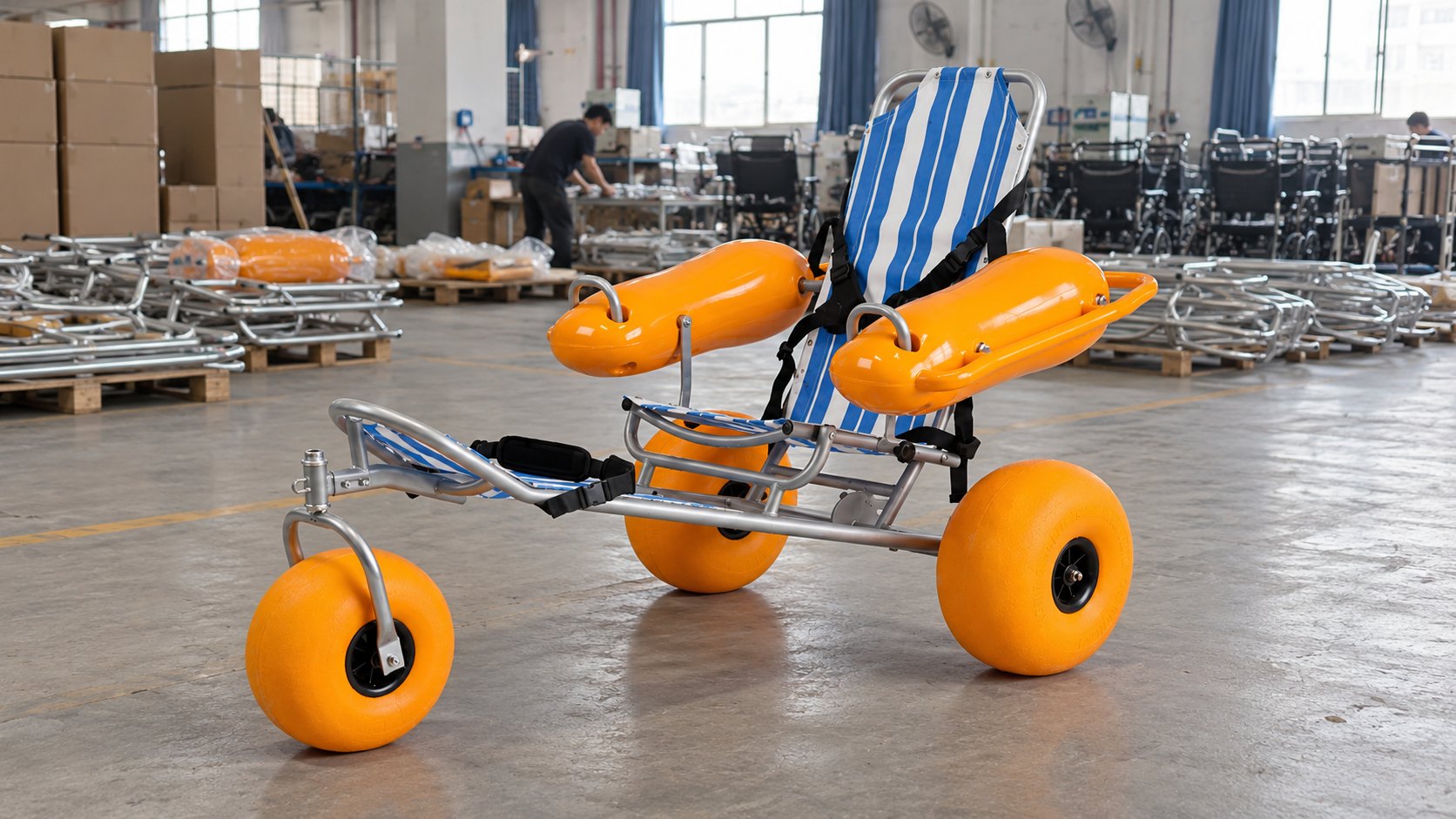
These side components belong to the floating design described in Ary’s supplied material. They should not be presented as ordinary decorative armrests or interchangeable accessories. Buyers need a clear understanding of which components belong to the complete approved configuration.
For a tourism business, this distinction supports an accurate product offer. A company can explain why floating chairs form a separate purchase category. Unspecified accessories do not turn a land chair into an equivalent product.
Treat flotation components as part of an identified system.
- Confirm the exact associated components.
- Ask for applicable product instructions.
- Avoid visual assumptions about replacements or alterations.
Compare this floating model with the all-terrain land-chair category when discussing different equipment roles. Do not describe a component’s appearance as proof of buoyancy, stability or suitability for a particular user. Those claims require appropriate product evidence and review.
Explain the component’s role
| Product point | Buyer value | Unsupported inference |
|---|---|---|
| Dedicated flotation components | Clear category distinction | Any armrest can provide flotation |
| Identified complete assembly | More precise order and support requests | Components may be mixed freely |
| Current instructions | Applicable operating information | Appearance proves safe performance |
3. What does the three-wheel layout tell a buyer?
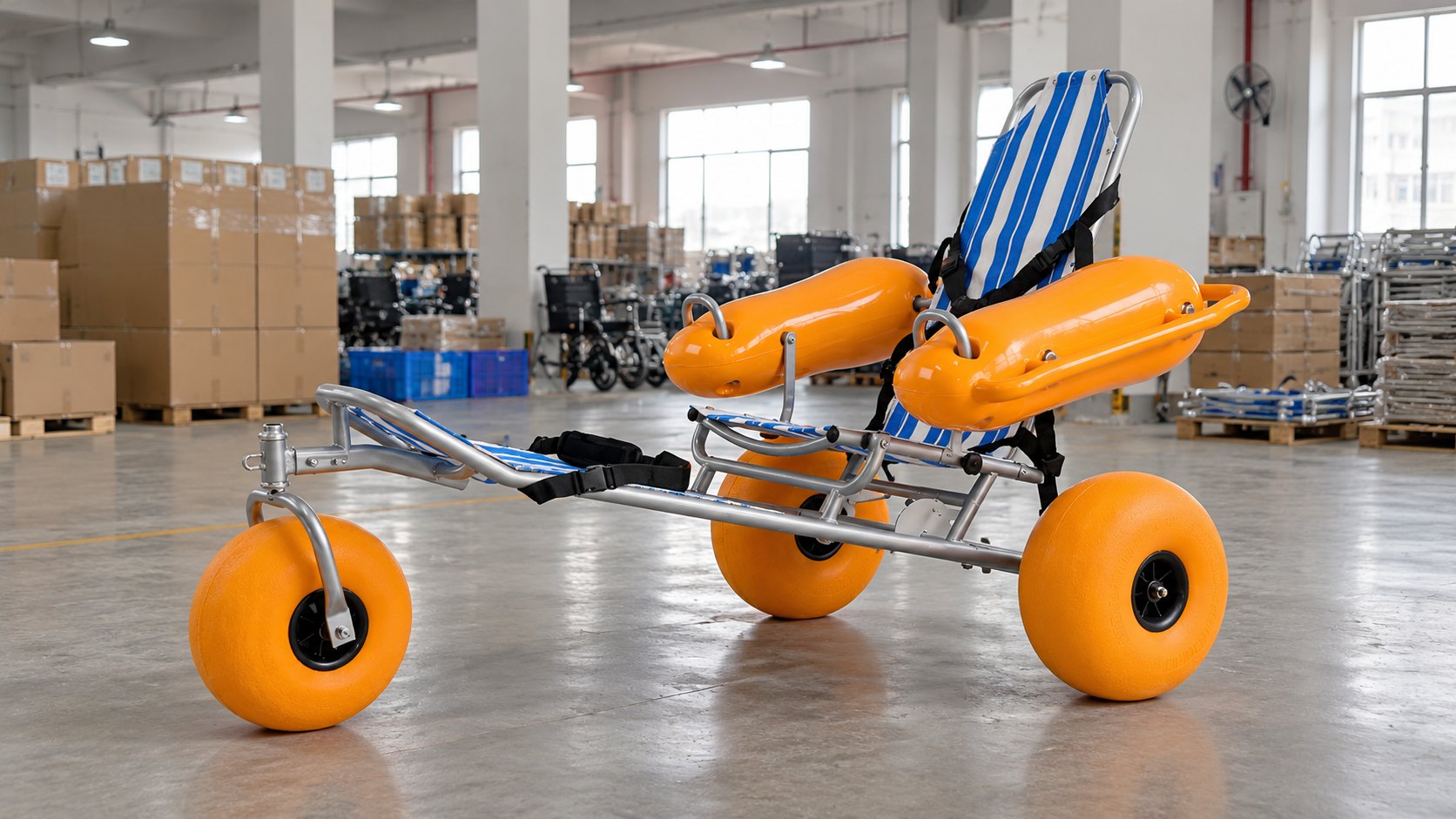
It identifies a different product arrangement from the four-wheel land models. Review the supplied frame, front assembly and rear wheels together. A photograph showing three wheels can establish visible identity, but it cannot establish handling performance under every condition.
Ask whether this complete model addresses your stated product requirement. Avoid ranking wheel counts as inherently better or safer. Different layouts belong to different designs and need their own applicable instructions.
Compare complete models instead of counting wheels in isolation.
- Identify the actual supplied front and rear assemblies.
- Keep component references with the model record.
- Request clarification on unknown configuration differences.
The beach balloon wheel resource can support component inquiries. It does not authorize replacing an AY-ST-V1.0 wheel with an unspecified part. A matched diameter or similar color does not establish correct attachment, material or applicability.
Use wheel information properly
| Observation | What it establishes | What remains separate |
|---|---|---|
| Three wheels visible | Product-layout identification | Handling and operating limits |
| Different front/rear assemblies | Need for exact references | Replacement compatibility |
| Complete model photograph | Configuration context | Verified technical specifications |
4. What should buyers understand about the fabric seating?
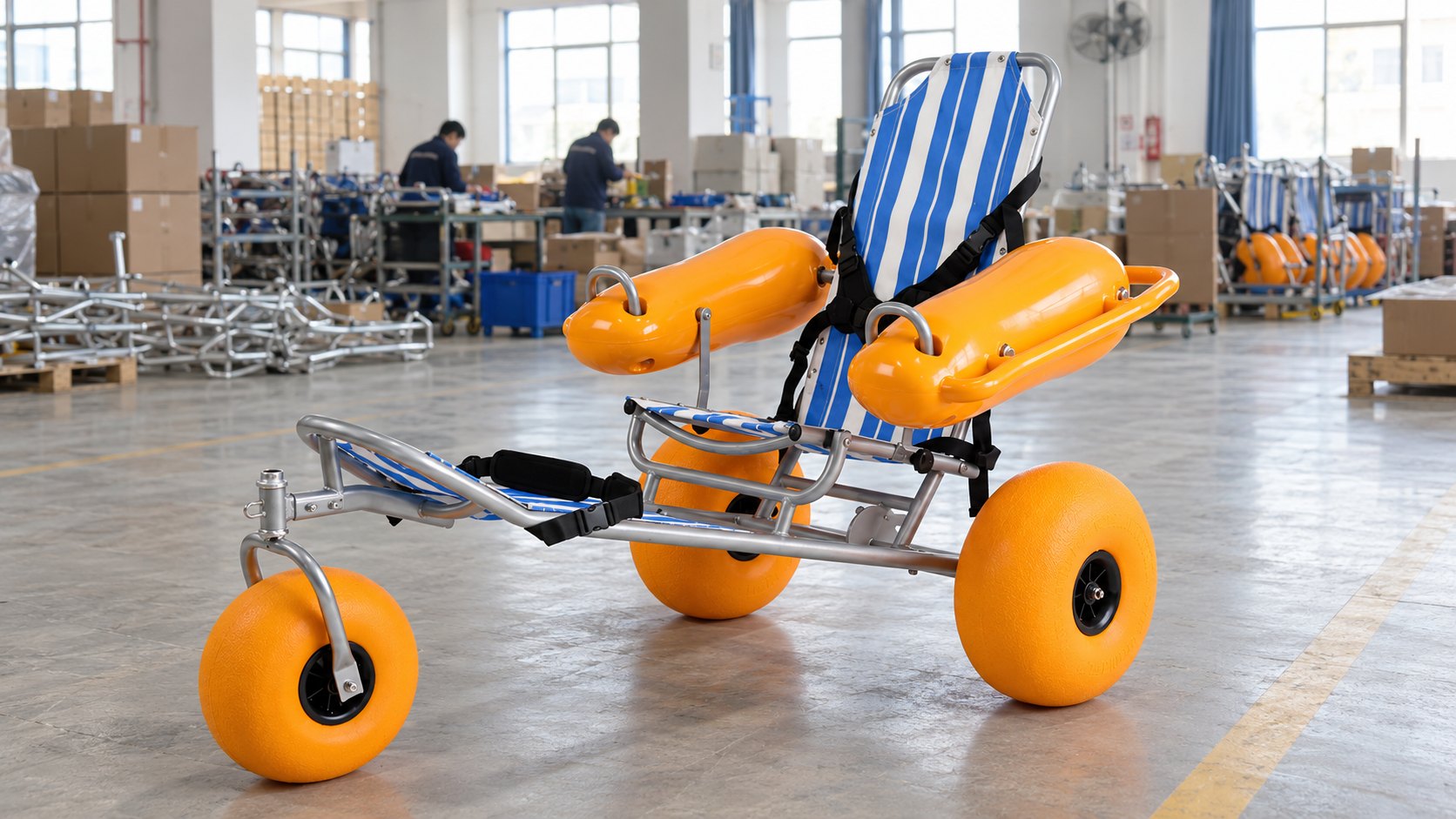
The supplied model uses a fabric seat-and-back arrangement within its frame. Current photographs should show the complete seating layout, its relationship with side components and its actual support structure. Avoid cropping the product so tightly that its configuration becomes difficult to understand.
For a resort or tour operator, a clear view supports a more useful discussion with prospective users. It lets people ask specific questions about the proposed equipment without being told that a floating category automatically meets their requirements.
Describe the seating configuration without prescribing suitability.
- Provide current complete-product photographs.
- Request confirmed relevant seating specifications.
- Refer individual positioning questions appropriately.
The tour-program model comparison can help separate product choices. It does not replace a qualified assessment where one is needed. Do not infer therapeutic benefits, comfort for prolonged use or permitted transfer methods from a fabric-seat description.
Keep seating information factual
| Material | Useful purpose | Limit |
|---|---|---|
| Complete product image | Explain visible arrangement | No measured fit inferred |
| Current specification | Provide confirmed product facts | Not an individual assessment |
| Applicable instructions | Identify permitted product use | No improvised personal assistance |
5. How should the adjustable backrest be described?
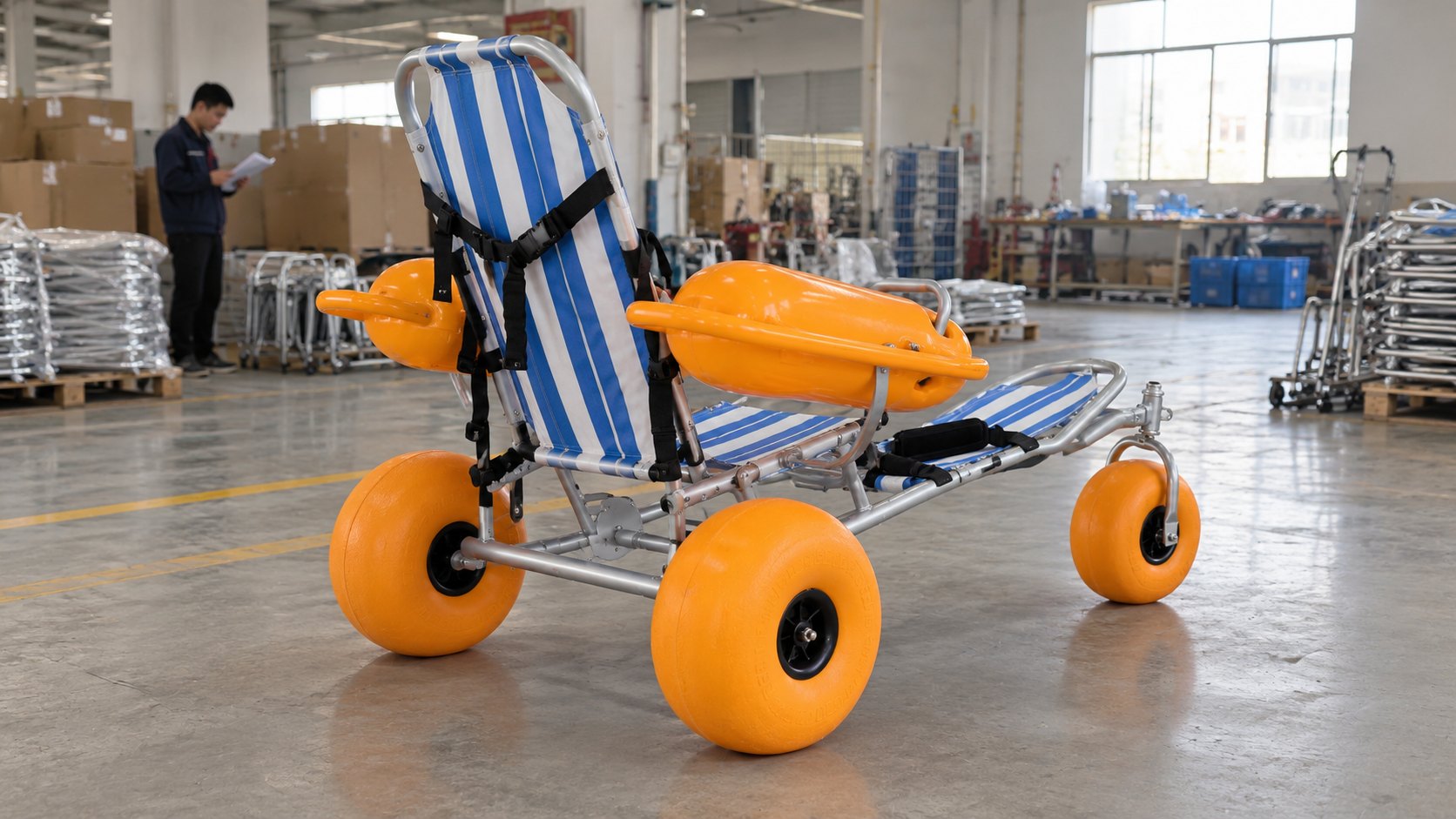
The supplied AY-ST-V1.0 documentation shows an adjustable backrest. Buyers should request permitted settings and operating instructions for the current version. This article does not reproduce an adjustment procedure or prescribe a position for a user.
This feature gives purchasers a specific configuration question to evaluate. It should not become a claim that any setting is appropriate in every environment. Keep product adjustment, individual needs and operating conditions in the same review without confusing them.
Request the current adjustment information for this model.
- Identify the applicable supplied version.
- Ask which settings and restrictions are documented.
- Keep personal positioning decisions separate from sales descriptions.
Use the equipment manual resource to locate applicable information. A generic reclining-chair page cannot define the AY-ST-V1.0’s permitted operation. Where a document is unclear, request clarification instead of filling gaps with another model’s guidance.
Define the adjustment question
| Question | Evidence needed | Avoid |
|---|---|---|
| What can adjust? | Current model documentation | Assuming identical mechanisms |
| Which settings are permitted? | Applicable instructions | Choosing from appearance |
| Is an arrangement suitable? | Appropriate individual and operating review | Universal comfort or safety claims |
6. What value can a floating model add to a tourism product range?
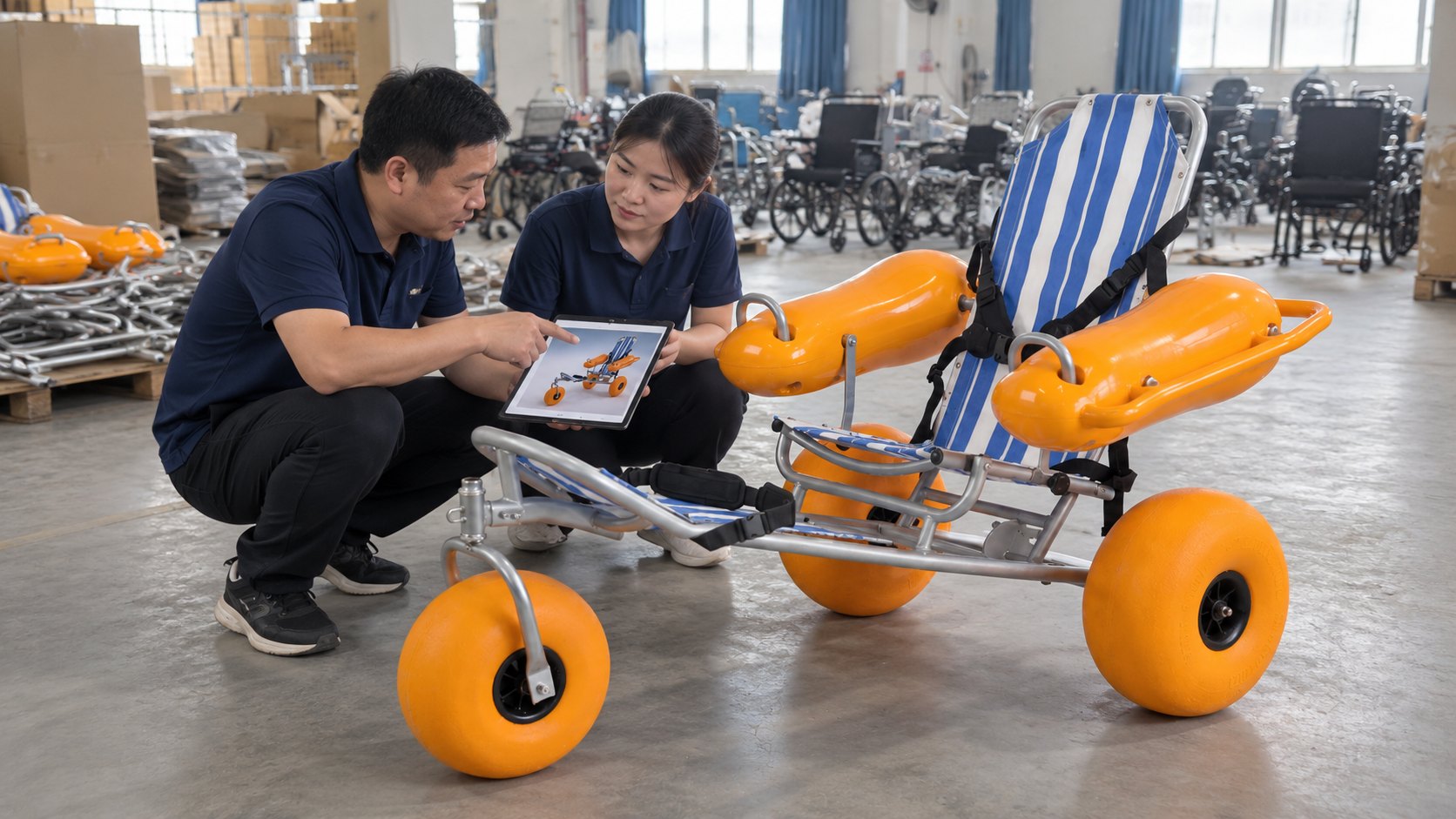
It gives a buyer a dedicated product category to evaluate for a separately reviewed water-access offer. A land-based chair and a floating chair answer different equipment questions. Keeping both categories clear helps a tourism company describe its range without implying interchangeable use.
The commercial benefit is a more specific product proposal. It is not a guaranteed increase in bookings or proof that a water activity can be delivered. Staffing, individual suitability, local permission and current operating guidance remain separate requirements.
Define your product offer before promising the service.
- Clarify whether the inquiry concerns sand or water access.
- Identify which model is actually proposed.
- Confirm the service arrangements through responsible personnel.
A product-range overview can help buyers distinguish those equipment roles. Explain the role of each selected product rather than describing one as a universal solution to every coastal-access requirement.
Separate product value from service promises
| Product contribution | Potential business use | Does not establish |
|---|---|---|
| Dedicated floating category | A more specific equipment offer | An approved water activity |
| Clear model identity | Accurate purchasing and communication | Universal user suitability |
| Distinct product roles | Better-defined range | Guaranteed commercial returns |
7. Where do access mats and land chairs remain relevant?
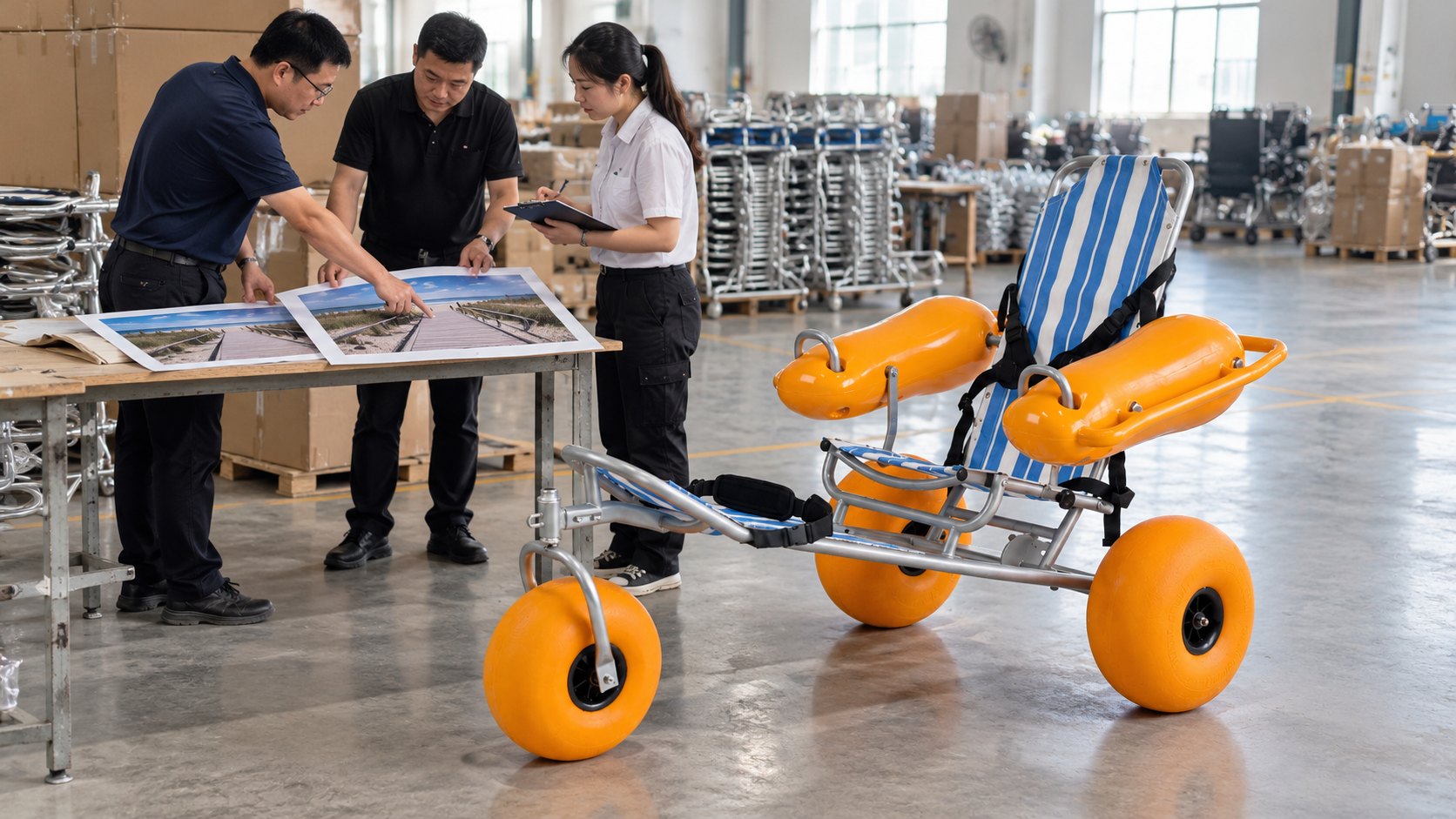
A floating chair does not replace the route surface or every land-based mobility option. A resort may need an approach route, an appropriate land-chair choice and a separately reviewed floating-product proposal. Each item should address a defined requirement.
Some guests may want to remain on land or use their own equipment where reviewed arrangements permit. Buying a floating model should not turn water participation or a chair change into an expectation for every visitor.
Keep the route, land mobility and floating product distinct.
- Identify which connection an access mat would serve.
- Review land-chair options against their actual role.
- Preserve individual choices within confirmed arrangements.
Request accessible beach mat information when the approach surface needs a separate product review. An existing lightweight folding chair may remain relevant for another equipment task. Neither item becomes redundant merely because a floating model joins the range.
Define complementary product roles
| Product | Requirement it may address | Separate confirmation |
|---|---|---|
| Access mat | Proposed route surface | Local installation and condition |
| Land chair | Reviewed beach-mobility task | Current configuration and suitability |
| Floating chair | Dedicated floating-product requirement | Applicable operating arrangements |
8. What should buyers confirm about transport and storage?
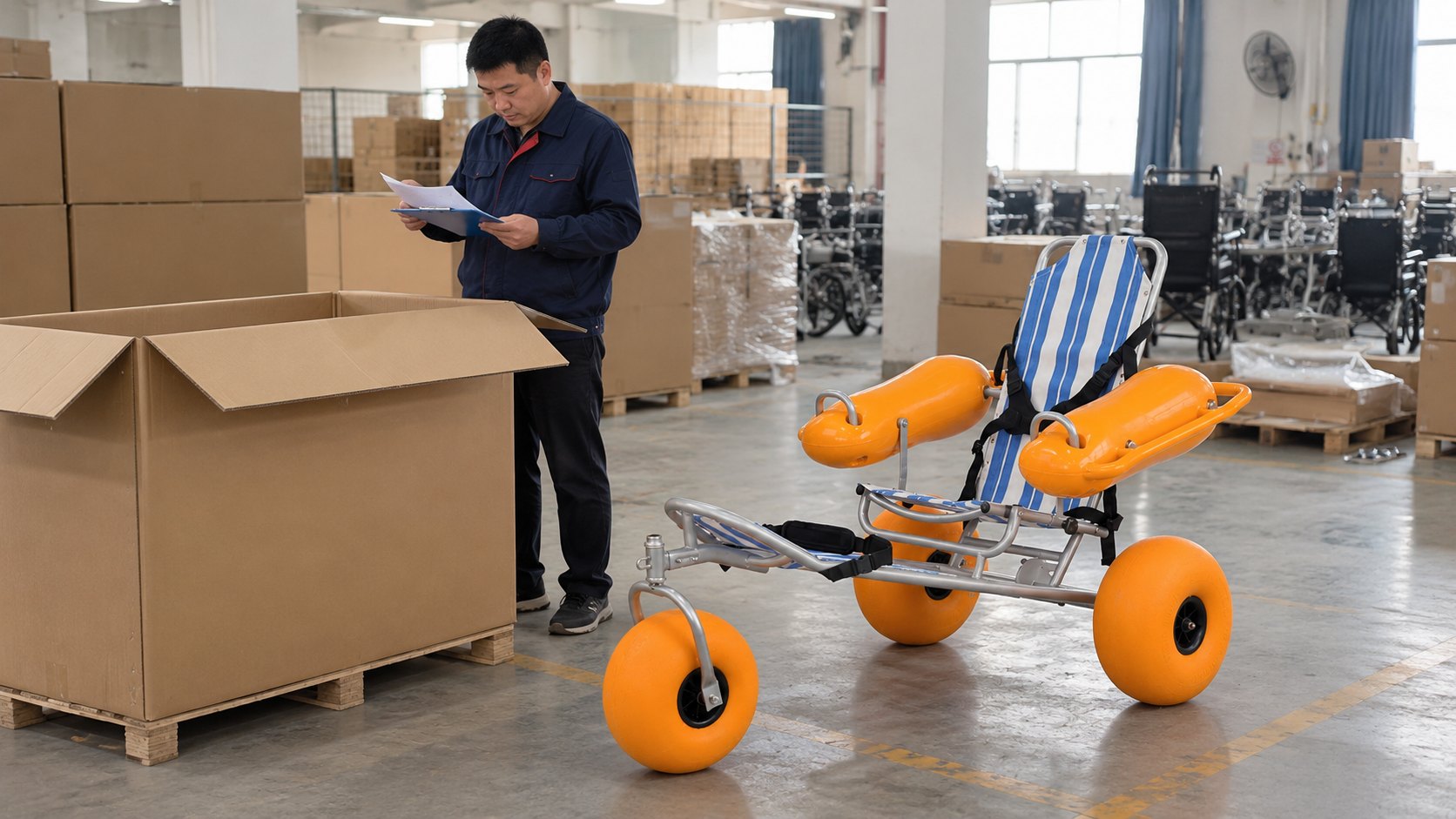
Request current dimensions and configuration details for the complete supplied chair, including its permitted transport state. The prominent side components and three-wheel layout make it inappropriate to borrow packing assumptions from a compact folding land chair.
Ask what may be prepared or separated under current instructions, and what information accompanies the shipment. This is a purchasing question, not a direction to dismantle equipment. Keep unidentified components or unconfirmed methods outside the handling plan.
Plan around the actual floating-chair package.
- Obtain current assembled and packed information.
- Identify the components included in each stated configuration.
- Review local handling and storage requirements competently.
Use the equipment delivery planning resource to connect confirmed product facts with your intended destination. Do not claim that a chair fits a particular vehicle or storage position without checking the actual arrangement. Any freight proposal should identify its own scope and current terms.
Request comparable logistics facts
| Configuration | Information required | Buyer decision |
|---|---|---|
| Complete chair | Confirmed current dimensions | Local space review |
| Permitted transport state | Applicable guidance and included parts | Handling arrangement |
| Shipping package | Actual packed details | Freight and receiving scope |
9. What documentation belongs with a floating-chair quotation?
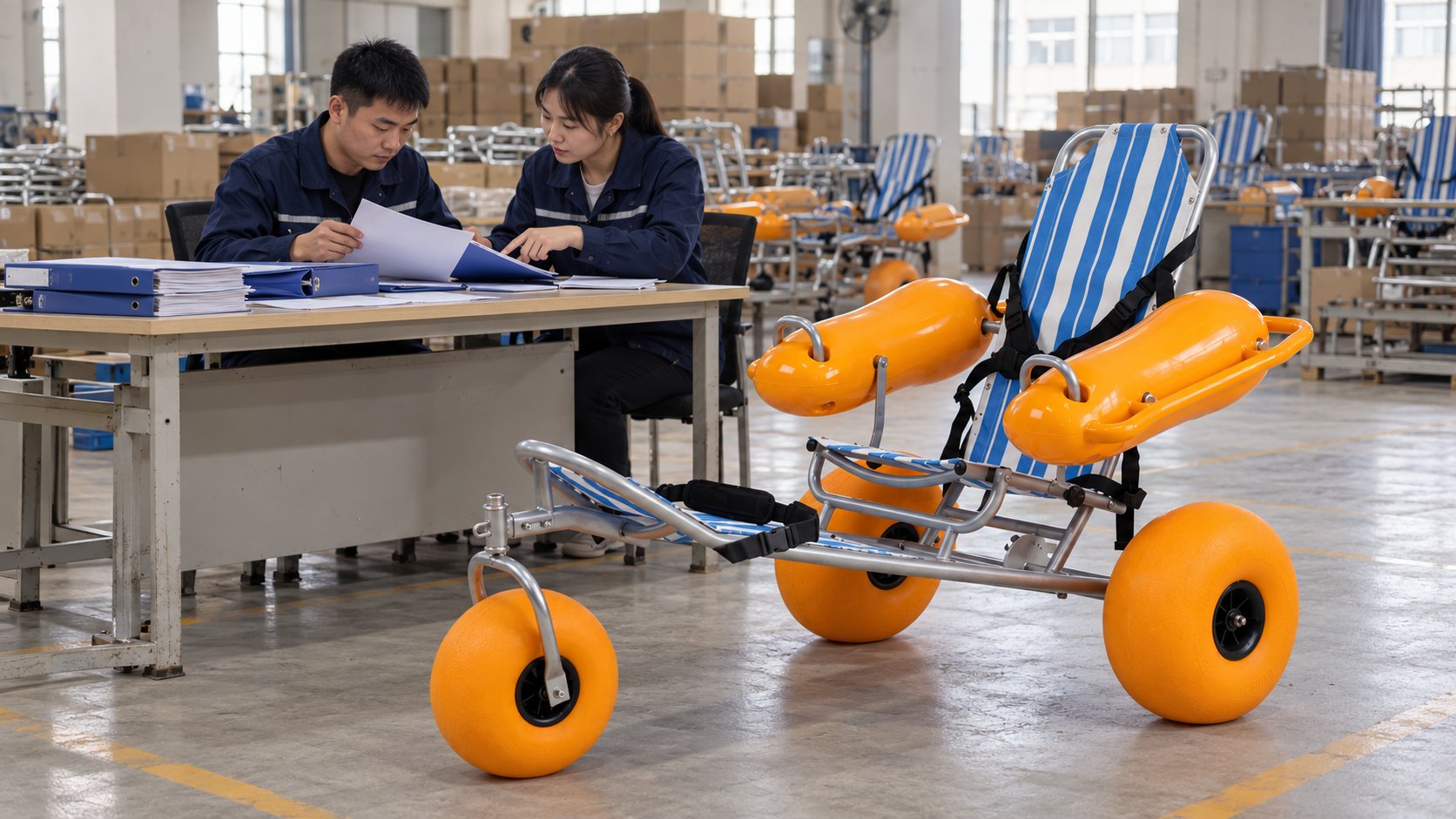
Ask for one current information set naming AY-ST-V1.0 and the supplied version. It should identify the complete configuration, included components, applicable instructions and confirmed specifications. Keep optional items and commercial terms distinguishable from the core product.
Request appropriate evidence for consequential claims. A logo on a brochure does not establish that a particular certificate applies to the offered configuration or destination. Likewise, a promotional water photograph cannot prove performance, operating limits or individual suitability.
Require a model-specific answer to a model-specific question.
- Confirm the exact proposed version.
- Ask for applicable documents and current specifications.
- Resolve disagreements before relying on a value.
The tourism equipment buying checklist can organize your inquiry. Do not combine a capacity figure from one document with dimensions from another version. This article intentionally leaves unconfirmed numerical specifications out of the buying discussion.
Make the information set coherent
| Document or claim | Required check | Avoid |
|---|---|---|
| Specification | Same current supplied version | Mixed-model figures |
| Operating instructions | Exact applicability | Generic water-use guidance |
| Certification or test claim | Relevant supporting evidence | Logos treated as proof |
10. When should a buyer shortlist the AY-ST-V1.0?
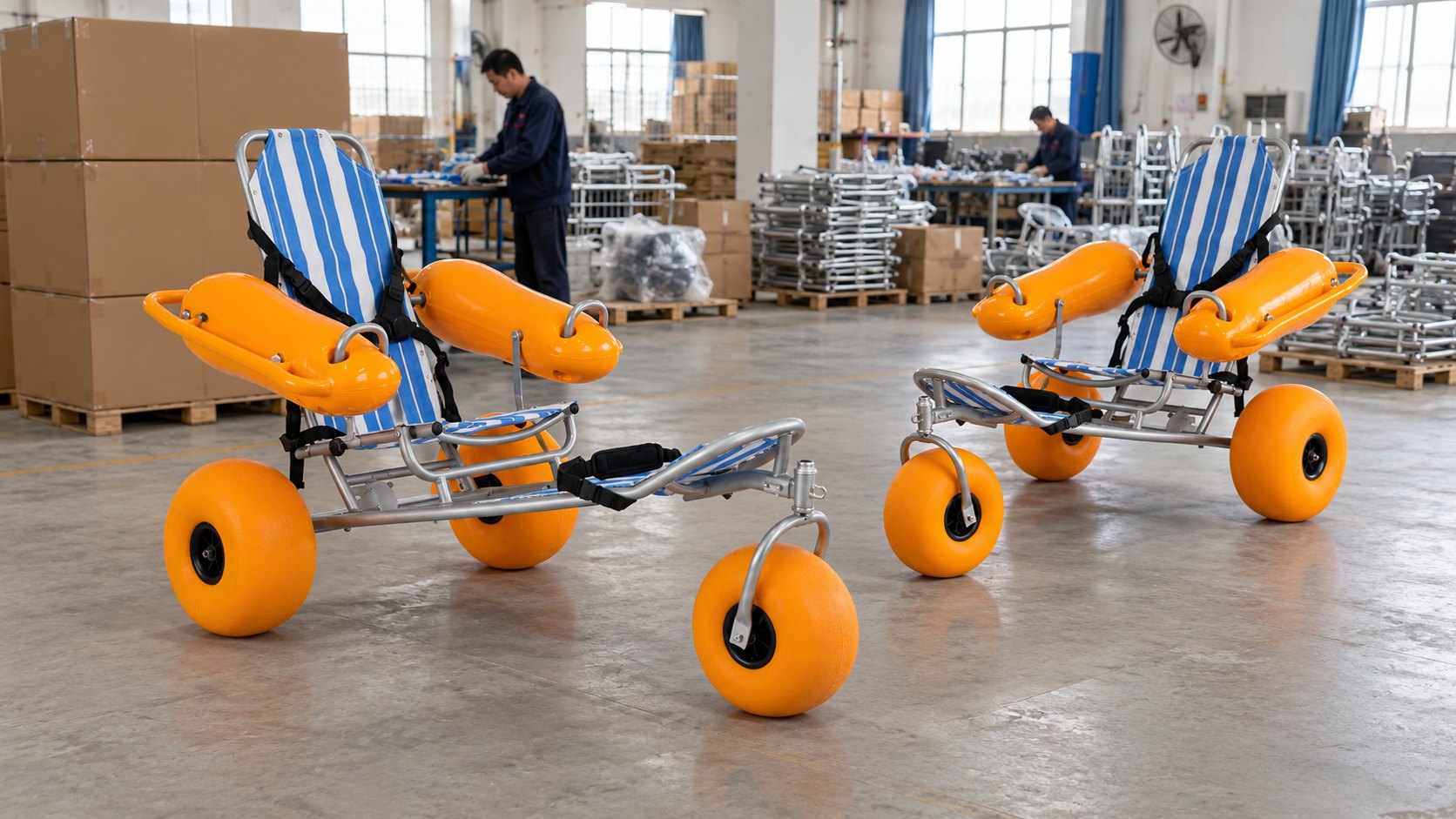
Shortlist this configuration when a dedicated floating product is part of a defined beach-access requirement. Review its complete assembly, current documentation and any separate arrangements needed for the proposed service. Do not select it merely because it appears more versatile than a land chair.
The useful next step is a focused supplier discussion. Identify which information remains missing and who will review it. Keep water-use, individual suitability and operational decisions with the appropriate responsible people rather than expecting a product description to settle them.
Evaluate the complete product before approving its intended role.
- Confirm model identity and supplied components.
- Obtain current applicable documents.
- Keep land and floating use categories distinct.
- Agree the purchasing scope after unresolved facts are clarified.
Contact Ary Beach with AY-ST-V1.0 and your product requirements. Ask for current photographs, confirmed specifications and an itemized quotation. Use that response as the basis for a product decision, without turning it into an unsupported service guarantee.
Q1: Is a floating beach wheelchair the same as a land-based chair?
No. The supplied floating model has a distinct assembly and product role. Confirm applicable guidance for each category separately.
Q2: Do side flotation components prove suitability for every user?
Water-access planning checks
No. Product identity, performance evidence, individual suitability and operating arrangements require separate consideration.
Q3: Can components be borrowed from another floating model?
Do not assume compatibility. Obtain exact component and model applicability before considering any replacement through the authorized process.
Q4: Does buying this chair establish a water-access service?
No. Equipment supply and service readiness are different decisions. Appropriate people must review the relevant local and individual arrangements.
Q5: What should the quotation identify?
The current AY-ST-V1.0 version, complete supplied configuration, confirmed specifications, applicable documents and clearly stated commercial scope.