
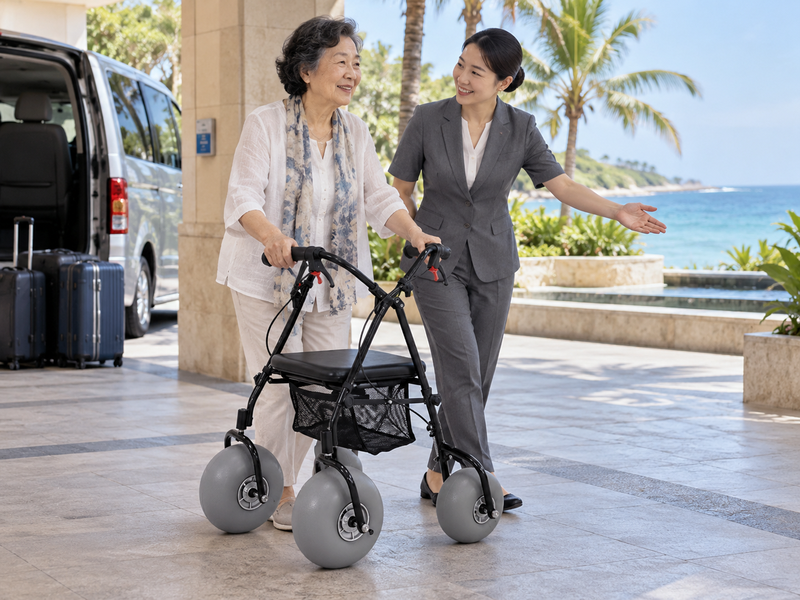
The right beach wheelchair for US buyers is a sand-ready chair matched to your coast, your users and the people who’ll push and clean it every day. Picture a county beach in July: a family arrives with a standard wheelchair, the pavement ends at the dunes, and the narrow front casters dig in after three feet. Staff borrow a hand truck, the grandmother waits in the sun, and the family leaves before lunch. That’s the gap a well-chosen beach wheelchair USA fleet closes, and this guide walks you through types, wheels, frames, costs and suppliers so you can buy once and buy right.
For procurement context, use public beach wheelchair program together with beach wheelchair USA shipping.
For broader destination-level context, consult the UN Tourism accessibility publications and guidelines. Apply local requirements and current product documents to the specific project.
We build these chairs in our own factory and ship them to beach operators in the United States, Australia, Europe and South America. So the advice below comes from the production floor and from the questions buyers actually send us, not from a catalog.
What Is a Beach Wheelchair USA Buyers Actually Need?
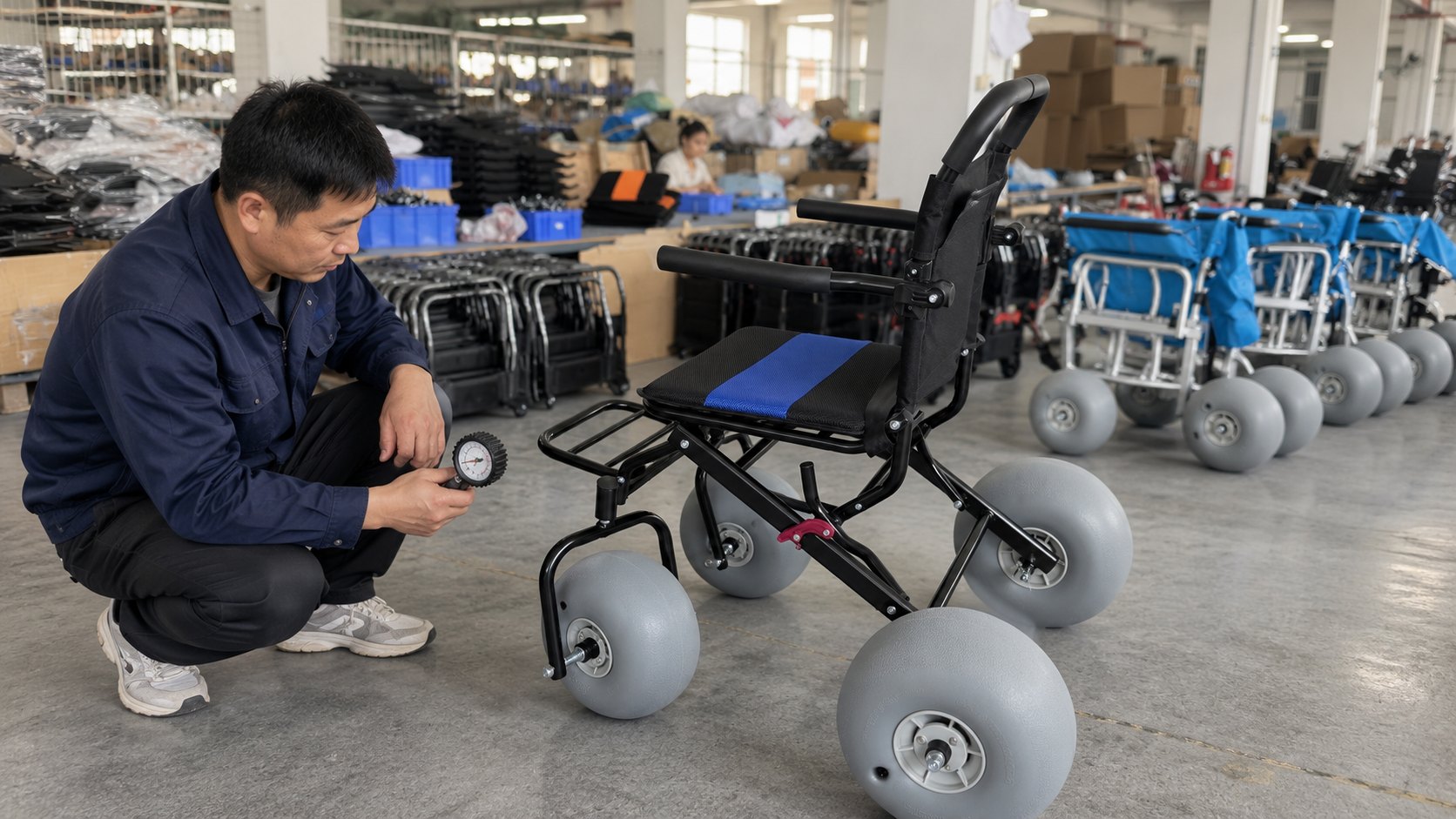
A beach wheelchair USA buyers can rely on is a manual chair with wide, low-pressure wheels that roll over soft sand instead of sinking into it. It usually needs an attendant to push, and it’s built to shrug off salt, sun and grit. That’s very different from an everyday hospital chair with thin tires.
Why does a standard wheelchair fail on sand?
Narrow tires concentrate weight on a tiny contact patch, so they cut straight into loose sand. Here’s the deal: the problem isn’t effort, it’s physics.
- Thin front casters dig in and stop the chair
- Bearings and axles pick up grit fast
- Steel parts start to rust after a few salty weeks
What makes a chair truly beach-ready?
Large balloon wheels spread the load across a wide footprint. Corrosion-resistant frames, quick-dry fabric and simple controls do the rest. You’ll want a chair your seasonal staff can figure out in minutes.
| Feature | Standard wheelchair | Beach wheelchair |
|---|---|---|
| Wheels | Narrow, high pressure | Wide balloon, low pressure |
| Soft sand | Sinks quickly | Rolls with an attendant |
| Salt exposure | Rusts and seizes | Built for rinse-and-dry care |
| Typical user | Daily indoor use | Beach visits and programs |
The table shows why buying a converted indoor chair rarely saves money for long.
Key Takeaway: If your users need sand access, start with a purpose-built chair rather than adapting a standard one.
Which Beach Wheelchair USA Types Fit Different Coasts?
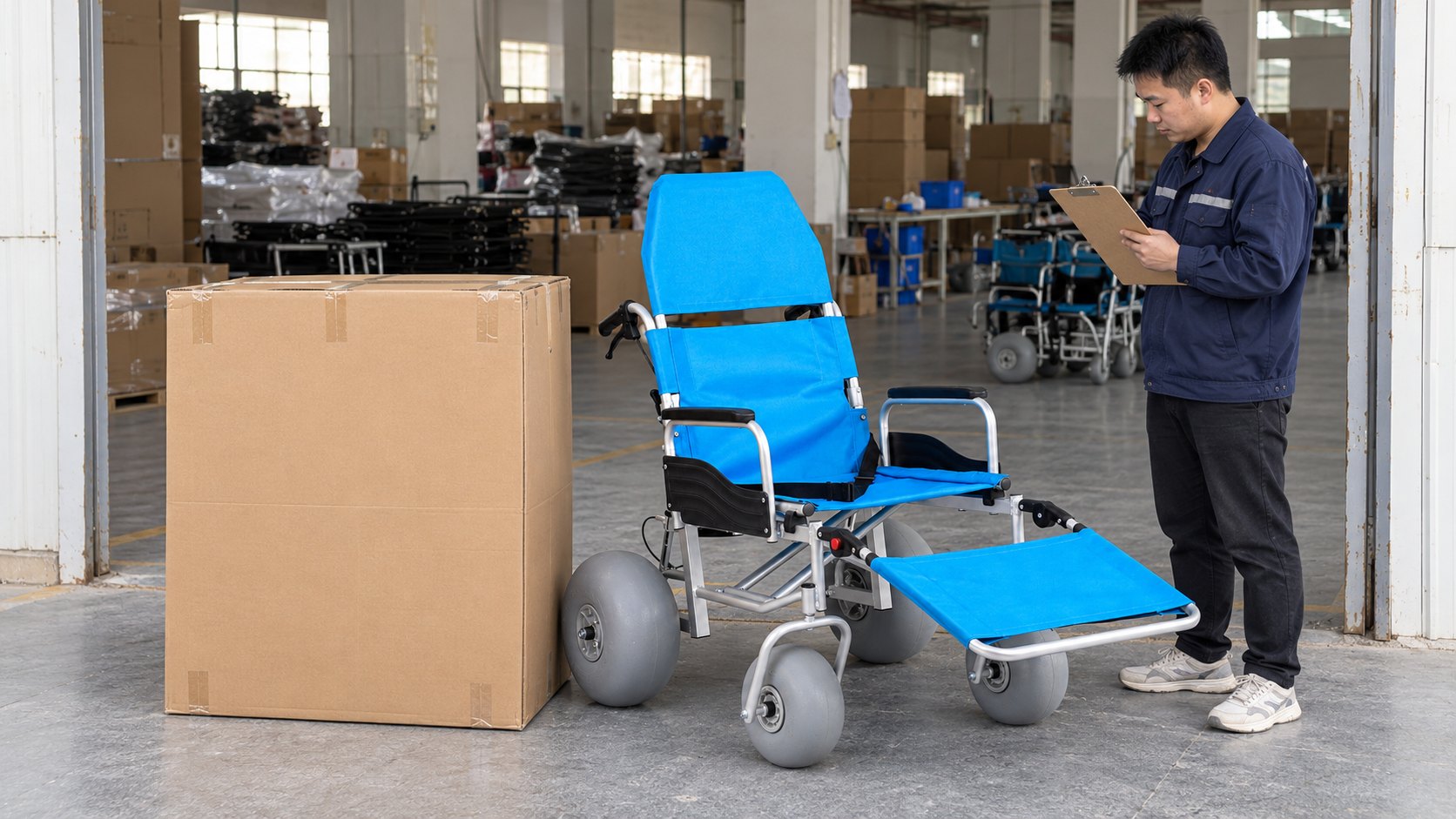
Most beach wheelchair USA orders fall into three types: all-terrain land chairs, lightweight folding chairs and floating chairs that can enter shallow water. Each one solves a different problem. Picking the wrong type is the most common mistake we see on new orders.
Which type works for a busy public beach?
All-terrain chairs with four balloon wheels are the workhorses of loan programs. Our high-back model, for instance, has an adjustable backrest and leg support for longer beach stays. Think about it: a sturdy chair that sits comfortably for two hours gets borrowed again.
When does a folding chair make more sense?
Folding chairs suit rental companies, hotels and families who move chairs by car. Our black-and-blue folding model has a flip-up foot support and collapses for transport.
- Fits in a car trunk or storage closet
- Faster to deliver to rental addresses
- Lighter to lift into a van
Who needs a floating beach chair?
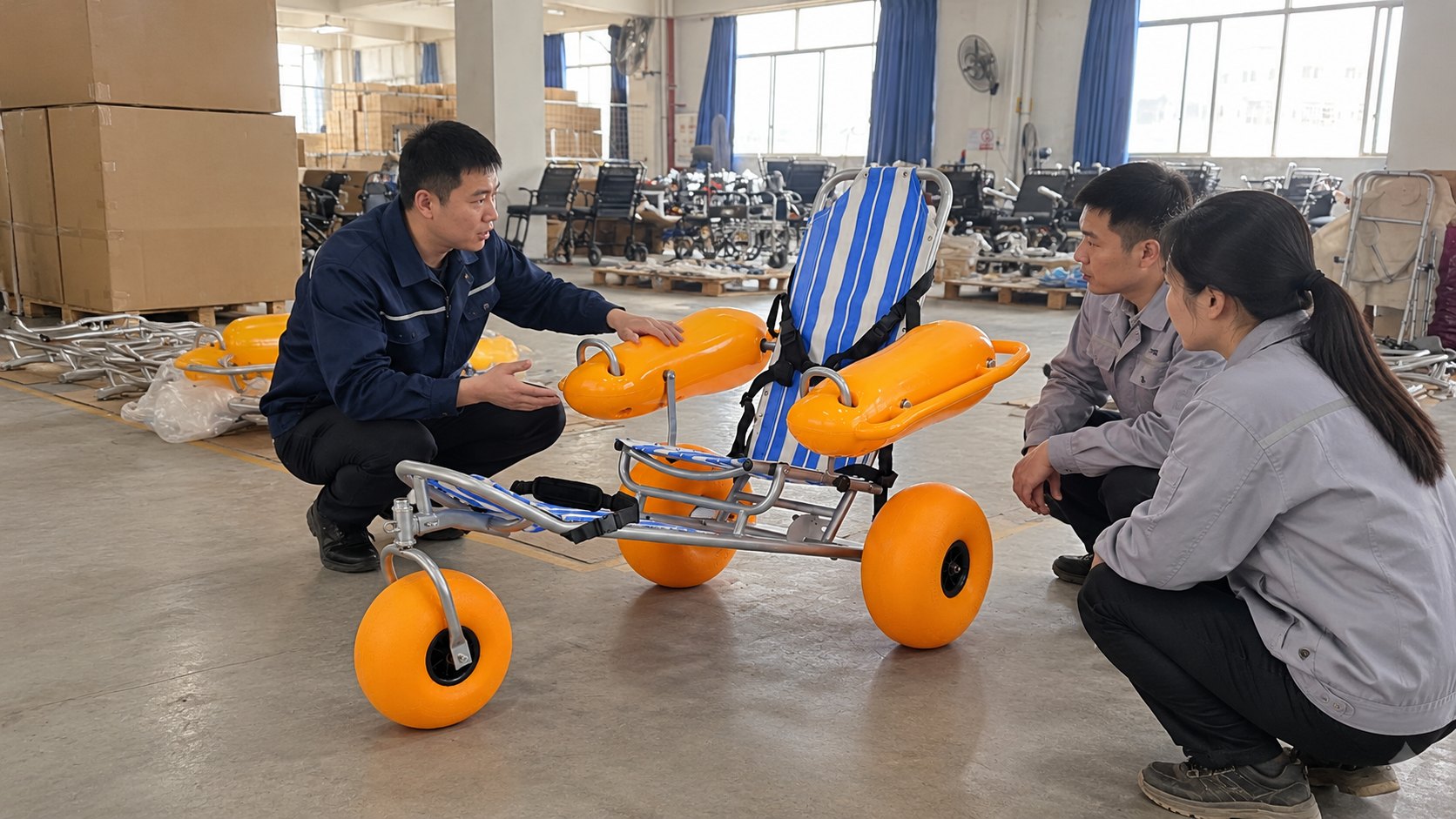
Floating chairs carry side flotation armrests so a supervised user can enter calm, shallow water. They suit programs with trained staff or lifeguards nearby.
| Type | Best use | Water entry | Transport |
|---|---|---|---|
| All-terrain | Public beach loans | No | Stays on site |
| Lightweight folding | Rentals and travel | No | Folds for vehicles |
| Floating | Supervised water fun | Calm shallow water | Bulkier |
Most US fleets end up mixing at least two of these types once demand grows.
Key Takeaway: Match the chair type to where your users want to go, sand only or sand and water.
Who Are Typical Beach Wheelchair USA Buyers?
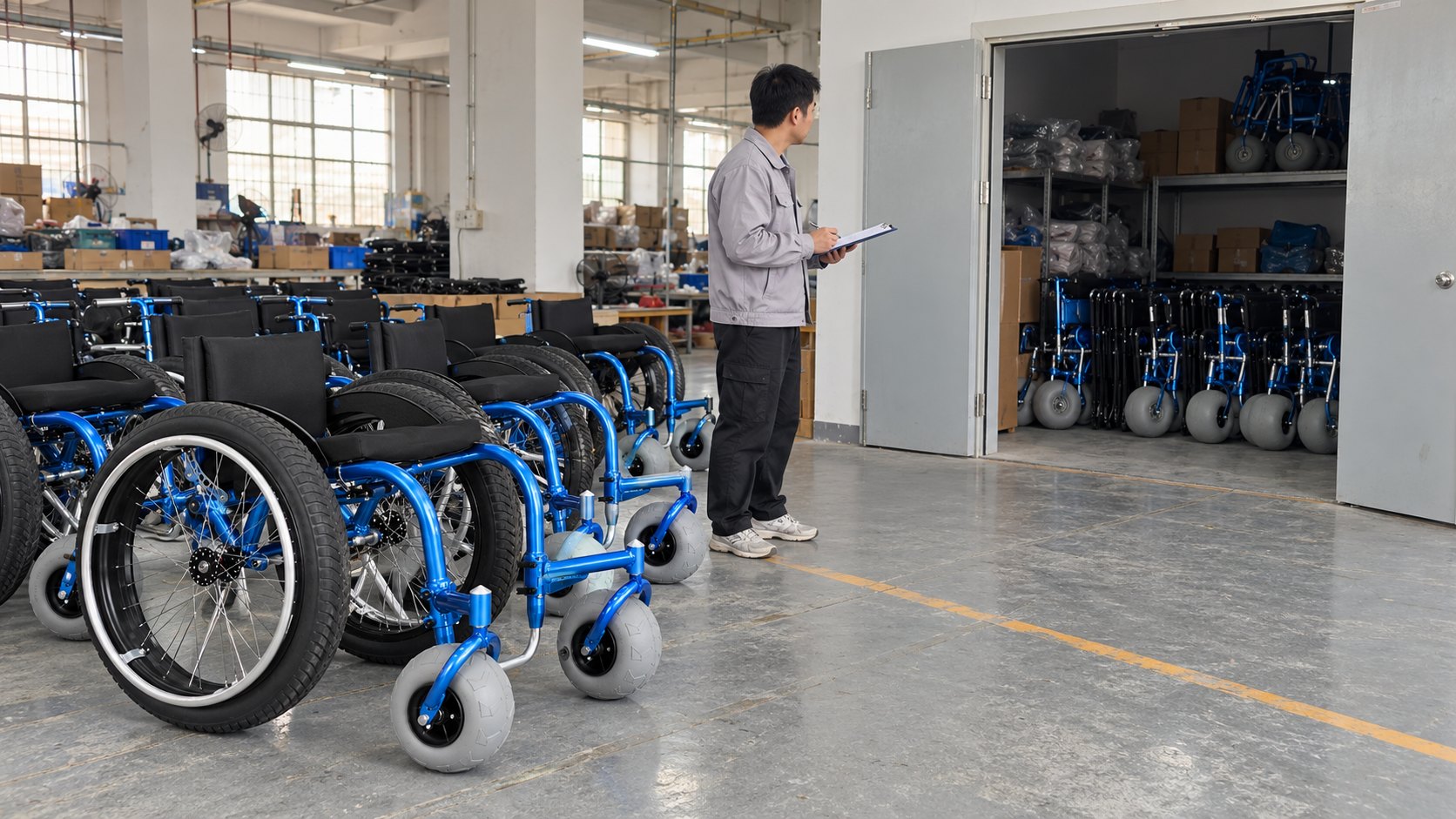
Typical beach wheelchair USA buyers include city and county beach departments, state parks, resorts, rental companies, nonprofits and dealers. Each group buys for a slightly different reason. Knowing your own reason keeps the spec sheet short and honest.
What do public agencies usually look for?
Parks and recreation teams care about durability, simple check-out and parts they can source years later. But here’s the kicker: they often have to justify every dollar to a council or board.
- Clear specs for purchase approval
- Replaceable wheels and fabric
- Easy cleaning between users
What do private operators care about?
Resorts and rental firms care about guest experience, turnaround time and how the chair looks in photos. They also need chairs that fold or stack when the season ends.
| Buyer group | Main goal | Top question |
|---|---|---|
| City or county | Public access | How long will it last? |
| Resort or hotel | Guest service | Will guests feel comfortable? |
| Rental company | Revenue per chair | How fast can I turn it around? |
| Nonprofit | Community events | Is it easy for volunteers? |
Your buyer group shapes the spec more than the beach itself does.
Key Takeaway: Write down who’ll push, borrow and clean the chair before you compare models.
What Frame and Fabric Should a Beach Wheelchair USA Order Specify?
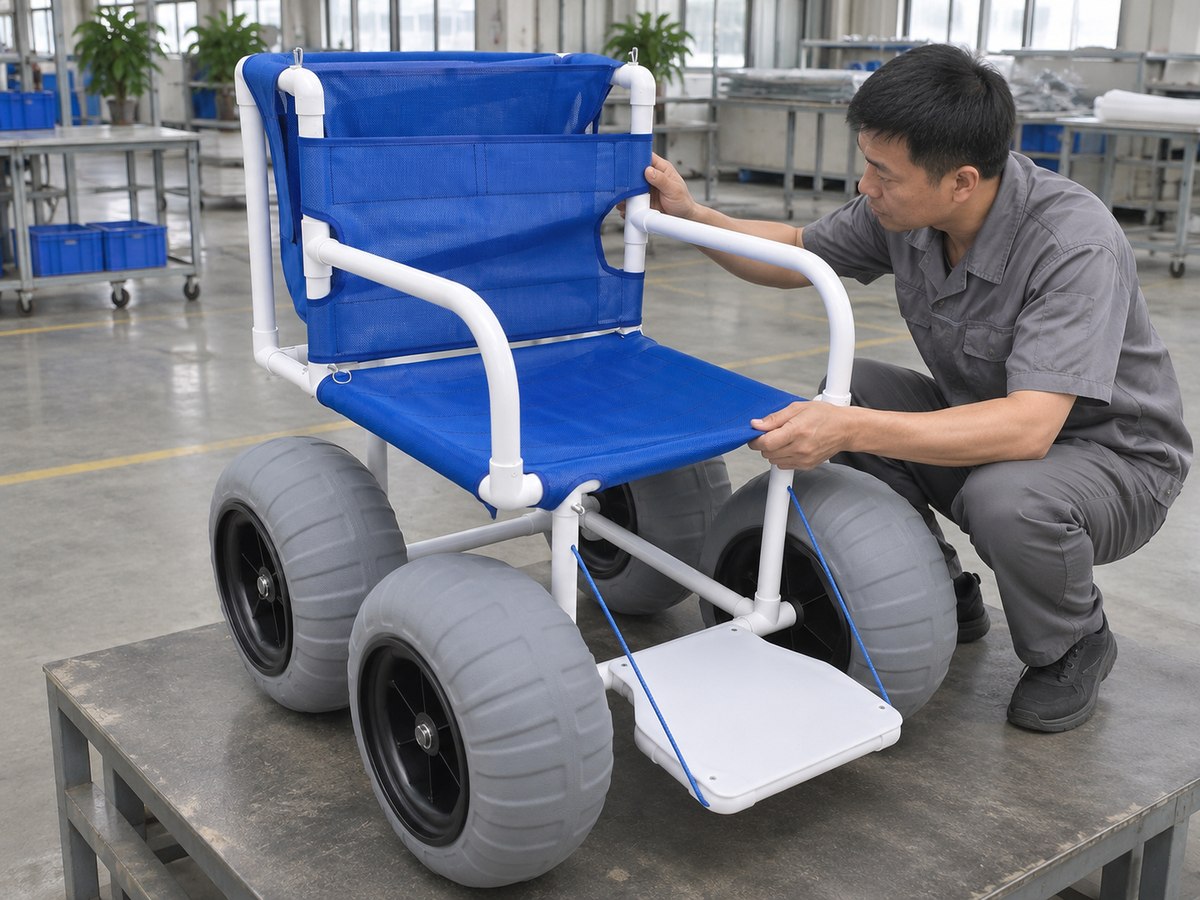
A smart beach wheelchair USA order specifies the frame material, the fabric and the wheel type in writing before anything ships. These three details decide how the chair handles salt, sun and daily cleaning. Vague quotes hide the differences.
Which frame materials hold up to salt?
Aluminum and coated steel both appear in beach chairs, and each behaves differently in salt air. Here’s why that matters: a frame material listed one way in a brochure and another way in a manual is a red flag. Ask for the exact material on the exact model you’re buying.
- Confirm frame material model by model
- Ask how joints and bolts resist corrosion
- Request photos of the actual production unit
What fabric details should you check?
Sling fabric should dry quickly and rinse clean without holding sand. Check seat width, backrest height and whether the fabric can be replaced on its own.
| Component | What to request | Why it matters |
|---|---|---|
| Frame | Exact material and finish | Corrosion life |
| Fabric | Quick-dry, replaceable | Hygiene and turnaround |
| Wheels | Size and spare availability | Sand performance |
| Fasteners | Material and replacement kit | Field repairs |
Every row in this table belongs in your purchase order, not just your email thread.
Key Takeaway: Put materials and spare parts in writing so the chair that arrives matches the chair you approved.
Should a Beach Wheelchair USA Fleet Include Floating Chairs?
A beach wheelchair USA fleet should include floating chairs only if you have calm water and trained people to supervise every water visit. Floating chairs open up a moment many users never expect, actually feeling the ocean. They also add responsibility.
What does a floating chair add for users?
Our floating model has three wheels, side flotation armrests and a fabric sling seat. Sounds simple, right? It is on the sand, but water use always needs supervision.
What should you plan before offering water use?
Talk to your lifeguards, insurer and local authorities before launch. Decide when the chair stays on dry sand.
- Staff trained by your water-safety lead
- Clear limits on surf, wind and currents
- A rinse station near the exit point
| Question | Land-only fleet | Fleet with floating chairs |
|---|---|---|
| Staffing | Basic check-out | Trained water supervisors |
| Locations | Any sandy beach | Calm, managed water |
| Cleaning | Rinse and dry | Rinse, dry, inspect floats |
| User experience | Reach the shoreline | Enter shallow water |
Floating chairs raise both the reward and the workload for your team.
Key Takeaway: Add floating chairs when your water-safety plan is ready, not before.
How Do Beach Mats Work With a Beach Wheelchair USA Plan?
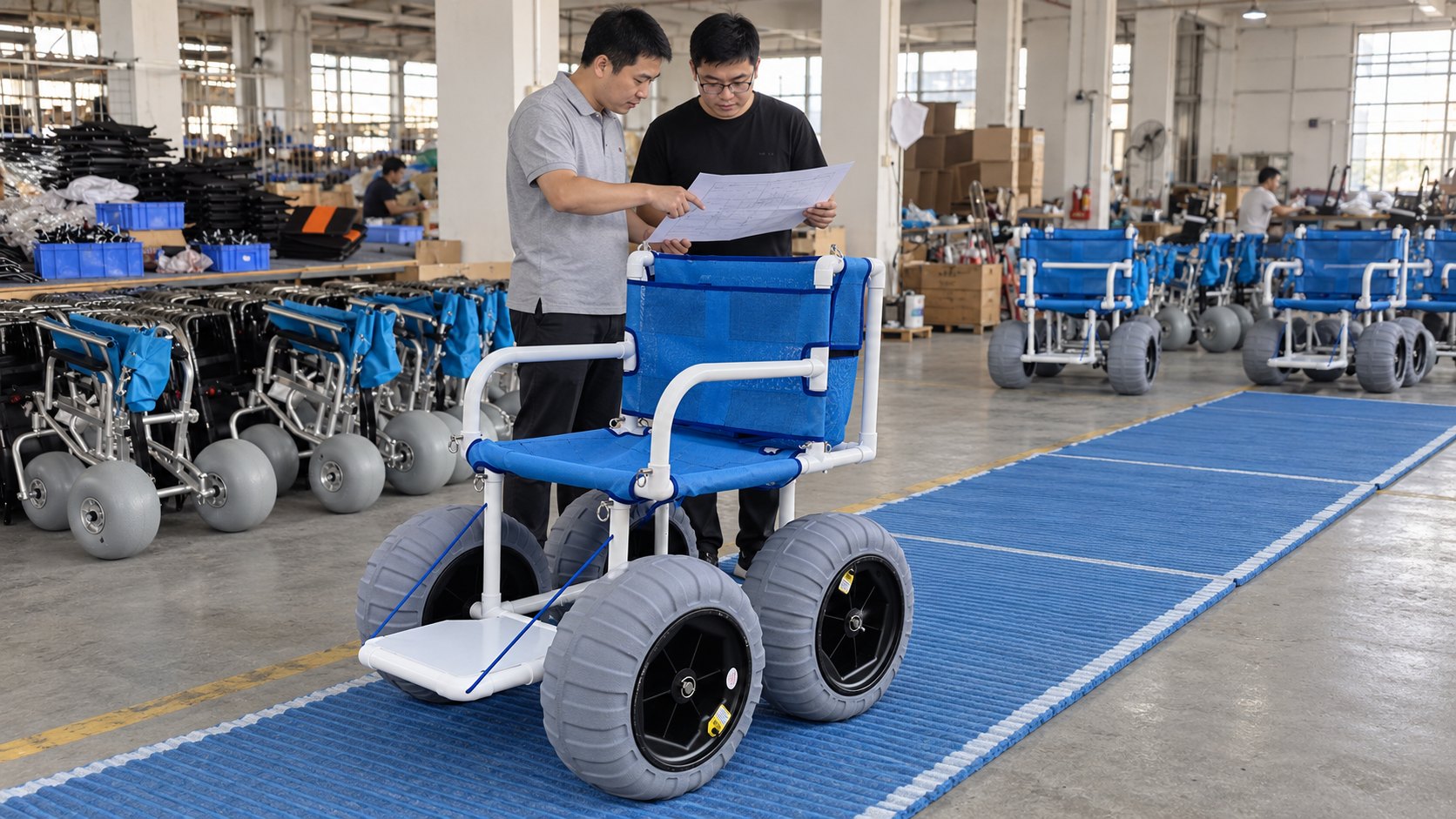
Beach mats help a beach wheelchair USA plan by giving users a firm path from the parking lot to the chair pickup point. Without that path, even the best chair starts its day stuck at the dune line. The mat and the chair work as one route.
Where should the mat end?
Ideally, the mat ends where the beach chair takes over, close to firm sand or the loan station. Now here’s the twist: a mat that stops too early just moves the problem.
How do you plan the full route?
Walk the route with someone who uses a wheelchair. Note slopes, gaps and turning space at each end.
- Parking and drop-off area
- Mat path through the dunes
- Chair transfer spot with shade
| Route stage | Equipment | Check |
|---|---|---|
| Parking to dune | Ramp or path | Slope and width |
| Dune to sand | Access mat | Anchoring and gaps |
| Sand to shoreline | Beach chair | Wheel size and staff |
Thinking in route stages stops you from buying chairs for a path nobody can reach.
Key Takeaway: Plan the mat and the chair together so users move from car to shoreline without a dead end.
What Does a Beach Wheelchair USA Purchase Really Cost Over Time?
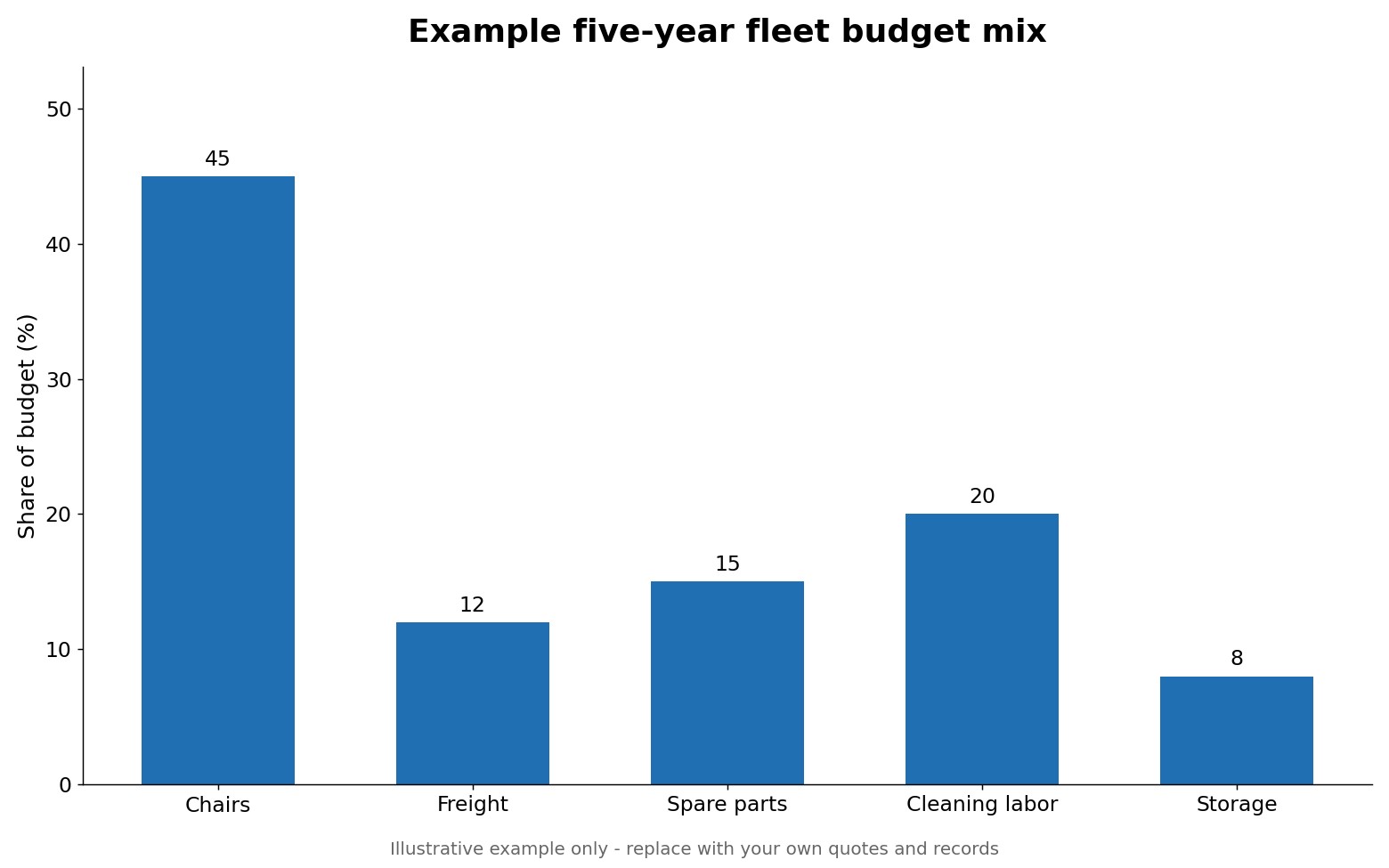
The real cost of a beach wheelchair USA purchase is the chair price plus freight, spare parts, cleaning time and storage over several seasons. The sticker price is just the opening number. Budgets that ignore the rest run into trouble by year two.
What costs do new buyers often miss?
Freight, import fees and replacement wheels often surprise new buyers. Want to know the best part? Most of these costs are predictable once you ask for them up front.
- Ocean or air freight and delivery
- Spare wheels, fabric and fastener kits
- Staff time for cleaning and inspection
How do you build a simple multi-year budget?
List each cost line by year and compare suppliers on the total, not the unit price. A slightly pricier chair with cheap, available spares can win easily.
| Cost line | Year one | Later years |
|---|---|---|
| Chairs | Main purchase | Replacements as needed |
| Freight | Main shipment | Small parts orders |
| Spares | Starter kit | Wheels and fabric |
| Labor | Training and setup | Daily cleaning |
Comparing totals usually changes which quote looks cheapest.
Key Takeaway: Ask every supplier for a full cost picture, including spares and freight, before you decide.
How Should You Store and Care for a Beach Wheelchair USA Fleet?
You should store a beach wheelchair USA fleet dry, shaded and rinsed with fresh water after every salty day. Daily care is cheap, and skipping it is expensive. Most early failures we hear about trace back to chairs put away wet and sandy.
What does a daily care routine look like?
Rinse, dry and look over each chair before it goes back into storage. Here’s the thing: a five-minute rinse beats a five-week repair wait.
- Rinse frame, wheels and fabric with fresh water
- Check wheel pressure and fasteners
- Tag any damaged chair out of service
How should you store chairs off-season?
Clean them thoroughly, dry the fabric and store them out of direct sun. Keep spare wheels and parts on the same shelf as the chairs they fit.
| Task | Frequency | Owner |
|---|---|---|
| Fresh-water rinse | After each use day | Beach staff |
| Wheel and bolt check | Weekly | Equipment lead |
| Deep clean | End of season | Maintenance team |
| Spare parts count | Before season | Program manager |
Clear owners for each task keep care from slipping in peak season.
Key Takeaway: A simple, owned care routine adds seasons to every chair you buy.
How Long Does a Beach Wheelchair USA Order Take to Arrive?
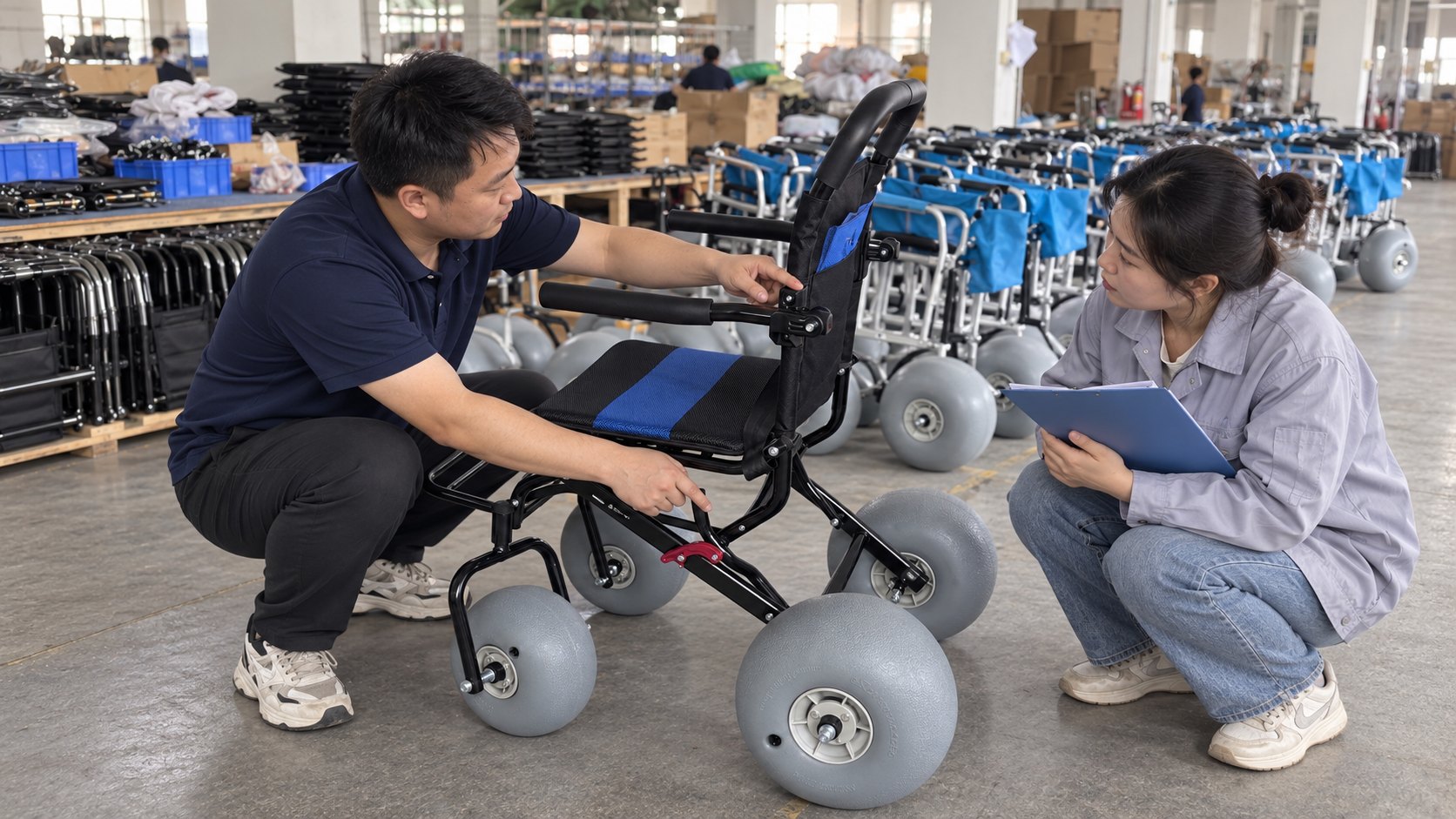
A beach wheelchair USA order usually takes production time plus several weeks of ocean freight, so plan months ahead of your season, not weeks. Air freight is faster but costs far more per chair. The calendar matters as much as the chair.
How should you time your order?
Work backward from your opening day. Here’s a simple rule: order before your off-season ends, not when warm weekends start.
- Confirm production time in writing
- Add ocean transit and customs clearance
- Leave a buffer for inland delivery and assembly
What paperwork should travel with the shipment?
Ask your supplier for a commercial invoice, packing list and product description that matches your purchase order. Your customs broker can then advise on classification and any duties.
| Stage | Who handles it | What to confirm |
|---|---|---|
| Production | Supplier | Start and finish dates |
| Ocean freight | Forwarder | Departure and arrival port |
| Customs | Your broker | Documents and fees |
| Final delivery | Carrier | Dock or liftgate access |
Each stage has a different owner, so one missed email can delay the whole chain.
Key Takeaway: Book your order early and assign every shipping stage to a named person.
How Do You Pick a Beach Wheelchair USA Supplier You Can Trust?
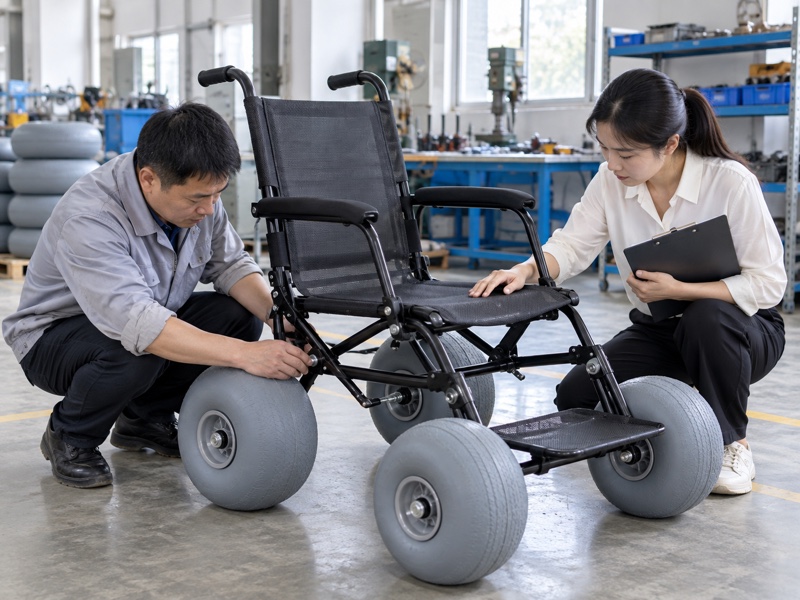
You pick a trustworthy beach wheelchair USA supplier by checking that they make the chairs, document the exact model and can ship spare parts for years. A good supplier answers specific questions clearly. A weak one answers with adjectives.
What proof should a supplier provide?
Ask for factory photos, model manuals and real production images of the unit you’re ordering. The short version? If the details keep changing, keep looking.
- Exact model number and current manual
- Clear frame material and wheel specs
- Spare parts list with lead times
How do you compare quotes fairly?
Put every quote into the same template with the same model details. Compare warranty terms, packaging and after-sales support side by side.
| Check | Strong answer | Weak answer |
|---|---|---|
| Who builds it? | Own factory, named models | Unclear sourcing |
| Specs | Model-specific and consistent | Vague or changing |
| Spares | Listed with lead times | “Contact us later” |
| Support | Named contact | Generic inbox |
A supplier who scores well on these four checks usually stays reliable after the sale.
Key Takeaway: Choose the supplier who documents everything, because that’s the one who’ll still help you in year three.
Final Thoughts
Buying beach chairs in the United States comes down to a few clear choices. You’ve seen how sand-ready wheels work, which chair types fit which users, what to write into your order, how mats complete the route, and how to judge real costs and real suppliers. Get those right and your chairs spend their days on the sand, not in the repair corner.
If you’re planning a new fleet or expanding an old one, we can help you match models, spares and shipping to your beach. Contact us today with your site details, and we’ll send model-specific options. We believe every coastline should welcome every visitor, and we build our chairs to make that a daily reality.
FAQ
Can I use a regular wheelchair on the beach?
Usually not. Narrow tires sink into soft sand, so you’ll need wide balloon wheels or a purpose-built beach chair.
What’s the best beach chair type for a public loan program?
An all-terrain chair is usually the best start. It’s sturdy, easy to clean and works for most visitors on dry sand.
How do I know if I need a floating chair?
You need one only if users want water entry and you have calm water plus trained supervisors. Otherwise, a land chair is the safer choice.
Can I order spare wheels and fabric separately?
Yes, you should. Ask your supplier for a spare parts list before ordering so repairs don’t stall your program.
How do I know if a supplier really makes the chairs?
Ask for factory photos, model manuals and production images. A real manufacturer can show the exact unit and explain its specs consistently.