
Buyers need an all-terrain beach wheelchair whose wheel layout, frame, attendant controls, care method, and supplier records match a documented coastal route. A product photo can show shape, yet it cannot answer how a chair will move from a store room through gates, ramps, boardwalk transitions, loose sand, wet sand, and the return station. That gap creates extra work for resorts, municipalities, rental teams, distributors, and recreation operators. A sound review starts with the route, turns each site condition into a product question, and records the evidence used for the buying choice. This guide explains how to compare an all-terrain beach wheelchair without inventing load figures, surface claims, or service outcomes.
Before finalizing this workflow, review beach wheelchair for sale alongside beach wheelchair rental.
For broader destination-level context, consult the UN Tourism accessibility publications and guidelines. Apply local requirements and current product documents to the specific project.
What route should an all-terrain beach wheelchair cover?
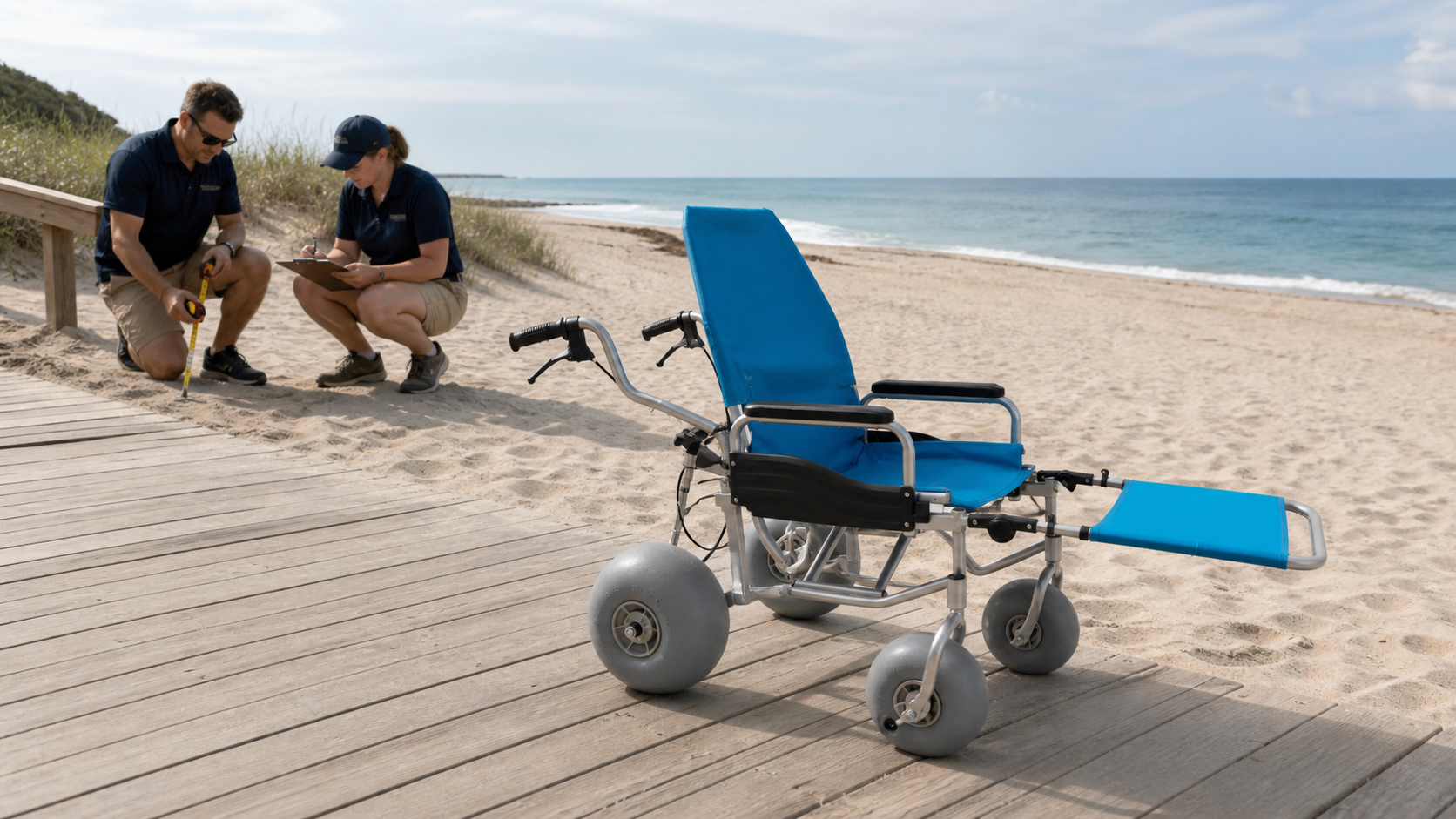
An all-terrain beach wheelchair should cover only the surfaces and handoffs supported by its current instructions and a site-specific route review. Map the complete service path, not only the open beach. Include storage doors, service corridors, ramps, boardwalk seams, gates, packed sand, loose sand, damp sand, turning areas, transfer points, rinse access, and the return route.
Build a surface-by-surface route record
Here’s the practical point: walk the route with operations, accessibility, and maintenance staff at the time the service is likely to run. Record physical limits and changing conditions without turning observations into product claims. The mixed-surface application page can frame the discussion, while the local route record remains the buying reference.
- Mark every surface and handoff.
- Measure gates, turns, ramps, and clear paths.
- Name transfer, pause, rinse, and storage points.
- Record seasonal or event-related route changes.
Key Takeaway: Route evidence converts a broad equipment search into a site-based buying brief.
| Review area | Working record |
|---|---|
| Surface | Type and change point |
| Access | Width, slope, turn, and gate |
| Operations | Transfer, pause, rinse, and return |
The route map shows which product questions need written answers.
How do wheel layout and surface changes affect handling?
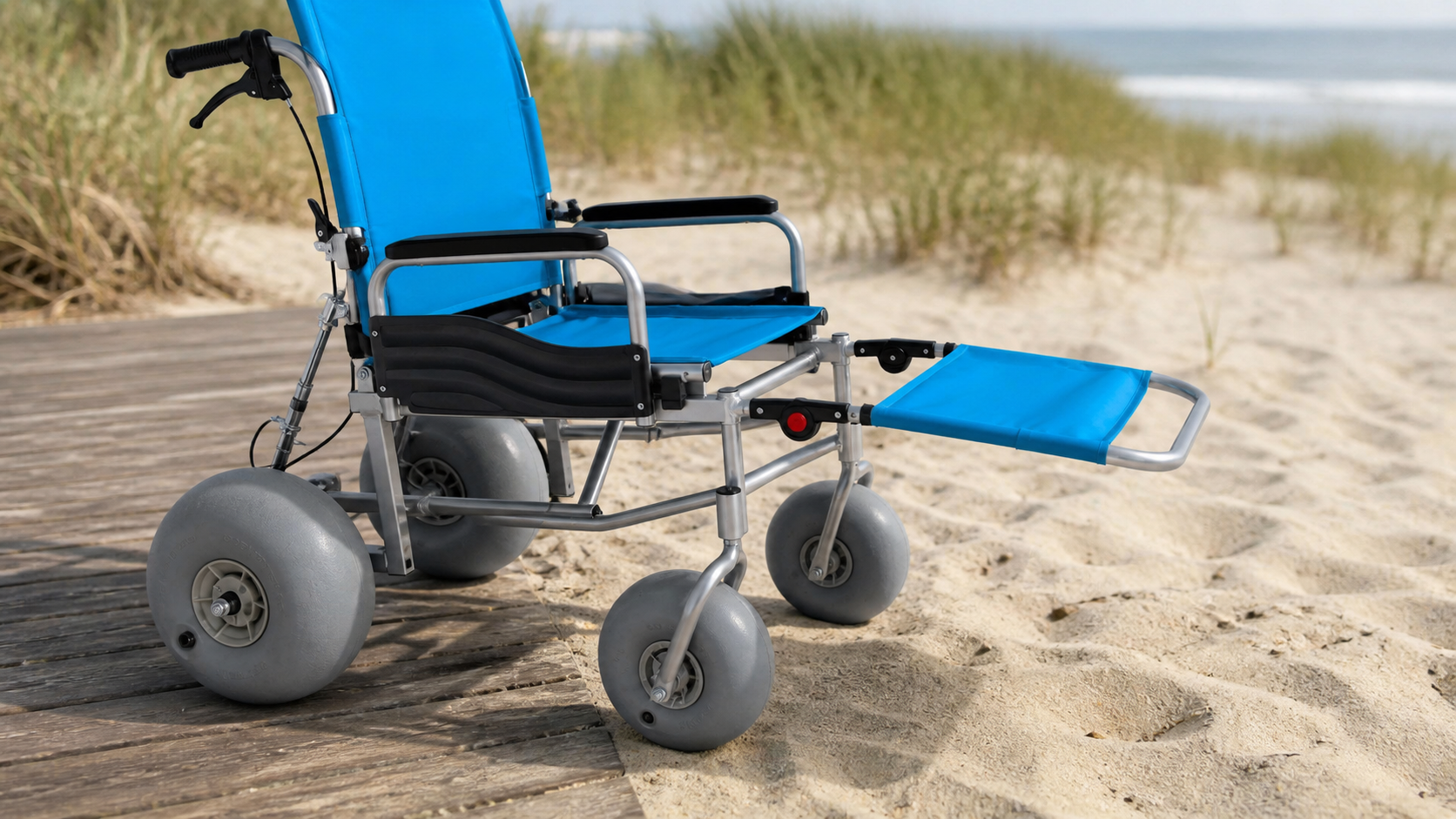
An all-terrain beach wheelchair handles surface changes through the combined effect of wheel count, wheel position, diameter, width, steering method, frame geometry, and attendant technique. A wide balloon wheel may reduce digging on loose material, yet one visible feature cannot predict turning, side clearance, curb transitions, or movement on a firm approach.
Review the complete rolling system
The useful detail: ask the supplier to identify the wheel specification, intended surface range, inflation or care method, and approved replacement parts for the exact configuration. During a controlled empty-chair review, observe straight travel, gradual turns, tight turns, stops, and each surface handoff. Keep results tied to that route and chair rather than making a universal performance statement.
- Record wheel count, position, and steering method.
- Review side clearance at gates and doors.
- Observe transitions on the planned route.
- Link wheel care to the maintenance record.
Key Takeaway: Wheel design should be judged as a system on the real route.
| Review area | Working record |
|---|---|
| Wheel record | Count, position, size, and care |
| Route check | Straight travel, turn, stop, handoff |
| Decision | Pass, question, change, or hold |
A wheel comparison is useful only when its route context remains visible.
What attendant workflow belongs in a route trial?
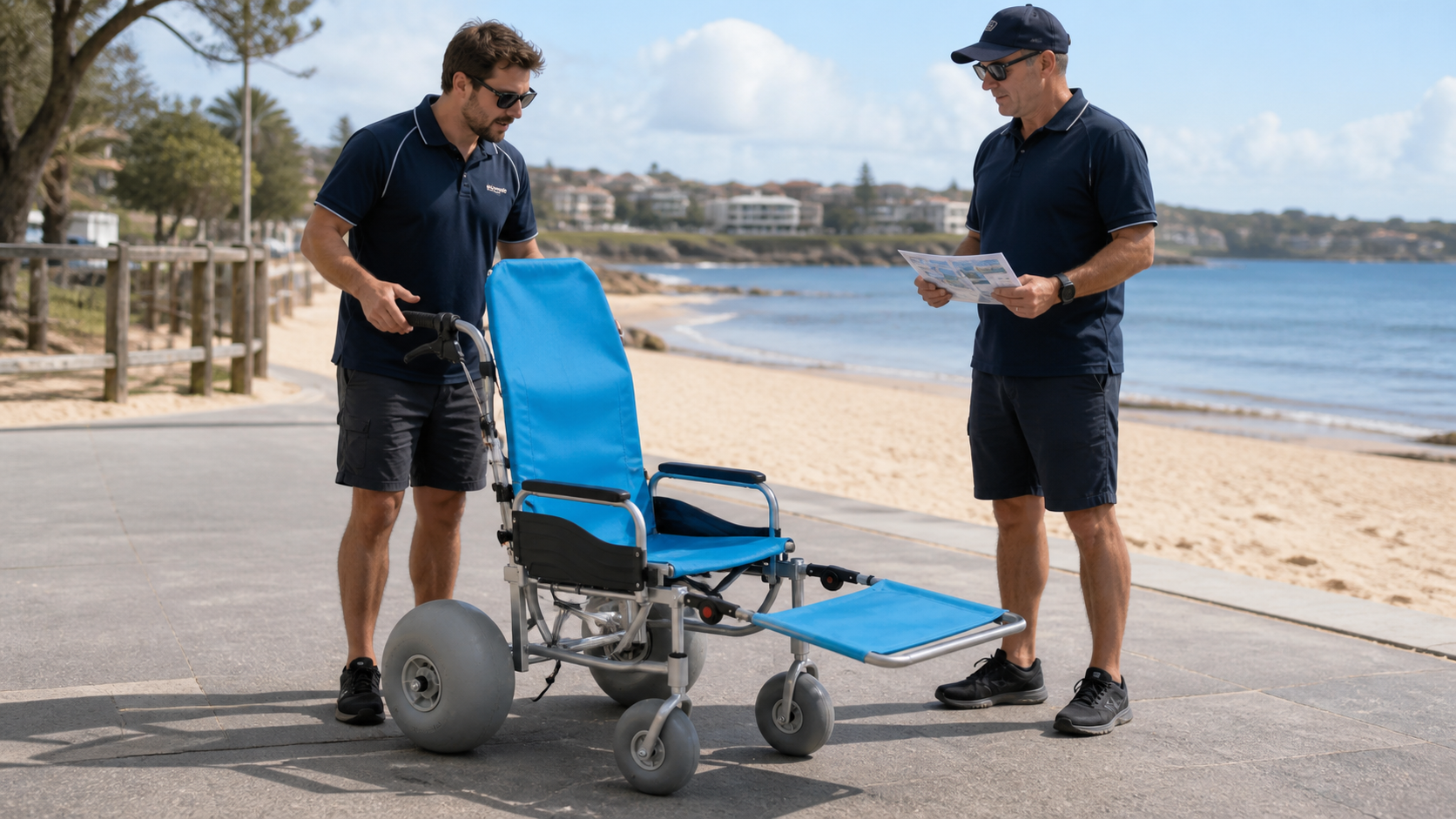
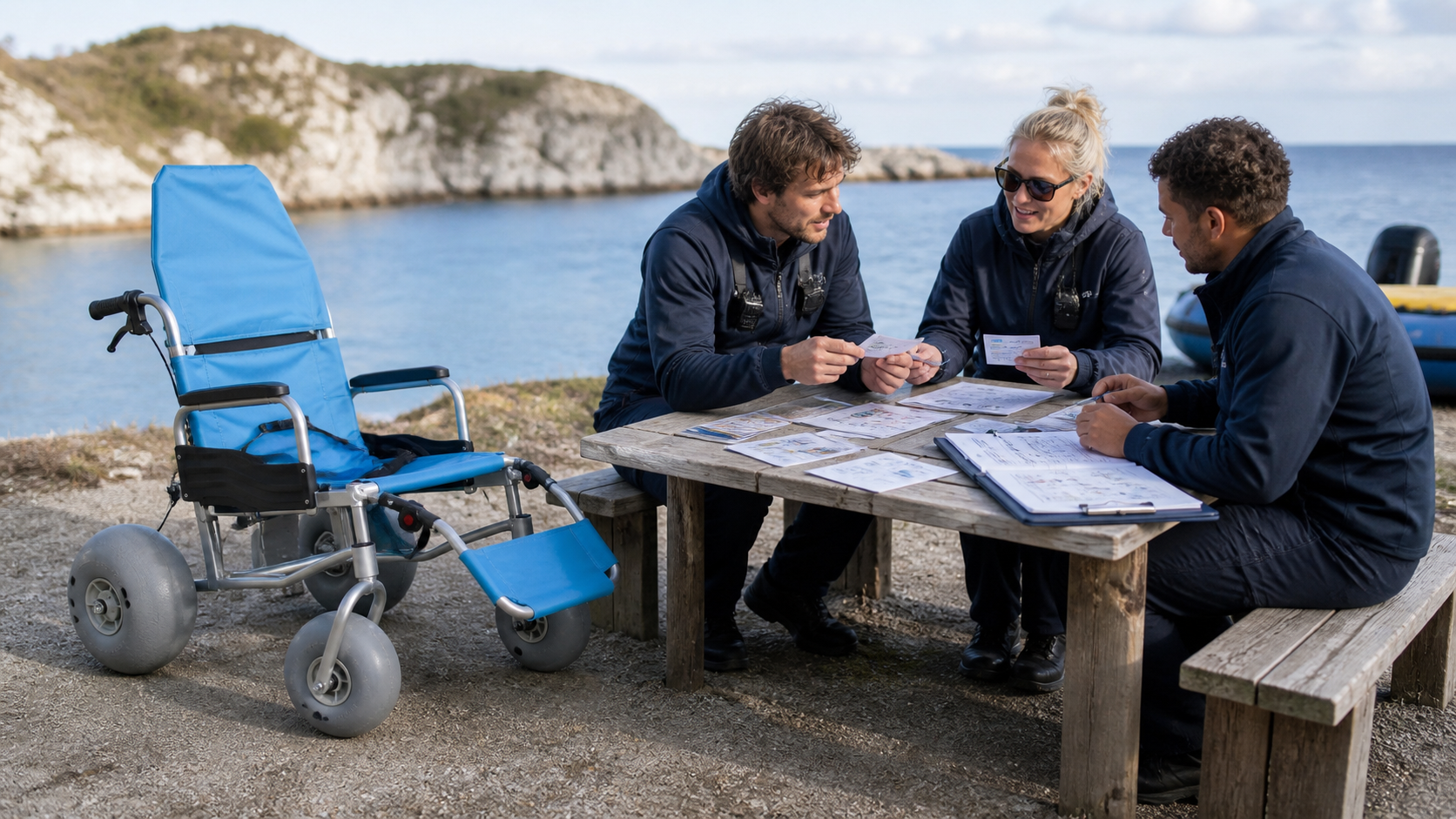
An all-terrain beach wheelchair route trial should give attendants a written sequence for setup, empty-chair movement, guest handoff, stopping, turning, return, and release after care. The trial is not a contest of strength. It is a controlled way to see whether instructions, staffing, grip points, brake controls, sight lines, and pause locations form a workable process.
Practice every handoff with an empty chair
What does that mean on site? begin on firm ground with the exact model and the current manual. Name who checks the chair, who guides movement, who watches the route, and who can stop the trial. Practice the complete path without a guest. Record any instruction that staff interpret differently, then obtain a written answer before service planning continues.
- Assign setup, movement, route-watch, and release roles.
- Use only documented grip and control points.
- Practice turns, stops, and handoffs without a rider.
- Record questions and the source that closes each one.
Key Takeaway: An empty-chair trial reveals workflow gaps before guest service begins.
| Review area | Working record |
|---|---|
| Trial stage | Evidence |
| Setup | Checks and named role |
| Route | Movement notes and stop points |
| Closeout | Questions, owner, and status |
The best result is a repeatable method, not a fast trial time.
How should buyers review frame and seating details?
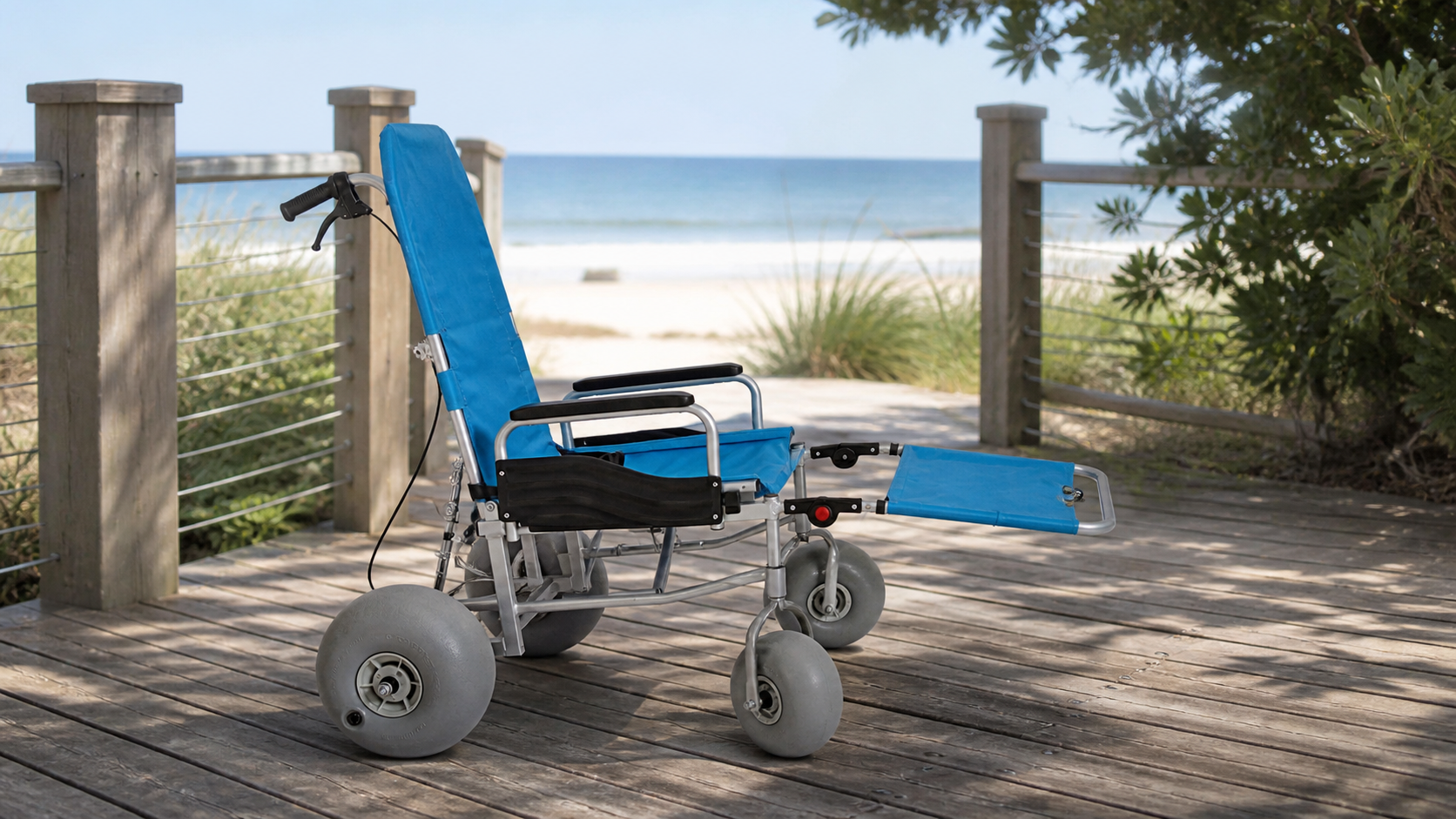
An all-terrain beach wheelchair should be reviewed as a complete frame-and-seating system tied to the quoted model. Buyers can inspect tubes, joints, fasteners, arm supports, back and seat fabric, belt, foot support, push handles, and wheel attachments, but they should not infer material grades, load limits, corrosion resistance, or user fit from appearance.
Connect visible parts with supplier records
For procurement teams: request drawings, component lists, user instructions, and option records that identify what will arrive. Compare them with the visible sample and quotation. Product-family context can help teams separate model types, while the order record should name the exact frame, seating, restraints, supports, wheels, and accessories under review.
- Match visible components to the quotation.
- Record seating, support, and control options.
- Ask for stated adjustment and inspection methods.
- Keep unanswered material or fit questions open.
Key Takeaway: Visible inspection and written configuration data should describe the same chair.
| Review area | Working record |
|---|---|
| Area | Buyer record |
| Frame | Drawing, joints, and visible condition |
| Seating | Fabric, supports, belt, and options |
| Controls | Handles, brakes, and stated checks |
A mismatch here can affect training, parts planning, and receiving work.
What supplier records support a fleet decision?
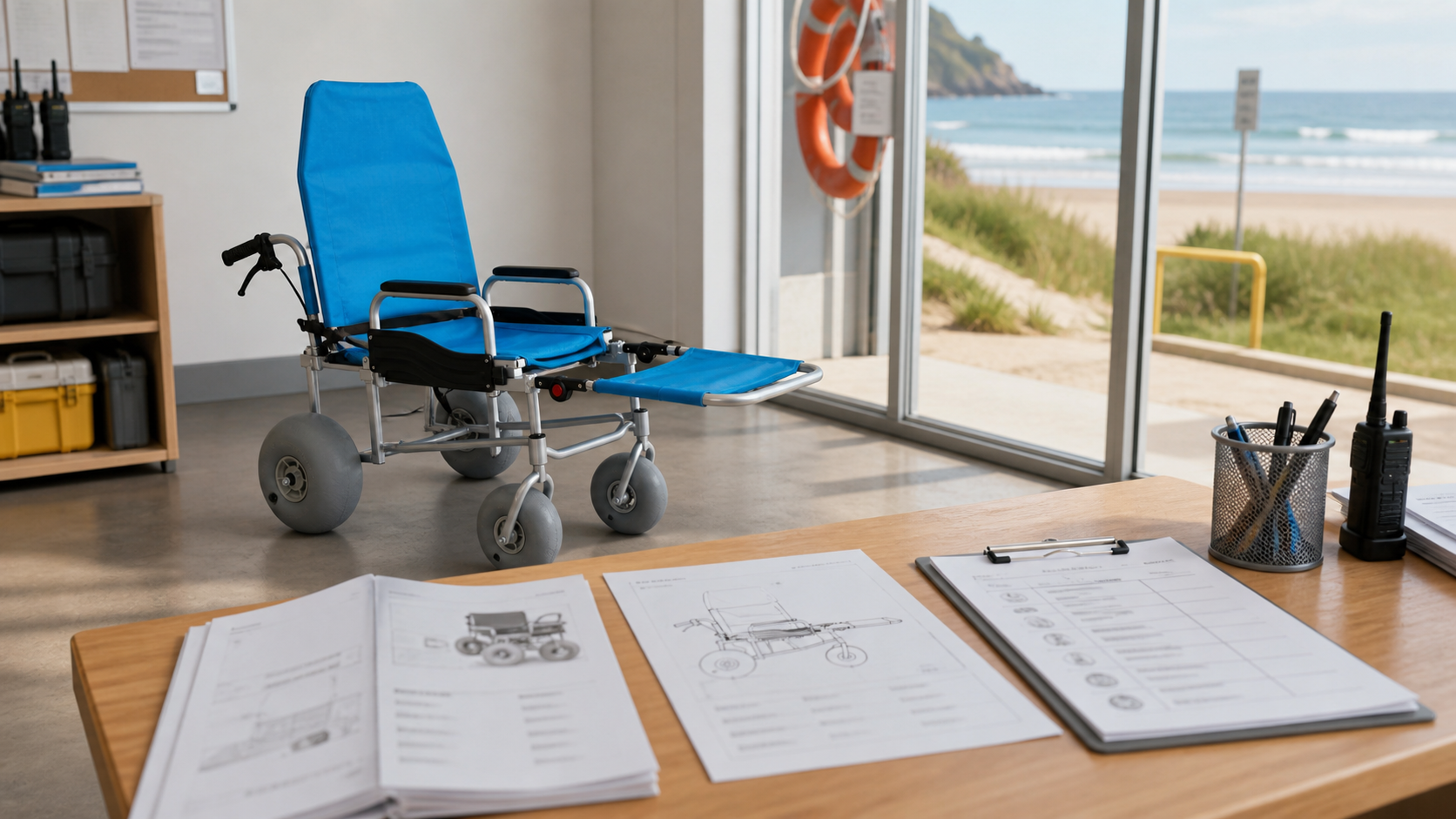
An all-terrain beach wheelchair fleet decision needs current records for configuration, intended use, setup, operation, inspection, cleaning, storage, transport, parts, and service. Marketing text may start a conversation, but it cannot resolve model revision, wheel care, approved grip points, fastener checks, replacement compatibility, or the boundary between operator work and supplier service.
Build a model-specific document set
The buying question: can facility staff plan receiving, training, daily checks, care, storage, and fault handling without guessing? Request records tied to the quoted model and options. Use the user manual page as a document-access starting point, then confirm revision, product match, and any local-language need with the supplier.
- Match each record to model and revision.
- List setup, inspection, care, and storage steps.
- Identify parts and service contact paths.
- Track open questions with owners and dates.
Key Takeaway: A complete document set turns product features into managed fleet tasks.
| Review area | Working record |
|---|---|
| Record | Fleet use |
| Drawing | Configuration and space planning |
| Manual | Setup, use, care, and checks |
| Parts record | Identification and service requests |
Document gaps should remain visible until written evidence closes them.
How can teams plan receiving and setup checks?
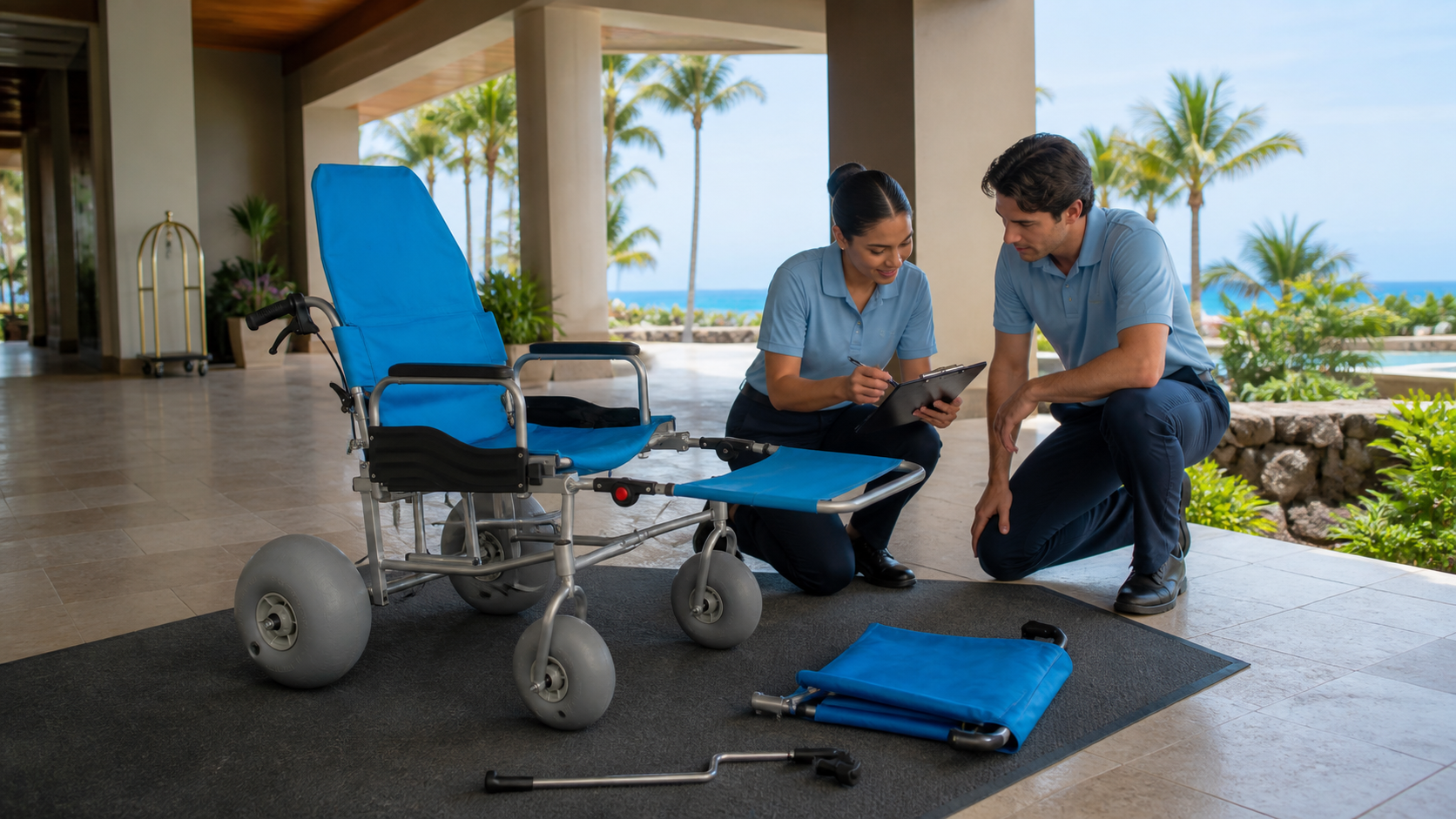
An all-terrain beach wheelchair should enter fleet service only after receiving staff match the shipment to the order, inspect visible condition, account for parts, assemble under the stated method, and record a ready or hold result. Packaging damage, missing retainers, mixed accessories, or unclear assembly steps can be missed when teams focus only on shipment quantity.
Release each delivered chair through one record
The receiving rule: prepare the checklist before delivery and use the exact order record. Photograph packaging and visible issues for the internal file, without treating a photo as proof of hidden condition. Keep all components tied to a chair ID. If a step, part, or configuration does not match current documents, place the unit on hold and request clarification.
- Match model, options, quantity, and visible identifiers.
- Count wheels, supports, hardware, tools, and documents.
- Assemble and check the empty chair as directed.
- Record ready, hold, or service status by chair ID.
Key Takeaway: Receiving control keeps a delivery mismatch from becoming an operating problem.
| Review area | Working record |
|---|---|
| Receiving point | Record |
| Shipment | Order match and visible condition |
| Assembly | Parts, steps, and checks |
| Release | Chair ID, status, and reviewer |
One release record also gives maintenance teams a clean starting history.
What cleaning routine fits sand and salt exposure?
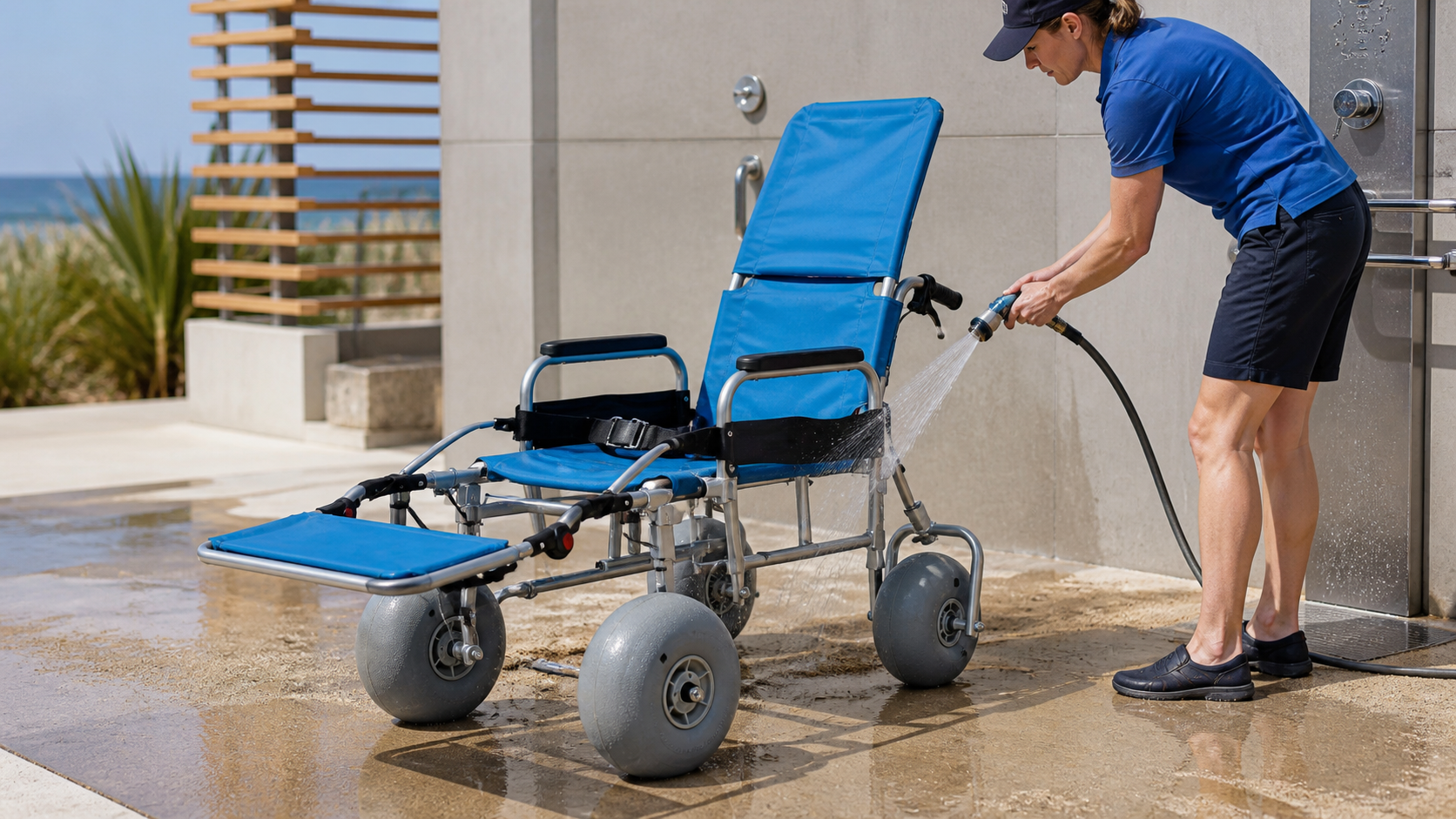
An all-terrain beach wheelchair cleaning routine should follow current supplier guidance and move through loose-sand removal, any approved rinse, drainage, drying, inspection, and recorded release. Sand and salt exposure can reach wheel hubs, frame joints, fabric seams, fasteners, brake parts, and supports, so a quick spray cannot stand in for a model-specific care method.
Separate return, care, drying, and release
Here’s the care view: create distinct returned, cleaning, drying, hold, and ready locations even when the facility is small. Use the cleaning materials and water exposure method named in the supplier instructions. Good light and access around the open chair help staff see trapped sand, retained moisture, loose parts, abrasion, or a change that needs service review.
- Remove loose sand through the approved method.
- Use only stated rinse and cleaning steps.
- Dry and inspect every named area.
- Keep faults attached to the chair ID until release.
Key Takeaway: Care is complete only after drying, inspection, and status recording.
| Review area | Working record |
|---|---|
| Care state | Release condition |
| Returned | Care not started |
| Drying | Moisture check still open |
| Ready | Inspection passed and recorded |
Visible status prevents a wet return from entering the ready fleet.
How should storage and transport shape procurement?
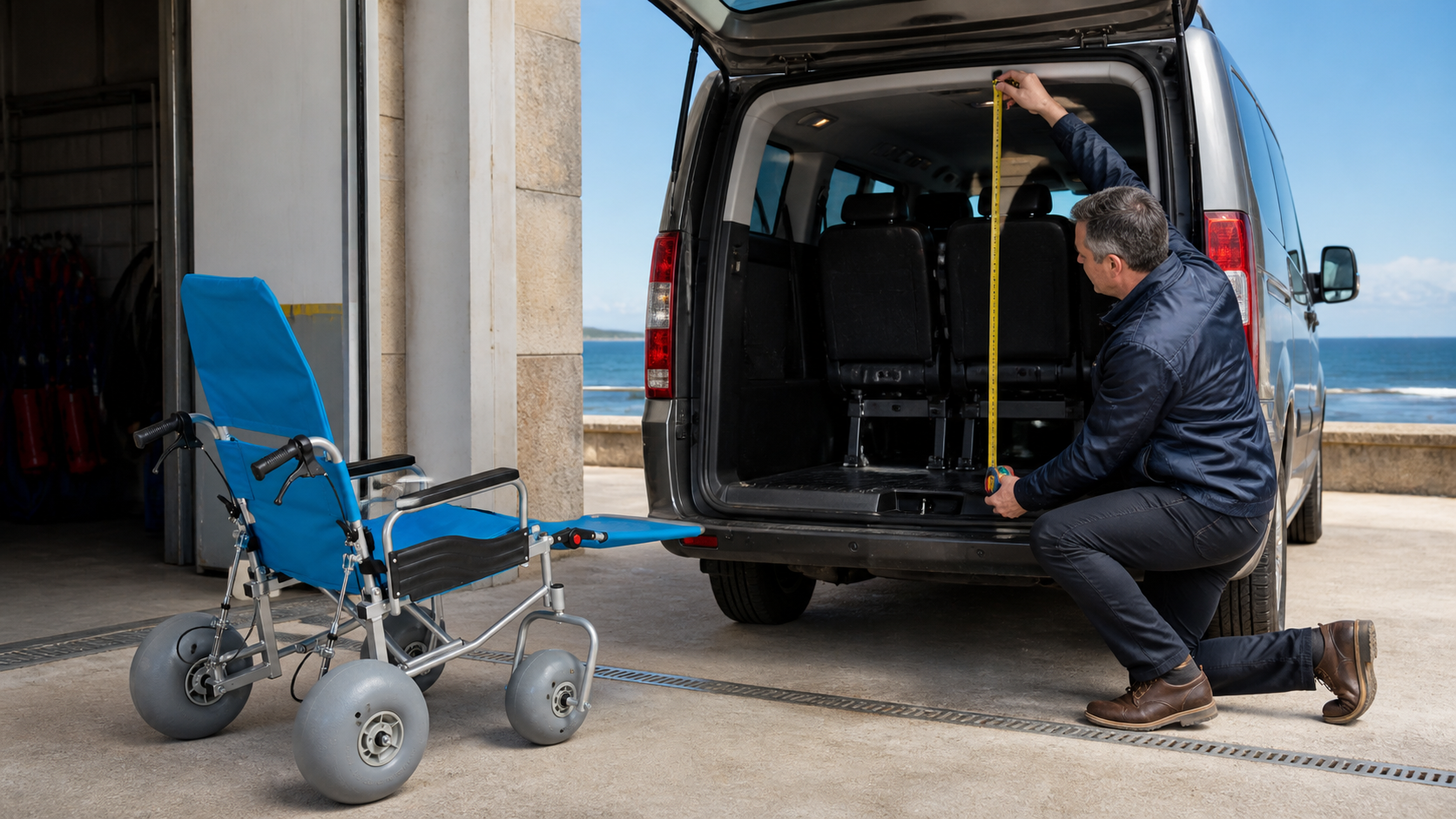
An all-terrain beach wheelchair purchase should account for doors, aisles, vehicle openings, loading paths, restraint access, storage support, ventilation, and staff hand clearance. An assembled chair may fit a bay yet remain difficult to turn through a corridor or protect inside a vehicle. Removable parts can reduce occupied space while adding labeling, handling, reassembly, and inspection work.
Measure the complete handling envelope
The space test: compare current product dimensions and approved handling states with measurements taken at the real facility and vehicle. The rental fleet project offers a relevant operating setting, but local measurements and vehicle rules should govern the plan. Never select restraint or lifting points from appearance alone.
- Measure doors, turns, bays, and vehicle openings.
- Record approved assembled or disassembled states.
- Protect wheels, fabric, controls, and frame during travel.
- Plan reassembly and release checks after transport.
Key Takeaway: Storage and transport are product requirements, not tasks to solve after delivery.
| Review area | Working record |
|---|---|
| Space | Check |
| Facility | Door, aisle, turn, bay, and drying access |
| Vehicle | Opening, cargo area, protection, and restraint |
| Handling | Grip, clearance, parts, and release |
The handling envelope can rule out a chair that fits only on paper.
What training records help fleet handoffs?
An all-terrain beach wheelchair training record should identify the exact model, document revision, staff role, practiced tasks, review date, open questions, and release decision. A signature without task detail does not show whether someone practiced setup, route movement, stopping, guest communication, return, cleaning, storage, or fault escalation.
Link training to model, role, and task
The operational view: build short role-based records around observable tasks. A reservation worker may need booking and handoff steps, while an attendant needs route practice and controls, and maintenance staff need care and fault handling. When the product, route, manual, or local process changes, review the affected tasks and update the record.
- Name model, revision, role, trainer, and date.
- List each practiced task and result.
- Record questions, limits, and escalation paths.
- Repeat review after relevant changes.
Key Takeaway: Task-level records make staff handoffs easier to audit and refresh.
| Review area | Working record |
|---|---|
| Role | Practice focus |
| Booking | Eligibility questions and handoff |
| Attendant | Setup, route, controls, and return |
| Care | Cleaning, inspection, status, and faults |
The record should show what a person practiced, not merely attendance.
What workflow keeps route reviews consistent?
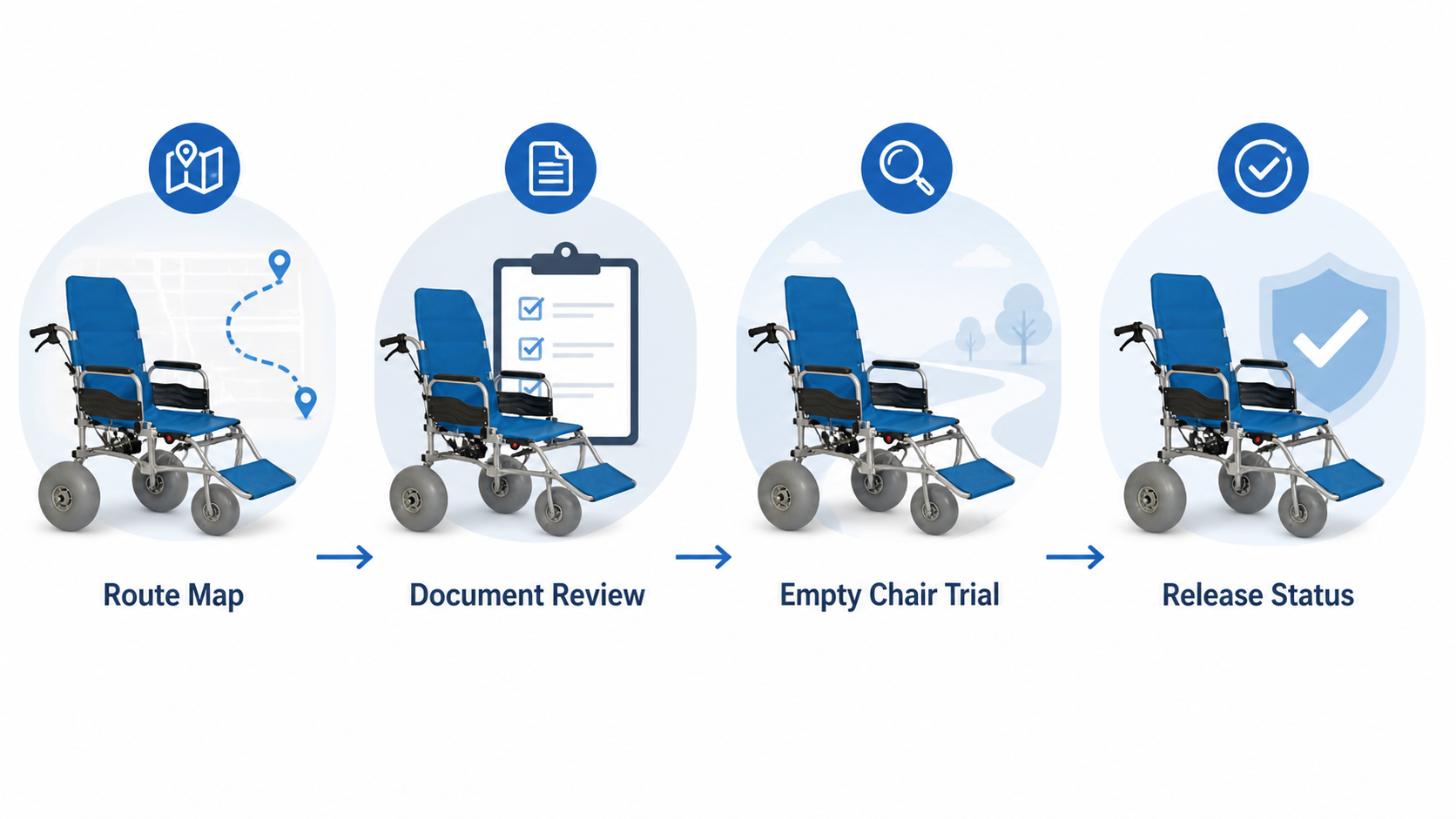
An all-terrain beach wheelchair route review stays consistent when teams repeat a fixed sequence: map conditions, define product questions, review supplier records, run an empty-chair trial, record changes, approve or hold the route, and schedule a new review when conditions or equipment change. The method avoids undocumented shortcuts while allowing local details to remain visible.
Connect route evidence with release status
The process point: give every stage an owner, evidence item, and status. Route approval should name the chair model and planned path rather than applying to every product or coastline. Weather, construction, events, erosion, access-mat movement, vehicle changes, and document revisions can trigger a targeted review without forcing staff to rebuild the whole program.
- Map the route and its change triggers.
- Tie questions to model-specific records.
- Run and document a controlled trial.
- Release, hold, or revise with a named owner.
Key Takeaway: A status-based workflow keeps route decisions traceable as conditions change.
| Review area | Working record |
|---|---|
| Stage | Output |
| Map | Route record and questions |
| Trial | Observed tasks and open items |
| Review | Release, hold, or revision status |
The workflow highlights where evidence is missing before service starts.
Closing Notes
A fleet choice becomes clearer when route evidence, wheel layout, attendant tasks, seating review, supplier records, receiving checks, care, storage, training, and status handoffs point to the same operating method. Keep every claim tied to the exact model and current supplier documents. To discuss a route brief with a product team, contact us today with your surface changes, access points, storage setting, transport method, and staff roles.
Frequently Asked Questions
Can I select one chair for every coastal surface?
Not from a product label alone. Compare the exact route, chair configuration, supplier instructions, and a controlled site trial before making that choice.
What’s the best way to compare balloon wheels?
Use model-specific records and a route-based trial. Review layout, wheel count, steering method, care steps, and each firm-to-soft surface handoff.
How do I know if attendants can manage the route?
Run a controlled empty-chair practice under current instructions. Record grip points, turns, stopping points, staff roles, and any unclear step.
Can I rely on a sales photo for frame details?
No. Request current drawings, manuals, parts records, and configuration notes tied to the quoted chair.
What’s the best receiving check for a fleet order?
Match every delivered chair and part to the order record, inspect visible condition, assemble as directed, and record ready or hold status.