
Clear model identity, approved component records, protected storage, and controlled service handoffs make beach wheelchair parts easier to manage. Coastal fleets often use chairs that look similar while their wheels, hubs, joints, fabrics, cords, fasteners, and support pieces differ. A shelf label such as wheel or belt cannot prove compatibility. Resorts, rental operators, municipalities, distributors, and service teams need a parts method that starts with the exact chair and ends with a recorded release. This article answers ten questions about building that method. Clear records also help purchasing and service teams use one component language. It avoids invented service life, compatibility, price, stock availability, certification, or performance data.
Related planning resources cover beach wheelchair maintenance and beach wheelchair storage.
For broader destination-level context, consult the UN Tourism accessibility publications and guidelines. Apply local requirements and current product documents to the specific project.
What counts as a model-specific part?
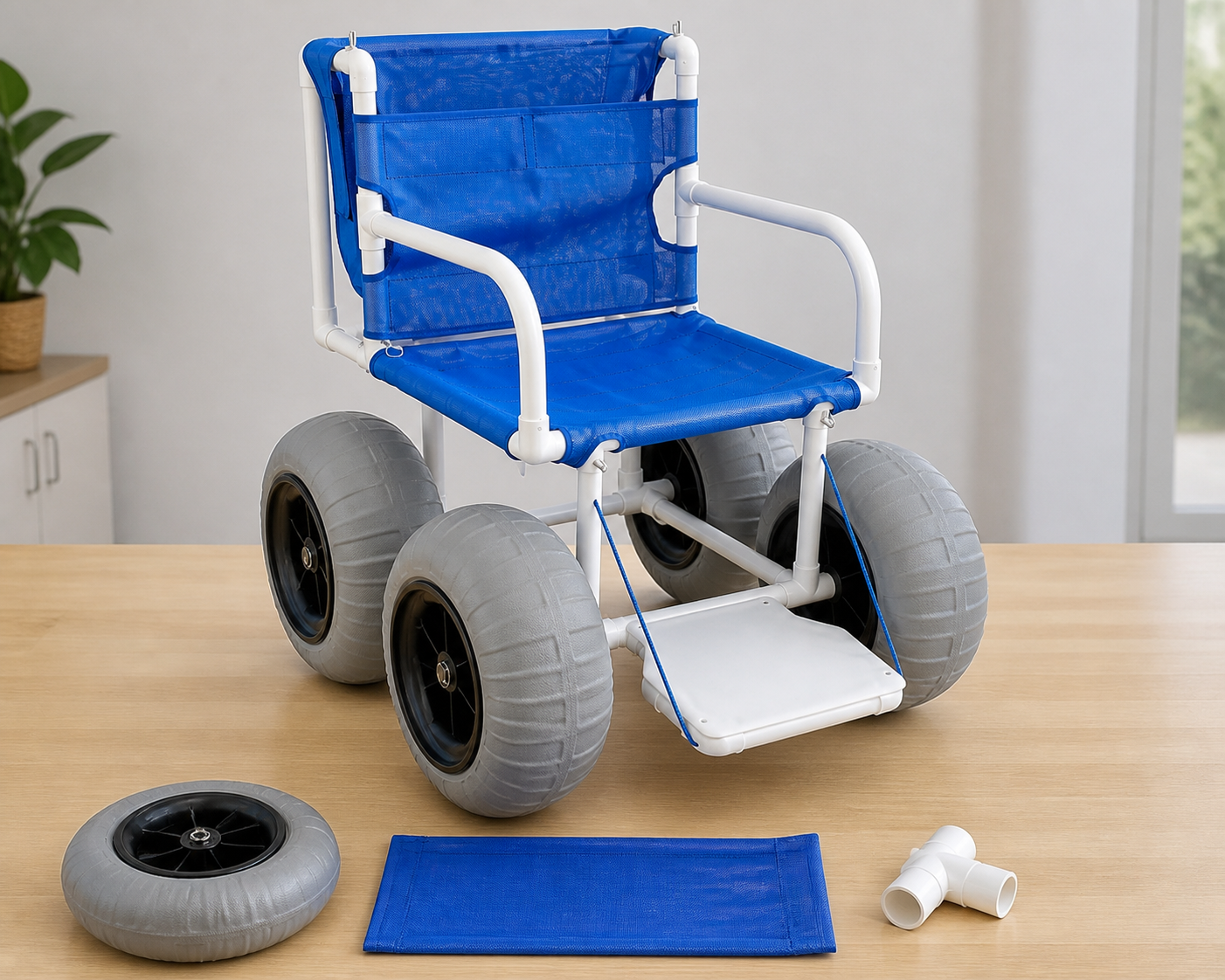
Beach wheelchair parts count as model-specific when supplier records tie their form, dimensions, material, attachment, and use to a named chair configuration and revision. A gray balloon tire, blue mesh panel, white PVC joint, or footplate may resemble another item while its hub, axle, holes, fit, hardware, or support method differs. Visual similarity does not establish compatibility.
Start with chair identity and approved compatibility
Here’s the identity rule: begin every parts request with chair ID, model, configuration, drawing revision, and clear component location. Use the beach wheelchair catalog to separate broad product families, then request exact part evidence from the current supplier file. Record superseded references and approved substitutions with source and date. If compatibility remains unclear, keep both chair and component on hold.
- Identify chair, model, configuration, and revision.
- Record component name and exact location.
- Match part reference with supplier evidence.
- Give unclear compatibility a hold status.
Key Takeaway: Part identity begins with the chair and its current document set.
| Review area | Working record |
|---|---|
| Identity level | Record |
| Chair | ID, model, options, and revision |
| Component | Location, form, and part reference |
| Compatibility | Approved source, date, and limits |
This approach keeps a similar appearance from becoming an unsupported parts decision.
How should teams build a parts identity record?
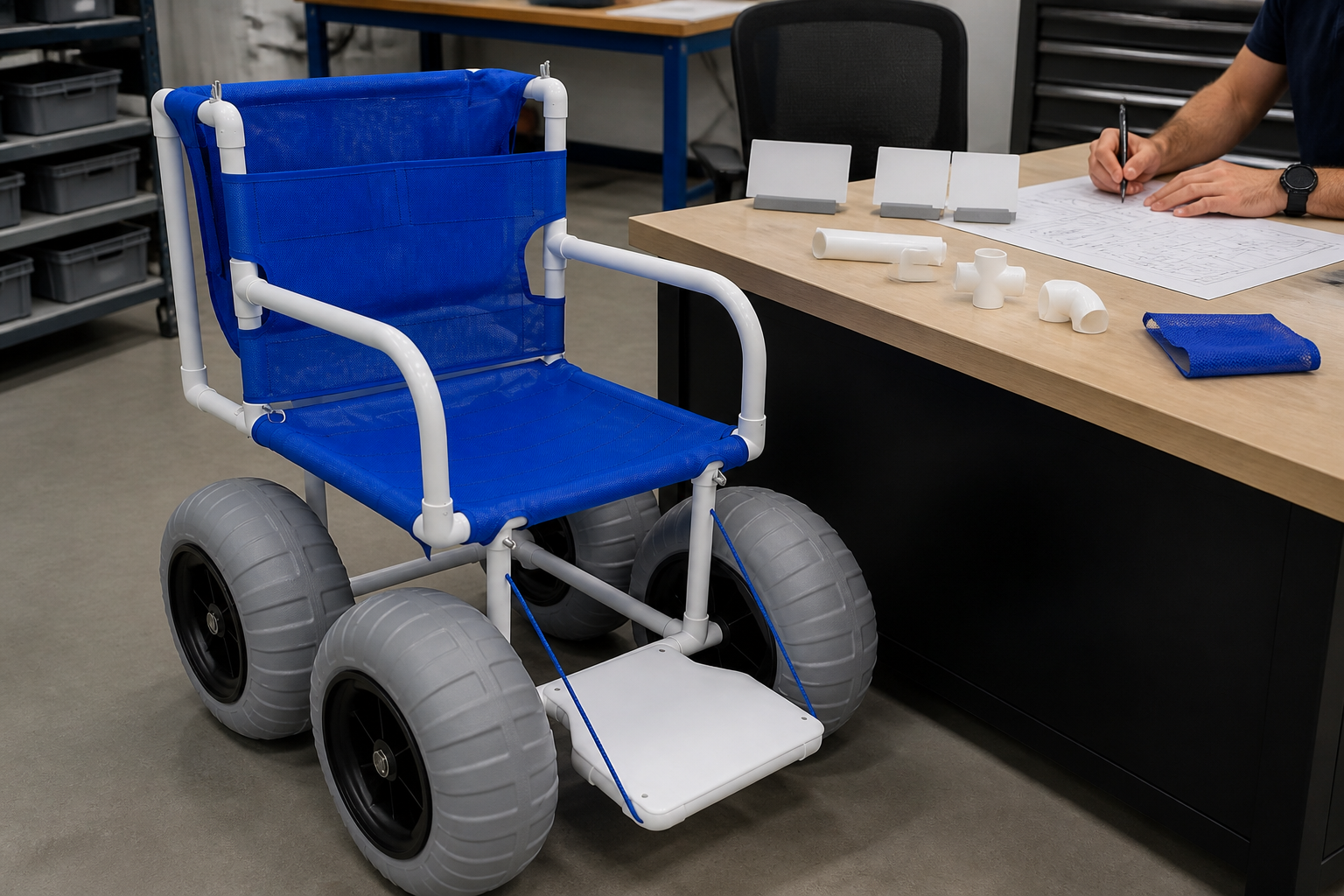
Beach wheelchair parts should be recorded with chair model, configuration, drawing revision, supplier part name, part reference, component location, approved compatibility, quantity unit, storage needs, inspection method, service boundary, and document source. A record should also show whether an item is current, superseded, under review, held, installed, or removed. Short controlled states make the file easier to use.
Use one record from chair drawing to storage bin
The traceability test: staff should move from a chair fault to the correct record, approved component, storage location, work instruction, and release check without guessing. Link the site supplier review page when collecting production and service questions. Avoid free-form nicknames such as big wheel or blue strap unless they sit beside exact supplier identity.
- Link chair model with drawing and part reference.
- Record approved use and storage location.
- Show current, held, installed, or superseded state.
- Keep source, owner, and review date.
Key Takeaway: A parts identity record should trace both item origin and fleet use.
| Review area | Working record |
|---|---|
| Record field | Purpose |
| Chair link | Model, option, and drawing revision |
| Part link | Reference, location, and compatibility |
| Control | State, source, owner, and review date |
Traceability reduces wrong-bin choices during busy service work.
Which wheel and hub details belong in the parts list?
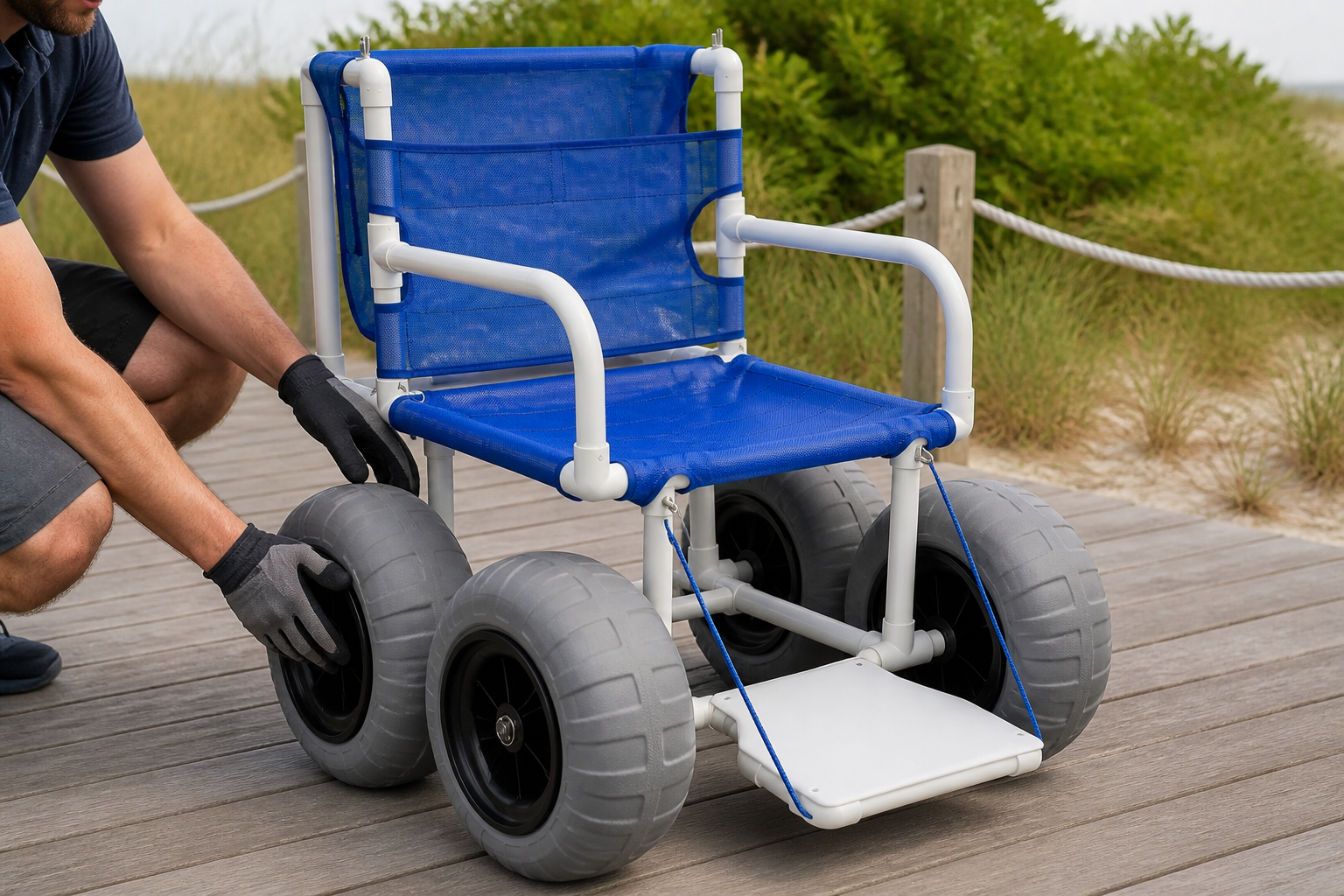
Beach wheelchair parts records for wheels should cover tire or balloon body, diameter, width, material, tread form, hub design, bearing or bushing type, axle interface, spacers, retainers, fasteners, valve or care points, wheel position, and supplier reference. Front and rear positions may differ on some chairs. Even four equal-looking tires can use installation details that require exact records.
Record the complete rolling assembly
The wheel check: photograph or diagram each position under local procedure, then match every listed element with current supplier documents. Record inspection and care steps without inventing pressure, load, life span, or surface figures. Keep removed wheel assemblies tagged with chair and fault identity until the work record closes. Never mix loose retainers or spacers from unrelated models on one bench.
- Record tire, hub, axle, spacer, and retainer identity.
- Name wheel position and direction where relevant.
- Link inspection and care instructions.
- Separate removed and approved replacement assemblies.
Key Takeaway: A wheel entry should identify the whole assembly, not only the gray tire.
| Review area | Working record |
|---|---|
| Wheel area | Record |
| Body | Size, material, tread, and position |
| Hub | Interface, bearing, spacer, and retainer |
| Control | Supplier source, care, and work status |
Complete wheel records support safer matching and cleaner service benches.
What frame joints and hardware need supplier matching?
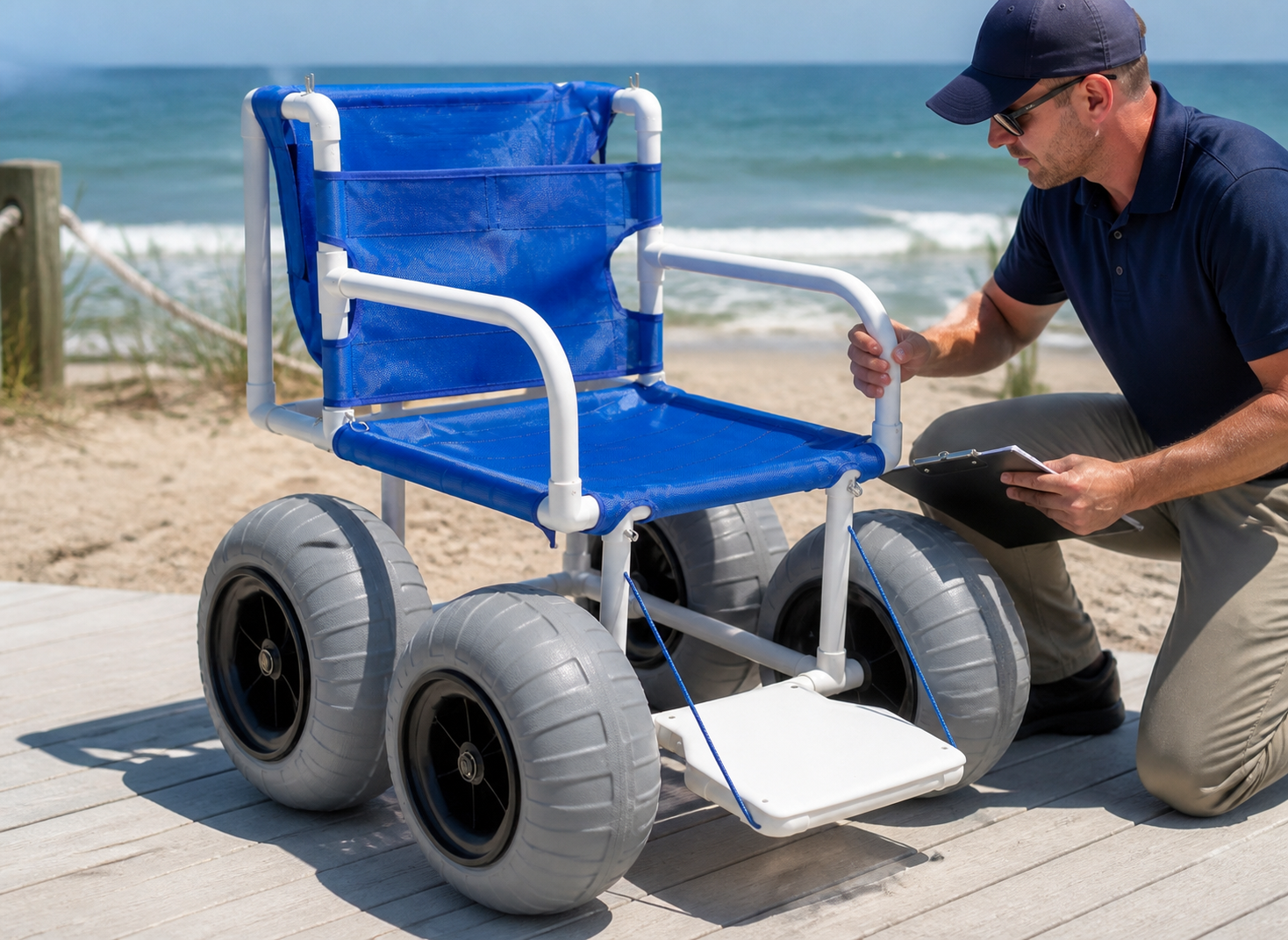
Beach wheelchair parts for a PVC frame should identify tube sections, molded elbows, T joints, seat supports, axle supports, arm rails, back frame, footplate supports, hardware, inserts, pins, and any bonded or fixed connections. A white joint with the same angle may still differ in diameter, wall fit, hole pattern, reinforcement, or approved installation method. Frame work needs supplier matching and a defined service boundary.
Map tubes, elbows, T joints, supports, and fasteners
The boundary rule: document which items staff may inspect, which work an onsite technician may perform, and which repairs belong with an authorized provider. Do not drill, bond, heat, force, or substitute frame items without written approval. Record cracks, movement, discoloration, missing hardware, or unclear fit through the fault process, then hold the chair until a qualified release.
- Map every tube, joint, support, and hardware point.
- Record dimensions and references from approved drawings.
- Separate inspection, onsite service, and provider repair.
- Hold chairs with unclear frame work.
Key Takeaway: Frame parts require exact geometry and a written repair boundary.
| Review area | Working record |
|---|---|
| Frame group | Matching record |
| Tube and joint | Location, size, form, and reference |
| Hardware | Type, position, and approved fit |
| Work boundary | Inspect, service, provider repair, or hold |
A mapped frame helps staff report faults without improvising a repair.
How should seat fabric and straps be documented?
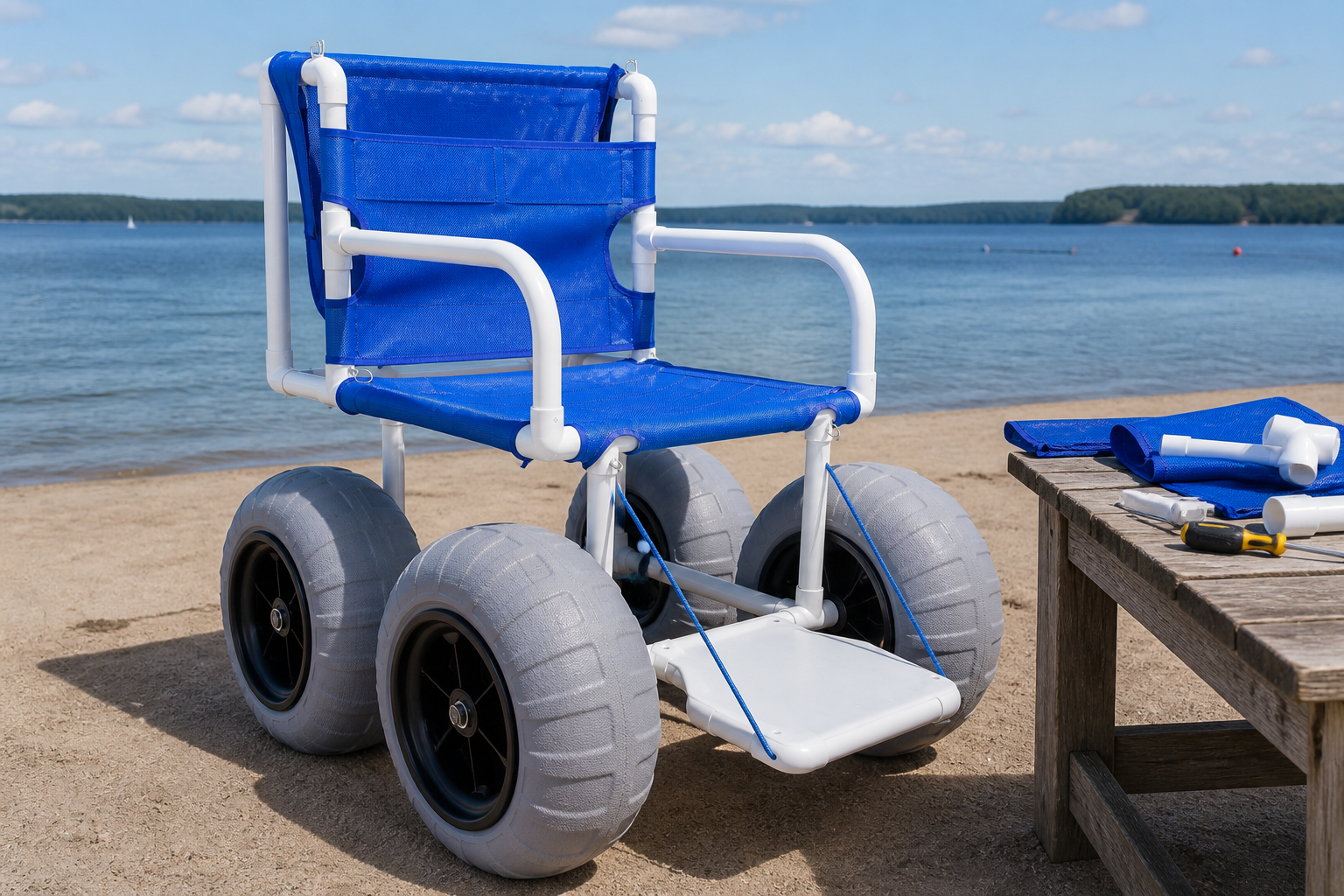
Beach wheelchair parts records for seating should identify blue mesh seat panel, blue mesh back panel, edge sleeves, seams, attachment loops, fasteners, belt or strap provision, arm interfaces, and any removable support named by the supplier. Color alone cannot identify a panel. Dimensions, cut pattern, attachment method, material specification, and chair configuration all belong in the record.
Record material panels, edges, attachments, and fit
The fabric review: inspect clean and dry panels in good light, then record fraying, cuts, stretched areas, loose seams, staining, attachment concerns, or missing items under the fault process. Follow stated cleaning and replacement methods. Do not sew, patch, add straps, or change attachment points without supplier approval. Keep removed fabric isolated from clean approved replacements.
- Identify each panel, edge, seam, and attachment.
- Record material and fit through supplier files.
- Separate clean replacements from removed items.
- Use approved cleaning and replacement methods.
Key Takeaway: Fabric and strap records need exact fit evidence, not a color match.
| Review area | Working record |
|---|---|
| Seating item | Record |
| Panel | Location, size, cut, and material |
| Attachment | Sleeve, loop, seam, fastener, or strap |
| Status | Clean spare, installed, removed, or hold |
Detailed panel identity makes replacement work easier to verify.
What footrest components need a complete parts record?
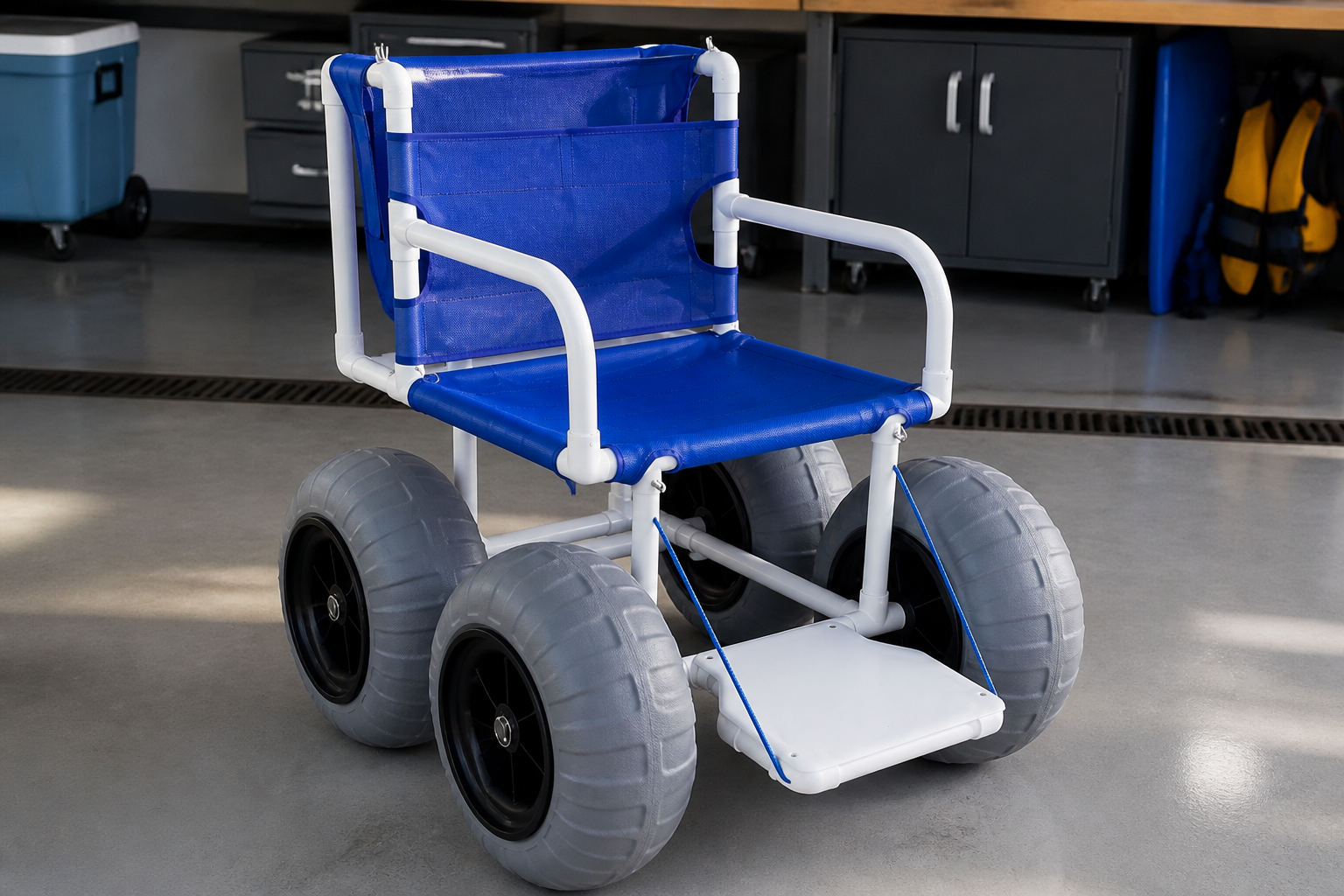
Beach wheelchair parts for the footrest should identify the white rectangular plate, its surface and edge form, support tubes, attachment points, blue cords, cord routing, end fittings, hardware, position, and stated setup method. A footplate can look separate from seating, yet its geometry and cords interact with frame clearance, transfer space, storage, handling, and chair identity.
Trace plate, cords, supports, and attachment points
The setup check: compare the installed assembly with current drawings before removal or replacement. Record cord length or routing only from approved files, not from a visual estimate. Keep left and right attachment items identified where relevant. Do not knot, shorten, drill, substitute, or reshape a support item without written approval. After approved work, perform the stated check and document chair release.
- Identify plate, cords, fittings, supports, and hardware.
- Record routing and position from approved drawings.
- Protect cords from mix-ups or damage in storage.
- Link replacement work with release checks.
Key Takeaway: Footrest parts should be treated as one documented support assembly.
| Review area | Working record |
|---|---|
| Assembly area | Record |
| Plate | Form, edge, surface, and reference |
| Cords | Routing, fittings, and attachment points |
| Closeout | Approved work and release result |
A complete record stops a small cord or fitting from becoming an undocumented substitute.
How can storage protect clean spare parts?
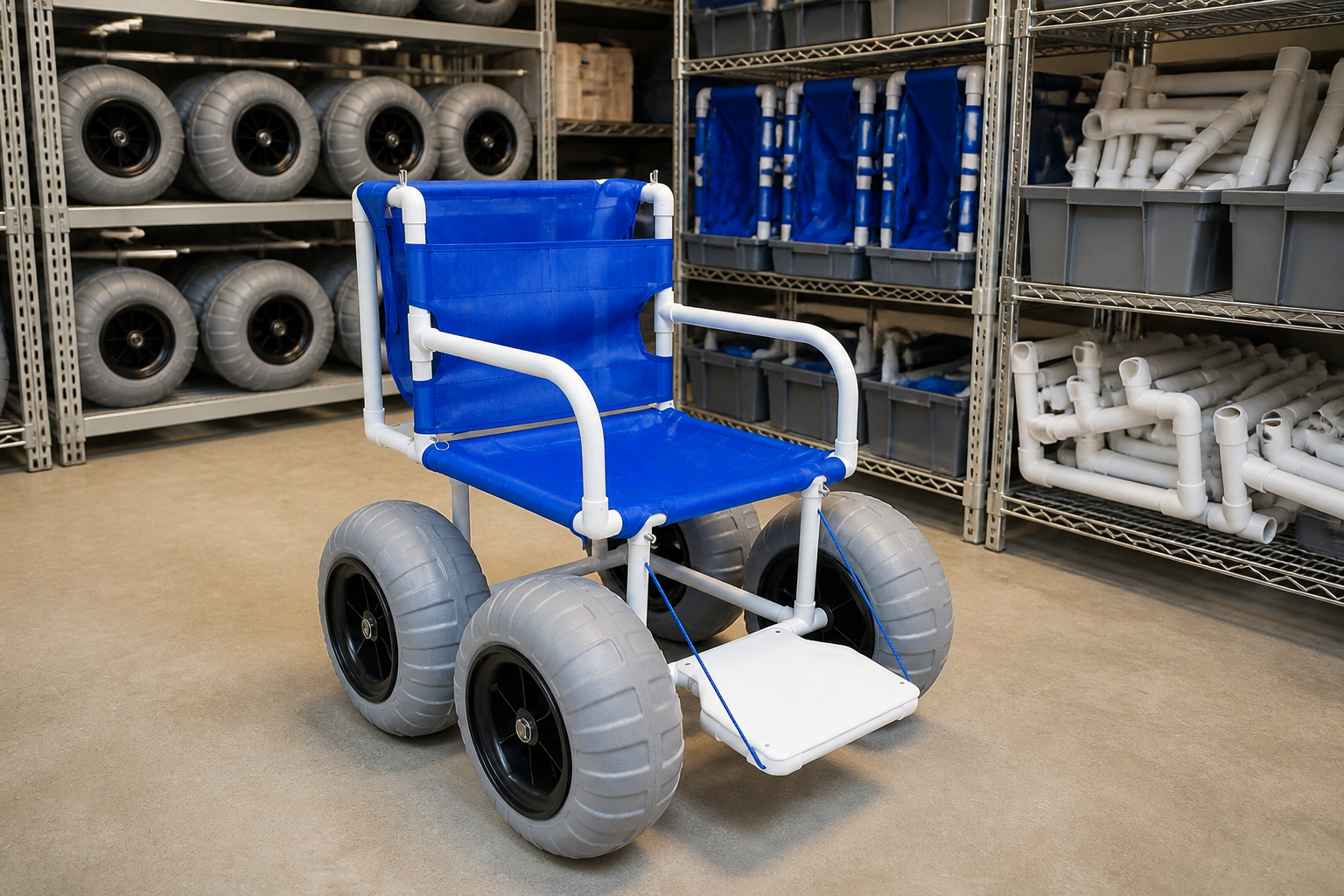
Beach wheelchair parts should be stored by model identity, component reference, clean condition, environmental need, and status. Approved unused items need protection from moisture, sand, sunlight, impact, crushing, contamination, and mixing. Removed or held components should not share an open bin with clean stock. Large wheels, fabric panels, PVC pieces, footplates, cords, and small hardware may need different support.
Separate approved stock, removed items, and held items
The storage test: staff should retrieve a named part from its record without opening unrelated containers or relying on memory. Use stable racks, sealed bins where suitable, protective spacing, and visible status controls. The portable chair application can frame handling questions, while supplier guidance controls storage for each item. Record location changes and periodic checks. If packaging or identity becomes damaged, move the component to review status rather than returning it to approved stock.
- Separate clean stock, removed parts, and held items.
- Protect against moisture, sand, light, impact, and mixing.
- Link every location with part identity.
- Review damaged packaging or unclear labels.
Key Takeaway: Parts storage should preserve identity, condition, and approval state.
| Review area | Working record |
|---|---|
| Storage zone | Contents |
| Approved stock | Clean identified components |
| Removed | Chair-linked items awaiting closeout |
| Hold | Unclear condition or identity |
A retrieval rehearsal reveals weak labels and mixed storage before service work starts.
When should staff repair, replace, or hold a chair?
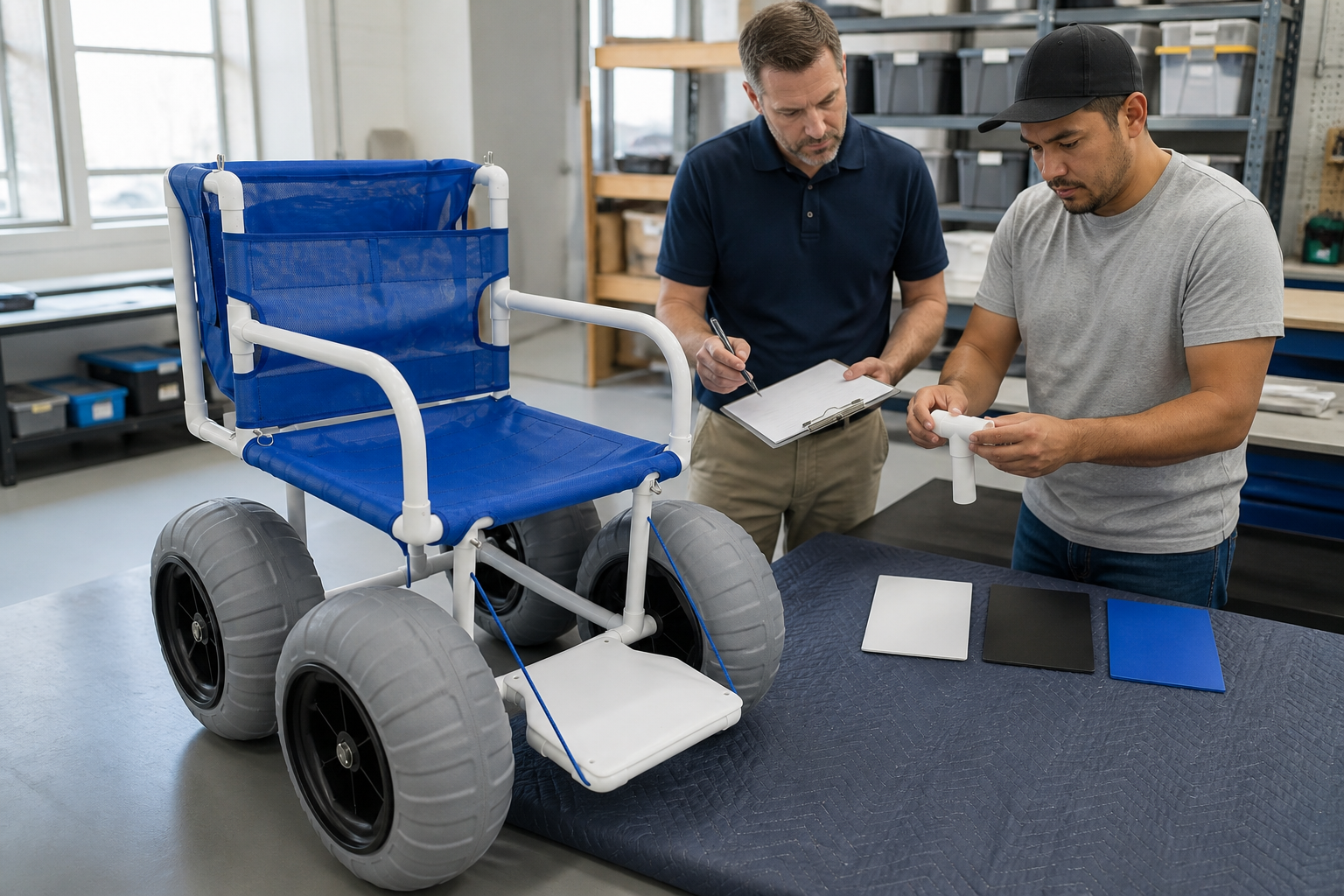
Beach wheelchair parts work should lead to repair, replacement, provider service, or hold based on current supplier records, observed condition, local policy, staff authorization, and available approved components. Staff should not select a path from schedule pressure or part appearance. Any frame, wheel, fabric, strap, foot support, or hardware issue needs a recorded source and decision.
Use supplier boundaries and named release authority
The stop rule: when identity, compatibility, work method, or release check remains unclear, hold the chair. Record the fault, affected component, chair ID, observed condition, photo or diagram if permitted, source consulted, owner, and next action. After approved work, inspect the complete chair through current instructions. A replaced part does not create ready status until the named release check passes.
- Classify issue through approved service boundaries.
- Record chair, part, condition, source, and owner.
- Hold when identity or method remains unclear.
- Release only after stated post-work checks.
Key Takeaway: A clear hold path protects staff from guessing under schedule pressure.
| Review area | Working record |
|---|---|
| Decision | Evidence |
| Repair or replace | Approved method and compatible part |
| Provider service | Work outside onsite boundary |
| Hold | Missing identity, method, or pass result |
The decision record connects a fault with its authorized next step.
What reorder record prevents incompatible purchases?
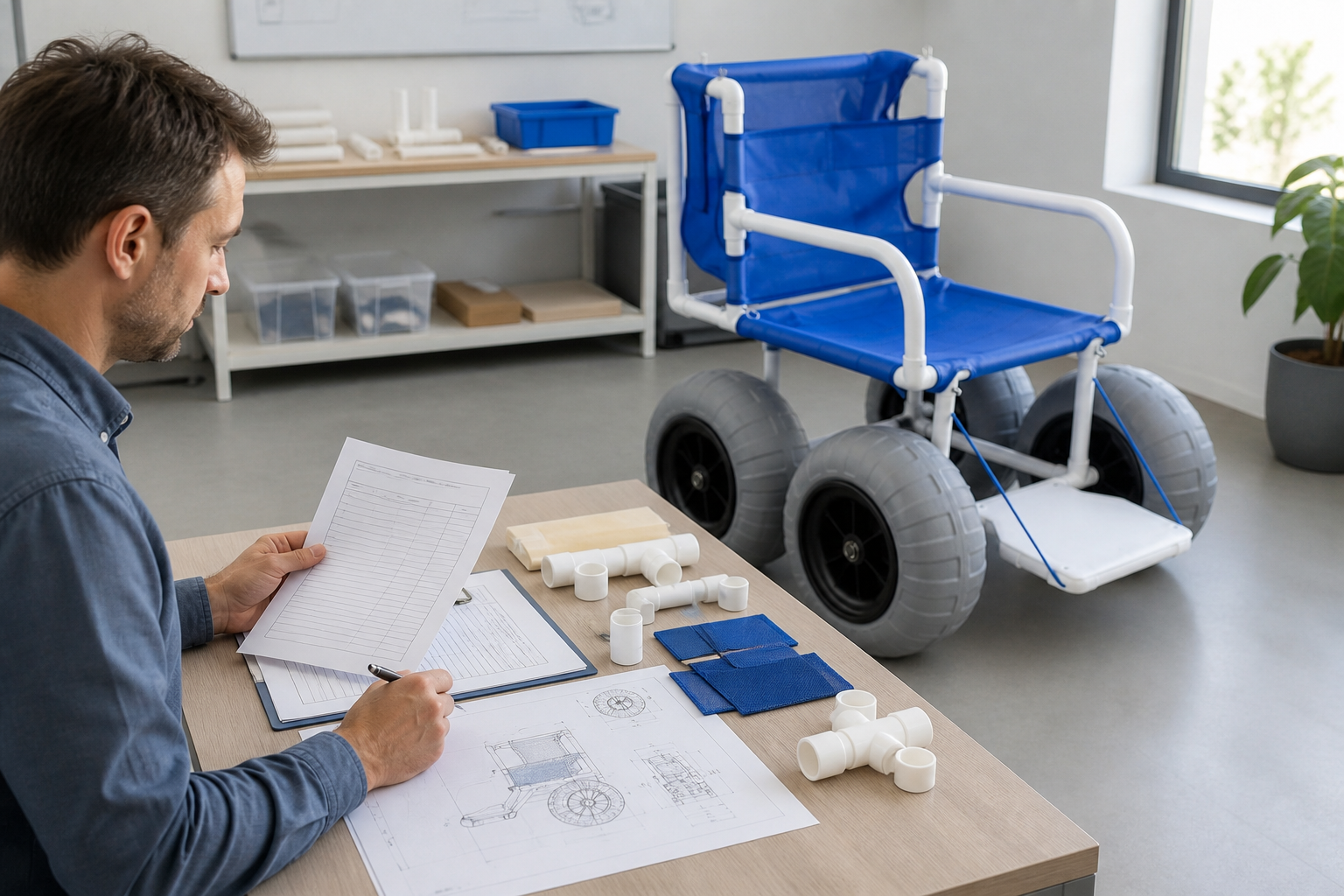
Beach wheelchair parts reorders should use exact part reference, chair compatibility, supplier source, document revision, current approved stock, items on hold, local use record, expected service need, lead-time evidence, packaging needs, and storage capacity. Teams should avoid guessed stock figures or blanket spare ratios. Different components may have different service boundaries and storage risks.
Link demand evidence with exact supplier identity
The buying check: require a reviewer to match every reorder line with chair models and current supplier evidence before approval. Record substitutions, superseded references, minimum order conditions, or availability statements only when the supplier provides them for that inquiry. Keep commercial terms outside article claims and inside controlled purchasing records. After receipt, move components through identity, condition, and storage checks before approved stock status.
- Use exact part reference and compatible chair models.
- Review stock, holds, use history, and storage space.
- Record supplier source and document revision.
- Inspect receipts before approved stock status.
Key Takeaway: A reorder record should prevent a purchasing shortcut from creating a compatibility gap.
| Review area | Working record |
|---|---|
| Reorder field | Evidence |
| Identity | Part reference and chair compatibility |
| Need | Use record, hold status, and service plan |
| Receipt | Condition, document match, and storage release |
The check creates a traceable path from local need to accepted stock.
How should parts records connect with fleet status?
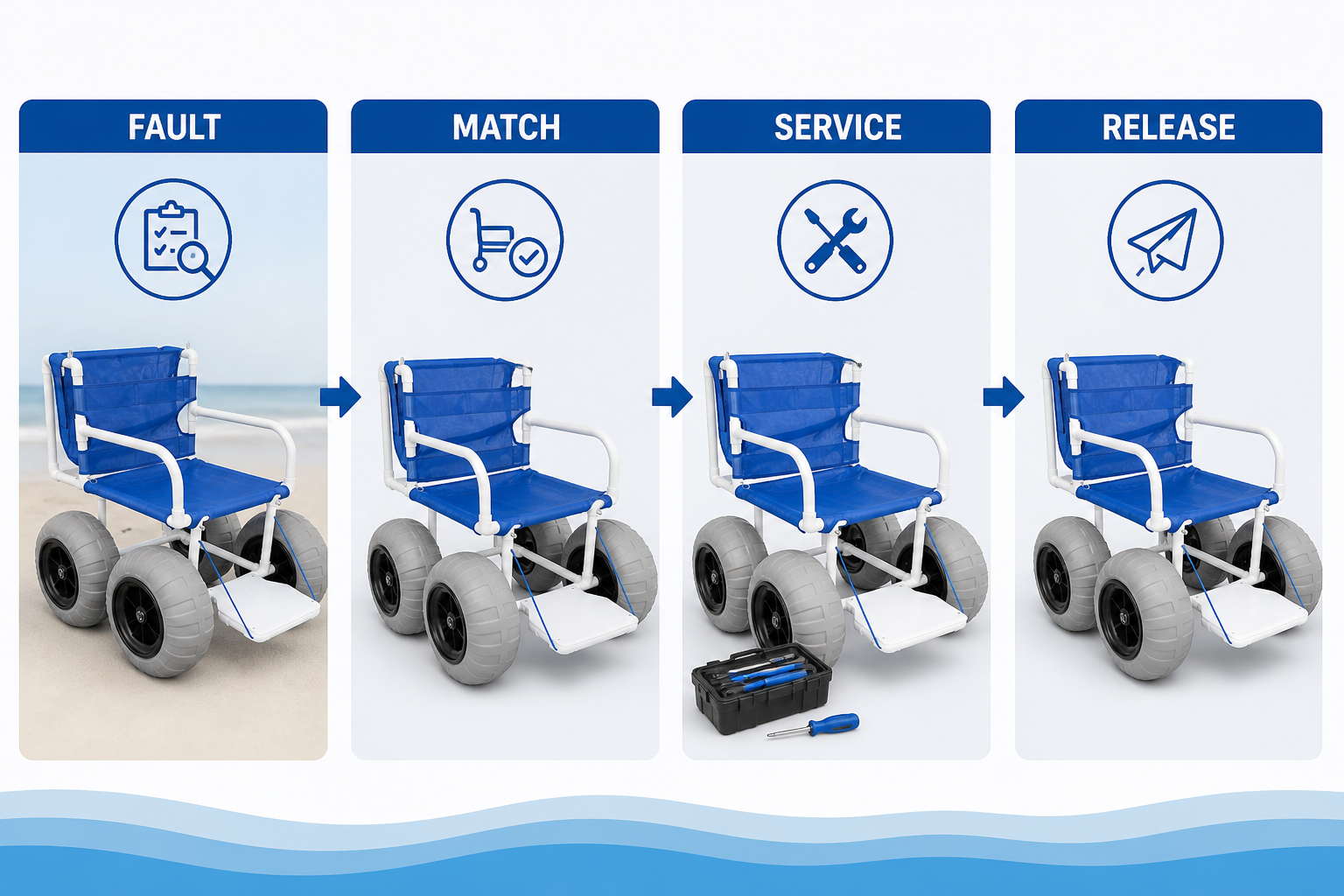
Beach wheelchair parts records should connect approved stock, reserved item, issued item, installed item, removed component, held component, repair source, chair ID, work result, and release status. This link shows whether a component remains available, belongs with a specific fault, or has entered service. Parts quantity and fleet readiness should never be inferred from separate unconnected lists.
Close every part movement against a chair or stock state
The control view: use one chain from fault report through part selection, issue, work, removed-item handling, inspection, chair release, and stock update. Give every movement a date, owner, source, and state. Reconcile storage with records through periodic checks. Investigate a mismatch before ordering or installation. Preserve work history so a later supplier question can trace which item entered which chair.
- Link stock movement with chair or fault identity.
- Record issue, install, removal, and hold states.
- Close work with inspection and chair release.
- Reconcile records with protected storage.
Key Takeaway: Parts control works when every movement changes both component and chair status.
| Review area | Working record |
|---|---|
| Flow stage | Linked status |
| Fault | Chair and component under review |
| Part movement | Reserved, issued, installed, or held |
| Closeout | Removed item, stock update, and chair release |
The linked chain makes parts and fleet records agree after each service event.
Closing Notes
Parts work becomes clearer when chair identity, drawings, wheel and frame records, fabric and foot support details, protected storage, repair boundaries, reorder checks, and fleet status stay connected. Keep every spare tied to current supplier evidence. To discuss a parts and service brief, contact us today with your chair models, component records, storage method, fault process, and reorder needs.
Frequently Asked Questions
Can I use a similar-looking wheel on another chair?
No. Match supplier part identity, model, revision, dimensions, hub, axle, and written compatibility before installation.
What’s the best starting point for a parts list?
Start with chair ID, model, drawing revision, current component list, approved part numbers, and service contacts.
How do I know if a spare should stay in stock?
Use approved compatibility, local use history, lead-time evidence, storage needs, and supplier guidance rather than a guessed quantity.
Can staff repair every component onsite?
No. Follow supplier records and local policy that separate inspection, permitted service, and authorized repair.
What’s the best release record after a replacement?
Record chair ID, removed part, installed approved part, work source, checks performed, result, and named release decision.