Beach wheelchair rental is the primary solution for individuals with mobility challenges who wish to navigate the sandy shores of the Bay Area. Imagine arriving at a stunning coastline like Ocean Beach, only to find the soft, shifting sand acts as an impassable barrier for your standard mobility device. This common struggle often prevents families and individuals from enjoying the therapeutic rhythm of the waves. Fortunately, specialized Beach wheelchair rental options exist to transform these inaccessible terrains into open, welcoming playgrounds for everyone.
Why seek a Beach wheelchair rental today?
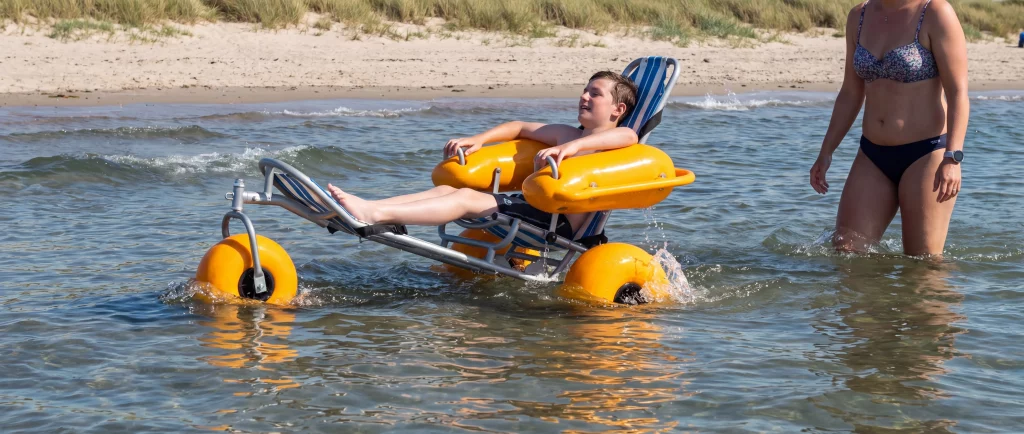
Seeking a Beach wheelchair rental is the first step toward reclaiming your independence on the California coast. Many people find that these specialized devices allow them to traverse terrain that would otherwise be off-limits. By choosing to rent, you gain access to high-end engineering without the significant financial investment of owning a private all-terrain vehicle.
What makes beach access so vital?
Outdoor recreation is a fundamental right that significantly boosts mental and physical well-being for those with disabilities. Accessing the shoreline provides a unique sense of freedom that standard city paths simply cannot replicate.
But here is the thing: The psychological impact of being “just another person on the beach” is truly revelatory. It moves the focus from a disability to the shared human experience of enjoying nature.
How do modern chairs solve the sand issue?
Modern frames use advanced tire technology to prevent sinking into fine, loose sand. These designs distribute weight evenly across a larger surface area to ensure smooth movement.
- Low-pressure balloon tires glide over soft surfaces.
- Corrosion-resistant frames withstand harsh saltwater.
- Ergonomic handles allow for easier assistance from companions.
- Stabilized seating provides comfort during long outings.
Key Takeaway: Modern rental equipment bridges the gap between the parking lot and the waterline, ensuring no one is left behind on the boardwalk.
| Feature | Standard Wheelchair | Beach Wheelchair |
|---|---|---|
| Tire Type | Thin, high-pressure | Wide, low-pressure balloon |
| Sand Performance | Sinks/Stuck | Glides/Floats |
| Frame Material | Steel/Aluminum | Marine-grade Alloy |
The technical superiority of beach-specific tires is what makes the impossible possible on shifting terrains.
How does a Beach wheelchair rental work?
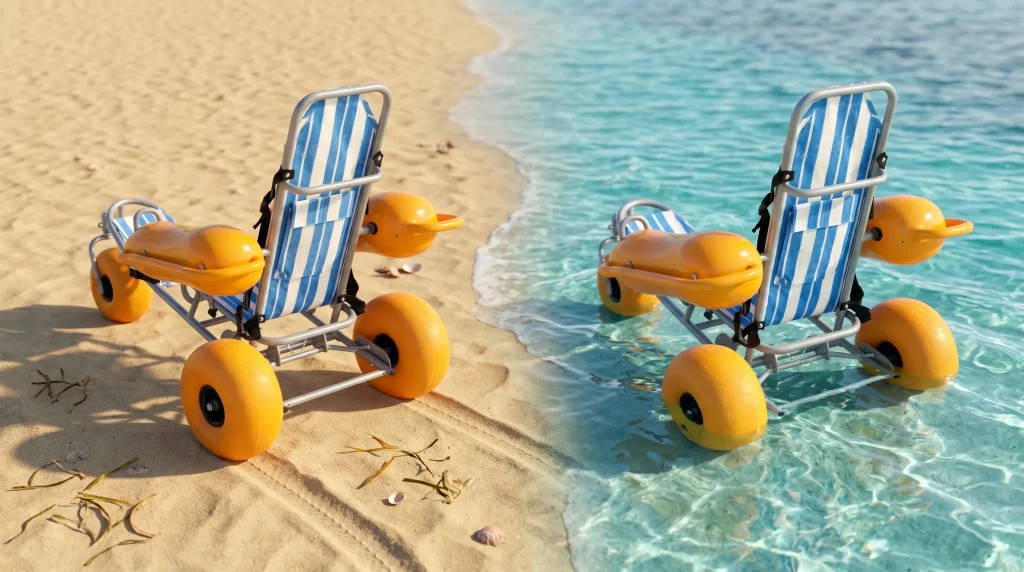
A Beach wheelchair rental works by utilizing oversized, air-filled tires that allow the chair to stay on top of the sand rather than digging into it. Most rental programs in the Bay Area offer manual models that require an assistant to push the user across the beach. These chairs are specifically designed to be lightweight yet durable enough to handle the unique stresses of a coastal environment.
Are manual frames easy to push?
Manual frames are significantly easier to handle than standard chairs on the sand, though they still require physical effort from an assistant. The specialized wheels reduce friction, making the transit from the path to the ocean relatively smooth.
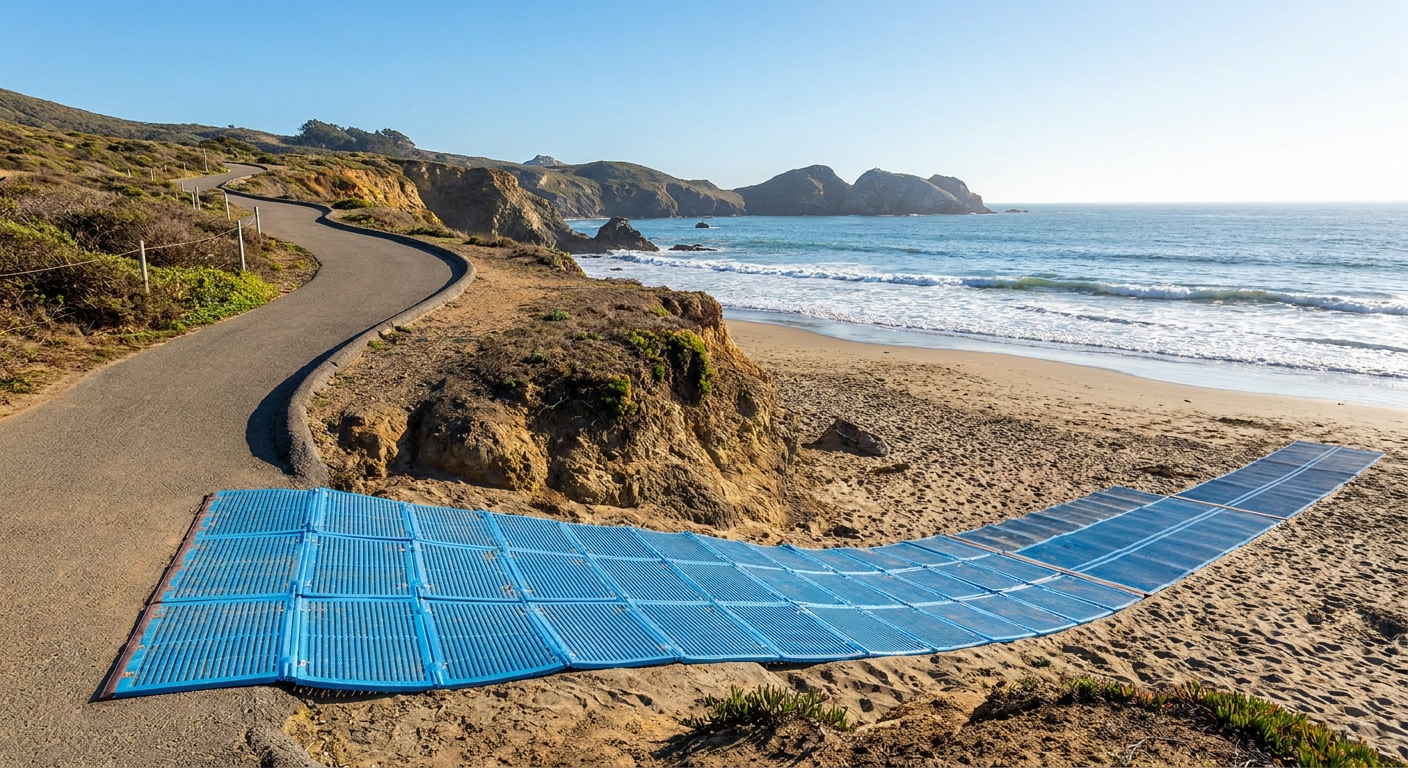
It gets better: Many beaches now provide temporary beach mats that create an even firmer surface for the initial part of your journey. This combination makes the beach accessible even for those with limited physical strength in their support group.
What features ensure user safety?
Safety is the top priority for park programs, which is why rental chairs often include integrated seatbelts and high-traction braking systems. These features ensure the user remains secure even when navigating gentle slopes or uneven dunes.
- Secure lap belts prevent sliding on inclines.
- High-visibility colors help lifeguards spot users.
- Rust-proof coatings prevent structural failures from salt air.
- Oversized armrests provide lateral stability.
Key Takeaway: User safety is engineered into every component, from the harness system to the high-buoyancy tire design used in these specialized vehicles.
| Safety Element | Purpose | Benefit |
|---|---|---|
| Harness System | User Stability | Prevents falls on uneven sand |
| Balloon Tires | Ground Clearance | Avoids getting stuck in pits |
| Marine Coating | Durability | Prevents salt-related breakage |
Strict maintenance protocols at rental stations ensure that every safety feature is fully functional before you head out.
Where to find a Beach wheelchair rental?
You can find a Beach wheelchair rental at numerous locations throughout the Golden Gate National Recreation Area and along the San Mateo coastline. Major spots like Stinson Beach, Muir Beach, and Baker Beach maintain dedicated lockers for this equipment. Most of these programs are operated by park services or local non-profits to ensure the community has barrier-free access to the water.
Which coastal spots offer access?
San Francisco and its neighboring counties have made significant strides in coastal accessibility over the last decade. From the urban shores of Crissy Field to the rugged beauty of Point Reyes, options are expanding.
You might be wondering: Are these chairs available at every single beach? While the list is growing, it is important to check the specific availability for your intended destination before you pack your bags.
Are state parks fully equipped?
State parks like Half Moon Bay and Francis Beach are excellent examples of fully equipped facilities that prioritize inclusive recreation. They often have multiple manual chairs available for free on a first-come, first-served basis at the entry kiosks.
- Stinson Beach offers reservations via email.
- Half Moon Bay provides chairs at the entrance.
- Crissy Field features seasonal beach mats for easier entry.
- Point Reyes maintains equipment at Drakes Beach.
Key Takeaway: The Bay Area is home to one of the most robust beach accessibility networks in the country, with gear available at almost every major landmark.
| County | Notable Beach | Reservation Method |
|---|---|---|
| San Francisco | Baker Beach | Email/Phone |
| San Mateo | Francis Beach | Kiosk Request |
| Marin | Stinson Beach | Email Ahead |
The diverse locations ensure that whether you prefer an urban view or a secluded cove, an accessible option is within reach.
What is a manual Beach wheelchair rental?
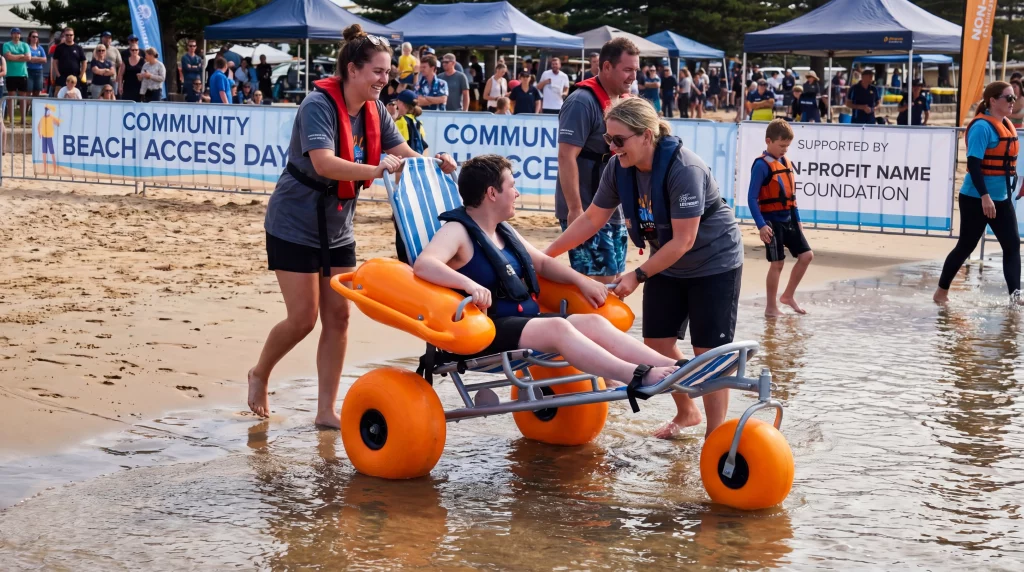
A manual Beach wheelchair rental refers to a non-motorized mobility device that features oversized wheels for sand navigation. These are the most common types of accessible equipment found in public parks because they are durable and easy for staff to maintain. Unlike motorized versions, these require a companion to assist with movement, making them a collaborative way to experience the outdoors.
Do you need a companion to help?
Yes, manual rental chairs almost always require a second person to push, as the oversized tires are not designed for self-propulsion. This makes the beach trip a shared activity where friends or family members help navigate the terrain.
But here is the thing: The effort required to push these chairs is significantly less than trying to force a standard wheelchair through the sand. The engineering of the large tires does most of the heavy lifting for you.
How heavy are these beach frames?
While they look bulky, most manual beach wheelchairs are built using lightweight aluminum alloys to keep the overall weight manageable. This makes them easier for an assistant to maneuver while ensuring they don’t sink too deep into the beach surface.
- Aluminum frames reduce the total load.
- Removable parts allow for easier transport.
- Folding designs are available for certain models.
- Quick-release wheels simplify cleaning and storage.
Key Takeaway: Manual chairs are designed to balance rugged durability with a lightweight profile, facilitating ease of use for the entire support group.
| Component | Material | Benefit |
|---|---|---|
| Frame | Lightweight Aluminum | Easier to push and steer |
| Seat | UV-Resistant Fabric | Stays cool in the sun |
| Axles | Stainless Steel | Resists saltwater damage |
The focus on lightweight materials ensures that the physical demand on the companion is kept to a minimum.
Why plan your Beach wheelchair rental?
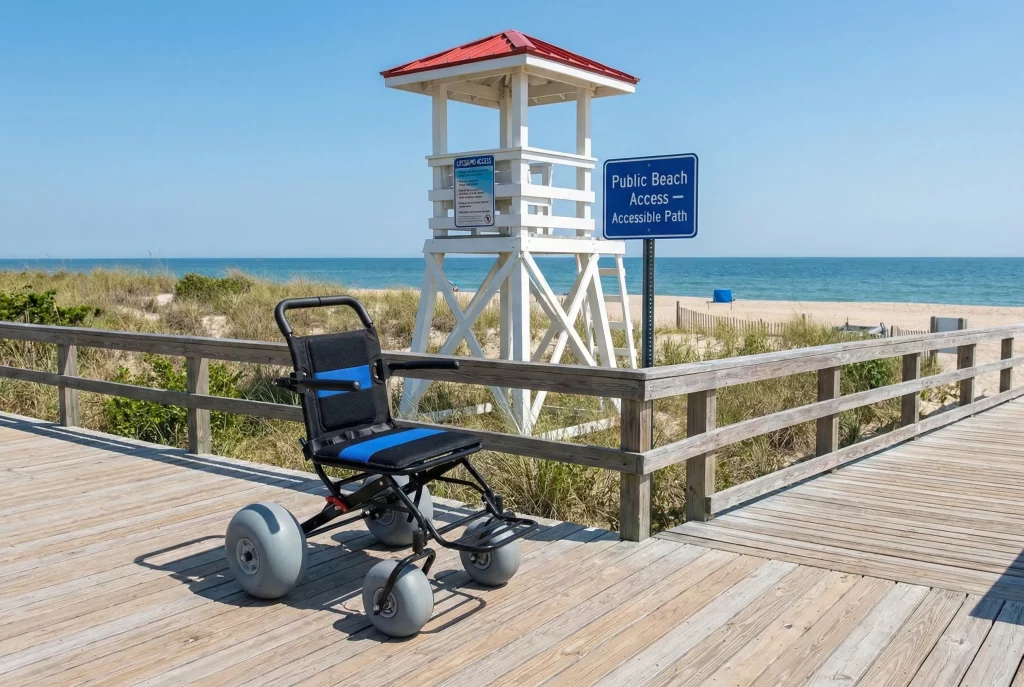
Planning your Beach wheelchair rental in advance is essential because these popular resources are often in high demand during the summer months. Many parks only have a limited number of chairs—sometimes just one or two—so showing up without a reservation can lead to disappointment. By coordinating with the park’s accessibility team a few days early, you ensure your equipment is ready and waiting for your arrival.
Is advance booking always required?
While some locations allow for walk-up requests, the most reliable way to secure equipment is through an advance email or phone call. This is especially true for popular destinations like Stinson Beach where the program is very active.
It gets better: Booking ahead often allows you to receive a brief orientation or safety briefing from park staff before you even arrive. This saves you valuable time so you can get straight to the shoreline when you get there.
What details should you confirm?
When you make your plan, you should confirm the exact pickup location and any weight limits associated with the specific chair model. Knowing these details ahead of time prevents logistical hurdles on the day of your trip.
- Confirm the rental pickup hours.
- Ask about the proximity of accessible parking.
- Check if a waiver form needs to be signed.
- Verify the maximum weight capacity of the gear.
Key Takeaway: A little bit of foresight goes a long way in ensuring your day at the beach is seamless, relaxed, and fully accessible.
| Month | Demand Level | Recommendation |
|---|---|---|
| July-August | Peak | Reserve 1 week ahead |
| May-June | High | Reserve 3 days ahead |
| Sept-Oct | Moderate | Walk-ups often possible |
As the chart illustrates, peak summer demand requires more aggressive planning to guarantee equipment availability.
Who benefits from Beach wheelchair rental?
Beach wheelchair rental benefits a wide range of people beyond those with permanent disabilities, including seniors and individuals recovering from recent injuries. Anyone who finds standard walking difficult on soft surfaces can use these chairs to enjoy the coastal scenery. Whether you are dealing with a temporary broken leg or age-related mobility shifts, these chairs provide a safe way to stay active in nature.
Is this only for permanent needs?
Absolutely not, as these tools are intended for anyone who struggles with the physical demands of sand navigation. They are frequently used by avid beachgoers who are simply in a phase of recovery and don’t want to miss out on the season.
But here is the thing: The “all-terrain” nature of this equipment makes it an ideal solution for anyone who finds uneven ground challenging. It’s about creating an inclusive environment where the reason for the need doesn’t matter.
How does it aid post-surgery trips?
For those recovering from hip or knee surgery, the beach can seem like a forbidden zone due to the risk of falls. A rental chair provides the stability and support needed to visit the shore without putting undue stress on healing joints.
- Provides a stable base for those with balance issues.
- Eliminates the risk of falling on shifting sand.
- Allows for long-duration enjoyment without physical fatigue.
- Keeps the user elevated and dry away from the tide.
Key Takeaway: These chairs are a universal tool for accessibility, providing freedom to seniors, the injured, and those with chronic conditions alike.
| User Group | Typical Need | Benefit of Rental |
|---|---|---|
| Seniors | Balance/Endurance | Safe, relaxed coastal tours |
| Post-Surgery | Joint Protection | Access without physical strain |
| Families | Inclusivity | Everyone stays together on sand |
Broadening the definition of who “needs” accessibility equipment helps more people discover the joy of the Bay Area coast.
Is a Beach wheelchair rental free to use?
In many Bay Area public parks, a Beach wheelchair rental is provided as a free service to ensure that all citizens can enjoy the shoreline regardless of their income. This is often made possible through generous donations from coastal commissions and non-profit advocacy groups. While some private resorts may charge a fee, the vast majority of popular public beaches offer this equipment at no cost to the visitor.
Are public parks offering free gear?
Most regional and national parks in the Bay Area consider accessible equipment to be an essential public service. At places like Half Moon Bay State Beach, you can simply request a chair at the entrance kiosk for immediate, free use.
You might be wondering: Are there hidden costs like deposits? Generally, you may need to leave an ID or sign a simple liability waiver, but no financial payment is typically required for the use of the chair itself.
What are the typical time limits?
While the service is free, there are usually time limits to ensure that as many people as possible can use the equipment throughout the day. Most parks allow for a few hours of use, which is usually plenty of time for a full beach outing.
- Usually 2-4 hours per reservation.
- First-come, first-served for non-reserved gear.
- Mandatory return before the park office closes.
- Option to extend if no one else is waiting.
Key Takeaway: The zero-cost barrier for public equipment ensures that coastal recreation remains an egalitarian experience for all Bay Area residents.
| Location Type | Typical Cost | Requirement |
|---|---|---|
| National Park | Free | ID/Waiver |
| State Park | Free | Kiosk Request |
| County Park | Free | First-come basis |
Public funding and community donations keep these programs alive, highlighting a shared commitment to total beach inclusivity.
How to book a Beach wheelchair rental?
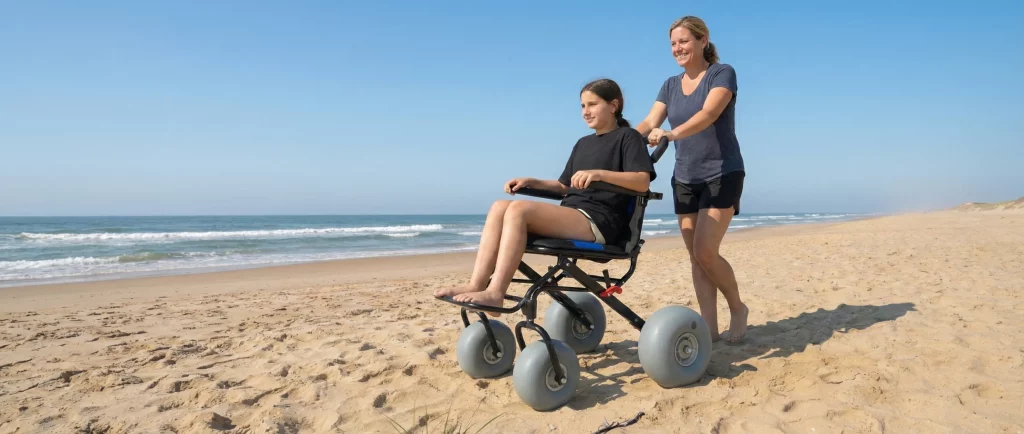
The best way to book your Beach wheelchair rental is to identify the specific park agency in charge and use their designated email or phone reservation system. For the Golden Gate National Recreation Area, a central email address manages requests across multiple sites like Rodeo Beach and Muir Beach. Simply provide your name, the date of your visit, and which beach you plan to explore to get the process started.
Can you reserve via email or phone?
Email is often the preferred method as it creates a clear record of your request and allows staff to send you maps and safety instructions in return. However, phone calls are still a great way to check for last-minute availability or to ask specific questions about the terrain.
It gets better: Some park offices are now integrating their reservation systems into broader park management apps. This makes it easier than ever to manage your outdoor itinerary from your mobile device while you are on the go.
What information is needed upfront?
When you reach out to book, be prepared to share your contact information and the expected duration of your beach visit. This helps the rangers manage the equipment schedule effectively for all visitors throughout the day.
- Name and primary phone number.
- Desired beach location (e.g., Baker Beach).
- Date and specific time of arrival.
- Approximate weight of the user for gear matching.
Key Takeaway: Clear communication with the park’s accessibility team is the most effective way to guarantee your equipment is ready when you arrive.
| Step | Action | Outcome |
|---|---|---|
| 1 | Email park agency | Initiates reservation |
| 2 | Provide details | Ensures gear matches needs |
| 3 | Confirm time | Locks in your equipment slot |
The transition from planning to enjoying is fast and efficient when you follow the established reservation protocols.
Can a Beach wheelchair rental go in water?
Not every Beach wheelchair rental is designed for water immersion, so you must confirm if the model is a “floating” or “dry-only” chair. Most public rental chairs in the Bay Area are intended for sand mobility and are not meant to enter the waves due to the high surf and strong currents typical of Northern California. However, some specialized floating models exist that allow for supervised, shallow-water entry in calmer areas.
Are all frames safe for saltwater?
While all beach rental frames are built with corrosion-resistant materials, they are not all designed to float or remain stable in moving water. Dry-only models can be severely damaged if sand and salt get into the mechanical joints through immersion.
But here is the thing: Using a sand-only chair at the waterline can be dangerous if a sudden wave hits, as the chair might become difficult to steer. Always stick to the usage guidelines provided by the park staff to stay safe.
How deep can floating models go?
If you find a floating model, they are typically rated for shallow water entry, usually up to the user’s waist or about 1.2 meters. These chairs require an attendant at all times to ensure the chair does not drift or tip in the surf.
- Floating chairs have buoyant armrests or tires.
- Supervision is mandatory for all water entry.
- Check tide charts before entering the water.
- Rinse the chair with fresh water after every use.
Key Takeaway: While sand navigation is the primary goal, specialized floating gear can offer a more immersive ocean experience when conditions are safe.
| Model Type | Primary Use | Water Safe? |
|---|---|---|
| Standard Beach | Sand Transit | No (Dry use only) |
| All-Terrain | Mixed Paths | No (Avoid surf) |
| Floating | Water Entry | Yes (Supervised) |
Always prioritize safety over immersion, especially on the rugged and unpredictable coastlines of the Bay Area.
What limits a Beach wheelchair rental?
The primary thing that limits a Beach wheelchair rental is the steepness of the terrain and the presence of deep, unstable dunes that are too difficult for an assistant to push through. Even with balloon tires, extremely soft sand or high-grade inclines can be physically taxing for the person providing the push. Additionally, environmental factors like high surf zones or rocky areas can make certain parts of the beach off-limits for mobility devices.
Are steep dunes off-limits for you?
Yes, for safety reasons, you should avoid attempting to climb steep sand dunes as the chair could tip or become hopelessly stuck. Stick to the flatter parts of the shoreline and use the designated accessible paths or beach mats whenever they are available.
You might be wondering: How do I know where the safe zones are? Most parks with rental programs provide maps that highlight the best “accessible zones” where the sand is firm and the grade is manageable.
How does loose sand affect pushing?
Extremely loose, dry sand requires much more force to navigate than damp, packed sand near the waterline. You will find that your journey is much easier if you plan your route along the more compacted surfaces of the beach.
- Damp sand provides better traction for wheels.
- Deep pits should be avoided to prevent getting stuck.
- Cross-winds can make steering the large tires difficult.
- Tidal changes can quickly alter the sand’s firmness.
Key Takeaway: Understanding the limitations of the terrain is key to having a successful and safe outing with your rental equipment.
| Terrain Type | Ease of Use | Strategy |
|---|---|---|
| Packed Damp Sand | High | Best for long transits |
| Dry Loose Sand | Moderate | Stick to level areas |
| Steep Dunes | Low | Avoid entirely for safety |
By respecting the boundaries of the equipment and the environment, you ensure a stress-free experience for everyone involved.
Conclusion
Opening up the Bay Area’s stunning coastline for everyone is a mission rooted in the belief that nature should be accessible to all. Through the availability of specialized equipment, we can bridge the physical gaps that once kept individuals from the sand and surf. If you are ready to plan your next coastal adventure or have questions about equipment specifications, please reach out to us to see how we can support your journey. At Ary Beach Accessibility Solutions, our vision is to lead the industry in creating innovative, high-quality tools that turn every shoreline into a welcoming destination. Together, we can ensure that no barrier is too big and no beach is out of reach.
FAQ
Can I transport the rental chair to a different beach?No, most public rental programs require the equipment to remain at the specific beach where it was checked out. This is because the gear is often funded for that specific location and needs to be available for other visitors at the same site.
What is the best way to ensure I get a chair on weekends?Reserving several days in advance via email is the only way to guarantee equipment during high-traffic weekend periods. Demand peaks on Saturdays and Sundays, so walk-up availability is extremely limited during these times.
How do I know if the chair fits my specific mobility needs?You should ask the park staff for the specific dimensions and weight capacity of the chair before you arrive. Most rental programs use “one-size-fits-most” models, but confirming the weight limit is a crucial safety step.
Can I use the equipment independently without an assistant?Generally no, as most manual beach wheelchairs available for rent are designed to be pushed by a companion. The oversized balloon tires make self-propulsion almost impossible on soft surfaces, so having a helper is necessary.
What is the best time of day to navigate the sandy terrain?Navigating is often easiest during low tide when the damp sand is more compacted and provides a firmer surface. Check local tide charts and aim for these windows to reduce the physical effort required to push the chair.