Floating beach wheelchairs are essential because they bridge the critical gap between sand-level mobility and true water immersion, ensuring a complete coastal experience for individuals with disabilities. You might have seen standard wheelchairs struggle and sink into the soft sand, leaving users stuck at the boardwalk while others enjoy the surf. This exclusion creates a secondary disability—social isolation—that ruins the spirit of a beach holiday. By integrating a floating beach wheelchair into your facility, you solve this fundamental problem of “near-water” versus “in-water” access.
How do they improve water access?
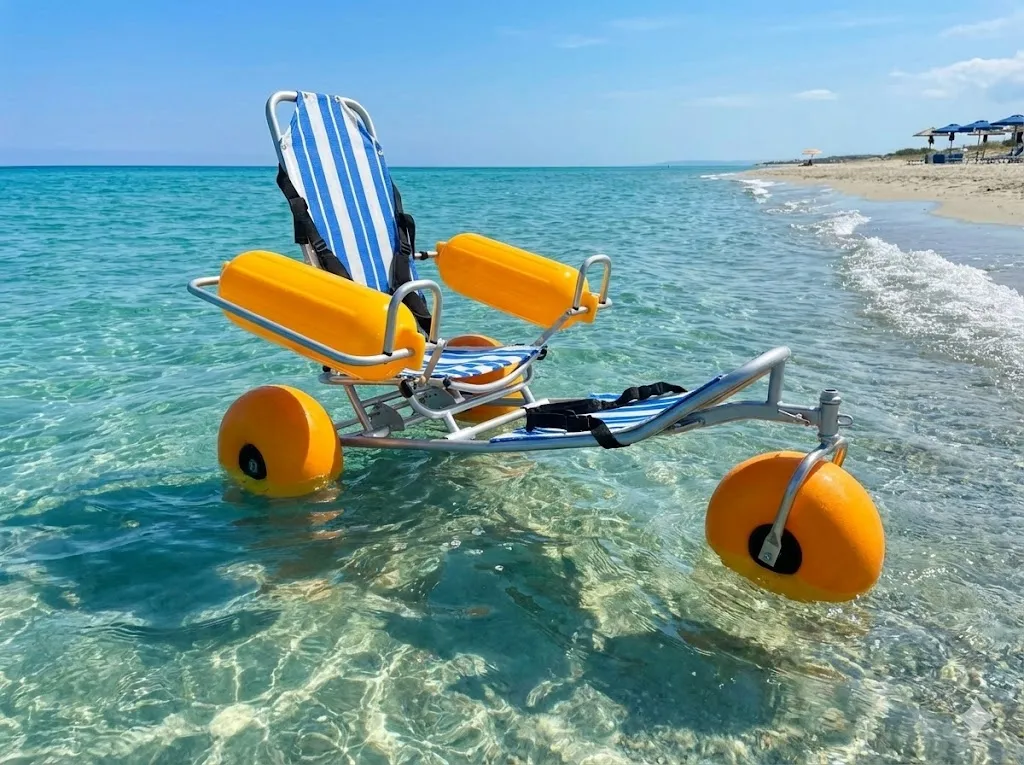
For example, a floating beach wheelchair improves water access by allowing a direct transition from the shoreline directly into the waves without the user needing to transfer out of their seat. Traditional equipment often stops at the wet sand line, but these specialized units use buoyant materials to safely enter the surf. This capability transforms a spectator-only visit into an active, immersive experience. For model context, review the floating chair overview and verify the exact fit for this use.
However, but that’s not all. The design allows for supervised exploration of shallow coastal waters, providing a sensory experience that standard mobility aids cannot match.
Can they handle uneven shorelines?
Meanwhile, the wide, low-pressure balloon tires are specifically engineered to absorb the shock of uneven sand and small shore breaks. This stability is crucial for ensuring the user feels secure as they transition from a solid surface to a liquid environment.
What about water depth limits?
As a result, while these chairs are designed for immersion, they are most effective in waist-deep water where the attendant can maintain firm footing. Safety protocols generally advise against using them in high-surf zones or deep water without dedicated supervision.
Key Takeaway: Immersive access is the final frontier of beach inclusivity, moving beyond the sand to provide genuine water interaction.
| Feature | Impact on Access | User Benefit |
|---|---|---|
| Buoyant Arms | Floating in water | Effortless immersion |
| Wide Tires | Sand traversing | Smooth transport to surf |
| Water Entry | direct transition | No manual lifting needed |
Also, Analytical Insight: Total accessibility is only achieved when the user journey includes the water itself, not just the view of it.
What makes the design unique?
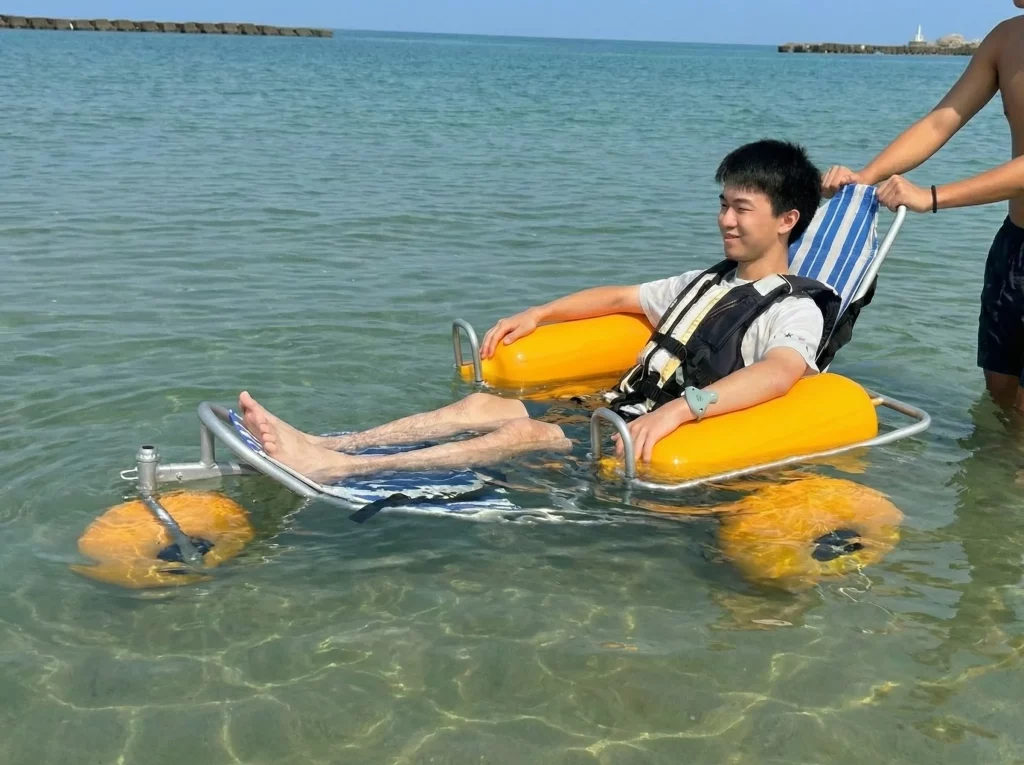
Then, the design of a floating beach wheelchair is unique because it combines marine-grade structural integrity with hydrodynamic buoyancy components that standard wheelchairs lack. Unlike a typical chair that would rust and sink, these units use aluminum or stainless steel frames paired with air-filled armrests and tires. This specific configuration ensures that the chair stays upright and floats even when properly submerged. For model context, review the all-terrain chair overview and verify the exact fit for this use.
For example, here is why. Every component is chosen to survive the harsh “triple threat” of sand, salt, and sun while maintaining user comfort.
Are the armrests functional?
However, the armrests serve a dual purpose: they act as comfortable rests for the user and as primary flotation devices. They are strategically positioned to keep the user’s head well above the water level throughout approved use.
How do balloon wheels help?
Meanwhile, balloon wheels distribute weight over a massive surface area, preventing the chair from digging into the sand. In the water, these wheels contribute additional buoyancy, making the chair easier for an attendant to maneuver.
Key Takeaway: Specialized engineering is required to balance the commercial-use needs of sand transport with the delicate physics of water flotation.
| Design Element | Primary Function | Secondary Benefit |
|---|---|---|
| Aluminum Frame | Corrosion resistance | Lightweight handling |
| Buoyant Armrests | Flotation stability | User positioning |
| Balloon Tires | Soft sand mobility | Added lift in water |
As a result, Analytical Insight: The marriage of sand-specific tires and water-specific armrests creates a hybrid tool that masters two distinct environments.
Why is safety the top priority?
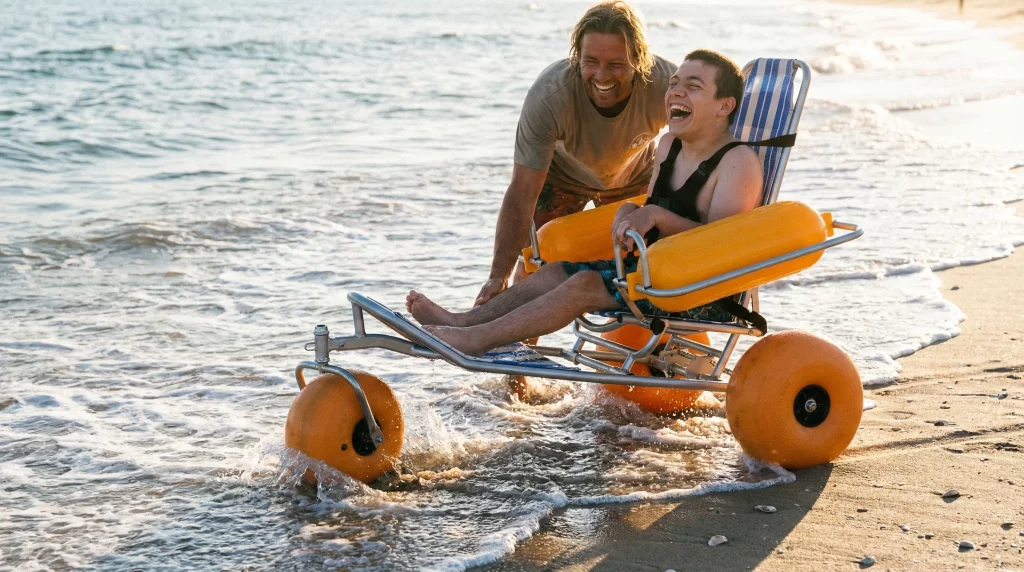
Also, safety is the top priority because a floating beach wheelchair operates in a dynamic environment where waves, currents, and shifting sands present constant risks. Without a stable frame and a secure restraint system, the user could be at risk of tipping or being pulled by a riptide. Manufacturers prioritize a low center of gravity to ensure the chair remains upright even as it transitions into the surf. For model context, review the accessible beach mat and verify the exact fit for this use.
Then, but wait, there’s more to consider regarding the role of the person assisting the user.
Is an attendant always required?
For example, yes, for safety reasons, a floating chair should always be operated with at least one able-bodied attendant. The attendant acts as the anchor, managing the chair’s position against the movement of the tide.
What safety features are standard?
However, most high-quality units include quick-release restraint systems and high-visibility flags to ensure the user is seen by other beachgoers. These features:
- For example, prevent the user from sliding out during immersion.
- Also, allow for rapid exit if an emergency occurs.
- Next, increase visibility for lifeguards and boaters.
- In practice, provide peace of mind for the user’s family.
Key Takeaway: Safety in the water is a collaborative effort between engineered stability and active attendant supervision.
| Safety Asset | Function | Risk Mitigated |
|---|---|---|
| Low Center of Gravity | Anti-tip stability | Capsizing in waves |
| Safety restraint | Secure seating | Falling out of chair |
| Attendant Handle | Control and steering | Drifting into deep water |
Meanwhile, Analytical Insight: Safety protocols must be as durable as the hardware to ensure a zero-incident environment for inclusive programs.
Are they durable in saltwater?
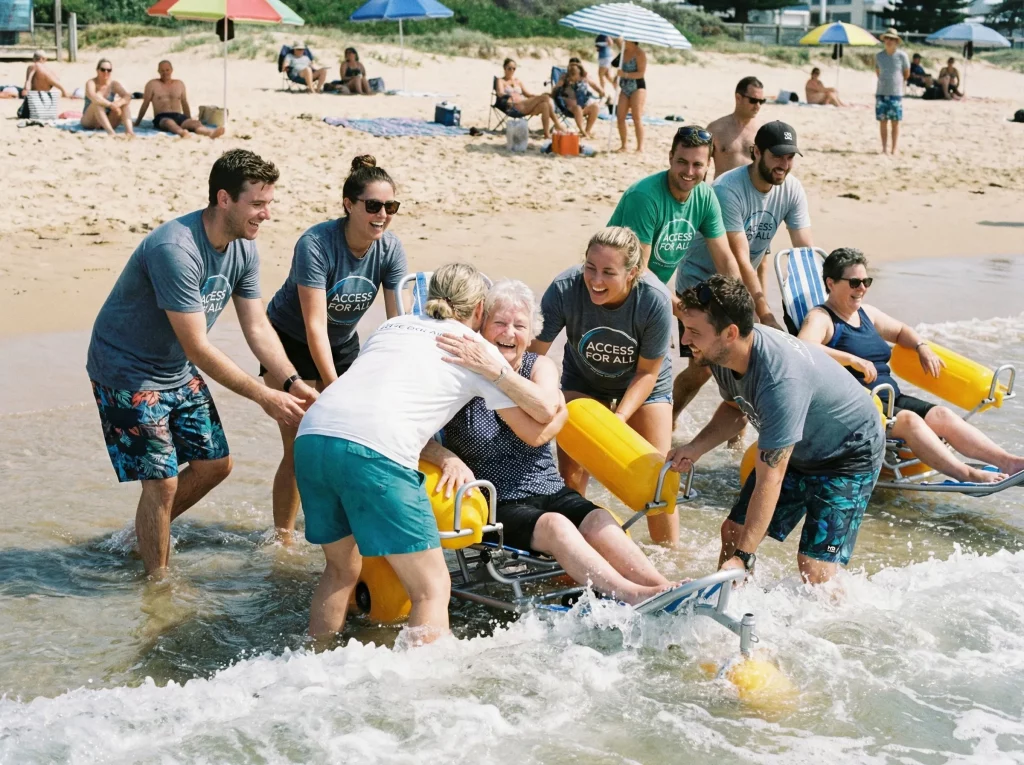
As a result, they are generally durable in saltwater because they are manufactured using non-corrosive materials like marine-grade aluminum and high-density plastics. A standard floating beach wheelchair is designed to withstand the highly abrasive nature of salt and sand that would destroy a regular mobility device within weeks. Long-term durability is the result of rigorous engineering focused on preventing oxidation at joint points. For model context, review the user manual resource and verify the exact fit for this use.
Also, the secret lies in the maintenance routine and the quality of the raw materials.
How do you prevent rust?
Then, while the metals are resistant, regular freshwater rinsing after every use is essential to remove salt crystals. This simple step prevents “crevice corrosion” and ensures that moving parts, like wheel axles, continue to spin freely.
Do the fabrics fade?
For example, most inclusive beach programs use chairs with UV-resistant mesh seating that allows water to drain instantly. This fabric:
- For example, resists fading from intense coastal sunlight.
- Also, prevents mold and mildew growth.
- Next, dries quickly for the next user.
- In practice, stays cool to the touch even in high heat.
Key Takeaway: Durability is a function of both high-quality manufacturing and consistent, simple maintenance protocols.
| Material | Durability Factor | Maintenance Need |
|---|---|---|
| Marine Aluminum | Rust-proof | Freshwater rinse |
| UV-Mesh Fabric | Sunlight resistant | Air dry after use |
| Sealed Bearings | Sand protection | Periodic inspection |
However, Analytical Insight: Investing in durability reduces the total cost of ownership by extending the equipment’s lifecycle materially.
Do they enhance guest experience?
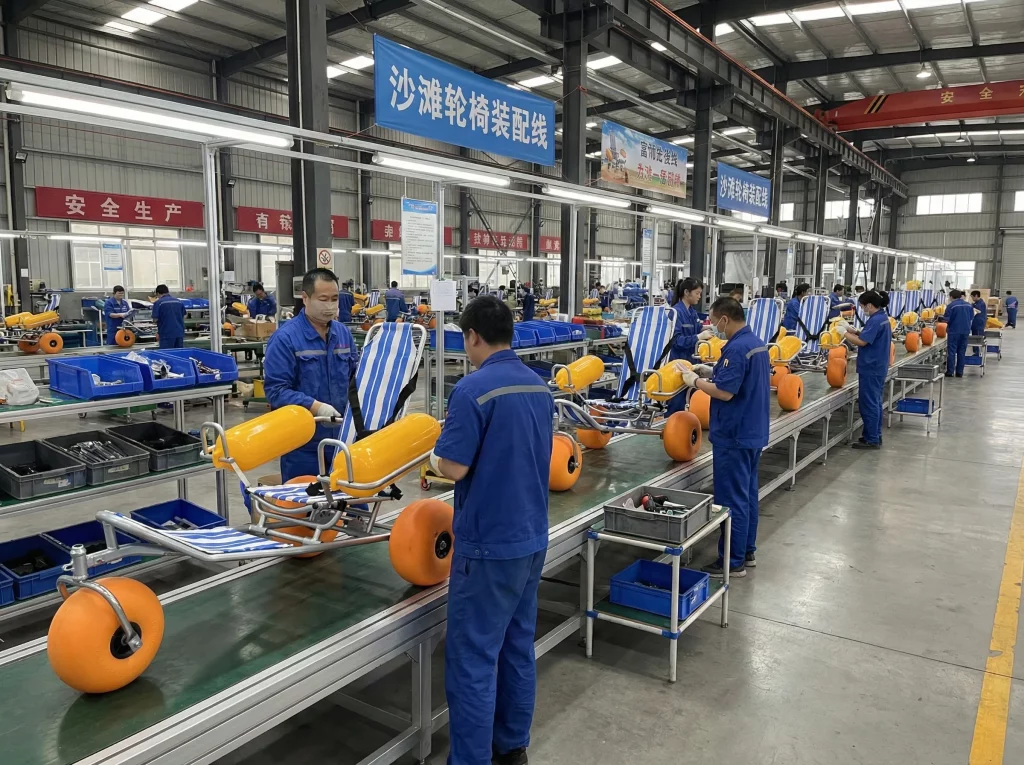
Meanwhile, they enhance guest experience by removing the psychological and physical barriers that prevent families from enjoying the beach together. When a resort offers a floating beach wheelchair , it sends a powerful message of welcome to the 15% of the global population living with a disability. This equipment allows a person with limited mobility to play in the waves with their children, rather than watching from a distance. For model context, review the supplier overview and verify the exact fit for this use.
As a result, The next check matters: inclusivity often becomes the deciding factor for family vacation bookings.
Does it affect brand loyalty?
Also, families with members who have disabilities are famously loyal to venues that provide high-quality accessibility. By providing the tools for water access, you create emotional connections that result in repeat visits and positive word-of-mouth.
How does it change the atmosphere?
Then, a beach that is truly accessible feels more vibrant and diverse, reflecting a modern commitment to social equity. This atmosphere:
- For example, attracts a wider demographic of visitors.
- Also, enhances the resort’s reputation for luxury and care.
- Next, encourages longer stays as guests feel more comfortable.
- In practice, supports the local community’s inclusivity goals.
Key Takeaway: The guest experience is exponentially improved when every family member can participate in every activity.
| Impact Area | Guest Response | Business Outcome |
|---|---|---|
| Emotional | Feelings of inclusion | Five-star reviews |
| Physical | Active water play | Longer stay duration |
| Social | Family togetherness | Brand advocacy |
For example, Analytical Insight: Accessibility is not a niche service; it is a fundamental component of high-end hospitality excellence.
How does the buoyancy work?
However, the buoyancy works through the application of Archimedes’ principle, using air-filled components that displace enough water to lift the weight of the chair and the occupant. In a floating beach wheelchair, the large balloon tires and the oversized armrests act as pontoons. This distributed lift ensures that the chair floats level, preventing the front or back from dipping too low. For model context, review the resort project example and verify the exact fit for this use.
Meanwhile, it’s essentially physics in action, but tuned for human comfort.
Why is the balance point critical?
As a result, the center of buoyancy is carefully aligned with the user’s center of mass to prevent the chair from flipping. If the chair was too buoyant at the bottom and not the sides, it would become unstable in even the smallest waves.
Can buoyancy be adjusted?
Most chairs have fixed buoyancy levels, but the air pressure in the balloon tires can be slightly tweaked to change how high the chair sits. Lower pressure increases the “footprint” on sand, while higher pressure can offer a slightly different feel in the water.
Key Takeaway: Precise buoyancy engineering is what separates a safe floating chair from a dangerous improvised float.
| Component | Displacement Volume | Role in Buoyancy |
|---|---|---|
| Armrest Floats | High | Upper body stability |
| Balloon Tires | Medium | Lower body lift |
| Lightweight Frame | Low | Minimizing total weight |
Analytical Insight: Understanding the physics of displacement is key to choosing equipment that remains stable in shifting tides.
What is the economic impact?
The economic impact of investing in a floating beach wheelchair is overwhelmingly positive, as it taps into the “Purple Pound”—the massive spending power of disabled travelers and their families. Research shows that inclusive tourism is one of the fastest-growing sectors in the industry, yet it remains underserved. By providing water access, you differentiate your program from competitors who only offer basic boardwalk access. For model context, review the water-park application example and verify the exact fit for this use.
Think about it: one accessible feature can unlock an entire family’s vacation budget.
Is there a direct ROI?
While some programs offer these chairs for free as an amenity, others generate revenue through rental fees that quickly cover the initial purchase price. The return on investment (ROI) is seen through:
- For example, increased hotel room bookings.
- Also, higher food and beverage sales from groups.
- Next, reduced marketing costs due to organic social sharing.
- In practice, grant eligibility for public accessibility projects.
Does it help with compliance?
In many regions, providing “meaningful access” is a legal requirement under disability acts. Proactively installing floating chairs can help avoid costly litigation and ensure your facility meets or exceeds government standards.
Key Takeaway: Inclusivity is a strategic business decision that pays dividends in both social capital and financial revenue.
| ROI Factor | Description | Estimated Impact |
|---|---|---|
| Market Expansion | Accessing disabled travelers | 15-20% increase in reach |
| Brand Equity | Reputation for inclusivity | High commercial-use perception |
| Legal Security | Compliance with ADA/Equality acts | Risk mitigation |
Analytical Insight: Financial success in modern tourism is increasingly tied to how well a facility serves all guests, regardless of ability.
How do they compare to standard?
They compare to standard chairs by offering a specialized “all-terrain plus” capability that ordinary beach chairs simply cannot match. While a standard beach wheelchair is excellent for traversing soft sand, it will often become unstable or waterlog if taken into the surf. The floating beach wheelchair is the only device designed specifically for the transition from the dry sand to the deep water. For model context, review the contact the team and verify the exact fit for this use.
The difference is clear when you look at the wheel and armrest configuration.
Can standard chairs float?
No, standard all-terrain wheelchairs are designed for stability on land and will generally sink or tip if they enter water deep enough to submerge the frame. They lack the pontoon-style armrests that provide the necessary lateral stability for floating.
Which one should you buy?
If your beach has a boardwalk and you only need to get people to their towels, a standard chair is fine. However, if your goal is an “inclusive program” that allows for water therapy and play, the floating model is non-negotiable.
Key Takeaway: Floating chairs provide a “sand-to-surf” solution, whereas standard beach chairs are limited to “sand-only” mobility.
| Feature | Standard Beach Chair | Floating Beach Chair |
|---|---|---|
| Water Use | No (Sinks) | Yes (Floats) |
| Stability | High on land | High in water/sand |
| Primary Goal | Sand transport | Immersive interaction |
Analytical Insight: Choosing the right tool depends on the “Performance Boundary” of your specific beach environment.
Is setup and storage difficult?
Setup and storage are not difficult because modern floating beach wheelchair models are designed with modularity and quick-release pins in mind. Most units can be assembled or disassembled in under five minutes without the need for specialized tools. This is a critical feature for beach clubs and resorts that need to store equipment indoors overnight to prevent theft or weather damage. For U.S. coastal sites, NOAA tide predictions can inform timing, while present conditions and local rules still control use.
Here is why this matters for operational efficiency.
Do they take up much space?
When disassembled, the frame, wheels, and floats can be stacked efficiently, taking up roughly the same space as two standard lounge chairs. Many resorts use dedicated storage lockers near the lifeguard station for easy deployment.
Can one person handle setup?
Yes, the lightweight aluminum construction makes it possible for a single staff member to wheel the chair from storage to the shoreline. Key design benefits include:
- For example, folding frames for compact storage.
- Also, tool-free assembly for rapid response.
- Next, lightweight materials for easy lifting.
- In practice, durable wheels that handle various storage floors.
Key Takeaway: Operational simplicity ensures that your staff will actually encourage guests to use the equipment.
| Storage Metric | Value/Standard | Benefit |
|---|---|---|
| Assembly Time | < 5 Minutes | Fast deployment |
| Tool Requirement | None (Quick-pins) | No lost parts |
| Footprint | Compact/Stackable | Minimal storage cost |
Analytical Insight: Equipment that is easy to manage is equipment that gets used, maximizing the impact of your accessibility program.
Why invest in them now?
You should invest in them now because the global standard for beach accessibility is shifting from “basic access” to “full inclusion.” As more travelers demand equitable experiences, beaches that fail to provide water-entry solutions will find themselves excluded from travel guides and booking platforms. Investing in a floating beach wheelchair today secures your position as a leader in the inclusive travel market before it becomes a baseline requirement.
The world is moving toward a more accessible future; your facility should lead the way.
Are there grants available?
Many governments and non-profits offer funding specifically for municipal and resort accessibility upgrades. By acting now, you can often offset the cost of purchase through these community development programs.
What is the long-term outlook?
As the population ages, the demand for mobility-friendly travel will only increase. A floating chair is not just a purchase for today; it is an investment in a future-proofed business model that respects the rights of all visitors.
Key Takeaway: Early adoption of full-immersion technology provides a competitive edge and demonstrates genuine social responsibility.
| Future Trend | Market Reaction | Your Strategic Move |
|---|---|---|
| Aging Demographic | Need for mobility aids | Invest in walkers/chairs |
| Social Media | Viral inclusive content | Showcase your equipment |
| Legislation | Mandated accessibility | Get ahead of compliance |
Analytical Insight: Proactive investment in inclusivity is the most effective way to build a sustainable, resilient brand in the tourism sector.
The challenges of beach accessibility—corrosion, sand resistance, and water safety—are effectively solved by the specialized engineering of floating beach wheelchairs. These devices move beyond simple transport, providing the dignity of choice and the joy of immersion for every guest. Our vision is a world where the shoreline is not a boundary, but an invitation for everyone. To see how our equipment can transform your facility, contact us today to discuss your specific needs. Start your journey toward a truly inclusive beach program now.
FAQ
Can I use a floating wheelchair in a swimming pool?Yes. They are excellent for pool use as they provide a stable, buoyant seat for individuals who might struggle with traditional pool lifts.
What’s a practical way to transport the chair to a different beach?Modular design. Most models break down with less effort into pieces that can fit into the back of a standard SUV or van for transport between locations.
Can I operate the chair by myself in the water?No. For safety and stability against currents, a floating wheelchair should always be used with an attendant or supervisor.
What’s the best sand type for these chairs?Any type. The low-pressure balloon tires are designed to glide over everything from hard-packed sand to deep, powdery dunes without sinking.
Can I leave the chair in the saltwater overnight?No. While they are corrosion-resistant, leaving them submerged for long periods will lead to accelerated wear and is not recommended.