
Illustrative equipment and route image from the Ary Beach collection.
Begin the forecast with the purchase or staffing decision it must support. A seaside operator deciding whether to buy a second high-back land chair needs the number of suitable requests that overlap at its entrance. A monthly total of all beach visits combines different destinations, equipment and times. It gives little guidance about that particular purchase.
Use the same unit throughout the forecast. One request means one intended visit for a named service in a time window. Link a phone enquiry that becomes an online reservation to the same request. Keep the eventual outcome and the reason for an unfulfilled request. A person who asks about two possible dates before choosing one has supplied useful scheduling information, but has not requested two completed outings.
Build a baseline from comparable operating periods
Combine bookings, walk-ins, declined requests, closures, weather notes and equipment availability. Group by entrance, time window and service offered. Record which periods actually opened. If the water zone was closed all afternoon, record enquiries received during the closure. Treat demand from people who saw the closure notice and never enquired as unknown.
Keep the equipment requirement with the request. An AY-ST-V2.0 high-back chair offers four wheels and adjustable leg support for an assessed land outing. An AY-ST-V1.0 has inflatable armrests and wheels for an appropriately supervised, controlled calm-water service. Treat these as separate service streams even when staff use one booking desk. A spare land chair cannot fulfil a request for a water visit. Beach wheelchair model comparison
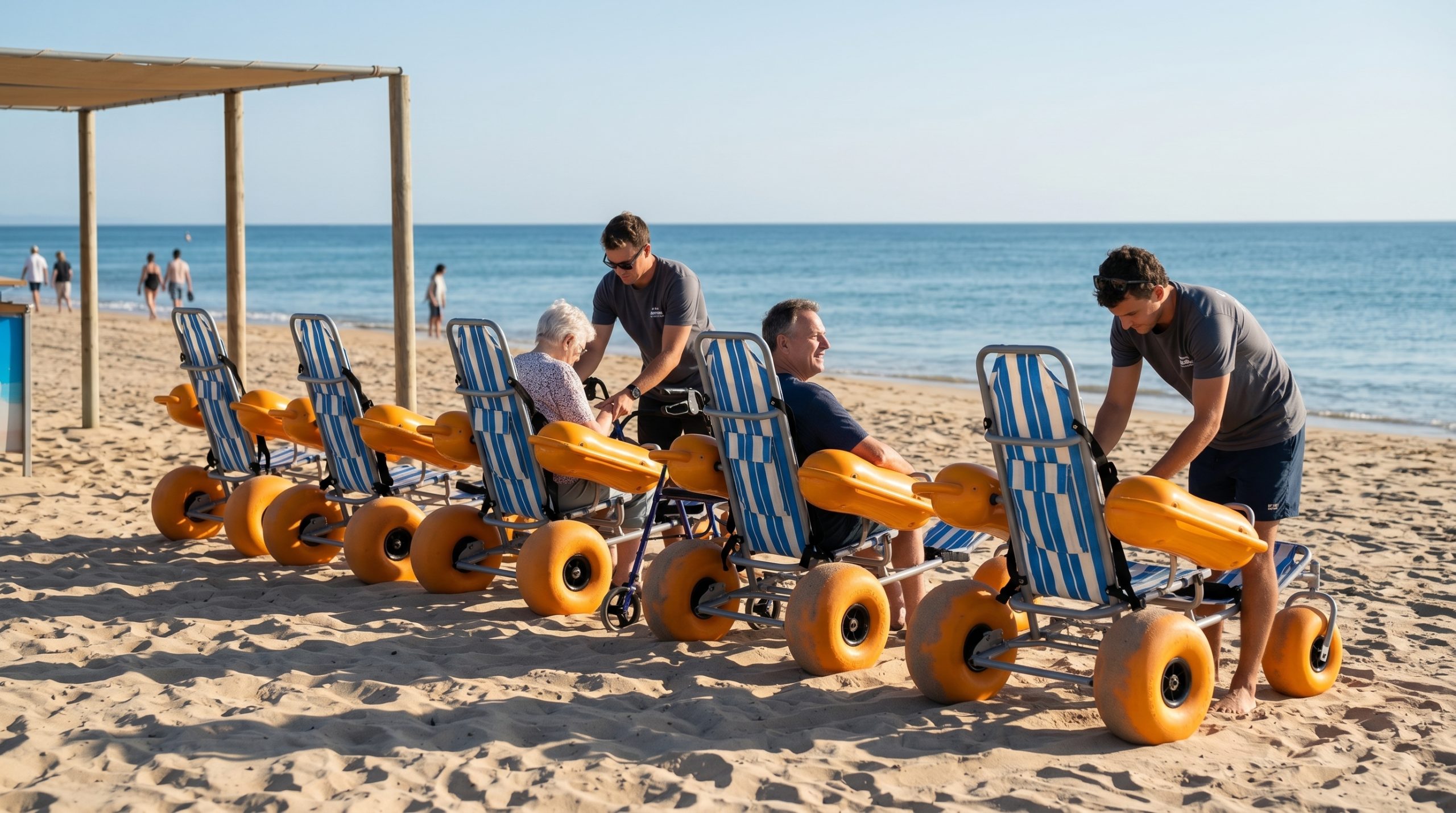
Use school holidays, special events, weather disruption and changes to opening hours to select comparison periods. Write down the reason for selecting them. A newly accessible entrance or a change from walk-up to advance booking can change which requests the system sees. Preserve that break in the series before projecting next season.
Turn a demand estimate into a timetable
In this hypothetical planning example, two comparable Saturday mornings had six and eight distinct requests for assisted land outings. Each proposed outing occupies a chair for 45 minutes and the next inspection and preparation take 15 minutes. Assume a three-hour operating window, a released chair at opening, and no interruptions. One chair has room for three complete one-hour cycles. Two chairs give a theoretical six cycles. The higher observed total of eight exceeds that equipment ceiling by two even before checking arrival times or staff.
Now put the requests onto a clock. If three families all request 10:00, two chairs can start at most two visits then. If just one trained team is available for that opening, only one of those starts is supportable under that staffing assumption. Ask whether visitors could accept another time. Record later accepted times separately from requests that were lost entirely. The peak-day queue guide addresses what the desk should do when those people actually arrive.
| Planning input | What to use | What to update after the pilot |
|---|---|---|
| Requested starts | Distinct suitable requests by service and time block, including recorded unmet requests | How many accepted another time and how many left unserved |
| Equipment time | Outing, return, cleaning and inspection using observed local durations | Actual return-to-ready time and units taken out of service |
| Staff time | Coverage for collection, assistance, return checks and breaks | Where two scheduled duties required the same person |
| Route availability | The time the intended destination and return path were usable | Closures, revised endpoints and visitor choices during those periods |
Decide what an extra chair would change
Present the expected range, the overlap that matters and the limiting resource. In the example, extending a staffed window or staggering willing bookings might handle some requests. Another released land chair can help only at times when the team can issue and recover it. Forecast a water session separately with the trained cover and operating conditions it requires.
At the start of the next operating period, compare actual requests, service delivered and reasons for declines against the assumptions. Retain the original forecast so staff can see whether demand changed or the available service changed. A supervisor can use the program metrics dashboard to monitor those outcomes and reopen a purchase decision when the gap persists.