
A useful beach wheelchair procurement checklist turns route conditions, operating roles, handling, storage, service access, and supplier answers into a comparable buying record. Coastal buyers often receive product sheets that look complete but do not explain how a chair will move from storage to a real guest handoff. The checklist should close that gap. It should help operations, purchasing, facilities, and accessibility staff review the same observable facts without inventing performance promises. This B2B guide presents ten questions that can shape a request for information, a sample review, and an accountable purchase decision.
Related planning resources cover beach wheelchair for sale and beach accessibility site assessment.
For broader destination-level context, consult the UN Tourism accessibility publications and guidelines. Apply local requirements and current product documents to the specific project.
What service goals should procurement define?
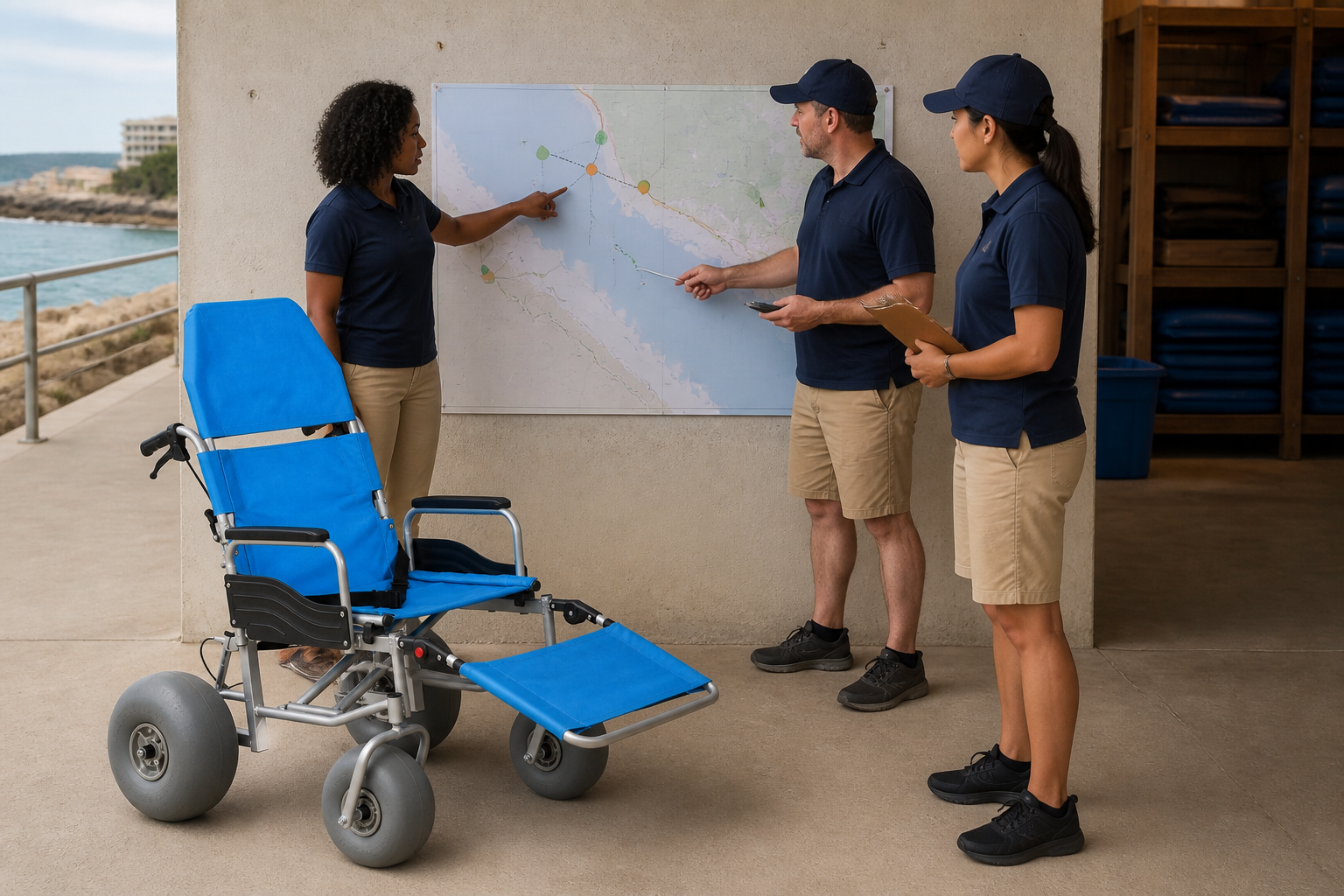
Beach wheelchair procurement checklist should begin with a short operating brief. The brief names the users, staff roles, service point, route boundary, booking model, and return flow. That shared picture keeps purchasing criteria tied to daily work instead of broad product language.
For resort, municipal beach, park, and rental procurement teams, staff examine guest handoff point, staffed service hours, and planned return point against current product guidance and site policy. Any unclear point goes to the role authorized to decide, keeping the current service state visible.
Write the operating brief
Here is the working point: Write one sentence for each service stage and assign an owner to confirm it. The assigned role records the agreed service boundary and each open decision. If a service stage has no owner or route, the item or service moves out of the ready flow until the named owner documents what happens next. A later shift should be able to understand the state from the record and the physical setup without relying on memory.
- Check guest handoff point
- Confirm staffed service hours
- Record planned return point
Key Takeaway: A clear operating brief gives every department the same buying target.
| Review point | Working response |
|---|---|
| Observe | Record the current condition |
| Decide | Assign the next action and owner |
Use the table as a short discussion prompt, then watch the task on the real route and revise wording that staff cannot apply consistently.
Which beach routes must buyers document?
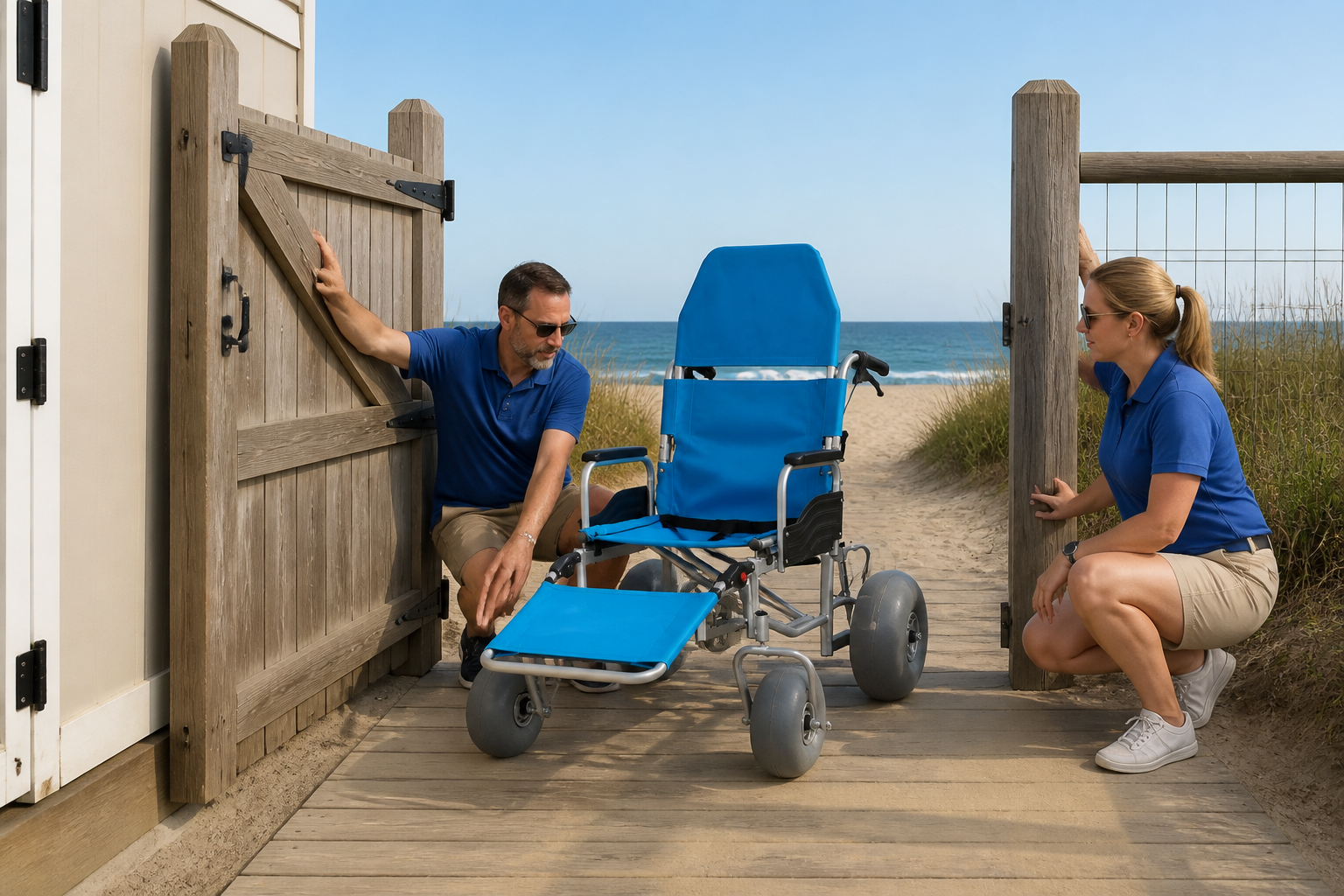
Beach wheelchair procurement checklist should document the complete route before comparing chairs. Record storage exits, vehicle loading points, gates, boardwalks, sand changes, turn areas, water boundaries, and the return path. Site photos and measurements should follow local policy and reflect normal service conditions. Compare route needs with the all-terrain chair category before drafting product questions.
For resort, municipal beach, park, and rental procurement teams, staff examine narrow access points, surface changes, and turn and pause areas against current product guidance and site policy. Any unclear point goes to the role authorized to decide, keeping the current service state visible.
Map the real working route
What should staff see: Walk the route with operations staff and mark where chair handling changes. The assigned role records the route version, walk date, and unresolved condition. If temporary barriers or route conditions block the planned flow, the item or service moves out of the ready flow until the named owner documents what happens next. A later shift should be able to understand the state from the record and the physical setup without relying on memory.
- Check narrow access points
- Confirm surface changes
- Record turn and pause areas
Key Takeaway: A documented route converts terrain into product and handling questions.
| Review point | Working response |
|---|---|
| Observe | Record the current condition |
| Decide | Assign the next action and owner |
Use the table as a short discussion prompt, then watch the task on the real route and revise wording that staff cannot apply consistently.
How should teams compare chair categories?
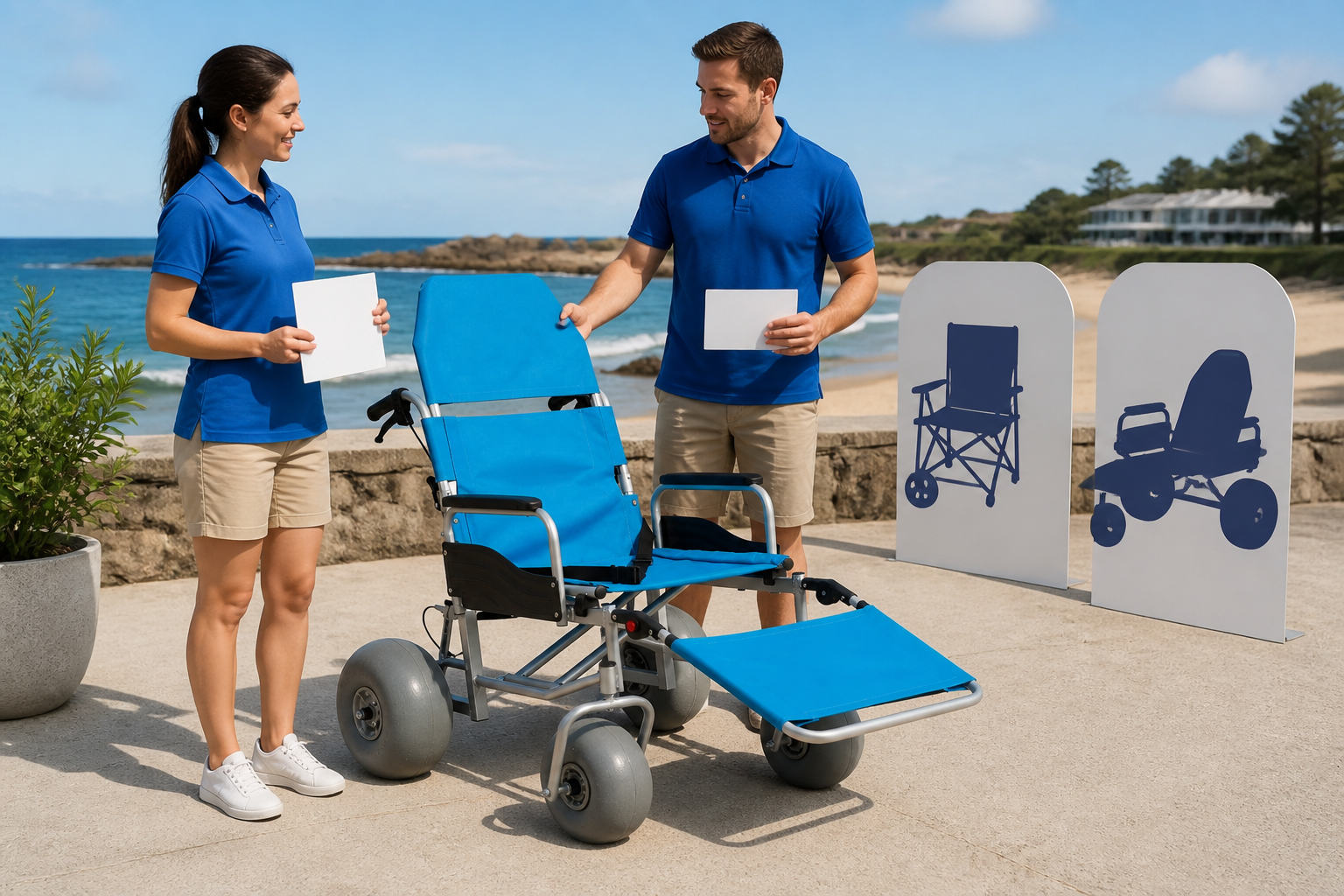
Beach wheelchair procurement checklist should compare chair categories by operating role before model details. A folding chair, all-terrain chair, floating chair, and walker support different workflows. Buyers should name the intended route and staff interaction for each category instead of asking one product to cover every site task.
For resort, municipal beach, park, and rental procurement teams, staff examine terrain role, transport role, and staff handling role against current product guidance and site policy. Any unclear point goes to the role authorized to decide, keeping the current service state visible.
Compare roles before models
Use this field cue: Create one role card per category and connect it to a documented route. The assigned role records the role card and source used for each statement. If the role depends on an unsupported product claim, the item or service moves out of the ready flow until the named owner documents what happens next. A later shift should be able to understand the state from the record and the physical setup without relying on memory.
- Check terrain role
- Confirm transport role
- Record staff handling role
Key Takeaway: Category roles keep shortlists focused on the service the site will run.
| Review point | Working response |
|---|---|
| Observe | Record the current condition |
| Decide | Assign the next action and owner |
Use the table as a short discussion prompt, then watch the task on the real route and revise wording that staff cannot apply consistently.
What product details deserve written confirmation?
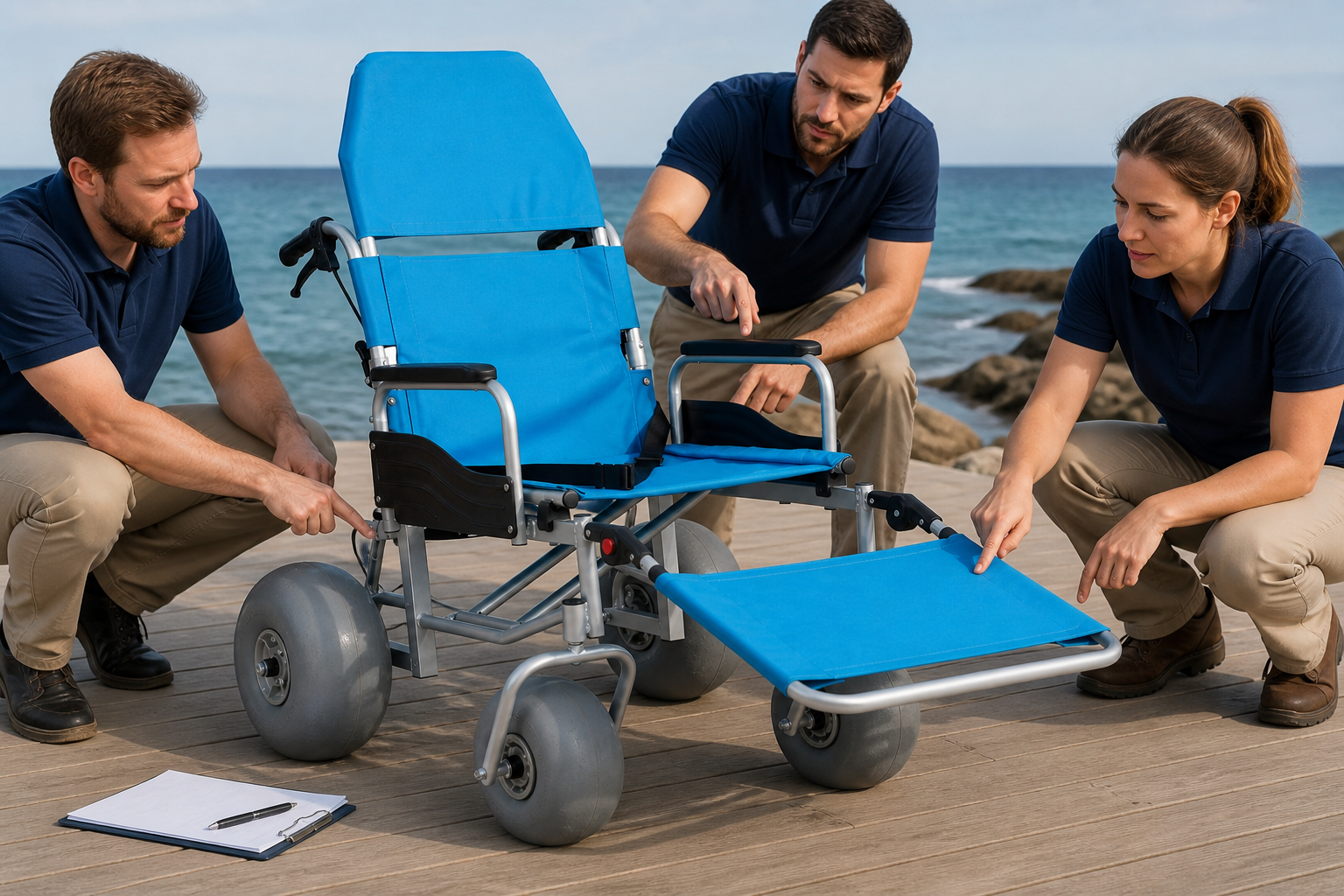
Beach wheelchair procurement checklist should request written confirmation for product details that affect use and care. Frame layout, wheel count, seat materials, foot support, push handles, folding points, removable parts, cleaning guidance, assembly, and compatible service items can change the operating plan. Buyers need source documents rather than verbal summaries.
For resort, municipal beach, park, and rental procurement teams, staff examine visible construction, included parts, and care instructions against current product guidance and site policy. Any unclear point goes to the role authorized to decide, keeping the current service state visible.
Request observable product facts
The practical test: List each fact as a question and attach the supplier response or product document. The assigned role records the response date, source file, and clarification owner. If the response conflicts with the sample or supplied document, the item or service moves out of the ready flow until the named owner documents what happens next. A later shift should be able to understand the state from the record and the physical setup without relying on memory.
- Check visible construction
- Confirm included parts
- Record care instructions
Key Takeaway: Written product facts create a traceable comparison and reduce assumptions.
| Review point | Working response |
|---|---|
| Observe | Record the current condition |
| Decide | Assign the next action and owner |
Use the table as a short discussion prompt, then watch the task on the real route and revise wording that staff cannot apply consistently.
How should buyers plan storage and transport?
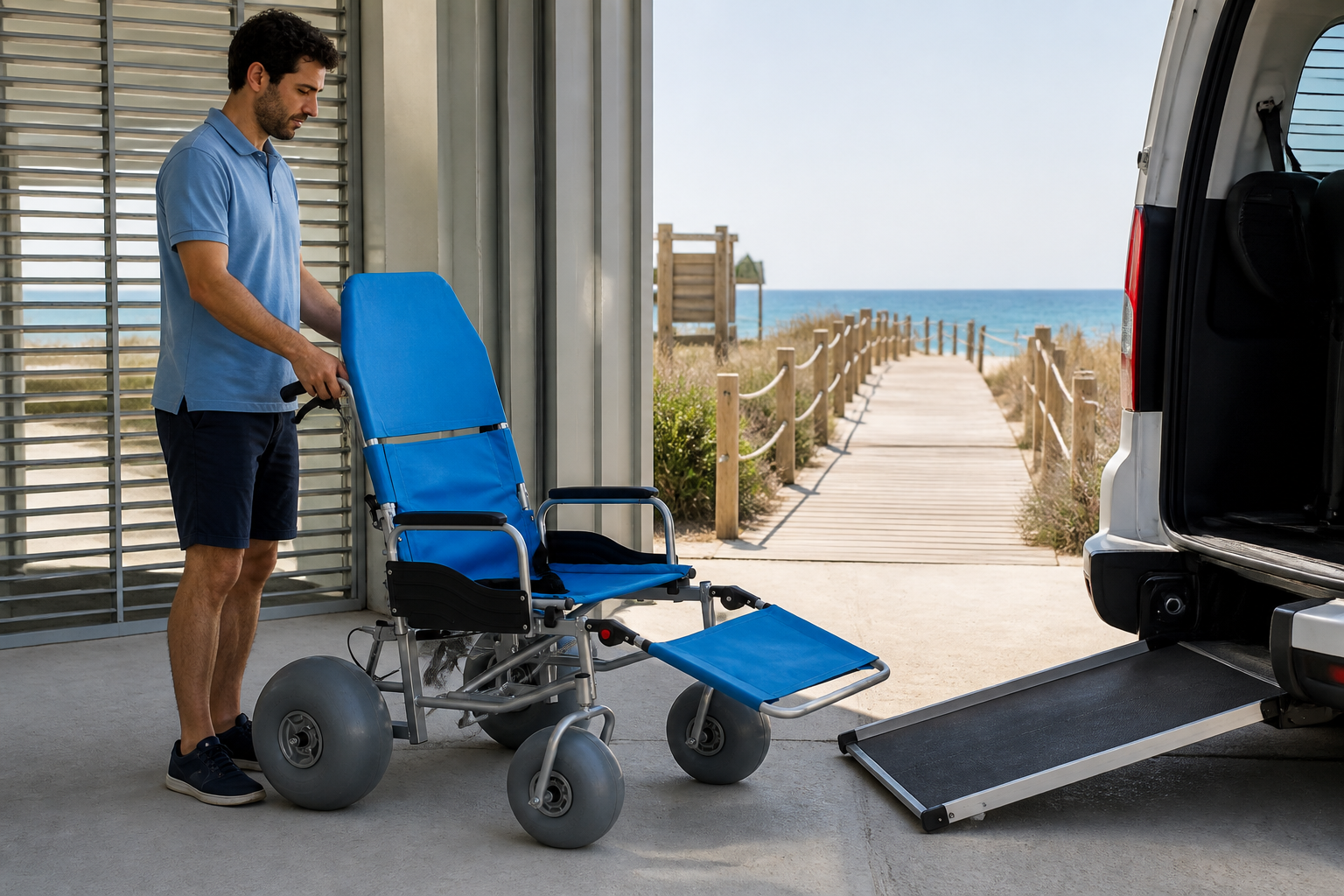
Beach wheelchair procurement checklist should test storage and transport as one connected movement path. A chair may fit its storage bay yet cause problems at a door, lift, service vehicle, ramp, or staging corner. The review should follow the product from its dry bay to its ready position and back. A lightweight chair overview can help buyers frame transport questions for portable service roles.
For resort, municipal beach, park, and rental procurement teams, staff examine bay access, door and vehicle clearance, and drying and ready zones against current product guidance and site policy. Any unclear point goes to the role authorized to decide, keeping the current service state visible.
Test the complete movement path
Keep the response simple: Run a no-guest handling trial with the real vehicle and normal service gear. The assigned role records the trial route, handling roles, and open fit question. If staff cannot move or secure the chair under the approved method, the item or service moves out of the ready flow until the named owner documents what happens next. A later shift should be able to understand the state from the record and the physical setup without relying on memory.
- Check bay access
- Confirm door and vehicle clearance
- Record drying and ready zones
Key Takeaway: A movement trial reveals site friction that a product sheet cannot show.
| Review point | Working response |
|---|---|
| Observe | Record the current condition |
| Decide | Assign the next action and owner |
Use the table as a short discussion prompt, then watch the task on the real route and revise wording that staff cannot apply consistently.
Which staff handling needs affect selection?
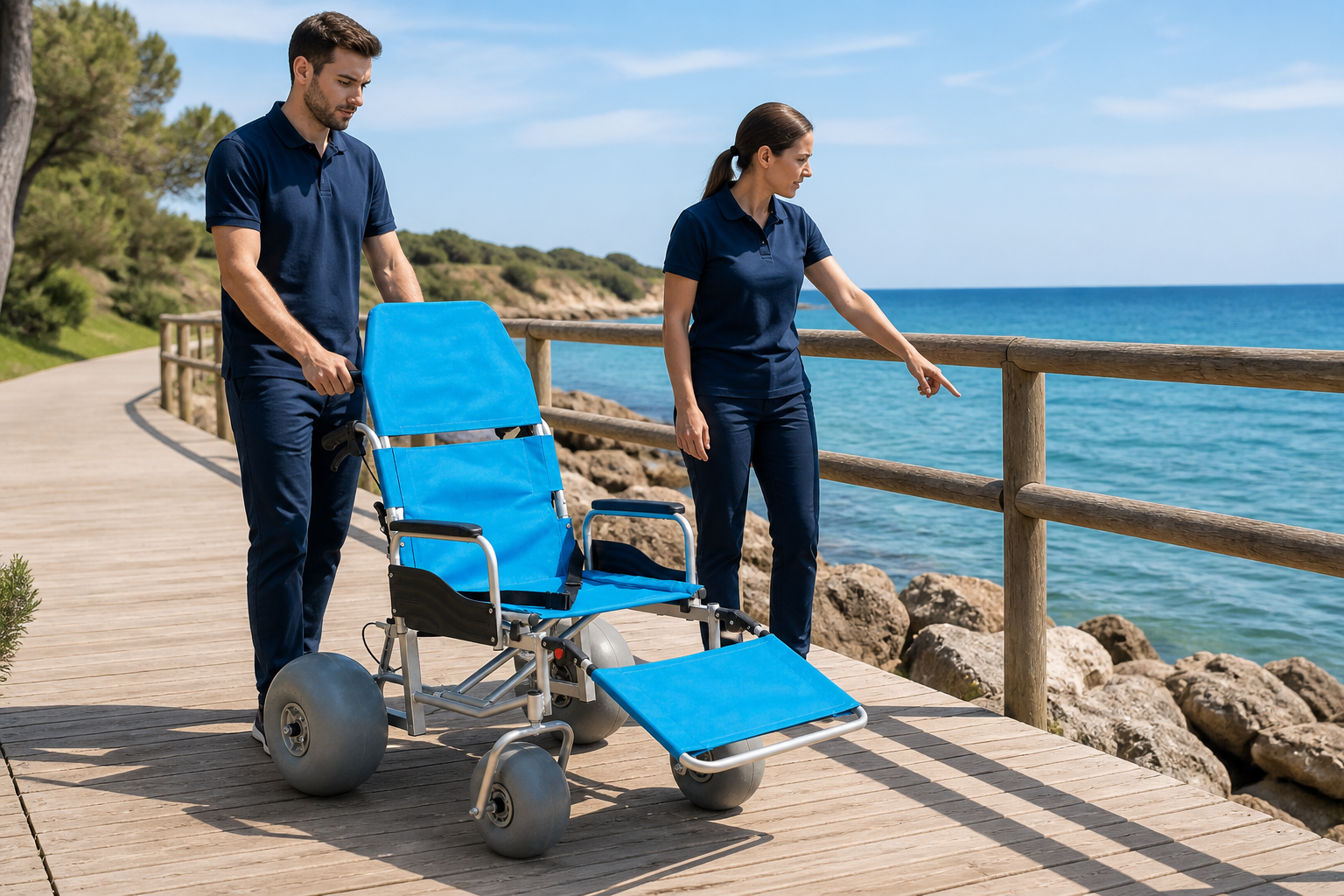
Beach wheelchair procurement checklist should include staff handling needs in the buying record. Lifting roles, push positions, folding steps, restraint checks, guest briefings, route pauses, rinsing, and storage placement all affect daily work. Staff who perform those tasks should join the sample review.
For resort, municipal beach, park, and rental procurement teams, staff examine grip positions, team movement, and handoff sequence against current product guidance and site policy. Any unclear point goes to the role authorized to decide, keeping the current service state visible.
Include the people who handle the chair
This is the operating move: Observe trained staff completing a normal setup and return without rushing. The assigned role records the task, role, observed friction, and agreed response. If a task falls outside local handling policy or product guidance, the item or service moves out of the ready flow until the named owner documents what happens next. A later shift should be able to understand the state from the record and the physical setup without relying on memory.
- Check grip positions
- Confirm team movement
- Record handoff sequence
Key Takeaway: Staff observation links product choice to the real labor flow.
| Review point | Working response |
|---|---|
| Observe | Record the current condition |
| Decide | Assign the next action and owner |
Use the table as a short discussion prompt, then watch the task on the real route and revise wording that staff cannot apply consistently.
How should buyers review cleaning and service access?
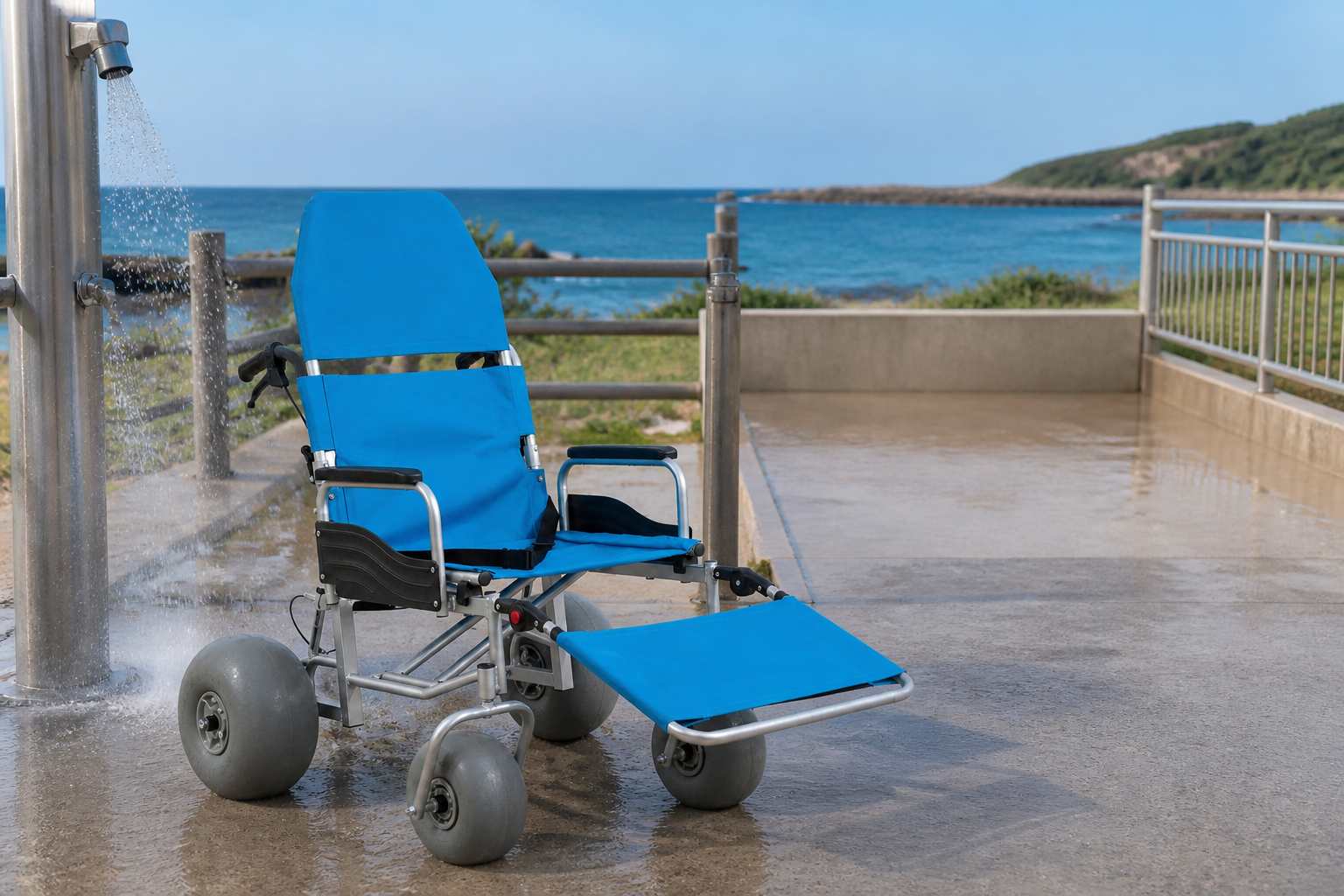
Beach wheelchair procurement checklist should map cleaning, drying, inspection, parts support, and service contacts before approval. Coastal operations need a clear place for fresh-water rinsing, drying, visible inspection, and held equipment. The supplier reply should also state how technical questions and parts requests are routed.
For resort, municipal beach, park, and rental procurement teams, staff examine approved care method, dry storage flow, and service contact path against current product guidance and site policy. Any unclear point goes to the role authorized to decide, keeping the current service state visible.
Map care before approval
Watch the handoff: Follow a sample through return, rinse, dry, inspection, and held status. The assigned role records the care source, service contact, and site action. If care instructions are missing or the site lacks a suitable work area, the item or service moves out of the ready flow until the named owner documents what happens next. A later shift should be able to understand the state from the record and the physical setup without relying on memory.
- Check approved care method
- Confirm dry storage flow
- Record service contact path
Key Takeaway: Care planning protects daily availability without inventing maintenance claims.
| Review point | Working response |
|---|---|
| Observe | Record the current condition |
| Decide | Assign the next action and owner |
Use the table as a short discussion prompt, then watch the task on the real route and revise wording that staff cannot apply consistently.
What should a supplier information request include?
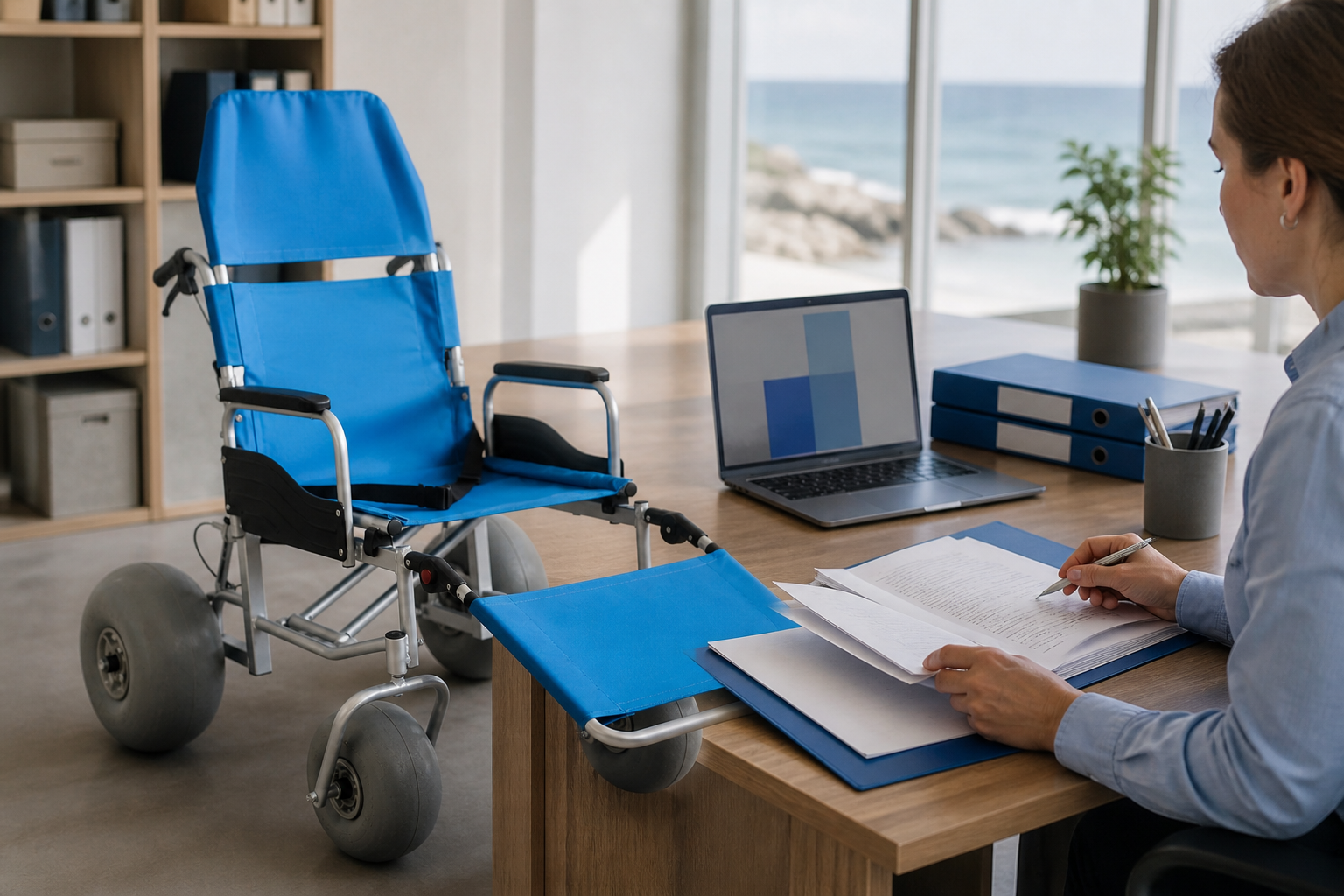
Beach wheelchair procurement checklist should turn supplier questions into a consistent information request. Ask for product identification, current documents, dimensions stated by the maker, material descriptions, included parts, setup and care guidance, media, service contacts, lead-time context, and any stated operating limits. Do not convert missing information into a guess.
For resort, municipal beach, park, and rental procurement teams, staff examine same question order, named document sources, and clear open-item field against current product guidance and site policy. Any unclear point goes to the role authorized to decide, keeping the current service state visible.
Ask for comparable evidence
Use one clear rule: Send the same question set to shortlisted suppliers and log every attachment. The assigned role records the reply date, source, owner, and open item. If a material response remains verbal or cannot be traced, the item or service moves out of the ready flow until the named owner documents what happens next. A later shift should be able to understand the state from the record and the physical setup without relying on memory.
- Check same question order
- Confirm named document sources
- Record clear open-item field
Key Takeaway: A consistent request makes supplier replies easier to compare and audit.
| Review point | Working response |
|---|---|
| Observe | Record the current condition |
| Decide | Assign the next action and owner |
Use the table as a short discussion prompt, then watch the task on the real route and revise wording that staff cannot apply consistently.
How can teams evaluate a sample chair?
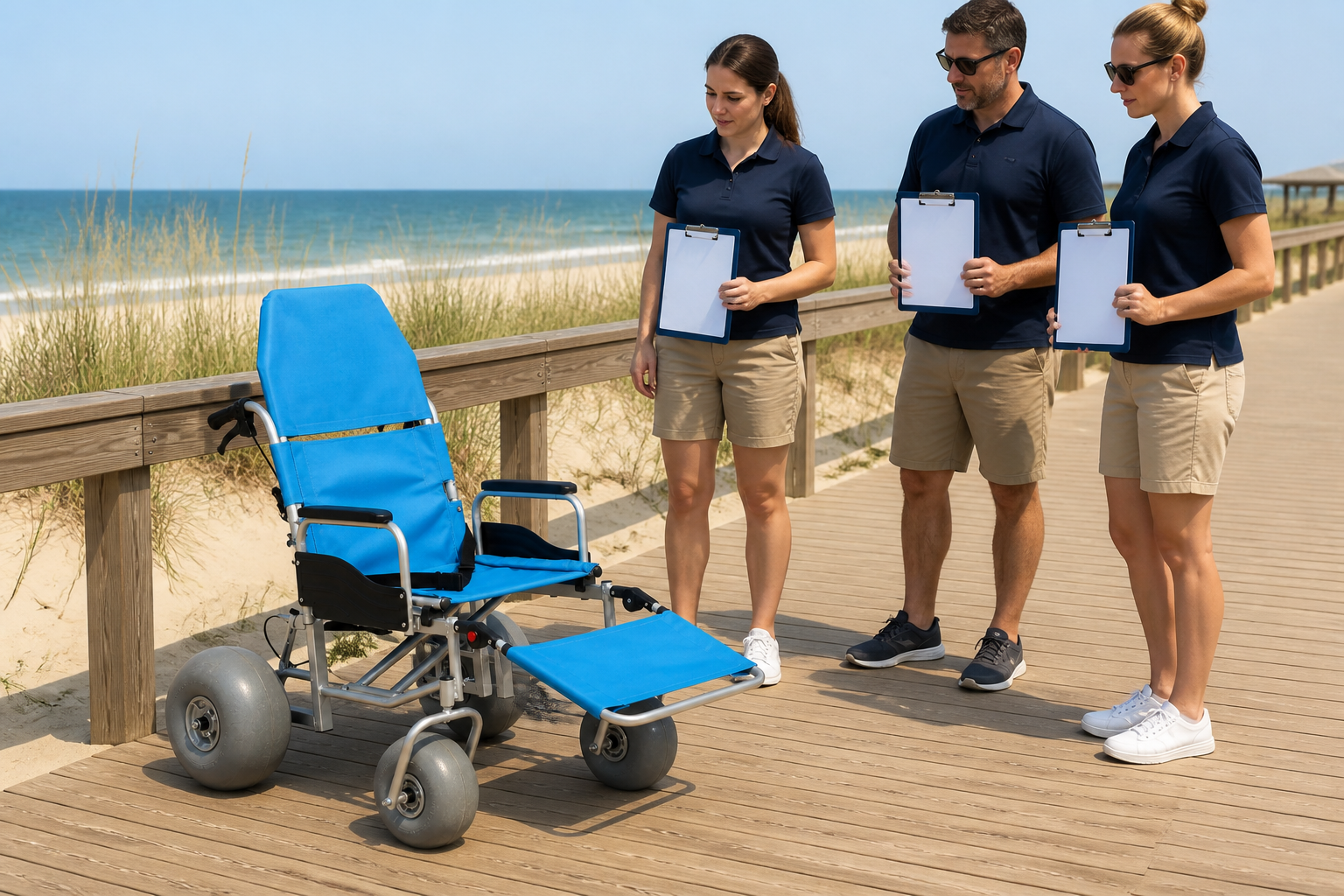
Beach wheelchair procurement checklist should evaluate a sample against the documented service path. The review can cover receiving, assembly, storage, normal movement, visible checks, staff handoff, route turns, cleaning, drying, and return to ready status. Product instructions and site rules control every technical decision.
For resort, municipal beach, park, and rental procurement teams, staff examine product matches documents, route flow works, and staff tasks are clear against current product guidance and site policy. Any unclear point goes to the role authorized to decide, keeping the current service state visible.
Use a route-based sample review
Make the status visible: Run the agreed sequence and record observations at the point where they occur. The assigned role records the observation, photo reference under policy, and owner response. If the sample differs from the quoted product or a key task remains unclear, the item or service moves out of the ready flow until the named owner documents what happens next. A later shift should be able to understand the state from the record and the physical setup without relying on memory.
- Check product matches documents
- Confirm route flow works
- Record staff tasks are clear
Key Takeaway: A route-based review tests operational fit without inventing scores.
| Review point | Working response |
|---|---|
| Observe | Record the current condition |
| Decide | Assign the next action and owner |
Use the table as a short discussion prompt, then watch the task on the real route and revise wording that staff cannot apply consistently.
Which records support a final purchase decision?
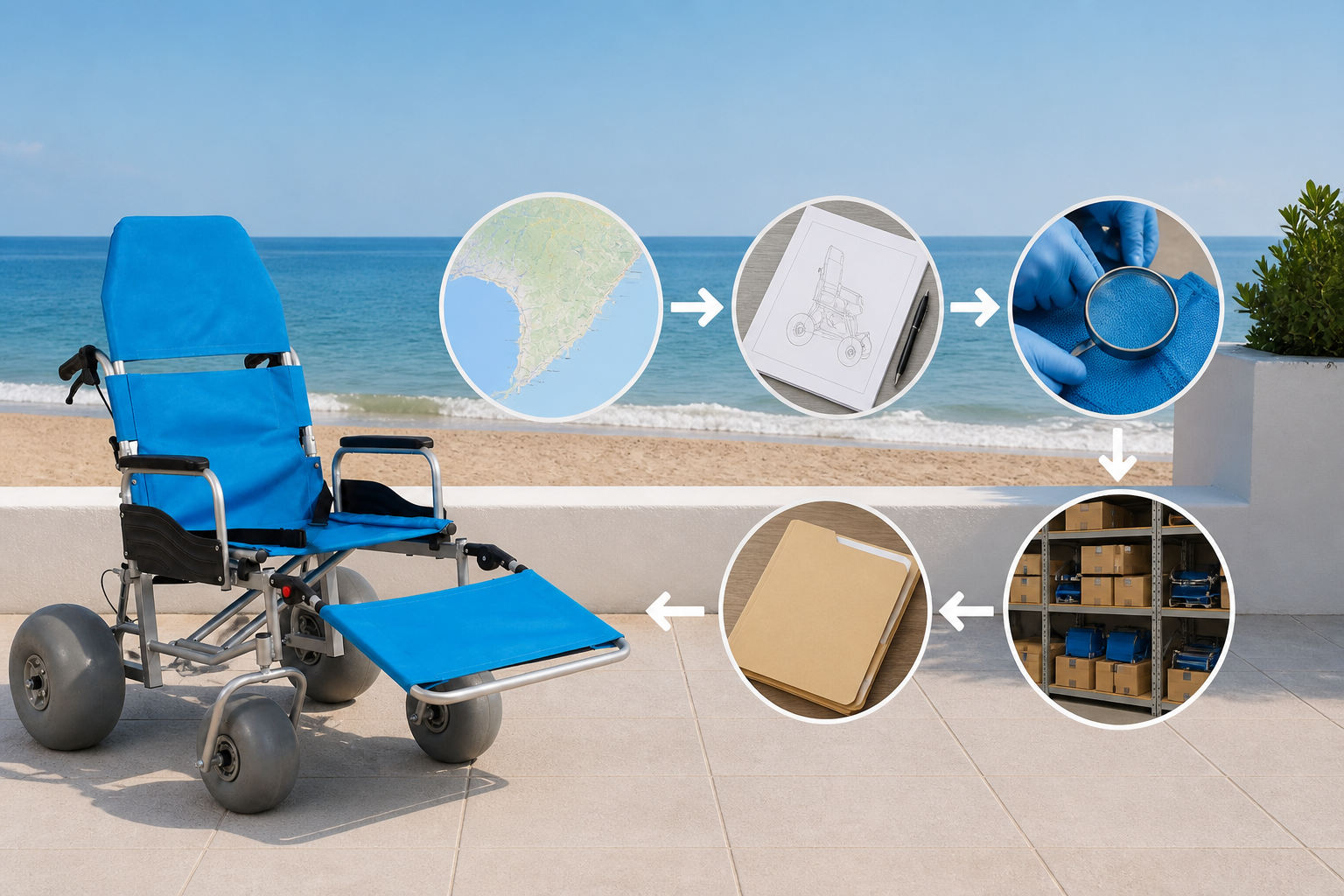
Beach wheelchair procurement checklist should finish with a traceable approval file. The file joins the operating brief, route record, category role, supplier response, product documents, sample observations, storage plan, care flow, open questions, and named approval. Every item should lead to a decision or follow-up action. Use the site’s project examples to prompt route and service questions, not as proof of local results.
For resort, municipal beach, park, and rental procurement teams, staff examine source record, decision owner, and open-item status against current product guidance and site policy. Any unclear point goes to the role authorized to decide, keeping the current service state visible.
Build a traceable approval file
Close the decision loop: Review each source, resolve contradictions, record the decision, and retain the final version. The assigned role records the approval date, accepted limits, and follow-up owner. If a core criterion lacks evidence or accountable acceptance, the item or service moves out of the ready flow until the named owner documents what happens next. A later shift should be able to understand the state from the record and the physical setup without relying on memory.
- Check source record
- Confirm decision owner
- Record open-item status
Key Takeaway: A traceable file shows why the chosen product fits the planned service.
| Review point | Working response |
|---|---|
| Observe | Record the current condition |
| Decide | Assign the next action and owner |
Use the table as a short discussion prompt, then watch the task on the real route and revise wording that staff cannot apply consistently.
FAQs
Can I use one checklist for several chair types?
Yes, for shared buying criteria. Add a model-specific section for folding parts, flotation parts, wheel layout, foot support, or other visible differences.
What’s the best way to compare supplier replies?
Use the same response format. Ask each supplier for written answers, matching product documents, media, service contacts, and a clear list of unanswered items.
Procurement evidence to verify
How do I know if a sample review is useful?
Check whether it follows the planned route and handling flow. A showroom-only review will not reveal storage, transfer, staging, or cleaning friction.
Can I approve a purchase with open questions?
Only when the named decision owner accepts them. Record every open point, its operational effect, and the person responsible for closure.
What should stay out of the checklist?
Avoid invented ratings and vague claims. Keep each line tied to an observable product detail, documented instruction, route condition, or accountable response.
Closing perspective
A useful procurement record keeps the route, operating role, storage plan, staff handling, service access, and supplier response in one decision file. Buyers can start with observable conditions, test a sample against the written route, and record any open point before approval. Teams preparing a coastal access purchase can contact us today with their route and equipment questions.