
A useful beach walker maintenance checklist turns each opening, rinse, drying, storage, and service decision into a short documented action. Coastal teams can lose time when sand-contact parts, fasteners, seating, handles, or folding joints receive irregular attention. A shared checklist gives resort, park, rental, and care teams one repeatable visual review without making medical claims or replacing product instructions. This guide covers opening checks, frame and fastener review, handle and seat condition, sand-contact parts, fresh-water cleaning, drying, storage, removal from service, records, and manager audits.
Teams can connect this topic with lightweight beach wheelchair deployment and beach wheelchair procurement checklist.
For broader destination-level context, consult the UN Tourism accessibility publications and guidelines. Apply local requirements and current product documents to the specific project.
What should teams inspect before each opening?
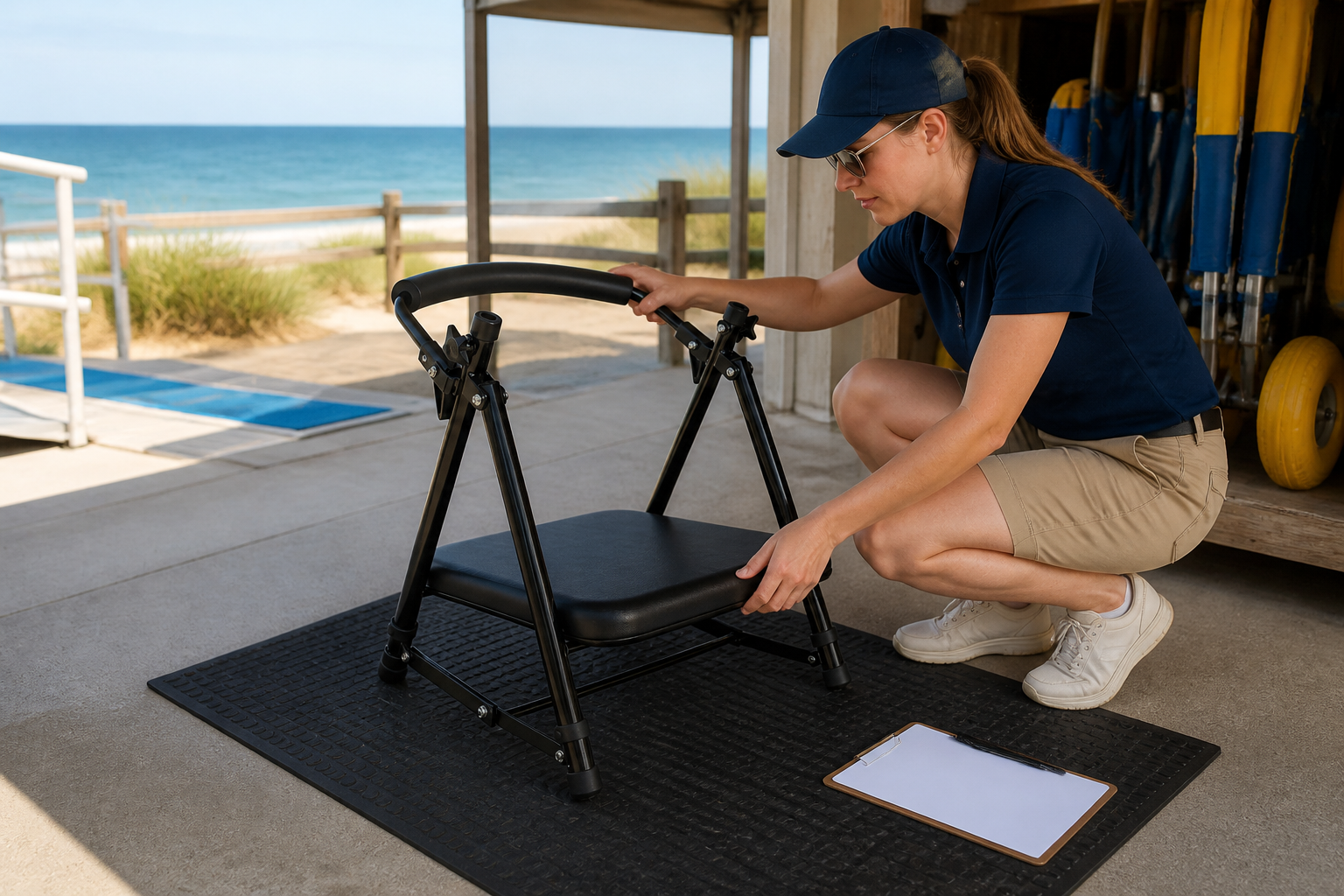
A beach walker maintenance checklist should open with a top-to-bottom visual and touch check covering handle, folding joints, seat, frame, fasteners, and four sand-contact feet. A fixed sequence makes skipped points easier to notice and supports consistent work across shifts. Staff should check a dry walker under useful light before moving it into the ready zone. The checklist supports local operations while product instructions remain the source for service methods and part limits.
Use one top-to-bottom sequence
Here’s the practical point: Start at the padded handle, move down both frame sides, press the seat surface, view each fastener, and finish at every foot. Record pass, hold, or service review. The senior-care application gives context for a calm equipment handoff.
- Start at the handle
- Move down both sides
- Finish at four feet
Key Takeaway: A fixed inspection path gives every shift the same view of walker readiness.
| Checkpoint | Working choice |
|---|---|
| Area | Status |
| Upper frame | Pass or hold |
| Lower frame | Pass or hold |
Watch staff perform the sequence and remove any checklist wording that cannot be seen or felt directly.
How should staff check the frame and fasteners?
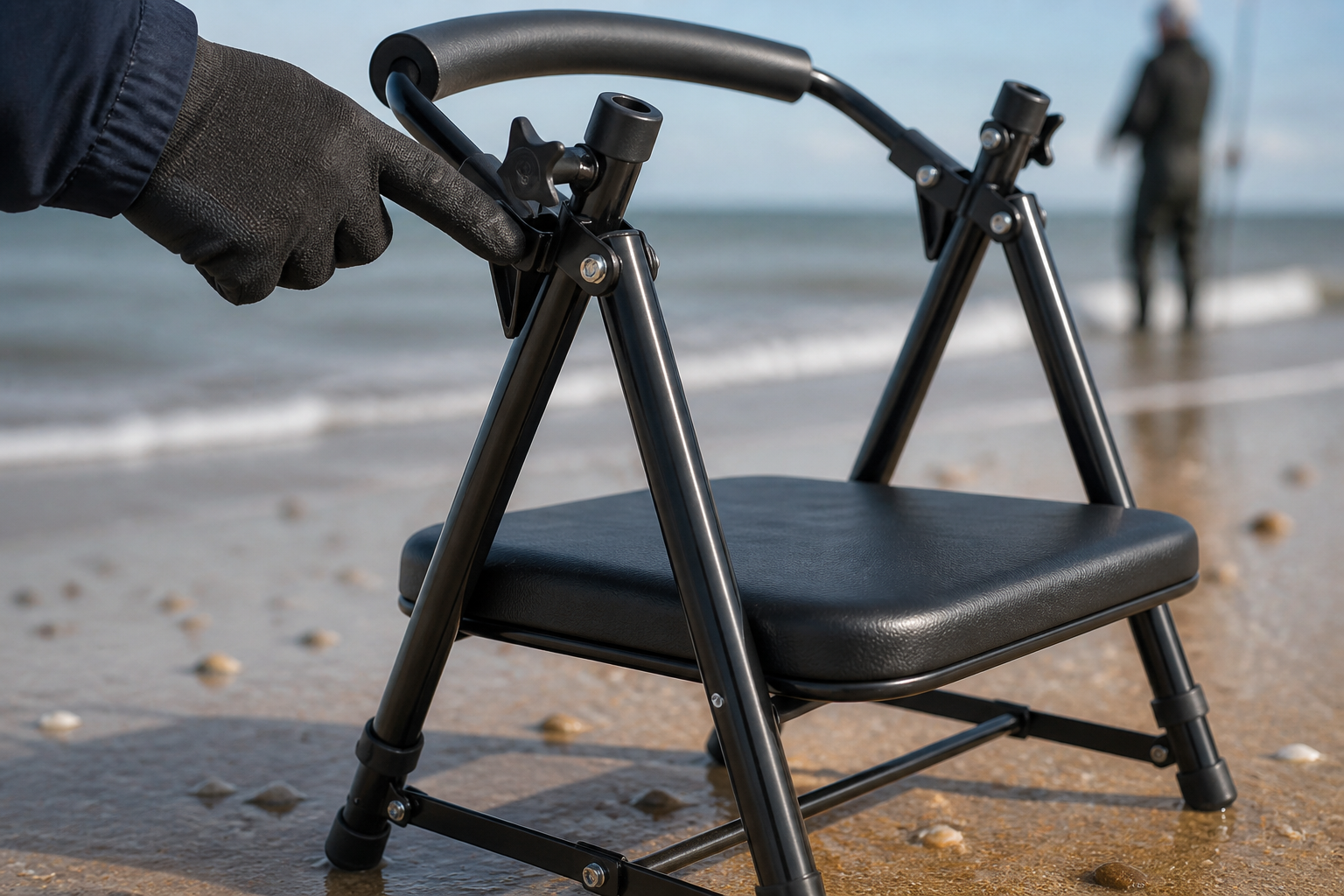
A beach walker maintenance checklist should ask staff to inspect frame tubes, weld areas, folding pivots, braces, and visible fasteners for damage, unexpected movement, or missing parts. The goal is observation, not improvised repair. Staff can compare both sides for symmetry and gently follow the approved opening motion. If a joint moves differently from normal or a fastener appears loose, the walker leaves ready status until the assigned service person reviews it.
Look for visible change and movement
The useful move: Group frame checkpoints by location rather than technical vocabulary. Upper joints, seat supports, lower braces, and feet are easy for operators to find. Keep tools away from the opening check unless local service policy gives a trained person a specific adjustment task.
- Compare both frame sides
- View every pivot
- Check visible fasteners
Key Takeaway: Frame checks should produce a clear status decision, not an unrecorded field repair.
| Checkpoint | Working choice |
|---|---|
| Frame point | Working cue |
| Pivot | Normal movement |
| Fastener | Present and seated |
Ask a new staff member to locate every checkpoint using only the checklist wording.
What should a handle and seat check cover?
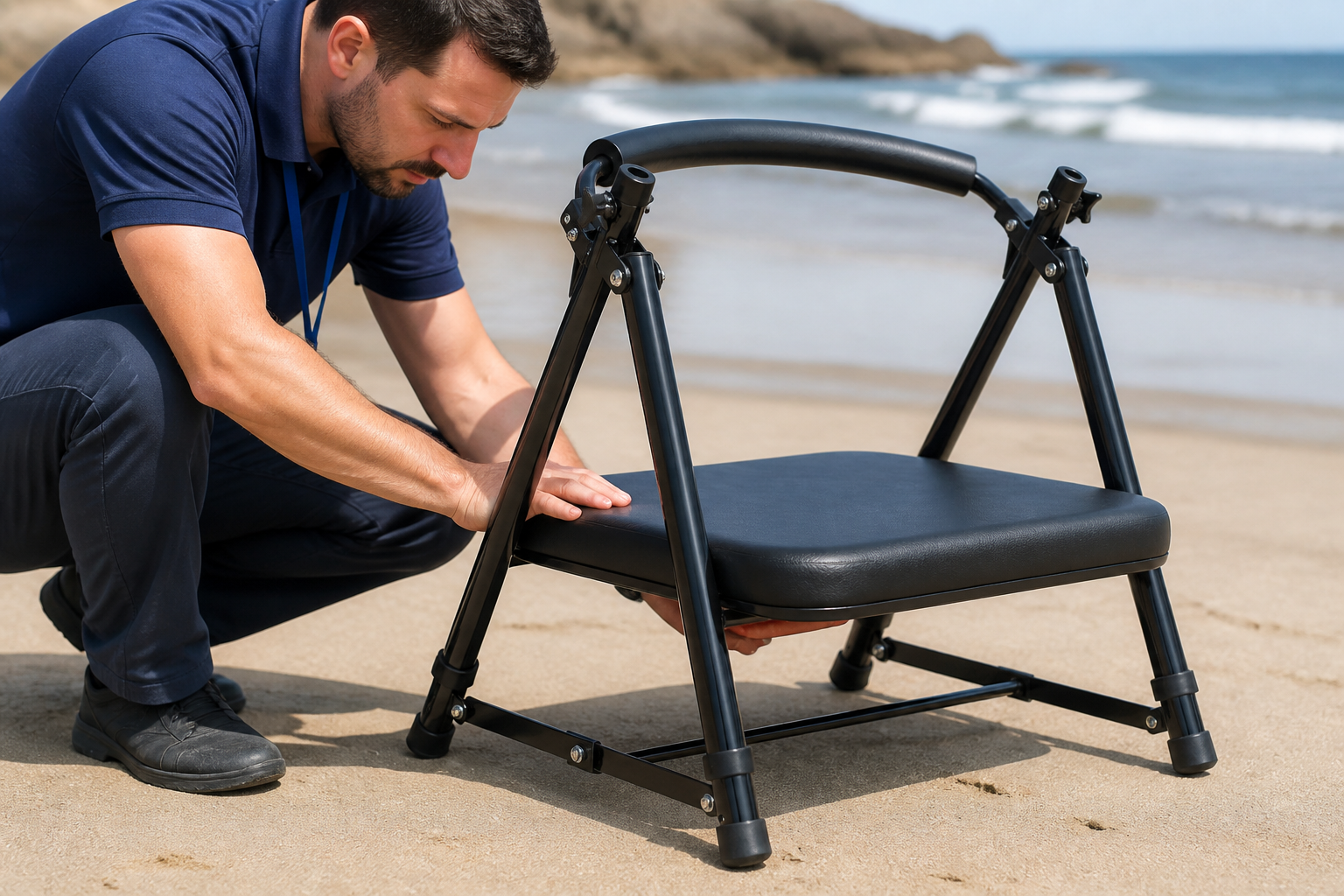
A beach walker maintenance checklist should check the curved padded handle and wide seat for secure attachment, visible damage, trapped sand, moisture, and unexpected movement. These contact surfaces shape the user handoff and can collect residue during coastal service. Staff should inspect seams, edges, support points, and the space beneath the seat without making medical judgments. Any split material, loose support, or unresolved wet area moves the walker to held status.
Check contact surfaces and support
A practical detail: Use clean hands or gloves suited to local policy, then apply only the light contact described by the checklist. The check should confirm condition, not test a user load. A walker project scenario can help teams connect product care with service flow.
- View handle padding
- Inspect seat edges
- Check beneath the seat
Key Takeaway: Contact-surface checks protect readiness and keep the guest handoff calm and clean.
| Checkpoint | Working choice |
|---|---|
| Surface | Check |
| Handle | Secure and clean |
| Seat | Dry and supported |
Perform the review from the user side and the staff side because each angle reveals different edges.
How can teams inspect sand-contact feet?
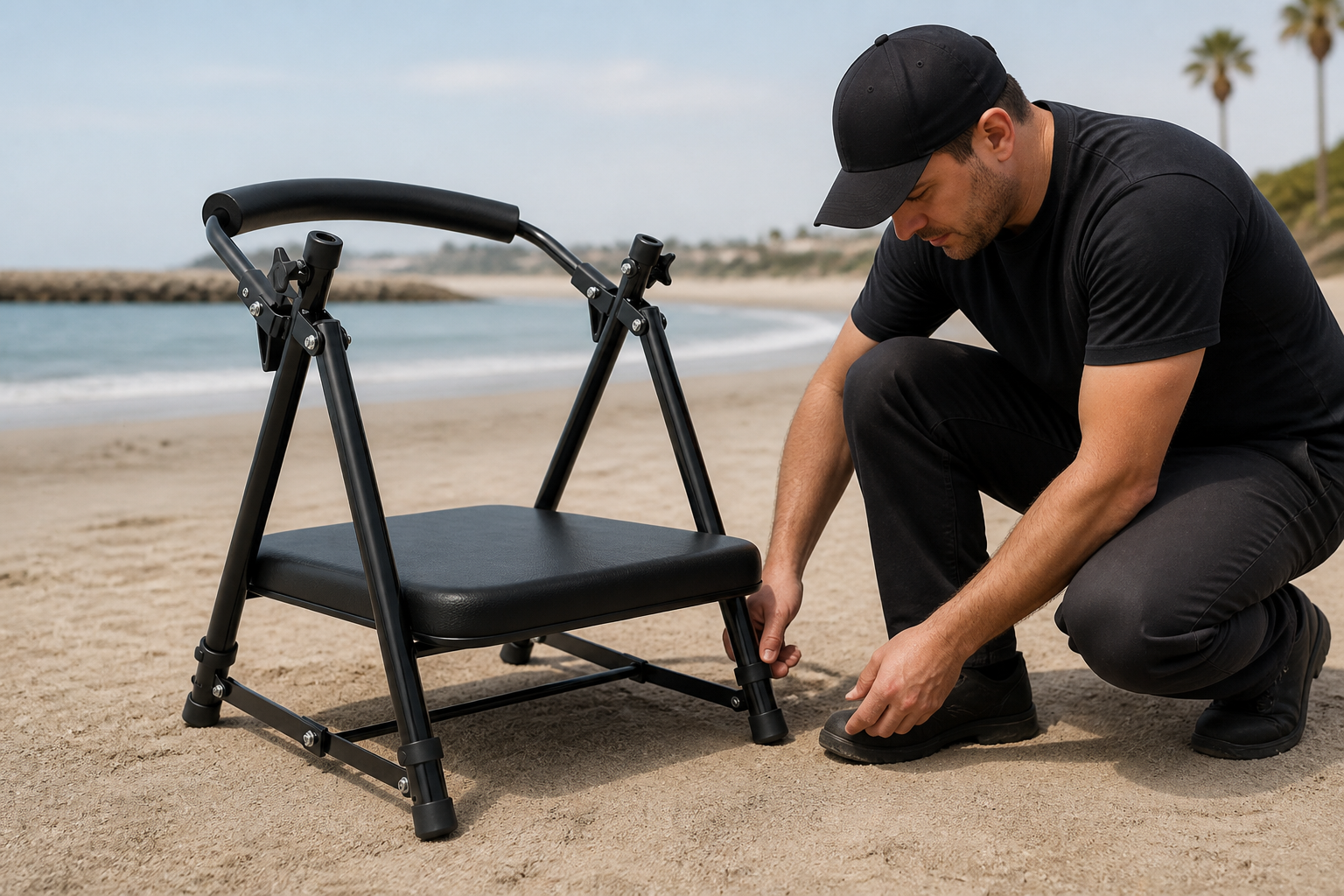
A beach walker maintenance checklist should inspect all four rubber sand-contact feet for secure fit, trapped debris, visible wear, and even contact on level ground. The reference walker uses broad feet rather than wheels, so staff should not apply a wheelchair wheel checklist. Place the empty walker on a stable dry surface and view each foot from several angles. A missing cap, damaged contact surface, or uneven stance triggers a hold decision.
Check all four feet on level ground
Here’s the working method: Move around the walker instead of tipping it into an unstable position. Remove loose surface sand only through the approved cleaning method, then repeat the level-ground view. Keep replacement or adjustment work inside the assigned service process rather than the daily opening check.
- Count four feet
- View contact surfaces
- Check level stance
Key Takeaway: Foot checks must match a wheel-free walker design and lead directly to pass or hold status.
| Checkpoint | Working choice |
|---|---|
| Foot cue | Decision |
| Secure fit | Pass or hold |
| Even stance | Pass or hold |
Photograph checklist examples locally only if site policy permits and no guest data appears.
What should happen after exposure to salt and sand?
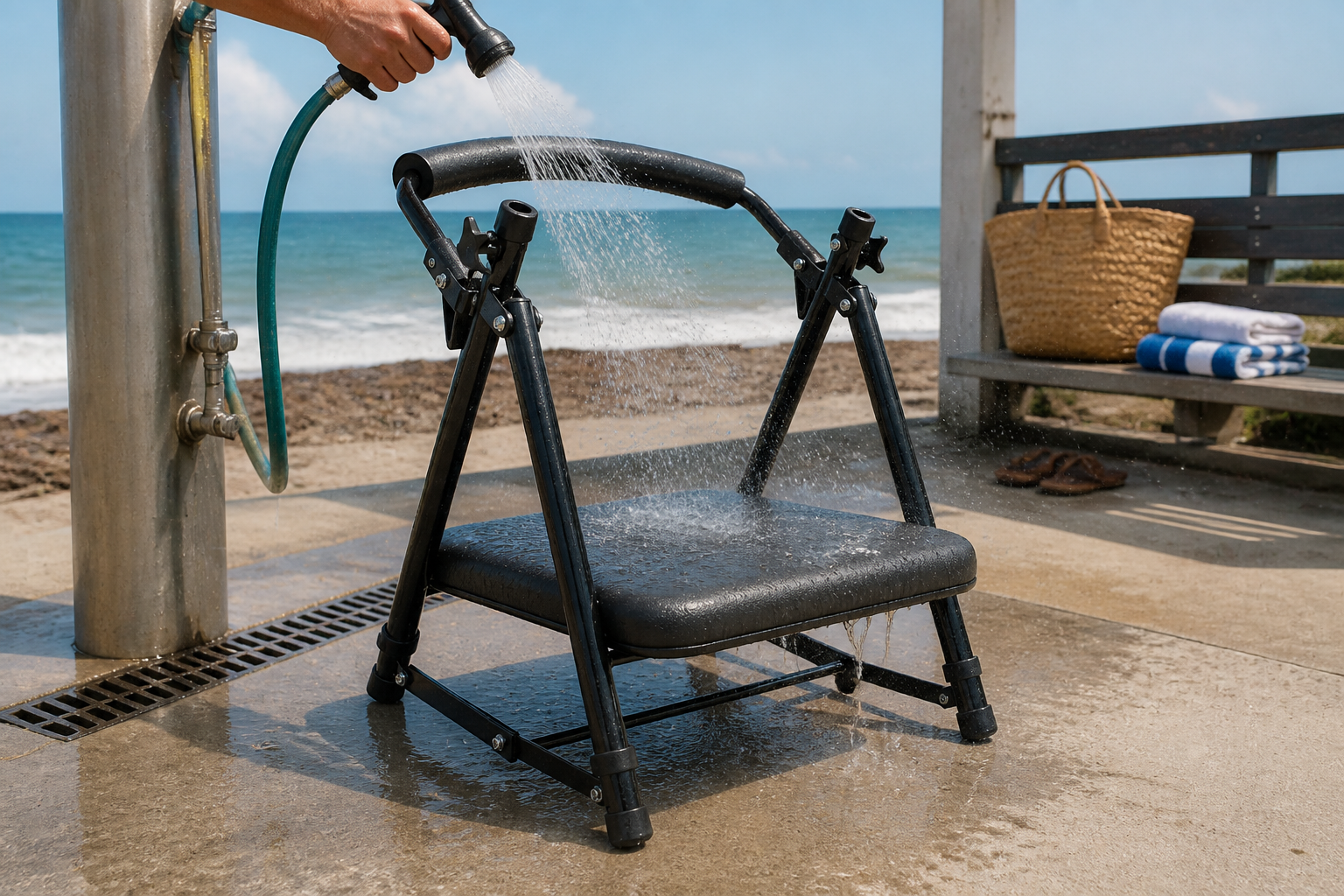
A beach walker maintenance checklist should direct returned equipment through approved sand removal, fresh-water rinsing, visible residue review, and drying before storage. Salt and sand can remain around joints, braces, seat supports, and feet after use. Follow product instructions for water exposure and cleaning materials, and avoid strong chemicals or unapproved lubricants. Keep returned equipment separate from ready walkers so status remains visible.
Move the walker into a cleaning flow
The short answer: Use one-way movement from return to rinse, residue check, drying, and inspection. Place cleaning tools near that path and keep dry storage outside splash range. If staff cannot clear debris from a joint through routine cleaning, place the walker on hold for service review.
- Remove loose sand
- Rinse as directed
- Check hidden corners
Key Takeaway: Cleaning flow should reveal residue and faults rather than hide them in storage.
| Checkpoint | Working choice |
|---|---|
| Cleaning stage | Output |
| Rinse | Loose residue cleared |
| Review | Clean or held |
Follow one returned walker through the area and check whether ready equipment can remain dry.
How should staff dry a beach walker after rinsing?
A beach walker maintenance checklist should require drainage, surface drying, ventilation around joints and seat supports, and a visible moisture check before dry storage. Folding a wet walker too early can hide moisture between contact surfaces. Place equipment in its approved open or supported drying position without blocking aisles. Staff should follow product guidance for orientation and avoid heat sources that could affect padding, rubber parts, or finishes.
Dry the complete frame before storage
This part matters: Add a drying status to the physical zone and the daily log. The next shift should not need to guess whether a walker completed cleaning. A separate dry-check checkpoint can confirm handle, seat underside, pivots, braces, and feet before storage or folding.
- Allow drainage
- Ventilate joints
- Check hidden moisture
Key Takeaway: Drying becomes reliable when it has a named zone, status, and completion check.
| Checkpoint | Working choice |
|---|---|
| Dry point | Visible cue |
| Open frame | Air movement |
| Hidden areas | No visible moisture |
Stand beside the drying rack and confirm staff can view each walker without moving another unit.
Which storage conditions reduce avoidable wear?

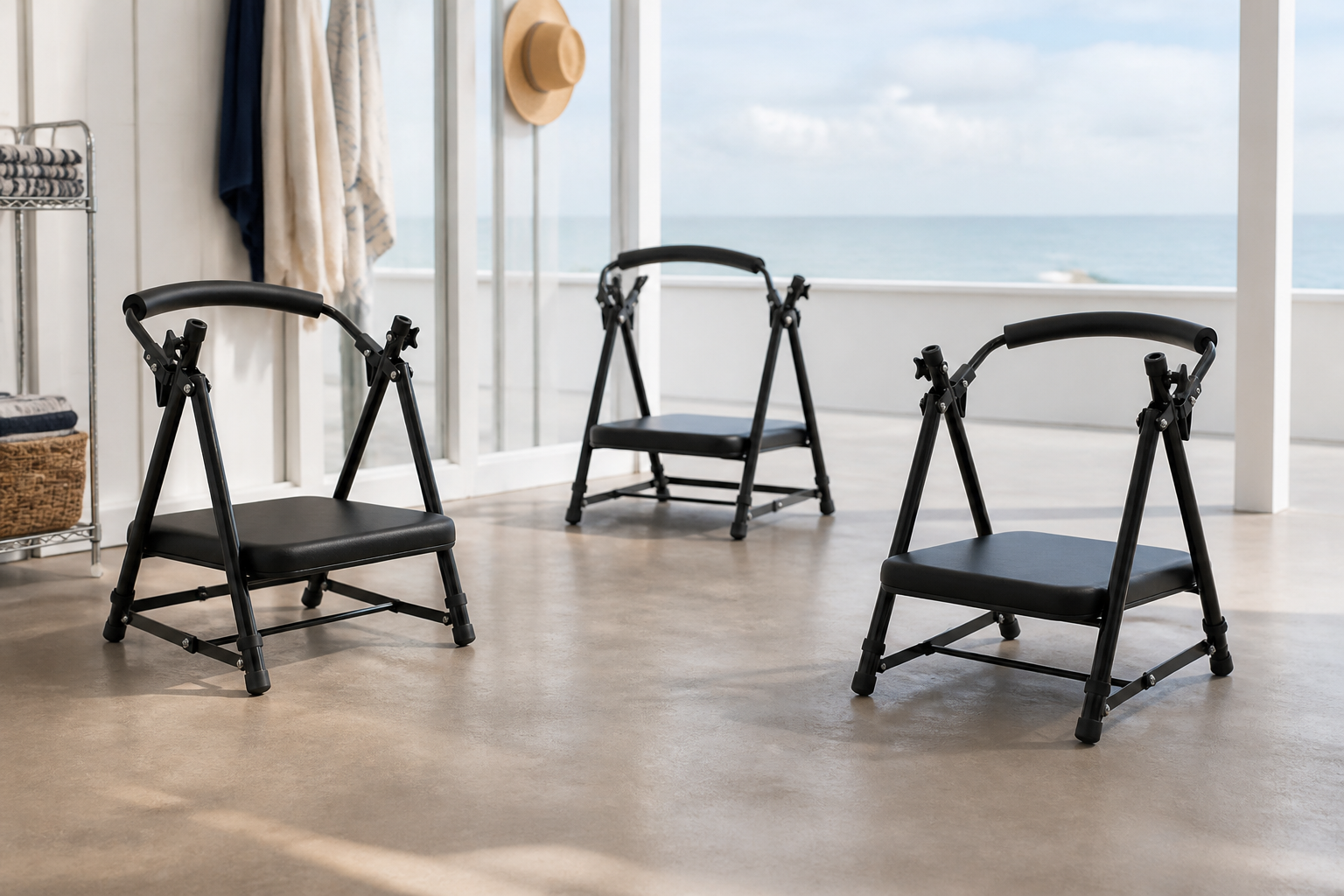
A beach walker maintenance checklist should confirm dry storage, clear floor space, protected padding, stable walker position, and separation between ready and held equipment. Stacking or nesting may save space only when product instructions permit and staff can still see status. A crowded bay can press handles against frames, hide wet feet, or block the next inspection. The equipment range can help planners match storage layout with product types.
Use a dry bay with clear spacing
Here’s the practical setup: Assign each ready walker a bay or nesting position, keep held units in another marked area, and leave an inspection aisle. Store cleaning supplies away from contact surfaces. Rotation cards can guide use without attaching labels where they may damage padding or moving joints.
- Keep bays dry
- Protect padded surfaces
- Separate held equipment
Key Takeaway: Storage layout should preserve condition, status visibility, and access for the next inspection.
| Checkpoint | Working choice |
|---|---|
| Storage cue | Purpose |
| Dry floor | Moisture control |
| Clear aisle | Inspection access |
View the bay from its entrance and check whether every walker status is visible.
When should a walker leave the active rotation?
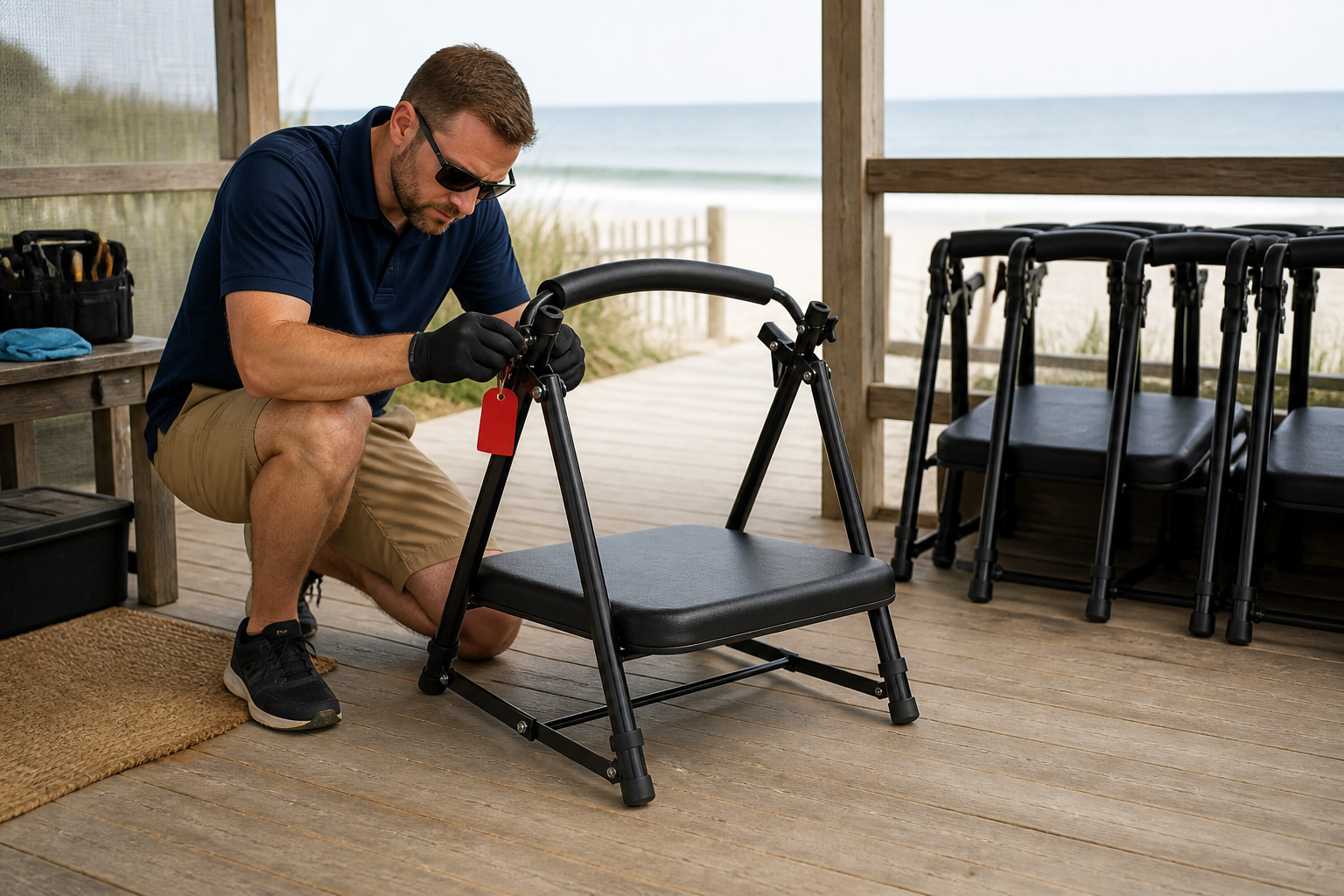
A beach walker maintenance checklist should remove a walker from active rotation after any failed checkpoint, unexpected movement, visible damage, missing part, unresolved moisture, or unclear status. Staff should not weigh severity during a rushed opening. A hold decision protects the workflow while an assigned person reviews product instructions and local service policy. The walker returns only after the review and action receive a dated record from the responsible role.
Use clear hold triggers
The useful rule: Make hold status easy to see physically and in the log, but keep the tag free from dramatic or medical wording. Move the walker away from ready stock and state the observed condition. Avoid guessing the cause until a suitable service review occurs.
- Mark hold status
- State observed condition
- Assign service review
Key Takeaway: A clear hold rule prevents uncertain equipment from drifting back into daily service.
| Checkpoint | Working choice |
|---|---|
| Trigger | Action |
| Failed check | Hold |
| Unclear status | Hold and review |
Audit held equipment weekly so each item has an owner and next action without invented repair deadlines.
What should a service record capture?
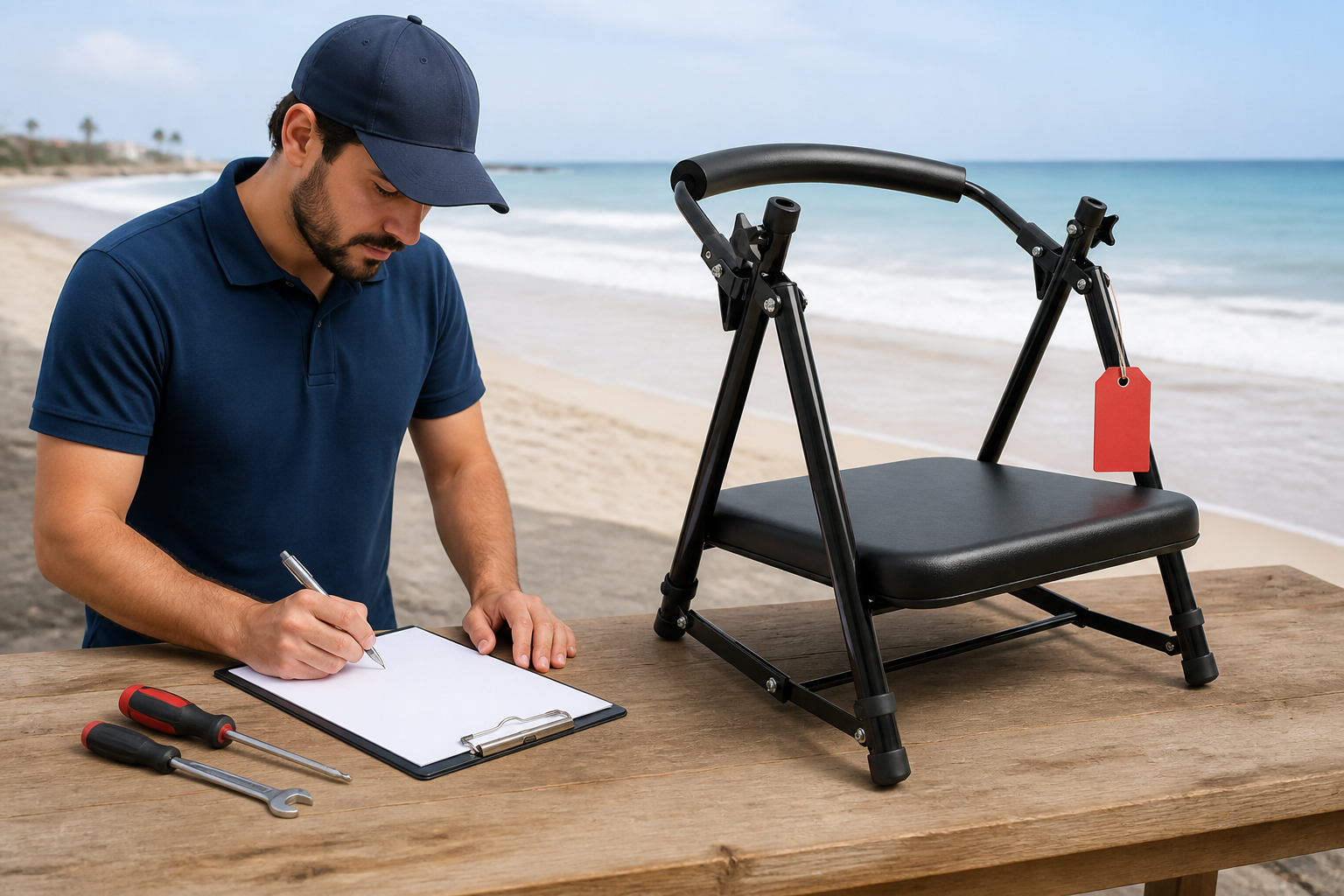
A beach walker maintenance checklist record should capture date, walker identifier, observed condition, status, assigned action, responsible role, and documented return to service. Write observable facts rather than conclusions about cause. A record such as right lower foot cap missing gives the service person a clear starting point. Avoid placing guest health details in equipment records. Keep any protected information inside the site’s approved system.
Record condition, action, and release
Here’s the useful format: Use one line for the event and one line for the response. Attach photos only under local policy and without guest data. Close the record when the assigned person confirms the status decision, even if that decision keeps the walker on hold pending a part or further review.
- Name the condition
- Assign the action
- Record release decision
Key Takeaway: A concise service record links an observed condition with accountable follow-through.
| Checkpoint | Working choice |
|---|---|
| Record field | Example type |
| Condition | Visible fact |
| Action | Named response |
Read several records and replace vague terms such as bad or broken with precise visible observations.
How can managers audit checklist quality?
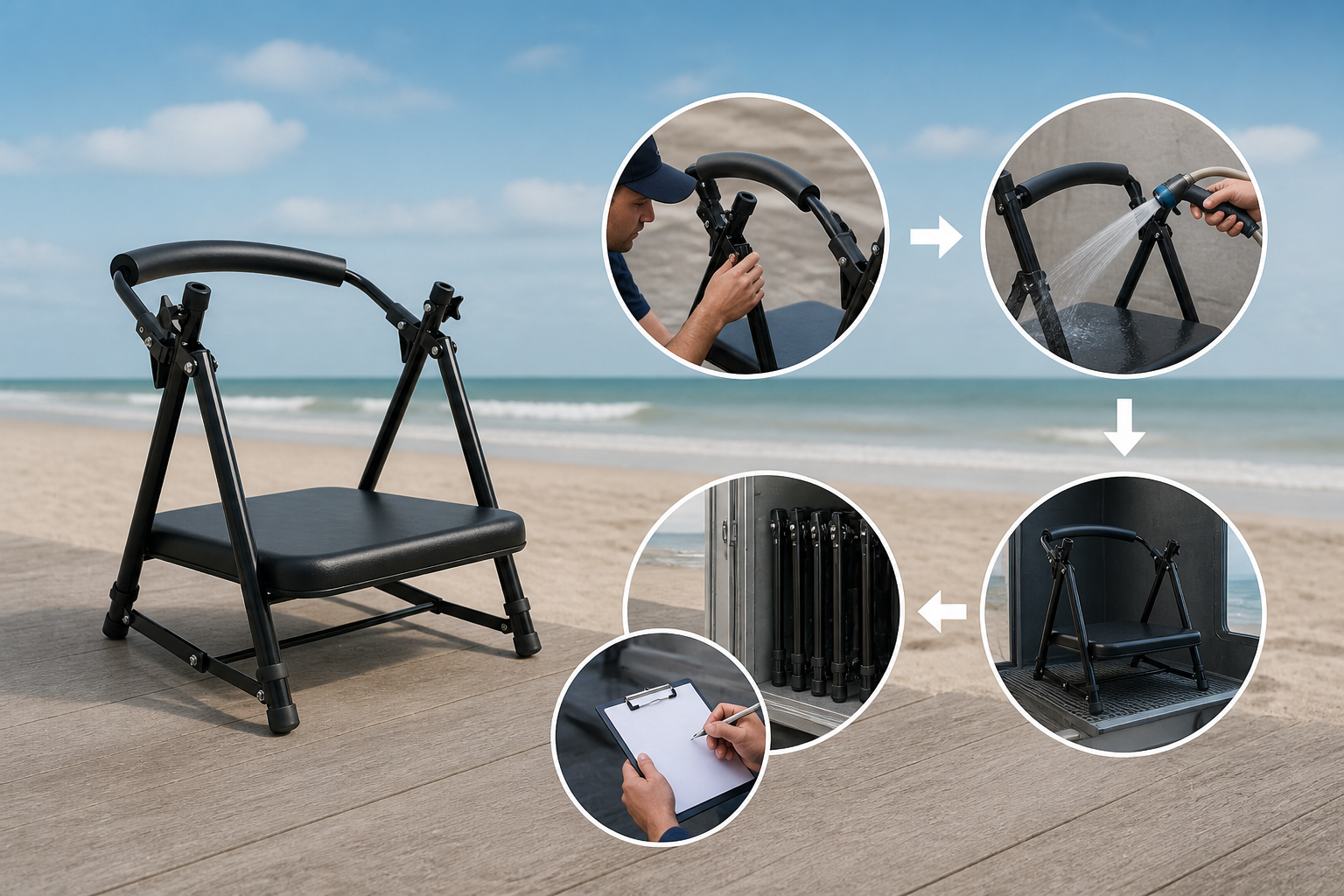
A beach walker maintenance checklist stays useful when managers watch real inspections, review repeated hold reasons, and remove items that staff cannot observe or act upon. A long checklist can create false confidence if operators tick boxes without touching the product. Managers should sample opening, return, cleaning, drying, and storage checks across shifts. They can then clarify wording, change checkpoint order, or assign missing responsibility without adding invented performance scores.
Check whether every item changes a decision
Here’s the review loop: Observe the task, compare the record, select one wording or workflow change, brief staff, and watch the next cycle. Repeated conditions may point toward storage, cleaning, or handling changes rather than a longer form. Product instructions remain the reference for technical service decisions.
- Observe real checks
- Review repeat holds
- Change one item
Key Takeaway: Checklist quality comes from observable actions and accountable responses, not page length.
| Checkpoint | Working choice |
|---|---|
| Audit step | Working output |
| Observe | Missed action |
| Revise | Clearer checkpoint |
Use this flowchart for team discussion without attaching numerical targets or unsupported results.
Closing Guidance
A useful checklist stays short, observable, and connected with action. Inspect before service, clean after coastal exposure, dry before storage, separate held equipment, and review repeated events. Teams planning a walker service can contact us today with questions about product structure, storage, and daily operating flow.
FAQ
Can I copy a wheelchair checklist for a beach walker?
Only as a starting structure. A walker needs checkpoints matched with its own frame, handle, seat, feet, fasteners, and folding parts.
What’s the best time for a daily opening check?
Run it before the walker enters the ready zone, after staff can see the complete dry product under good light.
How do I know if a walker should leave service?
Place it on hold whenever a listed checkpoint fails, a part behaves unexpectedly, or staff cannot confirm the condition.
Can I store a walker right after rinsing?
No. Follow product guidance and let moisture clear in a ventilated drying area before moving it into dry storage.
What should a manager review each month?
Review repeated hold reasons, incomplete records, storage issues, cleaning gaps, and actions that remain open.